• KGS/USD = 0.01144 0%
  • KZT/USD = 0.00193 -0%
  • TJS/USD = 0.10811 -0.28%
  • UZS/USD = 0.00008 0%
  • TMT/USD = 0.28490 0%
  • KGS/USD = 0.01144 0%
  • KZT/USD = 0.00193 -0%
  • TJS/USD = 0.10811 -0.28%
  • UZS/USD = 0.00008 0%
  • TMT/USD = 0.28490 0%
  • KGS/USD = 0.01144 0%
  • KZT/USD = 0.00193 -0%
  • TJS/USD = 0.10811 -0.28%
  • UZS/USD = 0.00008 0%
  • TMT/USD = 0.28490 0%
  • KGS/USD = 0.01144 0%
  • KZT/USD = 0.00193 -0%
  • TJS/USD = 0.10811 -0.28%
  • UZS/USD = 0.00008 0%
  • TMT/USD = 0.28490 0%
  • KGS/USD = 0.01144 0%
  • KZT/USD = 0.00193 -0%
  • TJS/USD = 0.10811 -0.28%
  • UZS/USD = 0.00008 0%
  • TMT/USD = 0.28490 0%
  • KGS/USD = 0.01144 0%
  • KZT/USD = 0.00193 -0%
  • TJS/USD = 0.10811 -0.28%
  • UZS/USD = 0.00008 0%
  • TMT/USD = 0.28490 0%
  • KGS/USD = 0.01144 0%
  • KZT/USD = 0.00193 -0%
  • TJS/USD = 0.10811 -0.28%
  • UZS/USD = 0.00008 0%
  • TMT/USD = 0.28490 0%
  • KGS/USD = 0.01144 0%
  • KZT/USD = 0.00193 -0%
  • TJS/USD = 0.10811 -0.28%
  • UZS/USD = 0.00008 0%
  • TMT/USD = 0.28490 0%
10 December 2025

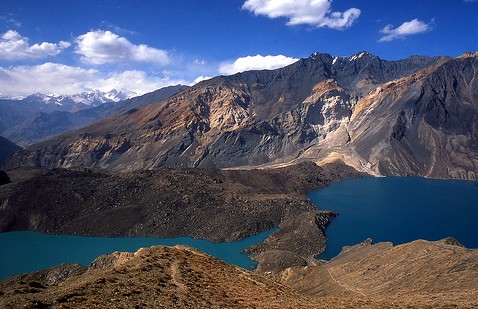
Tajikistan and Uzbekistan Discuss Using Lake Sarez For Drinking Water

On August 3, a Tajik-Uzbek working group on the shared use of water from Central Asia’s transboundary rivers met in Dushanbe.

Participants discussed the potential for using the water from Lake Sarez, in the Tajik National Park in the east of the country, to provide Central Asian countries with clean drinking water. Other potential joint projects between Tajikistan and Uzbekistan in the field of water management were also considered.

In 2018, the presidents of Tajikistan and Uzbekistan, Emomali Rahmon and Shavkat Mirziyoyev, first discussed using the Sarez freshwater as drinking water, during a visit by Rahmon to Uzbekistan. The nations subsequently commissioned a feasibility study from the Intergovernmental Joint Commission on Trade and Economic Cooperation.

Rahmon has repeatedly emphasized that Tajikistan has ample freshwater resources, and has previously used speeches at political forums to suggest using the Sarez mountain lake to provide Central Asian countries with drinking water. The Tajik government has also offered to supply drinking water from Sarez to Iran, Jordan, and the United Arab Emirates.

The Times of Central Asia has previously written that Central Asia will face severe water shortages in the coming years. More than 80% of the available water in Central Asia is used for irrigation, 40% of which is lost during delivery in the fields. With the commissioning of the Qosh Tepa canal in Afghanistan, the water shortage will become even more serious from 2028. The chairman of the Eurasian Development Bank, Nikolay Podguzov, has warned that the Qosh Tepa’s construction could threaten Central Asia’s water balance.
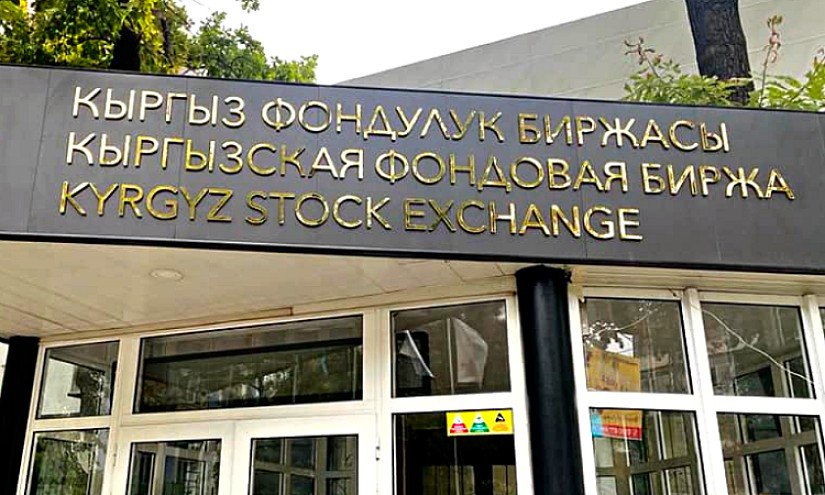

Kyrgyz Stock Exchange Continues to Grow

The Kyrgyz Stock Exchange (KSE) is the leader among the countries of the Eurasian Economic Union (Russia, Armenia, Kazakhstan, Kyrgyzstan, Belarus) in terms of trading volume growth. The volume of capitalization for the second quarter of 2024 amounted to $636 million. The indicator increased five times compared to the same period last year.

In 2022 the exchange began trading in precious metals, and in 2023 the first trades in government securities took place.

“The volumes in 2023 increased because there were very large transactions in the primary market. We hosted such companies as Aiyl Bank – more than 4.8 billion KGS ($56.4 million), State Mortgage Company – 3.8 billion KGS ($44.7 million), Entrepreneurship Development Fund – 503 million KGS ($5.9 million), and the National Electric Grid of Kyrgyzstan conducted a transaction for 5.3 billion KGS ($62.3 million). Banks and companies with state participation carried out additional capitalization,” KSE vice-president Aida Chodulova told The Times of Central Asia.

According to Chodulova, all securities transactions (public and private) must now go through the stock exchange.

“We are now introducing new software to make the system more modern and accessible. We are developing new areas: IPOs, digitalization, and the development of the commodities sector and the precious metals sector. We will also open a currency pairs trading and crypto exchange sector,” Chodulova said.

“At the end of 2023, we held auctions and issued State Treasury Bonds with a two-year circulation term. They were issued in both the national currency and Russian rubles. Commercial banks in Kyrgyzstan and insurance companies participated in the trade. Russian Gazprombank bought some of the securities for Russian investors,” she added.

Last year, KSE planned to issue “green” state treasury bonds with a five-year circulation term, with some of these securities to be sold to Russia. However, the project had to be suspended due to the international economic sanctions placed on Russia as a result of its invasion of Ukraine.

Turkmen Tennis Player to Enter Qualifying for Junior French Open

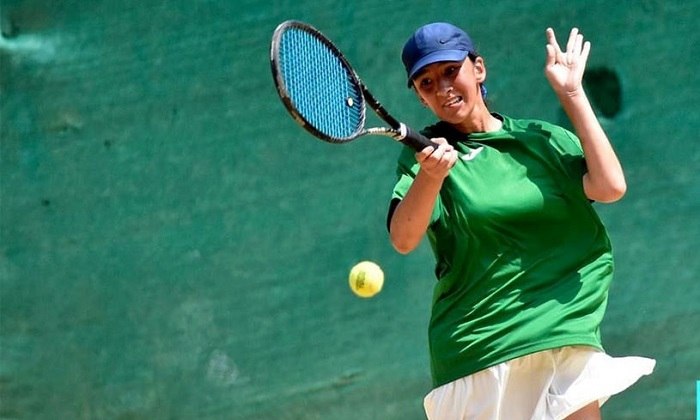
Sabrina Rakhmanova, an under-17 tennis player from Turkmenistan, has been given a ‘wild card’ entry to compete in a regional qualifying tournament for the junior French Open. The winner of the Central and West Asia qualifier, which will be held at Almaty’s Gorky Tennis Park from August 5-9, will earn a place in the competition’s main draw, on the clay courts at Roland Garros in Paris.

The French Open at Roland Garros has been held since in 1891. Its main and junior competitions are one of the four annual Grand Slams, making them one of the world’s biggest tennis tournaments. Rakhmanova’s opportunity to play at the qualifying tournament came thanks to a new partnership between the Asian Tennis Federation and the French Tennis Federation.

Rakhmanova is currently being coached by Turkmenistan’s leading tennis coach, Mirali Hasanov, at a three-week training camp in Uzbekistan.

Turkmenistan organizes various tennis tournaments, and the country marks World Tennis Day with competitions for juniors and adults. The national tennis federation organizes the Central Asian Team Championships in Ashgabat for children under twelve.

Tajikistan Aims to Employ AI to Achieve 5% of GDP by 2040

As previously reported by TCA, Tajikistan is the only Central Asian country with a national strategy for the development of AI.

In 2022, President Emomali Rahmon signed off a national strategy to achieve 5% of the GDP from developing artificial intelligence by 2040.

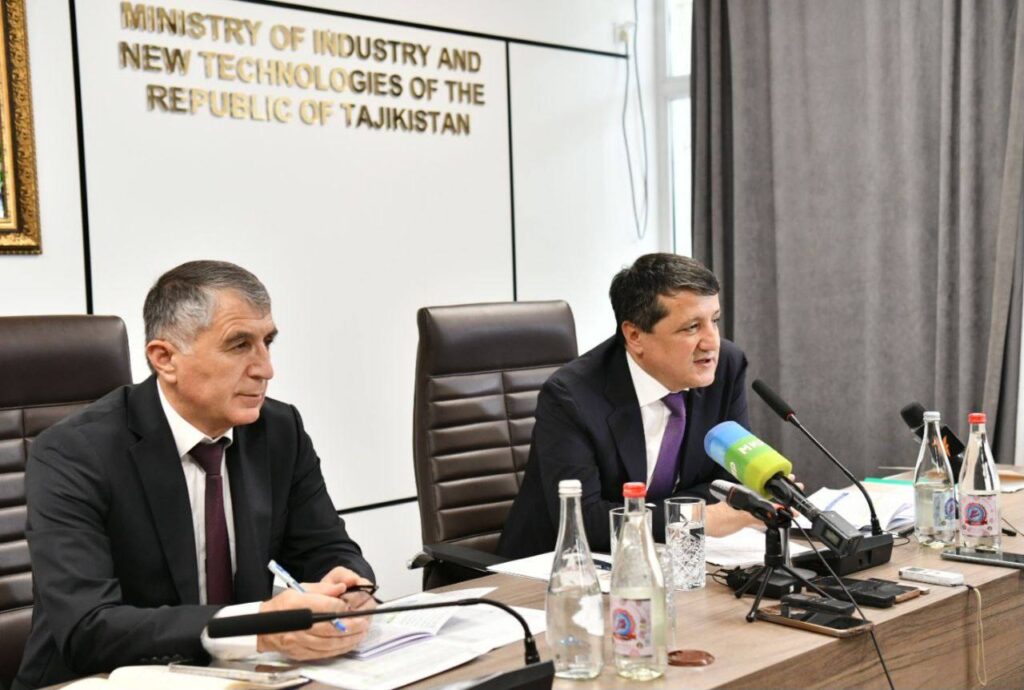
On August 1, the Minister of Industry and New Technologies of Tajikistan, Sherali Kabir, announced at a press conference  that work had begun in securing the first patent for the artificial intelligence algorithm ‘zGAN’ , developed by the local research laboratory of Tajikistan, and stated: “At a time when two-thirds of the world’s countries have yet to develop their national AI strategies, these steps highlight Tajikistan’s ambition to take a key position in technology and innovation.”

Referencing Tajikistan’s progress in the field, Azizjon Azimi, chairman of the Council on AI under the Ministry of Industry, said more than 300 experts had been trained in artificial intelligence and its applications in the economy were expanding. “The leading case is using ‘zGAN’ algorithms for credit scoring. More than 30 banks in over ten countries have already implemented this algorithm by the Tajik fintech zypl.ai, which automatically issued loans worth over $200 million. To date, zypl.ai has attracted more than $3 million in private direct investment in the development of AI in Tajikistan.”

Azimi emphasized that in addition to the impact of ‘zGAN’ in the economic sphere, plans are in place for its application in agriculture, industry, and healthcare. He also reiterated that an agreement had been signed to develop AI programs for the Emirate of Ras al-Khaimah based on Tajikistan’s national AI development strategy.

Central Asian Boxers Poised for Olympic Medals This Week

Mark your calendars: boxers from Central Asia are going for gold in Paris.

On Wednesday, Kazakh boxer Nurbek Oralbay will fight for Olympic gold in the 80-kilogram class final. Then, on Friday, Lazizbek Mullojonov of Uzbekistan will do the same in the 92-kilogram final.

Kazakhstan’s Oralbay, 24, defeated Dominican boxer Christian Pinales in a 3-2 decision on Sunday and will face Oleksandr Khyzhniak of Ukraine in the middleweight final on Aug. 7.

Oralbay’s twin brother, Aibek, is also a boxer. He competed in the 92-kilogram class at this year’s Olympics but lost in the quarterfinals.

“Their father, a former freestyle wrestler, wanted Nurbek and his brother to follow in his footsteps,” olympics.com reported. “But money was tight at home and boxing coach Askar Yerkebayev (KAZ) offered to train the boys in boxing for free, saying he had a dream to take twins to the world championships – and their father agreed.”

The Olympics Games website also reported that Nurbek once pretended to be Aibek in a bout because Aibek was ill. It didn’t offer more details on that subterfuge.

Meanwhile, Uzbekistan’s Mullojonov is up against Loren Alfonso of Azerbaijan in the Aug. 9 heavyweight final. Mullojonov, 25, defeated Tajikistan’s Davlat Boltaev in the semifinal on Sunday, and the Tajik boxer gets a bronze medal.

Mullojonov, who comes from Uzbekistan’s Ferghana region, was a super heavyweight gold medalist at the 2022 Asian Championships.

They call him “The Big Uzbek.”

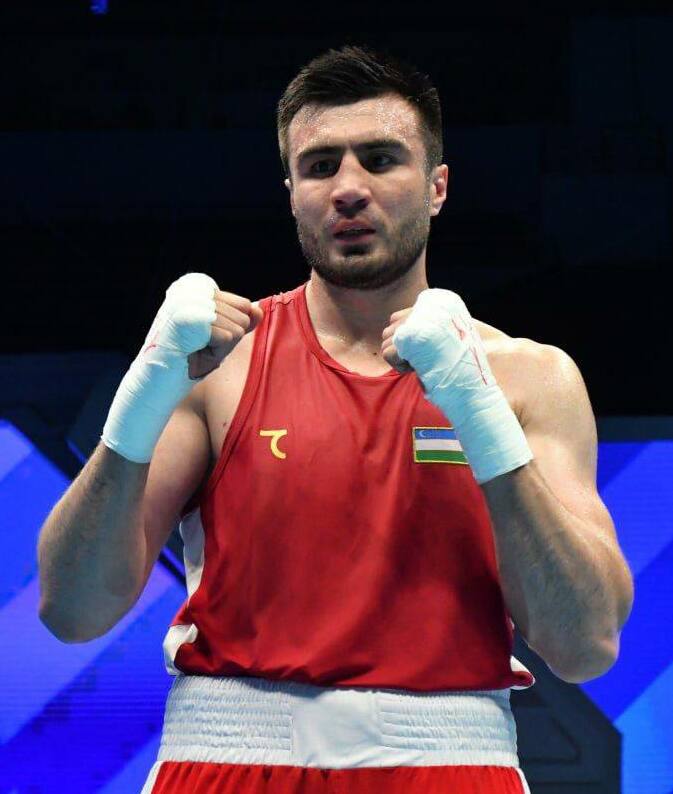
Another Central Asian boxer to watch in Paris this week is Uzbekistan’s Bakhodir Jalolov, who competes against Nelvie Raman Tiafack of Germany in a semifinal of the 92-kilogram-plus class on Aug. 7.

Jalolov, 30, is a defending champion. He was the super heavyweight champion at the Tokyo games in 2021. He has said he wants to become a professional boxer.

Nariman Kurbanov of Kazakhstan brought home silver in the men’s pommel horse, the first Olympic medal in gymnastics for the Central Asian country.

“20 years of hard work, 35 seconds on the Olympic podium. And now – History!” Kurbanov, 26, said on Instagram.

Kurbanov scored 15.433 on Saturday, just falling short of Ireland’s Rhys McClenaghan, whose score of 15.533 propelled him to gold.

The road to Olympic success has indeed been arduous for Kurbanov, whose father got him into the sport when he was a young boy.

“I had no other choice. My father is a gymnastics coach. He brought me into the gym literally from the cradle. At first, I just ran there, jumped, fooled around. But at the age of five my dad began to train me professionally,” Kurbanov said, according to the International Gymnastics Federation.

Kurbanov had failed to qualify as an apparatus specialist for the last Olympic Games in Tokyo.

Veteran sprinter Valentina Meredova of Turkmenistan has competed in Paris, 16 years after making her Olympic debut in Beijing.

The 39-year-old ran a 12:01 in the preliminary round of the 100 meters on Friday, finishing fourth in her group and advancing to the next round. Later in the day, she ran a season best of 11.95 but didn’t qualify for the semifinals.

There was anguish in Meredova’s preliminary round when another runner, Lucia Moris of South Sudan, collapsed with an injury during the race. Meredova was among those who tried to comfort Moris before medics arrived to help.

New Cargo Train Covers China-Kazakhstan-Uzbekistan Route In Record Time

Kazakhstan’s national railway company, Kazakhstan Temir Zholy (KTZ), announced on August 5 that Kazakhstan and Uzbekistan have launched the fastest ever cargo train service on the China-Kazakhstan-Uzbekistan route.

The train on this new route now covers a distance of 4,486 km in a record five days.

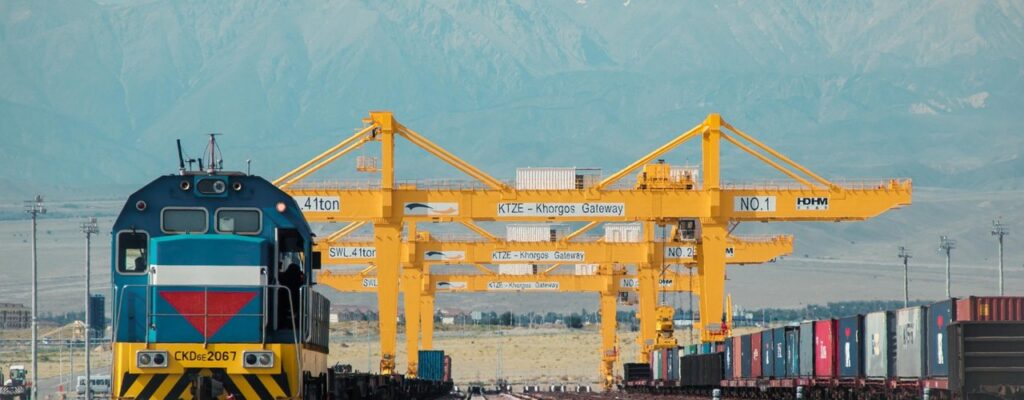
The train departed from the Kazakh-Chinese terminal in Xi’an, China. The containers were then transshipped at the KTZE Khorgos Gateway dry port on the Kazakh-Chinese border, and traveled through Kazakhstan to the Saryagash station on the border with Uzbekistan, before reaching its final destination — Tashkent rail station, one of Central Asia’s major transport hubs.

The short-term increase in cargo transportation is attributed to the utilization of KTZ terminal capacities in China, and the collaborative efforts between the railway administrations of Kazakhstan and Uzbekistan to enhance their border infrastructure. Reconstruction and technological process improvements have increased the capacity of the Saryagash interstate junction station, a key hub for cargo flow between Kazakhstan and Uzbekistan, by 50%.

In 2023, the volume of cargo transportation between Kazakhstan and Uzbekistan exceeded 31 million tons, an increase of 17.2% compared to 2022.