• KGS/USD = 0.01144 0%
  • KZT/USD = 0.00193 -0%
  • TJS/USD = 0.10811 -0.28%
  • UZS/USD = 0.00008 0%
  • TMT/USD = 0.28490 0%
  • KGS/USD = 0.01144 0%
  • KZT/USD = 0.00193 -0%
  • TJS/USD = 0.10811 -0.28%
  • UZS/USD = 0.00008 0%
  • TMT/USD = 0.28490 0%
  • KGS/USD = 0.01144 0%
  • KZT/USD = 0.00193 -0%
  • TJS/USD = 0.10811 -0.28%
  • UZS/USD = 0.00008 0%
  • TMT/USD = 0.28490 0%
  • KGS/USD = 0.01144 0%
  • KZT/USD = 0.00193 -0%
  • TJS/USD = 0.10811 -0.28%
  • UZS/USD = 0.00008 0%
  • TMT/USD = 0.28490 0%
  • KGS/USD = 0.01144 0%
  • KZT/USD = 0.00193 -0%
  • TJS/USD = 0.10811 -0.28%
  • UZS/USD = 0.00008 0%
  • TMT/USD = 0.28490 0%
  • KGS/USD = 0.01144 0%
  • KZT/USD = 0.00193 -0%
  • TJS/USD = 0.10811 -0.28%
  • UZS/USD = 0.00008 0%
  • TMT/USD = 0.28490 0%
  • KGS/USD = 0.01144 0%
  • KZT/USD = 0.00193 -0%
  • TJS/USD = 0.10811 -0.28%
  • UZS/USD = 0.00008 0%
  • TMT/USD = 0.28490 0%
  • KGS/USD = 0.01144 0%
  • KZT/USD = 0.00193 -0%
  • TJS/USD = 0.10811 -0.28%
  • UZS/USD = 0.00008 0%
  • TMT/USD = 0.28490 0%
10 December 2025

China Expands Footprint in Central Asia

In July, Chinese leader Xi Jinping, architect of the Belt and Road economic initiative, traveled to Kazakhstan for a meeting of the Shanghai Cooperation Organization, a security group whose founding members include several Central Asian countries. There, Xi warned against the threat of “external interference” and celebrated Chinese collaboration with President Vladimir Putin of Russia, the region’s other traditional power. Then he visited Tajikistan, a security partner that borders China and Afghanistan.

Europe and the United States, which want to counterbalance Chinese and Russian sway in Central Asia, were watching.

Last week, several analysts affiliated with Western institutions held a Zoom discussion titled “The China-Central Asia Crossroads.” It was hosted by the Center for the National Interest, a non-profit group based in Washington – a few blocks from the White House. Here are excerpts from the analysis:


Balancing China and Russia:

Temur Umarov, a fellow at the Berlin-based Carnegie Russia Eurasia Center:

There is a misconception that “China is somehow replacing Russia” as the main partner in Central Asia because of unease over Russia´s full-scale invasion of Ukraine in 2022.

“The reality is much more nuanced and detailed,” Umarov said. Since the end of the Soviet Union in 1991, he said, Central Asian countries have always looked for “diversified ties with the world” and “Central Asia wants to have China’s presence be enlarged into other spheres and to have a counterbalance in the face of Russia.”


Elizabeth Wishnick, an expert on Sino-Russian relations at the Center for Naval Analyses and the Weatherhead East Asian Institute at Columbia University:

“Central Asians wanted to diversify away from Russia to have more choice. China is not necessarily the only partner they want. And they they’ve been trying, especially recently, to engage with European countries, with India, with Iran, with Turkey, with a broader range of countries.”

Wishnick, who traveled recently to Central Asia, said some people described Russia as “toxic” in private conversations. She also said: “You see a lot of caution about the relationship with China in terms of the lack of transparency of some of the projects that China is investing in, the potential environmental consequence of some of these projects.


Brian Carlson,  a research professor at the Strategic Studies Institute of the U.S. Army War College:

There is “a little bit of slippage of Russian influence in the region,” although Putin has worked to maintain it with frequent meetings with Central Asian leaders, Carlson said. He noted that, after Putin visited China in May, he called the leaders of Kazakhstan and Uzbekistan to update them on the trip. Even so, China’s influence is increasing.

“And so, this does pose challenges for the Central Asian countries. In the past, they’ve kind of tried to play Russia and China off against each other. To some extent, that will be more difficult given that China and Russia have a very close partnership. So, it will be difficult for Central Asian countries to navigate great power relations in the coming years. It’s true that they can look beyond just Russia and China to other partners.”


Xi’s Visit to Tajikistan:

Umarov:

President Emomali Rahmon of Tajikistan is “getting closer and closer” to transferring power to his son, and so, since Xi doesn’t visit Tajikistan often, this might be the Chinese leader’s last trip there before the political transition.

There are two Chinese armed police bases on the border between Tajikistan and Afghanistan, according to Umarov, and “this is a unique case, not only for Central Asia, but also for the world.”


Wishnick:

“For China, there’s a lot of concern about Afghanistan and its future. And Tajikistan is seen as integral to that question.”

“They probably see Tajikistan as a kind of weak link on China’s border, and they’re trying to invest as much as possible to bolster Tajikistan. Although I would say that sometimes it doesn’t have the desirable conclusions, like the investment in a gold mine there has led to some dissatisfaction on environmental grounds as well.”


Carlson:

For years, people have talked about a “sort of informal agreement on a division of labor in which China promotes economic development, whereas Russia has the main security role” in Central Asia.

“Starting several years ago, China did begin to engage with the countries along its western border – Kyrgyzstan, Tajikistan, Afghanistan and Pakistan – in a format that did not include Russia. And the discussions were mainly about security along China’s western border and making sure that instability didn’t spill over, especially from Afghanistan, across the border into China.”


U.S. Withdrawal from Afghanistan:

Carlson:

The U.S. withdrawal from Afghanistan in 2021 potentially opened opportunities there for China, which along with Russia has engaged in outreach to the Taliban.

A Taliban representative made a statement of “support for China’s policies in Xinjiang, or at least, a pledge not to do anything that would aggravate the situation.”

(China has imposed an assimilation program in its western region of Xinjiang, which borders Kazakhstan. Rights groups accuse China of widespread abuses, including mass detentions, against Uyghurs and other Muslims).


China and Russia – Getting Along in Central Asia:

Umarov:

“In my view, we tend to underestimate the level of cooperation that exists between Moscow and Beijing on Central Asia.”

“I think it will be a hybrid future – there will exist some sort of competition between these two countries, but also a lot of cooperation… Cooperation is also something that Central Asian countries want to see.”

Even Russia and the United States, which have big problems in their bilateral relationship, coexist in a place like Kazakhstan, according to Umarov.


Wishnick:

“Central Asia is one of the routes that Chinese entities use to send their dual use items to Russia for use in Ukraine. And of course, there’s a lot of different sentiment on the war in Central Asian countries and large swathes of public opinion opposed to the war. But there are certain business entities and elites that are collaborating in this trade.”

China surpasses Russia in terms of trade in Central Asia, but Russia still has “levers of influence,” for example in the way it impacts Kazakhstan’s westward export of energy through pipelines that pass through Russian territory.


The U.S. Role:

Umarov:

Central Asian countries thought the Trump administration’s efforts to get them to cooperate less with China were “unrealistic.”

But the Biden administration “got rid of this approach and started to not even mention so much China, Russia or anything outside of Central Asia when it comes to building relationships with the region, but rather highlighting the strategic importance of the region as it is.”


Carlson:

“I think that the United States also has an interest in encouraging the Central Asian countries to work more closely [with] each other to strengthen intraregional collaboration, and that should strengthen the Central Asian countries´ hand in dealing with China; and possibly the United States also has an interest in other countries exerting some influence in the region, including Turkey, as a way to get the Central Asian countries some other options.”

A possible Chinese invasion of Taiwan would put Central Asia in a difficult position because “the United States would be interested in getting the Central Asian countries to provide some kind of support for the U.S. effort, but it would be very difficult for them to stand up to China by joining sanctions or cutting off energy supplies or anything like that. So, the Central Asian countries in that case would just have to try as hard as possible to maintain neutrality and stay out of it.”


Wishnick:

Lately, the United States “has focused more on functional areas of cooperation rather than grand strategies, looking at strategic minerals, customs clearance, green energy, things like that, where the U.S. can play a useful role. I think another area that would be very promising and helpful would be education.”

“To get Central Asia out of both the Russian and Chinese information space, they need to have access to other information spaces.”
SCO and Afghanistan on the Cusp of a New Relationship

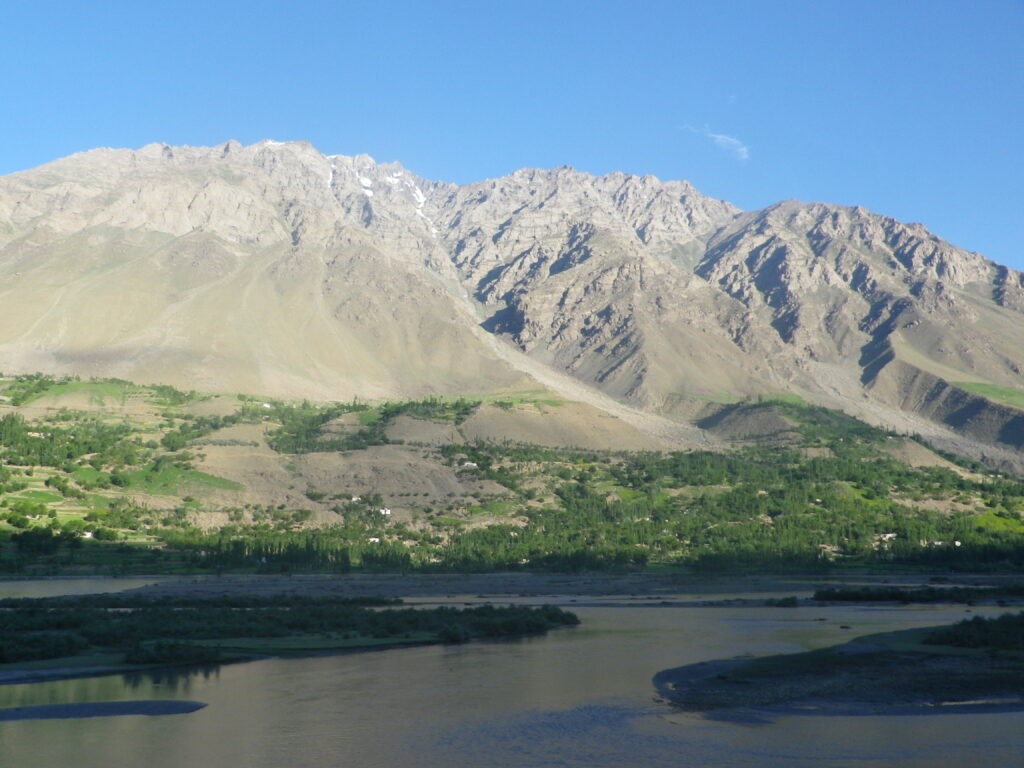
The hype surrounding the recent summit of the Shanghai Cooperation Organization Council of Heads of State in Astana has died down, and the expert community has offered differing takeaways, with some experts optimistic and others cautious. Few, however, have considered what new this summit delivered on Afghanistan. In general, what is the role of the Shanghai Cooperation Organization (SCO) in resolving the political issues around long-suffering Afghanistan and rebuilding its economy?

Despite the SCO’s previous hands-off approach to Afghan affairs, the issue of Taliban-ruled Afghanistan was raised for the first time at the highest level of the SCO in Astana, which gives hope that the organization will expand its role. In their remarks, almost every SCO head of state touched on Afghanistan in essentially the same vein, stating the need for peace, stability and security, while underlining the fact that Afghanistan is an integral part of Central Asia.

Indeed, Afghanistan was mentioned in the final declaration of the Astana summit, with Member States “reaffirming their commitment to asserting Afghanistan as an independent, neutral and peaceful state free from terrorism, war, and narcotic drugs [and voicing] their readiness to support the international community’s efforts to facilitate peace and development in that country.” At the same time, there was a clear message to the Taliban that “the establishment of an inclusive government involving multiple representatives of all ethnic and political groups of Afghan society is the only way toward attaining lasting peace and stability in that country.”

These statements represent a rather big step, considering that previously the SCO failed to find a consensus on Afghanistan and develop its own mechanisms to interact with Kabul. The creation of the SCO-Afghanistan Contact Group back in 2005 was rather a spontaneous reaction to the US-led coalition’s Operation Enduring Freedom in the wake of the 9/11 terrorist attack. The SCO itself says the contact group was created because of the “concerns of the SCO countries about the negative development of the situation in Afghanistan and the intention of the SCO to establish a specific consultative dialogue with Kabul.” While the contact group included the members’ permanent representatives to the SCO, only a few events were ever held.

Indeed, interest in the contact group was only really apparent from the Afghan side, which was looking for SCO assistance in rebuilding the Afghan economy and SCO participation in implementing various energy and transport infrastructure projects and creating favorable conditions for Afghan goods to access the markets of SCO countries. However, none of this was realized. The SCO states preferred, as they still do, to conduct relations with Afghanistan bilaterally, and did not support the efforts of the SCO Secretariat to intensify the work of the contact group. In 2010, Uzbekistan directly indicated its interest in building relations with Afghanistan exclusively on a bilateral basis and stated that it would no longer take part in the contact group.

In June 2012, Afghanistan’s application for SCO observer status was granted. Yet this step was more symbolic and failed to jump-start the development of SCO-Afghanistan relations. In July 2021, a month before the fall of the republican regime in Kabul, a contact group meeting took place in Dushanbe between the foreign ministers of the SCO states and their Afghan counterparts, with a joint statement being adopted.
The contact group continues to exist on paper, but uncertainty about its status prevails, as demonstrated at the Astana summit: Russian President Vladimir Putin and Uzbekistan President Shavkat Mirziyoyev pointed to the need to restart the contact group, while the Tajik leader Emomali Rahmon stated that there is no legal basis for the contact group and proposed launching an extensive expert discussion of Afghan issues in the format of the SCO member states.

Against a backdrop of stalling UN initiatives on Afghanistan and the growing influence of the SCO in world affairs, the organization could take a firmer stance in the international discourse on Afghanistan. SCO countries cover more than 35 million km², 65% of the territory of Eurasia, and have a combined population of approximately 3.5 billion people, almost half of the planet, accounting for about a quarter of world GDP, and more than 15% of international trade.

In this respect, a potential transformation of the SCO is hoped for, as voiced by Kazakhstani President Kassym-Jomart Tokayev at the Astana summit: “In the context of rapid global changes, we face the urgent task of further improving the SCO’s activity. The ongoing process of expanding the organization opens new opportunities and gives impetus to its development,” he stated. Indeed, Kazakhstan, which currently chairs the organization, has put forward “balanced proposals for transforming the organization into an even more effective multilateral cooperation mechanism” in particular strengthening the SCO Secretariat and the secretary-general.

Objectively, in the current era of turbulence, change and upheaval, when a global crisis of confidence is driving geopolitical conflicts and confrontations, the SCO should cultivate a new regional reality that excludes bloc and confrontational approaches to resolving international problems, which directly affects the entire system of continental and global security. None of the SCO member states are interested in another destabilization of Afghanistan. The mission of the country, historically a geopolitical buffer and a site for proxy wars, should be rethought, and Afghanistan should serve as a link in the SCO space between Central Asia and South Asia, as well as between the north and south of Eurasia.

At the same time, the national interests of all SCO member states are closely linked with the situation in Afghanistan, which should make this a key issue on the organization’s agenda. All the countries interested in future large-scale economic projects in Afghanistan are members of the SCO. These projects include the trans-Afghan railways, the North-South Transport Corridor, and the Central Asian branches of the New Silk Road – which are part of the Partnership Network concept of strategic ports and logistics centers that are being developed within the SCO. In addition, the SCO countries have direct economic interests in other projects, like the Turkmenistan–Afghanistan–Pakistan–India (TAPI) gas pipeline, the Central Asia–South Asia (CASA-1000) power project, and mining in Afghanistan.

Today’s Afghanistan, following the withdrawal of Western coalition troops, offers the SCO more opportunities to promote the interests of its members in the country. But what is preventing the SCO from taking a firmer stance on Afghanistan? One obvious factor is the need to transform the organization itself, as voiced by the Kazakhstani president.

The new goal of the SCO in Afghanistan could be combining and coordinating the efforts of its member states on trade, and economic as well as political issues. The SCO could act as an agent of the political process on Afghanistan as part of a broader mission to take on some of the most challenging issues of international relations, with the rights and responsibilities of the SCO as an international organization expanded. This is exactly what Astana has in mind.

Japan to Offer Aid to Central Asia

Japanese Prime Minister Fumio Kishida is set to announce an economic aid package for Central Asia.

According to The Japan Times, details will be revealed during the Japanese prime minister’s meeting with heads of  the five Central Asian states during his visit to Uzbekistan, Kazakhstan, and Mongolia from August 9 to 12.

Tokyo is seeking to strengthen ties with the region by helping to create a trade route across the Caspian Sea that would link Central Asia and Europe, bypassing Russia. According to the Japanese government, the initiative will reduce the heavy influence of both Russia and China on the region and afford Central Asia economic independence.

Kishida is expected to announce the economic support package in a joint statement following the six-party summit in Kazakhstan on  implementing a new trade route, helping to decarbonize the economy, and promoting people-to-people exchanges.

Japanese companies will also help Kazakhstan and other Central Asian countries reduce their dependence on coal by providing technology and loans to develop natural gas production and processing. In exchange, the Central Asian states will send skilled labor to Japan.

Turkmenistan and Afghanistan Accelerate Their Cooperation on Torghundi-Sanabar Railroad

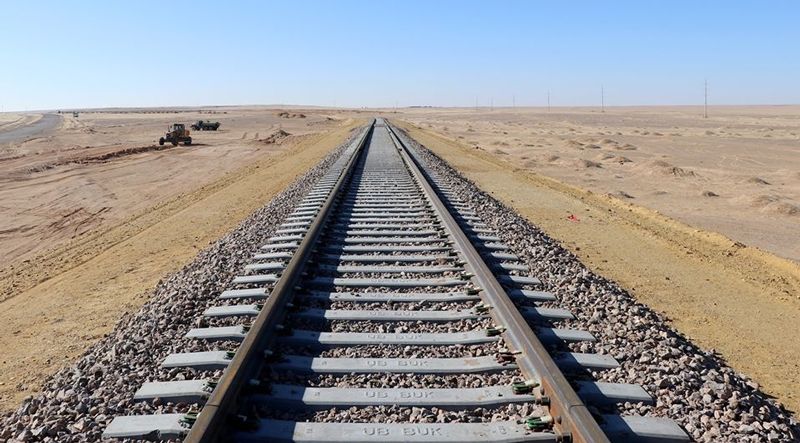
A group of managers from Turkmen Railways (Turkmendemiryollary) visited Afghanistan this week to discuss railway infrastructure projects.

High on the agenda was the construction of a goods warehouse at Torghundi station, and the first stage of the Torghundi-Sanabar section of the Torghundi-Herat railroad.

During the visit, the Turkmen delegation held talks with the head of the Afghan Railway Authority, Bakht-ur Rahman Sharafat. They discussed railroad connections between the two countries, including a joint plan for the Torghundi-Sanabar project.

On July 29 there were talks with the Afghan Cabinet of Ministers’ deputy head for economic affairs. The Afghan official approved the allocation of land for the warehouse complex, and signed off the Torghundi-Sanabar project.

The head of Afghanistan’s Herat province, Nur Mohammad Islamjar, has commented that these projects will contribute to Afghanistan’s economic stability, and stimulate Herat’s industrial development.

As part of the visit, an agreement was also reached to establish a working group to increase cargo transportation between the two countries.

Afghanistan is interested in transporting its goods along the Lazurite Corridor (a trade route that passes through Afghanistan, Turkmenistan, Azerbaijan, Georgia and Turkey), and announced that it would conduct a tariff analysis.

IMF estimates Uzbekistan’s GDP at Over $100 Billion

According to a recent assessment by the International Monetary Fund (IMF), Uzbekistan’s nominal GDP increased by $10.7 billion (125.6 trillion UZS) in 2023, and now stands at $101.6 billion (1,192.2 trillion UZS).

IMF analysts noted that the informal economy is a comprehensive direction. Changes in the structure of the country’s economy by sector were discussed after the socio-economic indicators were recalculated, taking into account the informal and hidden sectors.

Koba Gvenetadze, the IMF Resident Representative in Uzbekistan, said: “Uzbekistan is transforming its economy towards a market economy, and this is a long journey. We provide all possible assistance to our Uzbek colleagues in many areas of statistical calculation and analysis. The technical assistance that IMF experts can provide is also of interest to us because it will allow us to access data on the current state of statistics in the country. Based on this, we will see the dynamics of economic development.”

As stated in the report, more details about this study’s results will be announced at a press conference at the Agency for Information and Mass Communications on August 6th.

ADB to Provide $400 Million to Uzbekistan for Energy Reform

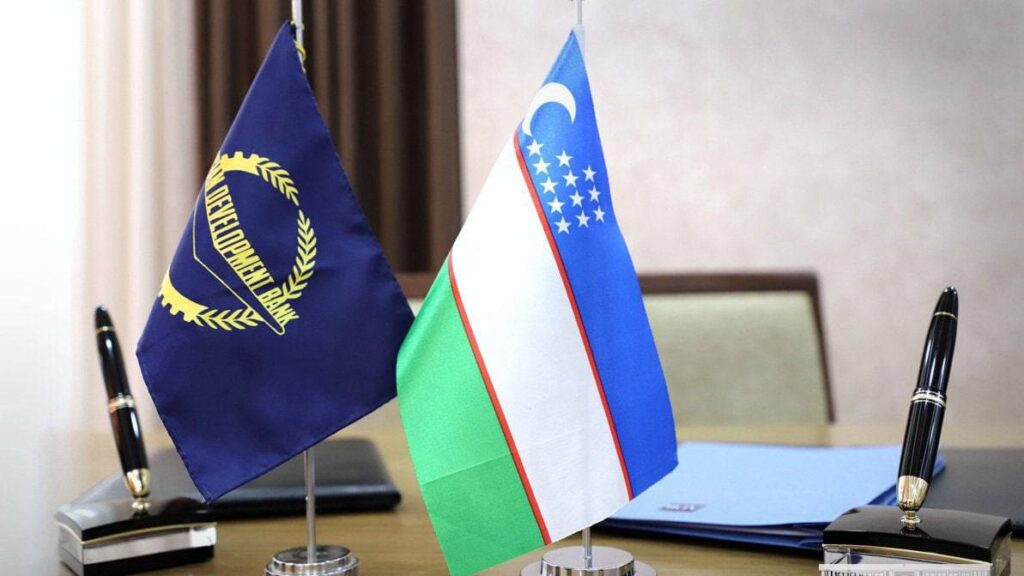
The Asian Development Bank (ADB) has approved two loans totaling $400 million to support the Government of Uzbekistan’s initiatives to strengthen the country’s financial markets and develop a sustainable market-oriented energy sector.

General Director of the ADB for Central and West Asia, Yevgeniy Zhukov emphasized that the active participation of the private sector is very important for Uzbekistan’s economic growth and transformation. “Reforms supported by these programs will help shape an enabling environment for regulators and firms to play their part in boosting development by building robust domestic financial markets and addressing energy needs while tackling climate change,” Zhukov stated.

A $300 million loan for subprogram 2 of the Power Sector Reform Program will provide budget support for policy actions to improve the power sector’s structure, legal and regulatory framework, and governance to encourage private sector investment and promote financial sustainability.

A $100 million loan for subprogram 2 of the Financial Markets Development Program will support regulatory and institutional reforms focused on improving market facilitation to streamline financial transactions and services and increase supply and demand measures to grow Uzbekistan’s capital and money markets.

The ADB had previously approved a $100 million soft loan to help Uzbekistan improve perinatal health services for pregnant women and newborns.

Uzbekistan became a member of the ADB in 1995, and since then, the bank has provided the country with loans, grants, and technical assistance totaling $12.5 billion.