• KGS/USD = 0.01144 0%
  • KZT/USD = 0.00196 -0%
  • TJS/USD = 0.10899 -0%
  • UZS/USD = 0.00008 -0%
  • TMT/USD = 0.28490 0%
  • KGS/USD = 0.01144 0%
  • KZT/USD = 0.00196 -0%
  • TJS/USD = 0.10899 -0%
  • UZS/USD = 0.00008 -0%
  • TMT/USD = 0.28490 0%
  • KGS/USD = 0.01144 0%
  • KZT/USD = 0.00196 -0%
  • TJS/USD = 0.10899 -0%
  • UZS/USD = 0.00008 -0%
  • TMT/USD = 0.28490 0%
  • KGS/USD = 0.01144 0%
  • KZT/USD = 0.00196 -0%
  • TJS/USD = 0.10899 -0%
  • UZS/USD = 0.00008 -0%
  • TMT/USD = 0.28490 0%
  • KGS/USD = 0.01144 0%
  • KZT/USD = 0.00196 -0%
  • TJS/USD = 0.10899 -0%
  • UZS/USD = 0.00008 -0%
  • TMT/USD = 0.28490 0%
  • KGS/USD = 0.01144 0%
  • KZT/USD = 0.00196 -0%
  • TJS/USD = 0.10899 -0%
  • UZS/USD = 0.00008 -0%
  • TMT/USD = 0.28490 0%
  • KGS/USD = 0.01144 0%
  • KZT/USD = 0.00196 -0%
  • TJS/USD = 0.10899 -0%
  • UZS/USD = 0.00008 -0%
  • TMT/USD = 0.28490 0%
  • KGS/USD = 0.01144 0%
  • KZT/USD = 0.00196 -0%
  • TJS/USD = 0.10899 -0%
  • UZS/USD = 0.00008 -0%
  • TMT/USD = 0.28490 0%
08 December 2025

China the Largest Market for Kazakhstan’s Agricultural Products

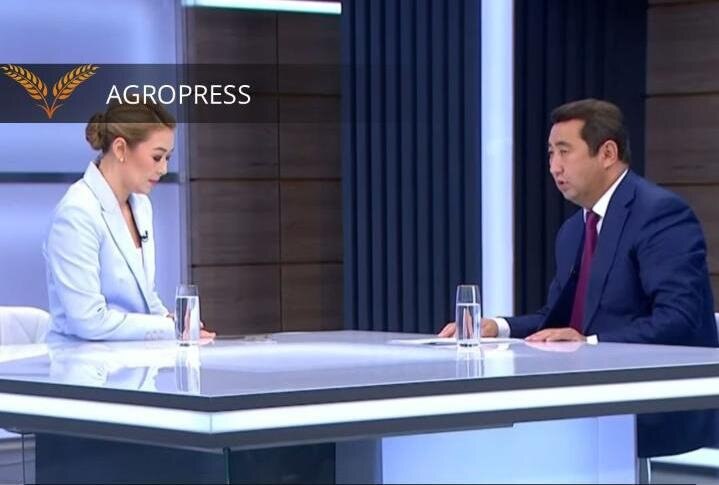
The Kazakh minister for agriculture, Aidarbek Saparov, has named China the largest market for Kazakhstani agricultural products.

Kazakhstan mainly exports grain and oilseeds to China, and imports Chinese vegetables and nuts.

In 2023 Kazakhstan’s agricultural exports to China increased by 84%, and reached $1 billion. In the first five months of this year, bilateral agricultural trade increased by 14%. It reached $540 million, including Kazakhstan’s exports at $380 million.

Kazakhstan has signed protocols with China on the export of 27 types of agricultural products to the Chinese market, including 18 types of crop products and nine types of livestock products. Currently, nine Kazakh companies export livestock products, and 728 companies export crop products. They are waiting to be included in China’s importers register.

Kazakhstan’s agriculture ministry has signed a protocol with China’s customs service to harmonise veterinary requirements for the export of various types of animals and livestock products, including cattle skins, dry mare’s milk, frozen poultry products, horse meat, offal obtained from slaughtering animals, meat products that have undergone high heat treatment, as well as chilled beef and lamb.

Saparov noted that Kazakhstan is among the world’s top 25 food exporters, exporting Kazakh agricultural products to 80 countries. Over the past five years its agricultural exports have doubled, reaching $5.4 billion.

“We intend to continue increasing these figures. In the context of a growing food deficit [in the world], our country seeks to double agricultural exports by 2029,” he said, adding that Kazakhstan is changing the structure of agricultural exports, giving preference to deeply processed products, the exports of which have doubled over the past five years, reaching $2.3 billion.

Daughter of Civil Activist in Turkmenistan Not Allowed to Leave Country

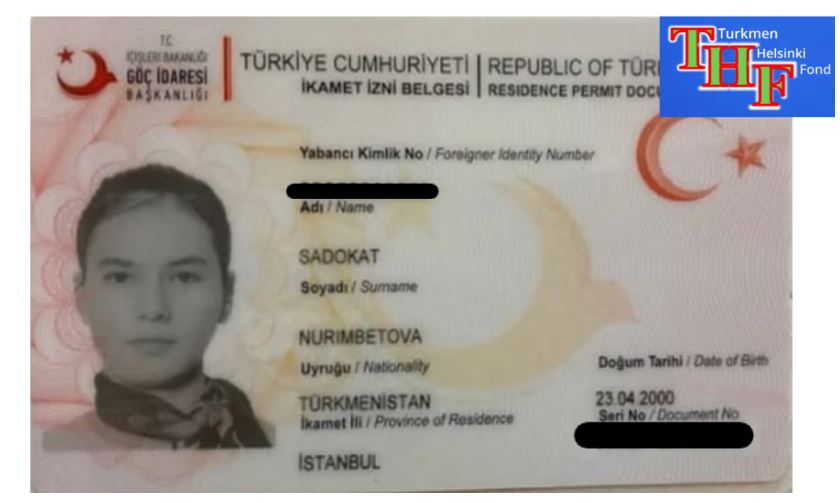
Sadokat Nurimbetova, the daughter of prominent civil activist Hamida Babajanova, was removed from a Turkmenistan Airlines flight to Istanbul at Ashgabat International Airport, it has been reported. Nurimbetova, an ethnic Uzbek, is a second-year student at Istanbul Medical University, and accordingly she has a valid Turkish residence permit, a “kimlik.”

On June 5, Nurimbetova went to her home country to apply for a new passport, which she duly received on July 10, and bought a plane ticket to Istanbul. At passport control, two immigration officials intercepted Nurimbetova and took her to a separate room. There, she was fingerprinted and interrogated, after which the Migration Service officers told the student that she was banned from leaving Turkmenistan.  “This is a directive from above,” Nurimbetova was told, and was advised not to go anywhere and not to complain to anyone. It was also emphasized to her that her mother should not entertain thoughts of going anywhere.

Nurimbetova is the daughter of well-known Turkmen civil activist Hamida Babajanova, who last year defended the right of her elderly mother, Yakujan, to make a pilgrimage to Mecca. Recently, cases of Turkmen citizens being removed from flights abroad without explanation have become more frequent. The same thing is happening when attempting to cross the border by land.

Dangerous Afghan Sodas Seized in Kyrgyz Stores

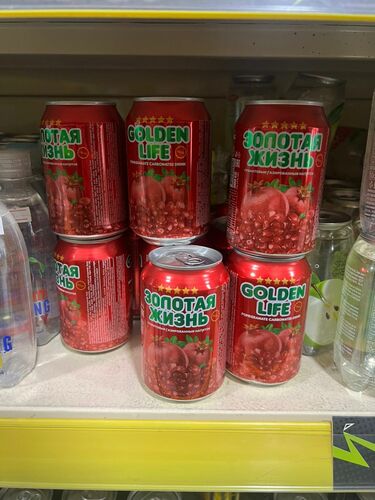
An unscheduled inspection to detect and seize from circulation the non-alcoholic carbonated pomegranate drink, “Golden Life” produced in Afghanistan was conducted in Bishkek. Earlier, the Ministry of Health of the Kyrgyz Republic reported that the Department of Disease Prevention and State Sanitary and Epidemiological Surveillance ordered that this drink be withdrawn from sale everywhere. Afghan-made sodas contain the dye azorubin E 122, which can negatively impact children’s activity and attention spans.

According to the Center for State Epidemiological Surveillance, 58 retail outlets, trading and market complexes were checked. The heads of enterprises were handed 65 sanitary prescriptions requiring them to withdraw these products from sale and return them to suppliers and resellers. In total, 7,356 cans of the drink were withdrawn. The heads of trade networks were instructed to prohibit the sale of this product in the future.

Cardiff University to Open Branch in Astana

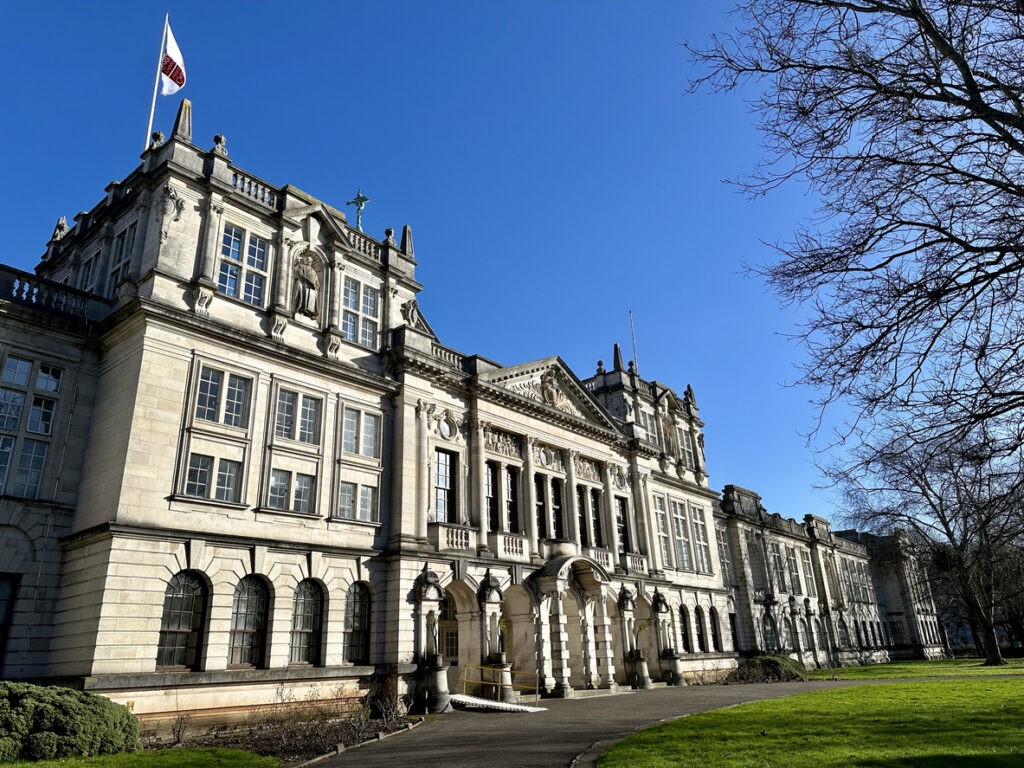
A branch of Cardiff University will open in Astana next year.

Cardiff University, in Wales, founded in 1883. It is one of the leading research universities in the UK, and is part of the prestigious Russell Group.

Kazakhstan’s ministry of science and higher education has reported that 14 branches of global universities have been opened in the country since 2021. Preparatory work is underway on eight other educational projects.

Kazakhstan Intensifies Efforts to Combat Extremism

There appears to be a small, but growing problem with terrorism and extremism in Kazakhstan.

More than 30 people from regions around the country have been detained in Kazakhstan so far in 2024, and in March, Russia’s Federal Security Service (FSB) killed two Kazakh citizens who were in Russia, allegedly to carry out a terrorist attack.

In response, the country’s Committee for National Security (KNB) had conducted dozens of raids. Kazakhstan’s government gave the KNB additional powers to monitor the internet, and authorities are tightening the law on religion.

Kazakhstan’s southern neighbors, Tajikistan, Turkmenistan, and Uzbekistan, border Afghanistan. Tajikistan and Uzbekistan have had problems with the Taliban and other militant groups during the last 25 years. These include domestic terrorist groups, the Islamic Movement of Uzbekistan and the Tajik-led Jamaat Ansarullah, both of which have been based in northern Afghanistan.

Kazakhstan has largely avoided problems with Islamic radicals.

Citizens from all the Central Asian states have gone to Afghanistan and Middle Eastern countries to join jihadist groups, including a small number of Kazakh citizens.

Turkey extradited a 22-year-old Kazakh citizen back to Kazakhstan on January 27, 2024. The Kazakh national, according to the KNB, was a “native of the Turkestan region [who] went to Syria in 2020, where he joined one of the armed groups operating there.”

The Islamic State of Iraq and Syria (ISIS) released a propaganda video in November 2014 that showed Kazakh nationals, including children, in a training camp in Syria. The video described them as “some of our newest brothers from the land of Kazakhstan.”

A group of some 25 men whom authorities said were Islamic militants staged attacks in the northwestern Kazakh city of Aktobe, near the Russian border in early June 2016. The group robbed two stores that sold hunting rifles and were involved in shoot-outs with the police and soldiers. At least 25 people were killed, most of them the attackers.

Deputies in Kazakhstan’s Mazhilis, the lower house of parliament, voiced concerns in October 2023 that radical forms of Islam were spreading in Kazakhstan. Controversial MP Yermurat Bapi said followers of these radical Islamic groups were taking over bazaars in the Atyrau, Aktobe, Mangystau, Ulytau, and Almaty provinces.

Bapi and 13 other deputies called on the government and KNB to take measures against these groups and stem extremist and terrorist propaganda from being disseminated inside Kazakhstan.

On February 17, 2024, the KNB staged a combined 49 raids on eight unspecified religious extremist groups in the Aktobe, Atyrau, East Kazakhstan, Zhambyl, West Kazakhstan, Turkestan, and Zhetysu provinces. The KNB said it detained 23 people and seized weapons, ammunition, religious literature, narcotics, and cash.

On April 1, 2024, the KNB detained a man in the Caspian coastal city of Aktau and found material for making explosives. According to the KNB, the suspect was a follower of a “radical religious ideology,” and was planning to carry out a terrorist attack.”

At the start of July, five people were detained in KNB raids in the Atyrau and Zhambyl provinces, and in the capital, Astana, and southern city of Shymkent. The five, one of whom was a “foreigner,” were suspected of “participation in terrorist activities, promoting terrorism, organizing extremist activities, and recruiting people for these purposes.”

The KNB has also been targeting recruitment over the internet. A Shymkent resident was convicted on May 6 of sharing ISIS videos on TikTok and sentenced to seven years in prison.

The day before that conviction, the KNB detained three people in Astana and the northeastern city of Pavlodar on suspicion of disseminating terrorism propaganda and participating in the activities of a banned religious extremist organization.

Most disturbing was the incident involving Kazakh citizens Sabit Ashiraliyev, 35, and Zhanibek Taskulov, 38. Both were from the Saryagash district some 100 kilometers from Shymkent, both were married with children.

On February 28, the two men flew to Russia and went to village of Koryakovo, in Russia’s Kaluzhsky Oblast. The FSB raided the flat where Ashiraliyev and Taskulov were staying on March 7 and killed them both after, according to the FSB, they offered resistance to being apprehended.

According to the FSB, the Kazakh nationals were members of the “Khorasan Willayat,” also known as the Islamic State of Khorasan Province (ISKP), a splinter group of ISIS that is based in Afghanistan but has expanded its operations to other countries.

The FSB said Ashiraliyev and Taskulov planned to attack a synagogue.

Om March 22, barely two weeks after the Kazakh citizens were killed, terrorists attacked the Crocus City Hall in Moscow, killing more than 140 people. ISKP claimed responsibility for that attack.

Mazhilis Deputy and member of the parliamentary Committee for International Affairs, Defense and Security, Konstantin Avershin, said at end of March that ”it is impossible to exclude that there are (ISKP) sleeper cells… on the territory of Kazakhstan.”

At the end of May, KNB chief Yermek Sagimbayev met with President Kassym-Jomart Tokayev and said since the start of 2024, 26 people have been convicted of involvement in terrorism or extremism, and 22 more were awaiting trial.

Shortly after Ashiraliyev and Taskulov were killed, the Kazakh government gave the KNB additional powers, among them the right to “use information systems and electronic information resources” for monitoring the internet and “protection of information systems.”

After MPs called for action in October 2023, then-Kazakh Prime Minister Alikhan Smailov said in November that amendments to the law on religion were being prepared that would introduce the “concepts of ‘destructive religious trends’ and ‘religious radicalism’” and impose severe punishments for those found guilty of subscribing to them.

The proposed amendments are still under discussion.

The numbers of people apprehended and convicted in Kazakhstan this year for involvement in terrorist or extremist groups is not large, but it is more than has been seen in previous years, and they’ve been caught in areas all over the country.

It seems clear that the problem is growing, and now it falls to the Kazakh authorities to effectively neutralize this challenge without taking such severe measures that the government ends up alienating people and driving them into the groups the state is seeking to eliminate.

Tajikistan-Born Singer, Criticized in Russia, Prepares to Release an Anti-War Song

In 2023, Tajik-Russian singer Manizha Sanghin, harshly criticized in Russia for her public comments on sensitive issues, travelled to the picturesque “Valley of the Forty Girls” in southern Tajikistan to record an anti-war song to be released on Friday.

The mountainous location, known to Tajiks as Childukhtaron, derives its name from ancient lore about a group of girls who turned into towering rock formations when an invading force swept through their homeland. Whether the girls-turned-rocks were meant to block the invaders, or simply bear silent witness, depends on the telling.

Tajikistan-born Sanghin said she felt an affinity for the girls as standing at the foot of the rock, she recorded ‘Gun’. Written a decade ago, the song was originally about the devastating civil war in Tajikistan in the 1990s but had been put to rest after being abandoned by music producers in Britain.

Following  Russia’s full-scale invasion of Ukraine in 2022, they talked about the song again and the singer, a goodwill ambassador for UNHCR, the U.N. refugee agency, said in YouTube video, “I thought, I have to release it. Because now, it’s not just a song about war in Tajikistan. It’s a song about war in Ukraine, in Gaza, and all wars around the globe.”

Music producer Liz Horsman who described Sanghin as” brave in the face of ongoing investigations into her anti-war stance,” readily agreed to record the song and since the war made travel between Britain and Russia impossible, the pair arranged to meet in Tajikistan. Seven months pregnant with her daughter, Sanghin described her return to her homeland as “very poetic”.

Over the years, the singer has sparked a fair share of controversy. In 2021, when she represented Russia at the Eurovision contest with a song called “Russian Woman,” she was condemned for advocating women’s and LGBT rights.

She was then denounced online and Russian promoters cancelled many of her concerts after she criticized the invasion of Ukraine. She was further alienated following her comments about the brutal treatment of several Tajik suspects in a terrorist attack that killed 144 people at a Moscow music venue in March. Sanghin condemned the attack but described the abuse of the suspects as “public torture.”

“I am a systemic victim of cyberattacks and cyberbullying. Sometimes I have to block thousands of bots a week and sometimes daily… They follow, mass unfollow and report my profile,” Sanghin said on Instagram in May. “Instagram’s algorithm then thinks that I am breaking community rules and doesn’t show my posts to most of my followers. (Sometimes it can last for months).”

Sanghin asked followers on the social media platform to leave a comment or just a heart emoji as a possible way to help her “get out of this ‘shadow ban.’”