• KGS/USD = 0.01144 0%
  • KZT/USD = 0.00193 -0%
  • TJS/USD = 0.10838 -0.09%
  • UZS/USD = 0.00008 0%
  • TMT/USD = 0.28490 0%
  • KGS/USD = 0.01144 0%
  • KZT/USD = 0.00193 -0%
  • TJS/USD = 0.10838 -0.09%
  • UZS/USD = 0.00008 0%
  • TMT/USD = 0.28490 0%
  • KGS/USD = 0.01144 0%
  • KZT/USD = 0.00193 -0%
  • TJS/USD = 0.10838 -0.09%
  • UZS/USD = 0.00008 0%
  • TMT/USD = 0.28490 0%
  • KGS/USD = 0.01144 0%
  • KZT/USD = 0.00193 -0%
  • TJS/USD = 0.10838 -0.09%
  • UZS/USD = 0.00008 0%
  • TMT/USD = 0.28490 0%
  • KGS/USD = 0.01144 0%
  • KZT/USD = 0.00193 -0%
  • TJS/USD = 0.10838 -0.09%
  • UZS/USD = 0.00008 0%
  • TMT/USD = 0.28490 0%
  • KGS/USD = 0.01144 0%
  • KZT/USD = 0.00193 -0%
  • TJS/USD = 0.10838 -0.09%
  • UZS/USD = 0.00008 0%
  • TMT/USD = 0.28490 0%
  • KGS/USD = 0.01144 0%
  • KZT/USD = 0.00193 -0%
  • TJS/USD = 0.10838 -0.09%
  • UZS/USD = 0.00008 0%
  • TMT/USD = 0.28490 0%
  • KGS/USD = 0.01144 0%
  • KZT/USD = 0.00193 -0%
  • TJS/USD = 0.10838 -0.09%
  • UZS/USD = 0.00008 0%
  • TMT/USD = 0.28490 0%
10 December 2025

SCO Summit: Eurasian Alliance Signs Security Agreements; Welcomes Belarus

By Jonathan Campion, reporting from the SCO Summit in Astana


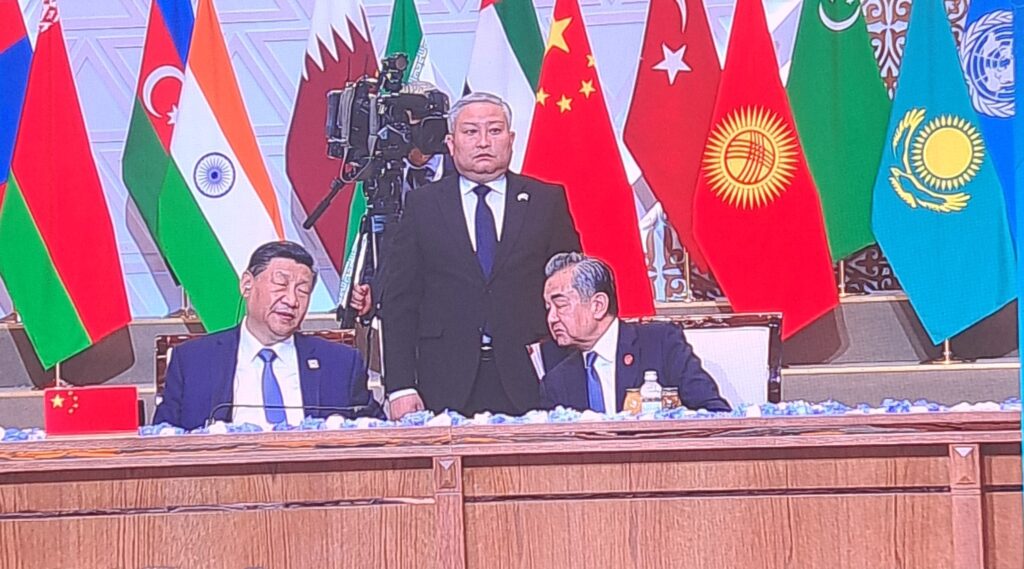
At the Shanghai Cooperation Organization (SCO) Summit in Astana this morning, leaders from the bloc’s member states signed a host of agreements intended to promote cohesion in the Eurasia region. The first session, which was held behind closed doors, had begun with the signing of the document that accepted Belarus as the SCO’s 10th full member.

The SCO is a political, security and economic alliance, of which Kazakhstan, Kyrgyzstan, Tajikistan and Uzbekistan are founding members. The group also includes China, Russia, Iran, India, Pakistan, and now Belarus. The organization has four observer states and 14 dialogue partners, covering half of the world’s population, and almost a third of global GDP. 

The first agreement signed was a document outlining the Shanghai Cooperation Organization’s development strategy for the next 12 months. In 2025 Kazakhstan will pass chairmanship of the alliance to China, and there is speculation that the SCO may grow further next year, to include at least one new member.

With security a growing concern for members, particularly in light of the March terrorist attack outside Moscow, for which the terror group Islamic State Khorasan Province (ISIS-K) have claimed responsibility, leaders approved the SCO’s latest three-year Cooperation Program to counter terrorism, separatism and extremism. The parties also signed an agreement on the organization’s regional anti-drug strategy.

Another high-profile document is the SCO’s development strategy for cooperation in the energy sphere. Kazakhstan is at the forefront of the region’s transition to green energy, with Chinese leader Xi Jinping mentioning the country’s new Zhanatas wind farm and the Turgusun hydropower station as key joint projects with China in an article published in the Kazakh press this week.

The heads of state were welcomed to the Summit by Kazakh President Kassym-Jomart Tokayev, with his Russian counterpart Vladimir Putin, Aleksandr Lukashenko of Belarus and Chinese leader Xi Jinping the last to arrive, ten minutes after the other dignitaries. Some leaders did not arrive at all: India’s Narendra Modi is not attending this year’s SCO Summit, and has sent the country’s external affairs minister Subrahmanyam Jaishankar in his place. 

The Summit’s afternoon session is styled as “SCO Plus”. In attendance are the heads of state of the alliance’s dialogue partners, including the presidents of Turkey and Azerbaijan, Recep Tayyip Erdogan and Ilham Aliyev. Turkmenistan – which is not affiliated to the SCO but which is invited as a guest – is led not by its President Serdar Berdimuhamedov, but by his father Gurbanguly Berdimuhamedov, the former leader who is now the chairman of the country’s People’s Council.
 

Remittances to Central Asia and Europe Down 10%

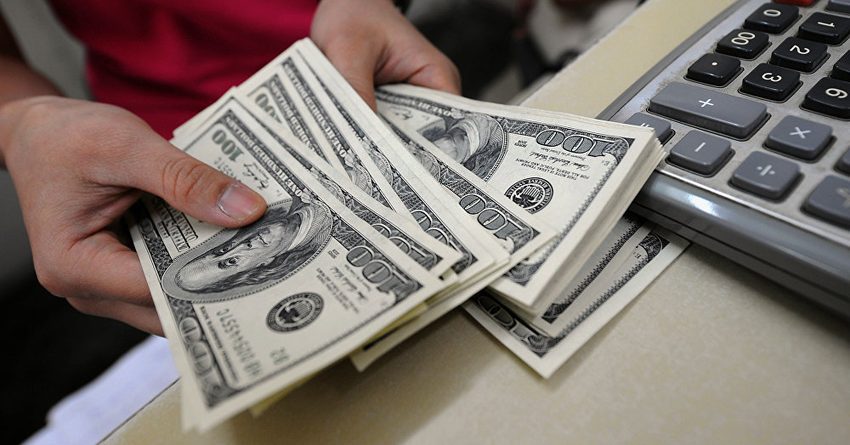
After significant growth of 18% in 2022, the inflow of remittances to Europe and Central Asia last year decreased by 10%, amounting to about $71 billion, according to an analytical review by the World Bank entitled “Migration and Development”. This reduction is due to a slowdown in remittances from Russia to neighboring countries, especially the Central Asian states. Among the reasons cited are the devaluation of the ruble against the dollar (39% in 2023), a decline in the number of remittances from Russia to Ukraine, and a slowdown in the outflow of migrants to Russia from neighboring states, many of whom have decided to return home after facing a wave of xenophobia following the Crocus City Hall attack. Financial institutions in some countries have also restricted transfers from Russia for fear of sanctions, which could divert remittance flows to unofficial channels.

According to the World Bank, in 2023, remittances from Russia fell significantly to Uzbekistan (from 87% to 78% of all remittances), Georgia (from 47% to 37%), Azerbaijan (from 82% to 63%), and Kyrgyzstan (from 95% to 94%). Remittances from the U.S. to these countries also declined. “In Armenia, Azerbaijan, and Kazakhstan, remittances fell by at least 29% in 2023. At the same time, remittances to Albania, Bulgaria, Kosovo, and Turkey doubled,” the report states.

According to the World Bank’s forecast, remittance flows to Europe and Central Asia will decline by another 2% in 2024, but grow by about 4% to about $72 billion in 2025. The average cost of sending remittances also increased.

Turkmenistan and Iran Sign Natural Gas Swap Deal

From 1-3 July, Turkmenistan and Iran engaged in negotiations on the supply of natural gas. Reporting on the meeting in Ashgabat, Turkmenistan’s Foreign Ministry announced that a contract had been signed for the purchase and sale of natural gas of up to 10 billion cubic meters per year, to be supplied by Turkmenistan to Iraq through the territory of Iran under a swap scheme.

According to the ministry’s statement, to accommodate increased supplies of gas, Iranian companies will also build a new 125-kilometer pipeline and three gas compressor stations in Turkmenistan.

Under the new contract, the volume of Turkmen gas supplied to Iran along the Dovletabad – Sarahs – Hangeran route and through the Chaloyuk gas measuring station, will rise to 40 billion cubic meters per year.

Despite being home to the world’s second-largest natural gas reserves, Iran has experienced chronic natural gas shortages during the winter months, and rising domestic demand has limited the country’s ability to export gas.

As a result of the gas swap with Turkmenistan, Iran will be able to meet its gas export commitments.

Turkmenistan has the world’s fourth-largest proven natural gas reserves, but due to its geographical location and geopolitical environment, has faced difficulties in finding export markets for its gas.

Today, China is the main buyer of Turkmen natural gas.


Hungarian Company to Develop Smart Parking for Tashkent

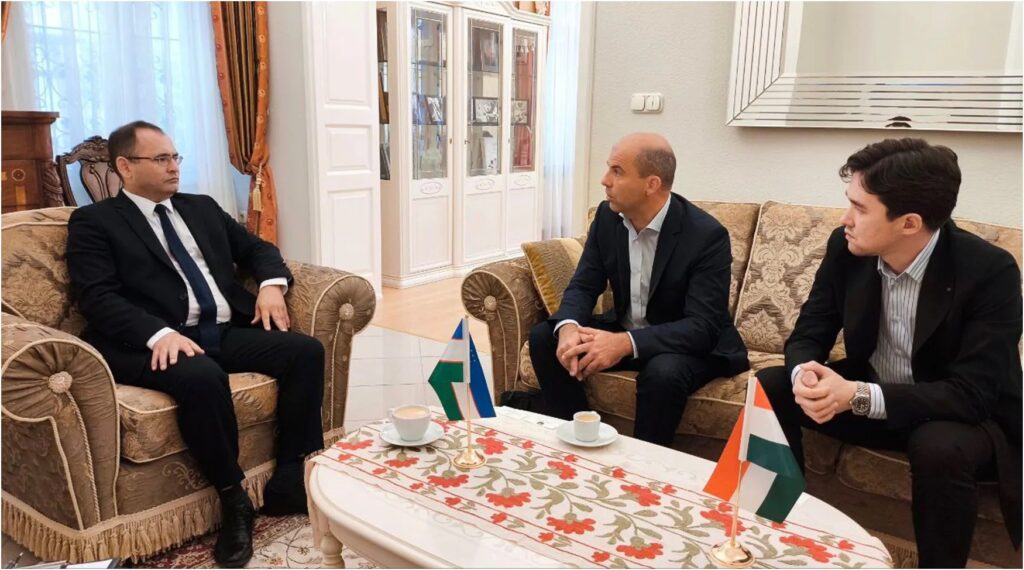
Specialists from Hungary will create an automated “smart” parking system in Tashkent. The issues of establishing cooperation and realizing investment projects in road and urban infrastructure were discussed at a meeting between Uzbekistan’s Ambassador to Hungary, Oybek Shakhavdinov, and Gabor Pusztai, Advisor to the General Director of the iCell company.

The parties conferred on the Hungarian group’s work on a project to help establish parking management within the fast-growing city of Tashkent. The system involves introducing and using high-tech sensors and mobile applications to find, reserve, and pay for parking spaces.

iCell’s specialists have been working for over a year on studying possible options for the effective implementation of the project and preparing a package based on the conditions and specifics of the capital of Uzbekistan. It was stated that an essential point in implementing the project is introducing changes to the republic’s current legislation regarding administrative sanctions for offenses and  articles which provide a clear understanding of the rights and obligations of road users.

iCell specializes in software development and services in various technological and telecommunication sectors. The company’s main activities and services include fleet management, intelligent parking solutions, IT services, energy and infrastructure management, and application development for various industries.

Uzbek Afghan Business Forum

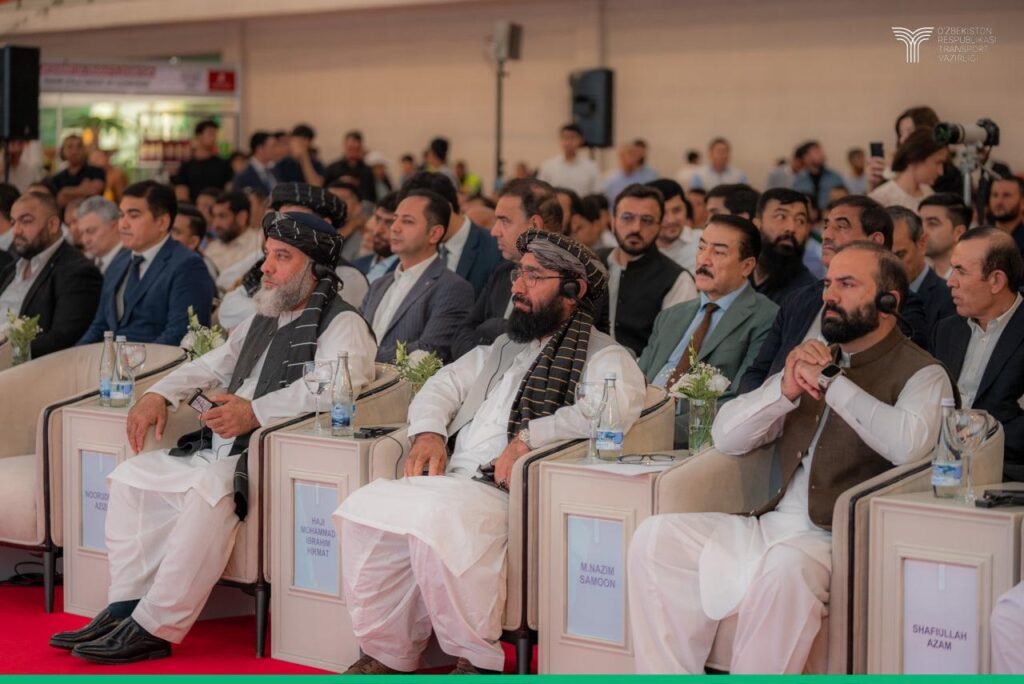
On July 3, an Uzbek-Afghan business forum was held in Tashkent to coincide with the visit  of an Afghan delegation headed by Minister of Industry and Trade Nuriddin Azizi. The major event, the forum was attended by heads of ministries and government agencies, industry, and over 1,000 business representatives from both countries.

As reported by the Uzbek Ministry of Investment, Industry and Trade, Afghanistan is Uzbekistan’s fifth-largest export market. In the last five years, trade between the two countries has increased almost 1.5-fold, reaching $866 million in 2023. Uzbekistan currently receives Afghan investment in 550 enterprises, 443 of which are wholly funded with Afghan capital.

In his welcoming speech, Laziz Kudratov, Minister of Investment, Industry and Trade of Uzbekistan, highlighted several promising areas of cooperation, including diversifying the range of goods traded, and bolstering cooperation between producers and exporters with support of both countries’ respective departments and industry associations.

The forum focused on initiatives to further develop mutual trade, such as the transition to round-the-clock border crossing operations, the establishment of trading houses, and the execution of major transport and infrastructure projects.

Attention was drawn to the significant impact of more proactive engagement at the International Trade Centre in Termez on the Uzbek-Afghan border, where the creation of business-friendly conditions include a 15-day visa-free regime and tax-free zone.

Nuriddin Azizi, Minister of Industry and Trade of Afghanistan, commended Uzbekistan’s efforts to foster an environment conducive to bilateral trade, economic and investment cooperation. He also encouraged more proactive engagement between Afghan and Uzbek entrepreneurs by offering assurance of both sides’ readiness to support new ventures and initiatives.

The forum was complemented by the  exhibition “Made in Afghanistan” which showcased the produce of 75 major Afghan companies from jewellery, textiles and food to electrical engineering, mining, transportation and logistics.

The event concluded with the signing of several trade agreements in the chemical and agricultural sectors, as well as an agreement to establish a logistics centre.

According to the Uzbek Ministry of Transport, Afghanistan is one of the key links in ensuring regional connectivity across Central and South Asia. In recent years, cargo transportation across Afghanistan has risen significantly and in 2023, the volume carried along the multimodal transport corridor Uzbekistan – Afghanistan – Pakistan increased 1.5-fold compared to 2021.


Chinese Power Plant for Western Kazakhstan

On July 2, Kazakhstan’s MAEK LLP and China Huadian Corporation Ltd., represented by Huadian Kazakhstan Energy, signed an agreement for the joint construction of a combined-cycle gas plant in Aktau.

The plant, aimed to meet the growing demand for electricity in Western Kazakhstan, is scheduled for commission in December 2026.

As reported by Kazakh Invest, the Chinese State Bank has pledged finance for the project for up to 15-25 years at a rate below 5%.

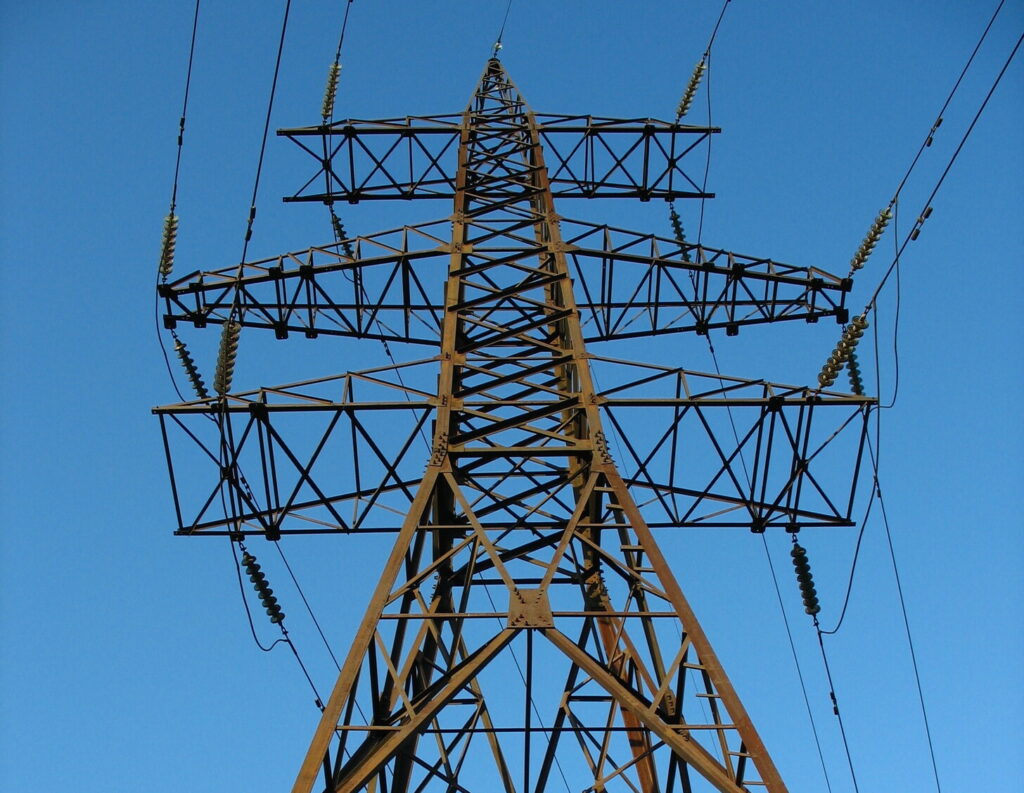
China Huadian Corporation is currently implementing the build of a combined-cycle gas plant in the Mangystau region of Kazakhstan. The $190 million project, which has the potential to integrate renewable energy sources,  will serve as the primary supplier of power and help regulate peak loads at a local level.