• KGS/USD = 0.01144 0%
  • KZT/USD = 0.00212 0%
  • TJS/USD = 0.10456 0.19%
  • UZS/USD = 0.00008 0%
  • TMT/USD = 0.28490 0%
  • KGS/USD = 0.01144 0%
  • KZT/USD = 0.00212 0%
  • TJS/USD = 0.10456 0.19%
  • UZS/USD = 0.00008 0%
  • TMT/USD = 0.28490 0%
  • KGS/USD = 0.01144 0%
  • KZT/USD = 0.00212 0%
  • TJS/USD = 0.10456 0.19%
  • UZS/USD = 0.00008 0%
  • TMT/USD = 0.28490 0%
  • KGS/USD = 0.01144 0%
  • KZT/USD = 0.00212 0%
  • TJS/USD = 0.10456 0.19%
  • UZS/USD = 0.00008 0%
  • TMT/USD = 0.28490 0%
  • KGS/USD = 0.01144 0%
  • KZT/USD = 0.00212 0%
  • TJS/USD = 0.10456 0.19%
  • UZS/USD = 0.00008 0%
  • TMT/USD = 0.28490 0%
  • KGS/USD = 0.01144 0%
  • KZT/USD = 0.00212 0%
  • TJS/USD = 0.10456 0.19%
  • UZS/USD = 0.00008 0%
  • TMT/USD = 0.28490 0%
  • KGS/USD = 0.01144 0%
  • KZT/USD = 0.00212 0%
  • TJS/USD = 0.10456 0.19%
  • UZS/USD = 0.00008 0%
  • TMT/USD = 0.28490 0%
  • KGS/USD = 0.01144 0%
  • KZT/USD = 0.00212 0%
  • TJS/USD = 0.10456 0.19%
  • UZS/USD = 0.00008 0%
  • TMT/USD = 0.28490 0%

Kazakhstan Targets Raising Wage Share of GDP to 40%

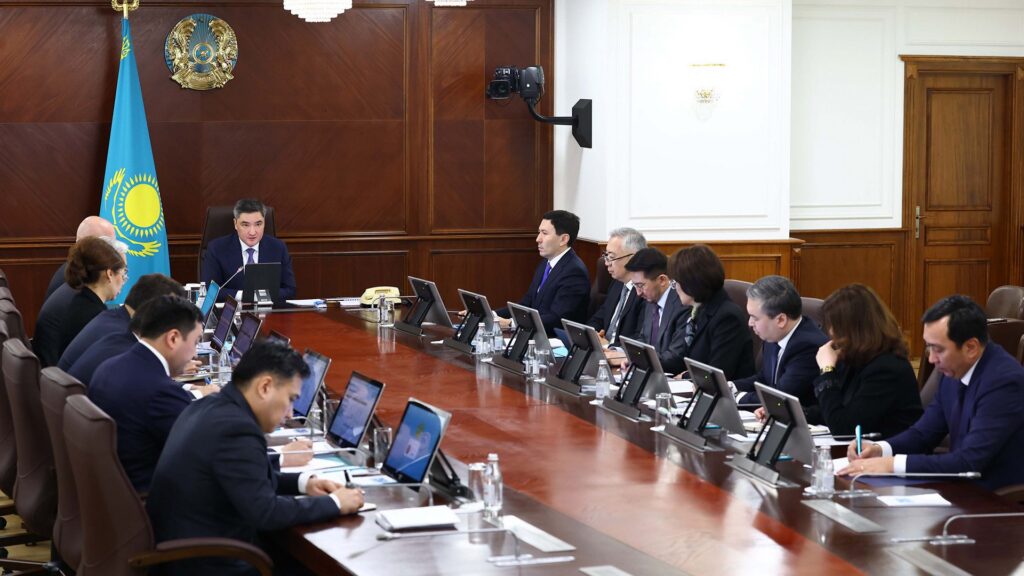
The Kazakh government is preparing a series of measures aimed at accelerating wage growth and increasing the overall wage fund, with the goal of raising its share in the country’s GDP to 40%, Prime Minister Olzhas Bektenov announced during an expanded government meeting.

According to government estimates, household incomes are currently growing more slowly than the broader economy and corporate profits, including those generated with state support. At present, wages account for roughly 31% of Kazakhstan’s GDP, a figure considered relatively high by Central Asian standards but still below the levels seen in developed economies, where wage funds typically exceed 40% of GDP.

Kazakhstan’s GDP growth in 2025 reached $20.1 billion in monetary terms, with the economy expanding at an annual rate of 6.5%, according to official data.

To address the income gap, the government is developing a comprehensive package that includes financial, tax, and regulatory incentives for employers to raise wages. The initiative also prioritizes the creation of new, decently paid jobs, upskilling of the workforce, and reducing the financial burden on citizens. Real income growth has been designated a key economic policy priority for 2026.

A complementary role will be played by the upcoming Joint Action Program for 2026-2028, developed by the Cabinet, the financial regulator, and the National Bank. The program aims to stabilize the macroeconomic environment and improve public welfare, setting a target of household income growth at a rate of at least 2-3% above inflation each year.

According to official statistics, the average monthly salary in Kazakhstan stood at approximately $873 by the end of the third quarter of 2025. However, earlier reports indicated that the minimum wage will remain frozen at $172 in 2026, despite prior commitments to increase it.

Kyrgyzstan’s Crypto Market Generates More Tax Revenue Than Country’s Largest Bazaar

Kyrgyzstan’s virtual asset market has rapidly become one of the fastest-growing segments of the national economy. In the first nine months of 2025 alone, the country’s cryptocurrency turnover exceeded $7.9 billion, a figure that industry insiders believe could continue to rise substantially.

Kyrgyz law currently permits fully legal cryptocurrency transactions, and the authorities are actively working to enhance regulation and oversight. According to official figures, the total volume of crypto transactions last year surpassed $20.5 billion, generating $22.8 million in tax revenue.

Temir Kazybaev, Chairman of the Association of Virtual Asset Market Participants, told The Times of Central Asia that tax income from crypto turnover has already outpaced revenue collected from the Dordoi bazaar, Kyrgyzstan’s largest commodity trading hub, as well as the total from voluntary patent fees.

“Just over $7.9 million in taxes was collected from the Dordoi bazaar over the year. Patent tax collection totaled $13.6 million. In other words, the entire market and all individuals in Kyrgyzstan working under a patent paid as much tax as was collected from cryptocurrency turnover,” Kazybaev explained.

He noted a significant shift in public perception of the sector.

“A few years ago, most Kyrgyz people saw the crypto market as a scam or a pyramid scheme. That perception is changing. People and businesses now see it as an opportunity. This is in large part because President Sadyr Japarov is personally invested in the topic,” Kazybaev said.

He also highlighted recent developments in the market’s professional infrastructure.

“The development of virtual assets is a critical area. As far as I know, the National Council on Virtual Assets has a dedicated secretariat, and our association is deeply involved in this work. Educational events are being held actively. We are training compliance officers, including those focused on crypto, and we’ve already trained two groups of accountants in crypto asset accounting,” he said.

As of early 2026, more than 200 crypto exchanges and 11 mining companies are officially registered in Kyrgyzstan. The sector received a further boost with the launch of the USDTKG digital asset, a token said to be backed by Kyrgyz gold, which is gradually gaining domestic recognition.

Kyrgyzstan Plans Full Transition to Water-Saving Irrigation in Issyk-Kul Region

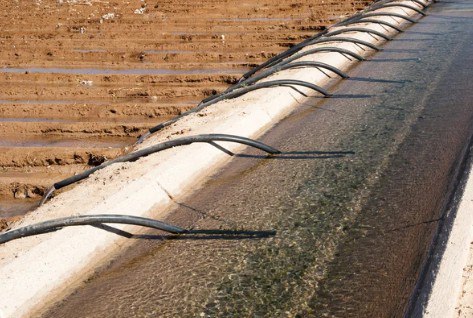
Kyrgyzstan’s government is preparing to fully transition the Issyk-Kul region to water-saving irrigation technologies, offering farmers preferential financing amid growing concerns over falling water levels in the country’s largest lake and key tourist destination.

Speaking in parliament on February 11, Deputy Chairman of the Cabinet of Ministers and Minister of Water Resources, Agriculture, and Processing Industry Bakyt Torobaev announced that farmers adopting drip or sprinkler irrigation systems will be eligible for low-interest loans at a preferential 2% rate. Lending is expected to begin next month.

Torobaev emphasized the urgency of reducing agricultural water consumption to stabilize inflows into Lake Issyk-Kul. “If we switch to drip irrigation, more water will flow into Issyk-Kul. If we use all the water for agriculture, none of it may reach the lake. Therefore, our goal is to fully transition the Issyk-Kul region to drip and sprinkler irrigation,” he told lawmakers.

Environmental pressure on the Issyk-Kul basin has intensified due to climate change and accelerated glacier retreat. The basin contains 957 glaciers, covering about 560.8 square kilometers, many of which are shrinking rapidly. Although around 120 rivers feed the lake, only about 80 reach it during the summer months due to irrigation withdrawals. Between 1927 and 2003, the lake’s level dropped by 2.75 meters, an effect largely attributed to inefficient water use.

Policy support for conservation has recently been formalized. In December 2025, the Cabinet of Ministers approved the Concept for the Sustainable Development of the Ecological and Economic System of Lake Issyk-Kul through 2030, alongside a detailed action plan prioritizing the adoption of water-saving agricultural technologies.

Under current plans, modern irrigation systems will be installed on 100,000 hectares of farmland across the Issyk-Kul region, potentially redirecting up to 200 million cubic meters of water back into the lake annually.

Nationwide, adoption of water-efficient irrigation remains limited but is accelerating. According to the Ministry of Water Resources, Agriculture, and Processing Industry, modern irrigation technologies currently cover around 16,000 hectares. The authorities aim to expand that area by 30,000-40,000 hectares each year, targeting 200,000 hectares under water-saving irrigation by 2030.

State-funded installations are also increasing. In 2026, drip and sprinkler systems are scheduled to be deployed on 5,270 hectares. Between 2024 and 2025, such systems were installed on 2,369 hectares, 641 hectares with drip irrigation, and 1,728 hectares with sprinkler systems. Kyrgyzstan currently has approximately 1 million hectares of irrigated agricultural land overall.

Up to Eighty Persian Leopards Now Roam Turkmenistan

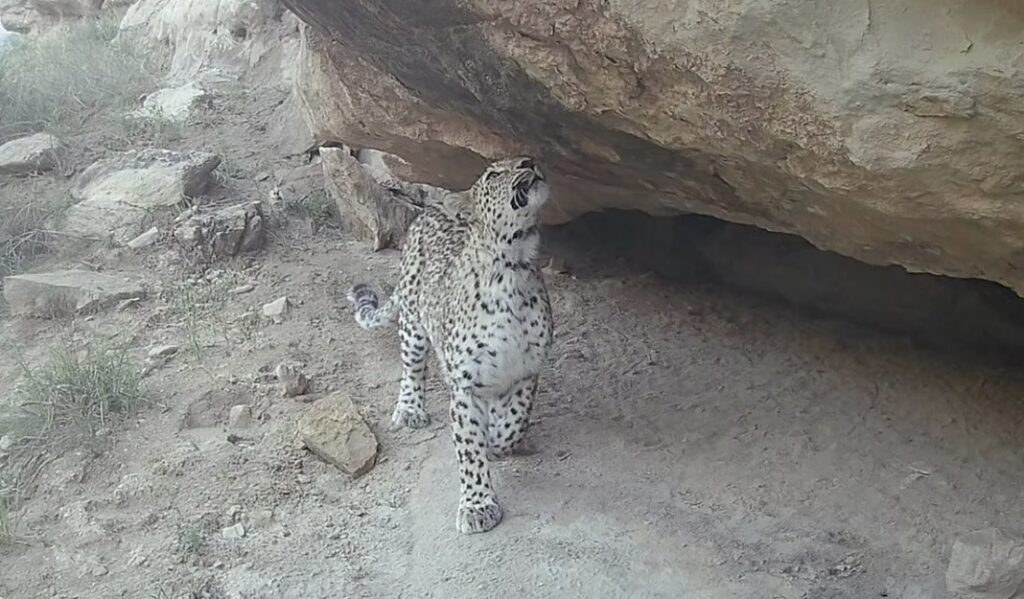
Between 60 and 80 Caucasian leopards, also known as Persian leopards, currently inhabit Turkmenistan, according to extensive monitoring conducted throughout 2025. The findings confirm not only the stable presence of this rare predator in key ecological zones but also provide encouraging signs of population recovery.

A recent report by Conservation X Labs estimates Turkmenistan’s Persian leopard population at 60-80 individuals. Most breeding activity occurs within protected natural reserves, while border zones serve as critical migration corridors that support the dispersal and genetic diversity of the species.

The Persian leopard is one of the largest leopard subspecies and plays a vital role in maintaining biodiversity in Turkmenistan. The majority of the national population is concentrated along the Kopetdag Mountains, near the border with Iran.

Camera trap data also confirms a significant presence in the Uly-Balkan Range, an area of ecological importance. It supports the potential repopulation of the Garabogazgol region and sustains habitat connectivity with neighboring Kazakhstan. The re-confirmed presence of leopards along the southern coast of Garabogazgol is viewed as a particularly meaningful indicator of the species’ gradual return to its historical range.

In 2025, monitoring efforts were significantly expanded. A wide network of camera traps was deployed across key habitats, providing more accurate and consistent long-term data.

The data confirms that individual leopards have been present in the same territories over multiple years. Notably, a third breeding female has now been recorded in the Uly-Balkan mountains, an important development for the species’ viability.

Conservation X Labs researchers describe the findings as “an important step in the conservation of the species,” citing improvements in habitat quality, sufficient prey availability, and the cumulative impact of long-term conservation efforts.

Despite this progress, the global outlook for the Persian leopard remains fragile. Experts estimate that the total wild population numbers between 750 and 1,044 individuals, including only 450-626 adults. The majority of these leopards live in fragmented and declining habitats across the region. As such, the subspecies is listed as endangered in the IUCN Red List of Threatened Species.

Turkmenistan’s leopard population thus serves as a rare example of regional recovery, underscoring the importance of continued monitoring, cross-border cooperation, and sustained habitat protection.

Kyrgyzstan to Install Electric Vehicle Charging Stations in Key Tourist Region

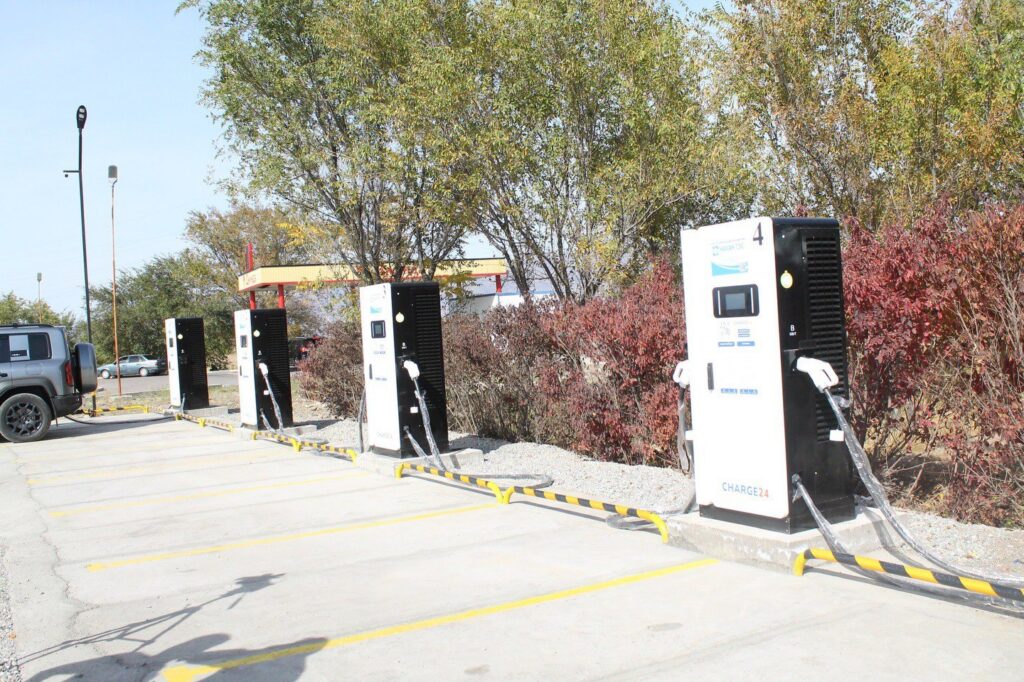
State-owned Chakan GES OJSC will install 10 electric vehicle (EV) charging stations across the Issyk-Kul region, Kyrgyzstan’s primary tourist destination, and home to Lake Issyk-Kul and the country’s largest mountain ski resort in Karakol.

The initiative is being implemented with support from the Ministry of Energy as part of ongoing efforts to promote environmentally friendly transportation and enhance tourism and transport infrastructure in the region.

The new stations will be located in Karakol, the administrative center of the Issyk-Kul region (2 stations); Cholpon-Ata, the main resort hub (2); Balykchy (2); and the villages of Bokonbaevo (1), Kyzyl-Suu (1), and Tyup (2). All are scheduled to begin operations later this year.

The number of electric vehicles in Kyrgyzstan is steadily rising. According to First Deputy Prime Minister Daniyar Amangeldiev, more than 200 EVs are imported into the country daily under a VAT exemption scheme.

As a member of the Eurasian Economic Union (EAEU), Kyrgyzstan has an annual quota allowing for the duty-free import of up to 15,000 electric vehicles.

Despite this growth, EVs still make up a small share of the national vehicle fleet. According to Minister of Natural Resources, Ecology, and Technical Supervision Meder Mashiev, Kyrgyzstan had over 1.9 million registered vehicles as of early 2026, a 13% increase from 2024. Of these, 972,000 run on gasoline, 339,000 on diesel, 56,900 on gas, and 37,000 are hybrids. Electric vehicles account for just 0.8% of the total, or approximately 15,200 units.

The government is also advancing plans to localize EV assembly as part of its broader strategy to expand eco-friendly transport options and combat air pollution, particularly in cities like Bishkek.

In June 2025, the Ministry of Economy and Commerce signed a memorandum of understanding with South Korean firms EVSIS, NGS, and the Korea Automobile Environment Association. The agreement focuses on developing EV charging infrastructure in Bishkek.

As The Times of Central Asia previously reported, South Korean partners also intend to launch production of EV charging stations in Kyrgyzstan, aiming to establish local manufacturing and create a nationwide charging network across major cities and regions.

Opinion: Afghanistan and Central Asia – Security Without Illusions

Over the past year, Afghanistan has become neither markedly more stable nor dramatically more dangerous, despite how it is often portrayed in public discourse. There has been neither the collapse that many feared, nor the breakthrough that some had hoped for. Instead, a relatively unchanged but fragile status quo has persisted, one that Central Asian countries confront daily.

For the C5 countries, Afghanistan is increasingly less a topic of speculative discussion and more a persistent factor in their immediate reality. It is no longer just an object of foreign policy, but a constant variable impacting security, trade, humanitarian issues, and regional stability. As such, many of last year’s forecasts have become outdated, based as they were on assumptions of dramatic change, whereas the reality has proven far more inertial.

Illusion #1: Afghanistan Can Be Ignored

The belief that Afghanistan can be temporarily “put on the back burner” is rooted in the assumption that a lack of public dialogue or political statements equates to a lack of interaction. But the actions of Central Asian states show that ignoring Afghanistan is not a viable option, even when countries intentionally avoid politicizing relations.

Turkmenistan offers a clear example. Ashgabat has maintained stable trade, economic, and infrastructure ties with Afghanistan for years, all with minimal foreign policy rhetoric. Energy supplies, cross-border trade, and logistical cooperation have continued despite political and financial constraints, and regardless of international debates over the legitimacy of the Afghan authorities.

This quiet pragmatism stands in contrast to both isolationist strategies and symbolic or ideological engagement. Turkmenistan may avoid making public declarations about its relationship with Afghanistan, but it nonetheless maintains robust cooperation. This calculated calmness reduces risks without signaling disengagement.

Importantly, this approach does not eliminate structural asymmetries or deeper vulnerabilities. But it dispels the illusion that distancing reduces risk. On the contrary, sustained economic and logistical ties foster predictability, without which attempts to “ignore” a neighboring country become a form of strategic blindness.

In this sense, Turkmenistan’s experience affirms a broader regional truth: Afghanistan cannot be removed from Central Asia’s geopolitical equation by simply looking away. It must be engaged pragmatically or dealt with later, in potentially more destabilizing forms.

Illusion #2: Security Is Achieved Through Isolation

Closely related to the first is the illusion that security can be ensured by building walls. Security in Afghanistan, and in the broader Afghan-Pakistani zone, is often seen as an external issue, something that can be kept out by sealing borders or minimizing engagement. Yet in practice, security is determined less by geography and more by the nature of involvement.

This is reflected in the recent decision by Uzbekistan and Kazakhstan to participate in U.S. President Donald Trump’s “Board of Peace” initiative. While the initiative focuses on resolving crises outside Central Asia, both countries have framed their participation as essential to their own national and regional security interests.

As Abdulaziz Kamilov, advisor to the President of Uzbekistan, explained, Tashkent’s involvement stems from three factors: its own security needs, its foreign policy principles, and the recognition that the Middle East remains a region of vital interest to Uzbekistan.

Uzbekistan’s past experience supports this logic. During periods of conflict in the Middle East, Uzbeks and other Central Asians were drawn into international terrorist networks, posing significant security threats upon their return.

The interconnection between Afghanistan, the Middle East, and Central Asia is clear. According to the Uzbek authorities, terrorist organizations entered Afghanistan from elsewhere, primarily conflict zones in the Middle East. Given this framing, Uzbek officials have argued that Afghanistan often functions as a transit environment rather than the source of extremist threats.

Kazakhstan’s recent move to join the Abraham Accords, a diplomatic framework aimed at reducing tensions in the Middle East, is similarly revealing. Though at first glance the decision may appear to lie outside Central Asia’s immediate interests, it reflects an understanding that regional instability is contagious.

In an era when radical ideologies and transnational threats ignore borders, participation in conflict-mitigation mechanisms, even those based outside the region, is no longer symbolic. It is a form of pre-emptive security.

Security today is less about hard boundaries and more about proactive engagement. In this light, efforts to isolate are not only ineffective but they may also prove counterproductive, depriving states of influence in regions where risk is incubated.

Illusion #3: Recognition Equals Control

Another persistent illusion is that formal recognition of Afghanistan’s government confers control or influence, while its absence renders engagement difficult or illegitimate. But diplomatic practice paints a different picture.

As of February 2026, multiple foreign diplomatic missions are active in Afghanistan, including embassies from all Central Asian countries. Other nations with diplomatic representation include Russia, China, India, Iran, Pakistan, Turkey, the Gulf states, Japan, and the European Union.

Beyond Kabul, multiple provinces also host consulates. Mazar-i-Sharif hosts several regional consulates, including those of Russia and Turkmenistan, along with other neighboring states. Iran, Turkey, and Turkmenistan are present in Herat, and Pakistan maintains a consulate in Nangarhar.

This broad diplomatic presence is not merely symbolic.

These missions underscore a critical reality: formal recognition has not been a prerequisite for functional engagement. Instead, countries have pursued de facto diplomacy, addressing issues such as security, trade, logistics, humanitarian aid, and border management. This blurs the once-binary view of “recognition vs. isolation.”

In effect, the continued presence of Central Asian missions in Afghanistan suggests that pragmatic engagement now outweighs normative debates. Influence and risk management come through sustained presence and open channels, not formal status.

From Illusions to Realism

The common flaw in many approaches to Afghanistan is the tendency to treat it as a project, whether political, economic, or integrational. This perspective breeds unrealistic expectations and inevitable disappointment.

Afghanistan is not a project for Central Asia. It is a permanent geopolitical factor. It cannot be “switched off” from regional dynamics. The task for Central Asia is not to solve Afghanistan but to coexist with it, based on pragmatism, not illusion.


The views expressed in this article are those of the author and do not necessarily reflect the official policy or position of the publication, its affiliates, or any other organizations mentioned.