• KGS/USD = 0.01144 0%
  • KZT/USD = 0.00216 0%
  • TJS/USD = 0.10698 0%
  • UZS/USD = 0.00008 0%
  • TMT/USD = 0.28530 0%
  • KGS/USD = 0.01144 0%
  • KZT/USD = 0.00216 0%
  • TJS/USD = 0.10698 0%
  • UZS/USD = 0.00008 0%
  • TMT/USD = 0.28530 0%
  • KGS/USD = 0.01144 0%
  • KZT/USD = 0.00216 0%
  • TJS/USD = 0.10698 0%
  • UZS/USD = 0.00008 0%
  • TMT/USD = 0.28530 0%
  • KGS/USD = 0.01144 0%
  • KZT/USD = 0.00216 0%
  • TJS/USD = 0.10698 0%
  • UZS/USD = 0.00008 0%
  • TMT/USD = 0.28530 0%
  • KGS/USD = 0.01144 0%
  • KZT/USD = 0.00216 0%
  • TJS/USD = 0.10698 0%
  • UZS/USD = 0.00008 0%
  • TMT/USD = 0.28530 0%
  • KGS/USD = 0.01144 0%
  • KZT/USD = 0.00216 0%
  • TJS/USD = 0.10698 0%
  • UZS/USD = 0.00008 0%
  • TMT/USD = 0.28530 0%
  • KGS/USD = 0.01144 0%
  • KZT/USD = 0.00216 0%
  • TJS/USD = 0.10698 0%
  • UZS/USD = 0.00008 0%
  • TMT/USD = 0.28530 0%
  • KGS/USD = 0.01144 0%
  • KZT/USD = 0.00216 0%
  • TJS/USD = 0.10698 0%
  • UZS/USD = 0.00008 0%
  • TMT/USD = 0.28530 0%

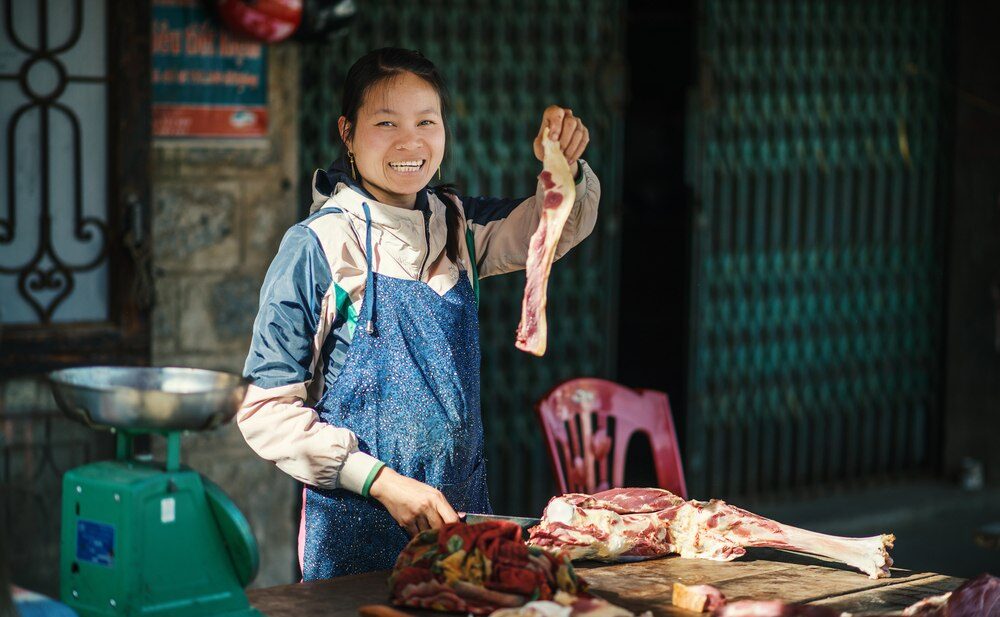
Meat Prices in Tajikistan Among Highest in Central Asia

Beef prices in Tajikistan remain among the highest in Central Asia, with average retail prices ranging from $10 to $11 per kilogram, higher than in neighboring Kyrgyzstan, Kazakhstan, and Turkmenistan.

By comparison, beef costs around $7.6 per kilogram in Kyrgyzstan, approximately $7-7.5 in Turkmenistan, and about $8.66 in Kazakhstan. Uzbekistan is at a similar level to Tajikistan, with prices averaging $10.85 per kilogram.

Globally, meat prices continue to rise. According to the Food and Agriculture Organization (FAO), prices increased by about 1% in March compared with February and were up 8% year-on-year.

Analysts say the increase is largely driven by rising pork prices, particularly in Europe, along with reduced meat production in Brazil. At the same time, lamb and poultry prices have edged down slightly. Experts warn that declining production in the United States and Brazil, combined with strong demand in Europe, could push beef prices even higher.

The highest beef prices globally are recorded in Switzerland, where they reach $45.72 per kilogram. Other high-cost markets include Norway ($32.67), Luxembourg ($27.09), South Korea ($25.23), and Singapore ($25.02). The lowest prices are found in Nigeria ($4.56), Pakistan ($4.70), Kenya ($5.17), India ($5.33), and Nepal ($5.40).

Among former Soviet countries, price differences are also significant, with the highest costs in the Baltic states. In Estonia, beef is priced at $20.48 per kilogram; in Latvia, $13.71; and in Lithuania, $12.43. Mid-range prices are seen in Armenia ($11.59), Russia ($10.80), Azerbaijan ($10.64), and Georgia ($9.91). Lower prices are found in Belarus ($9.25), Moldova ($8.59), and Ukraine ($7.22).

Despite high prices, domestic meat production in Tajikistan is increasing. According to official data, output of livestock and poultry (in live weight) reached 54,700 tons in January-March 2026, up 11.5% year-on-year.

However, prices remain elevated due to supply shortages. The country meets only about 58% of domestic demand, while imports account for just 4-6% of the market. Imported meat, particularly from Belarus and Kazakhstan, is cheaper and helps contain prices, but due to consumer preferences it is mainly used in the food service sector and does not replace locally produced meat.

Experts say the high cost of meat in Tajikistan is driven by structural factors, including underdeveloped livestock farming, feed shortages, and limited systemic support for farmers. Imports, they note, provide only temporary relief and do not address the underlying causes of high prices.

From Kazakhstan to International Ballet: Meirambek Nazargozhayev’s Rise

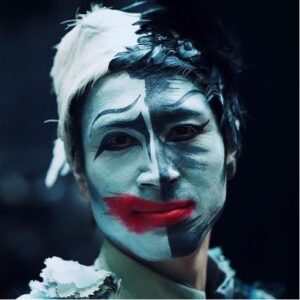
Meirambek Nazargozhayev’s journey is a remarkable story of talent, determination, and transformation. Hailing from the small village of Karaoy in Kazakhstan’s Almaty region, he grew up like many boys in the countryside, playing football and the dombra, with little connection to the world of classical ballet. Today, however, he is a principal soloist at the Royal Danish Theatre, one of Europe’s most prestigious cultural institutions.

Ballet was not part of Nazargozhayev’s childhood dreams. His path changed thanks to his aunt Farida, a choreographic instructor in Almaty, who noticed his potential early on and encouraged him to pursue dance. At the age of ten, he entered professional training, marking the beginning of an unexpected but extraordinary career.

Creativity had always been part of his life. He recalls being drawn to music and performance from an early age, playing instruments, exploring artistic interests, and taking part in local cultural activities. In 2006, he was admitted to a choreographic school in Almaty, where he trained intensively. Watching dancers glide and leap across the stage left a lasting impression, turning his initial curiosity into a deep passion for ballet.

From a personal photo archive

With consistent effort and discipline, Nazargozhayev soon began gaining international recognition and winning awards. His artistic path echoes the words of Rabindranath Tagore, who described art as an expression of the inner self.

While many of his classmates aimed to join local theaters in Astana or Almaty, Nazargozhayev aspired to build a career abroad. He first moved to Moscow, where he spent eight months working at a major theater, performing key roles and refining his skills. Eager to broaden his horizons, he then turned to Europe, known for its rich ballet traditions and high professional standards.

His European career began in Kiel, Germany, where his distinctive style and talent quickly earned him a contract. He flourished there, particularly in contemporary dance, a genre he continues to value deeply.

During his time in Germany, he heard a great deal about the Royal Danish Theatre, which soon became his ultimate goal. An offer from a major theater in Madrid followed, promising strong prospects. Shortly afterward, however, he received an invitation from the Royal Danish Theatre, the very stage he had long dreamed of joining.

From a personal photo archive

“I was in disbelief,” he admits. “I had applied, but I never imagined I would actually be accepted.”

After joining the company, Nazargozhayev made an immediate impact by performing a solo role in Jiří Kylián’s ballet 27’52”, an opportunity rarely given to new members. His performance captivated both audiences and colleagues, establishing him as a standout artist.

Over the past eight years, he has continued to grow professionally, appearing on major stages across Europe, China, North America, and at the Kremlin Palace. In recognition of his excellence and dedication, the Royal Danish Theatre granted him a lifelong soloist contract, an honor reserved for only the most distinguished performers.

He has also performed before the Danish royal family, marking a major achievement in his international career.

From a personal photo archive

Today, Nazargozhayev is a leading figure in ballet and a prominent cultural representative of Kazakhstan. His journey from a remote village to some of the world’s leading stages reflects what can be achieved through hard work, courage, and determination.

Victory, Memory, and Moscow: Central Asia’s Changing May Calendar

May is when Central Asia’s past crowds into the public square. Workers, soldiers, veterans, constitutions, unity campaigns, and the legacy of World War II all compete for space on the calendar. The dates are familiar across the region, but their meanings are no longer the same.

Kazakhstan marks People’s Unity Day on May 1, Defenders’ Day on May 7, and Victory Day on May 9. Kyrgyzstan has a May calendar built around Labor Day, Constitution Day, and Victory Day. Uzbekistan has recast May 9 as the Day of Remembrance and Honor. Turkmenistan lists May 9 as Victory Day of the 1941-1945 Great Patriotic War, but it no longer carries the same public weight as the country’s main state holidays.

Those choices show how each state is handling its Soviet past. May 1 can mean labor, unity, or almost nothing. May 9 can mean victory, mourning, family memory, or careful diplomacy. In Central Asia, the politics of memory rarely move through open rejection. It works through renaming, recalibrating, and changing the optics.

Russia still treats May 9 as a central ritual of state power. Victory Day marks the Soviet defeat of Nazi Germany in what Russia calls the Great Patriotic War. Under Vladimir Putin, it has become a display of military strength, national sacrifice, and confrontation with the West. Since Russia’s full-scale invasion of Ukraine in 2022, that message has become more direct.

This year, the image projected from Moscow will be weaker. Russia is preparing to hold its May 9 parade on Red Square without the usual display of military hardware. Tanks and missile systems, long central to the spectacle, are being kept away. Russia’s Defense Ministry cited the “current operational situation,” while the Kremlin linked the change to Ukrainian attacks.

For Central Asian governments, that image will be hard to separate from their own handling of Victory Day. Moscow has long used May 9 to gather friendly leaders and place the post-Soviet region inside a shared wartime story. Attendance in Moscow has become a diplomatic signal. Absence has become one too. In recent years, Victory Day diplomacy has shown how Central Asian governments try to respect wartime memory while avoiding full alignment with Russia’s narrative. This year, at least some Central Asian leaders are again expected in Moscow. Kazakhstan’s Kassym-Jomart Tokayev and Kyrgyzstan’s Sadyr Japarov have been reported among those planning to attend, though the Kremlin has not yet published a full list of foreign guests.

Central Asian states cannot simply discard May 9. Millions of people from the region served in the Red Army or worked behind the front during World War II; from Kazakhstan alone, around one million people contributed to the war effort, with nearly 271,000 soldiers still listed as missing. Families still carry those memories. Monuments, veterans’ payments, school events, and wreath-laying ceremonies remain important. For many people, Victory Day is personal before it is geopolitical.

Yet governments have changed the tone. Kazakhstan still marks Victory Day as a public holiday, but large military parades are not at the center of the commemoration. The state tends to favor ceremonies, concerts, veterans’ support, and local memorial events. This leaves space for remembrance without copying Moscow’s militarized script. In Central Asia, Victory Day has often come without much pomp, but with plenty of feeling.

Kazakhstan’s May sequence makes that layering unusually clear. May 1 is People’s Unity Day, tied to the country’s multiethnic identity and the state’s long-running focus on interethnic harmony. May 7 marks Defenders’ Day, linked to the creation of Kazakhstan’s own armed forces after independence. May 9 follows two days later. The order places Soviet victory memory alongside two post-Soviet themes: unity at home and national defense under Kazakhstan’s flag.

Kyrgyzstan keeps May more Soviet-shaped. May 1 remains Labor Day; May 5 is Constitution Day; May 9 is Victory Day. Together, they give the month a strong public rhythm, with work calendars often adjusted around weekends and transferred days off.

Uzbekistan has taken a different path. May 9 is not officially called Victory Day. It is the Day of Remembrance and Honor. The change is subtle, but important. It keeps wartime memory, but moves the focus from military triumph toward mourning and national dignity. In 2026, President Shavkat Mirziyoyev reviewed preparations for the holiday, including military training, support for service members, and events connected to memory and honor. The language lets Uzbekistan remember the dead without placing Moscow at the center of the story.

Tajikistan also retains Labor Day and Victory Day. That continuity reflects close security, migration, and economic ties with Russia. It also reflects Tajikistan’s own wartime losses. But Tajikistan’s calendar also has a separate post-Soviet track. National Unity Day, marked in June, commemorates the end of the country’s civil war. That gives the state two different kinds of remembrance, one Soviet and regional, the other domestic.

Unsurprisingly, Turkmenistan offers a more controlled version. Victory Day remains on the official list of holidays and memorable dates, but it sits inside a calendar dominated by neutrality, independence, the Turkmen horse, carpets, and the poetry of Magtymguly. The Soviet frame survives, but is absorbed into a wider national story.

Across the region, the pattern is not erasure; it is selective preservation. Central Asian states still honor veterans, maintain monuments, and teach World War II as a defining event, but they also rename and soften Soviet holidays. They move the emphasis from Moscow to national capitals, from military victory to remembrance, from class struggle to unity, and from Soviet identity to state sovereignty.

That makes May one of the most revealing months in the regional calendar. The same week can celebrate workers, the constitution, armed forces, unity, sacrifice, and victory. Each country chooses a different mix, and none of those choices is accidental. They say something about relations with Russia, views of Soviet history, and each state’s need to build legitimacy at home.

This year, Russia’s scaled-down parade sharpens the contrast. For years, Victory Day projected strength; in 2026, the absence of tanks and missile systems will project caution. Moscow still presents the Soviet victory as a central part of Russian state identity, but Central Asian governments increasingly frame May 9 through their own national calendars.

The dates are old. Their meanings keep changing.

INMerge Tashkent Showcases Rise of Uzbekistan as Regional Innovation Hub

On April 30, investors, founders and corporate leaders gathered in Uzbekistan’s capital, Tashkent, for the latest incarnation of the INMerge Innovation Summit. The traveling series followed an earlier session in Istanbul and will lead into the main summit scheduled for October 8-9 in Baku.

In Tashkent, discussions centered on a question that continues to define Uzbekistan’s digital trajectory: how to turn rapid growth into a sustainable, interconnected ecosystem capable of competing beyond national borders.

Two core discussions framed the agenda. The first focused on how companies are building digital ecosystems around everyday user needs. The second addressed a more structural issue: whether capital alone is enough to build what some participants called a “Digital Silk Road,” or whether deeper foundations are required.

A Rising Regional Star

The series of summits has been organized by PASHA Holding, an Azerbaijani conglomerate owned by the ruling Aliyev and Pashayev families.

For Tughra Musayeva, Head of Innovations at PASHA Financial Holding and Managing Partner at INMerge Ventures, Uzbekistan stands out as a “rising star of the region”.

“It’s rich in human talent and capital, and increased political support for innovation and tech infrastructure is already showing results,” she told The Times of Central Asia on the sidelines of the event. “In the coming years, we’re going to see many interesting startups and projects emerging from Uzbekistan.”

Musayeva challenged a common assumption about emerging tech markets – that they remain dependent on foreign expertise. In her view, Tashkent already has most of the elements needed to sustain growth internally.

“What we see right now is a very self-sufficient platform. There is infrastructure and the right actors are in place. The next step is about scaling, especially across borders,” she said, pointing to her ambition to increase cross-border collaboration between Central Asia and the Caucasus.

A similar emphasis on connectivity came from her colleague Ulviyya Mehraliyeva, innovation events manager at PASHA Financial Holding and a member of the INMerge team. For her, the Tashkent gathering was part of a broader effort to link ecosystems that often develop in isolation.

“What differentiates us is our focus on connecting ideas, people, ecosystems, and talent with opportunities,” she told TCA. “We believe Tashkent has huge potential. There has been significant investment and development in the startup ecosystem.”

To her, the city is already emerging as a regional hub, but she cautioned that Uzbekistan still has a lot to learn from outside.

“It’s both building your own ecosystem while also learning from others. This is a stage of development. Every region goes through it,” she said. “We believe that collaboration between countries like Azerbaijan and Uzbekistan will only strengthen that.”
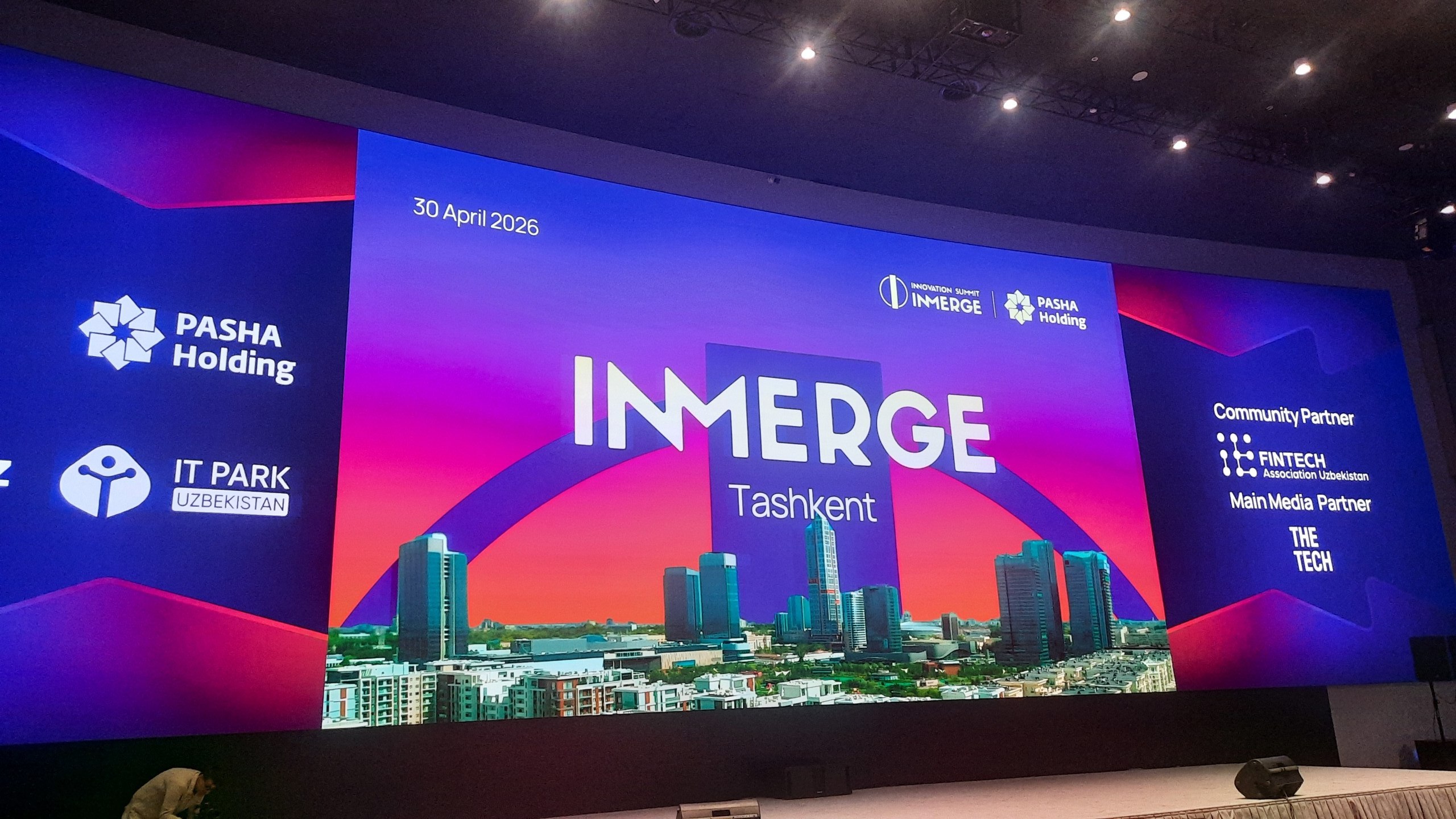
Image: TCA

The View from the Ground

Practitioners working within Uzbekistan’s tech sector were more circumspect.

Dalerkhon Nodirov, CEO of IT Park Ventures, offered a more measured view of the country’s technological independence, particularly in the field of artificial intelligence.

“We don’t yet have our own AI models,” he said. “At this stage, we still depend on international players.”

Nevertheless, he noted the ongoing efforts to address this by building local capacity, including the development of datasets that could eventually support homegrown systems.

“We are working on it,” he said. “Later, we may develop our own models and systems. But for now, this is part of the process.”

Uzbekistan’s Unicorn Success Story

That tension between global integration and local development also surfaced during a panel discussion on building “everyday ecosystems,” where companies discussed how they are reshaping consumer behavior.

Kevin Khanda, Chief Product and Technology Officer at Uzum, Uzbekistan’s first tech unicorn, described the company’s experience in shifting Uzbek consumers from traditional, offline shopping habits to digital platforms.

“Our main challenge was understanding how to build trust and maintain it,” he explained. “Without trust, there is no e-commerce.”

Before Uzum entered the market, online retail in Uzbekistan faced serious credibility issues. Delivery reliability was inconsistent, and customers often received items that did not match what they had ordered.

“The service level was around 35% to 40%,” Khanda said. “That means there was a very high chance you would not receive what you expected.”

For Uzum, solving that problem required heavy investment in physical infrastructure, including warehouses that allowed it to control inventory directly.

“All the goods you see on the platform are actually in our warehouses,” he said. “We know exactly what is in stock.”

This approach was complemented by a network of delivery points, introducing an offline element into the online shopping experience. Customers can pick up orders, try items, and return them if necessary.

According to Khanda, Uzum now has more than 1,800 delivery points across Uzbekistan, and the network is expected to grow further.

“Four years ago, if a family in Nukus wanted to buy a television, they might have had to travel to Tashkent and spend two days on the trip,” he said. “Now, they can order it and receive it the next day.”
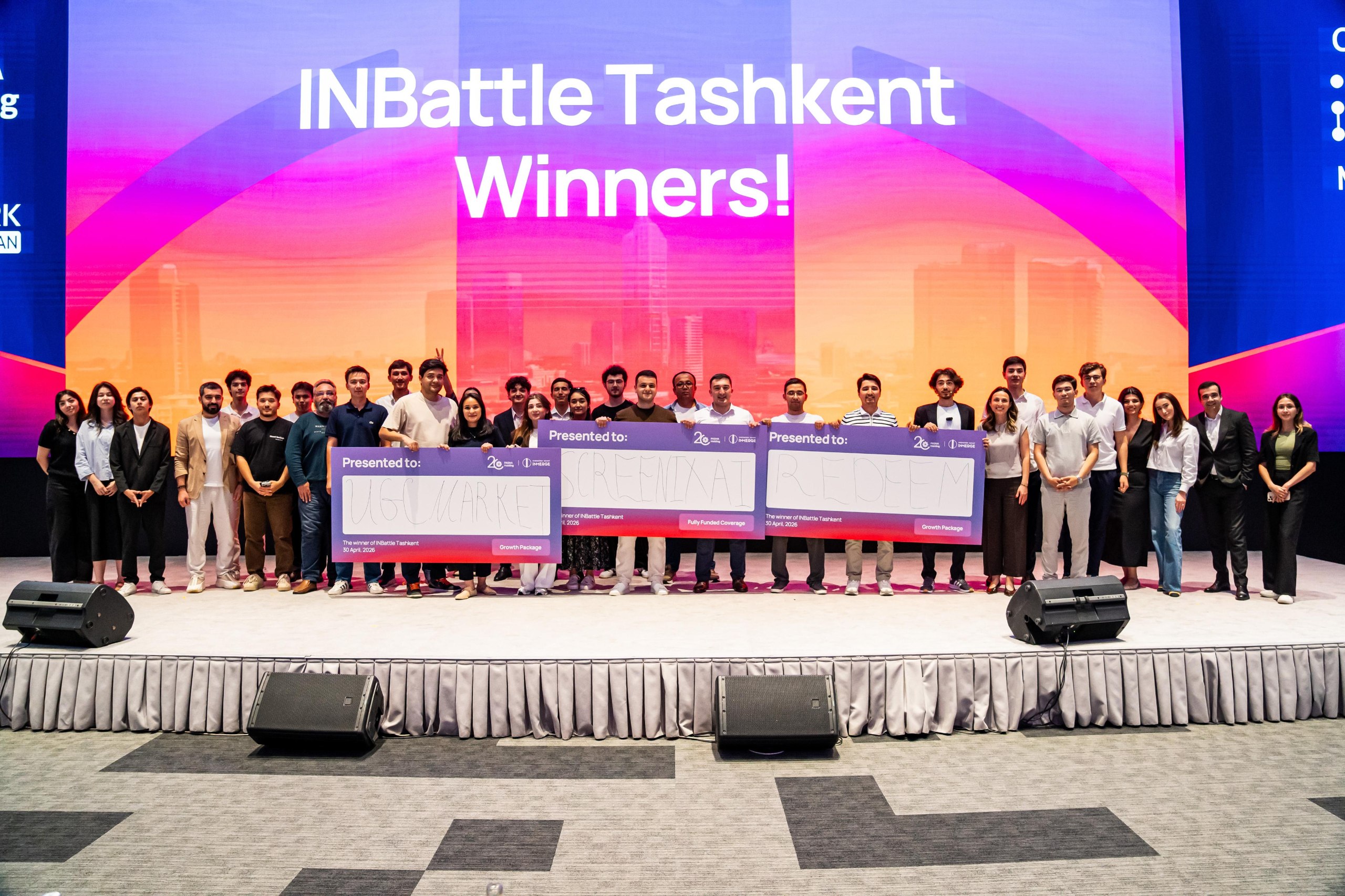
Image: TCA

Trust extends beyond logistics. In fintech, the stakes are even higher, as users must feel confident that their money is secure.

To address this, Uzum introduced incentives designed to encourage digital payments, including discounts for customers using its financial services.

“Last year, we subsidized more than $15 million in discounts,” he said. “This is also part of building trust, giving people a reason to use the system.”

Challenges Beyond Investment

The discussion highlighted how infrastructure, user experience, and financial incentives intersect in shaping digital ecosystems. It also underscored a broader point raised throughout the summit: technology alone is not enough.

That theme was central to the second panel, which examined whether capital alone can drive the creation of a regional digital economy.

“Capital is important, but it is not everything,” said Musayeva during the discussion. “You need the right environment, the right policies, and the right connections between markets.”

The idea of a “Digital Silk Road”, a network of interconnected tech ecosystems stretching across Central Asia and beyond, remains an aspiration. But events like INMerge suggest that the building blocks are beginning to take shape.

New Talent

The Tashkent roadshow concluded with a startup pitch competition, where selected teams presented their ideas to a panel of regional investors.

Fariza Islamova, a manager in the startup ecosystem development department at IT Park, said the competition attracted strong interest from local entrepreneurs.

“We received around 120 applications, and selected 10 startups to participate,” she told The Times of Central Asia.

Of these 10, three were chosen to advance to the final round of the competition in Baku later this year, earning themselves a shot at the top prize of $50,000.

Screenix AI, which took first place, will receive a fully funded participation package. Two other startups, UGC Market Uzbekistan and Redeem, were awarded partial support.

Opinion: Uzbekistan’s Growth Story Has a Skills Problem

Uzbekistan has become one of Central Asia’s strongest growth stories. GDP expanded by 6.5% in 2024, and the Asian Development Bank projects growth of 6.7% in 2026 and 6.8% in 2027. Industry, services, and foreign investment are all expanding. The World Bank says real GDP growth averaged around 6% a year between 2017 and 2025.

Beneath that momentum, however, a quieter problem is taking shape. Uzbekistan may not yet be training enough workers for the economy it is trying to build. The issue is not a shortage of capital; it is a shortage of market-ready skills.

The country has moved from an isolated, heavily state-controlled economy toward a more open and reform-driven model in less than a decade. But if education, vocational training, and private-sector demand do not align faster, Uzbekistan risks turning one of the region’s strongest demographic advantages into a labor-market strain.

A Dividend That Could Become a Deficit

Uzbekistan is a young country in every sense. About 700,000 young people enter the job market each year, while the working-age population is expected to keep expanding for decades. In development economics, this kind of demographic concentration is often described as a dividend: a period when a large share of the population is of working age, productive, and capable of driving growth.

The risk is that the dividend does not materialize automatically. It depends on whether young people can move into productive, formal, and better-paid work. If the workforce entering the economy is not equipped with the skills employers need, the same demographic pressure can feed into informality, underemployment, migration, and social strain.

The official unemployment rate fell to 4.9% in the third quarter of 2025. That is a meaningful improvement. But around 760,000 people remained registered as job seekers, and the International Labour Organization has estimated informal employment at about 40% of the workforce. Remittances also remain a structural pillar of household income: according to Central Bank data cited by local media, inflows reached $18.9 billion in 2025, up from $14.8 billion in 2024.

This is not the picture of a country that has already solved its human-capital challenge. It is the picture of a country racing against time.

The Mismatch at the Heart of the Problem

The core challenge is not a shortage of graduates. Higher education has expanded dramatically. According to Uzbekistan’s National Statistics Committee, coverage among 18- to 23-year-olds reached 47.7% at the start of the 2024/2025 academic year, up from 8.3% in 2017. The number of higher education institutions has also grown rapidly.

By conventional access metrics, this is an extraordinary achievement. But enrollment alone is not the measure that matters. Employers need workers who can solve practical problems, operate modern equipment, manage digital systems, and adapt quickly to changing production and service needs.

Too many students are still moving through programs shaped by an older economic model: credential-heavy, theoretically oriented, and weakly connected to the needs of a modern labor market in IT, manufacturing, logistics, energy, tourism, and services.

The student-financing system has also reinforced the mismatch. The World Bank has noted that the existing system has not been sufficiently aligned with labor-market needs, including high-demand fields such as STEM and information and communications technology. Women make up a large share of students and education-loan beneficiaries, but they remain underrepresented in STEM fields where demand and wages are often stronger.

The result is a paradox: Uzbekistan is investing heavily in education, but its training pipeline is not yet producing enough of the skills its economy most urgently needs.

What Is Being Done, and Where the Gaps Remain

To its credit, the Uzbek government has recognized the problem and is moving on several fronts.

Vocational and technical education is being pushed closer to the center of national development policy. President Shavkat Mirziyoyev has declared 2026 the year of training young people in modern professions. The same official account says an Agency for Vocational Education is being created to introduce a new educational environment and international standards across 598 technical colleges.

The reform agenda also includes cooperation between 100 technical colleges and educational organizations in Germany, Switzerland, China, South Korea, and the United Kingdom. International BTEC programs have been launched in 14 technical colleges covering areas such as tourism, IT, medicine, construction, logistics, energy, mechanical engineering, biotechnology, and the creative economy.

The October 2025 presidential resolution PQ-316 points in the same direction. It sets out reforms to the vocational education system, including closer employer involvement, stronger regional coordination, and a greater focus on employment outcomes. Its hub-and-spoke logic is practical: not every institution can be equipped with expensive modern laboratories and expert trainers, so regional centers can concentrate high-cost resources and serve surrounding colleges.

A major external commitment followed in December 2025, when the World Bank approved a $250 million loan under the EduImkon Program. The program is intended to expand access to student financing for an estimated 600,000 young people over three years, with around 80% of funds directed toward low-income students and women. Crucially, it is also designed to make student financing more relevant to labor-market demand.

School-level reform is also part of the same picture. Unified state exams for 9th and 11th graders are due to be introduced from the 2026/2027 academic year, with results guiding students toward vocational or higher education pathways. This could create a more coherent pipeline from school to work if implementation is transparent and if vocational routes gain real status among families and employers.

These are genuine achievements. They show a government that is listening to its labor market and trying to adapt its institutions. But the gap between policy ambition and implementation on the ground remains significant.

What Still Needs to Happen

First, curriculum reform must accelerate. Technical schools need enough freedom to respond to local labor demand, not only to centrally defined programs. In a fast-moving economy, demand for skills in ICT, green energy, advanced manufacturing, logistics, and business services can shift faster than any centralized planning mechanism can track. Institutions need room to adjust courses in near-real time with employers.

Second, the gender dimension needs targeted attention. Legal reforms and financing support help, but they will not be enough by themselves. If girls are steered away from technical fields from an early age, the country loses talent before students even reach university or technical college. Uzbekistan needs scholarships, role models, school-level career guidance, and employer partnerships that make technical careers visible and credible for young women.

Third, Uzbekistan must build stronger institutional bridges between education and the private sector. The World Bank Country Economic Memorandum noted that growth between 2017 and 2022 did not generate the desired level of employment, although job creation accelerated in 2023 and 2024. That finding points to a deeper structural problem: investment does not automatically become productive employment.

State-owned enterprises still play a large role in key sectors. That can slow the feedback loop between firms, training institutions, and workers. Private companies are often quicker to define new skill needs, test new training models, and reward practical competence. Deeper market liberalization and stronger employer engagement in curriculum design are therefore not peripheral issues. They are central to whether education reform produces jobs at scale.

The Stakes Are High, and the Window Is Narrow

Uzbekistan has something many countries would envy: youth, time, and economic momentum. The reform trajectory under Mirziyoyev is real. International institutions, including the World Bank, ADB, UNESCO, and the ILO, are engaged and aligned around human capital, skills, and job creation.

But demographic windows do not stay open indefinitely. Young people entering the labor market now will not wait for institutions to catch up. They will look for informal work, migrate, or remain underemployed if formal jobs and useful skills do not meet at the right speed.

Uzbekistan’s economic future will not be decided by its gold reserves, its cotton fields, or even its trade corridors, vital as these are. It will be decided by whether the country can build an education and training system that gives young people the practical, market-relevant skills to power a modern economy.

The issue is no longer whether Uzbekistan understands the problem. It is whether schools, employers, and the state can close the gap before today’s demographic advantage becomes tomorrow’s labor-market pressure.


The views expressed in this article are those of the author and do not necessarily reflect the official policy or position of the publication, its affiliates, or any other organizations mentioned.

EBRD Invests $125 Million in Kazakhstan Railway Operator Eurobond

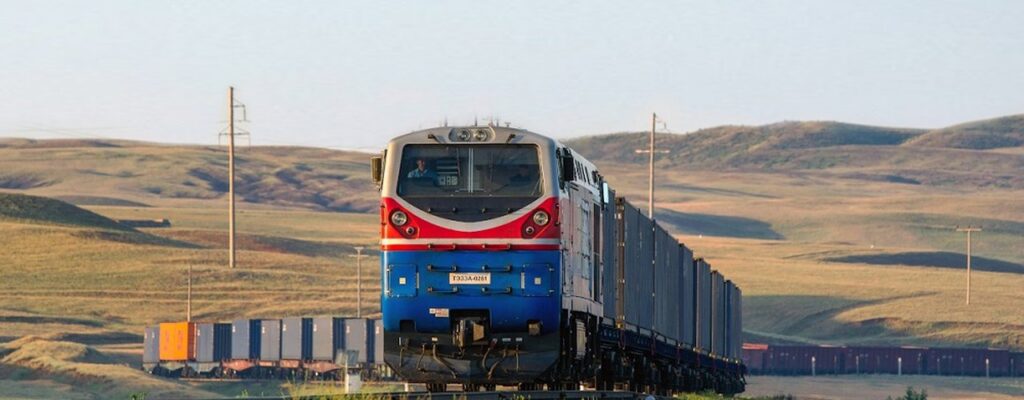
The European Bank for Reconstruction and Development is investing up to $125 million in a Eurobond issue by Kazakhstan’s national railway operator, Kazakhstan Temir Zholy (KTZ). The bond, with a total value of up to $1 billion, was listed on the London Stock Exchange, Kazakhstan Stock Exchange, and Astana International Exchange.

The EBRD’s investment will help modernize passenger stations across Kazakhstan, supporting improvements in safety and operational performance. The upgraded stations are expected to offer higher throughput capacity, modern lighting, and significant enhancements for passengers with disabilities.

According to the Kazakh Ministry of Transport, a large-scale reconstruction and modernization program covering 124 railway stations nationwide began in 2025. The initiative aims to improve convenience and accessibility for all passengers, including those with disabilities, and to bring Kazakhstan’s railway infrastructure in line with international quality and safety standards.

Additional infrastructure upgrades financed by the bond will take place along the Trans-Caspian Corridor and are expected to support more sustainable rail transportation between Europe and Asia.

The EBRD will also mobilize technical cooperation funds to help KTZ adopt international standards in passenger rail services, including measures to strengthen cybersecurity.

KTZ owns and operates a 16,400-kilometer railway network and manages more than 1,700 locomotives, 46,800 freight cars, and 2,300 passenger cars.

In the first quarter of 2026, KTZ transported approximately 3.2 million passengers.

KTZ also transported 64.5 million tons of cargo in the first quarter of 2026, an increase of 360,000 tons compared to the same period last year. Domestic shipments accounted for 40.8 million tons, while exports totaled 23.7 million tons, up 2.2%.