• KGS/USD = 0.01144 0%
  • KZT/USD = 0.00196 -0%
  • TJS/USD = 0.10899 0%
  • UZS/USD = 0.00008 0%
  • TMT/USD = 0.28490 0%
  • KGS/USD = 0.01144 0%
  • KZT/USD = 0.00196 -0%
  • TJS/USD = 0.10899 0%
  • UZS/USD = 0.00008 0%
  • TMT/USD = 0.28490 0%
  • KGS/USD = 0.01144 0%
  • KZT/USD = 0.00196 -0%
  • TJS/USD = 0.10899 0%
  • UZS/USD = 0.00008 0%
  • TMT/USD = 0.28490 0%
  • KGS/USD = 0.01144 0%
  • KZT/USD = 0.00196 -0%
  • TJS/USD = 0.10899 0%
  • UZS/USD = 0.00008 0%
  • TMT/USD = 0.28490 0%
  • KGS/USD = 0.01144 0%
  • KZT/USD = 0.00196 -0%
  • TJS/USD = 0.10899 0%
  • UZS/USD = 0.00008 0%
  • TMT/USD = 0.28490 0%
  • KGS/USD = 0.01144 0%
  • KZT/USD = 0.00196 -0%
  • TJS/USD = 0.10899 0%
  • UZS/USD = 0.00008 0%
  • TMT/USD = 0.28490 0%
  • KGS/USD = 0.01144 0%
  • KZT/USD = 0.00196 -0%
  • TJS/USD = 0.10899 0%
  • UZS/USD = 0.00008 0%
  • TMT/USD = 0.28490 0%
  • KGS/USD = 0.01144 0%
  • KZT/USD = 0.00196 -0%
  • TJS/USD = 0.10899 0%
  • UZS/USD = 0.00008 0%
  • TMT/USD = 0.28490 0%
08 December 2025

Where Wings Grow: New Show at Aspan Gallery, Almaty

Let’s move Aspan Gallery from name to place, from reputation to reality. As one of the Kazakh galleries most visible on the fair circuit, known for its impeccable presentations and strong roster of Central Asian artists, visiting its headquarters in Almaty felt almost inevitable.

It didn’t disappoint. Tucked into the underground floor of a shopping complex in a leafy area of Almaty, where you might catch a glimpse of a stylish passerby balancing a matcha cup before descending the stairs, the gallery unfolds as a quiet enclave.

There, Where Wings Grow opens as a multifaceted meditation on the cycles of nature, and particularly on the steppe, explored by several Central Asian artists through ecological, historical, and mythic lenses. What emerges is not a nostalgic portrait of a nomadic past but a layered reflection on resilience and renewal.

At the center of the curatorial vision is Alan Medoev, the archaeologist whose 1960s expeditions uncovered hundreds of sites across the Kazakh steppe. His discoveries challenged Soviet portrayals of the region as an empty expanse and instead presented it as a cradle of memory. The exhibition extends that lineage, tracing how the steppe continues to act as an archive where cultural, personal, and ecological time intersect.

The installation is clean and deliberate: suspended collages, unframed paintings, and subtle shifts in light. Walking through, one feels the exhibition itself has been conceived as a kind of landscape.
Where Wings Grow, installation view; image: Theo Frost

The Interplay Between Distance and Proximity

This quality resonated strongly when encountering the works. At a distance, some pieces seemed almost naïve or casual in their painterly surfaces, but up close, their textures, materials, and embedded details revealed far more intricate worlds.

This is true of Saule Suleimenova’s Plasticographies (two works titled Zhana Omir – New Life and Steppe Romanticism). From afar, they appear to be simple, even sentimental landscapes. Up close, however, they are revealed as collages of discarded plastic: fragments of packaging, commercial logos, counterfeit brands, and old ID cards.

Suleimenova, who grew up in Almaty and trained as an architect before turning to socially engaged art, calls plastic “a treasure” and uses it to question both waste and memory. Within these luminous surfaces are startling details such as embryonic forms and small figures hidden in the texture. These unsettling images evoke new generations coming into a world shaped by waste, suggesting both renewal and ecological crisis.

Steppe Romanticism distills the landscape into minimal horizons and contemplative silence. Yet knowing it is made of plastic prevents forgetting the contradiction, serenity marked by civilization’s residue. It recalls how landscapes themselves operate, inviting from afar but, up close, layered with scars, residues, and histories.
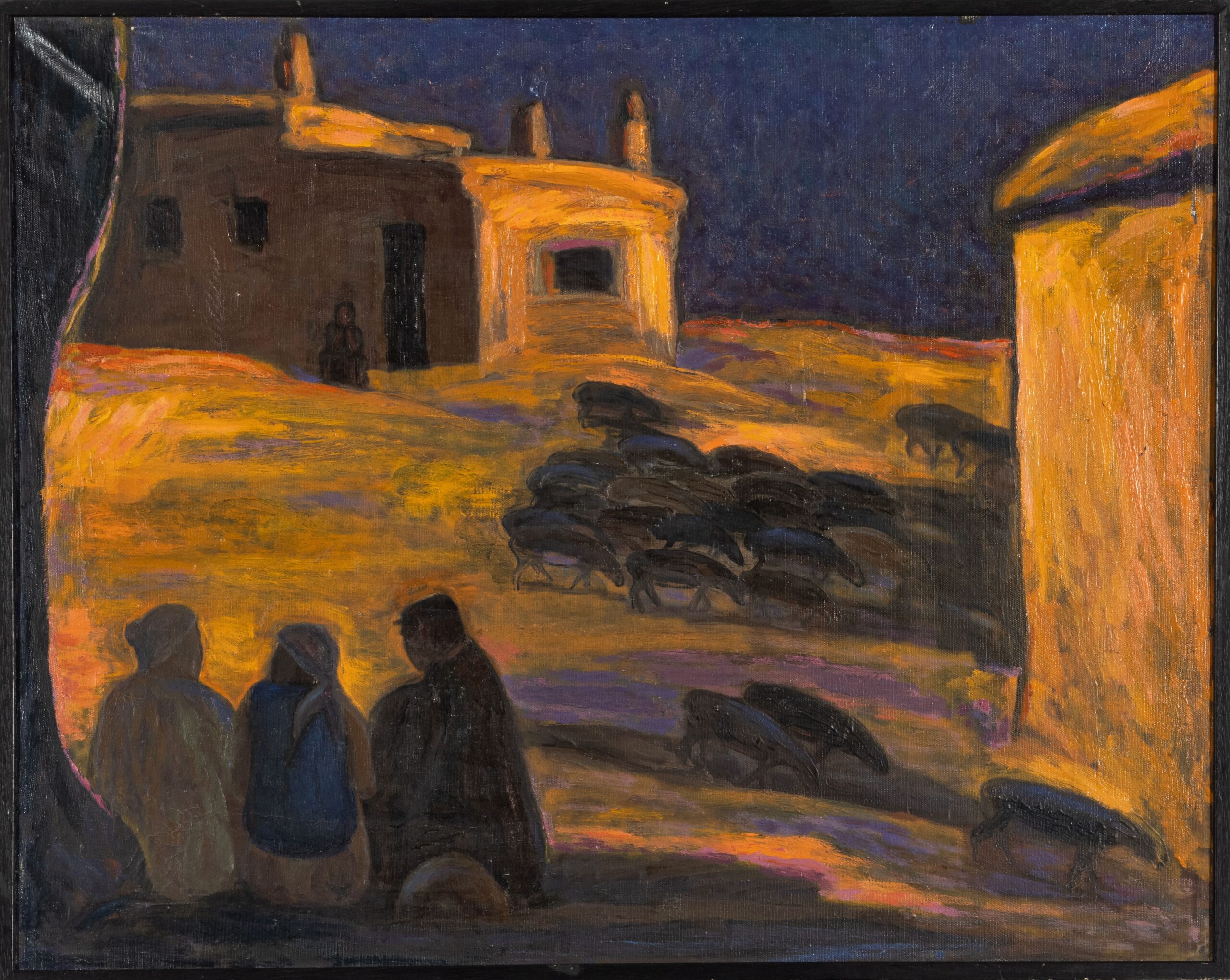
Moldakul Narymbetov, “Untitled”; image: Aspan Gallery.

In a similar spirit, Moldakul Narymbetov’s paintings establish the exhibition’s tone. A founding member of the radical Kyzyl Tractor collective and one of the central figures in Kazakh contemporary art, Narymbetov (1948–2012) was known for fusing folklore, shamanic motifs, and gestural abstraction.

His brushstrokes, dense with fiery movement, make the earth appear both dying and alive. Köktem (Spring) celebrates rebirth through rough, instinctive brushwork that still feels deliberate. Another canvas, Untitled, with its violet and yellow hues, recalls Munch’s haunted skies, yet the subject is a quiet pasture, a landscape impossible to fully grasp. His work, born of the post-Soviet rediscovery of national identity, captures the vitality and volatility of a culture relearning to speak through color.

Resilience in the Face of Adversity

One of the most striking works on view is Ulan Djaparov’s three-minute video Zvezdopad (Falling Stars), created during the Lazy Art Residency. Djaparov, trained as an architect in Bishkek and long active as an artist, curator, and teacher, has always blurred the line between activism and poetics. The video shows children pulling adults into the water, an absurd yet graceful act that alludes to youth movements toppling monuments and to creativity born from collective courage. It is a quiet allegory of change, both generational and moral.

The theme of resilience continues in Bakhyt Bubikanova’s Qanat painting series. Bubikanova (1985–2023), a student of Narymbetov and a rising figure of Kazakhstan’s second avant-garde wave, worked across video, performance, and painting, exploring the paradoxes of modern life. In this series, landscapes are rendered inaccessible by a red fence, a blunt and urgent motif that slices across horizons. The works feel both political and deeply personal, a confrontation between nature and the grids of control. Their quiet unease resonates even more when one recalls that Bubikanova often addressed industrial expansion and environmental degradation.

The photographs by Rustam Khalfin, In Honor of the Rider (created with Zhanat Baimukhametov and Georgy Tryakin-Bukharov), provide one of the exhibition’s most memorable moments. Khalfin (1949–2008), often described as the father of Kazakh contemporary art, was trained in architecture in Moscow before returning to Almaty to teach and experiment with performance, video, and installation. In this piece, a nude man coated in clay sits astride a horse, his body merging with earth and animal. Behind him, a faint rural structure anchors the mythic scene in lived reality. Khalfin’s work, rooted in his lifelong interest in nomadic ontology, visualizes the interdependence of human, animal, and soil. The clay on the rider’s body feels less like a costume than a memory: human flesh as the earth’s own matter.

Askhat Akhmedyarov, “Nomad 4”; image: Aspan Gallery.

That theme of nomadism re-emerges in Askhat Akhmedyarov’s Nomad 4, one of the exhibition’s most urgent interventions. Akhmedyarov, born in western Kazakhstan in 1965 and associated with the Transavantgarde generation, often fuses surrealist imagery with social critique. Here, the traditional nomad is recast as a “new nomad,” displaced not by choice but by circumstance, hanging a painting of a landscape in the open landscape itself.

The work recalls recent evictions in Astana, where urban renewal has meant the demolition of old wooden districts and the relocation of thousands of residents. Many families have spoken publicly about being pressured to leave with inadequate compensation as their homes made way for redevelopment. In this light, Nomad 4 becomes a mirror of forced migration, an image of mobility as injustice. Akhmedyarov’s use of the nomad figure, once a symbol of freedom, now reveals the precarity behind the city’s polished surfaces.

Saodat Ismailova, “Arslanbob”; image: Aspan Gallery.

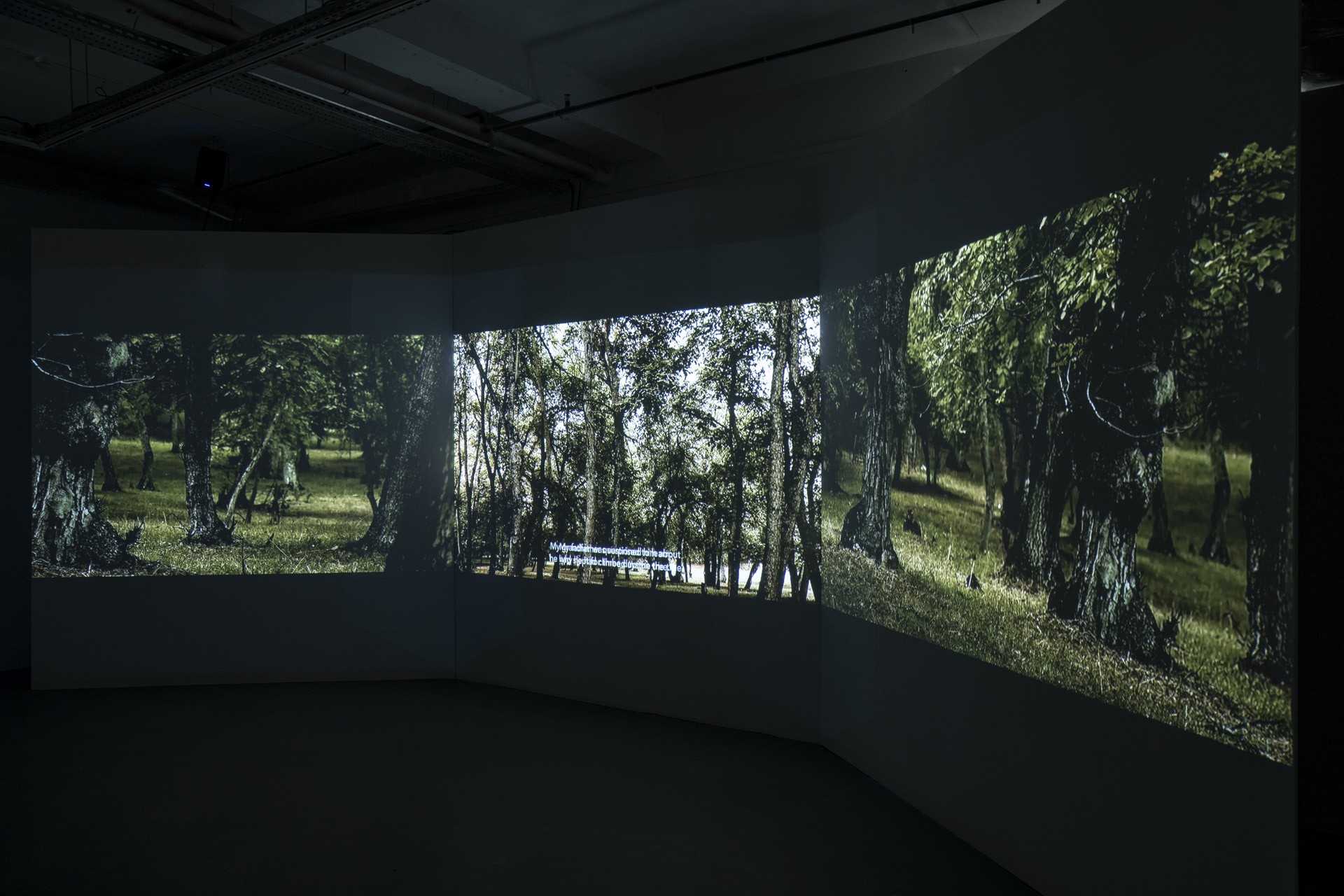
In a separate room, Saodat Ismailova’s three-channel video Aslanbob closes the exhibition with a lush, meditative reflection on the walnut forests of Kyrgyzstan. Ismailova, born in Tashkent in 1981 and now one of Central Asia’s most internationally recognized artists, works in film and installation to connect myth and environment. Drawing on the legend of a saint who nurtured a seed that grew into the vast forest, Aslanbob reflects on intergenerational responsibility.

What binds these diverse works is their shared reflection on landscape, not as picturesque scenery but as contested terrain. The title Where Wings Grow crystallizes the exhibition’s paradox: to grow wings, one must first be rooted. Yet in Kazakhstan today, both flight and roots are precarious. By turning to the land, these artists seek to reimagine a future where art, ecology, and identity remain intertwined.
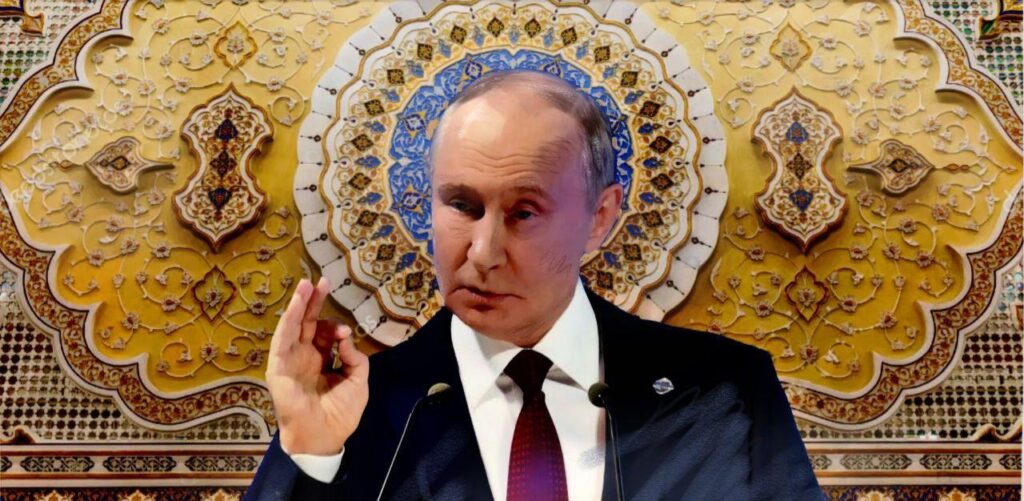

Russia Seeks to Reassert Role at Central Asia Summit, but Kazakhstan and Uzbekistan Push Their Own Agendas

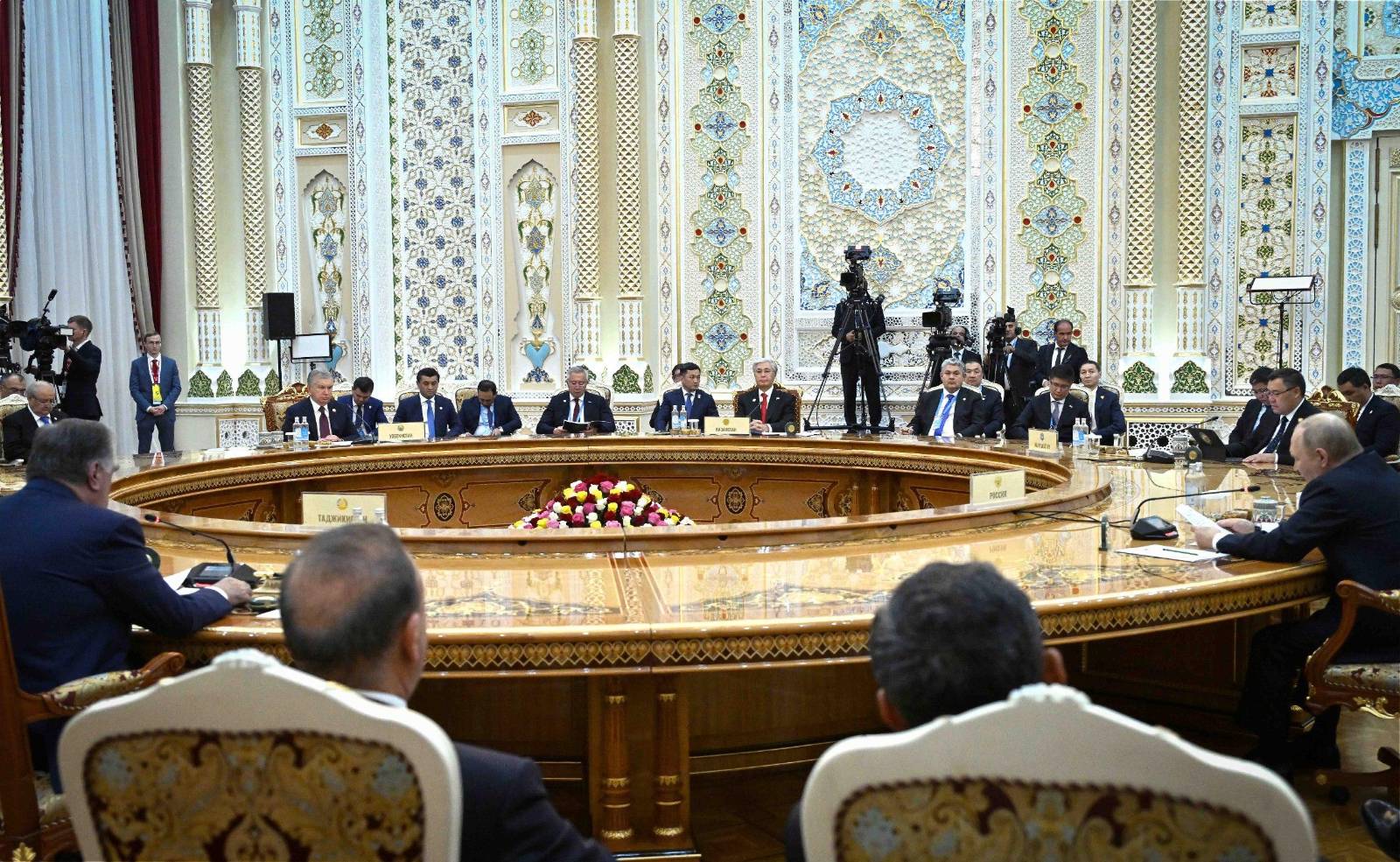
The second Central Asia-Russia summit, held ahead of the Commonwealth of Independent States (CIS) leaders’ meeting, reaffirmed the Kremlin’s continued intent to assert influence over the region. Russian President Vladimir Putin used the platform not only to signal discontent with the pace of economic integration but also to critique the Central Asian republics for what he portrayed as insufficient engagement in bilateral trade.

Despite growing ties between Central Asian states and external partners, exemplified by the “C5+1” dialogue format that includes major powers such as the U.S. and China, Putin made clear that Russia does not view its influence in the region as diminished.

Opening the summit, Putin took a veiled swipe at the “C5+1” initiative, which has gained traction in recent years. “I am in constant contact with each of the Central Asian presidents,” he said, before adding, “But I am sure that this multilateral format of communication is also very useful and has its obvious ‘added value’, so to speak.”

By “added value,” the Russian leader appeared to suggest that multilateral engagement enables Central Asian states to present a more unified front in foreign negotiations, an approach that complicates Moscow’s ability to exert influence through bilateral channels.

Putin also expressed dissatisfaction with the current levels of mutual trade and Russian investment in the region. While acknowledging that trade between Russia and Central Asia had surpassed $45 billion, he pointedly compared this figure to trade with Belarus, which exceeds $50 billion despite its far smaller population.

“Our trade turnover with Belarus exceeds $50 billion. Let me remind you that Belarus has a population of 10 million. Uzbekistan already has nearly 40 million, Tajikistan over 10 million, and Kazakhstan more than 20 million. Can you imagine what a colossal resource this is?” Putin said. “This means there are strong prospects for expanding our economic relations.”

Putin described Russia’s current $20 billion in regional investments as inadequate and called for increased engagement, but also tempered expectations surrounding major infrastructure and logistics projects championed by Astana and Tashkent, while positioning Russia as a central player in their development. He proposed integrating existing North-South and East-West corridors into a unified Eurasian logistics network supported by digital and transport services.

“This will allow us to significantly increase international transport volumes through our common region,” Putin said.

Kazakh President Kassym-Jomart Tokayev responded directly, updating figures presented by Putin and reaffirming Kazakhstan’s commitment to regional integration. He noted that Russia’s total trade with Central Asia exceeded $50 billion in 2024, with $28 billion in trade between Russia and Kazakhstan alone.

Tokayev emphasized the strategic importance of transport cooperation with Russia, stating that “Russia is a key gateway for the region’s countries to global markets. Therefore, cooperation in the transport and logistics sector is a matter of heightened strategic importance.”

Image: Akorda.kz

Tokayev outlined Kazakhstan’s existing transport infrastructure, eleven international corridors, including five rail and six road routes, that carry about 85% of land freight between Asia and Europe. Over 15 years, Kazakhstan has invested more than $35 billion in the sector. As a result, rail transit from Russia to Central Asia via Kazakhstan has risen 26% over three years, with traffic in the opposite direction growing by nearly 50%. Deliveries from Russia to China via Kazakhstan have tripled, exceeding five million tons.

He proposed launching a joint Kazakh-Russian investment and infrastructure program for the eastern segment of the North-South corridor, with potential participation from international financial institutions. He also proposed forming a “Council for the Development of the Eurasian Route,” led by the heads of transport agencies, to coordinate initiatives and address logistical challenges.

Uzbek President Shavkat Mirziyoyev also offered proposals, suggesting the creation of a Coordination Council at a deputy prime ministerial level to accelerate joint development projects. He further proposed establishing a unified transport and logistics network to integrate national programs in road, rail, and air transport. Mirziyoyev emphasized that closer coordination would help remove bottlenecks, speed up the implementation of regional agreements, and make Central Asia more competitive in global trade.

Kyrgyz President Sadyr Japarov highlighted improved regional security since the first summit and reaffirmed Russia as a “key trade and economic partner.” He urged the removal of trade and transit barriers and backed faster progress on transport links connecting Russia with China and Iran. Japarov also pointed to Kyrgyzstan’s hydropower and renewable projects as opportunities for joint investment. Tajik President Emomali Rahmon, hosting the summit, stressed cooperation on trade and connectivity, while Turkmenistan’s President Serdar Berdimuhamedov emphasized his country’s engagement but did not announce major new initiatives.

The Dushanbe summit highlighted both Moscow’s determination to remain a central partner for Central Asia and the region’s effort to diversify its external ties. Putin’s calls for deeper trade and investment underscored Russia’s intent to anchor its influence, while Tokayev and Mirziyoyev’s proposals reflected Central Asian leaders’ own ambitions to shape connectivity and development on their terms. Although Russia still plays a pivotal role in trade and infrastructure, the parallel growth of formats such as C5+1 and expanding ties with China, the EU, and others suggest that Central Asian states are increasingly seeking a balance – leveraging Russian partnership without relying on it exclusively.

New Kazakh-Chinese Lab to Streamline Agricultural Exports to China

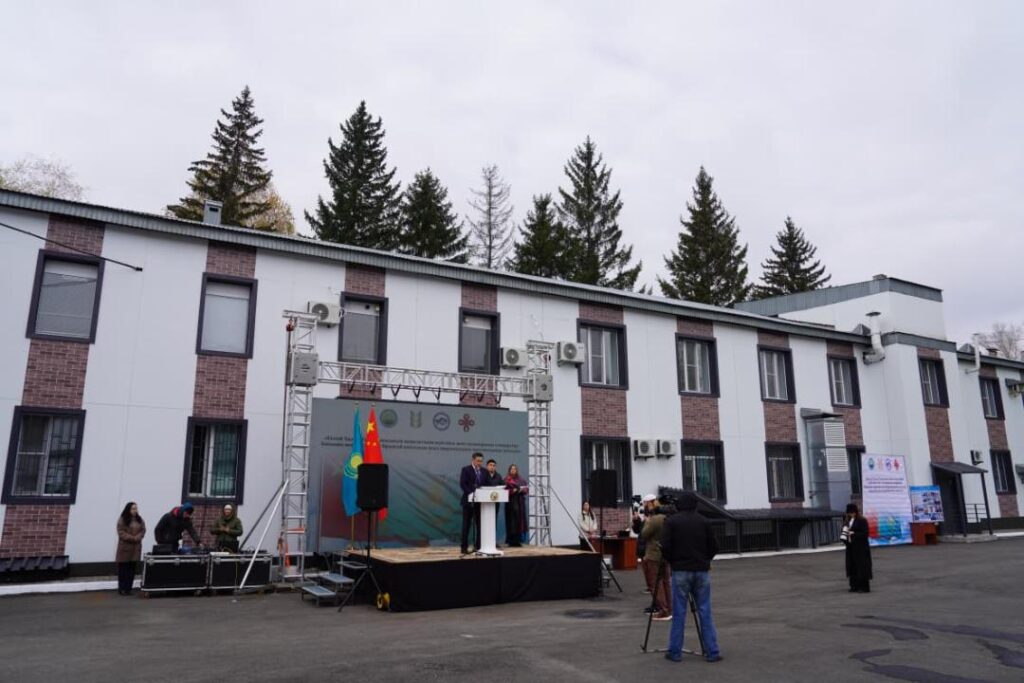
A joint Kazakh-Chinese veterinary laboratory has opened in the East Kazakhstan region, aiming to streamline and accelerate the export of Kazakh agricultural products to China.

According to the Ministry of Agriculture of Kazakhstan, the facility was outfitted with modern equipment and furniture provided by the Chinese government. Accredited under Chinese and international ISO 17025 standards, the laboratory is equipped to conduct high-precision veterinary diagnostics, quality control, and food safety testing.

Chinese specialists assisted with the installation and provided training for local staff. The facility can perform up to 550,000 tests annually on particularly dangerous infections, along with approximately 4,000 food safety tests.

The new laboratory is expected to remove technical trade barriers and boost Kazakhstan’s export potential for agricultural and livestock products to China and other international markets.

Speaking at the opening ceremony, Minister of Agriculture Aidarbek Saparov said:
“The opening of this laboratory is the result of the strategic partnership between Kazakhstan and China, aimed at advancing science and technology and enhancing the competitiveness of domestic products. I am confident that this new facility will play a key role in ensuring the quality and safety of agricultural goods.”

Kazakhstan’s agricultural exports to China have been rising steadily. According to the Ministry of Agriculture, bilateral trade in agricultural products increased by 10.5% in 2024, reaching $1.4 billion. Of that, Kazakh exports accounted for $1.05 billion, primarily consisting of animal feed, grain, oilseeds, and vegetable oil.

Kazakhstan has also made progress in ensuring its meat exports meet Chinese quality and safety standards. In May 2025, Minister Saparov and Sun Meijun, head of China’s General Administration of Customs, signed the Protocol on Inspection,

Quarantine, and Food Safety Requirements for the Import and Export of Poultry Meat. The agreement opened the Chinese market to Kazakh poultry products.

Since 2019, Kazakhstan has aligned its veterinary standards with Chinese requirements, signing 11 bilateral protocols regulating the trade of meat and livestock products. These agreements now cover 29 categories of plant and animal goods approved for export to China.

Currently, over 2,400 Kazakh enterprises are registered as exporters to China, supplying products such as safflower meal and cake, peas, lentils, and rapeseed.

In 2025, Kazakhstan plans to open the Chinese market to sugar beet cake, and in 2026 to rice, mung beans, cotton, and melons.

Additionally, regional restrictions related to foot-and-mouth disease and avian influenza have been lifted, further clearing the path for meat and meat product exports to China.

Meat Becomes Increasingly Unaffordable in Turkmenistan Amid Soaring Prices

Meat is fast becoming a luxury item in Turkmenistan, as residents across the country report skyrocketing prices and declining quality. Even in Ashgabat, where incomes are generally higher, beef is no longer affordable for many households.

Rising Prices, Declining Quality

For years, the price of meat has served as a barometer of living standards in Turkmenistan. This year, costs have repeatedly hit new highs. Ahead of the Eid al-Adha holiday, prices in Ashgabat nearly doubled, with similar surges reported in the Balkan region. Today, even after the holiday period, beef prices in the capital remain elevated, reaching up to 175 manats ($9.2) per kilogram, with noticeable drops in quality.

Consumers complain that even trusted vendors are selling overly fatty or tough cuts. At a late September session of the Halk Maslahaty, elder Yazmyrat Atamyradov proposed scrapping the annual increase in wages and pensions, prompting widespread public backlash.

The move brought renewed attention to the cost of basic goods, including meat. Globally, Turkmenistan ranks 15th in per capita beef consumption and 4th for lamb.

The Cost of Meat in Markets and Shops

In spring, boneless beef was selling for 75-80 manats ($3.9-4.2) per kilogram. Now, such prices are a rarity, available only in a handful of shops in Ashgabat’s Gulistan (Russian Bazaar) and other select outlets, often with the condition of purchasing bones or offal as well.

Current pricing is as follows:

• 80-95 manats ($4.2-5): Occasionally available in supermarkets and hypermarkets, but often sells out quickly and varies in quality.

• 100-110 manats ($5.3-5.8): Entry-level pricing for consistently decent meat at open markets.

• 140-150 manats ($7.4-7.9): Common at popular vendors and “premium” stores.

To address the situation, state-owned shops have expanded their offering of low-cost meat products. Shoppers can now buy frozen ground chicken for 25 manats ($1.3), beef bones for 26 manats ($1.4), and frozen beef briquettes for 38 manats ($2) per kilogram.

However, buyers report that the briquettes contain very little meat and are sold in limited quantities per customer.

Livestock Disease and Veterinary Shortcomings

The price hikes coincide with reports of recurring disease outbreaks among livestock. In June, Chronicles of Turkmenistan reported suspected anthrax cases in the Akhal region, and in August, additional deaths were reported in Lebap. In September, Radio Azatlyk cited a new illness in Akhal causing skin inflammation and respiratory distress in cattle.

Farmers have criticized the poor state of veterinary services, citing misdiagnoses and contradictory advice. Years of drought have weakened livestock’s immune systems and reduced herd sizes.

Meanwhile, hospitals in the capital have begun admitting patients with brucellosis, a bacterial infection transmitted from animals that can affect nearly every organ in the human body.

While cooking destroys the pathogen, brucellosis can still be contracted during the handling or cutting of infected meat, especially under unsanitary conditions. Medical professionals warn that with lax veterinary oversight and poor quality control, the risk of infection remains high.

Experts attribute the worsening situation to a mix of agricultural mismanagement, shrinking livestock numbers, and growing meat exports to neighboring Kazakhstan and Uzbekistan, where market prices are more favorable. The crisis is further deepened by feed shortages, animal diseases, and weak government support for domestic producers.

Kazakhstan Labor Migration Report Shows Most Citizens Working in Russia

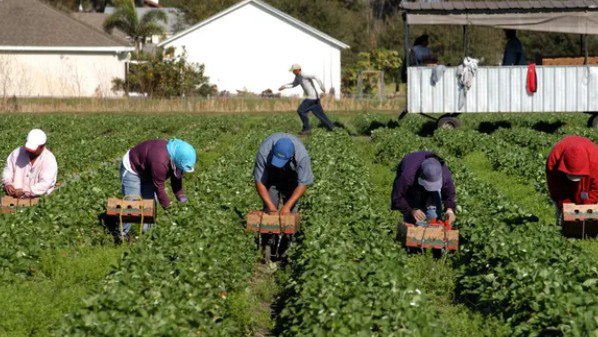
The Ministry of Labor and Social Protection has released updated data on the number of Kazakh citizens working abroad. According to the ministry, 126,000 citizens are currently employed outside the country, which has a population of more than 20 million. The vast majority, over 80%, have found work in neighboring Russia.

The figures were shared by First Deputy Minister of Labor and Social Protection Askarbek Yertayev during a briefing with journalists on the sidelines of a Senate meeting.

Of the 126,000 citizens working abroad, 102,000 are employed in Russia, 15,000 in South Korea, and approximately 2,000 in the United Kingdom and European Union member states.

Yertayev noted that Kazakhstan has yet to finalize bilateral labor agreements with all countries where its citizens are working.

“In particular, an agreement with South Korea is still under discussion, we have been negotiating for two years. Talks were paused due to the domestic political situation there,” Yertayev said, referring to the ongoing standoff between South Korean President Yoon Suk Yeol and the country’s parliament.

“Negotiations resumed this fall, and we plan to continue them, as 11,000 of the 15,000 Kazakh citizens in South Korea are working illegally. Measures must be taken, but the Korean side has several conditions, including that Kazakhstan address the issue of its undocumented migrants,” he added.

Seoul has requested a “road map” from Kazakhstan to address the problem of illegal labor migration. The document is expected to include mechanisms to prevent undocumented employment. Yertayev expressed confidence that an agreement would be reached before the end of the year. He noted that legal employment in South Korea would allow Kazakh workers to access higher wages and social protections, including healthcare and insurance.

“Currently, our citizens in South Korea who are working illegally cannot even send their earnings back home: banks refuse to process the transfers, forcing them to rely on informal channels, which often leads to fraud,” the deputy minister said.

As previously reported by The Times of Central Asia, Kazakh authorities have also intensified domestic efforts to formalize the labor market by cracking down on employers who pay “gray” wages, off-the-books income that evades taxes and social contributions.

Tokayev Proposes Regional Nuclear Council in Kazakhstan

At the second Central Asia-Russia summit in Dushanbe, Kazakh President Kassym-Jomart Tokayev proposed establishing a regional council in Kazakhstan focused on nuclear fuel cycle expertise and radioactive waste management.

The proposal follows last year’s national referendum in which over 70% of voters supported building a nuclear power plant (NPP) in Kazakhstan. Since then, the government has selected a site for the first plant and announced plans to construct at least two additional facilities. This summer, Rosatom began construction of the first NPP in the Almaty region in southern Kazakhstan.

Tokayev has previously emphasized the need for Kazakhstan to develop domestic expertise in the peaceful use of nuclear energy, citing international best practices. He expanded on this vision during the Dushanbe summit.

“Cooperation in the nuclear industry will ensure the development of a number of related industries, which is critically important for us,” Tokayev stated.

“We propose to establish a Regional Council of Competencies in the field of the nuclear fuel cycle and radioactive waste management in Kazakhstan. It is important to strengthen the modern research base and the system for training qualified personnel. The first step in this direction has already been taken: a branch of the National Research Nuclear University MEPhI has opened in Almaty,” Tokayev said, referring to the Moscow-based institute that has conducted nuclear research since 1953.

He added that Kazakhstan intends to continue developing this sector in cooperation with research institutions from both countries.

Tokayev also highlighted recent progress in regional energy integration, citing the trilateral gas union between Russia, Kazakhstan, and Uzbekistan as a key development in ensuring stable gas supplies for both citizens and industry.

“An important document on cooperation in the gas sector between Kazakhstan and Russia was signed recently in St. Petersburg,” he said, referencing a memorandum with Gazprom on the construction of a new gas pipeline from Russia to Kazakhstan to support domestic gasification.

The president also underscored the strategic role of the Caspian Pipeline Consortium, which transported approximately 63 million tons of Kazakh oil to Europe in 2024. He noted the increasing significance of the so-called eastern vector for hydrocarbon exports.

“Kazakhstan serves as a transit corridor for Russian oil to China, with volumes reaching up to 10 million tons per year. In 2024, deliveries have already surpassed this level. Given this momentum, there is potential to further increase capacity,” Tokayev said.
As previously reported by The Times of Central Asia, the China National Nuclear Corporation (CNNC) has been awarded contracts to build the second and third nuclear power plants in Kazakhstan.