• KGS/USD = 0.01144 0%
  • KZT/USD = 0.00192 -0%
  • TJS/USD = 0.10849 0.37%
  • UZS/USD = 0.00008 0%
  • TMT/USD = 0.28571 0.28%
  • KGS/USD = 0.01144 0%
  • KZT/USD = 0.00192 -0%
  • TJS/USD = 0.10849 0.37%
  • UZS/USD = 0.00008 0%
  • TMT/USD = 0.28571 0.28%
  • KGS/USD = 0.01144 0%
  • KZT/USD = 0.00192 -0%
  • TJS/USD = 0.10849 0.37%
  • UZS/USD = 0.00008 0%
  • TMT/USD = 0.28571 0.28%
  • KGS/USD = 0.01144 0%
  • KZT/USD = 0.00192 -0%
  • TJS/USD = 0.10849 0.37%
  • UZS/USD = 0.00008 0%
  • TMT/USD = 0.28571 0.28%
  • KGS/USD = 0.01144 0%
  • KZT/USD = 0.00192 -0%
  • TJS/USD = 0.10849 0.37%
  • UZS/USD = 0.00008 0%
  • TMT/USD = 0.28571 0.28%
  • KGS/USD = 0.01144 0%
  • KZT/USD = 0.00192 -0%
  • TJS/USD = 0.10849 0.37%
  • UZS/USD = 0.00008 0%
  • TMT/USD = 0.28571 0.28%
  • KGS/USD = 0.01144 0%
  • KZT/USD = 0.00192 -0%
  • TJS/USD = 0.10849 0.37%
  • UZS/USD = 0.00008 0%
  • TMT/USD = 0.28571 0.28%
  • KGS/USD = 0.01144 0%
  • KZT/USD = 0.00192 -0%
  • TJS/USD = 0.10849 0.37%
  • UZS/USD = 0.00008 0%
  • TMT/USD = 0.28571 0.28%
11 December 2025

Kazakhstan’s Two Futures on Display at Energy and Digital Forums in Astana

As the temperatures in Astana dipped below zero this week, the capital played host to two international gatherings that offered sharply contrasting visions of Kazakhstan’s future. On one bank of the Ishim River, industry veterans and government officials gathered for Kazakhstan Energy Week in the cavernous halls of the Independence Palace. Just across town, the Astana Digital Bridge forum drew swarms of young entrepreneurs and tech enthusiasts to the gleaming Expo Center. 

The Old Guard Assembles

Energy Week opened at 10 a.m. sharp on Thursday, October 2nd. Beneath gold-and-jade ceilings, chandeliers clinging to them like stalactites, padded white leather chairs were lined up neatly on stage. They were filled by some of the oil industries leading lights; dark suits were de rigueur. Over lunch, a string quartet performed Gardel’s Por Una Cabeza, while the final evening saw delegates invited to see Verdi’s Rigoletto at Astana’s ostentatious opera house. 

The format was carefully stage managed. Executives delivered their speeches like lecturers at a school assembly, with the audience listening politely. Questions from the floor were not invited.

There was a certain quiet bullishness amongst those present – the air of an industry that had been written off, but far from ready to concede relevance. Oil and gas continue to provide 35% of GDP and 75% of exports, despite talk of an energy transition.

“We expected a tailing off in demand on a global level, and this has not happened,” said Richard Howe, Executive Vice President of Shell’s Exploration and Production division during a panel of energy executives.

Beside him, Askhat Khassenov, Chairman of the Board at KazMunayGas, was a little more smug – “It looks like oil and gas are going to be around for a lot longer than some had anticipated,” he said.

Nevertheless, regular attendees at Kazakhstan’s annual energy shindig noted that the event was notably quieter than in previous years. Russians were absent, and Europeans few and far between. Delegations from neighboring Central Asian and Middle Eastern states padded out the numbers, perhaps reflecting countries in a similar situation.

The audience skewed heavily male and middle-aged. While a side event titled “Women in Oil” took place in a nearby hall, the real worry was generational. Both Howe of Shell and Bakhodirjon Sidikov of Uzbekneftegas admitted that talent – or the lack of it – was their biggest challenge.

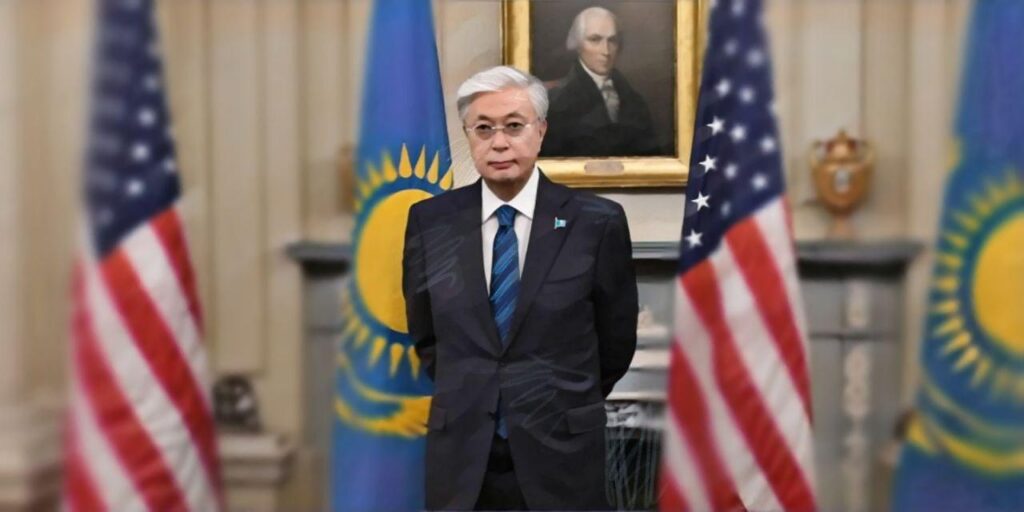
Concerns about the lack of top scientists have also been taken up at the highest level. “Today, 90% of university graduates have bachelor’s degrees. Meanwhile, the proportion of PhD holders is less than 1%,” President Kassym-Jomart Tokayev said earlier this week. “Therefore, it is necessary to increase the number of grants for doctoral studies, with preference given to technical specialties.”

If the message of Energy Week was that Kazakhstan’s present still runs on oil and gas, it was also clear the sector is worried about who will run it tomorrow. 

Image: Joe Luc Barnes, TCA

New Kazakhstan

For the future talent, you only had to drive a few minutes to the Expo Center, where Astana Digital Bridge was in full swing. If Energy Week was polished but staid, here the halls were packed with enthusiastic youth. Long queues snaked outside, the kind more often seen at rock concerts.

The language was different too. At Energy Week, everyone addressed one another as “colleagues” and “partners”. At Digital Bridge, it was simply “friends”.

The crowd responded accordingly, breaking into spontaneous applause during keynote speeches with local tech titans. They were motivational pitches to a generation that sees technology as the only real ladder of social mobility in Kazakhstan. At every panel the unspoken, aspirational message was “you can do this too”.

“The main thing is that being IT gives you a road to becoming independent,” said Tolkyn, an IT worker attending the event, told The Times of Central Asia. “It offers great opportunities for Kazakhs to work abroad, to earn good money and build an international career, and to support your parents. And all of this through honest work: in IT, your success is more or less a function of your hard work. Even if you have connections, if you’re not bright, you’re not going to get a job.”

Thousands of young Kazakhs crammed into sessions on fintech, artificial intelligence, cryptocurrency and venture capital. 

On the exhibition floor, Sairan, a young salesperson for Crocus, a company developing a hotel management platform called ChekInn, explained his choice of career. “I work in tech marketing,” Sairan says enthusiastically, “I went into it because it’s well paid, plus I’m very sociable so it gives me the chance to meet people.”

Nearby, Aigerim, a medical student volunteering at the stand for Remind.ai, a start-up focused on detecting early signs of Alzheimer’s, took a broader view. “I believe in the power of tech to do good,” she said. “As a medical practitioner, I can help one person at a time, whereas technology helps me to scale up that ability.” 

The government is keen to blow wind into these sails. “We have set ourselves a clear goal: Kazakhstan must become a truly digital country within three years,” Tokayev declared while opening Digital Bridge. 

While developing its own digital infrastructure, including building its first supercomputer and announcing plans for one more, Astana has also positioned itself as a haven for Russian and other post-Soviet tech entrepreneurs seeking a new base since 2022. One blockbuster panel featured Timur Turlov and Arsen Tomsky, two Russian founders of Kazakhstani SuperApps Freedom Holding and InDrive appearing alongside local hero Mikhail Lomtadze, founder of Kaspi.kz, Kazakhstan’s biggest tech success story.

Even Pavel Durov, also of Russia and the founder of Telegram, met with Tokayev at the Akorda before taking part in one of the panels. Telegram has officially joined Astana Hub, opened an office in Kazakhstan, and launched the Alem.AI AI laboratory. 

Image: Joe Luc Barnes, TCA

An Ambitious Tech Agenda

The big question is whether Kazakhstan can make the leap from hydrocarbons to high tech. Other petro-states have tried. Dubai, often invoked as the city that Astana would like to emulate, has recast itself as a global logistics and fintech hub. Kazakhstan appears to be trying to follow suit.

Some evidence suggests it could. Kaspi.kz has already expanded into Turkey through its purchase of a controlling share in e-commerce firm Hepsiburada, which now has 17 million users. Lomtadze also floated an ambition to rival Yandex, the ubiquitous taxi and delivery provider across the post-Soviet space. Turlov has spoken of pushing into the Tajik market and has openly asked the government to champion Kazakh digital firms abroad, particularly against Chinese competition.

But for all its elegance and finesse, the newest generation of technology, particularly AI, is also energy-hungry. And it is here that the two fora agendas may dovetail.

Image: Joe Luc Barnes, TCA

Two Astanas, One Future

Tokayev’s recent address to the National Council on Science and Technology, delivered days before both events, struck a stark tone. “The future of our country, its place among the world’s leading nations, depends on its implementation,” he said of the national drive toward digitalisation and AI. “Clearly, as digitalization and artificial intelligence develop, the country’s energy demand will grow rapidly,” he said. “Therefore, it is necessary to use energy sources efficiently.”

Tokayev evidently believes that the country cannot be underutilizing its massive energy capacities if it is to compete in the technologies of the future.

Last week he notably echoed Donald Trump in dismissing climate change as a “fraud” and praised Kazakhstan’s coal sector. “The U.S. president rightly said, ‘I don’t like wind, I like coal,’” he said. “Kazakhstan produces 113 million tons of coal annually … this is our asset.”

For a country already on the frontlines of desertification and water stress, it was an uncomfortable message to square with international expectations, but it appears that the president sees the AI race as equally existential.

“We have no right to lag behind global progress in our development,” Tokayev said. “Ultimately, this is a question of Kazakhstan’s survival as an independent country.”

But the question is whether it can persuade its young people to persevere with the energy industry when the attractions are elsewhere.

“I never thought about working in the oil and gas industry,” said Tolkyn. “The money is great there – and I’m aware that people in Western Kazakhstan feel like they foot the bill for the lifestyles of people in Almaty and Astana, but I’d be uncomfortable living in a place with a lot of emissions and pollution. IT gives you flexibility, you can be part of any industry – in finance, in medicine, even in oil and gas!”


Uzbekistan to Co-Host FIFA U-20 World Cup in 2027 with Azerbaijan

It’s been a big year for Uzbekistan’s football ambitions. 

In June, the national team qualified for the 2026 FIFA World Cup, securing a 0-0 draw against the United Arab Emirates in Abu Dhabi that was enough to propel Uzbekistan into the main draw. It is the first time that Uzbekistan, which has built up its sports infrastructure over the years, has qualified in the country’s 34 years of independence.  

Now Uzbekistan and Azerbaijan are celebrating their joint appointment as host nations for the FIFA U-20 World Cup in 2027. The announcement was made on Thursday at a meeting of the FIFA Council in Zurich, Switzerland. 

“Great News!” the Uzbekistan Football Association said

“This competition is considered the second most significant men’s national team tournament organised by FIFA, after the FIFA World Cup itself,” said the association, adding that Uzbekistan had gained hosting experience in recent years by staging some big international football events. 

Last year, Uzbekistan hosted the FIFA Futsal World Cup, a fast-paced variation of football that is played indoors. Some 52 matches were played during the contest. The cities of Tashkent, Andijan and Bukhara hosted games and tournament organizers received generally positive reviews.  

FIFA, football’s governing body, has been helping the Central Asian country to modernize its football facilities by funding pitch construction, floodlight installation and the renovation of a stadium. 

Azerbaijan, in the South Caucasus region, is also delighted with the prospect of co-hosting the FIFA event in 2027, describing it as a showcase for its good relations with Uzbekistan. 

The decision “is a clear indication of the friendly relations between the heads of state, the policies aimed at the welfare and development of the countries, as well the special attention and care shown to sports in both countries,” said Rovshan Najaf, president of the Association of Football Federations of Azerbaijan. 

The two nations have worked to strengthen diplomatic and economic ties, agreeing this year to a goal of boosting bilateral trade and investment to $1 billion annually by 2030. 

The FIFA U-20 World Cup is held every two years. Argentina hosted it in 2023 and this year’s tournament is currently underway in Chile.

First Kazakh Woman Heads to Space with Blue Origin

Kazakh entrepreneur Danna Karagussova is set to make history as the first woman from Kazakhstan to travel into space. She will join Blue Origin’s upcoming New Shepard NS-36 mission, marking both a personal milestone and a significant event for her country.

Suborbital Flight on New Shepard

Karagussova will be one of six passengers aboard the suborbital spacecraft, alongside United States entrepreneur Jeff Elgin, engineer Clint Kelly III, startup founder Aaron Newman, Ukrainian businessman Vitalii Ostrovsky, and one participant who has chosen to remain anonymous. For Kelly, this will be his second spaceflight after his participation in the NS-22 mission.

Blue Origin has confirmed that the upcoming launch will be its 15th crewed mission. To date, the company’s spacecraft have carried 75 people beyond the Kármán line, the internationally recognized boundary of space. The launch date has not yet been disclosed, but the event will be livestreamed on BlueOrigin.com, X, and YouTube, beginning 30 minutes before liftoff.

Who Is Danna Karagussova?

Karagussova brings more than 25 years of experience in media, distribution, and event management. She is the co-founder of Portals, a project that combines digital self-regulation tools with science and art. Outside of business, she has climbed both Mount Kilimanjaro and Mount Elbrus, reflecting her resilience and determination.

Now, she is turning her focus to space, which she describes not as entertainment but as a profound and transformative journey. Writing on Instagram, she said: “The future of humanity is tied to space. By exploring new horizons, we not only develop technologies but also expand our own potential. For me, the NS-36 mission is part of a research project and a step toward a dream I have pursued for many years.”

Kazakhstan’s Other Space Initiatives

Karagussova’s mission comes as Kazakhstan expands its space research efforts. In Astana, a unique isolation experiment known as SANA-1 recently began, the country’s first such initiative featuring an all-female crew. Over ten days, participants live inside a spacecraft-simulation module, undergoing medical, cognitive, and engineering assessments.

The project, launched by the Eurasian Ventures Group and supported by Kazakh cosmonaut Aidyn Aimbetov, aims to inspire young people and build interest in STEM fields. It also contributes to the knowledge base for Kazakhstan’s future space programs and highlights the growing role of women in science.

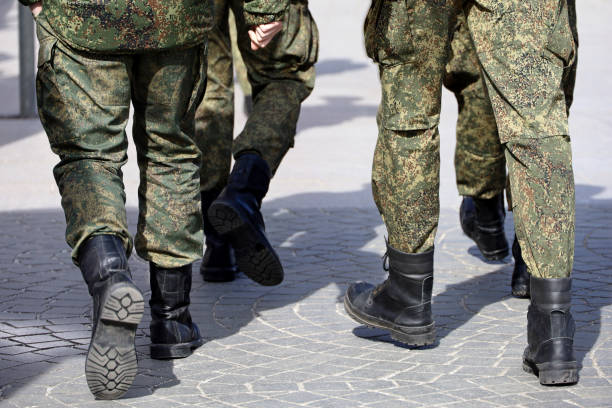
Survey Reveals What Kazakhstanis Think About the Army and Defense

In September 2025, the research platform Demos.kz conducted a nationwide survey on public perceptions of Kazakhstan’s Armed Forces.

When asked about the likelihood of Kazakhstan becoming involved in a military conflict over the next five years, 29.7% of respondents considered the risk very low, 28% rated it as average, 13.2% as rather low, 7.1% as very high, and 6.9% as rather high.

Public confidence in the military’s capabilities was divided. Some 31.9% of respondents believe the Kazakh army is strong enough to defend the country against external threats, while 35% said it will “more likely be able” to do so. Meanwhile, 15.8% said the army will “most likely not” be able to protect the country, and 10.4% expressed the view that “No, it won’t be able to protect it at all”.

On the issue of defense partnerships, 29.3% favored strengthening ties with Russia through the Collective Security Treaty Organization (CSTO). A further 27.5% supported closer cooperation with NATO members such as the United States or Turkey. Another 22.6% favored working with China via the Shanghai Cooperation Organization (SCO), 20% preferred collaboration with neighboring Central Asian countries, and 18.4% advocated for neutrality and minimizing military alliances.

Opinion was also split on the preferred army recruitment model. A total of 36.6% supported transitioning to a fully professional, contract-based military. Another 36.5% favored returning to universal compulsory service, while 17.7% supported retaining the current mixed system.

According to Kazakhstan’s 2025-2027 state budget, the country plans to allocate 2.7 trillion KZT ($5.2 billion) to defense and law enforcement in 2025.

The Finance Ministry reported that military spending from January to July 2025 amounted to 544.4 billion KZT, down 8.8% from the same period in 2024. Last year, Kazakhstan’s defense budget totaled approximately 1.3 trillion KZT.

Over the past three years, Kazakhstan has steadily increased defense spending. According to media reports, the defense budget stood at $1.2 billion in 2023 and $1.1 billion in 2022.

Pavel Durov’s Telegram Launches AI Laboratory at Alem.ai in Astana

Telegram founder Pavel Durov has announced the launch of a dedicated artificial intelligence laboratory in Astana, housed within the newly inaugurated International Artificial Intelligence Center, Alem.ai.

The Alem.ai center was officially opened on Thursday during the Digital Bridge 2025 forum in Kazakhstan’s capital. At the opening ceremony, President Kassym-Jomart Tokayev described the center as a future global hub for the effective and ethical application of artificial intelligence. The initiative will bring together both domestic and international developers, with Telegram among the first companies to establish operations at the site.

“A year ago, we opened our first regional office in Kazakhstan, and today we are pleased to launch a specialized AI laboratory inside Alem.ai,” Durov said.

“This is a joint project between Telegram and Kazakhstan’s national supercomputer cluster, established by the Ministry of Artificial Intelligence. The technology will allow more than one billion people to use AI functions privately, transparently, and efficiently. We hope that Kazakhstan’s supercomputer cluster will become the first major provider of computing power for this network.”

As previously reported by The Times of Central Asia, Kazakhstan launched the region’s most powerful supercomputer earlier this year. At the Digital Bridge 2025 forum, President Tokayev announced plans for a second cluster. On the sidelines of the event, he also met with Pavel Durov to discuss cooperation in education, artificial intelligence, and cybersecurity, according to the presidential press service.

“The President highly appreciated Telegram’s contribution to advancing Kazakhstan’s digital agenda: the company officially joined Astana Hub, opened an office in Kazakhstan, and launched AI laboratories at Alem.ai,” the statement said. “For his part, Pavel Durov briefed Tokayev on prospects for joint projects in artificial intelligence.”

Tokayev also discussed venture investment opportunities and the development potential of Kazakhstani AI startups with Stanford University professor Ilya Strebulaev.

In addition, Tokayev held meetings with Omar Al Olama, UAE Minister of State for Artificial Intelligence, Digital Economy, and Remote Work Applications, and Mansoor Ibrahim Al Mansoori, Chairman of Abu Dhabi’s Department of Health and former COO of G42. The talks focused on expanding Kazakh-Emirati cooperation in AI, including the ongoing Smart City project, which Tokayev called a milestone in bilateral relations.

Tokayev also announced plans to establish an Artificial Intelligence University in Kazakhstan, with a strong focus on research and development. According to the presidential press service, he noted the importance of drawing on the UAE’s experience, where the world’s first IT-focused university is already in operation.

Small Firms Power Kyrgyz Construction Surge

The turnover of small and medium-sized enterprises (SMEs) in Kyrgyzstan’s construction sector has increased 2.5 times over the past five years, according to national statistics.

Medium-sized and small businesses have become key drivers of growth in one of the country’s most important economic sectors. In 2020, the volume of work performed by SMEs in construction amounted to 70 billion KGS ($802 million). By the end of 2024, this figure had risen to 185 billion KGS ($2.1 billion).

Role of Individual Entrepreneurs

More than half of total construction output in 2024 was attributed to individual entrepreneurs. Their main advantage lies in the ability to respond quickly to shifting demand in the housing and infrastructure markets. Their contribution was estimated at 95 billion KGS ($1.08 billion).

Small construction firms also recorded substantial growth, tripling their output to 65 billion KGS ($745 million) in 2024. Medium-sized companies posted the fastest expansion: in 2022, they delivered projects worth 7.8 billion KGS ($90 million), rising to 25.2 billion KGS ($289 million) in 2024.

Sector Growth Outpaces the Economy

The Eurasian Economic Commission previously reported a 40% increase in Kyrgyzstan’s construction sector during the first half of 2025. In the first five months of the year alone, construction volumes nearly doubled compared to the same period in 2024.

As previously reported by The Times of Central Asia, Kyrgyz authorities have designated construction as a strategic priority for national development. Investment in residential housing, infrastructure, and social facilities quadrupled in the first five months of 2025, reaching $800 million.

Kyrgyzstan’s GDP grew by 11.5% in the first seven months of 2025, with construction contributing 3 percentage points and the services sector accounting for approximately 5 percentage points.