As the war between Russia and Ukraine approaches its fifth year, diplomatic efforts to reshape trade routes, energy flows, and regional partnerships are intensifying far beyond the battlefield. For Ukraine, Central Asia has emerged as an increasingly important economic and logistical partner, particularly as Kyiv seeks alternatives to disrupted transport corridors and supply chains.
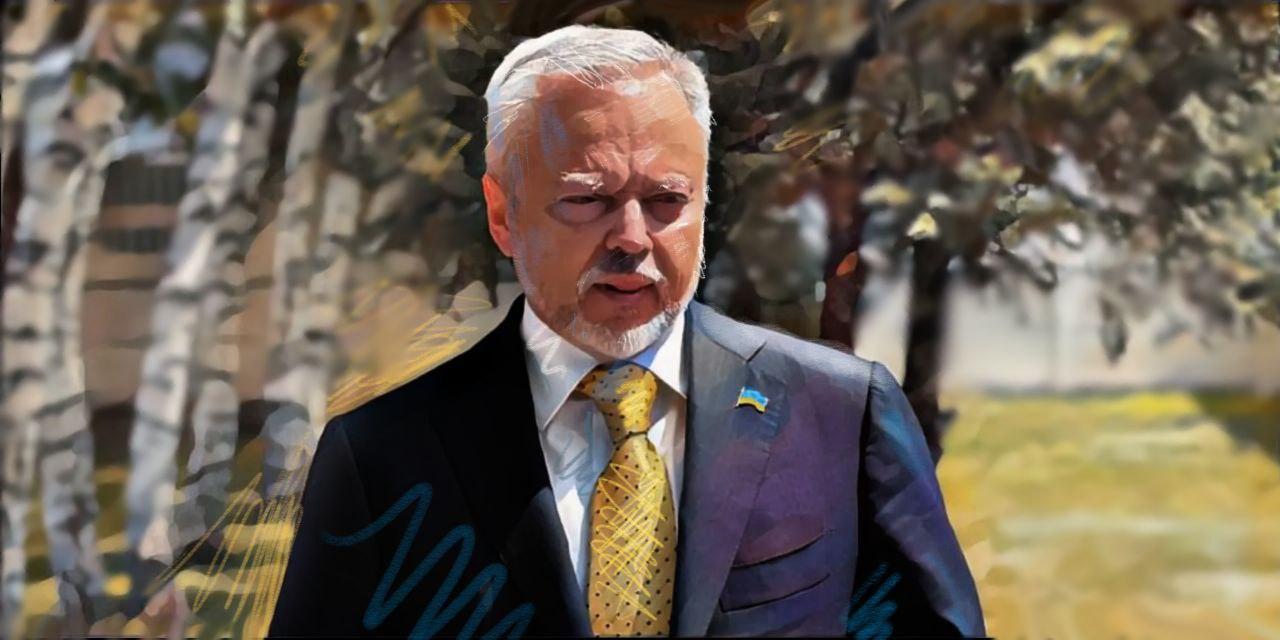
The Times of Central Asia spoke with Viсtor Mayko, Ukraine’s Ambassador to Kazakhstan, about the prospects for deeper economic cooperation with Central Asia, the role of the Middle Corridor, energy transit challenges in the Caspian region, Kyiv’s expectations for international support, and a possible path toward ending the war.
Trade and Economic Prospects in Central Asia
TCA: Mr. Ambassador, what are the prospects for deepening trade and economic partnerships between Ukraine, Kazakhstan, and wider Central Asia? Which sectors offer the greatest potential for cooperation?
Ambassador Mayko: Deepening trade and economic ties between Ukraine, Kazakhstan, and other Central Asian countries is not merely a prospect; it is a necessity dictated by global economic trends.
Kazakhstan leads the region economically, with a GDP exceeding $300 billion. It is on a trajectory to join the G20 within 5 to 10 years. The United States, recognizing this potential, has invited Kazakhstan to the upcoming G20 meeting in the U.S., demonstrating Kazakhstan’s rising global significance.
Ukraine and Kazakhstan’s economies are complementary. Ukraine brings experience in agricultural technology, mechanical engineering, IT, and processing, while Kazakhstan contributes resource strength, industrial capacity, and logistics. Promising areas for cooperation include agro-industrial development, from crop production to digitalized processing; industrial cooperation through equipment supply and joint production; logistics and infrastructure aimed at strengthening transport corridors; and energy and IT projects focused on efficiency and network modernization.
We are already transitioning from theory to action. A major business delegation from Ukraine will visit Kazakhstan this year. We also anticipate another meeting of the Joint Ukrainian-Kazakh Intergovernmental Commission on Economic Cooperation, which is crucial for removing barriers and initiating new projects.
Ukraine’s presence in Kazakhstan’s economy has historically been significant. If not for the war and resulting transport disruptions, I believe our mutual trade could have reached $10 billion. Ukrainian machinery still accounts for a substantial portion of Kazakhstan’s industrial base, especially in regions such as Karaganda, Aktau, and Pavlodar, though much of this equipment now requires modernization.
Another promising area is mineral resource development. Ukraine has the scientific and practical base to contribute meaningfully to this sector.
Turkmenistan’s earlier collaboration with Ukrainian firms in revitalizing depleted wells illustrates our potential. Wells deemed exhausted by older technologies yielded hundreds of thousands of tons of oil under Ukrainian management. This successful model can be applied in Kazakhstan, one of the EU’s top three oil suppliers.
Transport Infrastructure and the Middle Corridor
TCA: How is cooperation in the transport sector developing, especially regarding the Middle Corridor? Are there any potential plans for joint infrastructure projects?
Ambassador Mayko: Russia’s full-scale aggression disrupted Ukraine’s previous logistics routes. Today, we prioritize alternatives like the Trans-Caspian International Transport Route, the “Middle Corridor”, as a strategic interest.
Our current multimodal route passes through Romania, Bulgaria, Turkey, Georgia, and Azerbaijan before crossing the Caspian Sea. However, delivery remains costly and time-consuming. A 20-ton shipment to Almaty, for example, costs $11,000-$15,000 and takes around a month, largely due to ferry bottlenecks across the Caspian.
We see strong potential in joint Ukrainian-Kazakh railway and maritime projects to reduce costs and improve reliability. A key goal is to integrate Ukraine’s Black Sea ports into the Middle Corridor. Recent port-level agreements, including those involving the Belgorod-Dnestrovsky Sea Trade Port, aim to establish formal cooperation with Kazakh counterparts.
Ukrzaliznytsia JSC is actively engaging with railway administrations in Central Asia and the South Caucasus to implement a bilateral agreement focused on practical logistics solutions. Additionally, we support establishing a container hub in Aktau’s SEZ to enhance the corridor’s overall capacity.
The Middle Corridor is a vital instrument for boosting trade and reinforcing Kazakhstan’s role as a regional transit leader.
Energy Sector Cooperation and Route Diversification
TCA: How does Ukraine view its energy cooperation with Kazakhstan and other Central Asian countries? Are there plans to diversify supply routes?
Ambassador Mayko: Kazakhstan and Turkmenistan are vital energy partners for Ukraine, both for oil and gas. Our cooperation continues at an enterprise level, with Ukrainian manufacturers providing equipment for Kazakh energy companies.
Despite wartime challenges, Ukrainian companies have resumed direct engagement with partners in the Mangystau region. Ukrainian expertise is helping modernize critical systems without reliance on intermediaries or counterfeit parts.
Energy exports are another area of focus. Kazakhstan has emerged as a top-three oil supplier to the EU, accounting for 11.5% of EU imports in 2024, and demand is growing. Ukraine also seeks Kazakh oil, provided transportation avoids the Russian Federation.
Practical steps are underway in Aktau and Kuryk to improve tanker capacity and rail links. Promising routes include Aktau-Baku-Tbilisi-Ceyhan and Baku-Supsa, as well as the Trans-Adriatic Pipeline.
We invite Kazakh participation in rebuilding and constructing oil refineries in Ukraine, with the goal of refining Kazakh oil domestically for local use and EU export.
Deep drilling is a shared priority. Ukraine has drilled 24 wells beyond 6 km depth in the Poltava region, a model that may interest Kazakhstan. We are open to partnerships between JSC NC KazMunayGas and JSC Ukrgazvydobuvannya to jointly explore and develop hydrocarbon reserves.
Ukraine also offers strong potential in shipbuilding. Collaboration between Kazmortransflot and Ukrainian firms like the Nikolaev Shipyard and Smart Maritime Group could boost fleet repair and construction capacity. Ukrainian companies such as NPIK Neftegazstroizolyatsiya and Neftegazhim Service LLC can also assist in oil pipeline modernization across the Caspian region.
On Security and Attacks on Oil Infrastructure
TCA: How do you respond to reports of attacks on tankers transporting Kazakh oil and oil linked to Western companies, including U.S. firms? Have these events impacted bilateral relations?
Ambassador Mayko: Ukraine has never targeted Kazakhstan’s economy or infrastructure. We value Kazakhstan’s consistent support for our sovereignty and territorial integrity and aim to ensure secure energy supplies via the Black Sea.
Ukrainian strikes are strictly directed at Russian military-linked targets. For example, we target refineries supplying fuel to the Russian military, not civilian infrastructure. Ukraine never considered Kazakh facilities as legitimate targets.
The recent incident involving Greek tankers chartered by KazMunayGas illustrates this. These vessels, with active transponders and transparent routes, were not damaged. Simultaneously, two Russian “shadow fleet” tankers near Novorossiysk were severely hit by long-range Ukrainian drones. In contrast, the Greek tankers were reportedly attacked by short-range FPV drones, suggesting the launch did not originate from Ukraine but from waters near Novorossiysk.
Following discussions with Ukrainian military officials, I can confirm: Kazakhstan is not, and will not be, a target for Ukrainian strikes. This is the unified position of Ukraine’s political and military leadership.
International Support and the Path to Peace
TCA: How do you assess current relations with the U.S. and the EU? How are internal political dynamics affecting support for Ukraine?
Ambassador Mayko: Ukraine continues to receive strong support from the United States, the European Union, the United Kingdom, Canada, Japan, Turkey, and others. This support, military, financial, and humanitarian, is essential to our resistance.
During this winter’s attacks on our energy infrastructure, assistance has remained steady. We are receiving equipment, satellite communications, intelligence, and humanitarian aid. Starlink disconnections for Russian forces are a notable development.
New sanctions, including the EU’s 20th package, target Russia’s shadow fleet and financial system. Given these developments, concerns about waning support are unfounded.
The U.S. and Europe have been steadfast allies throughout the war. Without their backing, Ukraine’s situation would be significantly worse. We remain engaged in negotiations with Russia, supported by our European partners.
President Volodymyr Zelenskyy has signaled a willingness to make compromises, but not unilaterally. Security guarantees must be reciprocal. Russia continues shifting its terms, especially around post-war military presence.
Ukraine will not voluntarily cede its territory. These lands are home to citizens who do not wish to live under occupation. They include key industrial assets and mineral resources.
While Russian civil society remains largely passive, even the Kremlin must recognize its domestic limits. I believe those limits are fast approaching. That’s why I remain convinced: the war will end this year. I truly believe in that.