• KGS/USD = 0.01144 0%
  • KZT/USD = 0.00198 -0%
  • TJS/USD = 0.10901 0%
  • UZS/USD = 0.00008 0%
  • TMT/USD = 0.28490 0%
  • KGS/USD = 0.01144 0%
  • KZT/USD = 0.00198 -0%
  • TJS/USD = 0.10901 0%
  • UZS/USD = 0.00008 0%
  • TMT/USD = 0.28490 0%
  • KGS/USD = 0.01144 0%
  • KZT/USD = 0.00198 -0%
  • TJS/USD = 0.10901 0%
  • UZS/USD = 0.00008 0%
  • TMT/USD = 0.28490 0%
  • KGS/USD = 0.01144 0%
  • KZT/USD = 0.00198 -0%
  • TJS/USD = 0.10901 0%
  • UZS/USD = 0.00008 0%
  • TMT/USD = 0.28490 0%
  • KGS/USD = 0.01144 0%
  • KZT/USD = 0.00198 -0%
  • TJS/USD = 0.10901 0%
  • UZS/USD = 0.00008 0%
  • TMT/USD = 0.28490 0%
  • KGS/USD = 0.01144 0%
  • KZT/USD = 0.00198 -0%
  • TJS/USD = 0.10901 0%
  • UZS/USD = 0.00008 0%
  • TMT/USD = 0.28490 0%
  • KGS/USD = 0.01144 0%
  • KZT/USD = 0.00198 -0%
  • TJS/USD = 0.10901 0%
  • UZS/USD = 0.00008 0%
  • TMT/USD = 0.28490 0%
  • KGS/USD = 0.01144 0%
  • KZT/USD = 0.00198 -0%
  • TJS/USD = 0.10901 0%
  • UZS/USD = 0.00008 0%
  • TMT/USD = 0.28490 0%
07 December 2025

Blast Kills Four Workers at Explosives Plant in Uzbekistan

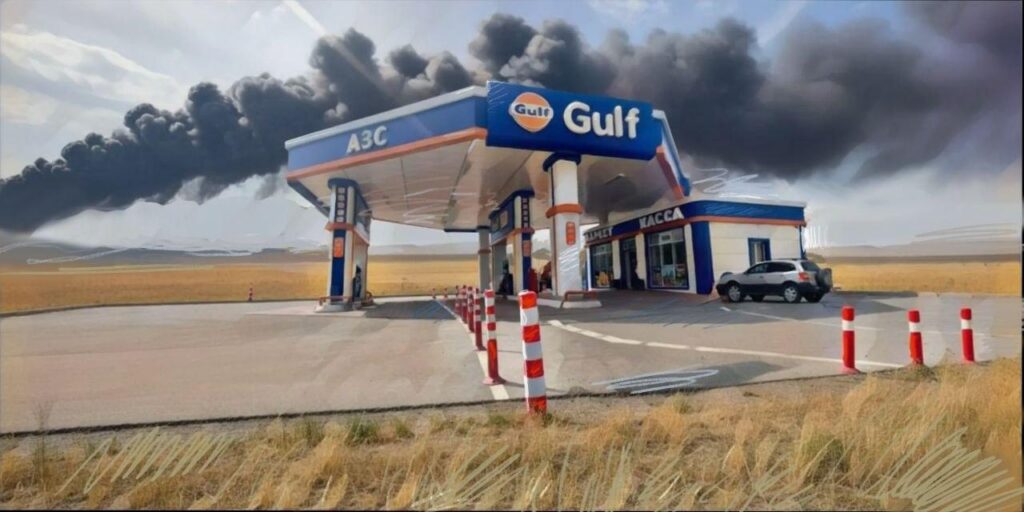
Four workers died and four were injured in an explosion and fire at a factory in Uzbekistan that supplies explosives to mining enterprises in Central Asia, emergency officials said on Saturday. The government said it was an accident.

The blast at the Shams Ltd. facility happened in a workshop at 9:40 a.m. on Saturday in the Kogon district of the Bukhara region, and the fire was extinguished by 10:27 a.m., the Ministry of Emergency Situations said.

Four out of the 30 workers who were in the warehouse died, the ministry said.

“Four employees who received minor injuries were taken to the hospital; two of them received outpatient medical care and were allowed to return home,” it said.

The government has established a commission to investigate the accident and provide urgent help to the victims.

The Shams company, which has been operating since 2019, specializes in supplying explosives used to develop new deposits for mining operations in Uzbekistan and other parts of Central Asia.

FIFA World Cup: Uzbekistan to Face Portugal and Colombia in Group K

Among the highlights for Uzbekistan at next year’s FIFA World Cup will be facing Portugal striker Cristiano Ronaldo in his last campaign in the event, to be held in Mexico, Canada and the United States.

Uzbekistan, which has qualified for the World Cup for the first time and is ranked 50th in the FIFA rankings, is in the four-team group K, one of 12 groups in the draw that was announced on Friday in Washington D.C. Group K includes sixth-ranked Portugal; Colombia, which is 13th in the FIFA standings; and a fourth team that is yet to be decided. Either Jamaica, Democratic Republic of Congo or New Caledonia will take that last spot after facing each other in playoffs.

A total of 48 teams are competing in the World Cup next year, up from 32 in previous contests.

Ronaldo, 40, has said next year’s World Cup will be his last one. In Qatar in 2022, he became the first player to score at five World Cups. He currently plays for Al-Nassr in Saudi Arabia.

Uzbekistan’s team is led by coach Fabio Cannavaro, a former defender who was captain of Italy’s winning team in the 2006 World Cup in Germany.

Cannavaro replaced Timur Kapadze, an Uzbekistani former pro football player who led Uzbekistan’s national team to its first-ever qualification for the World Cup with a 0-0 draw against the United Arab Emirates in Abu Dhabi in June.

“Everything” can happen in the World Cup, a smiling Cannavaro said after the draw was announced.

“We are so happy because we are here,” the coach said, adding that he hoped the team would fight “until the end.”


Kyrgyzstan UN Security Council Bid Gains Backing from Central Asian Neighbors

In a show of regional unity, the presidents of all of the Central Asian countries have endorsed Kyrgyzstan’s candidacy for a non-permanent seat on the United Nations Security Council for the 2027–2028 term. The joint appeal was announced on December 4 at a UN press briefing in New York by Uzbekistan’s Permanent Representative, Ulugbek Lapasov, who called on UN member states to support the bid. According to Lapasov, the endorsement reflects the region’s intent to strengthen its voice in international peace and security efforts.

Kyrgyzstan’s Permanent Representative to the UN, Aida Kasymalieva, welcomed the unified support from neighboring states. Kasymalieva said the move reflects “a shared commitment to peace, dialogue, and a constructive multilateral approach,” and emphasized that her country, if elected, would serve as “a responsible and principled” Council member that amplifies the voices of smaller and developing nations.

A Regional Campaign with Global Aspirations

Kyrgyzstan first announced its intention to seek a Security Council seat in 2017. The campaign gathered momentum in 2024, when President Sadyr Japarov told the UN General Assembly that it was time to correct the “historical injustice” of dozens of UN member states – Kyrgyzstan among them – never having served on the Council. Japarov also called for broader representation, especially for African countries, and pledged that Kyrgyzstan would work to make the Council more effective, transparent, and inclusive.

In April 2025, Kyrgyzstan officially launched its campaign with a reception at UN Headquarters in New York. Foreign Minister Jeenbek Kulubaev outlined Bishkek’s core priorities: conflict prevention, sustainable development for landlocked and mountainous nations, nuclear disarmament, and support for UN reform. The event drew diplomats from over 150 UN member states.

The bid has become a central part of Bishkek’s foreign policy agenda, with senior officials describing it as a long-term investment in the country’s diplomatic standing. The vote for the 2027–2028 non-permanent seats will take place during the UN General Assembly session in June 2026, as scheduled under UN election procedures. Local media have reported that Kyrgyzstan’s main competitor for the Asia-Pacific seat is the Philippines, which has also announced its candidacy.

This would not be the first time a Central Asian state has held a seat on the Council. Kazakhstan was elected for the 2017–2018 term, becoming the first country from the region to do so. Its campaign emphasized nuclear disarmament, regional security, and representing the interests of landlocked developing countries. Kyrgyzstan has framed its candidacy similarly, not just as a national endeavor, but as a platform for regional engagement on a global stage.

Domestic Challenges, Global Aspirations

While Kyrgyzstan pushes for a seat at the UN’s most powerful decision-making body, concerns persist over the country’s democratic trajectory. Once considered the most open society in Central Asia, Kyrgyzstan has seen a decline in civil liberties in recent years, with growing restrictions on independent media, increased pressure on NGOs, and a pattern of centralized political control under President Japarov.

In 2021, Kyrgyzstan adopted a new constitution that expanded presidential powers and weakened checks and balances. More recently, parliament passed a “foreign agents” law – widely criticized by civil society – which raised fears of a crackdown on nonprofit groups with international ties. The government argues that the reforms aim to protect national values and promote stability.

As the UN General Assembly vote nears, Kyrgyzstan’s diplomacy will be tested not just on international policy, but on how its domestic record aligns with the principles it pledges to uphold abroad. Whether the country’s bid succeeds will depend on both the strength of regional backing and the credibility of its global commitments.

Saltanat Law One Year On: Domestic Violence Crackdown, Hidden Barriers Remain

In the spring of 2024, the world’s attention turned to Astana as the trial of former minister Kuandyk Bishimbayev unfolded. Accused of the brutal murder of his common-law wife, Saltanat Nukenova, the proceedings were broadcast live, marking the region’s first live-streamed murder trial, which was widely followed like a reality show. The livestream drew hundreds of thousands across Kazakhstan, with daily clips dissected on TikTok and Telegram channels, a public fixation that turned the courtroom into a national arena

Under intense public pressure, President Kassym-Jomart Tokayev signed a landmark legislative reform popularly dubbed “Saltanat’s Law.” These amendments enhanced protections for women and children. The most consequential change was re-criminalizing battery and intentional infliction of minor bodily harm — offences frequently present in domestic violence cases — which had previously been treated as administrative violations.

Now, over a year later, the emotional urgency has waned, giving way to the realities of implementation. The transition from legislative success to consistent enforcement has revealed systemic resistance from conservative communities and infrastructural gaps.

A Statistical Paradox

The initial police data may appear counterintuitive. Rather than declining, reported cases of domestic abuse surged following the law’s passage. According to the General Prosecutor’s Office and the Institute of Legislation, such offenses increased by 238% within a year, rising from 406 to 1,370 criminal cases by mid-2025. Interior Ministry data shows that more than 70,000 protective orders were issued nationwide in the first nine months of 2025, a surge driven by mandatory registration and proactive police intervention.

Experts caution against interpreting this spike as a rise in violence, however. Instead, it reflects the exposure of previously hidden abuse. From 1 July 2023, police could start administrative domestic-violence cases without a victim’s complaint. The 2024 Saltanat Law then reinforced this proactive approach in the criminal sphere.

The law also removed the option for repeated reconciliation. Previously, over 60% of domestic violence cases collapsed when victims, often under familial pressure, withdrew their statements. Now, cases proceed regardless. As a result, administrative arrests have doubled, supporting the argument long made by human rights activists: it is the inevitability of punishment, not its severity, that disrupts the cycle of abuse.

Uneven Enforcement Across Regions

The law’s effectiveness varies significantly by region. High reporting rates in cities such as Almaty and Astana and in northern industrial regions often reflect improved enforcement rather than increased violence. In these areas, women are more aware of their rights, and law enforcement responds accordingly. In Astana and Almaty, police units trained specifically on domestic violence now conduct routine checks and intervene based on neighbour reports or video evidence, even without a formal complaint.

Conversely, in more traditional regions, particularly Turkestan, Zhambyl, and parts of western Kazakhstan, domestic violence often remains underreported. Here, entrenched patriarchal norms and the cultural concept of uyat (shame) discourage women from seeking legal help. Local police and community leaders sometimes view reporting abuse as a family disgrace and pressure women to resolve disputes privately.

In the Turkestan region, activists recount cases in which officers still advise couples to “make peace,” reflecting lingering beliefs that preserving family unity outweighs legal intervention. Human rights advocates describe this as “quiet obstruction”. While the law is uniform nationwide, its application hinges on regional urbanization and secularization levels.

Infrastructure Shortfalls

Another critical weakness lies in the support infrastructure. The law has increased penalties for perpetrators but has not adequately addressed the safety of victims before trial. Kazakhstan operates around 70–75 crisis centres, roughly 60 of which provide shelter beds. Experts and NGOs argue this is still an insufficient number for a population of 20 million. Shelter directors say that many women only seek help after repeated violence, often with children in tow, because they fear economic hardship or social ostracism, pressures that no criminal statute can override. Many shelters are NGO-run and depend on inconsistent grant funding. In rural areas, women often have no alternative but to remain in the same household as their abuser, placing them at further risk.

Cultural Shifts and Political Polarization

The law has also intensified political divisions. Conservative groups, including the Union of Parents of Kazakhstan, have voiced strong opposition, framing the law as a threat to traditional family values and an imposition of Western-style justice. These critics exploit societal fears, suggesting that minor disciplinary actions could result in the removal of children by the state. The government walks a fine line, championing human rights while seeking not to alienate its conservative base.

Yet, despite these challenges, the Saltanat Law marks a cultural turning point. For the first time in the country’s post-Soviet history, domestic violence is no longer a taboo subject. The law alone cannot eradicate abuse overnight, but it has dismantled a longstanding pillar of violence: the expectation of impunity. Officials have pushed back against conservative fears, noting that child-protection services have neither the mandate nor the capacity to “seize” children over minor discipline — a central claim of anti-law activists.

The Road Ahead

The future of this reform hinges not on further legal tweaks, but on long-term societal change. Encouragingly, a generational shift is underway. A growing number of women, especially younger ones, reject the notion of victim-blaming and are less tolerant of domestic violence. National surveys show that the share of women who justify a husband hitting his wife has fallen from 15% in 2015 to just 4% today, a dramatic shift in attitudes within a single decade.

In rural areas, the proportion of women who believe a husband has the right to use force has fallen from 20.6% to 6.8% over the past decade. Among urban women, the figure is just 2.6%. Notably, among women under 30, acceptance of domestic violence is practically non-existent.

While the Saltanat Law is not a panacea, it is a critical first step in breaking the cycle of silence, shame, and abuse. Its success will depend on continued societal transformation, expanded victim support, and the resilience of those pushing for justice.

AIIB Projects Win Awards as Uzbekistan Rises in Regional Infrastructure Finance

Three projects backed by the Asian Infrastructure Investment Bank (AIIB) were recognized at the Global Banking & Markets (GBM) Awards, Türkiye & Central Asia 2025, held in Istanbul. The accolades highlight AIIB’s expanding role in promoting commercially structured, investment-ready infrastructure projects in the region, a trend that is increasingly relevant for rapidly developing markets such as Uzbekistan.

At the awards ceremony, the Antalya Airport Expansion (Aspendos) received the Transport Finance Deal of the Year award. The Nakkaş-Başakşehir Motorway was named Infrastructure Finance Deal of the Year, and Ronesans Holding’s debut $350 million Eurobond received the Blended Finance Deal of the Year award.

Industry experts note that these projects reflect a broader shift toward blended finance and co-financing mechanisms in Turkey and Central Asia. These approaches are becoming increasingly important for Uzbekistan as it scales up infrastructure development and aligns new projects with international best practices.

Uzbekistan is now one of AIIB’s fastest-growing markets, with investments spanning energy, transport, digital infrastructure, and regional connectivity. The country’s recent rise into AIIB’s top ten borrowers reflects both its need for stable long-term financing and its intent to structure major infrastructure initiatives according to global standards.

Igor Popkov, Senior Investment Officer and Project Team Lead for the Antalya Airport project, said the awarded deals show how complex infrastructure financing is evolving. He noted that Türkiye remains AIIB’s second-largest borrower, with $6 billion in approved projects, while Uzbekistan is “rapidly climbing” the ranks. Development finance institutions, he added, continue to play a crucial role in making large-scale projects bankable and aligned with international norms.

Observers also pointed to the growing use of instruments such as A/B loan structures, guarantees, and long-term project financing in Uzbekistan, where multiple AIIB-supported projects are under preparation or implementation.

The GBM recognition follows the signing of a $500 million financing agreement between AIIB and the Government of Uzbekistan on November 28 to support the country’s Green and Resilient Market Economy Program. The initiative aims to help Uzbekistan transition to a more sustainable and climate-resilient economic model.

Journal Retracts Climate Study After Discovering Errors in Uzbekistan’s Economic Data

The scientific journal Nature has retracted a high-profile article on the economic impacts of climate change after significant inaccuracies were discovered in economic data related to Uzbekistan. The study, originally published online on April 17, 2024, examined how rising global temperatures could affect economic output by mid-century.

According to the retraction notice, the dataset contained serious errors in Uzbekistan’s economic indicators from 1995 to 1999, which substantially altered the study’s findings.

The authors acknowledged that the results were highly sensitive to the inclusion of Uzbekistan. Upon review, they found the country’s reported economic figures during that period were inaccurate. They also noted additional complications, including inconsistencies caused by transitions between data sources, and the failure to fully account for long-term economic trends.

Another methodological issue, spatial auto-correlation, which affects uncertainty estimates, had not been incorporated into the original analysis. Once the authors corrected the dataset and adjusted their methodology, the study’s conclusions changed significantly.

Specifically, the projected range of climate-related economic damages by 2050 shifted from 11-29% to a broader 6-31%. The statistical likelihood that damages would differ significantly under various emissions scenarios by mid-century also fell, from 99% to 90%. Due to the scale of these changes, the authors concluded that a simple correction was insufficient and opted for a full retraction.

A revised version of the study, updated with corrected data and improved methodology, has been made publicly available but has not yet undergone peer review. The authors plan to resubmit the article, and Nature has stated it will update the retraction notice if the revised version is accepted for publication.

The researchers thanked the members of the scientific community who identified the discrepancies, and emphasized the importance of transparent corrections in climate science.