Kazakhstan has set itself the task of developing the country’s transport and transit potential. The national railway network operator, as well as the country’s main freight and passenger rail carrier, is now engaged in organizing multimodal transportation that combines rail, maritime, air, and road transport, along with providing logistics services at international cargo hubs.
In August, it was announced that KTZ Express JSC, a subsidiary of KTZ JSC, had been established as Kazakhstan’s first national air freight carrier, and that modern sea vessels were being built to develop the domestic fleet. We spoke with Damir Kozhakhmetov, CEO of JSC “KTZ Express,” about the prospects for developing aviation and maritime competencies within the framework of a multimodal operator.
– Mr. Kozhakhmetov, could you tell us about your company’s plans for creating a national cargo airline under JSC “KTZ Express”?
– First, I would note that establishing a national cargo airline means building a modern, competitive freight carrier.
The project is coordinated by the Samruk-Kazyna Sovereign Wealth Fund, while our company is designated as the lead implementer. This effort will allow Kazakhstan to strengthen its position as a key transit hub of Eurasia and deepen integration into global transport chains.
In terms of goals, the priority is to ensure Kazakhstan has stable access to international markets. The new carrier will not only handle transit cargo but also open new opportunities for businesses, especially where delivery speed is critical. Aviation, in particular, offers capabilities that no other mode of transport can match.
As you know, the global air cargo market is growing rapidly. On the one hand, this is driven by the expansion of e-commerce; on the other, by rising transit flows between China and Europe. Kazakhstan’s unique geographic location gives us an advantage, and our task is to turn that into concrete, competitive services.
The process of building the airline is structured in stages, and we have already started practical implementation. Research results confirm strong potential on routes between China and Europe, the Middle East and Central Asia, and in transit shipments via Kazakhstan. These routes will form the backbone of a sustainable network and the company’s long-term growth, aligned with current market trends, competition, and projected demand.
In parallel, we have begun organizational structuring, regulatory compliance, and the development of manuals and documentation required to obtain an Air Operator Certificate (AOC). These documents are essential for launching any airline, as they confirm that the carrier has the necessary structure, staff, aircraft, and procedures that meet aviation law and safety standards.
To ensure the project is built on solid ground and delivers real impact, we are engaging international consultants and leading industry experts.
At the first stage, we plan to launch regular flights and establish a reliable route network. Priority will, of course, be given to the China-Europe corridor, which is one of the fastest-growing segments with strong and stable demand. At the next stage, the fleet will expand, and operations will extend to Southeast Asia, North America, the Middle East, and Africa.
We expect to increase flight frequency, introduce additional client services, and manage the route network flexibly depending on market conditions. This will improve aircraft utilization, optimize operating costs, and strengthen our presence in the most promising market segments.
The airline’s priority cargo will include high-value goods, e-commerce shipments, industrial components, pharmaceuticals, and agricultural products that require fast delivery and, in some cases, temperature control.
This direction will also be strengthened by integration into multimodal logistics chains that combine aviation with rail and maritime transport, where the company already has a strong presence. Thus, the airline will function not only as a competitive player in international air freight but also as a strategic element of Kazakhstan’s multimodal transport system, offering comprehensive solutions for clients and enhancing the country’s transit potential.
̶ You mentioned fleet expansion. What types of aircraft is the company considering?
̶ Aircraft selection depends on many factors: market availability, leasing terms, technical condition, as well as suitability for planned routes and cargo volumes.
Based on the optimal balance of capacity and flexibility, our preliminary concept envisions aircraft that can effectively serve regional flows with high frequency and low costs while also performing nonstop long-haul flights. This will improve competitiveness by reducing delivery times and optimizing fuel use.
Yes, we are also considering passenger-to-freighter conversions. However, technical condition and remaining service life are key. The final decision on aircraft types will be made after further evaluation.
̶ Let’s also discuss KTZ Express’s plans for expanding its maritime fleet. What are your forecasts and prospects here?
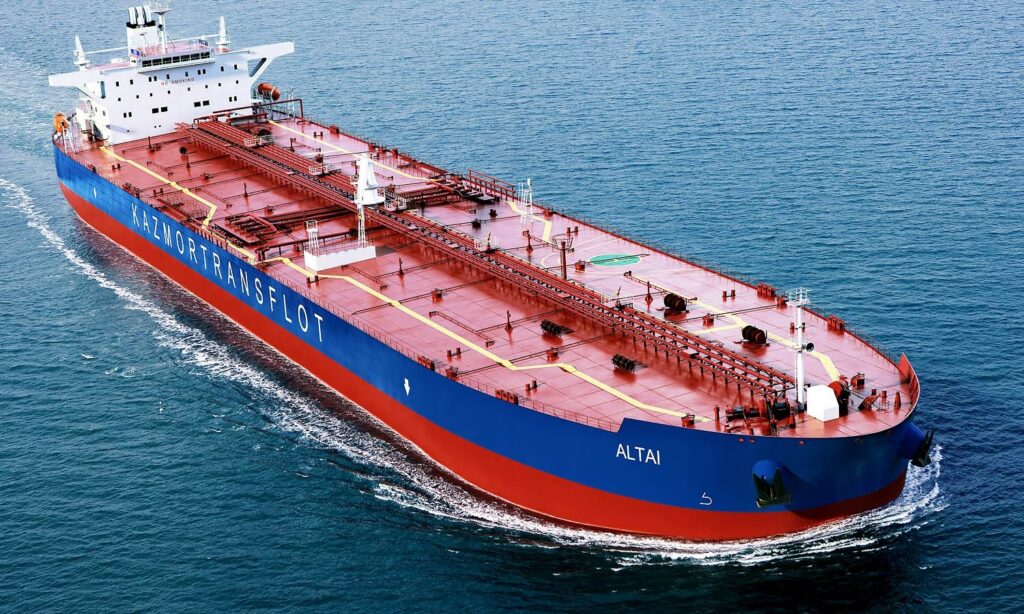
̶ Today, KTZ Express Group operates two vessels (through its subsidiary LLP “KTZ Express Shipping”). But these resources are insufficient for growing transit volumes. A program is underway to expand the fleet to eight vessels.
Currently, both Kazakh and foreign vessels operate along the maritime segment of the Trans-Caspian International Transport Route (TITR) in the Caspian Sea. At the same time, increasing demand from shippers is creating a need to establish a sustainable schedule and expand transport capacity.
For example, in the last two years alone, the volume of traffic has increased by tens of percent, and container traffic on the route has shown significant growth. As a result, in 2024, 358 container trains traveled from China along the Trans-Caspian route, which is 33 times more than a year earlier. In the near future, it is planned to increase this volume to 600 container trains, with a strategic goal of 3,000 per year.
The new fleet will ensure regular TITR service across both the Caspian and Black Seas. The vessels will carry bulk and general cargo as well as containers, fully integrated into multimodal supply chains. This will create entirely new opportunities: Kazakhstan will not only link the markets of Europe, the Caucasus, and Central Asia but also provide end-to-end logistics solutions “from port to final customer.” The route will cover key hubs in Azerbaijan and Kazakhstan on the Caspian Sea, as well as Georgia, Turkey, Romania, and other Black Sea ports, making it one of the most sought-after transport corridors in Eurasia.
A key part of this strategy is expanding port infrastructure. For instance, Aktau Port is actively building capacity by enlarging container terminals and deepening waters, thereby increasing throughput. Combined with the creation of a national fleet, this will raise TITR’s capacity and resilience to a new level.
Building a modern fleet is not only an economic step but also a strategic one. For Kazakhstan, it is about transport security, control over key logistics links, and supply chain resilience. Moreover, having its own fleet opens up the opportunity to offer partners competitive and predictable terms of cooperation, building trust and, of course, strengthening the country’s position in international logistics.
– Will these vessels be managed by KTZ Express Shipping, and what tasks will the company prioritize in maritime transport development?
̶ KTZ Express Shipping has been operating in the maritime transport market since 2014, with its own cargo base and strong client relationships.
Yes, all new vessels will be managed by this specialized subsidiary, which will handle operations and logistics. Fleet expansion will allow the company to move from limited participation to full-scale maritime freight operations, increasing market share, revenue, and standing in liner services.
At the same time, with TITR continuity as a top priority, the main focus will be on ensuring stable transport conditions, building long-term client loyalty, and adapting flexibly to market dynamics. This will also be supported by integration with NC KTZ’s infrastructure and a well-calibrated pricing policy.
̶ Given the problem of declining Caspian water levels, are current and future sea conditions being factored into vessel design?
̶ Yes, when designing the fleet, the key factor is first and foremost the adaptation of ships to the conditions of the Caspian Sea. Draft requirements are particularly important. Our technical specifications call for a draft of about 4.7 meters, which ensures safe operation despite Caspian shallowing trends.
When designing the fleet, we pay special attention to parameters such as dimensions, cargo capacity, speed, and type of vessels. Each of these factors directly affects the operational efficiency and competitiveness of the future fleet. For example, the hull characteristics are 140×17 meters, and the capacity of the vessels is up to 500 containers in twenty-foot equivalent units, which will ensure an optimal combination of maneuverability and load capacity. The designed cruising speed of 10-12 knots will allow regular liner services and meet transit route needs. Moreover, the fleet will consist of multipurpose vessels capable of handling various cargo types, ensuring adaptability to market conditions.
Importantly, we have engaged an independent international technical consultant to ensure transparency in shipyard selection and guarantee that the vessels fully meet international standards and safety requirements.
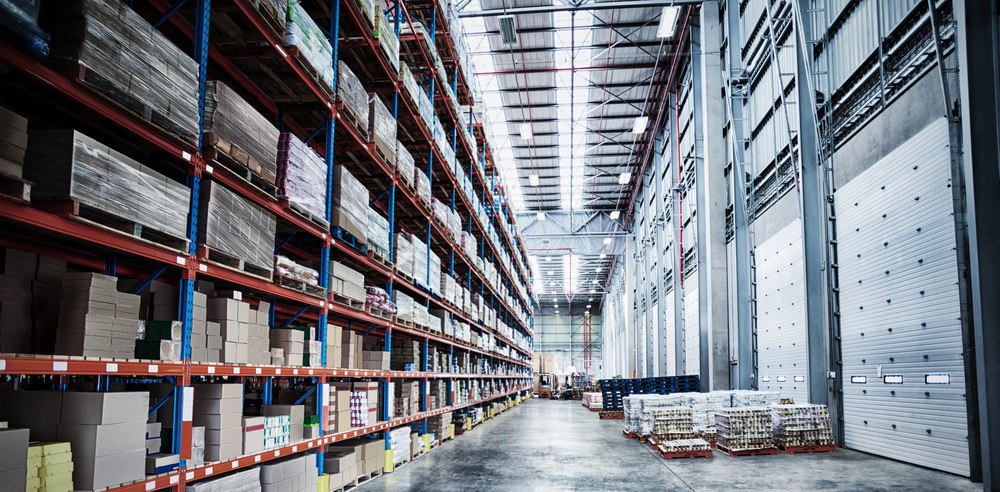
For reference: KTZ Express is a subsidiary of JSC “NC KTZ.” The company provides a full range of transport and logistics services across all modes, integrating rail, maritime, air, and road transportation, along with port and airport infrastructure, and a global network of warehouses and terminals. It operates its own terminals at Lianyungang Port in China and at Khorgos on the Kazakhstan-China border, and is currently building facilities in Russia, Belarus, Hungary, and Azerbaijan.