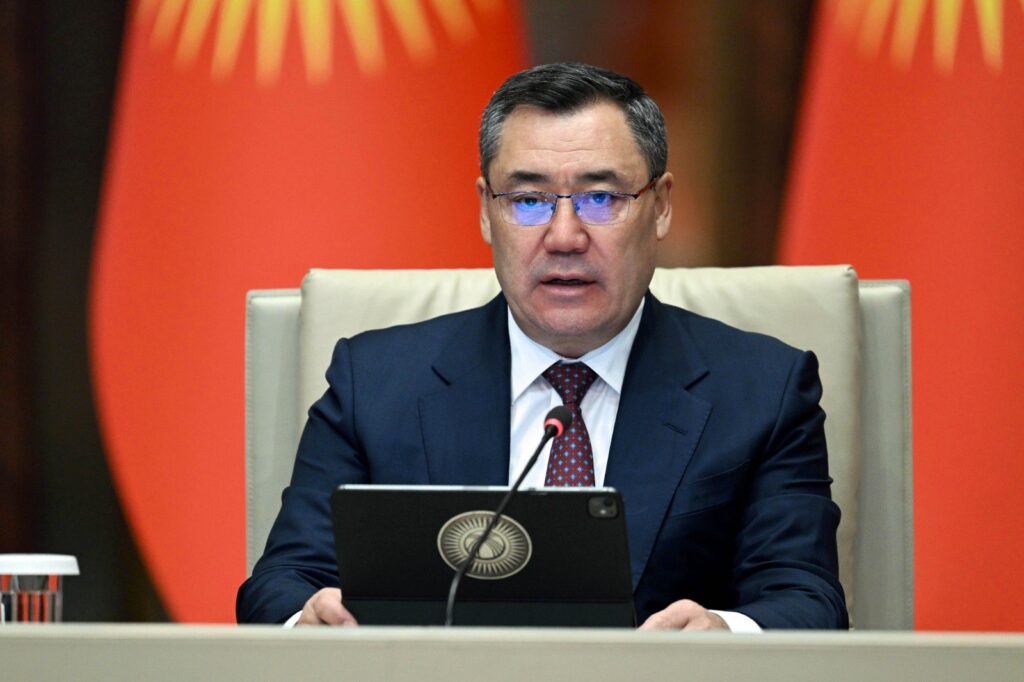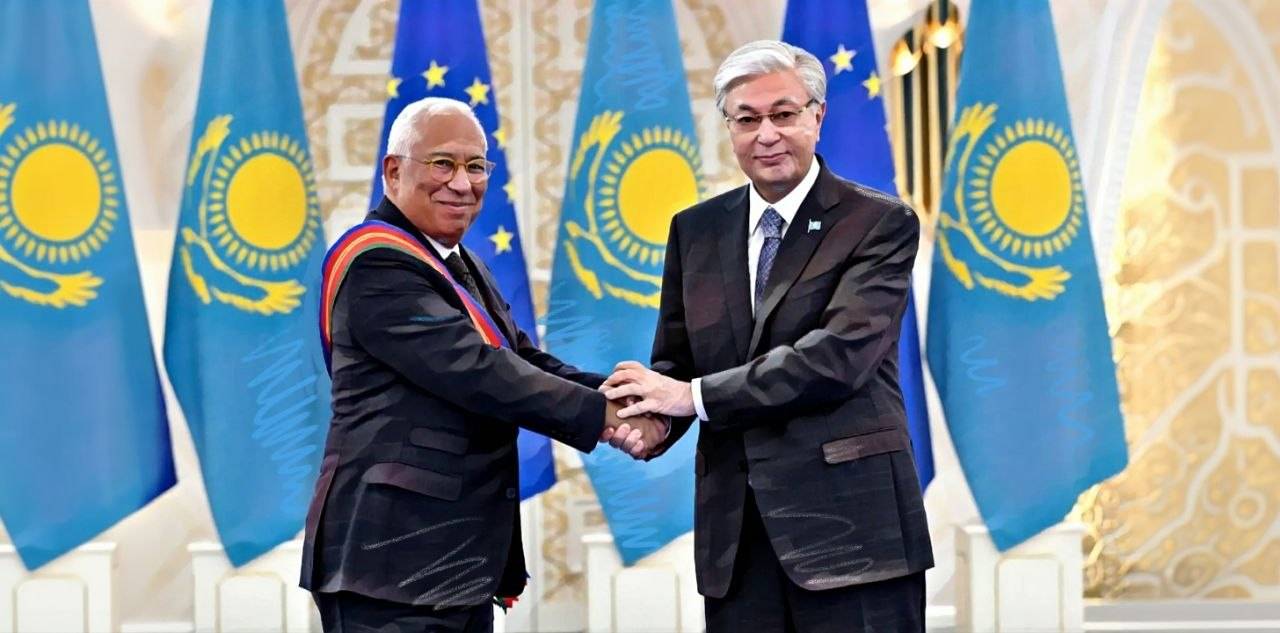
President Kassym-Jomart Tokayev arrived in Brussels on June 22 seeking to advance cooperation with the European Union on critical minerals, transport connectivity, investment, and visa facilitation, as Kazakhstan and the EU move from framework agreements toward implementation. Tokayev’s official visit brings him together with the European Union’s two senior institutional leaders and Belgium’s prime minister.
Tokayev is scheduled to meet European Council President António Costa at 7 p.m. on Monday. A joint meeting with Costa and European Commission President Ursula von der Leyen is set for Tuesday. His program also includes Belgian Prime Minister Bart De Wever and a Kazakhstan-EU roundtable with senior European business executives.
The announced agenda covers the enhanced partnership, bilateral ties and international issues. The business roundtable will focus on investment, trade and joint projects.
Ahead of the meetings, Tokayev set out three priorities for the next phase of relations: “strengthening resilience, expanding connectivity of all kinds, and creating new opportunities for citizens.” He linked them to energy and food security, critical raw materials, the Middle Corridor, artificial intelligence, easier travel, education and research.
The visit follows a year of closer ties. The EU and the five Central Asian states raised their relationship to a strategic partnership at the Samarkand summit in April 2025. Costa then visited Astana in December. Those meetings placed critical minerals, transport, energy, digital links and easier travel at the center of cooperation.
A Partnership Built on the EPCA
The Enhanced Partnership and Cooperation Agreement gives the relationship its legal basis. Kazakhstan and the EU signed it in 2015, and it entered into force on March 1, 2020, making Kazakhstan the first Central Asian country to conclude such an agreement with the EU.
The EPCA covers 29 policy areas, including trade, investment, energy, transport, climate, research, justice, and human rights. The broad range allows both sides to pursue commercial and political work through one framework.
The agreement reached its tenth anniversary in December 2025. Before his Astana visit, Costa set a clear goal for the coming years.
“The next decade must be defined by implementation: stronger value chains, modernised infrastructure, deeper technological cooperation, and tangible joint projects,” Costa said.
Large Volumes, Limited Diversification
The EU remained Kazakhstan’s main trade and investment partner in 2025. Two-way goods trade totaled €41.4 billion, down 10.7% from 2024. EU imports from Kazakhstan reached €30.8 billion, while EU exports were €10.6 billion.
The mix is less balanced. Fuel and mining products accounted for 92% of Kazakh exports to the EU. Machinery, transport equipment and chemicals led European sales to Kazakhstan.
That gives the Brussels business roundtable a clear economic focus. Kazakhstan wants more European capital in processing, manufacturing, infrastructure and technology, while European companies want reliable access to energy and raw materials, along with clear investment rules.
“We see great opportunities to venture in energy efficiency, critical minerals, digital technologies, and transport connectivity,” Tokayev said after meeting Costa in Astana in December.
Critical Minerals Move Closer to Investment
The EU and Kazakhstan signed a strategic partnership on sustainable raw materials, batteries and renewable hydrogen in November 2022. A 2025-2026 roadmap now guides work on exploration, processing, recycling, research and skills.
Kazakhstan can export 21 of the 34 critical raw materials on the EU list. Its position in uranium, copper, chromium, zinc and other minerals has made it an increasingly important partner in Europe’s critical raw materials strategy.
Astana also wants more value created inside Kazakhstan. Tokayev has called for local processing, higher-value production and recycling that meet EU standards. European finance and technology could support that shift, but projects still need clear commercial plans, transport links, and predictable regulation.
The Middle Corridor Remains Central
The Trans-Caspian International Transport Route, or Middle Corridor, links China and Europe through Kazakhstan, the Caspian Sea, the South Caucasus and Turkey. The EU and Kazakhstan launched a coordination platform in 2024 with a target of moving goods between Central Asia and Europe in 15 days or less.
The route gives Kazakhstan a central role in Europe’s transport policy for Central Asia, and offers an alternative to the northern route through Russia. Faster border procedures, more rail capacity and improved Caspian ports remain essential.
At the Samarkand summit, von der Leyen announced a €12 billion Global Gateway package for Central Asia in a regional package covering all five Central Asian states. Its priorities include transport, critical raw materials, digital links, water and energy.
Visa Talks Show Practical Progress
Visa facilitation has become one of the most practical issues in the relationship. Formal negotiations began in Brussels on December 2, 2025, alongside talks on a readmission agreement.
A further round in June 2026 produced substantial progress on most provisions. Negotiators discussed processing times, multiple-entry visas, and shorter lists of supporting documents. The talks aim to simplify visa procedures, though full visa-free travel lies outside the current negotiations.
“When concluded, this Agreement will make it easier for our people to meet, study, work and invest,” Costa said in December.
Ukraine, Sanctions and Rights Stay in the Dialogue
Russia’s war in Ukraine, the UN Charter and sanctions circumvention form part of the established political dialogue. EU and Central Asian leaders addressed all three at the Samarkand summit. The December 2025 Cooperation Council also discussed sanctions, human rights, constitutional reform, and the rule of law.
The EU and Central Asian governments have described freedom of expression, independent media and protection of human rights defenders as core elements of their relationship, a commitment that gives the Brussels talks a political dimension alongside the commercial agenda.
Brussels and Astana already have agreements, roadmaps and finance channels. This visit affords both sides a chance to attach projects, budgets and timelines to them. Mineral processing, transport, energy, digital links and mobility offer the clearest areas for potential progress.