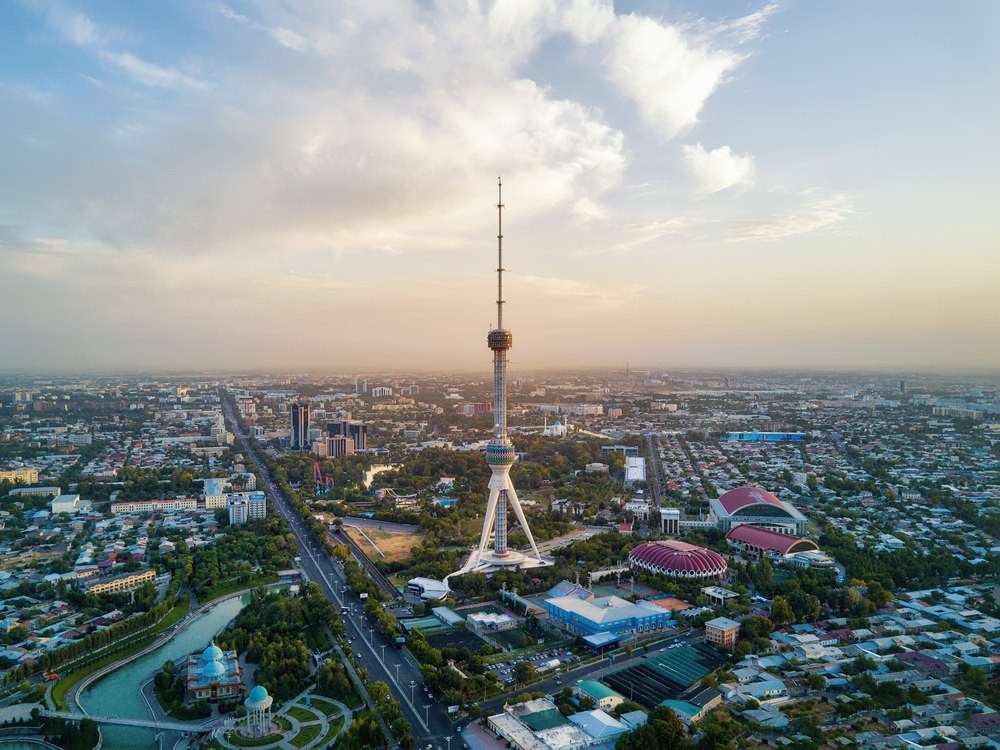
Nearly three million foreign tourists have visited Tashkent since the start of the year, prompting authorities to plan a series of practical upgrades aimed at making the Uzbek capital easier to navigate on foot.
The measures, discussed at a July 4 government meeting on Tashkent’s development, include free digital tourist maps, more public toilets, and an increase in waste bins across the city. According to official figures cited at the meeting, close to three million foreign visitors have travelled to Tashkent so far this year.
Officials said many tourists explore Tashkent on foot. Authorities now plan to install free tourist maps at transportation points across the city, with walking routes also available for download to mobile phones.
The plans point to a growing challenge for Tashkent: the city is receiving more visitors, but still lacks some of the basic infrastructure expected in a major tourist destination. Navigation, public sanitation, and waste collection are increasingly part of the tourism offer, particularly for visitors exploring the city independently rather than through organized tours.
The shortage of public toilets was identified as a particular problem in areas popular with pedestrians and tourists. Officials have been told to prepare a dedicated program within one month, with land plots to be auctioned this year for the construction of 15 to 20 modern public toilets in each district of the capital.
The initiative builds on earlier attempts to modernize public sanitation in Tashkent. In 2023, the city opened Uzbekistan’s first automated public toilet on Lokomotiv Street in the Mirabad district.
According to Gazeta.uz, the facility operates around the clock, includes shower facilities, is accessible for people with disabilities, and has a vending kiosk selling hygiene products and diapers in the women’s section. Authorities have also allocated 80-100 square meter plots through electronic auctions to more than 150 private businesses for the installation of additional modern public sanitation facilities.
Waste collection is another part of the program. Authorities plan to increase the number of bins on streets, especially around tourist zones, a relatively small intervention but one that can have an immediate effect on how visitors experience the city.
The focus on sanitation also reflects broader environmental and public-health challenges. In Yale University’s 2024 Environmental Performance Index, Uzbekistan ranked 107th out of 180 countries, with an overall score of 42.6. The country ranked 67th for unsafe sanitation and 43rd for unsafe drinking water, while its controlled solid waste score was listed at zero, highlighting continued weaknesses in waste management and urban services.