Uzbekistan’s capital markets are moving from promise to execution, and the National Investment Fund of the Republic of Uzbekistan (UzNIF) has become the clearest deal to show that shift.
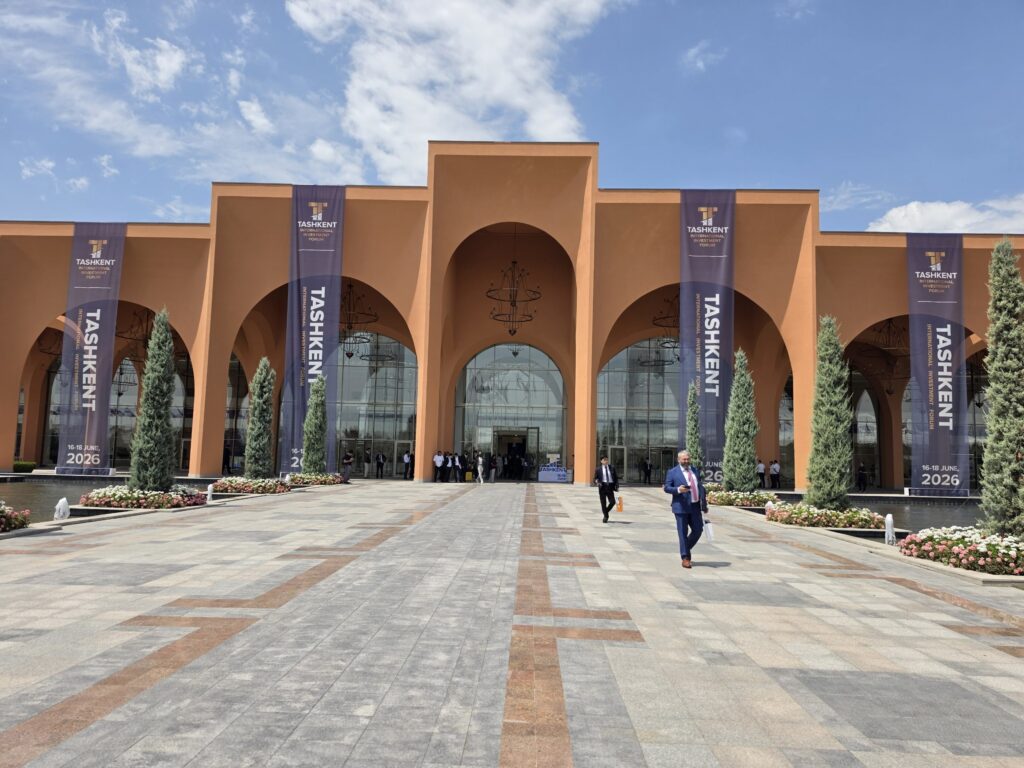
At the 5th Tashkent International Investment Forum, global investors, bankers, development finance institutions, and export credit agencies gathered gathered around one recurring message: Uzbekistan is no longer trying to convince the world that it is open for business. The challenge now is ensuring that investment momentum becomes sustainable and led by the private sector.
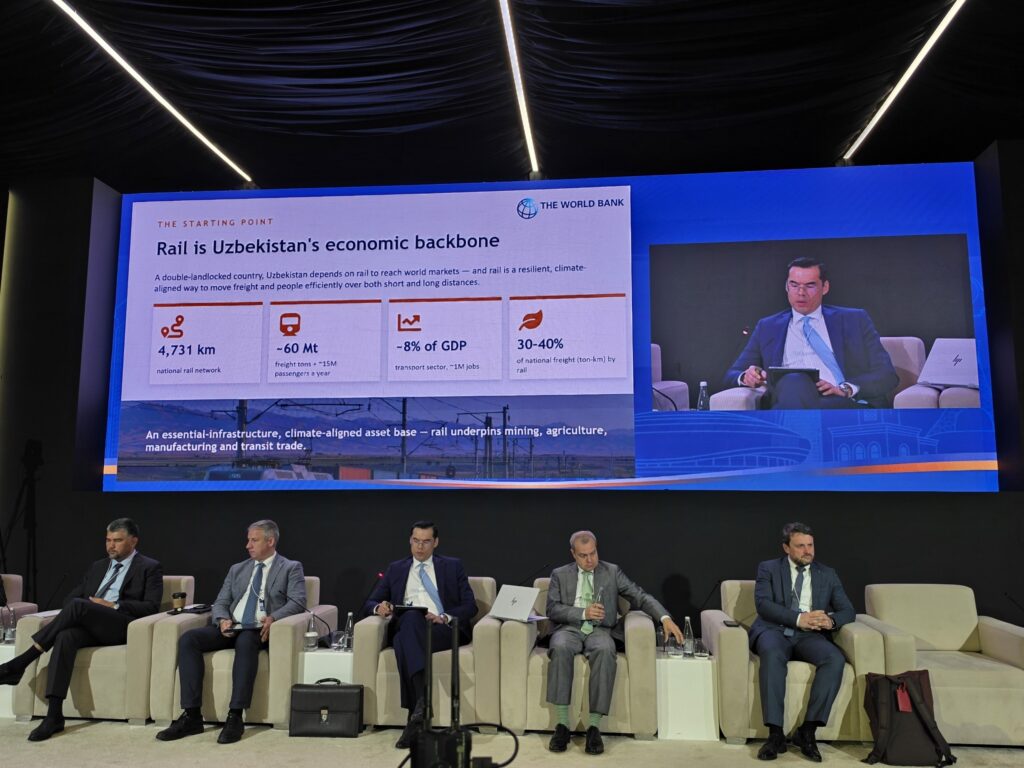
During a panel discussion on political risk and blended finance, government officials and international investors debated how frontier markets can attract larger volumes of private capital while reducing reliance on public financing and multilateral support mechanisms. While the discussion focused on frontier markets, Uzbekistan was at the center of nearly every exchange.
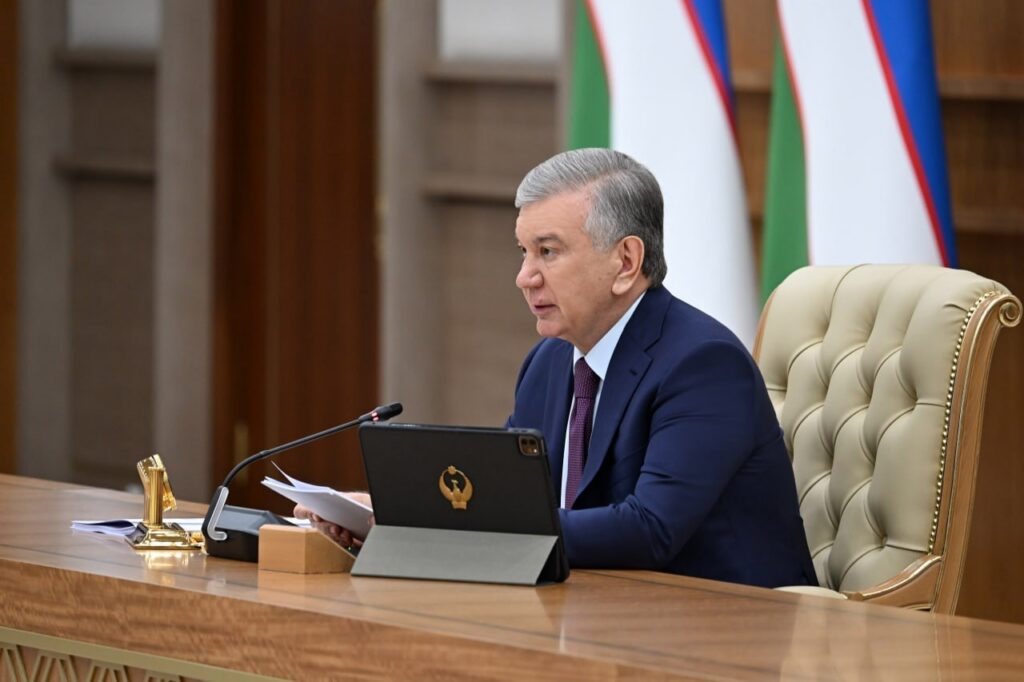
Jasur Karshibaev, advisor to the Minister of Economy and Finance of Uzbekistan, opened the session by outlining the government’s long-term ambitions.
According to Karshibaev, Uzbekistan aims to double the size of its economy and reach upper-middle-income status by 2030. He argued that recent economic indicators suggest the country is moving in that direction despite a difficult global environment.
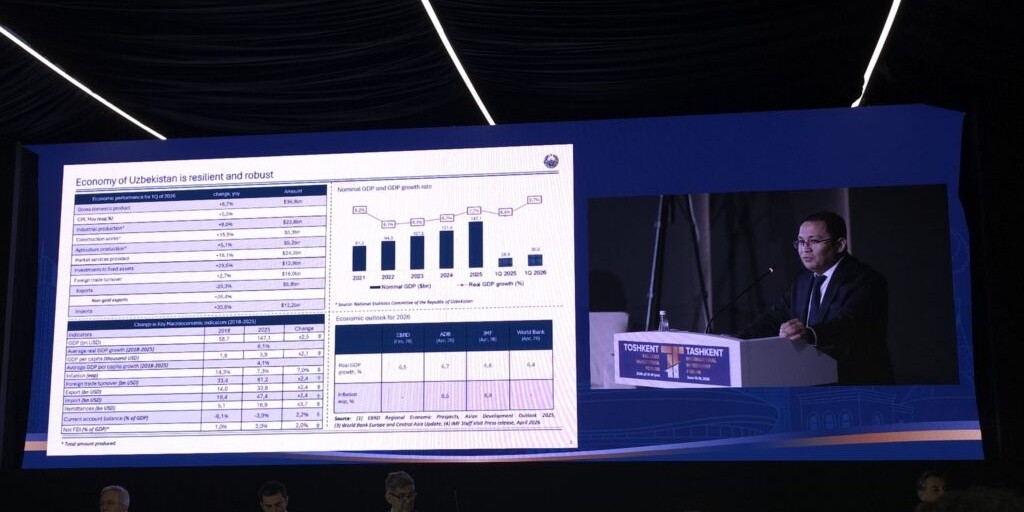
Image: TCA
“The reforms under the leadership of the President of Uzbekistan are already bearing results,” he said, pointing to strong first-quarter economic growth and declining inflation.
Karshibaev highlighted recent developments in the country’s sovereign credit profile. In June, Fitch Ratings affirmed Uzbekistan’s sovereign rating at BB and revised the outlook to positive. Yet despite this progress, he stressed that the government’s focus is shifting from public investment toward private capital mobilization.
“We cannot base our success on fiscal intervention,” Karshibaev said. “It should be private-sector-led growth.”
For Uzbekistan, attracting private investment is becoming more important as the economy expands faster than domestic savings can support. The country continues to seek foreign capital, but officials are increasingly focused on reducing the cost of accessing it. Karshibaev argued that one of the main challenges lies in the gap between perceptions of risk and economic realities.
He noted that sovereign bond spreads have narrowed significantly and are approaching levels typically associated with investment-grade economies. However, some institutional risk assessments and country-risk classifications continue to reflect older perceptions.
“International investors who vote with their cash are expecting a very positive credit trajectory,” he said.
According to Karshibaev, risk assessments need to reflect economic fundamentals more accurately because inflated risk perceptions can raise financing costs and make blended finance instruments less competitive than commercial funding alternatives. He said the government is working closely with international financial institutions, including the Asian Development Bank and the World Bank, while pursuing reforms aimed at achieving investment-grade status before the end of the decade.
Image: TCA
Investors also examined how frontier markets are evaluated in practice.
Francis Malige, managing director and head of the Financial Institutions Business Group at the European Bank for Reconstruction and Development, argued that one of the biggest misconceptions about frontier markets stems from distance.
“Risk has an inverted perspective,” Malige said. “The further out you are, the larger it looks.”
Investors who assess markets solely from financial centers often exaggerate risks, he argued. By contrast, those who spend time in-country frequently discover opportunities that are not visible from abroad.
“If you’re sitting in London and you’re saying, ‘Frontier markets are too risky,’ then you come here on the ground and realize there are a lot of things you can do,” he said.
Malige said certain fundamentals remain unchanged regardless of geography or market classification. Investors continue to prioritize transparency, predictability, governance standards, liquidity, and a level playing field between private and state-owned businesses.
For Uzbekistan, he said, reform consistency has become one of its main selling points.
“A government like Uzbekistan’s that has a clear strategy for governance reform, a clear strategy for where it wants to take the country and delivers on it consistently attracts much more investors,” he said.
Malige cautioned that significant work remains, particularly in the financial sector. State-owned banks still dominate the banking system, private banks remain relatively small, and domestic capital markets are still developing. To attract larger institutional investors, he argued, Uzbekistan must continue expanding local savings institutions such as pension funds and insurance companies while encouraging more listings on capital markets.
“Large investors typically come once you have a vibrant market,” Malige said.
UzNIF, managed by Franklin Templeton, is among the most closely watched examples of Uzbekistan’s efforts to develop capital markets.
Marius Dan, chief executive officer for Central Asia at Templeton Global Investments, which oversees UzNIF, provided perhaps the clearest example of how international investors are beginning to view Uzbekistan differently.
UzNIF was established in partnership with the Ministry of Economy and Finance and holds minority stakes in major state-owned enterprises across sectors including banking, infrastructure, transportation, utilities, insurance, and energy.
Within a year of becoming operational, UzNIF completed a landmark dual listing on the London Stock Exchange and the Tashkent Stock Exchange. Reuters reported that the initial public offering (IPO) raised more than $690 million and drew more than $2.8 billion in orders from global institutional investors. Major global investment firms participated, including BlackRock and Redwheel.
For Dan, the significance of the transaction extended far beyond fundraising.
“What investors participated in and why they invested in this transaction is because of what is happening here on the ground,” he said.
Having first visited Uzbekistan in 2018, Dan said he has witnessed firsthand how international perceptions often lag behind reality.
“A lot of times with frontier markets, perception is far worse than the reality on the ground,” he said.
According to Dan, bringing investors to Uzbekistan remains one of the most effective ways to close that gap. Meetings with government officials, company executives, and local stakeholders often reveal a more dynamic and reform-oriented economy than investors initially expect.
The fund’s performance appears to support that argument. Only weeks after its listing, Dan said the fund’s share price had risen by approximately 25-30% on both exchanges. Local retail investors also participated heavily, generating more demand than all previous IPOs combined. For Dan, however, the IPO represents an early stage in a longer transformation process.
The fund is now preparing a series of additional listings involving portfolio companies operating in telecommunications, hydropower, energy generation, and banking. He pointed in particular to Sanoat Qurilish Bank (SQB), one of the country’s major banks, as a potential future candidate for a market listing.
Dan highlighted governance reforms taking place within state-owned enterprises. Independent directors now hold majorities on the boards of 12 out of the fund’s 13 portfolio companies.
“That is a very clear sign of commitment from the government of Uzbekistan that transformation needs to happen,” he said.
The banking sector offers another lens through which international investors are assessing Uzbekistan’s reform trajectory.
Irakli Elashvili, deputy chief executive officer for corporate banking and market instruments at Ipoteka Bank OTP Group, described the transformation that followed OTP Group’s acquisition of a majority stake in the bank in 2023. The acquisition marked one of the country’s first major banking privatizations and introduced European banking standards, governance practices, and risk-management systems into the local market.
Elashvili said the arrival of OTP Group improved the bank’s relationships with international investors and development institutions. The bank subsequently became the first private financial institution from Uzbekistan to issue a public Eurobond. According to Elashvili, investor appetite was driven less by OTP Group’s international reputation than by growing confidence in Uzbekistan itself.
“During the roadshow, we didn’t have to pitch too much about Uzbekistan because all the institutional investors know the country,” he said.
Uzbekistan’s banking sector remains relatively young compared with many other emerging markets, creating substantial room for expansion. Levels of retail and corporate lending remain significantly below those seen in more mature financial systems, offering opportunities for future growth.
“For many markets this makes Uzbekistan very attractive,” Elashvili said.
Export credit agencies also see growing opportunities.
Marck Wengrzik, chief executive officer of AKA Bank, pointed to the importance of political-risk insurance and export credit guarantees in reducing barriers to investment.. He cited improvements in Uzbekistan’s handling of currency risks and macroeconomic stability, arguing that these developments have improved investor perceptions. German investors, he noted, increasingly have access to political-risk insurance mechanisms that make investments in frontier markets easier and more attractive
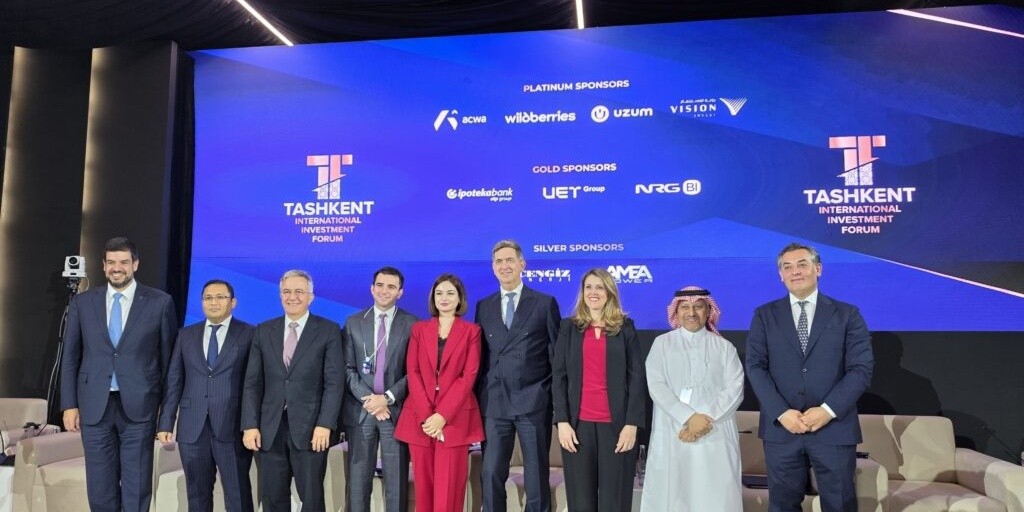
Image: TCA
Meanwhile, Cristiana Portale, head of international network for Europe, CIS countries, and Ukraine at SACE, Italy’s export credit agency, said Italian companies are showing growing interest in Uzbekistan across a wide range of sectors.
Energy, infrastructure, metallurgy, machinery manufacturing, agribusiness, and food processing are among the areas attracting particular attention. Portale said SACE has already supported more than €400 million worth of transactions involving Uzbekistan. Among the projects cited were support for gas-distribution modernization, engineering services for chemical plants, and expansion projects in the metallurgical sector.
“We are seeing opportunities in infrastructure projects, logistics corridors, energy systems, and critical raw materials,” she said.
The discussion also attracted perspectives from private investors already active in the region.
Sheikh Mansoor bin Khalifa Al-Thani, founder and chairman of MBK Holding, argued that leadership and reform have become key drivers of investor confidence.
“When the leadership has a clear strategy and has a clear vision, that creates confidence and trust,” he said.
He also highlighted Uzbekistan’s human capital as one of its strongest long-term advantages.
“The talent DNA is there,” he said.
Separately, The Times of Central Asia spoke with Malige about how international investors currently view Uzbekistan. Asked what advice he would give potential investors considering the country, Malige’s answer was straightforward.
“I think international investors need to come here and see for themselves and do good due diligence and take time to structure good projects,” he said.
“I don’t see major challenges, but I do see a need for commitment and a need for taking the time to understand the context.”
His comments echoed a recurring message throughout the forum: successful investment in frontier markets requires engagement rather than assumptions.
Malige also addressed the question of whether Uzbekistan should still be viewed as a frontier market.
“From that standpoint Uzbekistan is still a frontier market,” he said, pointing primarily to criteria such as stock-market liquidity. At the same time, his broader assessment suggested that traditional labels may no longer fully capture the country’s investment profile.
Throughout the session, participants repeatedly returned to a common conclusion: Uzbekistan has already succeeded in attracting the attention of global investors. The next stage is ensuring that reforms continue, financial markets deepen, and risk perceptions evolve alongside economic realities.
Karshibaev acknowledged that challenge directly during his closing remarks. The government, he said, remains committed to transparency, accountability, and ongoing dialogue with investors. Uzbekistan is participating in international data transparency initiatives, expanding engagement with institutional investors, and actively seeking feedback from international partners on remaining obstacles.
“We are very open,” he said.
He also reiterated that mobilizing private capital remains central to the country’s long-term development strategy. The government’s objective is to create an environment where private-sector growth can increasingly drive economic expansion.
As Uzbekistan continues pursuing investment-grade status, expands its capital markets, and advances state-owned enterprise reforms, the country is trying to position itself as a frontier market where reform progress, transactions, and private capital can align.