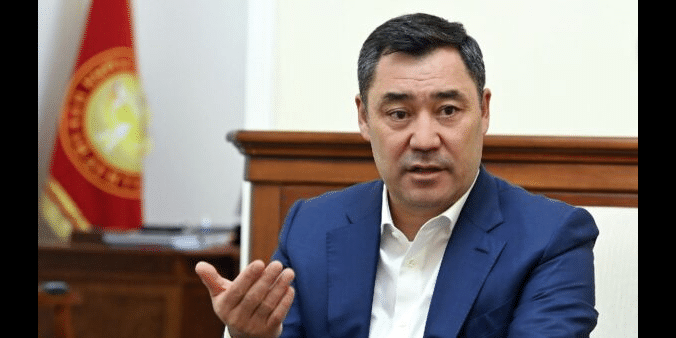
Eleven people, including President Sadyr Japarov, have applied to run in Kyrgyzstan’s presidential election on January 27, 2027. By November 16, two had collected the 30,000 voter signatures required for registration.
The Central Election Commission (CEC) confirmed the number of applicants on November 13. Applicants have until December 8 to collect enough signatures, after which the commission will verify their submissions before deciding who qualifies for registration.
Japarov was the first to finish collecting signatures, reaching the maximum of 60,000 that may be submitted to the CEC. By November 15, Syimyk Zhapykeyev, former head of the State Service for Combating Economic Crimes, commonly known as the Financial Police, had collected 31,140 signatures.
By that evening, Aimen Kasenov, a former board member of the Russian Kyrgyz Development Fund, was approaching the threshold with 28,257 signatures. Former lawmakers Iskhak Masaliyev and Baktybek Kalmamatov had collected 26,089 and 14,140, respectively. Klara Sooronkulova, a former Constitutional Chamber judge, had 13,613.
Former State Migration Service head Bakytbek Adylov and former CEC chairman Mambetzhunus Abylov are among the remaining applicants. Azamat Esenbekov, a former Finance Ministry official, is also seeking to run. The other two are logistics entrepreneur Akai Kydyrov and businessman Amur Aiba Meder. These five had collected between 3,446 and 15,263 signatures by November 15.
Masaliyev has held office for multiple parliamentary terms and participated in opposition politics. Sooronkulova has publicly criticized government decisions. Zhapykeyev became widely known during the political crisis of October 2020, before his appointment to lead the Financial Police.
For the first time in a Kyrgyz presidential election, signatures can be collected through Tunduk, the government’s digital platform for public services. Voters may support more than one applicant. A signature supports a person’s registration as a candidate and does not commit the voter to choosing that person in the election. By November 16, the electronic system had recorded more than 227,000 signatures.
Under the new rules, applicants were required to pay a nonrefundable electoral deposit of 1 million soms (approximately USD 11,400) before submitting their nominations. They must also demonstrate proficiency in Kyrgyz, the state language, and meet other legal requirements. Remaining registration documents will be accepted until December 13, and the CEC must complete registration by December 23, when official campaigning begins.
According to preliminary CEC figures, 4,467,040 citizens are included on the voter rolls.
Japarov came to power following mass protests against the results of Kyrgyzstan’s parliamentary elections in October 2020. In January 2021, he won an early presidential election with 79.2% of the vote on a turnout of 39.16%.
Several months later, Kyrgyzstan adopted a new Constitution, replacing its mixed parliamentary-presidential system with a presidential system. The head of state gained direct control over the executive branch, while the number of seats in the Jogorku Kenesh, Kyrgyzstan’s parliament, was reduced from 120 to 90.
The reform replaced a single six-year presidential term with a limit of two five-year terms. In February 2026, the Constitutional Court clarified Japarov’s eligibility, ruling that his current six-year mandate counts as his first term under the new Constitution and allowing him to seek another term.
The court initially said the election should take place on January 24, 2027. Subsequent legislative amendments moved polling day from the fourth Sunday to the fourth Wednesday of January, setting the date for January 27.
Preparations for the election are taking place under tighter media legislation and restrictions on public rallies in central Bishkek that have been extended until December 31. International human rights organizations have criticized criminal cases involving opposition politicians and journalists. Authorities have cited public order and security concerns to justify restrictions on gatherings.