For decades, Kazakhstan and Canada built their partnership around natural resources. Today, that relationship is expanding into new territory. From artificial intelligence and innovation to education and workforce development, both countries are increasingly looking beyond traditional sectors to shape the next phase of cooperation.
This trend is already reflected in economic indicators. More than 160 Canadian-linked enterprises operate in Kazakhstan, Canadian investment has exceeded U$ 6 billion since 1994, and bilateral trade reached approximately U$ 458 million in 2025. At the same time, sectors that will shape the competitiveness of both economies in the coming decades are gaining greater importance.
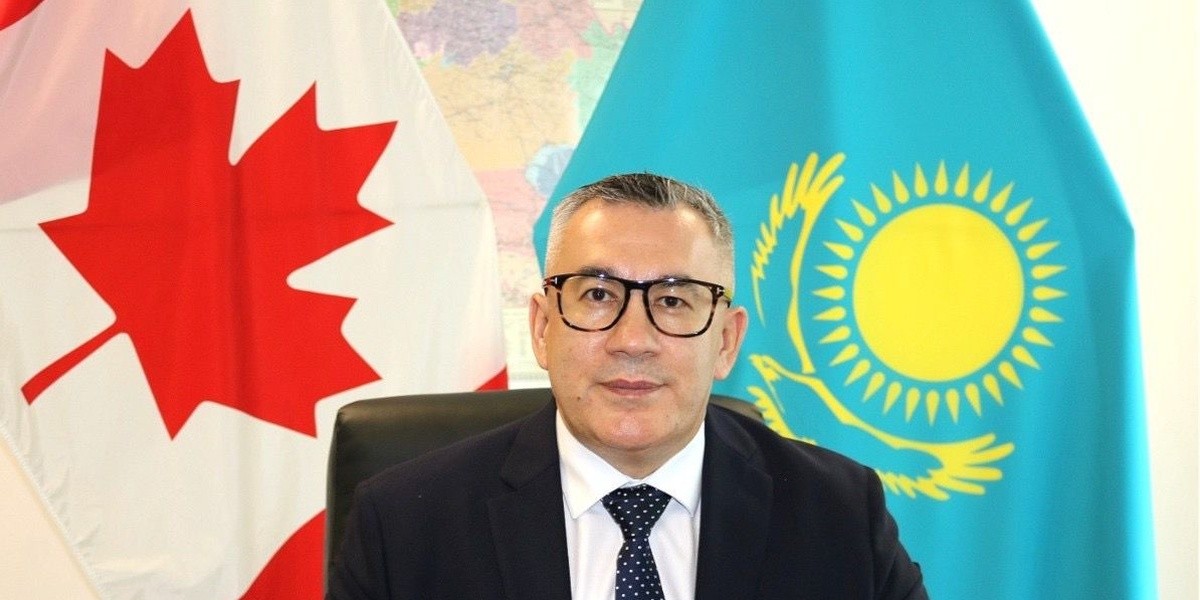
“I believe Kazakhstan-Canada relations are entering a new and dynamic phase,” said Dauletbek Kussainov, Kazakhstan’s Ambassador to Canada, in an interview with The Times of Central Asia.
According to him, changes in the global economy are creating new opportunities for cooperation between the two countries.
“Canada brings world-class expertise, technology and investment, while Kazakhstan offers significant resource potential, industrial capacity, and a strategic position connecting major markets,” the ambassador said.
Although mining and energy remain central to bilateral cooperation, the scope of engagement is expanding into areas linked to technology, innovation and workforce development.
This shift is also visible in the practical agenda of bilateral relations. In June, Astana hosted several major events involving Canadian business representatives. The Astana Mining & Metallurgy Congress brought together representatives of around 70 companies from 15 countries, including Canada, while the seventh meeting of the Kazakhstan-Canada Business Council brought together more than 100 participants, including senior representatives of Kazakhstani government agencies, the business communities of Kazakhstan and Canada, experts and academics.
“This year also marks the 30th anniversary of the Inkai joint venture, a lasting example of successful cooperation between Canadian and Kazakh partners,” Kussainov noted.
Three decades after the creation of one of the most successful joint projects in the uranium sector, bilateral cooperation is gradually moving beyond the traditional resource-based partnership and expanding into new areas, from education and technology to innovation and workforce development.
From Extraction to Value Creation
Critical minerals remain one of the key areas of cooperation between the two countries. As Western economies seek to diversify supplies of strategic raw materials, Kazakhstan is attracting growing attention because of its mineral resources. Canada, in turn, has one of the world’s strongest areas of expertise in geological exploration, mining engineering and sustainable resource development.
According to Kussainov, the greatest potential lies in three areas: geological exploration, mineral processing, and human capital development and knowledge transfer. Processing is becoming especially important.
“Today, the key challenge for many resource-rich countries is not simply extracting minerals, but creating more value from them domestically,” the ambassador said.
This point reflects a broader shift in Kazakhstan’s economic strategy. In recent years, the country has been placing greater emphasis on developing processing industries and localizing technological processes. In this context, Canadian expertise in engineering, metallurgy, processing technologies and industrial project management is particularly relevant. The discussion is not limited to traditional industrial competencies.
“The same applies to the use of artificial intelligence, which is becoming increasingly important in modern industrial operations,” Kussainov said.
Another important aspect is what the ambassador describes as the ecosystem supporting Canada’s mining sector: universities, research centres, industry associations and technical experts. This institutional base is one of Canada’s competitive advantages.
“In my view, the most valuable aspect of Kazakhstan-Canada cooperation is not limited to investment alone. It is the opportunity to combine resources, technology and expertise in ways that strengthen the competitiveness of the mining sector and support its long-term development,” he said.
Canadian companies ranging from long-established partners such as Cameco to newer entrants including Ivanhoe Mines, Teck Resources, Arras Minerals, First Quantum Minerals, Hatch and B2Gold are expanding their activities in Kazakhstan. Yet the long-term value of these projects will depend on whether they can support deeper industrialization of the economy rather than remain limited to raw material exports.
Achieving this goal, however, will require more than investment alone. Developing local processing capacity, expanding technical expertise, and building resilient supply chains remain among the key challenges facing many resource-rich economies, including Kazakhstan.
Education as a Strategic Investment
If critical minerals form the economic foundation of cooperation, education is gradually becoming one of its long-term strategic dimensions.
“When discussing economic cooperation, we often focus on investment, trade or industrial projects. Yet the success of any long-term economic transformation ultimately depends on people,” Kussainov said.
Each year, around 500 students from Kazakhstan study in Canada, including recipients of the Bolashak International Scholarship. According to Kussainov, these ties are already producing tangible benefits for Kazakhstan.
“Many have returned home and are contributing to Kazakhstan’s development in business, public service, science and education,” the ambassador noted.
Institutional cooperation between universities in the two countries is also expanding, including academic exchanges, joint research projects and the training of specialists. Educational ties are increasingly moving beyond higher education.
“The presence of Canadian International School in Astana reflects the expanding educational links between our countries,” he said.
The school follows a Canadian educational program and reflects growing interest in international education models in Kazakhstan. Against the backdrop of expanding cooperation between Kazakhstan and Canada in investment, technology and workforce development, such initiatives help strengthen people-to-people ties and create additional opportunities for international education without the need to study abroad.
The ambassador also pointed to growing interest in cooperation with Canadian colleges and polytechnic institutions, including Cambrian College, Olds College and other organizations specializing in industry-focused training and applied research. As demand grows for engineers, technicians and skilled workers for new industries, this area may become especially important.
“Ultimately, educational cooperation is about more than student exchanges or academic programs. It is about equipping the next generation with the knowledge and practical skills needed to support innovation, industrial development and the long-term competitiveness of our economies,” Kussainov said.
As Kazakhstan seeks to develop more technology-intensive sectors of the economy, workforce training is increasingly becoming not only an educational priority, but also an economic one.
Agriculture as an Emerging Area of Cooperation
Although natural resources remain an important part of bilateral economic relations, both countries see significant potential in sectors that have so far remained relatively underdeveloped. One such area is agriculture.
“Kazakhstan and Canada are among the world’s leading agricultural producers and face many similar challenges related to climate, productivity and sustainable land use,” Kussainov said.
According to the ambassador, opportunities for cooperation include seed development, precision agriculture, agricultural research and the production of higher-value food products.
The Technological Dimension of Partnership
Technology is another area where the interests of Kazakhstan and Canada increasingly intersect.
The timing is particularly significant. In January 2026, President Kassym-Jomart Tokayev signed a decree officially declaring 2026 the Year of Digitalization and Artificial Intelligence in Kazakhstan. The decision sets priorities at the level of state policy and defines the country’s development trajectory at least for the medium term. According to Kussainov, it underscores “the country’s commitment to accelerating the adoption of advanced technologies across the economy.”
According to Kussainov, Canada is a natural partner in this area.
“Canada was among the early pioneers of artificial intelligence and remains one of the world’s leading centres of AI research and commercialization,” Kussainov told TCA.
Kazakhstan, meanwhile, is actively investing in education, research and innovation infrastructure. Today, around 40 branches of foreign universities operate in the country, including dual-degree programs, while the number of international students has reached approximately 35,000. All of this creates the conditions for closer cooperation between universities, research centres, technology companies and start-ups in both countries.
A Partnership for a New Generation
More than three decades of engagement have forged strong and enduring ties between Kazakhstan and Canada, supported by a growing network of business, academic and institutional links.
“Ultimately, the greatest opportunities are often found where established strengths meet new ideas,” Kussainov said.
Today, the relationship is expanding into areas that will help shape the economies of the future. New companies, new technologies and new forms of collaboration are adding momentum across an increasingly diverse range of sectors. With both countries pursuing ambitious goals in innovation, digitalization and economic modernization, Kazakhstan and Canada are well positioned to deepen engagement across an expanding range of fields. Built on long-standing ties, the partnership is entering a new phase – one defined by even greater opportunities for Kazakhstan and Canada to expand cooperation in areas of shared interest.