• KGS/USD = 0.01144 0%
  • KZT/USD = 0.00216 0%
  • TJS/USD = 0.10698 0%
  • UZS/USD = 0.00008 0%
  • TMT/USD = 0.28530 0%
  • KGS/USD = 0.01144 0%
  • KZT/USD = 0.00216 0%
  • TJS/USD = 0.10698 0%
  • UZS/USD = 0.00008 0%
  • TMT/USD = 0.28530 0%
  • KGS/USD = 0.01144 0%
  • KZT/USD = 0.00216 0%
  • TJS/USD = 0.10698 0%
  • UZS/USD = 0.00008 0%
  • TMT/USD = 0.28530 0%
  • KGS/USD = 0.01144 0%
  • KZT/USD = 0.00216 0%
  • TJS/USD = 0.10698 0%
  • UZS/USD = 0.00008 0%
  • TMT/USD = 0.28530 0%
  • KGS/USD = 0.01144 0%
  • KZT/USD = 0.00216 0%
  • TJS/USD = 0.10698 0%
  • UZS/USD = 0.00008 0%
  • TMT/USD = 0.28530 0%
  • KGS/USD = 0.01144 0%
  • KZT/USD = 0.00216 0%
  • TJS/USD = 0.10698 0%
  • UZS/USD = 0.00008 0%
  • TMT/USD = 0.28530 0%
  • KGS/USD = 0.01144 0%
  • KZT/USD = 0.00216 0%
  • TJS/USD = 0.10698 0%
  • UZS/USD = 0.00008 0%
  • TMT/USD = 0.28530 0%
  • KGS/USD = 0.01144 0%
  • KZT/USD = 0.00216 0%
  • TJS/USD = 0.10698 0%
  • UZS/USD = 0.00008 0%
  • TMT/USD = 0.28530 0%

Uzbekistan and Afghanistan Plan Joint Hospital Project in Mazar-i-Sharif

Uzbekistan and Afghanistan have agreed to build a hospital in the Afghan city of Mazar-i-Sharif under a public-private partnership, Uzbekistan’s Ministry of Health said.

The agreement was reached during a visit by an Uzbek delegation led by Health Minister Asilbek Khudayarov to Afghanistan, where talks were held with Afghan Health Minister Mawlawi Noor Jalal, Balkh regional governor Mohammad Yusuf Wafa, and other officials.

According to the ministry, the Afghan side highlighted the need to expand cooperation in healthcare, noting that many districts in the country still lack hospitals. Officials also pointed to a rise in cancer cases in recent years and requested Uzbekistan’s support in building a medical facility in Mazar-i-Sharif, training specialists, and simplifying procedures for Afghan patients seeking treatment in Uzbekistan.

Wafa expressed appreciation for Uzbekistan’s continued support, particularly during difficult periods such as natural disasters, and emphasized the importance of strengthening humanitarian ties between the two countries.

During the visit, the Uzbek delegation also toured healthcare facilities in Balkh province, including a district clinic in Dehdadi and the Abu Ali Ibn Sina Central Hospital in Mazar-i-Sharif, where they met with medical staff and reviewed current conditions.

As a result of the talks, the parties agreed to establish a joint working group to develop proposals for supporting Afghanistan’s public healthcare system. Plans were also outlined to organize reciprocal visits by Afghan medical delegations to Uzbekistan.

The sides discussed launching training programs that would allow up to 100 Afghan specialists each year to improve their qualifications at Uzbekistan’s specialized medical centers. In addition, the possibility of allocating annual scholarships for up to 50 Afghan students to study at Uzbek medical universities was considered.

The Uzbek side also agreed to explore simplifying the issuance of medical visas for Afghan patients and easing procedures for the supply and registration of pharmaceuticals produced in Uzbekistan, which Afghan officials said are in strong demand in the local market.

A key outcome of the visit was the agreement to construct a hospital in Mazar-i-Sharif in cooperation with Arman Group. Under the arrangement, the Afghan side will invest in the project, adapt an existing building for medical use, and procure modern equipment, while Uzbekistan will provide qualified medical personnel.

The Times of Central Asia previously reported that in March, Uzbekistan and Afghanistan established a joint Business Council aimed at strengthening trade and economic ties, bringing together representatives from both countries’ business communities and institutions. The new healthcare agreement reflects a broader trend toward expanding cooperation between the two neighbors.

European Athletes Dominate World Triathlon Championships in Samarkand

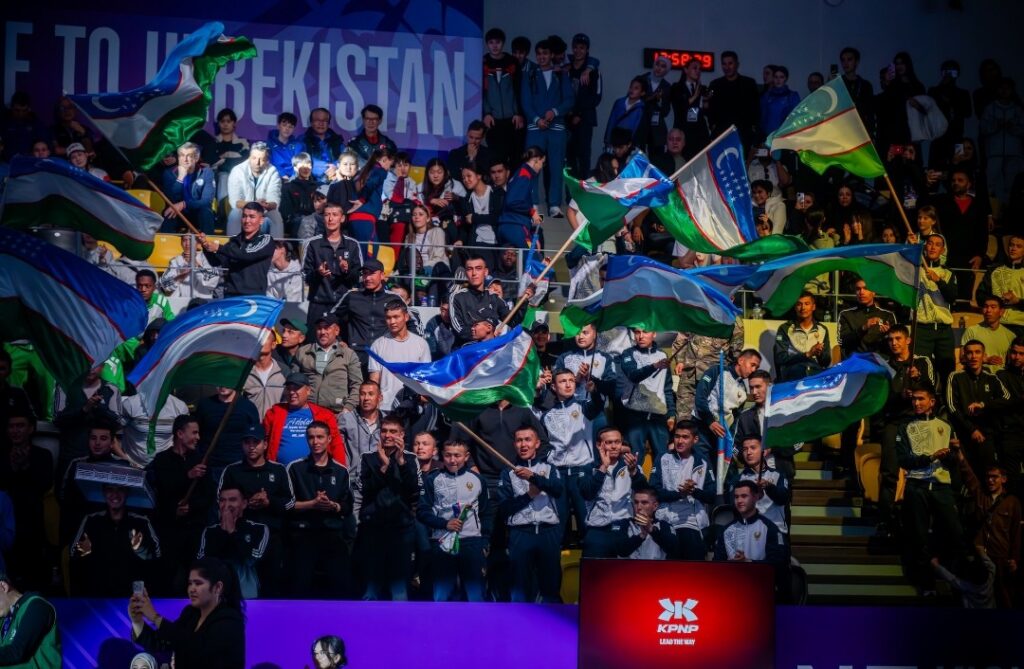
The city of Samarkand hosted the World Triathlon Championship Series (WTCS) from 25-26 April, further cementing Uzbekistan’s reputation within the Olympic Movement.

The event saw more than 150 athletes from over 40 countries compete on Samarkand’s Olympic-distance course, weaving through UNESCO World Heritage sites and historic Silk Road landmarks, including the breathtaking Eternal City complex. 

In the elite races, the world’s top triathletes battled for crucial ranking points. Vasco Vilaça from Portugal took gold in the men’s category with a time of 1:43:33, while the UK’s Beth Potter secured the top spot on the podium for the women’s race after a dramatic final run segment through the historic city centre.

“This weekend marked another landmark sporting occasion for Uzbekistan,” said Otabek Umarov, Vice President of the Olympic Council of Asia (OCA) and Deputy Chairman of the National Olympic Committee of Uzbekistan. “By bringing the World Triathlon Championship Series to Samarkand, we have once again shown that Uzbekistan can successfully deliver some of the world’s biggest sporting events, blending our warm hospitality with world-class sport.”

This event follows a series of major international sporting events recently hosted in Uzbekistan, including the record-breaking World Taekwondo Junior Championships in April, the Fencing World Cup and the Judo Grand Slam, alongside the largest-ever OCA General Assembly.

These successes underline a national strategy driven by President Shavkat Mirziyoyev, who has made the promotion of healthy and active lifestyles a cornerstone of the country’s development. With 60% of Uzbekistan’s population under the age of 30, Mirziyoyev’s initiatives focus on leveraging world-class sporting events to inspire the next generation to engage in physical activity and pursue excellence on the global stage.

Kazakhstan’s Abraham Accords Dividend

Astana’s entry into the Abraham Accords is not the opening of a relationship with Israel so much as the re-platforming of one. Kazakhstan recognized Israel in the early 1990s and has maintained a functional, if understated, partnership since then. What has changed is the format. An existing bilateral channel is being placed inside diplomatic architecture with better access to political attention, private capital, and commercially useful networks.

Kazakhstan announced its intention to join the Accords on November 6, 2025, ahead of President Kassym-Jomart Tokayev’s meeting with Donald Trump in Washington. The Times of Central Asia described Kazakhstan as the first Central Asian state and the only non-Middle Eastern or North African country to enter the framework. An official accession ceremony is still pending.

For Kazakhstan, the value lies not in symbolism but in the Accords’ convening power. The Accords make Kazakhstan more legible to Israeli technology firms, Gulf investors, American policymakers, and the growing ecosystem of institutions and policy platforms built around regional economic integration. For Astana, this is the practical utility of membership. It does not need the Accords to talk to Israel. It can use them to widen the circle around specific projects.

The formulation is also consistent with Kazakhstan’s foreign-policy habits. Astana has not presented the decision as a strategic turn against any other partner. Its Foreign Ministry said accession was made “solely in the interests of Kazakhstan,” and was consistent with a “balanced, constructive, and peaceful foreign policy.” The same statement reaffirmed support for a two-state settlement of the Middle East conflict.

That wording appears carefully calibrated. It allows Astana to engage with a Trump-associated diplomatic framework while presenting the decision as an extension of Kazakhstan’s established multi-vector foreign policy, not a departure from it. The better interpretation is additive multi-vectorism in the form of another channel, another table, and another set of possible transactions. A Times of Central Asia analysis made this point directly, arguing that Kazakhstan’s aims include converting symbolic capital into policy traction, developing Gulf co-financing, and preserving equilibrium with Moscow and Beijing.

The commercial agenda is already visible. Israeli Foreign Minister Gideon Sa’ar’s January 2026 visit to Astana, the first by an Israeli foreign minister in 16 years, produced a package of institutional and economic steps. A Kazakhstan-Israel business forum ran alongside the official meetings, and the sides identified a project map covering high-tech agriculture, water management, digital technologies, artificial intelligence, infrastructure, logistics, energy efficiency, renewables, healthcare, and pharmaceuticals.

These sectors are not ornamental but match Kazakhstan’s own reform priorities of productivity, digital administration, non-resource growth, infrastructure modernization, and technology transfer. Israel’s appeal lies less in its market size than in its applied capability. Gulf participation, where available, adds scale and financing. The Accords can help package those elements into projects that are easier for companies, development institutions, and governments to recognize.

Energy and infrastructure may become the most consequential tests. The Times of Central Asia has argued that the Accords could give Israeli firms a clearer political and legal framework for work in Kazakhstan’s energy and infrastructure sectors, while Gulf Cooperation Council states, especially the UAE, could provide project finance. If that model works, the Accords become not a communiqué but a deal structure.

The April 27, 2026 visit of Israeli President Isaac Herzog to Astana reinforced the same trajectory. Tokayev described Kazakhstan’s decision to join the Accords as a contribution to normalization between Middle Eastern countries and Israel, but his emphasis quickly moved to economic cooperation, the potential of which he called “extremely vast.” Herzog arrived with a delegation focused especially on technology. In expanded talks, Tokayev proposed holding an official accession ceremony in Astana, signaling that Kazakhstan sees itself not as a quiet entrant into the Accords but as a visible supporter and potential mediator in their expanding geography.

Platforms such as the N7 Initiative help explain why the Accords now have relevance beyond their original Arab-Israeli context. N7 has described Azerbaijan and Kazakhstan as a “new frontier” for the Accords, arguing that membership can provide access to a network organized around investment, prosperity, and broader cooperation with Israel and the United States. That framing suits Kazakhstan precisely because it is project-based rather than alliance-based.

For Astana, the promise of the Accords lies in their practical utility. They offer Kazakhstan another channel through which to connect Israeli technology, Gulf investment, and its own modernization agenda. The real dividend will come not from the ceremony, but from the partnerships, financing, and projects that follow.

Lavrov in Astana as Kazakhstan Prepares for Putin State Visit

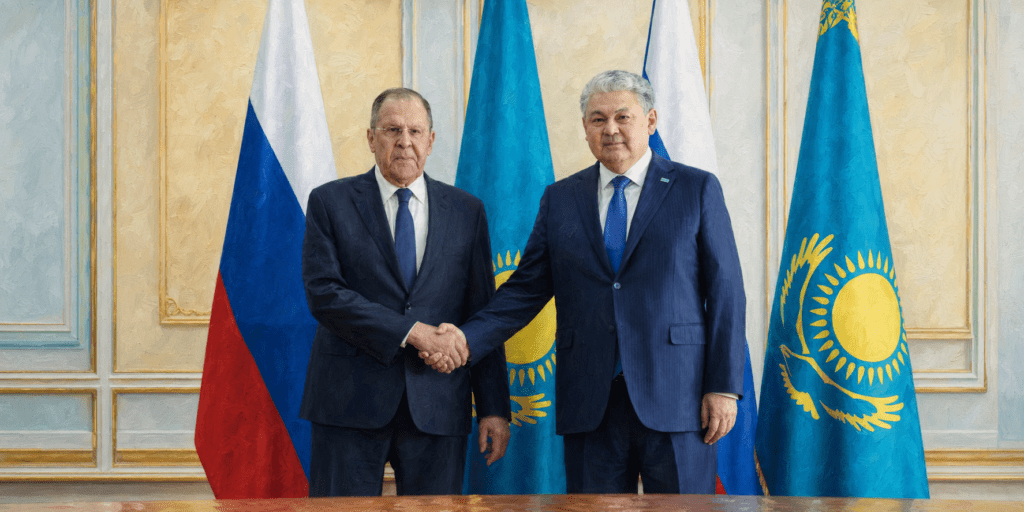
Russian Foreign Minister Sergey Lavrov has visited Astana for talks with Kazakhstan’s leadership, as the two countries prepare for a planned state visit by Russian President Vladimir Putin in late May.

Lavrov arrived in Kazakhstan on April 29. The main working part of the visit took place on April 30, with meetings with President Kassym-Jomart Tokayev and Foreign Minister Yermek Kosherbayev. Russia’s Foreign Ministry said the agenda covered political, trade, economic, cultural, and humanitarian ties, as well as cooperation in the Eurasian Economic Union, the Collective Security Treaty Organization, the Commonwealth of Independent States, and the Shanghai Cooperation Organization.

At expanded talks in Astana, Kosherbayev said Russia remains one of Kazakhstan’s key trade partners. Bilateral trade exceeded $27 billion last year, and the two governments are working toward a target of $30 billion. Kosherbayev said the talks covered energy, transport, logistics, industry, digitalization, cultural ties, and international issues.

The foreign ministers signed a cooperation plan between the two ministries for 2027-2028 during the visit. Kosherbayev said the plan reflected close coordination between Astana and Moscow on bilateral and international issues.

The visit also comes ahead of Putin’s expected trip to Kazakhstan. The Kremlin said in February that Putin had confirmed his participation in the Supreme Eurasian Economic Council meeting in Astana in late May and accepted Tokayev’s invitation to make a state visit linked to the event.

For Kazakhstan, relations with Russia remain a central part of its multi-vector diplomacy, alongside growing ties with China, the European Union, Turkey, the Gulf states, and the United States. The two countries share a long border, have deep trade links, and work together through several regional organizations. Russia also remains central to Kazakhstan’s energy export network. The Caspian Pipeline Consortium terminal near Novorossiysk handles roughly 80% of Kazakhstan’s crude exports.

That gives Astana a strong reason to keep stable ties with Moscow, but it also explains why Kazakhstan is pushing to diversify transport routes. The government has promoted the Trans-Caspian International Transport Route, also known as the Middle Corridor, as a way to move freight between China, Central Asia, the Caspian Sea, the South Caucasus, and Europe with less reliance on Russian territory.

The war in Ukraine has made that approach harder to sustain. Kazakhstan has kept ties with Moscow, but Tokayev has also stressed the importance of the UN Charter, sovereignty, and territorial integrity. In a phone call with Ukrainian President Volodymyr Zelenskyy on August 10, 2025, Tokayev said Kazakhstan supported the UN Charter, the inviolability of sovereign borders, and the territorial integrity of sovereign states.

Economic pressure has also grown. Western governments have increased scrutiny of trade routes that could be used to bypass sanctions on Russia. Kazakhstan has tried to protect its own trade from that pressure while avoiding a direct break with Moscow.

Energy adds another dimension. Any disruption to the CPC route can quickly become a national economic issue for Kazakhstan. In April, Kazakhstan’s energy ministry said CPC exports through the Black Sea remained stable after Russia reported a drone attack near Novorossiysk. The episode showed once again how Kazakhstan’s oil exports can be exposed to security events on Russian territory.

Lavrov’s visit, therefore, goes beyond routine diplomacy. It took place as Astana prepares for Putin’s state visit, manages sanctions risk, and tries to keep open several foreign policy tracks at once. Moscow wants to show it remains a central partner for Kazakhstan. Astana wants to keep that relationship stable without closing off its other options.

Lavrov’s visit showed how much of Kazakhstan’s Russia policy is still shaped by geography and infrastructure. Astana is building wider ties with other powers, but its oil exports, rail routes, border trade, and security contacts still run through or alongside Russia. That does not point to a rupture. It points to a relationship Kazakhstan cannot afford to mishandle.

Opinion: Kazakhstan’s Human Capital Problem – How State Scholarships Are Building a Talent Pipeline for the West

Kazakhstan spends millions of dollars every year sending its brightest students to the world’s best universities through two flagship programs: the Nazarbayev Intellectual Schools (NIS) and Bolashak. For NIS, the state invests millions with no public record of what becomes of its graduates once they enter foreign educational institutions. For Bolashak, the return figures look reassuring on paper, but only until one asks what happens the moment the obligation expires.

For Kazakhstan’s economy, heavily reliant on oil and gas exports, human capital is what can bring the country to its goal of economic diversification through the ideas and skills that no natural resource can replicate. Students from Kazakhstan studying abroad, with access to the world’s best professors and cutting-edge technologies, are exactly the human capital the country cannot afford to lose. However, they are also the ones the government has been paying to send away without a sustainable retention strategy in place.

Nazarbayev Intellectual Schools

Founded in 2008, the Nazarbayev Intellectual Schools network offers an internationally recognized 12-year curriculum, directly compatible with many foreign university admissions systems. It also provides some of its students with grants covering the full cost of attendance. The state funds NIS generously: in 2023 alone, more than $37 million was invested into the network. The results are extraordinary: from 2010 to 2024, 654 students received offers from the top 100 universities in the world, with 32 of them from the Ivy League. However, which country these graduates end up in is a different question, and the available statistics offer no public answer to.

One former NIS student, who received a full scholarship to study abroad, says, “I’m extremely grateful for all the resources that the NIS provided me with. However, after my graduation from the university, I will be moving to San Francisco to work as an AI engineer. It would take me at least seven years to make the same salary I’ll be earning here in a year.”

Another says, “It is not only about the higher wages in the U.S. It’s about the opportunities and autonomy one gets. The research lab I’ve joined since graduation has far more funding and resources for the work I’m actually passionate about.”

Bolashak Program

Unlike NIS, the Bolashak program, established in 1993 and widely regarded as one of the most generous scholarship programs in the world, does require its recipients to return. Graduates must work in Kazakhstan for up to four years or face financial penalties. On paper, this looks like a solution to the human capital problem. In practice, it is only a delay. While the state at least partially recovers its investment, it is developed markets that eventually inherit the talent.

“After completing my requirement back home, I was able to get an American company to sponsor my visa,” says one Bolashak recipient. “I moved to the U.S. shortly after.”

“I was offered a transfer to the European branch of my company,” says another, one year after fulfilling their obligation.

The Solution to the Brain Drain

Kazakhstan’s investment in NIS and Bolashak was never intended to benefit the research labs of MIT, Google’s engineering department, or European process manufacturing. Yet the accounts of graduates suggest this is precisely what is happening. While comprehensive data on retention rates remains unavailable, the pattern emerging from interviews with former NIS students and Bolashak recipients is consistent enough to warrant attention. The existence of financial penalties in Bolashak itself signals that voluntary return was never guaranteed as the government designed enforcement mechanisms precisely because it anticipated the problem. The issue is not the graduates themselves as every person will naturally pursue the best opportunities available to them. The question is why Kazakhstan has invested so heavily in sending talent abroad without an equally serious strategy for bringing it back. Addressing this requires action on multiple fronts:

To begin with, Kazakhstan should introduce targeted return incentives for recipients of state-funded scholarships. This could include additional compensation packages and relocation support. This model exists in other Asian markets, such as South Korea, which offers returnees financial incentives under the Brain Pool program. Kazakhstan could develop its own version, built for the sectors it most urgently needs, such as technology, AI, and engineering.

Moreover, government support for the private sector could unlock what policy alone cannot. Tax breaks, co-investment schemes, and streamlined business registration for technology companies in priority sectors would give returning graduates an option beyond taking a government job: starting their own tech company in Kazakhstan.

Finally, the prestige and quality of local universities must improve. State-led efforts to open campuses of foreign universities in Kazakhstan are a step in the right direction, but they are not sufficient. Kazakhstani universities themselves need investment, particularly in research. A scientist who can access world-class research opportunities at home has more reasons to return.

Lessons for Central Asia

Kazakhstan is not alone in facing this challenge. Across Central Asia, governments, including Uzbekistan’s, are investing in the education of their young people with the hope that knowledge brought home from abroad will strengthen their economies. Kazakhstan, as the region’s largest economy, serves as a reminder for other Central Asian states that are following the same path. Sending students abroad is the easy part; however, building opportunities worth coming back for is harder, and, unfortunately, it is the question no scholarship program can answer on its own.

The brain drain paradox is not inevitable, and it will most certainly not resolve itself. The countries that recognize this early enough to act will be the ones that actually diversify their economies. The ones that do not will continue growing talent for the rest of the world at their own expense.


The views expressed in this article are those of the author and do not necessarily reflect the official policy or position of the publication, its affiliates, or any other organizations mentioned.

Belousov’s Bishkek Warning: Russia Uses SCO Meeting to Target Outside Influence in Central Asia

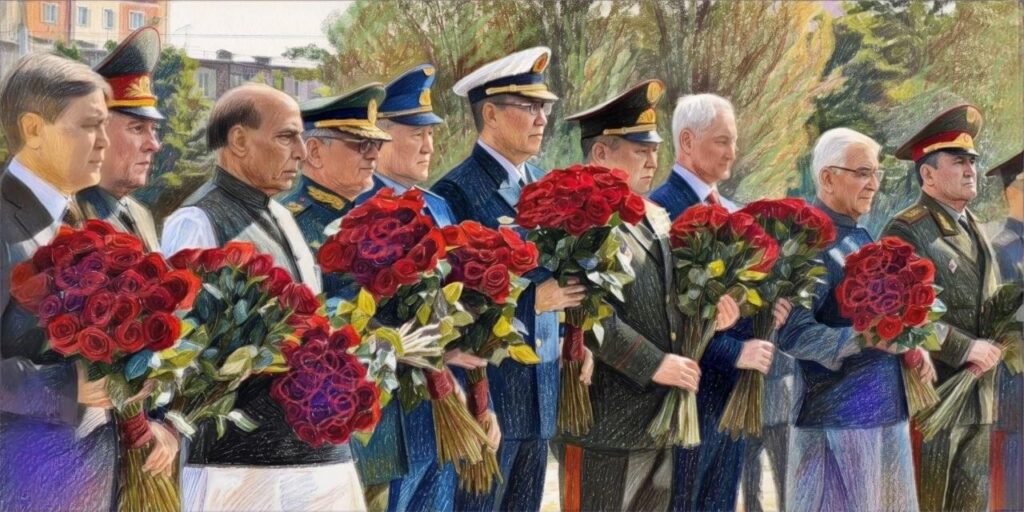
The April 28 meeting of defense ministers from the member states of the Shanghai Cooperation Organization (SCO), held in Kyrgyzstan’s capital, Bishkek, received relatively modest coverage in Central Asia and China. Russia’s Ministry of Defense, however, used the routine gathering to send a sharper message: Moscow remains opposed to any non-regional military presence in Central Asia.

According to the SCO Secretariat, the meeting was attended by defense ministers from member states, the organization’s Secretary-General, and the director of the Executive Committee of the SCO’s Regional Anti-Terrorist Structure.

“During the meeting, the parties held a substantive exchange of views on pressing regional and international security issues, noting persistent challenges and threats, including international terrorism, extremism, transnational crime, as well as emerging risks in information and cybersecurity,” the SCO said in a general statement.

The statement also emphasized the need to strengthen trust between the armed forces of member states, expand practical cooperation, conduct joint exercises, exchange experience, and develop mechanisms for military cooperation within the SCO.

China’s Defense Minister Dong Jun used similar institutional language. According to Xinhua, Dong said the SCO should uphold the international order, improve security governance, and “eliminate the sources of turmoil and conflict through shared development.” He also called for deeper defense and security cooperation among member states.

Kazakhstan’s Defense Minister Dauren Kosanov presented a report on the country’s approach to strengthening regional security, developing cooperation within the SCO, and improving joint responses to contemporary challenges, according to Kazakhstan’s Ministry of Defense. The ministry said participants also discussed the expansion of practical cooperation between defense agencies and approved a cooperation plan for SCO defense ministries for 2027.

Defense ministers from Uzbekistan and Kyrgyzstan also held bilateral talks on the sidelines of the meeting, discussing military-technical cooperation, joint training, experience-sharing among officers, and initiatives aimed at strengthening regional security. Uzbek media described the talks as being held in a constructive and friendly atmosphere.

Russian Defense Minister Andrei Belousov adopted a markedly different tone. His remarks were not limited to general SCO language about counterterrorism or cyber threats. They directly targeted the possible presence of outside powers in Central Asia.

“We are closely monitoring attempts by non-regional states to establish a military presence and address logistical tasks in Central Asia. We consider this unacceptable,” Belousov said, according to RIA Novosti.

Belousov also expressed concern about Syria, Lebanon, Afghanistan, and the humanitarian crisis in Gaza, warning that militants from crisis zones could infiltrate neighboring countries, including the SCO space. Belousov further argued that U.S. activity in the Asia-Pacific region was having a destabilizing effect.

“Their efforts to reshape the regional security system into a U.S.-centric model by strengthening military-political structures under Washington’s control provoke tensions, undermine regional stability, and increase the risks of armed conflict,” he said.

The contrast was striking. The SCO Secretariat spoke in broad terms about common threats and institutional cooperation. China emphasized development, governance, and multilateral stability. Russia used the same setting to issue a direct warning over Central Asia.

Iran added another layer to the meeting’s harder security tone. The Times of Central Asia previously reported that Iranian Deputy Defense Minister Reza Talaei-Nik used the Bishkek meeting to propose expanded defense cooperation with SCO partners, saying Tehran was ready to share its defensive capabilities with “independent countries,” especially SCO member states. The statement reinforced the sense that the Bishkek meeting was not only about routine SCO defense coordination, but also about how several member states are positioning the organization as a platform resistant to Western military pressure.

In Russian pro-state commentary, Belousov’s speech was quickly framed not only as a warning to Washington, but also as a message to Central Asian partners. Political commentator Natalya Starichkova described the statement as “clearly demanding” and argued that it was addressed not only to “non-regional states,” but also to SCO and CSTO partners in Central Asia.

“Some of them have recently been actively exploring participation elsewhere — or showing excessive responsiveness to ‘non-regional’ proposals,” she wrote.

Her interpretation is not official policy. But it reflects a wider Russian anxiety: that Central Asian states, while maintaining security ties with Moscow, are also widening their diplomatic, economic, and defense contacts with other powers.

Just days before the Bishkek meeting, Belousov met Chinese Defense Minister Dong Jun in Moscow. According to Vedomosti, the Russian minister highlighted regular contacts between Presidents Vladimir Putin and Xi Jinping and emphasized the “special importance” of military cooperation between Russia and China. Reuters, citing Beijing, reported that the two defense ministers agreed to enhance strategic communication and deepen practical cooperation across military fields.

Belousov’s remarks fit into a broader pattern in which Russia and China have increasingly used SCO platforms to promote overlapping security concepts: opposition to outside military influence, support for state sovereignty, and a preference for regional security arrangements not led by the West.

For Central Asia, this overlap is significant. The region has long tried to balance Russia, China, the West, Turkey, and other partners without being locked into a single security orbit. Moscow’s Bishkek message was therefore not just about Washington. It was also a reminder to Central Asian governments that Russia still sees the region as a core security space where outside military involvement will be treated as a direct challenge.

China’s position is more carefully phrased. Beijing tends to speak through the language of development, governance, and stability, rather than direct warnings. Yet its vision for Eurasian security also leaves little room for a Western military role in Central Asia. The SCO provides a forum where these Russian and Chinese preferences can reinforce one another, even when their rhetoric differs.

Belousov’s Bishkek speech should therefore be read less as an isolated Russian outburst than as a signal delivered inside a favorable multilateral setting. Moscow used the SCO platform to warn against Western military or logistical activity in Central Asia. Beijing did not need to echo the warning directly for the broader message to be clear.

The SCO meeting itself may have been routine, but Belousov’s intervention was not. It showed how Russia is using regional security forums to restate its opposition to outside military involvement in Central Asia, while relying on an institutional environment in which China’s language about security governance and external interference gives that message wider political resonance.