• KGS/USD = 0.01144 0%
  • KZT/USD = 0.00212 0%
  • TJS/USD = 0.10456 0.19%
  • UZS/USD = 0.00008 0%
  • TMT/USD = 0.28490 0%
  • KGS/USD = 0.01144 0%
  • KZT/USD = 0.00212 0%
  • TJS/USD = 0.10456 0.19%
  • UZS/USD = 0.00008 0%
  • TMT/USD = 0.28490 0%
  • KGS/USD = 0.01144 0%
  • KZT/USD = 0.00212 0%
  • TJS/USD = 0.10456 0.19%
  • UZS/USD = 0.00008 0%
  • TMT/USD = 0.28490 0%
  • KGS/USD = 0.01144 0%
  • KZT/USD = 0.00212 0%
  • TJS/USD = 0.10456 0.19%
  • UZS/USD = 0.00008 0%
  • TMT/USD = 0.28490 0%
  • KGS/USD = 0.01144 0%
  • KZT/USD = 0.00212 0%
  • TJS/USD = 0.10456 0.19%
  • UZS/USD = 0.00008 0%
  • TMT/USD = 0.28490 0%
  • KGS/USD = 0.01144 0%
  • KZT/USD = 0.00212 0%
  • TJS/USD = 0.10456 0.19%
  • UZS/USD = 0.00008 0%
  • TMT/USD = 0.28490 0%
  • KGS/USD = 0.01144 0%
  • KZT/USD = 0.00212 0%
  • TJS/USD = 0.10456 0.19%
  • UZS/USD = 0.00008 0%
  • TMT/USD = 0.28490 0%
  • KGS/USD = 0.01144 0%
  • KZT/USD = 0.00212 0%
  • TJS/USD = 0.10456 0.19%
  • UZS/USD = 0.00008 0%
  • TMT/USD = 0.28490 0%

IAEA Extends Central Asia Uranium Cleanup Plan Through 2030

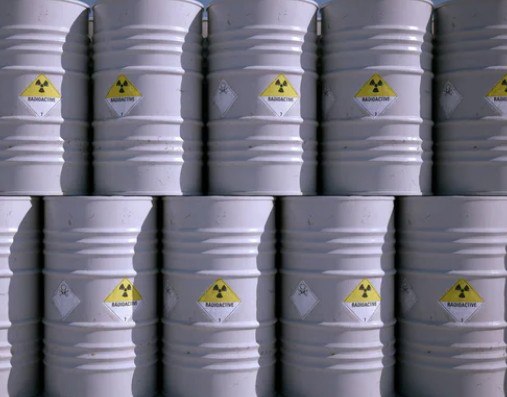
The International Atomic Energy Agency (IAEA) has released a new Strategic Master Plan extending its cooperation with Kyrgyzstan, Tajikistan, and Uzbekistan, alongside international partners, for the remediation of uranium legacy sites in Central Asia through 2030, according to World Nuclear News.

Central Asia served as a key uranium source for the former Soviet Union, with mining and processing conducted over more than 50 years. In addition to local production, uranium ore was imported for processing, leaving vast amounts of radioactive waste stored in tailings and mining dumps. Most sites were shut down by 1995, but limited remediation both pre- and post-closure, has left behind long-term environmental and public health risks, including the threat of groundwater and surface water contamination in agriculturally vital areas.

Since 2012, the IAEA’s Coordination Group for Uranium Legacy Sites has supported Central Asian countries with expert missions, legal and regulatory framework development, and remediation strategies. In 2017, the IAEA, the European Commission, the European Bank for Reconstruction and Development, the CIS Economic Council, and the governments of Kyrgyzstan, Tajikistan, and Uzbekistan adopted a Strategic Master Plan. Published in May 2018, it identified seven former uranium sites as the highest priority, with initial remediation costs estimated at €85 million.

A revised plan was signed in September 2021, and the most recent version was presented in Tashkent in October 2025. It emphasizes long-term monitoring, maintenance, recordkeeping, and ongoing engagement with local communities to ensure the safe reuse of remediated land.

“The new plan, an extension of our collaboration since 2017, focuses on enhancing the regulatory, technical, financial, and human resources for the long-term management of the remediated sites, according to IAEA safety standards,” said Hildegarde Vandenhove, Director of the IAEA Division of Radiation, Transport and Waste Safety.

The updated plan puts the total cost of the Environmental Remediation Account programme at €113 million. This includes remediation work, project management, and contingencies. Since 2017, four of the seven high-priority sites have been fully remediated, two in Kyrgyzstan and two in Uzbekistan, while work continues at a fifth site in Kyrgyzstan. In Tajikistan, one site has been partially remediated, and another remains untouched.

Lower-priority sites are also covered under the new plan, with some funding secured through bilateral agreements with Russia. Sardorbek Yakubekov, Deputy Chairman of Uzbekistan’s Industrial, Radiation and Nuclear Safety Committee, said the programme “stands as a vivid example of how the collective efforts of the international community… can yield tangible and lasting results.”

As previously reported by The Times of Central Asia last December, Tajikistan still faces tens of millions of tons of radioactive waste from Soviet-era uranium mining, highlighting both the scale of the challenge and the critical need for sustained international support.

Glacier Growing Despite Global Warming Discovered in Tajikistan

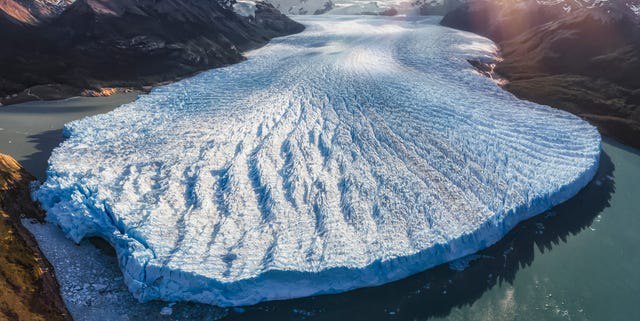
While most of the world’s glaciers are retreating due to climate change, a rare anomaly has been discovered in the Pamir Mountains. Researchers have identified a glacier in eastern Tajikistan that is not melting but is, in fact, growing.

The discovery, reported by Popular Mechanics, concerns the Kon-Chukurbashi ice cap, a rare formation demonstrating resilience in the face of global warming.

Located in the Sarykol Range of the Pamirs, near the Chinese border, the glacier lies on the slopes of the peak bearing the same name. The expedition reached an altitude of approximately 5,810 meters (nearly 19,000 feet) above sea level to conduct research.

Scientists extracted two ice cores, each over 100 meters long, from the glacier. These cores preserve up to 30,000 years of climate history. One was sent to the Ice Memory Foundation’s underground archive in Antarctica for long-term preservation. The other was delivered to the Institute of Low Temperature Science at Hokkaido University in Japan, where Professor Yoshinori Iizuka is leading an investigation into the glacier’s mass gain.

Researchers hope the analysis of the ice’s structure, trapped air bubbles, and chemical composition will help explain why this glacier defies global trends. Understanding these mechanisms could offer insight into glacial stability not only in Central Asia but globally.

The region, often referred to as the “Roof of the World”, is characterized by extreme altitudes, a harsh continental climate, and a near-total absence of permanent human settlement. Due to its remoteness, access to Kon-Chukurbashi is limited primarily to scientific missions, underscoring the rarity and importance of the data collected.

Scientists believe that studying this glacier could provide critical insights into the future of freshwater resources and climate risk assessment in mountainous regions worldwide.

ADB Supports Turkmenistan’s Power Grid Modernization with $500 Million Project

The Asian Development Bank (ADB) has been working with Turkmenistan since 2018 to modernize the country’s electricity infrastructure, marking a milestone in cooperation, Business Turkmenistan reported on January 12.

At the core of this partnership is the $500 million National Power Grid Development Strategy, the first initiative by an international financial institution in Turkmenistan’s energy sector. According to the ADB, the project aims to enhance the reliability of the national power network and bolster the country’s electricity export capacity.

The project has financed the construction of approximately 1,400 kilometers of power transmission lines at 110, 220, and 500 kilovolts. In addition, 11 substations have been built across the regions of Akhal, Balkan, Dashoguz, and Lebap, as well as in Ashgabat. Technical assistance valued at $1.5 million was also provided through a grant from the Japan Fund for Prosperous and Resilient Asia and the Pacific.

The ADB reported that the project is already yielding measurable results. Electricity exports rose from 3.4 terawatt-hours in 2017 to 9.3 terawatt-hours in 2023, driven by increased transmission capacity and system stability. The State Electric Power Corporation Turkmenenergo, the ADB’s local partner, contributed $175 million to the project’s implementation.

The ADB described its role as supporting sustainable economic growth and development across Asia and the Pacific through the provision of loans, grants, and technical assistance.

Cooperation between the ADB and Turkmenistan has also expanded into other sectors. In September 2025, the ADB approved a $75 million loan and a $2 million grant from the Japan Fund to strengthen Turkmenistan’s nursing and midwifery workforce. The initiative marked the ADB’s first health sector project in the country.

Kazakhstan’s Economy Grew by 6.5% in 2025

Kazakhstan’s economy expanded by 6.5% year-on-year in January-December 2025, according to preliminary data from the National Statistics Bureau.

The Ministry of National Economy reported that the key drivers of GDP growth were industry, transport, construction, and trade. At year-end, the industrial production index stood at 7.4%, with the manufacturing sector showing steady growth of 6.4%.

Positive dynamics in industry were attributed to an 8.1% increase in food production, a 5.9% rise in oil refining, 9.8% growth in the chemical industry, a 1.2% uptick in metallurgy, and a 12.9% increase in machine building .

The transport and warehousing sector recorded a substantial 20.4% growth in 2025, driven by increased freight transport by road and rail, alongside growth in passenger transport across various regions. The volume of ancillary transport services also expanded, including freight forwarding, air traffic control, airport and warehouse operations, and grain and refrigerated cargo storage.

Construction surged by 15.9%, linked to the implementation of major infrastructure and social development projects, including the building of schools, medical facilities, and transport and engineering infrastructure. In the same period, 20.1 million square meters of housing were commissioned, a 5.1% increase from 2024.

Trade posted an 8.9% increase by the end of the year, led by wholesale trade, which comprised more than two-thirds of the sector’s volume. Notably, wholesale trade in grain, seeds, and animal feed rose by 160%, trade in equipment nearly doubled, and pharmaceutical sales increased by 44.1%. Sales of automobiles grew by 33%, while dairy products, eggs, edible oils, and fats rose by 25.8%, and sugar, chocolate, and confectionery products by 21.2%.

Agriculture, forestry, and fisheries grew by 5.9%, supported by a 7.8% increase in crop production and 3.3% in livestock production. The information and communications sector posted 3.6% growth.

“Overall, the pace of economic development reflects the steady growth of key industries,” the Ministry of National Economy stated.

For comparison, GDP growth in 2024 stood at 5%, with the largest contributions from construction (15.3%), agriculture, forestry, and fisheries (13.7%), transportation and warehousing (9.4%), wholesale and retail trade (8.9%), and manufacturing (6.8%).

As previously reported by The Times of Central Asia, President Kassym-Jomart Tokayev forecast in early December 2025 that GDP would exceed 6% growth by year-end.

From Tehran to Tashkent: How Iran’s Crisis and U.S. Tariffs Reverberate Across Central Asia

At the end of 2025, Iran once again emerged as a flashpoint on the global political map. Mass protests erupted across the country, fueled by spiraling inflation and economic hardship. At present, the Iranian rial has plummeted to the point where it is effectively worth less than the paper it’s printed on. The current wave of unrest, already the largest and deadliest nationwide unrest Iran has seen since 2022, is not occurring in isolation.

U.S. President Donald Trump has renewed what his administration describes as a policy of “maximum pressure” on Tehran, and his administration is now pursuing what observers have characterized as a strategy of “pushing the falling,” a move aimed at reshaping the political order of the Middle East. What might this mean for neighboring Central Asia?

Tajik political analyst Muhammad Shamsuddinov argues the crisis must be viewed within a broader geopolitical context.

“The situation in Iran is directly tied to Trump’s second-term pressure campaign,” Shamsuddinov said, referencing a string of destabilizing events. “These include the 12-day U.S.-Israel war against Iran and the reimposition of U.N. sanctions in September 2025,” he added, referring to the 12-day June 2025 conflict between Israel and Iran, during which U.S. forces also struck Iranian nuclear facilities. “All of these have deepened the domestic crisis in Iran.”

In a further escalation, on January 12, Trump announced 25% tariffs on countries conducting trade with Iran. The move appears targeted primarily at Russia, China, and India – Iran’s largest international partners, but also has implications for Central Asian economies.

In the first nine months of 2025, trade between Kazakhstan and Iran grew by nearly 45%, reaching $310.8 million. Tajikistan, which maintains the closest economic ties to Tehran among Central Asian states, reported trade worth $430.7 million in the first eleven months of 2025, an increase of 28% over the same period in 2024.

Uzbekistan, while less directly exposed to Iran than Kazakhstan or Tajikistan, has also moved cautiously in recent years to expand trade links with Tehran, making it sensitive to further sanctions pressure. Turkmenistan, meanwhile, faces its own exposure through gas swap arrangements involving Iran, which could become collateral damage of escalating regional tensions.

Iranian investments in Tajikistan are also substantial. Among the most prominent projects is the Sangtuda-2 hydroelectric power plant, estimated at $256 million. The Iranian government contributed approximately $180 million, with an additional $36 million from an Iranian contractor. The remainder was financed by Tajikistan.

According to official data, roughly 160 companies with Iranian capital are currently operating in Tajikistan across multiple sectors. In Kazakhstan, around 650 Iranian companies are registered, with over 350 operational, primarily in manufacturing, infrastructure, and agriculture.

By contrast, trade between Iran and Russia, a strategic partner since the signing of a bilateral cooperation agreement in January 2025, increased by only 8% in the first nine months of 2025, according to official figures. Despite modest growth, Russian analysts view the figures optimistically.

“Growth is happening under challenging geopolitical conditions, with sanctions, logistical restructuring, and financial hurdles,” said Farhad Ibragimov, a political analyst at the Faculty of Economics of the Peoples’ Friendship University of Russia. “The North-South transport corridor linking Russia, Iran, and India offers a strategic advantage by reducing shipping costs and transit times compared to the Suez Canal.”

Inside Iran, the government has reportedly shut down internet access nationwide, aiming to prevent coordination among protest groups. Whether this move will succeed in quelling the unrest remains uncertain.

Georgian Middle East analyst Vasiko Papava believes the standoff has reached a critical impasse. “There is no clear path to victory for either side. Both the regime and the protest movement possess significant resources, but each also faces existential threats,” he said.

“In this case, ‘victory’ means the ability to define the country’s future narrative, not necessarily defeating the opponent outright,” Papava added. He forecasts a painful and protracted transformation: “The regime could morph into a military dictatorship cloaked in Islamic rhetoric, led by IRGC-linked technocrats. Conversely, a popular movement might erode the regime’s legitimacy over time through sustained civil disobedience.”

Beyond immediate economic and security concerns, Iran’s turmoil is also being interpreted in Central Asia through a broader lens of alliance fatigue and declining great-power credibility. For ordinary citizens, Iran’s crisis, following Venezuela’s turmoil after the U.S. armed intervention and capture of its president, signals something more personal: a visible decline in Moscow’s regional influence. As Russia loses key allies, countries such as Kazakhstan and Uzbekistan are witnessing a rise in anti-Russian sentiment, adding volatility to domestic politics.

Notably, Russia’s own state media has contributed to these sentiments. Their increasingly belligerent rhetoric has drawn more public attention in Central Asia than the unfolding events in Iran itself, underscoring the region’s growing unease with the Kremlin’s messaging and its geopolitical consequences.

Central Asian Tourists Among Injured in Boat Collision in Thailand

Police in Thailand are investigating a collision between a fishing vessel and a speedboat carrying tourists from countries including Russia, Kazakhstan, Kyrgyzstan, and Uzbekistan. A Russian citizen was killed, and dozens of others were injured, according to official accounts. 

The collision happened at about 9 a.m. on January 11 while the speedboat was heading from Phuket to the Phi Phi Islands in the Andaman Sea, the Russian embassy in Thailand said. 

“According to preliminary information, there were 33 Russian citizens on board the boat, as well as citizens from Kazakhstan, Kyrgyzstan, Uzbekistan, and several other countries,” the embassy said. “As a result of the incident, a Russian girl born in 2008 died. 23 of our citizens with various degrees of injuries were hospitalized in several medical institutions in Phuket, where they are receiving medical care.”

Thai authorities said the Russian who died was 17 years old. 

Kazinform, a state news agency in Kazakhstan, said eight nationals from that country were on the speedboat at the time of the accident and that three were hospitalized in stable condition. 

Akhror Burkhanov, press secretary to Uzbekistan’s Foreign Minister Bakhtiyor Saidov, said on Tuesday that there were three people from Uzbekistan on the speedboat. Two suffered minor injuries and were released from a hospital after treatment, he said. 

“In addition, all medical and other necessary expenses of the injured parties were fully covered by the insurance funds of the company that owns the speedboat,” Burkhanov said on X. 

Kyrgyzstan’s Ministry of Foreign Affairs said its embassy in Malaysia had immediately worked with its honorary consul in Thailand and learned that two Kyrgyz citizens were on the speedboat but did not suffer injuries. It said the two tourists will return to Kyrgyzstan on January 15. 

Thailand’s Department of Disaster Prevention and Mitigation said several Thai citizens were also injured and that government marine authorities, as well as private fishing vessels, helped the tourists after the collision. It said the accident between the speedboat, Koravich Marine 888, and the fishing vessel, Pichai Samut 1, is under investigation. 

Video of the incident that was posted on Instagram by the Thai Enquirer publication showed an overturned boat and people in the water nearby.

On Tuesday, the Russian embassy in Thailand urged people to obtain extended medical insurance, with coverage of at least $100,000 if possible, before traveling to the country.

“The presence of a valid insurance policy allows for promptly receiving the necessary medical assistance, covering the costs of treatment, hospitalization or emergency evacuation, as well as significantly reducing financial risks in unforeseen situations,” the embassy said.