• KGS/USD = 0.01144 0%
  • KZT/USD = 0.00192 -0%
  • TJS/USD = 0.10849 0.37%
  • UZS/USD = 0.00008 0%
  • TMT/USD = 0.28571 0.28%
  • KGS/USD = 0.01144 0%
  • KZT/USD = 0.00192 -0%
  • TJS/USD = 0.10849 0.37%
  • UZS/USD = 0.00008 0%
  • TMT/USD = 0.28571 0.28%
  • KGS/USD = 0.01144 0%
  • KZT/USD = 0.00192 -0%
  • TJS/USD = 0.10849 0.37%
  • UZS/USD = 0.00008 0%
  • TMT/USD = 0.28571 0.28%
  • KGS/USD = 0.01144 0%
  • KZT/USD = 0.00192 -0%
  • TJS/USD = 0.10849 0.37%
  • UZS/USD = 0.00008 0%
  • TMT/USD = 0.28571 0.28%
  • KGS/USD = 0.01144 0%
  • KZT/USD = 0.00192 -0%
  • TJS/USD = 0.10849 0.37%
  • UZS/USD = 0.00008 0%
  • TMT/USD = 0.28571 0.28%
  • KGS/USD = 0.01144 0%
  • KZT/USD = 0.00192 -0%
  • TJS/USD = 0.10849 0.37%
  • UZS/USD = 0.00008 0%
  • TMT/USD = 0.28571 0.28%
  • KGS/USD = 0.01144 0%
  • KZT/USD = 0.00192 -0%
  • TJS/USD = 0.10849 0.37%
  • UZS/USD = 0.00008 0%
  • TMT/USD = 0.28571 0.28%
  • KGS/USD = 0.01144 0%
  • KZT/USD = 0.00192 -0%
  • TJS/USD = 0.10849 0.37%
  • UZS/USD = 0.00008 0%
  • TMT/USD = 0.28571 0.28%
11 December 2025

Taliban Arrests Suspects After Deadly Attacks on Chinese Citizens Near Tajik-Afghan Border

The Taliban has announced the arrest of two suspects following two deadly attacks on Chinese workers in Tajikistan’s border regions, which left five dead and several others injured.

Afghan media, citing Taliban officials, reported that two individuals were detained in connection with the killings of Chinese nationals in Tajikistan. According to Ehsanullah Kamgar, a spokesperson for the Taliban’s security department in Afghanistan’s Badakhshan province, the arrests took place in the Maymay district. The identities of the suspects have not been disclosed.

Tajikistan’s security services believe that the militants crossed the border from this area before launching an assault in the Darvaz district on November 30. The attack targeted Chinese workers from a road construction company in the village of Shodak, killing two and injuring two more. Authorities said the assault occurred around 6:45 p.m. local time.

The border situation has deteriorated rapidly. Within one week, two armed attacks were carried out from Afghan territory targeting Chinese nationals in Tajikistan.

The first incident occurred on November 26 in the Shamsiddin Shokhin district, where three employees of the Shokhin-SM company were killed and one other was injured in a drone strike.

The second attack took place on November 30, when a terrorist group crossed from Ruzvayak, a village in Badakhshan, Afghanistan, and targeted workers from the China Road and Bridge Corporation. The outcome was again tragic: two Chinese workers were killed and two were wounded.

Tajik border guards emphasized that these attacks have occurred despite heightened security in the border regions.

“Criminal groups continue to destabilize the situation,” the border agency said in a statement.

Following the violence, the Chinese embassy in Dushanbe issued a strong demand for the Tajik authorities to “take all necessary measures” to protect Chinese citizens and employees of companies operating near the Afghan border.

On December 1, Tajikistan’s President Emomali Rahmon convened an emergency meeting with the heads of the country’s law enforcement agencies. He “strongly condemned the illegal and provocative actions of Afghan citizens” and ordered tighter security controls to prevent further cross-border attacks.

Kazakhstan’s World Champion Boxer Alimkhanuly Faces Doping Scandal Ahead of Title Unification Bout

Kazakhstan’s middleweight world boxing champion Zhanibek Alimkhanuly is embroiled in a doping scandal less than a week before the most significant fight of his career — a unification bout for three championship titles against Cuba’s Erislandy Lara. A positive test for the banned substance meldonium has thrown his career into jeopardy and may cost him at least one of his two belts.

The 29 year-old currently holds the WBO and IBF middleweight titles. He was awarded the WBO belt in 2022 after Demetrius Andrade declined to face him and secured the IBF title in 2023 with a knockout win over Germany’s Vincenzo Gualtieri. Alimkhanuly had since declared his ambition to become the undisputed champion by unifying all the major middleweight belts. His bout with Lara, the WBA titleholder, was scheduled for December 7 and was seen as a crucial step toward that goal.

However, on Tuesday evening, news emerged that Alimkhanuly had tested positive for meldonium, a substance banned by the World Anti-Doping Agency (WADA) since 2016. Studies cited by WADA in 2015 indicated that meldonium enhances endurance, accelerates recovery, and impacts the central nervous system.

Under the rules of the Voluntary Anti-Doping Association (VADA), Alimkhanuly has 10 days to request analysis of the “B” sample. Regardless, the fight with Lara has been canceled. The Cuban boxer has already agreed to a new matchup against Venezuelan fighter Johan Gonzalez.

The World Boxing Organization (WBO) announced it had initiated administrative proceedings and would allow Alimkhanuly’s team to present evidence.

“The WBO anti-doping program operates on the principle of strict liability… the athlete is fully responsible for the substances found in his body,” WBO President Gustavo Olivieri said on social media platform X.

Alimkhanuly’s team expressed shock at the test results and has called for a retest.

“The reason for our surprise is that we first received information about a clean sample, and then about a controversial moment in the second one. We didn’t change anything between tests, neither diet nor vitamins. We cannot understand how this could have happened,” the team stated.

They confirmed that lawyers and independent experts are now involved, and that testing of the “B” sample is underway.

The scandal marks the second high-profile doping case in Central Asian boxing within a short span. Olympic champion Lazizbek Mullojonov of Uzbekistan was recently handed a three-year suspension for violating anti-doping regulations.

Russia Revives Plan to Redirect Siberian Rivers as Central Asia Faces Worsening Water Crisis

The long-contested idea of diverting Siberian rivers to Central Asia has re-emerged after the Russian Academy of Sciences announced on November 14 that it is studying a new version of the project. The updated proposal revives elements of a Soviet-era plan from the 1970s and 1980s that aimed to channel water from the Ob River basin to arid regions of Central Asia. This time, however, the focus is on a closed pipeline system, rather than open canals, to transport large volumes of water to countries facing acute shortages, particularly Uzbekistan, according to Fergana News.

Discussions within the Russian Academy had reportedly already begun prior to the announcement. Researchers are now calling on Russia’s Ministry of Science and Higher Education to include a full study of the project in its state research plan. They argue that Central Asia is entering a critical phase of water scarcity that demands long-term strategic solutions.

The renewed interest comes amid escalating water stress across the region. Rapid population growth, retreating glaciers, and intensifying irrigation demands have pushed existing water systems to their limits. While some view the proposed pipeline as a potential lifeline for stabilizing regional water supplies, environmental concerns remain central to the debate, echoing the very reasons the original project was shelved.

A Long History of Controversy

The idea of redirecting northern rivers is not new. It was first proposed in the 19th century by Ukrainian-born engineer Yakov Demchenko, who envisioned transferring water from the Ob and Irtysh rivers to replenish the shrinking Aral Sea.

In the Soviet period, the concept gained political traction. By the late 1960s, it had entered official planning discussions, prompting detailed studies by the Academy of Sciences, the State Planning Committee, and the Ministry of Water Resources. In 1970, the project was formally designated a state priority, with plans for transferring up to 25 cubic kilometers of water annually.

Extensive technical documentation was produced, and construction began on supporting infrastructure, including the Irtysh-Karaganda canal. Designs for the main channel envisioned a span of more than 2,500 kilometers and a capacity exceeding 1,000 cubic meters per second. However, by 1986, the project was halted due to mounting economic pressures, scientific opposition, and growing awareness of potential environmental risks.

Experts warned of large-scale flooding, disruptions to groundwater, damage to fish stocks, displacement of Indigenous communities, and unpredictable impacts on permafrost and regional climate systems.

Renewed Debate in a Region Under Stress

Though shelved in the late Soviet era, the project has resurfaced multiple times since the collapse of the USSR. Former Moscow mayor Yuri Luzhkov advocated for its revival in 2002, and Russian and Kazakh presidents discussed it publicly in 2010. Yet concerns about environmental and geopolitical ramifications have consistently stalled progress.

Meanwhile, the water crisis in Central Asia has only deepened. Glaciers in the Tien Shan and Pamir mountains which feed the Amu Darya and Syr Darya rivers have shrunk by more than 25% in recent decades. The region’s population has grown to approximately 80 million, nearly 50% higher than in the early 1990s and continues to climb.

Despite this, water management remains inefficient. Agriculture and industry remain heavily dependent on outdated irrigation systems that waste up to half of the water they use annually. Efforts to modernize have been slow, and persistent disputes among Central Asian states over water sharing further hinder cooperation.

Some rivers in Kazakhstan and Uzbekistan have already lost between 40% and 70% of their flow. In many downstream areas, the remaining water is too saline for drinking or agriculture. Roughly 13% of the region’s population currently lacks access to safe drinking water.

New Challenges from Afghanistan

The pressure is being compounded by developments in Afghanistan. The Taliban administration is constructing the 285-kilometer Qosh Tepa canal to divert water from the Amu Darya. Once completed, the canal could reroute up to 10 cubic kilometers of water per year potentially reducing flow to already stressed downstream users in Uzbekistan and Turkmenistan.

As the crisis worsens, proponents of the Siberian water transfer see the revived project as a possible strategic solution. However, critics warn that the same environmental and political pitfalls that derailed earlier attempts remain unresolved and may have only intensified in the decades since.

Kyrgyzstan Launches Environmental Strategy for Lake Issyk-Kul

On December 2, Kyrgyzstan’s Cabinet of Ministers approved the Concept for the Sustainable Development of the Ecological and Economic System of Lake Issyk-Kul until 2030, along with a corresponding Action Plan. The initiative aims to protect the lake and its surrounding biosphere from intensifying environmental and human pressures, while ensuring long-term economic resilience in the region.

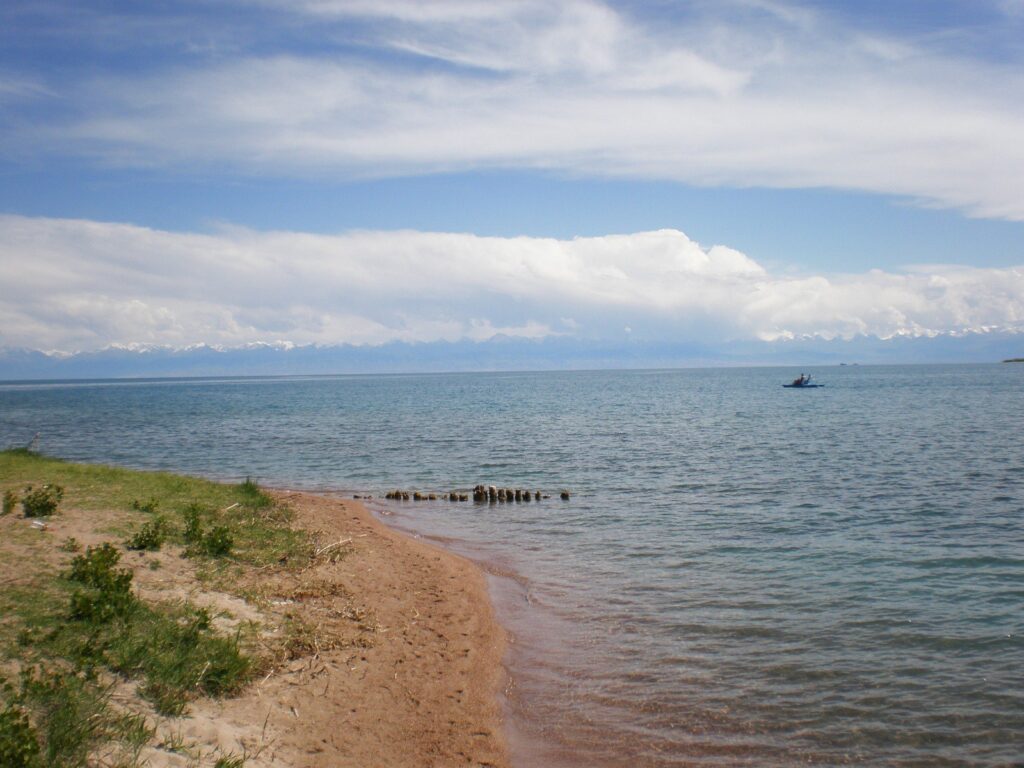
Located in northeastern Kyrgyzstan, Issyk-Kul is the country’s largest lake, a unique ecological reserve, and one of Central Asia’s main tourist destinations. However, the newly adopted Concept reflects growing concerns over environmental degradation and the urgent need for coordinated management. Based in part on a government technical assessment, the strategy outlines a comprehensive roadmap to stabilize the lake’s ecosystem, modernize critical infrastructure, and mitigate climate risks.

Climate Threats and Water Imbalance

A key priority of the Concept is enhanced monitoring of Lake Issyk-Kul and its surrounding basin, particularly its water and energy resources. Climate change, including glacial retreat and reduced river inflow, has placed the basin under mounting stress. Of the 957 glaciers in the Issyk-Kul basin, covering 560.8 square kilometers, many are melting at an accelerated rate. Although roughly 120 rivers flow into the lake, only 80 reach it during summer due to irrigation withdrawals.

To restore hydrological balance, the government plans to introduce modern irrigation technologies across 100,000 hectares of farmland. Officials estimate this could redirect up to 200 million cubic meters of water back into the lake each year.

Between 1927 and 2003, Issyk-Kul’s water level fell by 2.75 meters, driven by declining inflow, outdated monitoring systems, and inefficient water use. The new Concept calls for restoring hydrological infrastructure, including groundwater observation stations and river hydro-posts. It also proposes strict accounting of irrigation water and a shift toward water-saving technologies in agriculture.

Combatting Wastewater and Pollution

Untreated wastewater remains one of the most severe threats to the lake’s ecosystem. Discharges from settlements, hotels, and tourism facilities have polluted the lake for years. The Concept aims to modernize wastewater treatment plants, expand sewage networks, and promote the reuse of treated water for irrigation purposes.

Over the past five years, 47 new treatment facilities have been constructed in the Issyk-Kul region. The government now plans to reduce untreated wastewater discharge by 40%.

Industrial Risks and Waste Management

Environmental oversight of industrial activity, particularly at the Kumtor gold mine, the country’s largest, is another priority. The Concept calls for stricter regulation of hazardous waste and the rehabilitation of mining tailings to protect soil, groundwater, and the lake itself.

Solid waste management is also being addressed. In October 2025, China’s Hunan Junxin Environmental Protection Co. Ltd. began building a waste-to-energy incineration plant in Karakol, the region’s administrative center. This will be the company’s third facility in Kyrgyzstan, following earlier projects in Bishkek and Osh. The introduction of separate waste collection systems is seen as key to reducing landfill pressure and minimizing environmental damage.

To address air quality, the Concept promotes modernization of outdated heating systems, emission controls on industry and transport, and the adoption of cleaner technologies across economic sectors.

Regulating Growth and Tourism

Economic activity in the Issyk-Kul region, including agriculture, real estate, and infrastructure, is expanding rapidly. The Concept proposes new environmental standards, mandatory impact assessments, and incentives for businesses to adopt sustainable practices.

Tourism, while vital to the regional economy, is a growing environmental burden. The government intends to tighten oversight of tourist infrastructure and enforce ecotourism standards at all recreational facilities, aiming to balance economic development with environmental protection.

Turkmenistan Legalizes Crypto Mining and Exchanges for the First Time

Turkmenistan has officially legalized cryptocurrency mining and the operation of crypto exchanges. A newly adopted law sets strict conditions for market participants while introducing safeguards to protect citizens from the risks associated with virtual assets.

Key Provisions of the New Law

Coming into force on January 1, 2026, the Law on Virtual Assets, signed by President Serdar Berdymuhamedov and published in the state newspaper Neutral Turkmenistan, legalizes cryptocurrency mining, exchanges, and trading platforms for the first time in Turkmenistan.

The law defines the legal framework for the creation, storage, issuance, and circulation of virtual assets. While cryptocurrencies will not be recognized as a means of payment, currency, or security, they are treated as objects of civil law. Virtual assets may be either secured or unsecured.

Crucially, the legislation makes clear that the state bears no responsibility for obligations incurred by crypto platforms or for losses in asset value.

Mining Regulated by the Central Bank

The right to mine cryptocurrencies will be granted to individual entrepreneurs and legal entities, all of whom must register electronically with the Central Bank of Turkmenistan.

Hidden mining, the unauthorized use of another party’s computing power, is explicitly banned, targeting illicit mining networks.

Crypto exchanges and related service providers must obtain licenses from the Central Bank. Permitted services include the exchange, transfer, storage, and management of virtual assets, as well as initial offerings. Opening a crypto wallet will require full customer identification in line with anti-money laundering protocols.

Both Turkmenistan residents and foreign nationals may establish crypto exchanges, but with strict limitations:

  • Individuals and legal entities from offshore jurisdictions are barred from participation; and
  • Founders holding offshore bank accounts are also disqualified.

Tight Restrictions on Crypto Advertising

The law introduces some of the region’s strictest rules on crypto-related advertising. All promotional materials must include a warning that virtual assets are not backed by the state and that investments carry the risk of financial loss.

The following are prohibited in advertising:

  • Promises of profitability;
  • Use of images of minors;
  • Implications of luxury, bonuses, or effortless wealth;
  • References to state affiliation, including the use of “Turkmenistan,” “national,” or “Turkmen”;  and
  • Use of terms like “virtual asset,” “cryptocurrency,” or “digital asset” by companies not directly involved in the sector.

These restrictions aim to protect the public from deceptive and aggressive promotion of high-risk financial products.

Part of a Regional Regulatory Trend

Turkmenistan’s move follows a broader regional trend toward formalizing the crypto sector. In November, Kazakhstan also enacted legislation governing the circulation of unsecured digital assets nationwide. Previously, such activities were only permitted within the Astana International Financial Center source.

Opinion: Kazakhstan Bets Big on AI to Power Local and Global Growth

A bold vision for Kazakhstan’s future

In his recent State of the Nation address, the President of Kazakhstan articulated a bold and ambitious future for the country. He presented a new vision, central to which was the announcement of artificial intelligence adoption and digitization as new national priorities, positioning them as essential for the country’s economic modernization and long-term competitiveness.

The speech marked a significant moment for the government. Historically, much of its policy focus has been on managing risk and navigating regulatory uncertainty. Now, the administration is pivoting to focus instead on high-growth, innovation-led initiatives to build a more competitive and resilient Kazakhstan that can thrive in a rapidly changing global economy.

In his address, President Tokayev announced the creation of the Ministry of Artificial Intelligence and Digital Development. Its initial mandate is to develop the Digital Code, a comprehensive framework that will set out how every sector of the economy, from finance and energy to education and healthcare, will integrate AI and digital tools in a structured and sustainable way.

Leapfrogging into the digital economy

Kazakhstan is embracing leapfrog innovation to harness tools such as AI and blockchain technologies to help accelerate economic growth and diversify its economy. This bet will ensure that the nation remains competitive for generations to come in a digital-led global landscape where technology leadership increasingly defines prosperity.

Central to the project’s long-term success is the evolution of Kazakhstan’s educational system, and the country has recently approved its first national framework for integrating AI into its curriculum, signaling a major shift toward future-ready learning.

This initiative covers areas including ethics, legal regulation, personal data protection, and academic integrity. Kazakhstan is now one of the first countries to adopt its own national approach in this field, having drawn on the recommendations of UNESCO, OECD, and the EU’s work to ensure global best practices.

Building tomorrow’s AI leaders today

From the 2025–2026 academic year, AI is being integrated throughout the curriculum with the aim of converting classrooms into technology-literate talent pipelines. Students will benefit from new online courses, while teachers will be supported with professional development programs (with over 11,000 teachers already trained and more to follow).

Globally, the adoption of AI in education is surging. According to AllAboutAI, in 2025, 86% of students worldwide use AI in their studies, and half of all teachers will leverage AI for lesson planning. The market for AI in education is projected to reach over $2.7 trillion by 2033, having been valued at $177 billion in 2023.

With nearly 30% of Kazakhstan’s population under the age of 15 and a median age of just 29, the country is well placed to transform its students into a new generation of professionals ready to contribute to the country’s technological evolution and global competitiveness.

Universities such as the Astana IT University (AITU), International Information Technology University, and the Kazakh-British Technical University, all part of the NNEF ecosystem, are at the forefront of integrating AI across their curricula, ensuring that students gain the skills they need for the digital economy and innovation-driven industries.

NNEF, an educational foundation established by Dinara Kulibayeva and supported by philanthropist Timur Kulibayev through the Halyk Foundation, has made AI a strategic priority across multiple programs and courses.

Astana IT University has gone a step further by initiating and coordinating a landmark collaboration with US-based Perplexity AI. Under this agreement, Kazakhstan will receive nationwide access to Perplexity Pro for one year and is working with the company to establish a dedicated Perplexity R&D Centre at AITU – the first of its kind in Central Asia.

The scale of this partnership underscores how NNEF-affiliated universities are beginning to shape Kazakhstan’s AI and digital policy agenda, not only consuming advanced technologies but also helping to co-develop and localize them for regional needs.

AITU has also joined MIT’s GLEEN global innovation network- becoming the first university in Kazakhstan to do so – giving students and faculty access to leading entrepreneurship and AI programs such as StartMIT, MIT Orbit, and Jetpack AI.

This partnership further strengthens Kazakhstan’s ambition to build a globally connected, innovation-driven talent ecosystem and ensures that AITU students and faculty can develop skills that meet the highest international standards and expectations.

Kazakhstan’s place in the global adoption of AI

Despite the challenges, Kazakhstan is making a strategic investment in AI to unlock the next phase of its economic development. The country’s pivot represents a generational shift in approach and a clear signal to investors that Kazakhstan is serious about innovation. Investors seeking opportunities in emerging markets will be watching the work of the new Ministry closely in the coming months.

The global AI transition will be convulsive and transformational – but Kazakhstan has signaled to both domestic and global audiences that it is looking to the future and is open for business, ready to embrace change and lead where possible.


The views expressed in this article are those of the author and do not necessarily reflect the official policy or position of the publication, its affiliates, or any other organizations mentioned.