• KGS/USD = 0.01144 0%
  • KZT/USD = 0.00196 -0%
  • TJS/USD = 0.10899 -0%
  • UZS/USD = 0.00008 -0%
  • TMT/USD = 0.28490 0%
  • KGS/USD = 0.01144 0%
  • KZT/USD = 0.00196 -0%
  • TJS/USD = 0.10899 -0%
  • UZS/USD = 0.00008 -0%
  • TMT/USD = 0.28490 0%
  • KGS/USD = 0.01144 0%
  • KZT/USD = 0.00196 -0%
  • TJS/USD = 0.10899 -0%
  • UZS/USD = 0.00008 -0%
  • TMT/USD = 0.28490 0%
  • KGS/USD = 0.01144 0%
  • KZT/USD = 0.00196 -0%
  • TJS/USD = 0.10899 -0%
  • UZS/USD = 0.00008 -0%
  • TMT/USD = 0.28490 0%
  • KGS/USD = 0.01144 0%
  • KZT/USD = 0.00196 -0%
  • TJS/USD = 0.10899 -0%
  • UZS/USD = 0.00008 -0%
  • TMT/USD = 0.28490 0%
  • KGS/USD = 0.01144 0%
  • KZT/USD = 0.00196 -0%
  • TJS/USD = 0.10899 -0%
  • UZS/USD = 0.00008 -0%
  • TMT/USD = 0.28490 0%
  • KGS/USD = 0.01144 0%
  • KZT/USD = 0.00196 -0%
  • TJS/USD = 0.10899 -0%
  • UZS/USD = 0.00008 -0%
  • TMT/USD = 0.28490 0%
  • KGS/USD = 0.01144 0%
  • KZT/USD = 0.00196 -0%
  • TJS/USD = 0.10899 -0%
  • UZS/USD = 0.00008 -0%
  • TMT/USD = 0.28490 0%
08 December 2025

Kazakh Soccer Players Involved in Brawl Face “Severe” Penalties 

The Kazakhstan Football Federation said on Friday that it is considering lifetime bans for players involved in a brawl during a youth championship match.

Teen-agers lashed out at one another with kicks and punches during the soccer match between the Turan and Ekibastuz teams in the southern Kazakh city of Shymkent. The referee issued several red cards after the melée. The match was part of a national championship among teams of football centers and academies, involving players born in 2011.

“Football is a game based on respect, fair competition and the principles of Fair Play. Any acts of aggression and violence, especially by children and adolescents, are considered a gross violation of sports ethics and human values,” the federation said.

The federation said referees’ reports and video recordings have been been submitted to its disciplinary committee and a meeting on the brawl is scheduled for next week.

“All those found guilty will be subject to severe punishment, up to and including a lifetime ban from football,” it said.

Trump-Putin Alaska Summit Ends Without Ceasefire

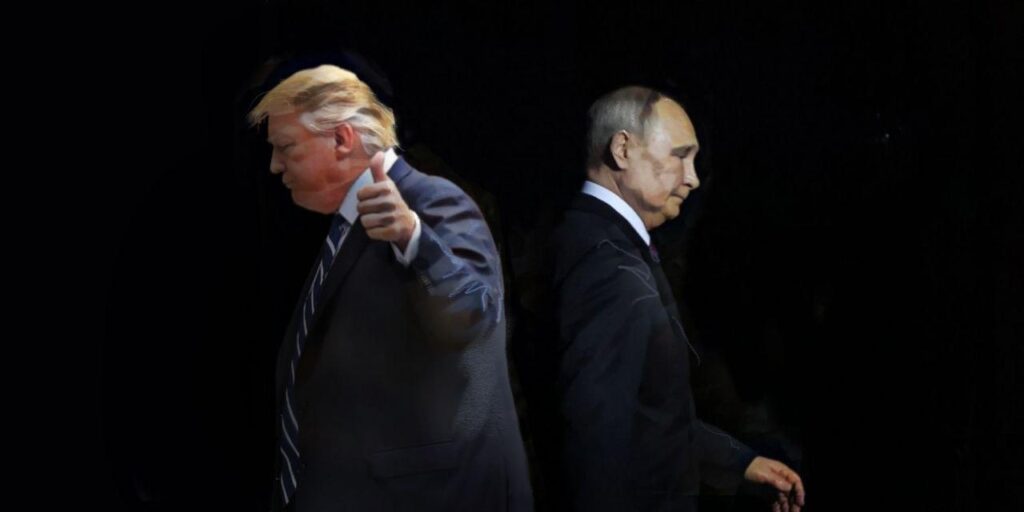
U.S. President Donald Trump and Russian President Vladimir Putin met on Friday in Alaska for their first face-to-face summit since the start of the Ukraine war. Despite optimism from the U.S. side, the talks ended without an agreement on a ceasefire.

The leaders met for nearly three hours at Joint Base Elmendorf-Richardson in Anchorage, following a red-carpet welcome and military flyover. Only a handful of aides joined the private session. Afterward, Trump called the exchange “extremely productive” and said “some headway” had been made, but stressed that “there’s no deal until there’s a deal.” Putin described “progress” and “agreements,” though neither leader offered specifics, and neither took questions.

No Ceasefire, Continued Dialogue
Ending Russia’s invasion of Ukraine dominated the agenda. Trump had vowed to bring the war to a close quickly, but the Alaska talks produced no ceasefire. Ukrainian officials noted that Putin appeared to have “bought more time” as fighting continues. Air raid sirens sounded in Ukraine, and Russian border regions came under drone attack even as the summit unfolded.

Having previously said on the way to his summit with Russian President Vladimir Putin that he wouldn’t “be happy if I walk away without some form of a ceasefire,” U.S. President Donald Trump walked away from the talks with no agreement in place, instead urging Ukrainian President Volodymyr Zelenskyy to “make a deal.”

“I believe we had a very productive meeting,” Trump stated. “There were many, many points that we agreed on… I will call up NATO… I’ll of course call up President Zelenskyy and tell him about today’s meeting… We really made some great progress… I’ve always had a fantastic relationship with President Putin – with Vladimir…We were interfered with by the ‘Russia, Russia, Russia’ hoax,” he added.

“Again, Mr. President, I’d like to thank you very much, and we’ll speak to you very soon and probably see you again very soon,” Trump said. “Thank you very much, Vladimir.”

“Next time in Moscow,” Putin replied, chuckling, with a rare use of English, before Trump abruptly ended his press event, refusing to take any questions.

Both leaders said the dialogue would continue. Trump claimed he and Putin agreed on “most things” and floated the idea of joining a future meeting between Putin and Ukrainian President Volodymyr Zelenskyy. Putin, while not referencing direct talks with Kyiv, urged Ukraine and its allies not to “derail” what he called constructive progress.

Signals from Washington and Moscow
Trump emphasized his desire to stop the fighting, stating, “I want the killing to stop,” and suggested he believed Putin wanted peace as well. He also said he would hold off on imposing new “severe” measures on Russia, a shift from earlier rhetoric. Trump also revealed that he would pause plans to levy tariffs on Chinese imports over Beijing’s purchases of Russian oil, saying progress in Alaska made that step unnecessary for now.

Putin, meanwhile, repeated his long-standing demands that NATO expansion and other “root causes” be addressed before peace can be achieved. He warned that provocations from Ukraine or its partners could undermine what he portrayed as emerging momentum from the summit.

Central Asia on Watch
While Europe remains at the center of the conflict, the outcome in Alaska is being closely monitored in Central Asia. The five former Soviet republics of the region have sought to remain neutral while adjusting to the war’s ripple effects. As previously reported by The Times of Central Asia, any outcome could have dramatic repercussions for the region.

The conflict has already reshaped economic and security outlooks. Inflation across emerging Europe and Central Asia spiked to a two-decade high of nearly 16% amid surging food and energy prices. A genuine peace could ease those pressures, reopening trade routes and stabilizing markets. But a prolonged or frozen conflict would leave these states balancing between Moscow, Beijing, and Western powers, walking a fine line to avoid sanctions while diversifying partnerships.

No Central Asian country has commented on the outcome of the summit. For now, Central Asia is watching carefully. Whether the Alaska summit leads to concrete steps toward peace or simply marks another stage in drawn-out diplomacy, its implications will extend well beyond Europe’s battlefields.

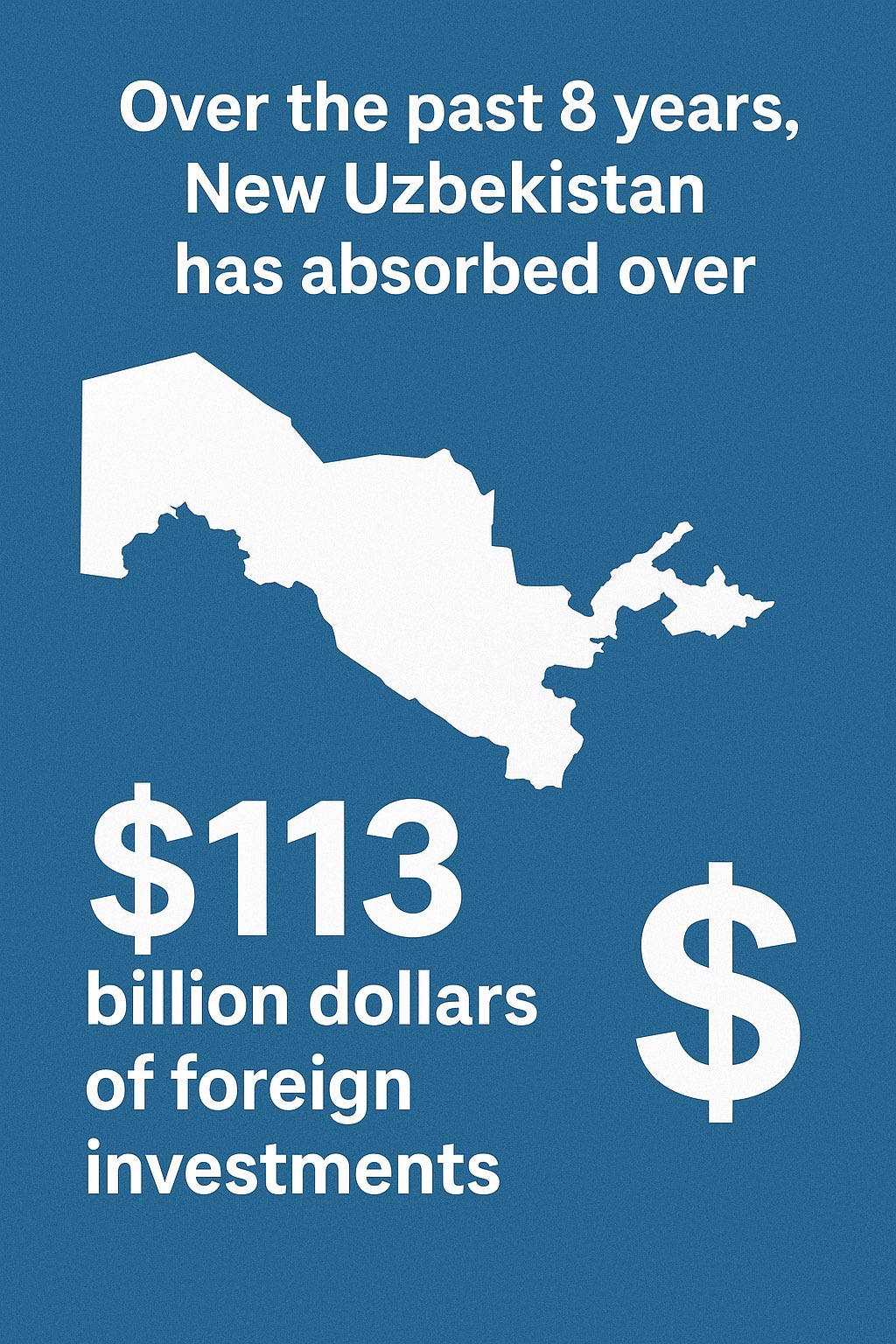
Opinion: Over the Past Eight Years, New Uzbekistan Has Absorbed Over $113 Billion in Foreign Investments

On the eve of the 34th anniversary of our country’s independence, the Executive Board of the International Monetary Fund finalized the 2025 consultations under Article IV of the IMF Agreement. The Fund’s main conclusion is that Uzbekistan’s economic outlook remains positive amid continued progress in the transition to a market economy. According to the published document, headline indicators are strong, including sustained growth, a reduced consolidated budget deficit, a narrower current account deficit, and an adequate level of international reserves.

IMF staff note that the successful implementation of structural reforms supports a favorable baseline. Despite a high degree of uncertainty in global trade policy, the IMF projects real GDP growth will remain robust in the coming years. These trends reflect greater economic openness, ongoing industrialization, active investment policy, and measures designed to build the export potential of promising industries.

The reform package – and the decisions already put into effect – aligns with available domestic resources and reserves, supporting long-term, sustainable development across the country and its regions. The commitment to irreversible market transformation allows Uzbekistan to combine targeted state support with space for private entrepreneurial initiative on the path to building a “New Uzbekistan.”

In recent years, rising openness and growing investor confidence have driven a steady increase in capital formation. From 2017 to 2024, total foreign investment exceeded $113 billion, more than 80% of which comprised foreign direct investment and loans. Financing activity has been particularly strong in leading industries and the fuel and energy complex, accelerating industrialization in virtually every region.

Deepening investment links with China, Russia, Germany, Turkey, Saudi Arabia, the Netherlands, the United States, the United Kingdom, and others is bringing advanced technologies and expertise, modern management practices, expanded localization, and stronger export capacity to priority sectors and regions. These resources are primarily directed to technological upgrades and modernization of existing facilities, as well as the creation of new production sites.

Over the past eight years, investment programs have launched more than 96,000 projects worth about $100 billion, creating 1.8 million jobs. In 2024 alone, the value of commissioned projects was nearly eight times higher than in 2017, while the number of jobs increased by 2.6 times. Active involvement by the Head of State has been pivotal. Since the start of this year, visits and high-level events have produced 366 investment agreements totaling $75 billion. Roadmaps have also been approved for 222 projects worth about $45 billion.
At the IV Tashkent International Investment Forum held in June, agreements were reached on investments exceeding $30 billion for 144 joint projects. In April 2025, on the sidelines of the 5th International Industrial Exhibition “INNOPROM. Central Asia” in Tashkent, 43 additional investment agreements were signed, with plans to attract a further $1 billion to the industrial sector.

Uzbekistan has also intensified outreach to the international community about project opportunities. This year, Investors’ Day events took place in 13 foreign countries, drawing representatives of 700 well-known companies. More than 200 investment projects worth $6 billion were presented to potential partners.

A central element of industrial policy is import substitution through high-quality, competitive local production. Under the Localization Program – covering around 10,000 projects – nearly 300 trillion som of output was produced from 2020 to 2024, yielding an estimated $25 billion in import substitution. The program has enabled the launch of new facilities for previously imported goods, reshaped the sectoral structure of industry, and reduced dependence on external supplies by diversifying the range of products and services.

The Number of Exporters Is Growing
Export orientation has become a pillar of Uzbekistan’s industrialization plans. Between 2017 and 2024, total exports exceeded $132 billion, with average annual export growth of 12–23% over this period. Thanks to systematic and targeted support for exporters, the geography of shipments expanded by 55 countries in 2024, and reached 186 destinations over the past eight years. Last year, the number of exporting enterprises increased by 3,143, bringing the total to 7,343.

Higher value-added goods are also gaining traction. In 2024 alone, the shift toward more processed exports added $1 billion to foreign sales. Entering new, promising markets requires substantial improvements in product quality and compliance with international standards. Under the GSP+ program, organizational and technical measures were implemented to obtain GlobalG.A.P., Organic, OEKO-TEX, BSCI, and CE certifications, and to transition more than 5,000 enterprises to ISO standards. These steps alone enabled additional exports of 617 product types worth $1.4 billion to the European Union last year.

Moving to more demanding standards and technologies makes it possible to deliver a different caliber of products for new markets. Growing shipments to developed countries confirm the strategy’s soundness. For example, as export geography expanded and producers responded to market conditions, average selling prices for fruit and vegetable products rose by 14% last year.

Industrialization has also changed the export basket. Until recently, Uzbekistan was widely associated with a cotton monoculture and raw-material dominance. According to IMF experts, the share of cotton fiber exports – once 0.2% of GDP – has trended toward zero since 2021 over the long term. Today, Uzbekistan exports an increasing array of higher-tech goods; by 2024, the export nomenclature had reached around 4,000 items. Compared with 2017, exports of primary goods fell by 22% last year, while exports of finished goods rose by 3.3 times, semi-finished goods by 4.4 times, and services by 2.9 times. Advanced cotton processing helped double garment and knitwear exports to $1 billion, making Uzbekistan the second-largest supplier of textile products to the Russian market.

Domestic brands are increasingly gaining recognition and trust among foreign consumers. Last year, about 300 Uzbek firms registered on major e-commerce platforms such as Alibaba, Wildberries, and Ozon, generating $680 million in sales. By the end of the first half of 2025, export volumes were up 33% year-on-year, approaching $17 billion. Since January, 1,557 companies have joined the ranks of exporters, accounting for $650 million in shipments.

The steady shift away from raw materials toward finished high-tech goods and services – including tourism, transport, construction, IT, and others – continues.

Investment Dialogue
Uzbekistan is building and actively operating an institutional environment to address strategic industrial-development priorities with a clear export focus and strong foreign-capital participation. Relevant ministries and state agencies are in place, alongside organizations that facilitate public–private interaction.

The Council of Foreign Investors under the President of Uzbekistan serves as a platform for direct dialogue between the government and investors, including international financial institutions. As an advisory and consultative body, the Council helps attract foreign direct investment into priority sectors and fosters a high-quality business dialogue that reflects international best practices.

The Council operates under the patronage of the President, who personally attends its meetings. A recent presidential decree provides for the implementation of agreements reached at the latest session, ensures systematic follow-through on participants’ initiatives and proposals, and enhances the Secretariat’s effectiveness.

In parallel, Uzbekistan continues to improve the legislative framework to support advanced industrial development, catalyze investment, and expand export potential across sectors and regions. Parliament remains closely engaged. In recent years, more than 500 state functions related to business regulation have been abolished, while about 70 have been transferred to public–private partnerships or outsourced to the private sector. Seventy-two types of licensed activities and 40 permits have been eliminated to improve the business climate and simplify procedures.

Positive Assessment
These transformations are reflected in assessments by international organizations. On the OECD FDI Regulatory Restrictiveness Index, Uzbekistan ranks as the most open among its Central Asian peers. Performance on the Heritage Foundation’s Index of Economic Freedom – particularly “Trade Freedom” and “Investment Freedom” – has also improved this year.

Returning to the IMF’s conclusions under the 2025 Article IV consultation, the Fund’s outcome document highlights opportunities arising from accelerated structural reforms, rising incomes and capital inflows, and favorable commodity-price dynamics, all supportive of Uzbekistan’s sustainable development.

An analysis of industrialization, investment activity, and the expansion of exports underscores the tangible effectiveness of the “Uzbekistan–2030” strategy and accompanying measures to strengthen the country’s economic potential and international standing. Taken together, these results demonstrate the irreversibility of reforms aimed at building an independent New Uzbekistan.

Uzbekistan Introduces Comprehensive Support for Palestinian Evacuees

Uzbekistan has introduced comprehensive measures to assist Palestinian women and children evacuated from Gaza late last year, including financial aid, housing support, free education, and healthcare. A presidential decree published on August 14 announced the creation of a special fund to finance these programs, UzA reported.

On December 26, 2024, 100 injured Palestinian women and children were evacuated from Rafah to Uzbekistan. They were admitted to hospitals and rehabilitation centers for treatment and provided with medication and medical examinations. Authorities say the new measures aim not only to address urgent needs but also to help the group adapt and integrate into Uzbek society.

Special fund and social support

The decree establishes a special fund under the National Social Protection Agency to cover living expenses, rent, and one-time material assistance. Funding will come from charitable donations, international grants, and other legal sources, with spending monitored by a national commission to ensure transparency.

The measures include monthly allowances for working-age adults, full coverage of rental costs for families, one-time payments for childbirth and funeral expenses equivalent to those granted to Uzbek citizens, and lump-sum assistance for essential non-food items. Each family will be assigned a local social worker to assess needs and provide tailored support.

A Republican Commission will coordinate the work of government agencies to resolve practical issues swiftly. Local mahalla committees and social service centers will directly assist families in adapting to community life.

Focus on education and healthcare

The decree guarantees free enrollment for children in state kindergartens and schools without waiting lists, with kindergarten fees waived until January 1, 2028. The Ministry of Higher Education will recognize the foreign academic documents of Palestinian students within two months, without fees or additional exams.

The Ministry of Health will register evacuees at family medical centers and polyclinics near their residences, granting them free care on the same terms as low-income Uzbek families. Any evacuee diagnosed with a disabling condition will be granted disability status regardless of treatment timelines, while elderly people without sufficient work records will receive pensions within two weeks.

Employment and integration

The Social Protection Agency has one month to develop proposals for helping evacuees find jobs and acquire new skills. The Ministries of Economy and Labor, along with commercial banks, will include Palestinians in entrepreneurship and small business support programs such as “Family Entrepreneurship,” “Support for Small Business,” and “First Step to Business.” Local officials and community bankers will oversee the use of funds and provide practical guidance.

Humanitarian context

Uzbekistan’s decision comes amid a worsening humanitarian crisis in Gaza. According to the Health Ministry in the Hamas-run administration, more than 60,000 Palestinians have been killed and over 145,000 injured since the outbreak of war in October 2023, the Associated Press reported.

Israeli Prime Minister Benjamin Netanyahu has reportedly suggested relocating Palestinians from Gaza to countries including South Sudan, a proposal that Juba has denied discussing. Hamas says it will disarm only if Israeli forces fully withdraw from Gaza, a condition that continues to hinder progress in ceasefire talks, Reuters reports.

Switzerland to Help Tajikistan Promote Tourism Globally

A meeting in Geneva has set the stage for closer cooperation between Tajikistan and leading Swiss tourism organizations to promote its tourism potential internationally.

Expanding Tajikistan’s global presence

Deputy Chairman of the Tajik Tourism Development Committee Ziyodullo Salimzoda and Tajik Ambassador to Switzerland Sharaf Sheralizoda held talks with Geneva Tourism Office Director General Adrien Genier, as well as executives from Swiss companies Trade Wings Voyages and Executive Travel.

Discussions focused on increasing Tajikistan’s visibility in the global tourism market. Proposals included organizing presentations of Tajik tourist routes in Switzerland, launching advertising campaigns, and participating in specialized international tourism events.

Tourism as an economic driver

Both sides emphasized the importance of attracting foreign investment to modernize tourism infrastructure, develop the hotel sector, and create jobs.

“Tajikistan is known for its unique nature and hospitality, as well as the legendary Pamir Highway, one of the highest and most picturesque roads in the world,” noted Primus Publishing, a Swiss media outlet specializing in travel content.

Officials expressed confidence that cooperation with Swiss partners will help increase foreign traveler interest in Tajikistan and strengthen bilateral economic ties.

Partners with global expertise

Trade Wings Voyages is a well established Swiss travel company offering premium business and leisure services worldwide. Executive Travel, based in Geneva, specializes in customized itineraries and full-service travel arrangements.

Both companies have signaled their readiness to include Tajikistan in their travel programs and promote it across the European market.

Following the meeting, participants agreed to pursue long-term initiatives, including cultural exchanges and joint promotional campaigns. This partnership could mark a shift from isolated marketing efforts to a coordinated, sustained promotion of Tajikistan as a distinctive destination for international travelers.

Kazakhstan’s Student Housing Crisis Deepens

Kazakhstan continues to face a severe shortage of student dormitories, with many new facilities being built in locations that do not address the areas of greatest need, according to a report by analysts at Energyprom.kz.

Demand far outstrips supply

In the 2024/2025 academic year, the country had 336,400 non-resident students, 7.5% more than the previous year. The largest concentrations were in Almaty (123,500), Astana (51,900), and Shymkent (28,500).

Of these, 131,400 required dormitory accommodation, but only 95,900 places were available. On average, just 39% of non-resident students in need were housed. In some regions, the situation was far worse: in Aktobe region, almost 70% of students seeking accommodation could not get it; in North Kazakhstan region, the figure was 68.8%; and in Turkestan region, 58.5%.

While the national average shows 73% of students have access to some form of housing, regional disparities are stark. Only eight out of 20 regions fully met demand. The lowest provision rates were recorded in Aktobe (50.4%), Almaty (60.3%), and Abai region (69.1%). As a result, even in relatively well-served areas, many students are forced to rent costly and often substandard accommodation.

Misaligned construction priorities

In the first half of 2025, 22 dormitories were commissioned nationwide, up from 18 in the same period last year. However, half were designated for workers and migrants rather than students. Only six were built specifically for students, while four were family-type facilities.

The Atyrau region saw the most activity, with six dormitories built, followed by Astana (four) and Akmola and Mangistau regions (three each). Notably, no new student dormitories were built in either Aktobe region or Almaty, where demand is highest.

Paradoxically, Atyrau, where 99.7% of demand is already met and only 26.3% of students require housing, recorded the highest construction rates.

Rising student numbers add pressure

The problem is compounded by an influx of internal and international student migrants. In the first quarter of 2025 alone, 8,900 such students arrived, a 26.3% increase year-on-year.

Almaty led the inflow with 2,100 new students, up from 1,400 last year (+48.9%). It was followed by Astana, Shymkent, Almaty region, and Turkestan region. Only Pavlodar region maintained last year’s intake, while Ulytau and Akmola regions saw declines.

Analysts note that while the growth reflects the appeal of Kazakhstan’s leading universities, it is placing additional strain on an already inadequate student housing system.