• KGS/USD = 0.01144 0%
  • KZT/USD = 0.00196 -0%
  • TJS/USD = 0.10899 -0%
  • UZS/USD = 0.00008 -0%
  • TMT/USD = 0.28490 0%
  • KGS/USD = 0.01144 0%
  • KZT/USD = 0.00196 -0%
  • TJS/USD = 0.10899 -0%
  • UZS/USD = 0.00008 -0%
  • TMT/USD = 0.28490 0%
  • KGS/USD = 0.01144 0%
  • KZT/USD = 0.00196 -0%
  • TJS/USD = 0.10899 -0%
  • UZS/USD = 0.00008 -0%
  • TMT/USD = 0.28490 0%
  • KGS/USD = 0.01144 0%
  • KZT/USD = 0.00196 -0%
  • TJS/USD = 0.10899 -0%
  • UZS/USD = 0.00008 -0%
  • TMT/USD = 0.28490 0%
  • KGS/USD = 0.01144 0%
  • KZT/USD = 0.00196 -0%
  • TJS/USD = 0.10899 -0%
  • UZS/USD = 0.00008 -0%
  • TMT/USD = 0.28490 0%
  • KGS/USD = 0.01144 0%
  • KZT/USD = 0.00196 -0%
  • TJS/USD = 0.10899 -0%
  • UZS/USD = 0.00008 -0%
  • TMT/USD = 0.28490 0%
  • KGS/USD = 0.01144 0%
  • KZT/USD = 0.00196 -0%
  • TJS/USD = 0.10899 -0%
  • UZS/USD = 0.00008 -0%
  • TMT/USD = 0.28490 0%
  • KGS/USD = 0.01144 0%
  • KZT/USD = 0.00196 -0%
  • TJS/USD = 0.10899 -0%
  • UZS/USD = 0.00008 -0%
  • TMT/USD = 0.28490 0%
08 December 2025

Tajikistan Seeks Stronger Protections for Striped Hyena at UN Wildlife Meeting

The striped hyena, listed as “near threatened” by international conservationists, has a vast range that includes Africa, the Middle East, and Central Asia, but is difficult to monitor because of its nocturnal, solitary habits in often rugged terrain.

Now Tajikistan is proposing tighter international protections for the species at the highest-level meeting of the Convention on International Trade in Endangered Species of Wild Fauna and Flora, or CITES. The United Nations gathering in Samarkand, Uzbekistan – the first in Central Asia – regulates trade in tens of thousands of species of animals and plants. It began on Monday and runs until the end of next week.

The sharp decline in global shark and ray populations is an urgent concern, and delegates will consider new restrictions on the fin and shark meat trade that conservationists hope will fend off the threat of extinction for some species.

Tajikistan’s proposal on behalf of the striped hyena aims for a similar outcome, noting a “marked decline in the population size in the wild” despite the difficulty in obtaining data. Some estimates put the number at significantly below 10,000, and the global IUCN Red List of Threatened Species labels the species as “near threatened,” with “vulnerable” being the next category on a scale leading to extinction.

The striped hyena’s range includes Tajikistan, Turkmenistan, and Uzbekistan, according to the list. Israel has a relatively robust population and supports Tajikistan’s proposal.

Habitat degradation, human-wildlife conflict, and the illegal trade in the striped hyena, which is allegedly trafficked into the exotic pet industry or whose body parts are used in traditional medicine, are some of the reasons for the decline of the species.

The striped hyena is currently listed in Appendix III of CITES regulations, under a 2014 request by Pakistan, where there were reports of illegal trade for circuses, captures for dog-fighting training, and myths and perceptions that the hyena was digging up graves and attacking people. Appendix III provides for some protections in the international trade in listed species.

Tajikistan wants CITES to move the striped hyena into the far more restrictive Appendix I.

Appendix I includes all species threatened with extinction which are or may be affected by trade,” CITES says. “Trade in specimens of these species must be subject to particularly strict regulation in order not to endanger further their survival and must only be authorized in exceptional circumstances.”

To upgrade protections for the species, Tajikistan will need to secure a two-thirds majority vote at the CITES conference. The striped hyena was thought to be extinct in Tajikistan for many years, though a sighting in 2017 restored hope. Tajikistan, which endured a civil war in the 1990s, warned in its proposal that conflict elsewhere was a threat to the species it hopes to save.

“With the recent political instability in Afghanistan and generally across the larger region where several conflicts are ongoing, it is anticipated a significant increase in illegal wildlife trade, further endangering the striped hyena population across its entire global home range,” the proposal said.

China’s Zhongyun to Partner on $300M Seaport Project in Aktau

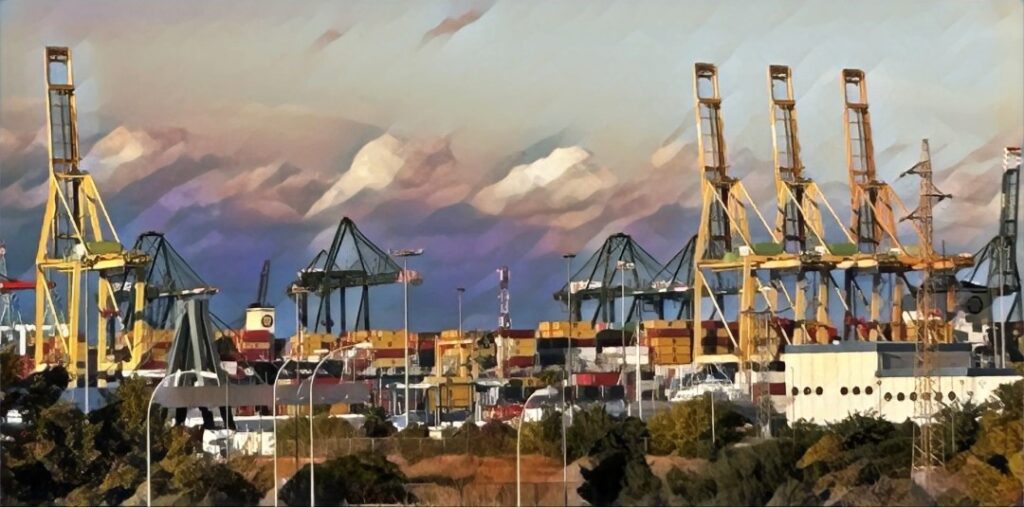
A new $300 million seaport is set to be built in Aktau, with China’s Zhongyun International confirmed as the strategic partner. The announcement was made by Nurdaulet Kilybay, Akim (Governor) of the Mangistau region, during a government meeting on November 25.

Located on the Caspian Sea in western Kazakhstan, the port of Aktau connects to Azerbaijani ports Baku and Alyat to the west, and to the Iranian port of Bandar-e Anzali to the south. The Aktau-Alyat ferry crossing plays a key role in the Trans-Caspian International Transport Route, part of the larger Belt and Road Initiative linking China to Europe via Kazakhstan, Azerbaijan, Georgia, and Turkey. The route significantly shortens delivery times to the European Union.

Aktau’s current cargo port has a capacity of 3.2 million tons of dry goods and 12.5 million tons of crude oil annually.

In June 2025, the first phase of a $38 million container hub was launched in Aktau, expanding the port’s capacity from 140,000 to 240,000 twenty-foot equivalent units (TEU).

Over the summer, Mangistau authorities held talks with several Chinese firms about building a modern seaport and logistics center in Aktau. Zhongyun International has since registered a local subsidiary and is preparing documentation for an investment agreement.

“This project will contribute to the formation of a new international transport corridor: China-Kazakhstan-Aktau-Baku-Poti-Europe. Its implementation will cut delivery times by 7-15 days, reduce transport costs by 18-25%, and create new jobs,” Kilybay said.

Additional Infrastructure at Kuryk Port

At the same meeting, Minister of Trade and Integration Arman Shakkaliev reported on progress at the Sarzha multifunctional marine terminal in the port of Kuryk, located on the eastern Caspian coast near Aktau. The $189 million project is being developed with private investment.

“The general cargo terminal and temporary storage facility are now operational, and cargo transshipment has already begun,” Shakkaliev said.

Terminals for grain, bulk, chemical, and universal cargo, as well as a transport and logistics center, are currently under construction.

The port of Kuryk now handles up to 6 million tons of cargo per year, 4.1 million tons via the railway terminal and 1.9 million tons via the road terminal. In 2024, dredging works in the port’s waters were completed ahead of schedule, enabling deeper drafts and the full loading of vessels.

CSTO Summit in Bishkek: Armenia’s Boycott, Russia’s Agenda, and a New Secretary General

On November 27, Kyrgyzstan will host the annual summit of the Collective Security Treaty Organization (CSTO) in Bishkek, bringing together foreign ministers, defense ministers, and security council secretaries from member states. While often portrayed in Russian media as an Eurasian analogue to NATO, the CSTO remains an organization heavily dependent on Russian military power. Should Moscow withdraw or reduce its support, the Organization’s relevance would likely collapse.

A stark illustration of this fragility is Armenia, whose Prime Minister Nikol Pashinyan will boycott the summit entirely. Russian Presidential Aide Yuri Ushakov confirmed that Armenia will not attend the session of the Collective Security Council, the CSTO’s highest governing body, though it does not object to the adoption of bloc-wide documents.

According to the CSTO press service, the Council is expected to adopt a declaration outlining member states’ joint positions on current security challenges. Also on the agenda is the formal appointment of the next Secretary General for the 2026-2029 term, and the unveiling of Russia’s priorities for its upcoming presidency in 2026.

President Vladimir Putin’s speech on these priorities is expected to dominate the summit. Armenia’s withdrawal highlights the CSTO’s waning cohesion, maintained largely by members’ reliance on Russian security assistance, a dynamic in place since the Treaty’s inception in Tashkent on May 15, 1992. The original signatories included Armenia, Kazakhstan, Kyrgyzstan, Russia, Tajikistan, and Uzbekistan, with Azerbaijan, Belarus, and Georgia joining in 1993. The treaty entered into force in 1994.

Its central provision, Article 4, mandates collective defense: an attack on one member is considered an attack on all, obligating military and other forms of assistance in line with Article 51 of the UN Charter.

In 1999, Armenia, Belarus, Kazakhstan, Kyrgyzstan, Russia, and Tajikistan signed a protocol extending the treaty, establishing an automatic renewal every five years. The formal CSTO was created in 2002; its charter was registered with the UN the following year, and it has held observer status at the UN General Assembly since 2004.

For Armenia, the CSTO’s relevance has waned dramatically since the bloc declined to intervene during the final phase of the Nagorno-Karabakh crisis. Yerevan’s disenchantment, however, predates 2023 and stretches back to the 2021–2022 border clashes, when it also felt the organization had failed to provide meaningful support. Kazakhstan, by contrast, remains a key beneficiary: the rapid CSTO deployment in January 2022 played a central role in stabilizing the country during a period of acute domestic unrest.

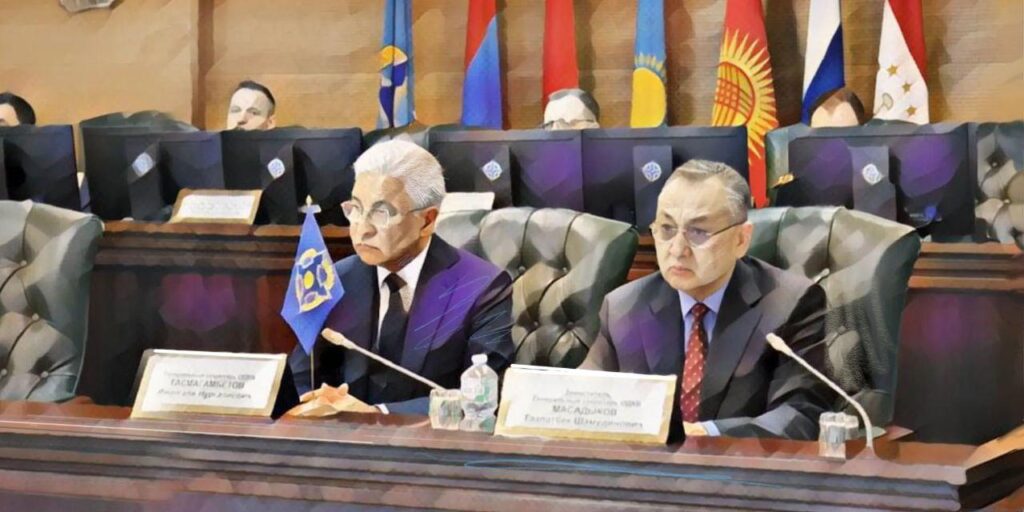
As the current Secretary General, Imangali Tasmagambetov – an influential figure from the “Old Kazakhstan” elite – completes his term, the position is scheduled to rotate to Taalatbek Masadykov of Kyrgyzstan. Ushakov confirmed that Tasmagambetov will deliver a final report on the Organization’s activities and security concerns before officially stepping down on January 1. Masadykov, currently Deputy Secretary General, is expected to assume the role seamlessly.

While Masadykov brings diplomatic gravitas, the question remains whether he can restrain Moscow and Minsk from pushing CSTO allies toward confrontation with NATO. Tasmagambetov leaves behind a significant legacy and an open question for Astana: where to place this seasoned, politically influential figure who has previously served as Kazakhstan’s Prime Minister, Minister of Defense, Ambassador to Russia, and more, after his CSTO tenure ends.

Masadykov, best known for his 2017 Kyrgyz presidential bid, is a veteran diplomat and international affairs expert. His résumé includes service in the UN Assistance Mission in Afghanistan, academic leadership at the American University of Central Asia, and deputy chairmanship of Kyrgyzstan’s Security Council. Since January 2024, he has served as Deputy Secretary General of the CSTO and holds the diplomatic rank of ambassador extraordinary and plenipotentiary.

Kazakhstan, Kyrgyzstan, and Uzbekistan Sign Trilateral Deal on Water and Energy Cooperation

Kazakhstan, Kyrgyzstan, and Uzbekistan have signed a trilateral protocol on water and energy cooperation, covering the upcoming winter heating period and the 2026 agricultural season. The agreement was formalized at a meeting of the countries’ energy and water ministers held in Almaty on November 22.

With water levels at Kyrgyzstan’s Toktogul Hydropower Plant (HPP) reservoir critically low, Kazakhstan and Uzbekistan have agreed to supply electricity to Kyrgyzstan during the winter months. This will allow Kyrgyzstan to reduce electricity generation during peak heating demand and conserve water in the Toktogul Reservoir. The stored water will later be released downstream to Kazakhstan and Uzbekistan during the 2026 growing season to ensure consistent irrigation for farmland in their southern regions.

The Toktogul HPP, located on the Naryn River, a key tributary of the Syr Darya, is Kyrgyzstan’s largest power station, supplying about 40% of the country’s electricity. It plays a dual role: meeting domestic energy needs and regulating water flows critical to downstream agricultural systems. In winter, Kyrgyzstan typically ramps up power output to meet heating demand, often at the expense of reservoir levels, which can compromise irrigation capacity the following spring.

Under the new protocol, Uzbekistan has also pledged to support regional electricity balancing and ensure transit capacity.

Earlier, the three countries agreed to facilitate cross-border electricity flows, including Russian electricity transiting to Kyrgyzstan via Kazakhstan, and Turkmen electricity reaching Kyrgyzstan through Uzbekistan’s transmission grid.

Participants in the Almaty meeting emphasized that the trilateral agreement reflects a spirit of good neighborliness and is aimed at enhancing regional energy security and stability.

The agreement is particularly critical for Kyrgyzstan, which faces persistent electricity shortages, especially during the winter when electric heating is widely used.

On November 18, Kyrgyzstan completed the full modernization of the Toktogul HPP, with the commissioning of its fourth generating unit. The upgrade raised the facility’s total capacity from 1,200 MW to 1,440 MW.

In parallel, Kyrgyzstan is advancing construction of the Kambarata-1 HPP, a major regional project being developed jointly with Kazakhstan and Uzbekistan. Once completed, Kambarata-1 will have a generation capacity of 1,860 MW and produce 5.6 billion kWh annually.

Russia Expands Soft Power Through New Cultural Center in Kyrgyzstan

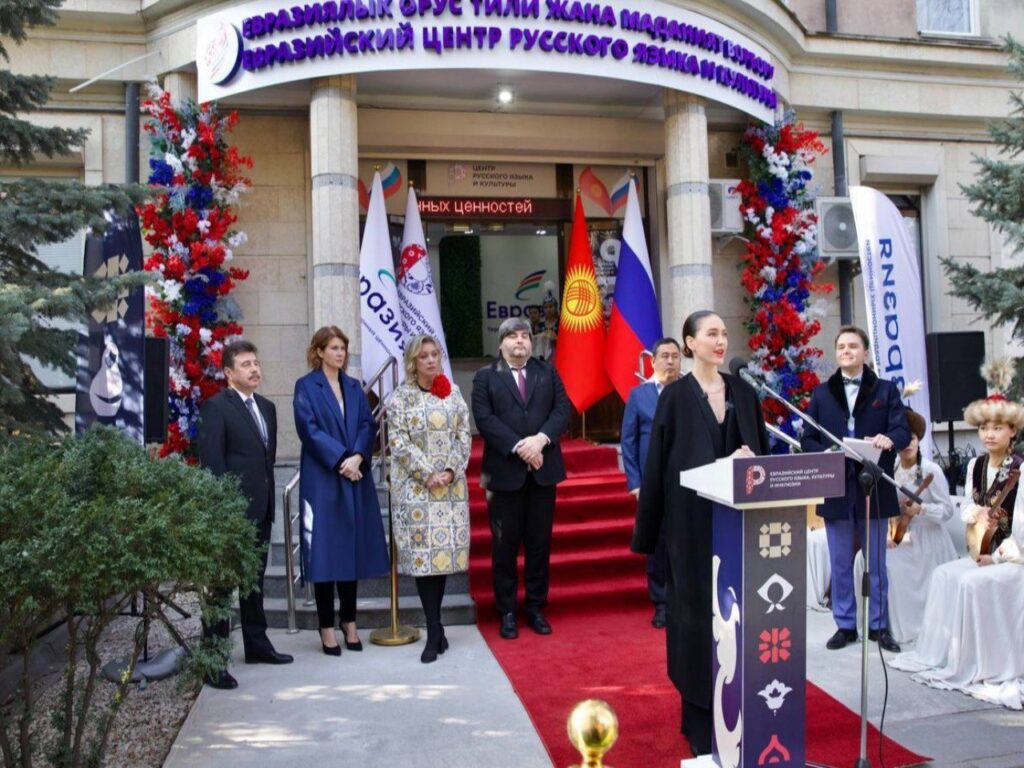
Russia’s international cooperation organization Evraziya has launched Kyrgyzstan’s first Eurasian Center for Russian Language and Culture in Bishkek. The initiative aims to promote the Russian language, support local educators, and advance bilateral humanitarian projects. The center’s opening came just days before Russian President Vladimir Putin’s state visit to Kyrgyzstan, which begins today on November 25.

Evraziya, a Russian non-profit, presents itself as a vehicle for deeper integration in the post-Soviet space and is widely viewed as a key instrument of Moscow’s soft power strategy in Central Asia.

High-Level Delegation at Launch

The opening ceremony was attended by Russian Ambassador to Kyrgyzstan Sergey Vakunov, Russian Foreign Ministry spokesperson Maria Zakharova, Head of the Presidential Executive Office for Strategic Partnership and Cooperation Vadim Titov, State Duma Deputy and Chair of Eurasia’s Coordination Council Alyona Arshinova, and Kyrgyz Deputy Minister of Education and Science Albert Makhmetkulov.

Arshinova noted that Evraziya had spent the past year enhancing cooperation with Kyrgyz institutions by offering teacher support, organizing educational forums, and providing professional development programs.

“Kyrgyzstan is not just a partner; it is a country with which we share common values and a strategic vision,” she said. “The Russian language remains a foundation that connects our countries and opens opportunities for new educational and cultural initiatives.”

Cultural and Educational Programming

The new center will run a range of initiatives for schoolchildren and adolescents, including a theater studio, workshops in art and media, digital culture and programming courses, and the “Unboring Russian” project. For adults, the center will offer film clubs, discussion platforms, and a literary lounge.

It will also serve as a training center for local teachers and coordinate bloggers focused on language and culture, reinforcing the Russian-language educational and cultural environment in Kyrgyzstan.

Deputy Minister Makhmetkulov called the opening “a strategic step for education and interethnic dialogue,” describing the center as a space for both promoting Russian and fostering cultural exchange and professional growth.

Evraziya plans to expand its network to other regions in Kyrgyzstan and eventually to other countries in the region.

Wider Engagement Strategy

Since 2024, Evraziya has intensified its presence in Kyrgyzstan through education, social, and humanitarian projects. In partnership with Russia’s Ministry of Education, the organization has dispatched young Russian teachers to Kyrgyz schools to teach various subjects in Russian.

It has also donated 100 school buses to rural areas and financed renovations at schools in Bishkek and Kyzyl-Kyya.

On August 28, in cooperation with Kyrgyzstan’s Cabinet of Ministers, Evraziya opened a $35 million amusement park in Bishkek. Two days earlier, the group launched its first social store in the capital, offering discounted essential goods to pensioners, veterans, large families, and people with disabilities.

Russian Language as a Strategic Link

The Russian language continues to be a central element in Moscow-Bishkek relations. During a July meeting at the Kremlin, Putin praised Kyrgyzstan’s decision to retain Russian as an official language.

Russian remains one of Kyrgyzstan’s official languages and is widely used in public administration, education, and interethnic communication.

As part of ongoing cooperation, the two countries are constructing nine Russian-language secondary schools across Kyrgyzstan. On November 10, Russian Deputy Prime Minister Alexey Overchuk and Kyrgyz Prime Minister Adylbek Kasymaliev visited one of the sites in Bishkek, which will accommodate 1,224 students.

Overchuk also announced that Russia will donate 651,000 Russian-language textbooks to Kyrgyz secondary schools.

Arrests of Opposition Politicians in Kyrgyzstan Sparks Outcry Ahead of Elections

On November 22, law enforcement agencies in Kyrgyzstan launched a large-scale special operation, detaining several opposition politicians, their relatives, and media representatives. The actions were carried out under criminal proceedings initiated under Article 278 of the Criminal Code of the Kyrgyz Republic, “Organization of Mass Unrest”. In three cases, the authorities also alleged attempts to “violently seize power” in what has become an increasingly familiar mantra.

The scope of the operation and the number of individuals involved have drawn significant public attention. The arrests come just days before the parliamentary elections scheduled for November 30, prompting concerns among observers about the government’s approach to managing opposition voices and maintaining stability during the electoral cycle.

Official Version

According to the Ministry of Internal Affairs, a “destructive group” was preparing to stage mass protests following the announcement of the election results in the Jogorku Kenesh (parliament).

The group allegedly included politicians, former deputies, civil servants, and law enforcement officials. Investigators claim the suspects attempted to recruit members of the criminal underworld and sports organizations to provoke violent clashes.

The ministry alleges that the planned unrest would start in the south of the country and then spread to Bishkek and other regions, creating an “effect of mass discontent.”

The group reportedly operated through a defined structure, with “coordination groups” tasked with articulating political demands and criminal organizations responsible for applying pressure. Some participants allegedly pre-assigned themselves roles in a proposed political configuration.

Investigators also claim the group intended to issue “unconstitutional appeals” and possibly seize government buildings, television channels, law enforcement facilities, weapons, and penitentiary institutions.

Separately, the Interior Ministry announced the arrest of Social Democratic Party leader Temirlan Sultanbekov and said he had been charged with organizing mass riots.

Waves of Searches and Detentions

Local media reported that Kadyrbek Atambayev, the son of former President Almazbek Atambayev, and former first lady Raisa Atambayeva were brought in for questioning. Raisa Atambayeva was released later the same day.

Former head of the State Service for Combating Economic Crimes, Syimyk Zhapykeyev, was detained in the Issyk-Kul region and transported to Bishkek for questioning before also being released that evening.

Searches were conducted at the home of former deputy Shailoobek Atazov, while other prominent figures, including former Deputy Minister of Internal Affairs and ex-MP Kubanychbek Kadyrov, and the former CEO of the April TV channel, Dmitry Lozhnikov, were also questioned. Authorities linked Lozhnikov to the detained politicians.

The Interior Ministry stressed that all actions were authorized by court orders and were part of an ongoing investigation into the organization of mass riots.

Court Rulings: Arrests and Preventive Detentions

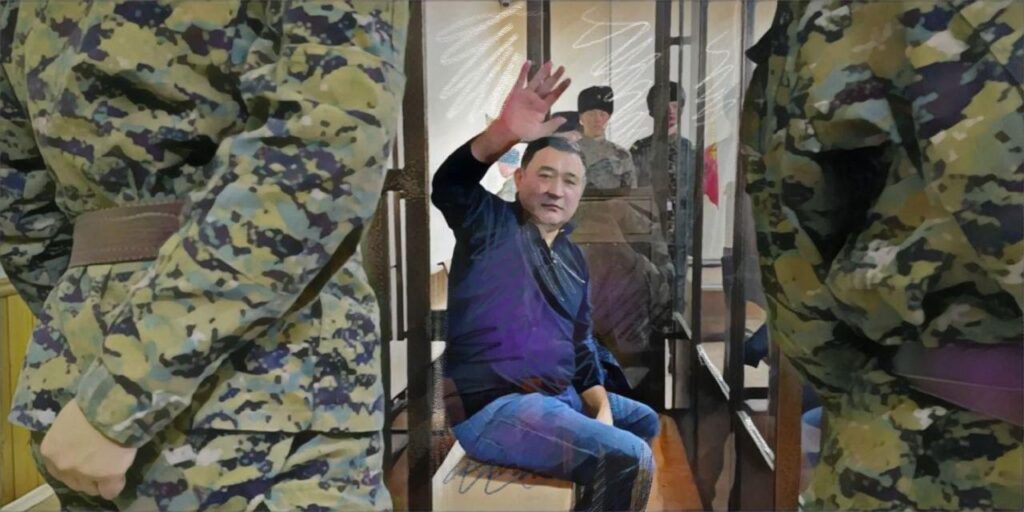
On November 23, the Pervomaisky District Court in Bishkek issued preventive detention orders for ten individuals, including Temirlan Sultanbekov, Shailoobek Atazov, Ermek Ermatov, Damir Musakeev, Kadyrbek Atambayev, Kubanychbek Kadyrov, and businessman Urmat Baryktabasov (also known as Askarbekov). The identities of three additional detainees have not been publicly disclosed.

Kadyrbek Atambayev has been remanded in custody until January 17, 2026, according to his lawyer Sergei Slesarev, who confirmed that the defense intends to appeal the decision.

Similar detention measures were issued for Sultanbekov and Ermatov. Sultanbekov’s arrest was confirmed by his sister, Kanykey.

Urmat Baryktabasov was also sent to a pre-trial detention center for two months. No official information has been released on the status of the other detainees.

Relatives of the accused reported being denied entry to the courthouse on the grounds that it was a non-working day.

Background: Atambayev, Legal Conflicts, and Political Tensions

In June 2025, the Pervomaisky Court in Bishkek delivered a verdict in the long-running Koi-Tash case, sentencing former President Almazbek Atambayev to eleven years in prison in absentia and ordering the confiscation of some of his property.

Commenting on the case, President Sadyr Japarov told Kabar News Agency that the judiciary acts independently and that “no one, including the president, can change a court decision”.

Kadyrbek Atambayev later claimed that the government was using the case as a tool for political pressure and possibly as leverage, hinting at a broader political deal involving the potential return of former President Kurmanbek Bakiyev to the country, an assertion that President Japarov has denied.

Crackdown on Media

In October 2025, three independent media outlets, Temirov Live, Kloop, and Ait Ait Dese, were labeled “extremist” by a Bishkek district court and banned from online activity. The Communications Regulation and Supervision Service, under the Ministry of Communications and Information Technology, is tasked with enforcing the bans.

Earlier in the year, seven current and former journalists from Kloop were detained and interrogated without legal representation. In August, four former Kloop employees were tried on charges of “inciting unrest.” Authorities alleged that their content posed a threat to national stability. Two former camera operators received five-year prison sentences based on video materials that, according to trial reporting and rights groups, were not created by them.

The sweep of arrests, searches, and criminal charges has intensified long-standing tensions between the government and its critics, particularly amid a broader crackdown on independent media and opposition-linked figures. With parliamentary elections set for November 30, the timing of the operation has raised fresh concerns about the shrinking space for dissent and the methods the authorities are willing to employ to manage political uncertainty in the days leading up to the vote.