• KGS/USD = 0.01144 0%
  • KZT/USD = 0.00210 0%
  • TJS/USD = 0.10559 0%
  • UZS/USD = 0.00008 0%
  • TMT/USD = 0.28530 0%
  • KGS/USD = 0.01144 0%
  • KZT/USD = 0.00210 0%
  • TJS/USD = 0.10559 0%
  • UZS/USD = 0.00008 0%
  • TMT/USD = 0.28530 0%
  • KGS/USD = 0.01144 0%
  • KZT/USD = 0.00210 0%
  • TJS/USD = 0.10559 0%
  • UZS/USD = 0.00008 0%
  • TMT/USD = 0.28530 0%
  • KGS/USD = 0.01144 0%
  • KZT/USD = 0.00210 0%
  • TJS/USD = 0.10559 0%
  • UZS/USD = 0.00008 0%
  • TMT/USD = 0.28530 0%
  • KGS/USD = 0.01144 0%
  • KZT/USD = 0.00210 0%
  • TJS/USD = 0.10559 0%
  • UZS/USD = 0.00008 0%
  • TMT/USD = 0.28530 0%
  • KGS/USD = 0.01144 0%
  • KZT/USD = 0.00210 0%
  • TJS/USD = 0.10559 0%
  • UZS/USD = 0.00008 0%
  • TMT/USD = 0.28530 0%
  • KGS/USD = 0.01144 0%
  • KZT/USD = 0.00210 0%
  • TJS/USD = 0.10559 0%
  • UZS/USD = 0.00008 0%
  • TMT/USD = 0.28530 0%
  • KGS/USD = 0.01144 0%
  • KZT/USD = 0.00210 0%
  • TJS/USD = 0.10559 0%
  • UZS/USD = 0.00008 0%
  • TMT/USD = 0.28530 0%

Pakistan Sends First Transit Shipment to Uzbekistan via Iran Corridor

Pakistan has launched trade operations under the Pakistan-Iran transit corridor, dispatching its first export consignment to Tashkent in Uzbekistan via Iran, Pakistan Today reported, citing customs officials.

According to the report, the inaugural shipment consisted of frozen meat transported in refrigerated trucks. The cargo departed from Pakistan and is being routed through Gwadar and Iranian territory before reaching Central Asia. Officials say the corridor is intended to facilitate overland trade and provide an alternative to maritime routes.

Sanaullah Abro, Director General of Transit Trade Customs, said the corridor has been operationalized under the TIR (Transports Internationaux Routiers) system, which enables goods to move across multiple countries with minimal customs checks. He added that key border crossing points including Taftan, Rimdan, Sost, and Gwadar, have been activated for TIR transit, with procedures streamlined to support faster cargo movement.

At a launch ceremony, Abro and Director of Transit Muhammad Rashid formally flagged off the first consignment. Officials described the initiative as part of broader efforts to strengthen Pakistan’s trade connectivity with Central Asia and reduce logistics costs.

Sources cited by Pakistan Today said the new route offers a more economical option for exporters and is expected to shorten transit times while easing pressure on maritime trade routes. The corridor may also increase traffic through Pakistan’s ports and support export growth.

The development comes as Pakistan seeks to expand its economic engagement with Central Asia, including Uzbekistan. As previously reported by The Times of Central Asia, bilateral trade between the two countries reached nearly $500 million last year, with around 230 companies with Pakistani capital currently operating in Uzbekistan. Cooperation spans sectors such as textiles, pharmaceuticals, agriculture, and chemicals.

Both sides have agreed to work toward increasing trade turnover to $2 billion in the near term. Measures under discussion include expanding the list of goods covered by the Preferential Trade Agreement, easing phytosanitary requirements, and strengthening trade infrastructure, including Uzbekistan’s trade houses in Lahore and Karachi.

Turkmenistan Fuel Duties Force Truck Drivers to Dump Diesel

Since early April, Turkmenistan has imposed restrictions limiting the amount of fuel in the tanks of trucks leaving the country to no more than 300 liters. Any excess fuel may be retained only upon payment of a duty of $5.72 per liter, about 20 times higher than the official domestic price. Faced with these costs, many drivers have opted to dispose of surplus diesel instead.

On April 5, turkmen.news posted a video on its Telegram channel showing foreign truck drivers dumping large quantities of diesel directly onto the ground. According to the outlet, the practice is a response to the country’s fuel regulations.

Foreign truck drivers are required to pay the duty in U.S. dollars at the official exchange rate, rather than in the local currency. As a result, each additional liter effectively costs about $5.70. By comparison, diesel prices in Hong Kong, often cited among the highest globally, are nearly $2 lower per liter. In Kazakhstan, diesel costs approximately $0.70 per liter, while in Uzbekistan it is around $1. Within Turkmenistan, domestic fuel prices remain heavily subsidized at roughly $0.05 per liter.

Only citizens of Turkmenistan are permitted to pay the duty in the national currency, the Turkmen manat. All others must pay in dollars, which are then converted into manats at the official exchange rate of 3.5 manats per dollar. Experienced drivers transiting Turkmenistan typically obtain manats in advance for local expenses. In this case, however, the requirement to pay in foreign currency appears to serve an additional fiscal purpose.

As a result, rather than preventing fuel shortages, the policy has caused environmental damage, with significant quantities of diesel dumped onto the soil. Turkmenistan drivers are also reported to engage in similar practices, particularly those traveling to or through Kazakhstan, where refueling is cheaper than paying approximately $1 per excess liter at home.

The impact is not limited to environmental concerns. Freight carriers operating within Turkmenistan have already begun increasing logistics prices, reflecting the added costs associated with the new regulations.

Russia Signals Readiness to Train Turkmen Cosmonaut

Russia is prepared to support the training of a Turkmen cosmonaut if Turkmenistan expresses interest, Russian Ambassador Ivan Volynkin said on April 10 in Ashgabat.

The statement was made during a ceremony marking the 65th anniversary of the first human spaceflight, during which participants laid flowers at a bust of Yuri Gagarin. The remarks were reported by the Russian Embassy’s official Telegram channel.

Volynkin highlighted the achievements of Oleg Kononenko, a native of Turkmenabat in Turkmenistan, who holds the record for the longest cumulative time spent in orbit, exceeding 1,100 days. He currently heads the Gagarin Cosmonaut Training Center.

According to the ambassador, cooperation between Russia and Turkmenistan in the space sector holds significant potential. He said Moscow is ready to collaborate with Ashgabat on satellite production and launches, navigation technologies, and joint scientific research.

The statement comes amid intensifying global competition in space, as more countries seek to expand their presence in orbit. Previous reporting has noted that major powers, including the United States, China, Russia, and European countries, are pursuing differing space strategies, while middle-income states increasingly view space as a means of economic development and technological advancement.

In Central Asia, this trend is most evident in Kazakhstan, which is developing its satellite capabilities while continuing to utilize infrastructure such as the Baikonur Cosmodrome.

A Technology to Reduce Harmful Industrial Emissions Developed in Kazakhstan

Scientists at Aktobe Regional University have developed a new gas purification technology capable of reducing dust and harmful substances in industrial emissions by dozens of times, the Ministry of Science and Higher Education of Kazakhstan reported.

The development is intended for use in the metallurgical, energy, and food industries, as well as in the production of construction materials. The technology is based on an improved regeneration system for bag filters, enabling the cleaning of filter elements from accumulated dust without the need for replacement. This approach helps preserve the filter material, improves purification efficiency, and extends the service life of equipment, contributing to more stable production processes.

The technology is currently being implemented at several industrial facilities in the cities of Aktobe, Aksu, and Ekibastuz. At the Aktobe Ferroalloy Plant, for example, use of the system has reduced the concentration of harmful components in emissions by approximately 40 times.

According to the ministry, similar solutions are already in use at the Aksu Ferroalloy Plant and at enterprises operated by JSC TNK Kazchrome, helping to reduce environmental impact and ensure compliance with environmental regulations.

The ministry emphasized the importance of the development in terms of import substitution, noting that such gas purification systems were previously supplied mainly from abroad. The technology also aligns with the objectives of the National Carbon Quota Allocation Plan, which aims to reduce industrial emissions and support the country’s climate goals.

The equipment is manufactured in Karaganda as part of scientific and technical cooperation between the university and KazEnergoMashEkologia. The results of pilot testing have been registered with the National Center for State Scientific and Technical Expertise, allowing the project to participate in a competition for the commercialization of scientific developments.

The project received a state grant of $742,000, while the industrial partner invested an additional $260,000. The total cost of the developed and implemented gas purification equipment to date is approximately $805,000.

As previously reported by The Times of Central Asia, scientists at Satbayev University in Almaty are also working on a compact device capable of converting mechanical vibrations from the environment into electrical energy.

Digital Tenge: Kazakhstan Becomes a Testing Ground for Programmable Money

While developed economies from the Federal Reserve to the European Central Bank, continue to debate the risks of introducing central bank digital currencies (CBDCs), Kazakhstan has already moved into large-scale commercial deployment. By early 2026, the volume of the digital tenge in circulation had reached 336.6 billion KZT (about $700 million), positioning Central Asia as a significant testing ground for programmable money for international investors and the global fintech community.

The digital tenge is already being used in tax administration, subsidy distribution, and other state-backed financial operations, extending its role beyond a purely technical innovation.

This is not merely a technological upgrade of the financial system, but a fundamental shift in the interaction between the state, business, and capital.

Algorithms Instead of Bureaucrats

For international businesses and investors, bureaucracy has long been a major barrier in emerging markets, often freezing liquidity for extended periods. The introduction of the digital tenge aims to address this by enabling faster transactions through smart contracts.

One of the most notable pilot cases in 2025-2026 was the implementation of a “digital VAT” mechanism. Traditionally, exporters waited up to 90 days for value-added tax refunds, often relying on short-term borrowing to bridge cash flow gaps. With the integration of the digital tenge into tax administration, the VAT refund period has been reduced to five business days.

A smart contract analyzes the digital supply chain and, if no discrepancies are identified, initiates payment automatically without the involvement of tax officials. For multinational companies, improved liquidity enhances Kazakhstan’s attractiveness as a manufacturing destination. Similar mechanisms have also been introduced for distributing government business subsidies through development institutions.

Financial Bridge: The Digital Silk Road Bypassing SWIFT

The current international money transfer system remains relatively slow and costly, as transactions pass through multiple intermediary banks, each charging fees. Under sanctions pressure, such transfers may also carry additional risks.

In this context, the role of the digital tenge extends beyond the domestic market. Kazakhstan is positioning its CBDC as a tool that could reshape the architecture of Eurasian trade. Research by the Bank for International Settlements suggests that digital currencies can significantly accelerate cross-border payments.

Given Kazakhstan’s substantial trade with China, which is advancing its digital yuan (e-CNY), the creation of direct digital payment corridors between the two countries appears increasingly plausible.

For global markets, this could enable near-instant, round-the-clock settlements between Asia and Europe, reducing reliance on traditional systems such as SWIFT. Kazakhstan is thus seeking to position itself as an emerging digital financial hub, with the potential to lower transaction costs and mitigate certain external risks.

The Flip Side of the Digital Coin

One of the most debated aspects of Kazakhstan’s digital currency initiative is the level of transparency enabled by “coloring” (or marking) technology. This system allows authorities to track how funds are used and ensure they are spent for their intended purpose.

If budget funds are allocated for infrastructure or agricultural equipment, their use can be limited accordingly. At the macroeconomic level, this could help reduce Kazakhstan’s shadow economy, estimated at approximately 22.8 trillion KZT (about $47.5 billion).

However, experts point to potential risks to financial privacy. Advanced analytics and AI systems could enable real-time monitoring of individual financial behavior, raising concerns among international observers and rights advocates.

Technological Foundation and Challenges for Commercial Banks

From a technical perspective, the digital tenge infrastructure is being developed with international compatibility in mind. Kazakhstan’s adoption of the ISO 20022 financial messaging standard is intended to facilitate integration with global financial systems.

At the same time, the expanding role of the state in financial transactions presents challenges for commercial banks. The introduction of the digital tenge increases the risk of disintermediation, a reduction in the role of banks as financial intermediaries.

Previously, state funds passed through commercial bank accounts, providing a source of short-term liquidity for lending. With the shift toward direct transactions in digital currency, banks may need to adapt their business models by focusing more on value-added financial services and technology-driven solutions.

A Delicate Balance

By 2027, the digital tenge is expected to move beyond the pilot phase and become a core component of Kazakhstan’s financial system. Internationally, the project may serve as a case study demonstrating how programmable money can improve efficiency, reduce administrative burdens, and facilitate trade.

For Kazakhstan, however, the transition marks the beginning of a new phase requiring a careful balance between increased financial transparency, seen as a tool to combat corruption, and the protection of citizens’ financial privacy.

How effectively this balance is maintained will be a key factor in determining the long-term sustainability of the country’s digital transformation.

Central Asia Recalculates as the Iran War Enters a New Phase

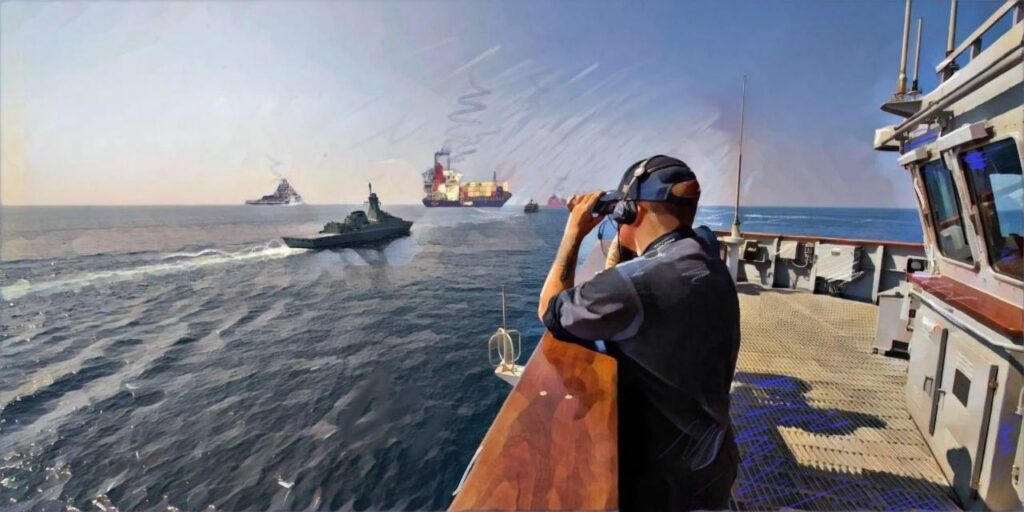
Central Asia’s first response to the Iran war was public and urgent. Governments organized evacuations, welcomed a ceasefire, and watched the Strait of Hormuz because the region’s trade routes, fuel costs, and food prices were already under pressure. The next phase looks different. Following the April 12 collapse of U.S.-Iran talks in Islamabad, Washington moved to block maritime traffic entering and leaving Iranian ports. That step does not formally close Hormuz to all shipping, but it pushes the crisis into a more serious phase for any country or company still treating Iran as a viable corridor.

That distinction is important in Central Asia because the region does not need a formal legal closure of Hormuz to feel the shock. It only needs insurers, banks, freight forwarders, airlines, and traders to decide that the southern option has become too risky for routine planning. That process was already underway. The route through Iran had come under strain in southern corridor traffic, food systems, and in the wider pricing of regional connectivity. A U.S. move against Iranian ports is likely to reinforce that view.

Official statements across Central Asia still reflect the ceasefire moment more than the latest escalation. On April 8, Kazakhstan’s President Kassym-Jomart Tokayev welcomed the truce and said he hoped it would support global trade and prosperity. Kyrgyzstan’s Foreign Ministry also welcomed the ceasefire and praised efforts to reduce tensions. Uzbekistan’s Foreign Ministry did the same, calling the truce an “important step toward de-escalating tensions,” and stressing that it should serve as a pathway to a broader political settlement. Tajikistan’s Foreign Ministry also welcomed the ceasefire agreement between Iran and the United States. Turkmenistan, meanwhile, had already taken a practical line, saying on March 4 that it was keeping all international checkpoints open and providing passage for foreign citizens, vehicles, and rail stock across the Turkmen-Iranian border.

Since then, public messaging has lagged behind the latest escalation. By April 13, Qazinform’s foreign news flow had shifted to the failed Islamabad talks and Trump’s blockade order, while the latest publicly visible official positions elsewhere in the region still reflected the April 8 ceasefire. That does not mean backchannel diplomacy has stopped, but it does suggest that Central Asian governments prefer caution in public as the conflict shifts from direct strikes to pressure on shipping and trade.

For the region, the economic logic is now clearer than the politics. Approximately 20% of global oil supplies and one-third of global fertilizer trade move through the Strait of Hormuz, while urea prices surged by almost 46% between February and March 2026. The World Bank’s April Europe and Central Asia Economic Update said growth in the developing economies of Europe and Central Asia is expected to slow to 2.1% in 2026, down from 2.6% in 2025, as the Middle East conflict, wider geopolitical tension, and trade fragmentation weigh on the region. Those pressures were already significant. The collapse of the main post-ceasefire diplomatic effort, followed by oil rising back above $100 a barrel, has made them harder to absorb.

Across Central Asia, higher prices do not bring gains for most of the region. Kazakhstan can benefit from stronger crude prices at the export level, and there is already discussion of whether it can supply more petroleum products to Asian markets. However, the broader regional picture is far tighter. Uzbekistan, Kyrgyzstan, and Tajikistan are all exposed to imported inflation through fuel, transport, and fertilizer channels. Even where shortages do not appear, margins tighten and household budgets worsen, turning a foreign war into a domestic economic problem.

Air routes show the same structural shift. On April 9, the European Union Aviation Safety Agency extended its conflict-zone bulletin for the Middle East and Persian Gulf through April 24. That leaves airlines with fewer safe and efficient corridors between Europe and Asia. Russian airspace remains unavailable to most Western carriers, and Iranian airspace remains extremely high risk. Therefore, traffic keeps moving toward the northern arc through the South Caucasus and Central Asia. That has already increased the strategic importance of Kazakhstan and Azerbaijan, and the latest escalation makes this shift look less temporary.

Central Asian governments have spent years trying to widen access to world markets through Iran, the South Caucasus, and, in some cases, Afghanistan and Pakistan. That strategy was meant to reduce dependence on northern routes and give the region more paths to global markets. With its 1,148-kilometer border with Turkmenistan, Iran still matters geographically. It still connects Central Asia to Gulf markets and the Indian Ocean. But geography does not keep a corridor usable if it is no longer insurable, financeable, and predictable. After the failure of talks in Islamabad and Washington’s move against Iranian ports, the southern route looks less like routine infrastructure and more like a contingency option.

That leaves Central Asia in a familiar but narrowing position. No government in the region wants to be pulled into a direct U.S.-Iran confrontation, but none can ignore what happens when the map of usable trade routes shrinks again. The practical answer is caution in public and recalculation in private. The first phase of the war brought evacuation plans, official statements, and visible coordination. The next phase is bringing something quieter and more important: a growing sense that the Iranian corridor may still exist on paper, but no longer belongs at the center of Central Asia’s planning map.