• KGS/USD = 0.01144 0%
  • KZT/USD = 0.00192 -0%
  • TJS/USD = 0.10879 0.28%
  • UZS/USD = 0.00008 0%
  • TMT/USD = 0.28571 0%
  • KGS/USD = 0.01144 0%
  • KZT/USD = 0.00192 -0%
  • TJS/USD = 0.10879 0.28%
  • UZS/USD = 0.00008 0%
  • TMT/USD = 0.28571 0%
  • KGS/USD = 0.01144 0%
  • KZT/USD = 0.00192 -0%
  • TJS/USD = 0.10879 0.28%
  • UZS/USD = 0.00008 0%
  • TMT/USD = 0.28571 0%
  • KGS/USD = 0.01144 0%
  • KZT/USD = 0.00192 -0%
  • TJS/USD = 0.10879 0.28%
  • UZS/USD = 0.00008 0%
  • TMT/USD = 0.28571 0%
  • KGS/USD = 0.01144 0%
  • KZT/USD = 0.00192 -0%
  • TJS/USD = 0.10879 0.28%
  • UZS/USD = 0.00008 0%
  • TMT/USD = 0.28571 0%
  • KGS/USD = 0.01144 0%
  • KZT/USD = 0.00192 -0%
  • TJS/USD = 0.10879 0.28%
  • UZS/USD = 0.00008 0%
  • TMT/USD = 0.28571 0%
  • KGS/USD = 0.01144 0%
  • KZT/USD = 0.00192 -0%
  • TJS/USD = 0.10879 0.28%
  • UZS/USD = 0.00008 0%
  • TMT/USD = 0.28571 0%
  • KGS/USD = 0.01144 0%
  • KZT/USD = 0.00192 -0%
  • TJS/USD = 0.10879 0.28%
  • UZS/USD = 0.00008 0%
  • TMT/USD = 0.28571 0%
12 December 2025

From Eurasia to Greater Central Asia: A Region Reclaims Its Voice

At its most basic, Eurasia refers to the combined landmass of Europe and Asia, stretching from the Atlantic Ocean in the west to the Pacific in the east, and from the Arctic in the north to South and Southeast Asia in the south. Yet when defined in political or economic terms, the concept becomes more complex. This vast region—covering over 36% of the world’s surface area—includes influential Western institutions in the west, such as the European Union and the Council of Europe. In contrast, the east is shaped by post-Soviet and Sino-Russian groupings, including the Commonwealth of Independent States (CIS), the Shanghai Cooperation Organization (SCO), and the Eurasian Economic Union (EAEU).

In policy circles, the term “Eurasia” often refers more narrowly to the Caucasus (Armenia, Azerbaijan, Georgia) and Central Asia (Kazakhstan, Kyrgyzstan, Uzbekistan, Tajikistan, Turkmenistan, Mongolia, and Afghanistan). Yet countries in these regions rarely lead the institutions that shape their future. Instead, most regional organizations are dominated by larger powers, primarily Russia and China. One partial exception is the Organization of Turkic States (OTS), though it excludes non-Turkic members such as Tajikistan, Georgia, and Armenia.

Many external actors—beginning with Japan’s “Central Asia plus Japan” initiative in 2001—have formed dialogue platforms with the five post-Soviet Central Asian republics, often referred to collectively as the “C5.” More recently, Turkey, China, the EU, and others have created similar frameworks. While these engagements have value, they are usually shaped by external agendas. The fundamental issue remains: Central Asia lacks strong, self-directed institutions of its own.

In response to this institutional vacuum, Professor S. Frederick Starr proposed in 2015 a broader regional framing: Greater Central Asia. He called for moving beyond the Soviet-era definition of Central Asia to include neighboring regions with shared historical, cultural, and strategic ties. He also noted a stark reality: Greater Central Asia is the only region of its kind without its own exclusive institutions—ones not directed by outsiders.

That may be starting to change. A more distinct regional identity is emerging, with new frameworks for cooperation gradually taking shape. As countries in the region increasingly define their own development priorities and diversify partnerships beyond Moscow and Beijing, there is growing momentum for a more autonomous and inclusive model of regional integration.

One of the clearest examples is CAMCA—an initiative that reflects the full geographic and political scope of Greater Central Asia. Over the past decade, the Central Asia-Caucasus Institute (CACI), founded by Professor Starr, has worked with the Rumsfeld Foundation to support a new generation of regional leaders through the CAMCA Fellowship Program. Originally conceived by alumni of a joint initiative between Starr and former U.S. Secretary of Defense Donald Rumsfeld more than fifteen years ago, the CAMCA Network has become one of the few institutions uniting the entire Greater Central Asia region.

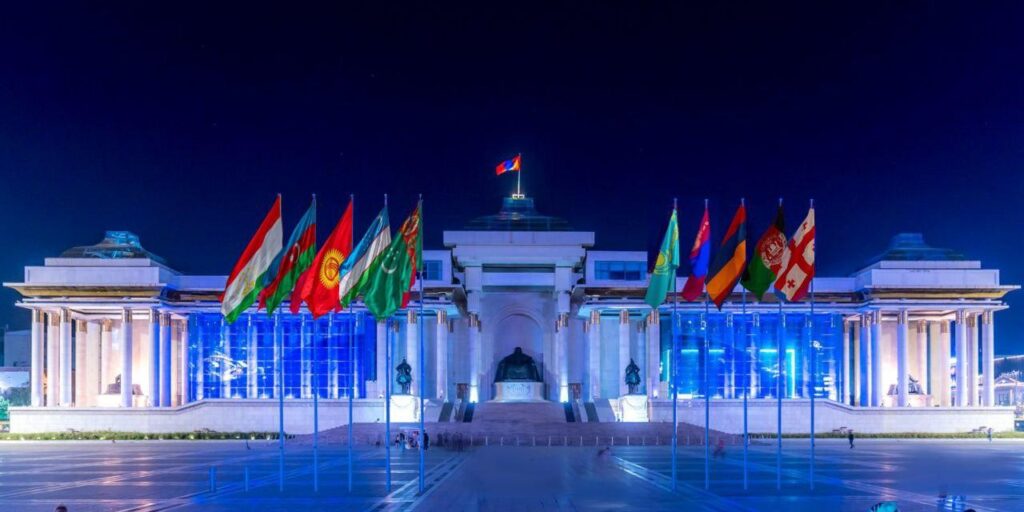
Each year, the fellowship culminates in a regional forum hosted by a different CAMCA country. The most recent—held last week in Ulaanbaatar—marked the 11th such gathering and the second time the event has been hosted by CAMCA fellows in Mongolia. Originally focused on trade, CAMCA has since broadened its scope. The 2025 agenda included sessions on tourism, AI, women in business, and media, alongside its traditional focus on investment and geopolitics. Over 300 delegates attended, including many from outside the region.

Yet questions remain. Can the ten diverse CAMCA countries—each with its own economic model and foreign policy—truly unite around a shared regional vision? With strong trade ties to China and Russia already delivering growth, is there sufficient political will to challenge the status quo?

Many CAMCA leaders believe so. While there is clear synergy with certain U.S. foreign policy objectives, the initiative does not seek to reorient the region toward Washington. Instead, it aims to foster practical collaboration among Greater Central Asian countries themselves.

Professor Starr has described the region as being “on the cusp of a dramatically different world,” where declining Russian and Chinese influence could create new space for local agency. At the Ulaanbaatar forum, Laura Linderman, Director of Programs at CACI, cautioned that such an opportunity could be lost unless countries in the region act with greater purpose. She urged governments to “reject outdated Cold War divisions” and focus on “connecting emerging leaders.”

One of the most revealing insights came from Sanat Kushkumbayev, a Senior Research Fellow at the Kazakhstan Institute for Strategic Studies (KazISS), who documented the overlooked history of the Central Asian Economic Union (CAEU) of the 1990s. Created and led by the Central Asian republics, the CAEU was so effective that Russia, under President Putin, asked to join. No external actors objected. Instead of joining, however, Putin dissolved the CAEU and established the EAEU—under Moscow’s leadership. Speaking at the Ulaanbaatar forum, Kushkumbayev remarked, “Leaders talk about unity, but without strong institutions, nothing will last.” His account highlights a lost moment of regional initiative and the factors that derailed it.

That call for renewed agency was echoed by delegates at the forum. Dr. Fuad Karimov, an Azerbaijani fintech executive, argued that CAMCA could serve as a practical engine for regulatory alignment, cross-border fintech collaboration, and knowledge exchange. Kyrgyz investor Daniel Abdyldaev, founder of the chANGELS platform, emphasized the community-building power of the network, noting, “None of our countries can integrate into the global ecosystem by itself, so it is crucial for our region to join forces and unite.”

Yet significant challenges persist. At a media roundtable, participants acknowledged the worsening state of press freedom in the region. Armenia ranks highest among CAMCA countries at 34th globally, while most of Central Asia ranks much lower, with Afghanistan at the bottom. Panelists—including Kyrgyz journalist Aigerim Turgunbaeva and Joanna Lillis of The Economist—noted that frameworks like WTO accession could pressure governments to adopt international standards. Uzbekistan, nearing WTO membership, may soon face such expectations. While regional cooperation remains the focus, global institutions still have a role to play in promoting transparency, accountability, and long-term reform.

Participation in global institutions like the WTO can help Eurasian countries integrate more deeply into the world economy while encouraging regulatory reform. All CAMCA countries are WTO members except Uzbekistan, Turkmenistan, and Azerbaijan, with Uzbekistan now in the final stages of accession. For a region often shaped by external powers, greater engagement with multilateral systems could help reinforce homegrown institutional development.

As Greater Central Asia moves to reclaim its voice, the future of the region will depend on whether its leaders can turn shared vision into shared infrastructure. CAMCA is not yet a finished structure, but it is one of the first forums to be built from within. Its strength lies not in replacing existing ties, but in deepening regional confidence—and showing that cooperation on Central Asia’s terms is not only possible, but long overdue.


“I Dreamed of Writing Without Borders”: An Interview With a Kazakh Journalist in Russia

Elmira, a journalist from Astana, moved to St. Petersburg six years ago to study journalism. Since then, she has transformed from a reserved first-year student into a working reporter, navigating culture shock, social media censorship, and the outbreak of the war in Ukraine. In this candid interview, Elmira discusses Russian bureaucracy, casual racism, and finding her voice in the Russian media landscape. She also offers reflections for others considering a similar path.

TCA: Why did you choose to study in St. Petersburg rather than stay in Kazakhstan or go elsewhere?

Elmira: I applied before the war in Ukraine began. At that time, Russia seemed like a land of opportunity, where you could earn a decent living even without connections, which is rare in Kazakhstan. Plus, Russia offers state-funded spots for foreign students, as long as you pass the entrance exams.

Kazakh journalism programs felt underdeveloped to me; they lacked tradition, experienced faculty, and institutional history. In contrast, Russian journalism schools had all of that. Also, I wanted to write in Russian. My family always spoke Russian at home, and Kazakh was harder for me, an experience common among northern Kazakhs. Studying elsewhere was financially out of reach, and among CIS countries, Russia was the most appealing.

TCA: Why journalism? And did your expectations match reality?

Elmira: I’ve loved writing since childhood, school news, travel stories, anything. I imagined journalism as limitless creativity. In reality, it has even more constraints than other fields: editorial policies, laws, and censorship. Still, I wasn’t disappointed. Restrictions force you to innovate, and a strong story can always be told within the right format.

TCA: What were your first impressions of university life? Did you feel like part of an international community or an outsider?

Elmira: The university itself was a pleasant surprise. Many professors were open-minded and genuinely interested in students’ ideas. That made me feel I belonged.

But the student environment was tougher. Although classmates claimed, “We’re not racist,” jokes about Tajiks, Uzbeks, and Caucasians were common, and occasionally about Kazakhs too, disguised as “harmless humor.” These moments were alienating. You’re sitting in the same lectures, working on the same projects, but still feel like a stranger.

TCA: Was the Kazakh diaspora in St. Petersburg helpful during your adjustment?

Elmira: Definitely. The community is very supportive. Besides the consulate, groups like Atameken and Dostar host cultural events. I couldn’t volunteer, but I never missed Nauryz or Independence Day. Just being able to speak with fellow Kazakhs helped me feel at home.

TCA: What domestic or cultural challenges surprised you the most?

Elmira: Dorm life was tough. Once, I overheard roommates say, “How can you live with a Chinese woman? She must smell bad.” These moments were rare but memorable.

Still, there were warm experiences. In the dorm, I befriended students from Kyrgyzstan, Armenia, and Tajikistan. We cooked together, shared stories, and supported each other. That helped me to feel part of a community.

I was also heartened that many Russian students were genuinely curious about Kazakhstan. They asked about our traditions, holidays, food, and even wanted to learn Kazakh words. That interest helped bridge gaps.

TCA: What bureaucratic challenges did you face as a foreign student?

Elmira: Once I moved out of the dorm, everything was on me: registrations, medical checks, document translations, insurance. The queues at the MFC were endless, and staff often didn’t know the rules. There’s only one clinic in the city that handles medical exams for foreigners. I once waited there for nearly nine hours.

TCA: How did you transition from student to journalist?

Elmira: I started writing for Kazakhstani outlets in my first year. By graduation, I had a solid portfolio, which made getting internships and job offers easier. Editorial teams were welcoming and quite diverse.

TCA: How did the war in Ukraine, starting on February 24, 2022, affect you and your university environment?

Elmira: It was terrifying. I seriously considered dropping out, but my parents persuaded me to stay, and they were right. The first months were tense. Some friends criticized me for “staying in Russia,” even though I opposed the war.

At university, political discussions disappeared. Navalny’s name wasn’t mentioned. Topics like Chechnya were covered in vague terms. Censorship grew steadily, Instagram was no longer considered a source, and LGBT issues were whispered about.

TCA: How did media censorship and tech restrictions affect your work?

Elmira: At first, it was chaotic, VPNs failed, and services like Canva were blocked. Now, I pay for a reliable VPN and keep backups for essential tools. I avoid sensitive topics that could endanger sources or myself, but even cultural reporting is now reviewed under new laws.

TCA: Have you faced job discrimination as a foreigner?

Elmira: Not directly during interviews, but as a part-time layout designer, I noticed something. A Russian friend and I would apply for the same internships, same skills, and with similar portfolios. She got interviews, I got polite rejections. It likely wasn’t about qualifications but assumptions: that I might have an accent, misunderstand tasks, or not fit in.

TCA: Are there any advantages to being a foreigner in Russian media?

Elmira: Honestly? Not many. It’s riskier to tackle controversial topics. But I’ve found a niche, writing about cultural ties across CIS countries. My background gives me insight that others might not have.

TCA: What helped you overcome the challenges?

Elmira: Friends, above all. I met my future husband in St. Petersburg; he’s Russian. His support has been essential. We’re planning to move to Kazakhstan eventually and are saving for a home there.

TCA: How have intercultural relationships affected your family dynamic?

Elmira: Our families reacted differently. My Kazakh relatives were initially worried – interethnic marriages still raise eyebrows in Kazakh society. On Kazakh social media, there are constant posts criticizing women who marry foreigners, with bizarre claims about “diluting the nation.”

Thankfully, our families came around. They saw that we respect each other and maintain traditions. We approach cultural differences not as threats, but as opportunities to grow stronger together.

TCA: What advice would you give aspiring Kazakh journalists considering a move to Russia?

Elmira:
Be realistic about the bureaucracy, registrations, health checks, and documents cost time and money. Expect cultural differences, and yes, everyday racism.

Most importantly, stay connected to Kazakhstan. The diaspora and Kazakhstani media can be a vital support system if things change.

German Firm to Build New Cargo and Passenger Airport in Kazakhstan

Kazakhstan’s Prime Minister, Olzhas Bektenov, has met with Dr. Christine Grötzbach, board member and co-founder of the German aviation company Skyhansa, to finalize the construction timeline for a new cargo and passenger airport in the Zhetysu region. The first phase of the project is expected to be completed by 2027.

The facility will be built within the Khorgos – Eastern Gate special economic zone (SEZ), located on Kazakhstan’s border with China. The project envisions the creation of a multifunctional aviation hub designed to meet ICAO international standards and will be developed in phases, according to a government announcement.

The initiative is being carried out under a framework agreement between Kazakhstan’s Ministry of Transport and the Kazakh-German consortium Skyhansa. On the German side, the project is led by the Hansa Consortium, an aviation infrastructure specialist, while the Kazakh side is represented by Skymax Technologies, a regional logistics and infrastructure operator active in Central Asia and the Caucasus.

The total investment in the airport project is projected at $500 million. Dr. Grötzbach emphasized that the vision extends far beyond a standard airport facility.

“We are creating not just an airport, but a comprehensive infrastructure: cargo and passenger terminals, a fuel and refueling complex, an aviation technical center, a business center, and hotels,” she stated. “Its strategic location near China, combined with access to rail and road transport, positions it as a key logistics node on the New Silk Road.”

Bektenov echoed this sentiment, stating that the project will significantly enhance Kazakhstan’s transport and logistics capabilities.

“The implementation of this project will give a powerful impetus to the development of transport infrastructure and reinforce Kazakhstan’s role as a bridge between China, Central Asia, and Europe,” he said.

This announcement follows a similar initiative by Kazakhstan’s Ministry of Transport, which recently signed an investment agreement with Terminals Astana Airport Limited, a subsidiary of a UAE-based holding company. That project involves a $1.1 billion investment in the development of the Astana Aerotropolis, as reported by The Times of Central Asia.

China’s Fufeng Group to Build Deep Corn Processing Plant in Kazakhstan

Kazakhstan’s Ministry of Agriculture and China’s Fufeng Group have signed an investment agreement to construct a deep corn processing plant in the Zhambyl region of southern Kazakhstan.

According to the ministry, the project will establish a vertically integrated industrial park with an annual corn processing capacity of up to one million tons. The complex will feature a starch production facility, three bio-fermentation plants, a coal-fired thermal power station, and a wastewater treatment plant. Future plans include facilities for producing hydrochloric acid and liquid ammonia.

The site will also manufacture amino acids and feed additives such as lysine, glutamine, glutamic acid, leucine, and threonine. The output will be primarily aimed at export markets in Europe, North Africa, and the Middle East.

Fufeng Group will invest approximately $350 million in the initial phase of the project, with the total investment expected to reach $800 million.

Production is scheduled to begin in 2029, with plans to scale up to five million tons of processed corn annually by 2032. The company intends to purchase 500,000 tons of locally grown corn starting in 2025 and to sign forward contracts with Kazakhstani agricultural producers in 2026.

This investment follows a broader trend of Chinese capital flowing into Kazakhstan’s agro-industrial sector. As previously reported by The Times of Central Asia, Chinese biopharmaceutical firm Yili Chuanning Biological Co. is investing $500 million in a major corn processing project in the Almaty region. That initiative will utilize advanced biotechnology to produce amino acids, probiotics, and biodegradable materials, including medical and packaging products.

Uzbekistan to Join International Nuclear Liability Agreement

Uzbekistan is set to join the 1963 Vienna Convention on Civil Liability for Nuclear Damage, following its approval by the Senate during the chamber’s eighth plenary session. According to the Senate press service, lawmakers reviewed and passed the legislation confirming Uzbekistan’s accession to the international treaty.

By joining the convention, Uzbekistan will adopt globally recognized legal standards for managing nuclear incidents. The treaty establishes a framework for liability in the event of nuclear accidents and sets out rules for compensating damages. It also mandates that nuclear facility operators provide financial guarantees to cover potential claims.

Senators emphasized that accession will strengthen the country’s legal framework on nuclear safety, enhance public trust, and promote international cooperation in the sector. “Joining the Vienna Convention means that in the event of a nuclear incident, Uzbek citizens will be better protected, and the country will be part of a global system that ensures compensation is paid fairly,” one official said.

The core aim of the convention is to define the legal responsibilities of nuclear operators and ensure a minimum level of financial protection for victims. Officials noted that the move would integrate Uzbekistan into the global nuclear legal regime, enhance systems for insurance and compensation, and clarify the government’s role in regulating the industry.

Kazakhstan is currently the only Central Asian country that is party to the Vienna Convention, according to the International Atomic Energy Agency (IAEA). Uzbekistan’s accession will make it the second country in the region to join.

Officials also said the decision will deepen collaboration with the IAEA and enable Uzbekistan to participate in additional international initiatives related to nuclear energy and safety.

The Senate approved the legislation unanimously at the end of the session.

Kyrgyz Security Forces Warn Officials of Prosecution Over Inefficiency

The State Committee for National Security (GKNB) of Kyrgyzstan has issued a stern warning to municipal officials in Bishkek, threatening criminal prosecution for negligence and ineffective performance of official duties.

The warning came during a meeting initiated by the GKNB and held at Bishkek City Hall. All heads of the capital’s territorial divisions were present. Officials were instructed to take a more responsible approach to their work, particularly regarding urban development, social services, and the responsible use of public funds.

“All heads of local authorities are advised to draw their own conclusions so that their future activities will only benefit society and not cause harm,” stated Kamchybek Tashiev, head of the GKNB.

Tashiev also criticized the procurement of cheap, low-quality goods through public tenders, emphasizing that quality and efficiency, not just cost, should guide spending decisions.

The crackdown follows the high-profile arrest of Tokmok Mayor Maksat Nusuvaliyev, a move seen by analysts as a stark signal from the central government to regional administrations.

Nusuvaliyev was detained during a similar meeting with Tashiev in Tokmok, in full view of his subordinates. He faces charges of corruption and misappropriation of funds intended for the construction of a sports school and a cultural park. His arrest followed complaints from local residents and concerns from central authorities over delays and inefficiencies in the projects.

The government had previously allocated approximately $12 million for Tokmok’s urban improvement. However, President Sadyr Japarov later stated that the funds had yielded no tangible results.

Along with Nusuvaliyev, two other officials and the head of the construction company overseeing the projects were also detained. A court has ordered that all four be held in pretrial detention for two months.

Footage of the mayor’s detention was widely circulated online, further fueling public attention.

In response to the scandal, Tashiev demanded immediate accountability from other local officials. They were given three days to either recommit to fulfilling their duties or resign voluntarily.

In a striking directive aimed at reconnecting officials with local issues, Tashiev also ordered administrators in the Chui region to travel on foot through their districts to observe municipal problems firsthand.