• KGS/USD = 0.01144 0%
  • KZT/USD = 0.00193 -0%
  • TJS/USD = 0.10811 -0.28%
  • UZS/USD = 0.00008 0%
  • TMT/USD = 0.28490 0%
  • KGS/USD = 0.01144 0%
  • KZT/USD = 0.00193 -0%
  • TJS/USD = 0.10811 -0.28%
  • UZS/USD = 0.00008 0%
  • TMT/USD = 0.28490 0%
  • KGS/USD = 0.01144 0%
  • KZT/USD = 0.00193 -0%
  • TJS/USD = 0.10811 -0.28%
  • UZS/USD = 0.00008 0%
  • TMT/USD = 0.28490 0%
  • KGS/USD = 0.01144 0%
  • KZT/USD = 0.00193 -0%
  • TJS/USD = 0.10811 -0.28%
  • UZS/USD = 0.00008 0%
  • TMT/USD = 0.28490 0%
  • KGS/USD = 0.01144 0%
  • KZT/USD = 0.00193 -0%
  • TJS/USD = 0.10811 -0.28%
  • UZS/USD = 0.00008 0%
  • TMT/USD = 0.28490 0%
  • KGS/USD = 0.01144 0%
  • KZT/USD = 0.00193 -0%
  • TJS/USD = 0.10811 -0.28%
  • UZS/USD = 0.00008 0%
  • TMT/USD = 0.28490 0%
  • KGS/USD = 0.01144 0%
  • KZT/USD = 0.00193 -0%
  • TJS/USD = 0.10811 -0.28%
  • UZS/USD = 0.00008 0%
  • TMT/USD = 0.28490 0%
  • KGS/USD = 0.01144 0%
  • KZT/USD = 0.00193 -0%
  • TJS/USD = 0.10811 -0.28%
  • UZS/USD = 0.00008 0%
  • TMT/USD = 0.28490 0%
10 December 2025

Central Asian Countries Agree to Recognize Each Other’s University Degrees

The governments of Kazakhstan, Kyrgyzstan, Tajikistan, Turkmenistan, and Uzbekistan have officially agreed to mutually recognize higher education diplomas issued within the region. Kazakhstan approved the relevant draft on November 12, as documented in an intergovernmental agreement.

The initiative aims to create a unified educational space in Central Asia and eliminate barriers related to qualification recognition.

Under the agreement, all five countries will automatically recognize university diplomas that are legally valid, officially accredited, and issued by state higher education institutions in any of the participating countries.

Recognition will apply in three key areas:

  • Employment in another Central Asian country
  • Internships
  • Continuing education at the next academic level

However, qualifications must meet common higher education standards. Recognition may be denied only if substantial differences in the educational systems are identified.

The agreement outlines a clear implementation mechanism: each country will appoint a designated authority responsible for diploma recognition and notify the depositary, which will in turn inform the other signatories. If the structure or authority of the appointed body changes, the state is required to issue an immediate notification through diplomatic channels.

Despite agreeing on a shared framework, the countries still maintain varying standards for recognizing foreign university degrees.

Uzbekistan, Kyrgyzstan, Turkmenistan, and Tajikistan have agreed to recognize diplomas from universities in any participating country, provided those institutions are legally operating and issue officially recognized state diplomas.

Kazakhstan, however, has adopted stricter criteria. It will only recognize diplomas from regional universities that appear in the top 1,000 of the following international rankings:

  • Quacquarelli Symonds World University Rankings (QS)
  • Times Higher Education (THE)
  • Academic Ranking of World Universities (ARWU)

Diplomas from these universities will allow holders from participating countries to work, intern, or pursue further studies in Kazakhstan, subject to an application process.

The agreement is expected to ease the movement of skilled professionals within Central Asia and reduce bureaucratic barriers to regional academic and professional mobility.

Kazakhstan Government to Cut Social Spending

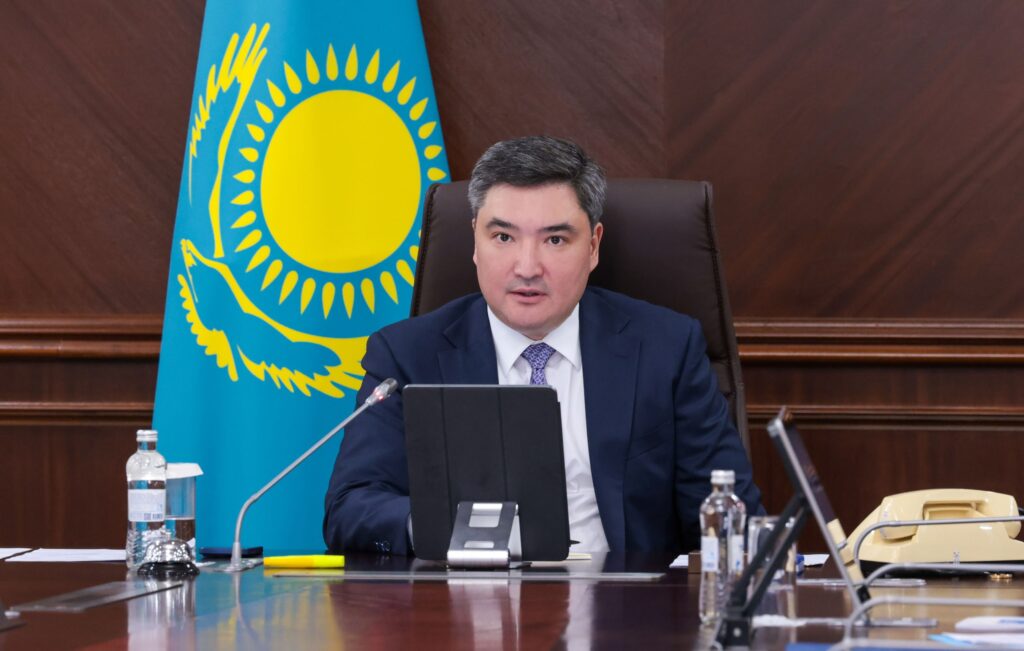
The Kazakh government plans to reduce budgetary spending on social support. Prime Minister Olzhas Bektenov told parliament that only citizens who are objectively unable to work will continue receiving state assistance.

According to the Cabinet of Ministers, approximately $16.9 billion was allocated to the social sector in 2024, representing 37.3% of total budget expenditures. Of that amount, $10.2 billion went toward social security and direct assistance to the population. In 2025, social spending is projected to rise to $18.4 billion, or 37.2% of the overall budget, with social payments continuing to represent a significant portion.

“The social sector places a very heavy burden on the budget: benefits, payments, and various support measures account for about 60% of the total budget. For many years, these expenditures exceeded 40% of the republican budget. When forming the budget for the next three years, we reduced them to 38%,” Bektenov said during his remarks in parliament.

He added that the government will continue its optimization efforts. Only citizens who are unable to work for objective reasons will qualify for state support, while those capable of working are expected to support themselves.

According to the Ministry of Labor and Social Protection, as of October 1, 2025, targeted social assistance (TSA) was being provided to 274,400 individuals from 51,000 families. The total amount disbursed thus far in 2025 was $47 million, out of a planned $190 million for the full year. TSA is distributed quarterly to low-income families, with employable recipients required to participate in state employment programs.

As previously reported by The Times of Central Asia, Deputy Prime Minister Serik Zhumangarin stated that the government would revisit the issue of increasing the minimum wage no earlier than 2027.

Food Conditions in the Turkmenistan Army Under Scrutiny

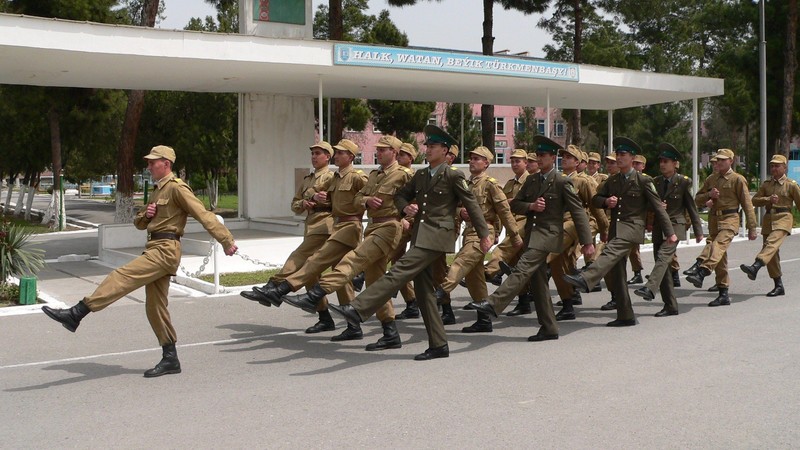
Conscripts returning from military service in Turkmenistan have reported severe food shortages, stark inequality between soldiers and officers, and institutional indifference. Against a backdrop of chronic malnutrition, instances of illness, interpersonal conflict, and even fatalities have been documented.

According to former soldiers, food rations in the Turkmen armed forces are grossly inadequate and fall far short of nutritional standards. Daily meals typically consist of boiled pumpkin, stewed cabbage, beets, and rice porridge for breakfast and dinner. Lunch includes a thin soup reportedly containing only “pieces of carrot” and little else.

Bread quality is a major concern. Flatbread made from locally sourced flour is often undercooked, forcing conscripts to eat it half-raw, leading to widespread gastrointestinal issues.

Meanwhile, soldiers from wealthier families reportedly fare much better. Their relatives send money, which conscripts use to pay canteen cooks for preferential treatment. These soldiers are served separately, receiving meat dishes, salads, fruit, soft drinks, and properly baked bread.

In some regions, such as the Balkan region, entrepreneurs have been officially allowed to open cafes near military checkpoints. There, soldiers can purchase rice, samsa, and other local dishes, funded either by family support or their own limited savings.

One tragic incident occurred this summer at a base in the Balkan region. A fight broke out outside the canteen when a soldier from a well-off family refused to share his meal. The altercation escalated, ending in the death of one private and a lengthy prison sentence for the other.

Discontent is also reportedly growing among officers. Despite earning relatively high salaries for the region, between $860 and $1,140 per month, many do not receive housing, forcing their families to pay substantial rents, which significantly reduces their disposable income.

Graduates of the Ministry of Defense’s Military Institute are required to serve a minimum of five years before becoming eligible for discharge. However, approval for resignation remains at the discretion of the command, and with ongoing personnel shortages, such requests are frequently denied.

Kazakhstan Considers Restricting Photography and Filming Without Consent

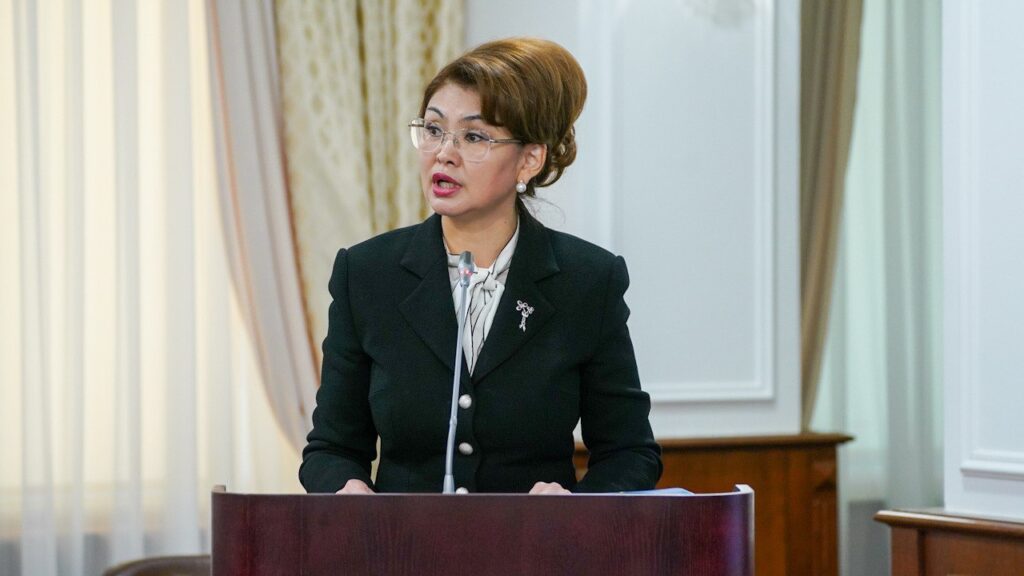
Kazakhstan’s Ministry of Culture and Information is considering new regulations on photography and video recording of individuals without their prior consent. The initiative was announced by Minister Aida Balaeva, who addressed potential amendments to the Law “On Mass Media.”

According to Balaeva, the proposal does not entail a ban but rather seeks to clarify the rules for filming in public spaces. Responding to media inquiries, she noted that the ministry regularly receives complaints from citizens concerned about being recorded without permission, particularly in content used for pranks or misleading narratives.

While current legislation allows individuals to contest the unauthorized use of their image, the ministry is exploring whether additional legal provisions are warranted. Balaeva invited journalists to join a working group to evaluate the matter further.

The minister dismissed claims that the proposed changes are intended to shield public officials. The speculation follows the recent circulation of a video on social media showing deputies appearing inattentive during President Kassym-Jomart Tokayev’s address.

“We are already used to being filmed everywhere. But we are citizens of this country too, and we also have the right to privacy,” Balaeva stated. She emphasized that the objective is not to hinder journalistic work but to address rising concerns over misuse.

Earlier drafts of the proposed regulation suggested requiring journalists and bloggers to obtain explicit consent before publishing an individual’s image, including online. In cases of republication, editing, or adding commentary, renewed consent would be necessary.

However, exceptions are proposed for filming public events, documenting official functions, and materials deemed in the public interest.

Gulmira Birzhanova, a lawyer at the Legal Media Center, warned that the measure could lead to excessive bureaucracy and potential abuse. She argued that the initiative contradicts existing legislation and Kazakhstan’s Constitution.

As previously reported by The Times of Central Asia, earlier this year the ministry also proposed strengthening penalties for inciting interethnic and interreligious discord.

Chinese-Kyrgyz Tensions Flare After Brawl at Construction Site

A roadside quarrel between Kyrgyz and Chinese workers in northern Kyrgyzstan escalated into a mass brawl, exposing simmering anti-Chinese sentiment in the Central Asian country. The fight broke out on November 15 in the village of Konstantinovka, Chui province, after a dispute over which truck had the right of way on a narrow road. Dozens of construction workers from both sides were involved. Police detained 16 people and brought in another 44 – including several Chinese nationals – for questioning. One Kyrgyz worker was hospitalized with head injuries, suffering a concussion and multiple bruises. Authorities quickly launched an investigation into the incident, and officials urged the public to refrain from spreading unverified rumors about the clash.

The altercation reportedly involved drivers from two road construction companies – the state-owned China Road and Bridge Corporation (CRBC) and a local subcontractor, Zhongzi, with what began as a minor traffic argument at a quarry site spiraling into physical violence. Videos of police detaining the brawlers later surfaced online, igniting a broader outcry. The timing of the fracas raised alarms in Bishkek, coming just two weeks before Kyrgyzstan’s scheduled November 30 parliamentary elections and only days ahead of an official visit by Chinese Foreign Minister Wang Yi on November 19. The authorities have moved to contain the fallout from the brawl before it can inflame any further anti-Chinese backlash.

Election Provocation Claims

President Sadyr Japarov was quick to downplay the confrontation and warn against politicizing it. Speaking to the state news agency Kabar, Japarov argued that such scuffles, while unfortunate, should not be blown out of proportion or framed as an international issue. “Anything can happen in life. In Bishkek, two Kyrgyz can quarrel and fight on the street – we see this on social media. But such everyday conflicts should not be elevated to the level of interstate problems,” Japarov said. “We know who they are. For now, we are just watching. If they cross the line, they will be arrested. And then they’ll start shouting that they were ‘detained for no reason.’ They have no other topics – only electricity and the Chinese.”

Other officials echoed Japarov’s call for calm, with Foreign Minister Jeenbek Kulubaev dismissing claims that Chinese laborers are “flooding” Kyrgyzstan and stealing local jobs. “Chinese citizens are working on the basis of work visas. We have a visa regime. When their visa expires, they leave,” Kulubaev said, urging the public not to exaggerate the issue.

Deputy Prime Minister Edil Baysalov posted on social media that “such provocations do not arise on their own. Their goal is to weaken and possibly derail the country’s economic strengthening, undermine our growing international authority, and ultimately strike a blow to Kyrgyzstan’s statehood itself.”

Daiyrbek Orunbekov, a spokesman from the president’s office, similarly wrote on Facebook that “conflicts happen wherever there are people – it doesn’t depend on ethnicity or race,” pointing out that over 1.5 million Kyrgyz citizens work abroad and sometimes get into fights as well. “Don’t be misled by provocateurs,” Orunbekov cautioned, suggesting the brawl was being exploited by individuals to inflame xenophobia.

In the wake of the brawl, the authorities warned Chinese workers to remain respectful and maintain peaceful relations with locals. Japarov underscored that Kyrgyzstan needs the infrastructure projects Chinese companies are building. “It is important for us that all major projects are completed,” he said, alluding in particular to the China–Kyrgyzstan–Uzbekistan (CKU) transport corridor under construction. “There are many forces interested in preventing this road from being built… This road is not needed by someone else – it is needed by us, by Kyrgyzstan. And it is vital.”

Anti-Chinese Sentiment on the Rise

Despite official assurances, the brawl in Konstantinovka has highlighted growing public frustration toward China’s expanding footprint. Kyrgyzstan has become increasingly reliant on Chinese investment and infrastructure support. China is Kyrgyzstan’s largest bilateral creditor and leading infrastructure investor, with significant stakes in roads, power plants, and mining operations. As previously reported by The Times of Central Asia, China remains the largest bilateral creditor to Kyrgyzstan, accounting for more than 40% of its external debt. Flagship projects include the China–Kyrgyzstan–Uzbekistan (CKU) railway, a long-awaited transport corridor intended to shorten freight times between East Asia and Europe. For Kyrgyzstan, which depends heavily on re-export and transit trade, such routes are economically crucial, but they also deepen dependence on Beijing. Local concerns have surfaced repeatedly around Chinese labor dominance and the environmental impacts of foreign-run mines, feeding into broader nationalist rhetoric ahead of elections.

Large Chinese projects often bring in a large number of Chinese workers, and that has triggered complaints in communities hosting them. Residents frequently perceive that Chinese companies hire their own nationals for everything from engineering roles down to manual labor, rather than recruiting locals. With unemployment remaining a serious issue, the continued inflow of cheap Chinese labor “will intensify social discontent” if not addressed, economic analyst Nurgul Akimova told RFE/RL’s Kyrgyz Service.

Past Clashes

The November 15 brawl was not an isolated case, but rather the latest flashpoint in a series of Kyrgyz-Chinese tensions.

In August 2011, Kyrgyz villagers clashed with Chinese workers at a gold exploration site in the Naryn Province. The conflict began after residents accused the company of polluting grazing land and operating without proper environmental oversight.

In 2019, local villagers violently clashed with Chinese mining workers at the Solton-Sary gold mine in Naryn province. About 500 local residents stormed a site operated by China’s Zhong Ji Mining, angry over a mass die-off of livestock they blamed on pollution from the mine.

Protesters seized company trucks and left at least 20 Chinese workers hospitalized with injuries, with several locals also injured. That melee only cooled after Kyrgyz officials rushed to the remote site to negotiate, warning residents not to drive out investors while also vowing to hold the mining firm accountable if it violated environmental rules.

Clashes involving Chinese workers have flared elsewhere in Central Asia, too.

Between Chinese Investment and Public Discontent

The latest incident leaves the country’s leaders having to perform a delicate balancing act between welcoming Chinese investment and addressing their people’s fears. Beijing is an indispensable economic partner, so overt hostility toward China could jeopardize projects and sour diplomatic relations. At the same time, if popular resentment is left to fester, it could explode into further unrest and even be weaponized by political forces.

Japarov’s talk of “provocateurs” using the Chinese worker issue as an election ploy is a reminder that nationalism runs strong in Kyrgyz politics. With parliamentary elections imminent, stoking anti-Chinese anger could rally votes and fuel discontent already running high over electricity shortages.

Lukoil ‘Garage Sale’ – Uzbekistan Bows Out, Kazakhstan Keeps Its Options Open

The story of the disposal of foreign assets by Lukoil, which has fallen under U.S. sanctions, is reaching its closing stages. A shortlist of potential buyers has already emerged, and in Kazakhstan intrigue remains: will the country’s national oil and gas company capitalise on the opportunity to acquire Lukoil’s shares in major projects?

A recent Reuters report noted that potential buyers of Lukoil’s assets face two key complications: first, U.S. firms, such as Carlyle, Chevron, and Exxon, are seen by analysts as more likely to get licensed, meaning deals will only be recognised after proper U.S. licence approval. Second, Lukoil itself had preferred to sell its assets as a package deal rather than piecemeal.  However, after a deal to offload assets to Guvnor collapsed, several analyses now say a full package sale is unlikely and that piecemeal deals are more realistic or even more profitable. A new negotiation deadline has now been set for December 13, 2025, for the completion of authorised transactions. 

Kazakhstan-based oil and gas market observer Oleg Chervinsky suggests that this could increase the likelihood of a “twostage process”. “Most likely, a single buyer with sufficient resources will purchase all of Lukoil’s foreign assets at a significant discount, then sell them off in parts,” Chervinsky said.

Some media reports point to the U.S. investment firm Carlyle Group as showing interest in Lukoil’s assets. The firm is considered a plausible main buyer due to its former ties to U.S. presidents Bush senior and junior. In this scenario, Carlyle would act both as buyer and organiser of the subsequent ‘garage sale’ of individual assets. Other firms, such as Chevron Corporation and ExxonMobil, have already been linked in reports with interest in Lukoil’s Kazakh stakes in the Tengiz and Karachaganak oil fields, while Abu Dhabi National Oil Company (ADNOC) has shown interest in Lukoil’s Uzbek gas projects. 

Meanwhile, three weeks ago, Uzbekistan made its position clear: it will not participate in the acquisition of Lukoil’s assets. Uzbekneftegaz Chairman Bahodir Sidikov said that “Buying out Lukoil’s assets in Uzbekistan is not on the table right now.” 

In Kazakhstan, energy sector experts believe that this moment presents a real window of opportunity to acquire Lukoil’s shares in systemically important oil and gas projects. “Why hasn’t our Ministry of Energy asked: does the Ministry approve changes in the shareholder structure under the terms of the stabilized contracts for Tengiz and Karachaganak? These shares (if a sale takes place) should go to KazMunayGas. If KMG doesn’t have the cash, then the Chinese state-owned CNPC should be brought in. To balance interests, it would be optimal for one of the world’s largest oil corporations to enter Tengiz and Karachaganak,” argues specialist Olzhas Baidildinov.

Baidildinov cited a review by Norway’s Rystad Energy estimating that Lukoil’s net cash flow from its Tengiz stake over the next five years will total $2.8 billion, and from Karachaganak $2.1 billion.

However, Kazakhstan’s Energy Minister Erlan Akkenzhenov recently stated that the government is not considering a purchase of Lukoil’s shares. At the same time, Samruk-Kazyna national wealth fund chairman Nurlan Zhakupov confirmed that the wholly state-owned KazMunayGas is in negotiations with Lukoil regarding its assets in Kazakhstan. He said there will be no “simple solutions”, but consultants are working on possible proposals, and a decision is expected shortly. 

Economist Rasul Rysmambetov has called the development “excellent news… The raw materials are important, but so is sovereignty when the owner of the asset still lives in Kazakhstan. I think the price for Lukoil should be slightly lower because of the stressful nature of the assets,” he said.