• KGS/USD = 0.01144 0%
  • KZT/USD = 0.00211 0%
  • TJS/USD = 0.10438 0%
  • UZS/USD = 0.00008 0%
  • TMT/USD = 0.28490 0%
  • KGS/USD = 0.01144 0%
  • KZT/USD = 0.00211 0%
  • TJS/USD = 0.10438 0%
  • UZS/USD = 0.00008 0%
  • TMT/USD = 0.28490 0%
  • KGS/USD = 0.01144 0%
  • KZT/USD = 0.00211 0%
  • TJS/USD = 0.10438 0%
  • UZS/USD = 0.00008 0%
  • TMT/USD = 0.28490 0%
  • KGS/USD = 0.01144 0%
  • KZT/USD = 0.00211 0%
  • TJS/USD = 0.10438 0%
  • UZS/USD = 0.00008 0%
  • TMT/USD = 0.28490 0%
  • KGS/USD = 0.01144 0%
  • KZT/USD = 0.00211 0%
  • TJS/USD = 0.10438 0%
  • UZS/USD = 0.00008 0%
  • TMT/USD = 0.28490 0%
  • KGS/USD = 0.01144 0%
  • KZT/USD = 0.00211 0%
  • TJS/USD = 0.10438 0%
  • UZS/USD = 0.00008 0%
  • TMT/USD = 0.28490 0%
  • KGS/USD = 0.01144 0%
  • KZT/USD = 0.00211 0%
  • TJS/USD = 0.10438 0%
  • UZS/USD = 0.00008 0%
  • TMT/USD = 0.28490 0%
  • KGS/USD = 0.01144 0%
  • KZT/USD = 0.00211 0%
  • TJS/USD = 0.10438 0%
  • UZS/USD = 0.00008 0%
  • TMT/USD = 0.28490 0%

How an Incident on the Azerbaijan-Iran Border Became a Test for Diplomacy in the Region

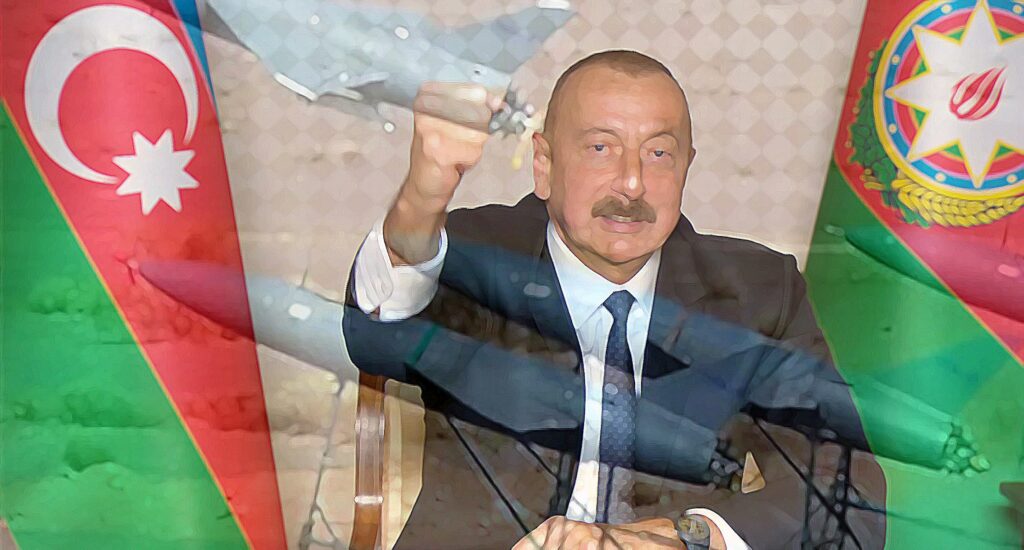
The drone strike on Azerbaijan’s Nakhchivan Autonomous Republic on March 5 has become one of the most serious incidents in relations between Baku and Tehran in recent years. Azerbaijani authorities described the incident as a terrorist act and demanded explanations and an apology from Iran. Tehran, in turn, rejected the accusations, suggesting the possibility of a provocation by “third forces.”

Following the drone incident, Kazakh President Kassym-Jomart Tokayev held a phone call with Azerbaijani President Ilham Aliyev to discuss regional security. According to the Azerbaijani presidency, Aliyev thanked Tokayev for condemning the attack on Nakhchivan and for voicing support for Azerbaijan.

What began as a local security incident has raised concerns about regional stability in the South Caucasus.

Terrorist Act Against the State

Azerbaijani President Ilham Aliyev issued a statement strongly condemning “this despicable terrorist act. Those who committed it must be brought to justice immediately,” Aliyev said.

According to Azerbaijan’s Ministry of Foreign Affairs, one drone hit the terminal building of Nakhchivan International Airport, while another crashed near a school in the village of Shekerabad. Two civilians were reportedly injured.

Baku stressed that the attack, allegedly launched from Iranian territory, violated international law and could lead to a dangerous escalation of tensions in the region.

Diplomatic Escalation

Despite the harsh rhetoric in the first hours after the incident, Baku opted to rely primarily on diplomatic tools. The Iranian ambassador was summoned to the Azerbaijani Foreign Ministry and handed a formal note of protest requesting official explanations. Azerbaijan said on Friday that it was evacuating staff from its embassy in Tehran as well as its consulate in the city of Tabriz.

At the same time, Azerbaijani security forces were placed on high alert. According to Aliyev, the country’s armed forces were instructed to prepare possible countermeasures.

Turkish President Recep Tayyip Erdogan spoke by phone with Aliyev, condemning the attack and expressing support for Azerbaijan, according to official statements. Reports of alleged Iranian-linked sabotage plots also surfaced, with the Azerbaijani authorities stating that several terrorist attacks had been prevented on the country’s territory. According to the State Security Service, the Iranian Islamic Revolutionary Guard Corps was behind the plots. Among the alleged targets was the Baku-Tbilisi-Ceyhan oil pipeline, a strategic energy corridor linking the Caspian region with Turkey and one of the main routes for exporting Azerbaijani oil.

According to Azerbaijani sources, other potential targets included the Israeli embassy, a synagogue in the capital, and a leader of the local Mountain Jewish community. The security service reported that three explosive devices had been brought into the country but were discovered and defused before they could be delivered.

The development of the crisis has prompted increased diplomatic contact between world leaders. Russian President Vladimir Putin held a telephone conversation with Iranian President Masoud Pezeshkian amid the growing regional tensions. Shortly thereafter, Russia’s Foreign Ministry called on both sides to exercise restraint and emphasized the need for a thorough investigation into the drone strike.

On March 7, the foreign ministers of all the Central Asian states, together with Azerbaijan, were guests of Recep Tayyip Erdoğan in Istanbul to discuss regional cooperation and emerging security challenges within the Organization of Turkic States (OTS) framework.

On March 8, French President Emmanuel Macron also held a telephone conversation with Aliyev and expressed support for Azerbaijan.

Aliyev also held consultations with several leaders from Central Asia and the Middle East as the crisis unfolded. The office of Uzbek President Shavkat Mirziyoyev reported a phone call with Aliyev to discuss regional security, while regional media reported consultations and expressions of concern from officials in Kazakhstan. Aliyev later also thanked Kazakh President Kassym-Jomart Tokayev for his support following the incident. Analysts note that such intense diplomatic activity reflects attempts by international actors to prevent further escalation in the region.

Tehran’s Response: Denial and Accusations of Provocation

Following the strike, Iran categorically rejected accusations of its involvement. The general staff of the country’s armed forces stated that Iran “respects the sovereignty of all states, especially neighboring and Muslim ones.” Iranian President Masoud Pezeshkian appealed to neighboring countries, emphasizing that Tehran is seeking to resolve the conflict through diplomatic means.

“We respect your sovereignty and believe that the security and stability of the region should be achieved through the collective efforts of the countries in the region,” he wrote on X.

By March 8, there were already signs of de-escalation. Pezeshkian contacted Aliyev directly, stating that the incident involving the attacks was not related to Iran and assuring his counterpart that the circumstances would be investigated. He also expressed gratitude for Azerbaijan’s intention to provide humanitarian aid to Iran.

How Analysts Are Interpreting the Incident

The incident has sparked intense debate among regional analysts, who have proposed several possible explanations.

Some regional analysts have suggested that the strike could have been intended to put pressure on Azerbaijan amid broader regional tensions. In recent years, Azerbaijan has strengthened relations with the U.S. and Israel, developments that have caused concern in Tehran. In this context, analysts have discussed the possibility of threats against the Baku-Tbilisi-Ceyhan oil pipeline, which supplies a significant share of Israel’s imported oil. Around 30–45% of Israel’s oil imports originate from Azerbaijan via BTC and related supply chains, with some reports suggesting the share reached 46% earlier this year.

A shutdown of the pipeline would affect Israel’s energy security, but it would also have serious economic consequences for Azerbaijan, as up to 80% of the country’s oil exports pass through this route. Disruptions would also affect Turkey, Kazakhstan, Turkmenistan, and European consumers.

The second explanation focuses on the internal structure of Iran’s military system. Some analysts have also raised the possibility that the decision could have originated from elements within the Islamic Revolutionary Guard Corps rather than Iran’s political leadership. Given the complexity of command structures during military operations, analysts note that technical failures or errors in the command system also cannot be ruled out.

A third explanation, promoted by Iranian officials through state media, involves the possible role of third parties seeking to draw the region into a wider conflict. Representatives of Iran’s Khatam al-Anbia Central Headquarters issued a warning to Azerbaijan, calling on the country to remove the Israeli presence from its territory.

A Fragile Security Environment

Even if this incident proves to be an isolated episode, it highlights the fragility of security in the South Caucasus. Azerbaijan plays a central role in the energy architecture of Eurasia, with major oil and gas routes from the Caspian region to Western markets passing through its territory. Any escalation between Baku and Tehran could therefore affect not only regional security but also the stability of energy flows and transport corridors linking Central Asia, the Caucasus, and Europe.

For now, despite strong rhetoric, both sides appear willing to keep the dispute within the diplomatic arena. The key question is whether the incident will remain a short-term crisis or become the first episode in a broader confrontation in one of Eurasia’s most strategically sensitive regions.

Uzbekistan Allocates $49 Million to Prevent Water Shortages and Upgrade Canals

Uzbekistan will allocate 600 billion UZS (about $49 million) this year to improve water management and reduce the risk of shortages, according to a presidential decision issued on March 5.

The funding will support additional measures aimed at using water resources more efficiently and preparing for potential water scarcity during the irrigation season.

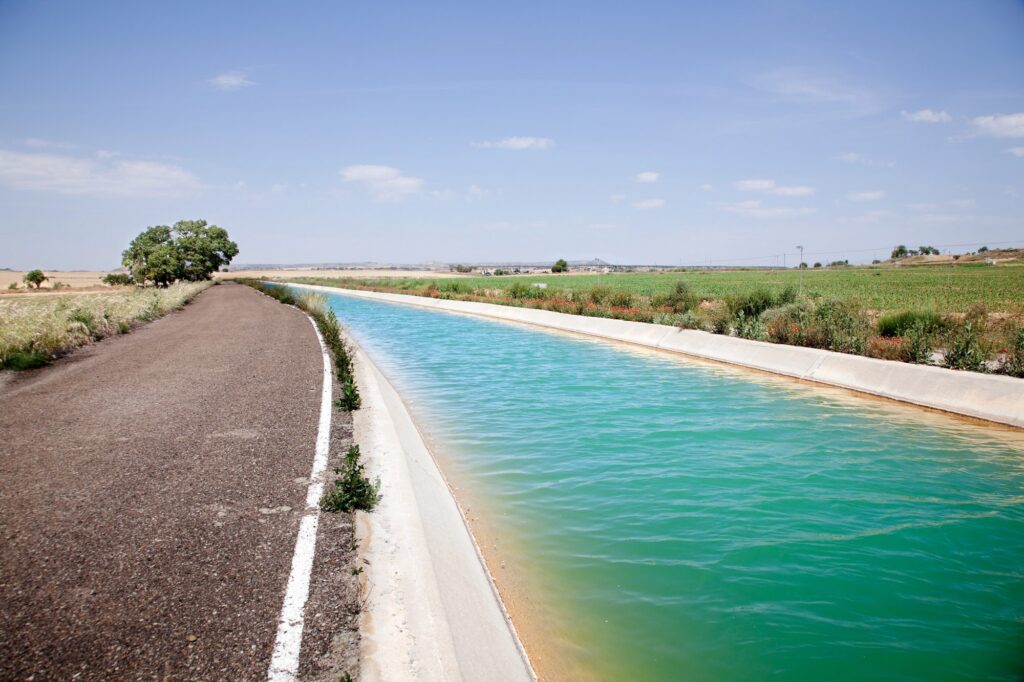
Under the plan, most of the funds will be directed toward modernizing irrigation infrastructure. The government intends to reconstruct and concrete 389 kilometers of irrigation canals that currently experience high levels of water loss. Officials say these improvements could help save an average of 206 million cubic meters of water and 26 million kilowatt-hours of electricity each year.

The work is also expected to improve water supply for about 158,400 hectares of irrigated farmland across the country.

According to the decision, 480 billion UZS (about $39.5 million) will be allocated specifically for concreting canals and irrigation networks, while the remaining 120 billion UZS (about $9.8 million) will fund other measures aimed at preventing water shortages and improving water management.

The initiative will be implemented by the Ministry of Water Resources in cooperation with regional authorities, including the government of the Republic of Karakalpakstan and provincial administrations. The ministry, together with the Ministry of Economy and Finance, has been instructed to prepare a detailed list of priority canal reconstruction projects within one week and submit it to the Cabinet of Ministers for approval.

Officials said the irrigation repairs will follow a “one canal – one system” principle, meaning priority will be given to irrigation networks connected to canals that have already been partially modernized or are currently undergoing reconstruction.

The funds will be allocated from additional state budget revenues generated during the first quarter of 2026.

Water management has become an increasing priority for Uzbekistan as the country seeks to modernize aging infrastructure and address growing pressure on water resources in agriculture.

The Times of Central Asia previously reported that the government is also working on a long-term strategy to expand access to clean drinking water nationwide, with a goal of providing 85% of the population with reliable drinking water services by 2030, according to proposals developed by the Agency for Strategic Reforms.

Kazakh Scientists Develop Technology to Generate Electricity from Noise

Researchers at Satbayev University in Almaty are developing a compact device capable of converting environmental mechanical vibrations into electrical energy.

Mechanical vibrations are repetitive movements that occur around a system’s equilibrium position and include phenomena such as sound waves and physical oscillations. Scientists at Satbayev University aim to harness these vibrations as a stable energy source for autonomous sensors operating in remote and hard-to-access areas.

The project focuses on creating an electromagnetic converter capable of operating within a frequency range from several tens to a few hundred hertz, the range most commonly found in natural vibration environments.

“We are developing a device that will efficiently convert mechanical vibrations into electrical energy and serve as an autonomous power source. This will help ensure the continuous and reliable operation of Internet of Things (IoT) sensors in remote regions,” said project leader Albanbay Nurtay.

The scientific basis of the technology is the law of electromagnetic induction: when a coil and magnets move relative to each other inside the device, an electrical signal is generated.

Researchers are focusing on engineering solutions that maintain high efficiency across a wide range of vibration frequencies. Engineers are also working to ensure stable operation under different vibration conditions and to minimize energy losses during transmission.

The project is being implemented in several stages. The first phase involves developing the conceptual design of the device, along with its 3D and mathematical models.

In the next stage, Satbayev University researchers plan to build experimental prototypes and develop a dedicated testing platform to measure the device’s performance.

Based on the results of these experiments, scientists will select a final prototype with optimal technical characteristics. The final stage will include the publication of research findings and the filing of a patent for the intellectual property.

The device could have practical applications across several sectors, including industrial monitoring, environmental observation, and agriculture.

The project represents an important step in the development of green technologies.

“Efficient use of natural vibration sources opens new opportunities for energy conservation and supports the implementation of sustainable development principles and goals,” Kazakhstan’s Ministry of Education noted.

As previously reported by The Times of Central Asia, researchers at Nazarbayev University recently developed a medical exoskeleton designed to assist in stroke rehabilitation.

Moody’s Upgrades Tajikistan’s Credit Rating to B2, Citing Economic Improvements

International rating agency Moody’s has upgraded Tajikistan’s long-term sovereign credit rating to B2 with a stable outlook, according to the National Bank of Tajikistan.

According to the financial regulator, Tajikistan has been cooperating with Moody’s since 2014, and the latest decision marks the first time the country’s sovereign rating has been raised to the B2 level.

The National Bank said the upgrade reflects the government’s ongoing economic reforms and policy measures aimed at strengthening the country’s financial system and macroeconomic stability.

Moody’s cited several factors behind the upgrade from B3 to B2, including sustained economic growth in recent years, improvements in fiscal management, and continued positive macroeconomic trends.

The agency also highlighted progress in structural reforms, reduced risks related to public debt, and improvements in public financial management.

The stable outlook indicates Moody’s expectation that Tajikistan will maintain prudent fiscal and monetary policies in the coming years.

A B2 sovereign rating signals moderate creditworthiness. This means that while the country is capable of meeting its financial obligations, certain economic and external risks remain.

Compared with the previous B3 rating, the upgrade reflects a stronger financial position and increased confidence from international financial markets.

The stable outlook also suggests that no major macroeconomic shocks are expected in the medium term and that economic risks are considered manageable.

Assessments by international rating agencies play an important role for countries seeking access to global financial markets.

First, sovereign credit ratings help investors and lenders evaluate a government’s ability to meet its financial obligations, which directly affects borrowing costs and loan conditions.

Second, a higher rating increases a country’s attractiveness to international investors. Global financial institutions often rely on such ratings when assessing investment risks, meaning improvements can help attract foreign capital.

Credit ratings are also viewed as indicators of economic stability and fiscal discipline, strengthening confidence in government policies among international partners and domestic market participants.

In addition, sovereign ratings influence external debt management and help governments raise financing for infrastructure and social development projects.

The Moody’s upgrade is not the only positive signal for Tajikistan’s economy.

Just a month earlier, another major international rating agency, Standard & Poor’s, improved the outlook on Tajikistan’s long-term sovereign credit rating from stable to positive while maintaining the rating at B.

Taken together, the assessments from two leading global rating agencies highlight improvements in Tajikistan’s macroeconomic conditions and point to stronger prospects for financial stability in the coming years.

Kazakhstan Extends Ban on Chicken Egg Imports to Support Domestic Producers

Kazakhstan has decided to extend a ban on chicken egg imports in an effort to support domestic poultry producers. The restriction will also apply to imports from member states of the Eurasian Economic Union (EAEU), despite the absence of customs borders within the bloc.

The decision was made during a meeting of the Interdepartmental Commission on Foreign Trade and Participation in International Economic Organizations, chaired by Deputy Prime Minister and Minister of National Economy Serik Zhumangarin. The commission reviewed several key issues affecting the country’s food security and economic policy.

“An import ban on chicken eggs will be introduced for six months, including imports from EAEU countries. The relevant order will be adopted by the Ministry of Agriculture,” the government press service said following the meeting.

According to the government, Kazakhstan currently has 70 poultry farms, including 34 specializing in egg production, 29 focused on meat production, and seven engaged in breeding and reproduction.

In 2025, domestic production of chicken eggs increased by 2.4% to reach 4.57 billion eggs. As a result, local production now covers approximately 98% of domestic demand.

Kazakhstan previously introduced temporary restrictions on egg imports in December 2025, when the Ministry of Agriculture imposed a one-month ban on imports of fresh chicken eggs. That measure expired on January 11, 2026.

Earlier, a similar restriction had already been in place from April 2025 for six months. Taken together, these measures effectively closed Kazakhstan’s egg market to imports for more than a year.

The commission also reviewed the possibility of introducing restrictions on potato exports. After assessing domestic market conditions, however, officials decided not to impose export limits.

According to the government, stabilized prices and sufficient domestic supply make it possible to maintain potato exports without additional restrictions.

At the same time, requirements for exporters seeking beef export quotas will be eased. The decision takes into account the government’s Comprehensive Livestock Development Plan, which aims to increase Kazakhstan’s cattle population from 7.9 million to 12 million head.

The program also seeks to expand Kazakhstan’s beef export potential and open new foreign markets. The Ministry of Agriculture will amend the existing quota distribution rules accordingly.

Meanwhile, authorities decided to extend the ban on the export of breeding livestock, including female cattle, as well as young bulls, in order to preserve breeding stock and ensure sufficient supply for domestic meat processors. The restriction also applies to exports to EAEU member states.

As previously reported by The Times of Central Asia, Kazakhstan increased revenue from agricultural exports by more than one-third in 2025 compared to 2024.

Mirziyoyev: Violence Against Women and Children Will Not Be Tolerated in Uzbekistan

President Shavkat Mirziyoyev has announced tougher measures against violence toward women and children, and unveiled new economic and education programs aimed at expanding opportunities for women across Uzbekistan.

Speaking on March 6 at a ceremony in Tashkent marking International Women’s Day, the president referred to a decree he signed on March 3 that strengthens the country’s response to domestic violence. According to remarks reported by Uzbek media and the presidential press service, the decree introduces a stricter system for addressing harassment and violence against women and minors.

Mirziyoyev said Uzbekistan has adopted the creation of an uncompromising environment against violence as a strategic goal.

“Anyone who raises a hand against women or children will either leave Uzbekistan or be forced to live according to the law,” he said during the event held at the Kuksaroy residence.

Mirziyoyev also stated that the decree includes tougher penalties for certain crimes against minors. According to his remarks, in some cases crimes involving pedophilia will now carry life imprisonment. He noted that legal experts had raised objections during discussions but said he insisted on including the punishment in the decree.

In addition to legal measures, Mirziyoyev outlined several initiatives focused on education, employment, and rehabilitation programs for women.

According to statements made during the event, women serving sentences in correctional facilities will be given the opportunity to apply to universities and study remotely. Officials said many female inmates currently have only secondary education and lack professional skills, while some have expressed interest in pursuing higher education.

To address this, the government plans to launch a program called “New Life,” which will provide vocational training for women in prisons. Participants will study for three to six months in professional training programs and receive certificates. Those who wish to enter universities will be able to take entrance exams inside correctional institutions. Women admitted to universities on a contract basis will be eligible for interest-free loans, repayable after completing their sentences and securing employment.

The government also plans to expand economic support for women nationwide. According to Mirziyoyev’s speech, 166,000 women will receive training in modern professions and entrepreneurship this year, while another 100,000 will study information technology skills.

A separate initiative called “Daromadli Ayol” (“Profitable Woman”) will support home-based businesses. With the help of experienced entrepreneurs, the program aims to create employment for 50,000 women in areas such as handicrafts, poultry farming, beekeeping, and household agriculture.

Officials also said that under the “Hamroh” program, around 1 trillion UZS (about $82,440,000) will be allocated to finance 3,000 business projects led by women.

Overall, the government aims to help 1.5 million women generate income this year, including 400,000 who are expected to enter business activities. More than 25 trillion UZS (about $2,060,950,000) in financial resources will be directed toward these initiatives.