• KGS/USD = 0.01144 0%
  • KZT/USD = 0.00194 -0%
  • TJS/USD = 0.10838 -0.09%
  • UZS/USD = 0.00008 0%
  • TMT/USD = 0.28490 0%
  • KGS/USD = 0.01144 0%
  • KZT/USD = 0.00194 -0%
  • TJS/USD = 0.10838 -0.09%
  • UZS/USD = 0.00008 0%
  • TMT/USD = 0.28490 0%
  • KGS/USD = 0.01144 0%
  • KZT/USD = 0.00194 -0%
  • TJS/USD = 0.10838 -0.09%
  • UZS/USD = 0.00008 0%
  • TMT/USD = 0.28490 0%
  • KGS/USD = 0.01144 0%
  • KZT/USD = 0.00194 -0%
  • TJS/USD = 0.10838 -0.09%
  • UZS/USD = 0.00008 0%
  • TMT/USD = 0.28490 0%
  • KGS/USD = 0.01144 0%
  • KZT/USD = 0.00194 -0%
  • TJS/USD = 0.10838 -0.09%
  • UZS/USD = 0.00008 0%
  • TMT/USD = 0.28490 0%
  • KGS/USD = 0.01144 0%
  • KZT/USD = 0.00194 -0%
  • TJS/USD = 0.10838 -0.09%
  • UZS/USD = 0.00008 0%
  • TMT/USD = 0.28490 0%
  • KGS/USD = 0.01144 0%
  • KZT/USD = 0.00194 -0%
  • TJS/USD = 0.10838 -0.09%
  • UZS/USD = 0.00008 0%
  • TMT/USD = 0.28490 0%
  • KGS/USD = 0.01144 0%
  • KZT/USD = 0.00194 -0%
  • TJS/USD = 0.10838 -0.09%
  • UZS/USD = 0.00008 0%
  • TMT/USD = 0.28490 0%
10 December 2025

UN Adopts Uzbekistan’s Initiative on Global Forest Restoration

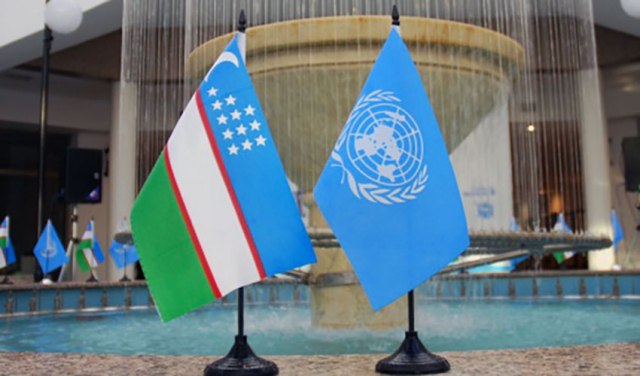
The United Nations General Assembly has adopted a resolution put forward by Uzbekistan to declare 2027-2036 as the Decade for Afforestation and Reforestation. The announcement was made in a statement by Uzbekistan’s Ministry of Foreign Affairs.

Titled “The Decade of Action for Sustainable Forest Management, Afforestation, and Reforestation”, the resolution was passed during a session in New York and garnered the support of over 80 co-sponsoring nations. Among them were all Central Asian countries, as well as Azerbaijan, Russia, Brazil, Austria, Germany, Finland, Portugal, India, Iran, Pakistan, the United Arab Emirates, Qatar, and Bahrain.

According to the Foreign Ministry, the resolution is grounded in several environmental initiatives championed by President Shavkat Mirziyoyev, including the national “Green Space” project, the “Year of Environmental Protection and Green Economy” program, and the “Central Asian Green Belt” tree-planting campaign.

The document urges nations and international organizations to intensify their efforts and pool resources to safeguard forests and rehabilitate degraded ecosystems, particularly in arid and semi-arid regions.

This marks the second recent environmental resolution initiated by Uzbekistan and adopted by the UN. In 2024, the General Assembly supported a separate proposal focused on sustainable forest management and the restoration of degraded lands, including drylands, as part of broader efforts to combat ecological degradation.

Uzbekistan’s flagship environmental initiative, Yashil Makon (Green Space), was launched in 2021 and aims to plant one billion trees and shrubs nationwide within five years.

UAE Firm Plans to Build Sugar Factory in Kazakhstan

Al Khaleej Sugar, one of the world’s leading sugar producers, intends to build a sugar factory near the city of Konaev, in Kazakhstan’s Almaty Region. The initiative was discussed during a meeting between Almaty Region Akim Marat Sultangaziev and the company’s managing director, Sheikh Jamal Al Gurair. 

Key topics on the agenda included the selection of a suitable land plot, the organization of sugar beet cultivation, access to water for raw material production, and power supply infrastructure for the future facility. A site near Konaev, just 56 kilometers from Almaty, is currently considered the most promising due to its logistical advantages.

“We want to create a completely self-sufficient enterprise using renewable energy sources. This will minimize the impact on the environment,” said Sheikh Jamal Al Gurair.

Al Khaleej Sugar currently accounts for up to 3% of global refined sugar output. If the project proceeds, it would mark the UAE-based company’s first sugar production venture in Kazakhstan.

Sugar Sector in Kazakhstan

Kazakhstan currently has four operational sugar factories: AksuKant in the Taldykorgan district, Koksu Sugar Factory in Almaty region, and the Merken and Taraz factories in Zhambyl region. Of these, three are configured to process sugar beets, while the Taraz facility processes raw cane sugar.

The primary beet-growing regions in Kazakhstan are Almaty and Zhambyl. In 2024, Kazakhstan harvested 1.2 million tons of sugar beets, yet only 700,000 tons were processed due to limited production capacity. 

Last year, Kazakhstan produced 243,000 tons of sugar, less than half of its domestic consumption needs. Despite the local shortfall, a significant share of sugar output is exported, primarily to neighboring Russia. This imbalance has led to recurring supply challenges.

In summer 2022, a Russian export ban on sugar triggered a sharp price increase in Kazakhstan. In response, Kazakhstan began imposing its own seasonal ban on sugar exports from June to August to stabilize domestic prices. As previously reported by The Times of Central Asia, the restriction remained in place last year. 

The prospective Konaev plant, if realized, could significantly enhance Kazakhstan’s processing capacity and reduce its reliance on imported refined sugar, contributing to greater food security and industrial diversification.

Breaking Old Ties: Central Asia’s Delicate Dance Between Russia and the West

Central Asian countries are increasingly asserting their independence in foreign policy, distancing themselves from traditional centers of global influence. Recent developments highlight a nuanced balancing act as states in the region navigate growing tensions between Russia and the West.

Kyrgyzstan Pushes Back

In Kyrgyzstan, the recent arrest of Natalya Sekerina, an employee of the Russian House in Osh, marked a notable assertion of sovereignty. Sekerina was detained under Part 1 of Article 416 of the Criminal Code of the Kyrgyz Republic, which pertains to the recruitment, financing, and training of mercenaries for armed conflict or attempts to overthrow state authority. Earlier, Sergei Lapushkin, an employee of Osh city hall, and two others were also detained in connection with the case. 

All suspects were later placed under house arrest. Nevertheless, the arrests are seen by observers as a clear signal that Kyrgyzstan is not simply aligning with Russian policy, despite its economic dependence on Moscow, particularly due to labor migration.

The move was reportedly a response to the April 17 detention of over 50 Kyrgyz nationals in a Moscow bathhouse, where Russian security forces allegedly used excessive force. The Kyrgyz Ministry of Foreign Affairs issued a formal note of protest. Russia later stated that the detainees were in the country illegally and some were suspected of links to radical groups. 

At the same time, Kyrgyzstan is scrutinizing Western influence as well. In February, U.S. President Donald Trump announced funding cuts and a wind-down of the U.S. Agency for International Development (USAID). The announcement triggered debate in Kyrgyzstan, where some voices argued that while USAID had supported civil society, it also fostered instability and economic dependency. Critics claim the agency promoted Western values and helped establish a network of NGOs that played outsized roles in the country’s politics. 

Kazakhstan and Uzbekistan Seek Equilibrium

In Kazakhstan, USAID also came under fire. Parliamentary Deputy Magherram Magherramov criticized the agency for promoting what he described as values alien to Kazakh society, referencing controversial events such as women’s rights marches and LGBTQ+ parades in Almaty. He called for a formal review of foreign-funded NGOs. 

Meanwhile, Uzbekistan witnessed a diplomatic rift during an April visit by Russian Foreign Minister Sergey Lavrov to the “Grieving Mother” memorial in Samarkand. Lavrov commented on the absence of a Russian-language inscription, provoking widespread backlash on Uzbek social media. Sherzodkhon Kudratkhodzha, rector of the University of Journalism and Mass Communications, responded sharply: “We are not their colony.” He also cited ongoing discrimination against Uzbek migrants in Russia, which, he argued, has been met with silence from Russian officials. 

A More Independent Foreign Policy

Central Asian nations are increasingly holding intra-regional and international meetings, often excluding Russia. On April 25, intelligence chiefs from the region gathered in Tashkent to coordinate on regional security threats. 

The following day, a meeting of foreign ministers from Central Asia and China took place in Almaty. It was attended by Kazakh Foreign Minister Murat Nurtleu, Chinese Foreign Minister Wang Yi, and counterparts from Kyrgyzstan, Tajikistan, Uzbekistan, and a Turkmen representative. 

Earlier in April, Samarkand hosted the inaugural summit between Central Asia and the European Union. Presidents Kassym-Jomart Tokayev (Kazakhstan), Shavkat Mirziyoyev (Uzbekistan), Sadyr Japarov (Kyrgyzstan), Emomali Rahmon (Tajikistan), and Serdar Berdimuhamedov (Turkmenistan) were in attendance, along with European Council President António Costa and European Commission President Ursula von der Leyen. 

Still, this shift should not be interpreted as a full-scale pivot away from Russia. As of April 28, all Central Asian presidents except Turkmenistan’s had confirmed their attendance at the Victory Day military parade in Moscow on May 9, commemorating the 80th anniversary of the end of World War II. 

Regional Outlook

In the face of global instability, Central Asian states appear increasingly aware of their strategic role as both a geopolitical crossroads and a zone of relative stability. Their growing assertiveness suggests a regional push toward a more autonomous and pragmatic foreign policy.

Kazakhstan and France Join Forces to Save Lake Balkhash

Work has begun in Almaty on the development of a master plan to preserve Lake Balkhash, one of Central Asia’s largest bodies of water. Experts from Kazakhstan and France will collaborate on the project, according to the Ministry of Water Resources and Irrigation of the Republic of Kazakhstan. 

Master Plan for the Balkhash Ecosystem

A two-day seminar has been launched in Almaty, during which a roadmap for the action plan was presented. The document includes an analysis of the water resources in the Ile-Balkhash basin, a study of groundwater reserves, the creation of a digital platform to monitor water levels, and the automation of hydraulic engineering facilities.

Additional measures aim to ensure the more efficient use of the basin’s water resources and involve joint projects with China to protect the Ili River. The French Development Agency (AFD) and the French Geological and Mining Research Bureau (BRGM) are key partners in the project. French experts are currently collecting the necessary data and planning site visits to inspect wells, hydrological stations, and irrigated lands.

The project is overseen by the Ministry of Water Resources and Irrigation of Kazakhstan, with support from Kazakhmys Corporation LLP. The seminar is attended by representatives from Kazakhstani ministries, international organizations, academia, and the Consulate General of France in Almaty.

“For a long time, issues related to Lake Balkhash were addressed on a case-by-case basis, without a unified strategy. To move towards a systematic approach, we are starting to develop a master plan,” said Bolat Bekniyaz, First Deputy Minister of Water Resources and Irrigation.

He emphasized that the plan would consider all aspects of the basin’s sustainability, from ecology and water management to energy, agriculture, and socio-economic development.

Kazakhstan-France Cooperation

The Balkhash preservation initiative builds on earlier agreements between Kazakhstan and France. Last October, it was announced that a memorandum of cooperation and a trilateral agreement, covering groundwater exploration in the Ili-Balkhash basin, were in preparation. 

The French Development Agency (AFD), the French Geological and Mining Research Bureau (BRGM), and the International Water Agency (OiEau) are leading partners in this endeavor.

During a meeting with Kazakhstan’s Minister of Water Resources, Nurzhan Nurzhigitov, French Ambassador Sylvain Guillemot highlighted the growing interest of French companies in constructing and modernizing water facilities, as well as in projects related to leak detection and resource management optimization.

Water Resource Challenges in Balkhash

Separately, on the shores of Lake Balkhash, in the village of Ulken, Kazakhstan plans to build its first nuclear power plant. 

According to unofficial data, since early 2025, approximately 3.8 billion cubic meters of water have been diverted from the Kapshagay Reservoir to Lake Balkhash, a move that has positively impacted the region’s ecological conditions and the Ili River delta. 

Experts have long warned that without a coordinated approach to water resource management, Lake Balkhash risks following the catastrophic path of the Aral Sea. Declining water levels are already impacting biodiversity, climate conditions, and the socio-economic well-being of local communities.

The development of a master plan is viewed as a crucial step in preventing further degradation, promoting sustainable water use, and preserving the ecological balance of the region.

Kazakhstan and Kyrgyzstan Seek to Increase Agricultural Trade

Kazakhstan and Kyrgyzstan have agreed to establish a “green-light corridor” for the export of Kyrgyz agricultural products to Kazakhstan, as well as for the supply of early spring fruits and vegetables from Kyrgyzstan. 

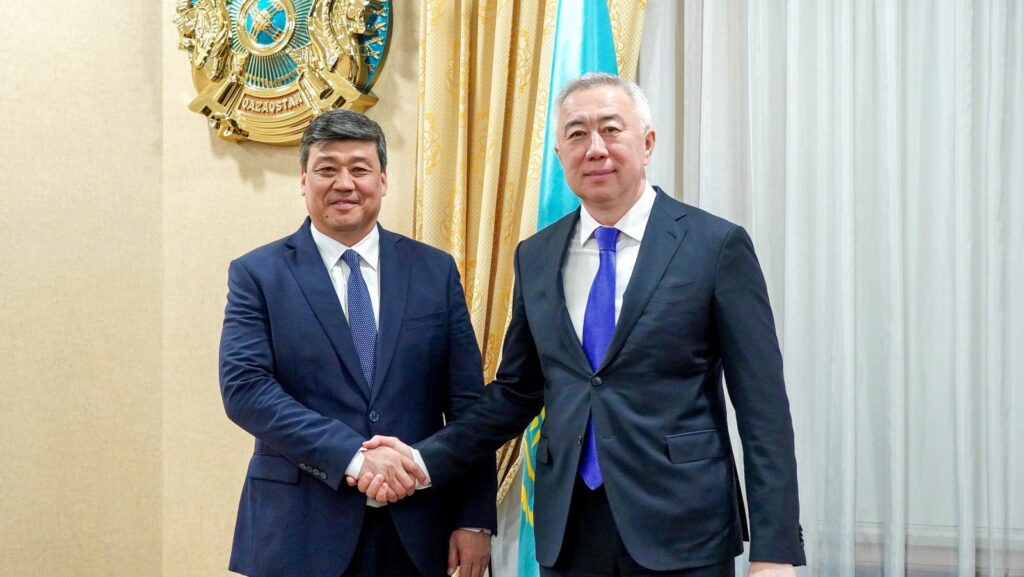
The agreement was discussed during an April 25 meeting in Astana between Kyrgyzstan’s Deputy Chairman of the Cabinet of Ministers and Minister of Water Resources, Agriculture and Processing Industry, Bakyt Torobayev, and Kazakhstan’s Deputy Prime Minister and Minister of National Economy, Serik Zhumangarin.

Kazakh and Kyrgyz officials agreed to jointly determine the list and volumes of agricultural products required by Kazakhstan. Zhumangarin and Torobayev also discussed introducing tariff discounts on rail transportation for Kyrgyz food and agricultural products intended for export and transit through Kazakhstan.

The officials noted the steady growth of Kazakh-Kyrgyz trade, which reached $1.7 billion last year.

Zhumangarin proposed expanding the range of Kazakh goods exported to Kyrgyzstan. 

“We are ready to increase the export of Kazakhstani products across 195 commodity items by more than $260 million,” Zhumangarin stated. He also suggested increasing the export of Kazakh grain and oilseeds to Kyrgyzstan.

Kyrgyzstan Simplifies Process for Obtaining Construction Licenses

The Kyrgyz Ministry of Construction has streamlined the process of issuing licenses to construction companies, eliminating intermediaries and making it possible to obtain a license directly for a fixed fee and within a short time frame. Minister of Construction Nurdan Oruntaev announced the changes via his official Facebook page. 

All documents can now be submitted, and construction licenses obtained, through the Ministry of Construction’s official website. According to the ministry, the number of documents required to obtain a construction license has been reduced significantly, from 23 to just 6.

However, the cost of obtaining a construction license has increased substantially, from 150,000 KGS (approximately $1,700) to 1.5 million KGS (around $17,000).

“Foreign investors, please contact us directly. Do not purchase licenses from unofficial sources. We are ready to issue you a construction license under the simplest conditions: you need only to provide a copy of the relevant license from your country and pay 1.5 million som to the state treasury. No bureaucracy, no queues, just six documents, and the license will be issued within 10 days,” Oruntaev emphasized.

Under the new rules, the procedure for obtaining one-time construction licenses has also been simplified. Companies without a full construction license can now receive a permit for a single project at a specific site.

This reform follows the establishment of the Ministry of Construction earlier in 2025. Previously, licensing and regulatory functions for construction were managed by the Architecture and Construction Agency, which was subordinate to the Ministry of Economy and Commerce.