• KGS/USD = 0.01144 0%
  • KZT/USD = 0.00210 0%
  • TJS/USD = 0.10454 -0.1%
  • UZS/USD = 0.00008 0%
  • TMT/USD = 0.28571 0.28%
  • KGS/USD = 0.01144 0%
  • KZT/USD = 0.00210 0%
  • TJS/USD = 0.10454 -0.1%
  • UZS/USD = 0.00008 0%
  • TMT/USD = 0.28571 0.28%
  • KGS/USD = 0.01144 0%
  • KZT/USD = 0.00210 0%
  • TJS/USD = 0.10454 -0.1%
  • UZS/USD = 0.00008 0%
  • TMT/USD = 0.28571 0.28%
  • KGS/USD = 0.01144 0%
  • KZT/USD = 0.00210 0%
  • TJS/USD = 0.10454 -0.1%
  • UZS/USD = 0.00008 0%
  • TMT/USD = 0.28571 0.28%
  • KGS/USD = 0.01144 0%
  • KZT/USD = 0.00210 0%
  • TJS/USD = 0.10454 -0.1%
  • UZS/USD = 0.00008 0%
  • TMT/USD = 0.28571 0.28%
  • KGS/USD = 0.01144 0%
  • KZT/USD = 0.00210 0%
  • TJS/USD = 0.10454 -0.1%
  • UZS/USD = 0.00008 0%
  • TMT/USD = 0.28571 0.28%
  • KGS/USD = 0.01144 0%
  • KZT/USD = 0.00210 0%
  • TJS/USD = 0.10454 -0.1%
  • UZS/USD = 0.00008 0%
  • TMT/USD = 0.28571 0.28%
  • KGS/USD = 0.01144 0%
  • KZT/USD = 0.00210 0%
  • TJS/USD = 0.10454 -0.1%
  • UZS/USD = 0.00008 0%
  • TMT/USD = 0.28571 0.28%

8 March Women’s Rights Rally Takes Place in Bishkek

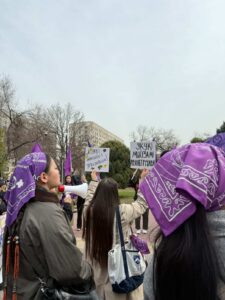
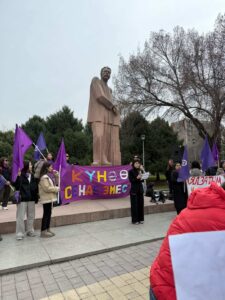
A rally in support of women’s rights took place in Bishkek’s Maxim Gorky Square on March 8, International Women’s Day. More than a hundred people gathered at the square, including activists, public figures, and city residents who came to support the initiative.

The rally has become one of the traditional events held in the capital of Kyrgyzstan on 8 March. For about ten years, marches and public gatherings dedicated to equal rights and women’s safety have been organized in Bishkek on this day.

In previous years, participants more often held marches through the city center. However, this time the authorities allowed the event only in the format of a peaceful rally in the park. Initially, the organizers planned a march, but the gathering ultimately took place in Gorky Square.

@TCA

The rally began during the day and lasted for about an hour. Police officers monitored public order during the event. Participants gathered in small groups, held posters and banners, and discussed issues related to women’s rights and gender equality.

Among those present at the rally were Member of Parliament Elvira Surabaldieva, former ombudsman Atyr Abdrakhmatova, as well as human rights defenders, content creators, and public activists.

Representatives of various civic initiatives and activists who regularly take part in similar events in Bishkek were also present.

Many participants brought posters addressing themes of equal rights and women’s safety. The signs included slogans against domestic violence and calls to protect women’s rights.

Posters traditionally serve as the main visual element of such events, helping participants draw attention to issues of gender inequality and the need to address cases of violence.

@TCA

Rallies dedicated to women’s rights are held in Bishkek every year on March 8. They usually bring together activists and residents who want to remind the public that International Women’s Day is connected not only with celebrations but also with the historical struggle for equal rights.

Despite changes in format over the years, such events remain among the most visible civic initiatives in the capital of Kyrgyzstan focused on gender equality and women’s rights.

“Acid clouds” from Iran? Kazakhstan and Uzbekistan Weather Agencies Say There is No Threat to Central Asia

Social media has been flooded with claims that a toxic cloud could drift from Iran toward Central Asia following strikes on oil facilities. However, the meteorological services of Kazakhstan and Uzbekistan say those fears are not supported by scientific data.

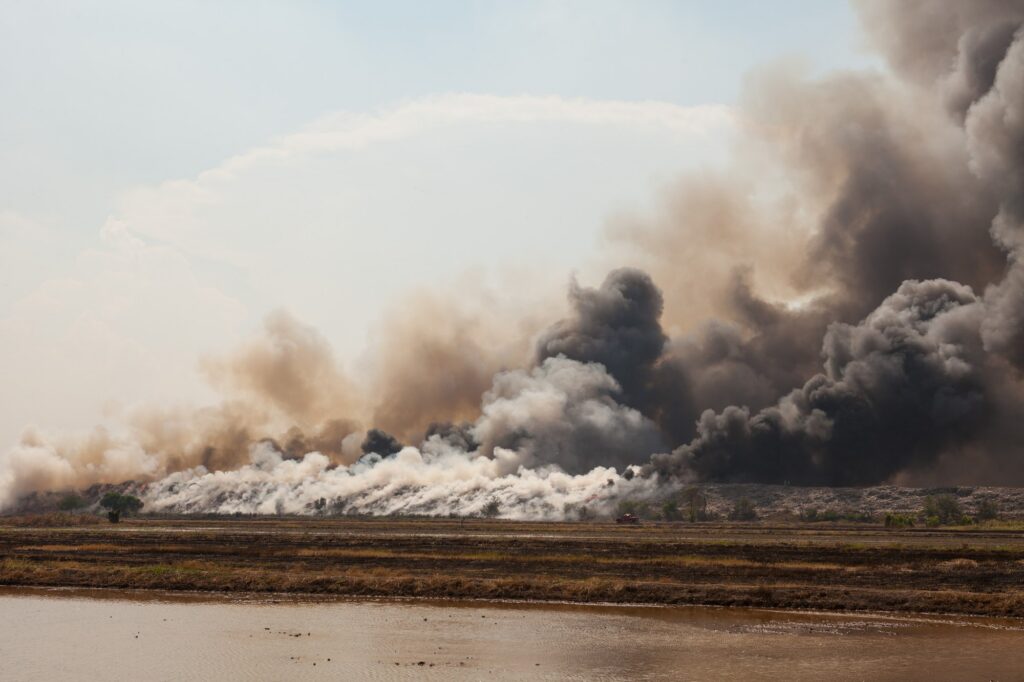
In recent days, posts online have warned of so-called “acid clouds” allegedly forming over Iran after attacks on oil depots and other energy infrastructure. Some of these posts claimed the pollution could be carried by atmospheric currents toward Turkmenistan, Uzbekistan, Kazakhstan, and China. Others cited reports of “black rain” in Tehran and elevated concentrations of sulphur dioxide, nitrogen oxides, and soot.

Iranian authorities and international reporting have documented severe local air pollution risks in and around Tehran after the strikes. The Iranian Red Crescent Society warned residents that rainfall following the explosions could be acidic and hazardous to health. Experts said the pollution could irritate the skin, eyes, and lungs and contaminate soil and water near the affected areas.

Kazhydromet, Kazakhstan’s national weather service, said reports that “acid clouds” from Iran could reach Central Asia are not confirmed by scientific data or observation results. The agency explained that acid precipitation typically forms near the source of emissions and that the concentration of pollutants decreases significantly over long distances due to natural atmospheric processes. Monitoring data, it said, show no signs of such pollution moving toward Kazakhstan or other Central Asian countries.

Uzbekistan’s hydrometeorological service, Uzhydromet, expressed a similar position. It said information circulating on social media about “acid clouds” reaching Central Asian countries has no scientific basis. According to the agency, dangerous concentrations of acid precipitation thousands of kilometres from the source are practically impossible, and current observations show no threat to Uzbekistan or neighbouring states.

Experts note that large fires at oil facilities can release substantial amounts of harmful pollutants into the atmosphere. However, such risks are primarily local or regional near the source. By the time emissions travel very long distances, atmospheric dispersion and deposition typically reduce concentrations sharply. As a result, the health concerns reported in Tehran do not support claims of a toxic cloud threatening Central Asia.

Both Kazhydromet and Uzhydromet urged the public and media outlets to rely on official information and avoid spreading unverified reports.

Central Asia Faces an Arc of Instability to the South

Until a few weeks ago, looking south from Central Asia, observers of the region saw nothing but opportunities for connectivity. Admittedly, Iran on one side and the area between Afghanistan and Pakistan on the other have never been known for their stability. However, the current situation sees two serious conflicts on the southern border of Central Asia, which risk representing an arc of instability that will be difficult to overcome.

While the global energy implications of the ongoing war in the Middle East, which began following the joint attack by the United States and Israel on Iran, are likely to be felt for months to come, the greatest risk for the Central Asian region is related to connectivity. This could also compromise significant efforts made in this regard by regional governments. Consider, for example, the recent trip to Pakistan by Kazakh President Kassym-Jomart Tokayev, which focused on the possibility of building a railway from Pakistani ports to Kazakh territory via Afghanistan and Turkmenistan.

For much of the past decade, Central Asian governments have invested heavily in opening southern trade routes to global markets. Railways through Afghanistan, port access through Iran, and new logistics corridors to Pakistan were meant to reduce dependence on northern routes and expand the region’s economic options. The sudden emergence of conflicts along the southern frontier now raises questions about how secure those connections will be.

The Times of Central Asia spoke with Peter Frankopan, author and Professor of Global History at Oxford University, about the potential implications of the two wars on Central Asia’s southern border. According to him, the main risk is not related to connectivity, but to contagion: “The key issue is about the safety of civilians and the protection of infrastructure in Central Asia,” he told TCA. “In times like these, nothing can be ruled out. With Iran lashing out at neighbors and realizing that attacks on oil, gas and more give it leverage, it is not hard to see what might come next. Second, of course, are threats to national economies. Wars create winners and losers. One can see a boom for some people in Central Asian states, but plenty of pressures, especially on inflation.”

Indeed, the economic repercussions of the Middle East conflict are already being felt in the region, particularly in Turkmenistan, which maintains some of the closest trade ties with Iran and shares a long border with the country.

Frankopan does not see any particular differences in terms of the danger to Central Asia posed by what is happening in Iran and between Pakistan and Afghanistan: “Clearly, instability in Afghanistan is an immediate concern, but it is not related to Iran and will have its own velocity and rhythms. But the risks of expanding violence and terrorism, of refugees, of narcotics and other illicit trafficking are real – and may well get worse.”

Regarding connectivity, one of the topics that Central Asian governments pay the most attention to, according to Frankopan, the current situation should not be considered an insurmountable obstacle: “This is simply testimony to turbulence as competing ideas of the present and future jostle and take shape. A few weeks ago, everyone was talking about middle corridors and a new golden era of exchange; now they are talking about breakdowns and dislocation. Both of those cannot be right – or wrong. People, states, and businesses cooperate when they want or need to, and when it suits all sides. Like all relationships, it works as long as it works, but it can all suddenly stop. The question now is who wants to collaborate and work together, why, and about what.”

Another aspect that could potentially jeopardize the difficult balancing act of the Central Asian republics, particularly Kazakhstan, should not be overlooked: increasingly narrow political margins. Consider, on the one hand, the fact that Uzbekistan has recently collaborated with India and Iran on a project such as the International North–South Transport Corridor, which has – or perhaps it would be more accurate to say “had” – a very important hub in the port of Chabahar, a collaboration that the current close relationship between the U.S. administration led by Donald Trump could make very costly to maintain.

On the other hand, the increasingly close relations between Kazakhstan and Israel could prove difficult to maintain in light of the increasingly assertive regional policies of Prime Minister Benjamin Netanyahu. Regarding this dimension, and with particular reference to Kazakhstan, Frankopan adopts a longer-term perspective, stepping back from the constant flow of news coming from the frontline. “Tokayev is a shrewd operator, and one who evaluates risk carefully. I don’t know how he is assessing the current situation, but I would pay close attention to it and think his analysis would be worth listening to. Kazakhstan has to balance multiple competing interests and pressures. Some of us think that experience helps in these circumstances; if you take a historian’s view, those run deep. So, balance and risk management are everything.”

In recent years, Central Asia has demonstrated great resilience and the ability to adapt quickly to an ever-changing international landscape. Although the situation on its southern border is becoming increasingly alarming, it remains possible that the pragmatism of regional leaders in international relations will once again prevail.

Opinion: Examination Reform – An Effective Assessment Tool in the Age of Artificial Intelligence

Kazakhstan’s decision to reform and expand assessment beyond the Unified National Testing (UNT) system marks a significant shift in how the country identifies talent and prepares young people for a rapidly changing world. Recently reported by Times Higher Education, the reform recognizes a growing reality: traditional, memory-based exams are no longer enough in an era shaped by artificial intelligence, automation and constant technological change.

For more than two decades, the UNT has provided a standardized and transparent route into higher education. It brought clarity and fairness at scale, and for that, it deserves credit. Yet its core limitation has become increasingly clear. By focusing largely on the reproduction of subject knowledge, it leaves little room for students to demonstrate analytical thinking, problem-solving ability, or the capacity to work across disciplines. In practice, it rewards exam technique and memorization over deeper understanding.

This matters because the skills now demanded of graduates are changing fast. Across the global labor market, employers are placing greater value on adaptability, technical literacy, and the ability to apply knowledge in real-world settings. International organizations have been clear on this point.

The OECD’s Future of Education and Skills 2030 framework argues that education systems must develop cross-cutting competencies such as critical thinking, creativity, collaboration, and self-direction. The World Economic Forum has made a similar case, urging a move away from static, theoretical learning towards transferable, future-facing skills. As artificial intelligence becomes embedded across industries, assessment models need to keep pace. Evaluating what a student can recall under exam conditions is no longer a reliable proxy for how they will perform in complex, technology-rich environments.

Research increasingly shows that standardized tests capture only part of an applicant’s potential, a point widely discussed in international higher education policy debates and assessments such as the OECD’s Programme for International Student Assessment. They can also reinforce socio-economic inequalities, as access to preparation resources often matters as much as ability. The result is a system that measures how well students survive exams, rather than how well they think.

Kazakhstan’s new modular examination model is designed to respond directly to these challenges. Instead of testing knowledge in isolation, it aims to assess functional literacy, logic, analytical reasoning and critical thinking alongside mastery of the school curriculum. This more practice-oriented approach offers a fuller picture of a student’s readiness for higher education and, ultimately, for professional life.

I see this shift every day in my work within Kazakhstan’s education ecosystem. The new test does not stand alone; it forms part of a wider effort to build coherence across schools, universities, policymakers and philanthropic organizations. Real, lasting change depends on alignment around shared goals, rather than on pilots or isolated initiatives.

At the NNEF Public Foundation, established by the renowned educator Dinara Kulibayeva, this principle has guided our work for nearly three decades. Through a network of affiliated schools, universities and developmental programs – including Astana IT University, which I am proud to lead – we have helped young people across Kazakhstan learn, grow and realize their potential.

Thousands of graduates now hold leadership roles in industry, research and public service, both at home and abroad. Many of them succeeded because someone recognized strengths that traditional examinations could not fully capture.

From my professional experience, students who thrive in today’s environment are those with cognitive flexibility and mature critical thinking. They can break down complex problems, understand how different elements interact, and consider multiple possible outcomes. Assessment systems should be designed to identify exactly these qualities, rather than relying solely on recall.

The modular structure of the new examination reflects this need. By moving beyond simple knowledge testing, it creates space to identify intellectual adaptability, systemic thinking, and readiness to operate in interdisciplinary, high-tech contexts. In doing so, it aligns Kazakhstan more closely with international assessment practices while remaining grounded in national priorities.

Greater transparency and a broader definition of merit should also strengthen trust in the admissions process. When selection criteria are clearer and more closely linked to real capability, confidence in fairness increases. Over time, stronger student intake feeds directly into academic performance and institutional reputation, reinforcing the quality of the higher education system as a whole.

Ultimately, this reform is about more than modernizing exams. It is about building a pipeline of talent equipped for analytical work, research, and lifelong learning. If implemented consistently and supported across the education system, the new approach has the potential to improve academic outcomes, enhance research capacity, and strengthen the international standing of Kazakhstani universities.


The views expressed in this article are those of the author and do not necessarily reflect the official policy or position of the publication, its affiliates, or any other organizations mentioned.

The Influence of Korean Culture on Uzbekistan: Personal Stories and Impressions

From fan meet-ups in shopping malls to Korean universities and supermarket shelves stocked with beauty brands, Korean culture in Uzbekistan has long ceased to be a niche interest. Yet behind bright music videos and conversations about Korean standards lies a more complex picture. For some, it represents a sense of community and part of personal identity; for others, it is a passing trend or even a source of disappointment.

How exactly is the Korean wave structured in Uzbekistan, and why is its influence perceived so differently? The answer lies in personal stories and observations.

How the Korean “Wave” Is Structured in Uzbekistan

When discussing the influence of Korean culture in Uzbekistan, it is important to recognize that this is not a single, monolithic phenomenon. Rather, it consists of several parallel streams that have gradually entered everyday life. These include popular culture — K-pop, television dramas, fan meetings, and new urban leisure formats — as well as consumer practices such as cosmetics, fashion, and gastronomy. Institutional ties also play a role, including language centers, university programs, cultural associations, and humanitarian initiatives.

In academic discourse, the concept of the Korean Wave, or Hallyu, refers to the global spread of South Korean cultural products and associated lifestyles beyond the country’s borders since the late 1990s. Mass media, internet platforms, and carefully designed state cultural policy have played key roles in this process.

In Uzbekistan, Hallyu has taken on a particular resonance. Here, Korean culture is not merely a trend introduced through new media; it is also part of the country’s social fabric. Uzbekistan has a historically significant Korean community composed of descendants of Koreans resettled during the Soviet period. For many people, interest in contemporary South Korea is therefore linked not only to fashion or pop culture but also to questions of identity, memory, and intergenerational dialogue.

Pop Culture and Urban Aesthetics

The most visible and widely discussed channel of influence is youth pop culture. It is through this sphere that the Korean wave becomes most noticeable. Researchers in the region describe K-pop as one of the main drivers of Hallyu’s popularity in Central Asia, including Uzbekistan. Interest in music often leads to language learning, the formation of fan communities, and increased online engagement.

For many, everything begins with a music video, bright, dynamic, and visually polished. Then come fan chats, dance cover groups, and attempts to analyze song lyrics. Music becomes a form of social glue, bringing teenagers together in Telegram channels, on university campuses, and in shopping malls where spontaneous flash mobs take place.

Alongside this runs what might be called the drama channel. Korean television series in Uzbekistan are no longer a niche interest. Academic publications analyze their growing popularity and explore why this format has proven so resilient and widely appealing. The explanation is often found in a combination of emotional storytelling, family-centered plots, and visual aesthetics that resonate with local audiences.

Pop-cultural influence does not remain confined to screens; it spills into the city itself. In 2023, Korea Week featured a series of events organized with the participation of the Korean diplomatic mission in Uzbekistan. In 2025, a Chuseok celebration was announced at the Palace of Korean Culture and Arts, offering a concert and cultural program for the broader public. Earlier, in 2022, cultural diplomacy platforms reported on Korean festivals featuring well-known performers.

These examples demonstrate that the wave is supported not only from below by fan communities but also from above through institutional cultural promotion.

At the everyday level, the influence appears in small details. In Tashkent, Korean-style photo booths, themed café spaces, and visual trends — from selfie poses to event decoration — have become increasingly common. This Korean aesthetic is easy to reproduce and spreads quickly through social media. It is accessible even to those who do not study the language or closely follow idol culture.

Researchers of Hallyu describe this process as cultural translation: local audiences select certain elements from a global cultural repertoire — music, visual codes, and leisure formats — and integrate them into their own daily lives. One does not need to be deeply immersed in another culture for it to become part of everyday experience. Sometimes a playlist, a weekend drama, and a photo booth snapshot with friends are enough.

Institutions, Economy, and Personal Experience: Between Showcase and Everyday Reality

In Uzbekistan, the influence of Korean culture extends well beyond the pop scene. One of the most significant channels is education, a sphere that moves beyond fan clubs to faculties, diplomas, and international partnerships.

On one hand, there is specialized training in Korean studies. The Tashkent State University of Oriental Studies, for example, describes its Faculty of Korean Studies as preparing philologists and Korean language teachers, illustrating a systematic and professional approach.

On the other hand, projects branded as Korean universities in the capital have gained visibility. Inha University in Tashkent presents itself as an internationally oriented technical university with partnership programs. Ajou University in Tashkent also refers to its partnership with Ajou University in South Korea and the use of Korean educational approaches. In public discourse, this is often framed as the transfer of a model characterized by discipline, technological advancement, and modern educational standards.

However, this is also where a gap of expectations sometimes emerges.

Evgenia Tyan, 19, a student, describes what she calls a partial influence. Her interest in Korean culture began in childhood through dramas, music, and fashion. Yet she expresses caution about the educational sphere:

“Sometimes what remains Korean is just the name and a few native-speaking lecturers. But I don’t always see the holistic model everyone talks about.”

Her observation highlights an important point: institutional influence is measured not by branding or international agreements but by everyday practices, including academic culture, standards, services, and discipline.

Such concerns are not unique. Research on transnational education suggests that although international branches and programs can serve modernization strategies, the real transferability of educational models depends on management practices, staffing, resources, and the ways in which the local environment adapts imported standards.

At the state level, South Korea is frequently described as a strategic partner in Uzbekistan’s economic modernization. Official communications refer to major joint projects and high-tech cooperation plans. Long-term industrial initiatives involving Korean company consortia have also increased demand for language specialists and reinforced the prestige associated with perceived Korean quality.

Yet perceptions here remain mixed.

Snezhana Petrova, 20, a student, says she does not feel Korean influence strongly in her daily life:

“After visiting Korea, I realized everything there is on a different level. And here, I don’t even see an attempt to approach that level, even though there’s a lot of talk about Korean technologies.”

Her comment illustrates the difference between symbol and practice. Brands, names, and joint projects exist, but whether they translate into tangible changes on the ground remains an open question. Cultural sociology often describes this distinction as the difference between showcase influence and structural influence: the former creates an image, while the latter transforms systems.

There is also a third perspective, that of the observer.

Sogdiana Mamarajabova, 20, who works in social media marketing, says she is aware of the popularity of K-pop, dramas, and Korean cosmetics but is only minimally involved:

“I see that it’s a trend. But for me, it’s just one of many fashionable packages that come through the internet.”

Her view serves as a reminder that Korean cultural influence in Uzbekistan is not universal. It competes with Turkish television series, Western pop culture, and Russian-language media. In this environment, Hallyu often functions as a trend ecosystem that people can partially adopt without turning it into a lifestyle.

For others, however, the influence is deeply felt in everyday life.

Kamilla Yunusova, 22, a waitress and active member of a fan community, describes Korean culture as a lived environment:

“I’m into K-pop and I feel like there’s a huge fan base in Tashkent. Those stores you see in dramas, where you can buy Korean albums, merch, and all kinds of Korean stuff, are popping up everywhere. It’s already part of the city.”

For her, the wave is not an abstract concept but a set of tangible spaces: fan meetings, themed cafés, and shop windows filled with idol albums.

A similar view is expressed by Malika Rakhimova, 21, a makeup artist:

“I think the influence in the beauty sphere is huge now. In the capital, it’s hard to find a girl who doesn’t have Korean cosmetics. They’re sold literally everywhere, even in regular grocery stores.”

Cosmetics have become one of the most visible and least controversial markers of influence. Unlike educational models or industrial standards, their effect is immediate, reflected in skincare routines, packaging, pricing, and beauty trends.

Taken together, these perspectives form a mosaic of perceptions. For some, Korean culture symbolizes modernization; for others, it represents an unattainable benchmark. For still others, it is simply another fashionable segment of the global internet. And for many, it has already become an ordinary part of urban life.

Describing the influence of Korean culture in Uzbekistan as a simple penetration would therefore be misleading. It is better understood as a multilayered process in which different levels and speeds of cultural change intersect.

It is precisely within this diversity of perception that the main effect of Hallyu in Uzbekistan becomes visible. It is neither a single success story nor a narrative of disappointment. Instead, it is a space of interpretation where globalization intersects with the local history of diaspora communities and where a vibrant cultural image is constantly tested against everyday standards of quality, from the level of education to service in a neighborhood shop.

How an Incident on the Azerbaijan-Iran Border Became a Test for Diplomacy in the Region

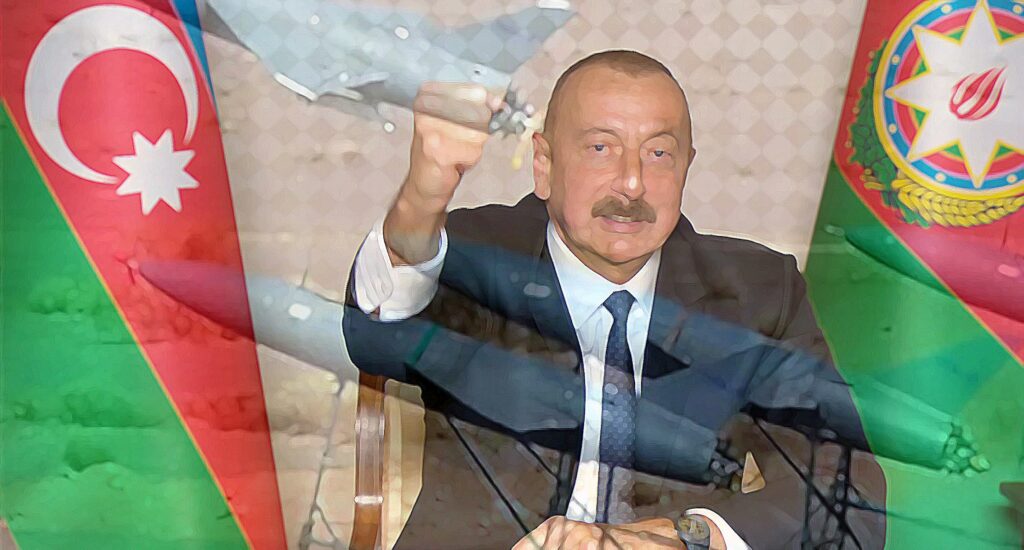
The drone strike on Azerbaijan’s Nakhchivan Autonomous Republic on March 5 has become one of the most serious incidents in relations between Baku and Tehran in recent years. Azerbaijani authorities described the incident as a terrorist act and demanded explanations and an apology from Iran. Tehran, in turn, rejected the accusations, suggesting the possibility of a provocation by “third forces.”

Following the drone incident, Kazakh President Kassym-Jomart Tokayev held a phone call with Azerbaijani President Ilham Aliyev to discuss regional security. According to the Azerbaijani presidency, Aliyev thanked Tokayev for condemning the attack on Nakhchivan and for voicing support for Azerbaijan.

What began as a local security incident has raised concerns about regional stability in the South Caucasus.

Terrorist Act Against the State

Azerbaijani President Ilham Aliyev issued a statement strongly condemning “this despicable terrorist act. Those who committed it must be brought to justice immediately,” Aliyev said.

According to Azerbaijan’s Ministry of Foreign Affairs, one drone hit the terminal building of Nakhchivan International Airport, while another crashed near a school in the village of Shekerabad. Two civilians were reportedly injured.

Baku stressed that the attack, allegedly launched from Iranian territory, violated international law and could lead to a dangerous escalation of tensions in the region.

Diplomatic Escalation

Despite the harsh rhetoric in the first hours after the incident, Baku opted to rely primarily on diplomatic tools. The Iranian ambassador was summoned to the Azerbaijani Foreign Ministry and handed a formal note of protest requesting official explanations. Azerbaijan said on Friday that it was evacuating staff from its embassy in Tehran as well as its consulate in the city of Tabriz.

At the same time, Azerbaijani security forces were placed on high alert. According to Aliyev, the country’s armed forces were instructed to prepare possible countermeasures.

Turkish President Recep Tayyip Erdogan spoke by phone with Aliyev, condemning the attack and expressing support for Azerbaijan, according to official statements. Reports of alleged Iranian-linked sabotage plots also surfaced, with the Azerbaijani authorities stating that several terrorist attacks had been prevented on the country’s territory. According to the State Security Service, the Iranian Islamic Revolutionary Guard Corps was behind the plots. Among the alleged targets was the Baku-Tbilisi-Ceyhan oil pipeline, a strategic energy corridor linking the Caspian region with Turkey and one of the main routes for exporting Azerbaijani oil.

According to Azerbaijani sources, other potential targets included the Israeli embassy, a synagogue in the capital, and a leader of the local Mountain Jewish community. The security service reported that three explosive devices had been brought into the country but were discovered and defused before they could be delivered.

The development of the crisis has prompted increased diplomatic contact between world leaders. Russian President Vladimir Putin held a telephone conversation with Iranian President Masoud Pezeshkian amid the growing regional tensions. Shortly thereafter, Russia’s Foreign Ministry called on both sides to exercise restraint and emphasized the need for a thorough investigation into the drone strike.

On March 7, the foreign ministers of all the Central Asian states, together with Azerbaijan, were guests of Recep Tayyip Erdoğan in Istanbul to discuss regional cooperation and emerging security challenges within the Organization of Turkic States (OTS) framework.

On March 8, French President Emmanuel Macron also held a telephone conversation with Aliyev and expressed support for Azerbaijan.

Aliyev also held consultations with several leaders from Central Asia and the Middle East as the crisis unfolded. The office of Uzbek President Shavkat Mirziyoyev reported a phone call with Aliyev to discuss regional security, while regional media reported consultations and expressions of concern from officials in Kazakhstan. Aliyev later also thanked Kazakh President Kassym-Jomart Tokayev for his support following the incident. Analysts note that such intense diplomatic activity reflects attempts by international actors to prevent further escalation in the region.

Tehran’s Response: Denial and Accusations of Provocation

Following the strike, Iran categorically rejected accusations of its involvement. The general staff of the country’s armed forces stated that Iran “respects the sovereignty of all states, especially neighboring and Muslim ones.” Iranian President Masoud Pezeshkian appealed to neighboring countries, emphasizing that Tehran is seeking to resolve the conflict through diplomatic means.

“We respect your sovereignty and believe that the security and stability of the region should be achieved through the collective efforts of the countries in the region,” he wrote on X.

By March 8, there were already signs of de-escalation. Pezeshkian contacted Aliyev directly, stating that the incident involving the attacks was not related to Iran and assuring his counterpart that the circumstances would be investigated. He also expressed gratitude for Azerbaijan’s intention to provide humanitarian aid to Iran.

How Analysts Are Interpreting the Incident

The incident has sparked intense debate among regional analysts, who have proposed several possible explanations.

Some regional analysts have suggested that the strike could have been intended to put pressure on Azerbaijan amid broader regional tensions. In recent years, Azerbaijan has strengthened relations with the U.S. and Israel, developments that have caused concern in Tehran. In this context, analysts have discussed the possibility of threats against the Baku-Tbilisi-Ceyhan oil pipeline, which supplies a significant share of Israel’s imported oil. Around 30–45% of Israel’s oil imports originate from Azerbaijan via BTC and related supply chains, with some reports suggesting the share reached 46% earlier this year.

A shutdown of the pipeline would affect Israel’s energy security, but it would also have serious economic consequences for Azerbaijan, as up to 80% of the country’s oil exports pass through this route. Disruptions would also affect Turkey, Kazakhstan, Turkmenistan, and European consumers.

The second explanation focuses on the internal structure of Iran’s military system. Some analysts have also raised the possibility that the decision could have originated from elements within the Islamic Revolutionary Guard Corps rather than Iran’s political leadership. Given the complexity of command structures during military operations, analysts note that technical failures or errors in the command system also cannot be ruled out.

A third explanation, promoted by Iranian officials through state media, involves the possible role of third parties seeking to draw the region into a wider conflict. Representatives of Iran’s Khatam al-Anbia Central Headquarters issued a warning to Azerbaijan, calling on the country to remove the Israeli presence from its territory.

A Fragile Security Environment

Even if this incident proves to be an isolated episode, it highlights the fragility of security in the South Caucasus. Azerbaijan plays a central role in the energy architecture of Eurasia, with major oil and gas routes from the Caspian region to Western markets passing through its territory. Any escalation between Baku and Tehran could therefore affect not only regional security but also the stability of energy flows and transport corridors linking Central Asia, the Caucasus, and Europe.

For now, despite strong rhetoric, both sides appear willing to keep the dispute within the diplomatic arena. The key question is whether the incident will remain a short-term crisis or become the first episode in a broader confrontation in one of Eurasia’s most strategically sensitive regions.