• KGS/USD = 0.01144 0%
  • KZT/USD = 0.00192 -0%
  • TJS/USD = 0.10879 0.28%
  • UZS/USD = 0.00008 0%
  • TMT/USD = 0.28571 0%
  • KGS/USD = 0.01144 0%
  • KZT/USD = 0.00192 -0%
  • TJS/USD = 0.10879 0.28%
  • UZS/USD = 0.00008 0%
  • TMT/USD = 0.28571 0%
  • KGS/USD = 0.01144 0%
  • KZT/USD = 0.00192 -0%
  • TJS/USD = 0.10879 0.28%
  • UZS/USD = 0.00008 0%
  • TMT/USD = 0.28571 0%
  • KGS/USD = 0.01144 0%
  • KZT/USD = 0.00192 -0%
  • TJS/USD = 0.10879 0.28%
  • UZS/USD = 0.00008 0%
  • TMT/USD = 0.28571 0%
  • KGS/USD = 0.01144 0%
  • KZT/USD = 0.00192 -0%
  • TJS/USD = 0.10879 0.28%
  • UZS/USD = 0.00008 0%
  • TMT/USD = 0.28571 0%
  • KGS/USD = 0.01144 0%
  • KZT/USD = 0.00192 -0%
  • TJS/USD = 0.10879 0.28%
  • UZS/USD = 0.00008 0%
  • TMT/USD = 0.28571 0%
  • KGS/USD = 0.01144 0%
  • KZT/USD = 0.00192 -0%
  • TJS/USD = 0.10879 0.28%
  • UZS/USD = 0.00008 0%
  • TMT/USD = 0.28571 0%
  • KGS/USD = 0.01144 0%
  • KZT/USD = 0.00192 -0%
  • TJS/USD = 0.10879 0.28%
  • UZS/USD = 0.00008 0%
  • TMT/USD = 0.28571 0%
12 December 2025

Kyrgyzstan to Improve Farmland Monitoring with EBRD and FAO Support

The European Bank for Reconstruction and Development (EBRD) and the Food and Agriculture Organization of the United Nations (FAO) have launched a joint initiative titled Greening Kyrgyzstan’s Economy: Know More, Act Better, Enhance Results. The project aims to foster climate-smart agriculture through the use of geographic information system (GIS) technology, improving farmland management and bolstering food security in Kyrgyzstan.

According to the EBRD, the initiative is supported by its Food and Agribusiness team and involves close cooperation with three key local aggregators: Kaindy-Kant (sugar beet processing), Kirbi (potato processing), and Dan Agro (pulses and legume processing). Together, these partners will help extend the project’s reach to more than 5,000 farmers.

Harnessing GIS Technology

The GIS platform will be managed by Kyrgyzstan’s State Agency for Land Resources, Cadastre, Geodesy and Cartography. It will be accessible to stakeholders across the agricultural sector, including the Ministry of Water Resources, Agriculture and Processing Industry, as well as farmers and aggregators. The system will enable users to identify sown crops, assess land-use efficiency, estimate productivity, and monitor crop rotation and sustainable water use.

With additional funding from the Ministry of Digital Development, the State Agency will also develop a mobile application to improve access and facilitate the adoption of GIS tools at the grassroots level. Meanwhile, the EBRD and FAO will roll out a free e-extension application to provide advisory services to farmers.

This collaboration promises substantial benefits for Kyrgyzstan, where agriculture employs nearly half the workforce and contributes approximately 12% of the national GDP.

Broader Impact and Expectations

The initiative is also expected to deliver environmental gains by enhancing efficiency in a sector responsible for roughly 37% of Kyrgyzstan’s greenhouse gas emissions. These efforts align with the country’s Paris Agreement target of cutting emissions by 16% by 2030.

In addition to supporting environmental goals, the project is set to improve food security for Kyrgyzstan’s growing population, projected to reach 9.6 million by 2050. The data-driven approach to land management is designed to help rural communities adapt to climate change, strengthen agribusiness supply chains, and contribute to sustainable economic development.

Participating aggregators stand to benefit from access to more accurate planting data, which will improve harvest forecasting and help optimize financing strategies.

How Kazakhstan and Azerbaijan Are Rewiring the Middle Corridor

Kazakhstan’s acceleration of its strategic alignment with Azerbaijan signals more than bilateral convergence. It reflects a deeper structural reconfiguration of Eurasian connectivity, a reconfiguration that is not additive but integrative. As documented in multiple announcements and institutional moves across March 2025, their cooperation has crossed the threshold from parallel development to systemic coordination. This evolving dynamic illustrates the emergence of a regionally endogenous axis that, without proclaiming itself as such, is shaping the wider functional geometry of Eurasia.

At the material core of this shift is the Middle Corridor — the Trans-Caspian International Transport Route (TITR) — linking China to Europe via Central Asia, the Caspian Sea, and the South Caucasus. While long viewed as a technical alternative to the Northern and Southern corridors, the Middle Corridor is now exhibiting the dynamics of what in systems theory would be called self-amplifying dynamic feedback loops. (The technical term is “autopoiesis,” literally “self-creation” of “self-production.”) In particular, institutional feedback, infrastructure reinforcement, and regulatory adaptation are all feeding into one another in ways characteristic of an autonomously emergent macroregional logic.

Kazakhstan’s announcement in December 2024 of the financing of a new terminal at Alat port in Azerbaijan, on which construction began in 2025, illustrates this logic in material form. Simultaneously, Kazakhstan is upgrading its Aktau port, backed by Chinese capital from Lianyungang, to triple its container throughput by 2028. This situation exemplifies the transformation of quantity into quality. Specifically, the upgrades are instantiating a network strategy that values not only volumes but also redundancy, flexibility, and strategic optionality.

The new fiber-optic cable agreement signed in March 2025 further reinforces this convergence. A 380-kilometer undersea connection between Sumqayit and Aktau — part of the broader Digital Silk Road — will reduce latency between the two countries from hours to milliseconds. In system-theoretic terms, this is not merely a technical augmentation. It converts the corridor from a physical transit route into a distributed digital platform capable of supporting real-time adaptive coordination. This shift from “throughput” to “synchronization” is foundational.

It also deepens the infrastructure-energy-information triad that has become characteristic of new macroregional systems. Kazakhstan’s expanded use of the Baku-Tbilisi-Ceyhan (BTC) pipeline, projected to carry 1.7 million tons of its oil in 2025, is not simply diversification. It is the strategic concretization of Azerbaijan’s role as a downstream node for Central Asian hydrocarbons. This is occurring alongside green transition signaling, including a modest floating solar project at Lake Boyukshor and a trilateral renewable energy agreement between Kazakhstan, Azerbaijan, and Uzbekistan. The repurposing of hydrocarbon corridors for hybrid energy flows is not substitution but overlay, in effect a dual-pathway system.

Meanwhile, capital commitment is reinforcing the commercial aspect. A $300 million joint investment fund announced by the two countries has already designated the construction of an intermodal terminal at Alat as its inaugural project. Additional integration comes from the UAE-backed $50 million grain terminal at Kuryk, which will further diversify the system’s carrying capacity by drawing agro-logistics into the corridor’s functionality.

In my recent article on the EU’s “new power play” in Eurasia, I explained how Central Asia is increasingly understood not as a buffer zone but as a platform for cooperation. This new strategic consciousness is evident in the March 2025 trilateral meetings between Azerbaijan, Kazakhstan, and Georgia to coordinate the Middle Corridor Multimodal Joint Venture. These are not bureaucratic exercises. They indicate a willingness to institutionalize mutual exposure as mutual benefit, transforming geographic proximity into systemic interdependence.

Security coordination, although still unstated, is becoming structurally implicit. As corridor density increases, so too does vulnerability. The dangers of sabotage, cyber interference, and logistical disruption are all enhanced. The lack of overt defense cooperation does not negate its presence in planning models. Infrastructure without a security architecture is a recipe for systemic fragility, but this aspect of cooperation remains off-record out of strategic discretion.

In this context, the EU’s recalibrated posture — epitomized by Kaja Kallas’s March 2025 tour of Central Asia and the upcoming EU–Central Asia Summit in Samarkand — must be interpreted as an attempt to enter this system as a non-hegemonic but indispensable partner. The EU’s Global Gateway initiative now recognizes the Middle Corridor as a backbone of Eurasian resilience. By embedding digital, energy, and regulatory integration within this initiative, the EU is engaging in a form of complex interdependence that enhances regional agency rather than co-opting it.

Kazakhstan’s position within this evolving system deserves particular attention. As I set out in another recent article, specifically addressing a potential new phase in the development of Kazakhstan’s relations with the U.S., Kazakhstan is becoming a structurally stabilizing actor. It balances the overlapping power-projection interests of multiple actors: Russia, China, Europe, and, increasingly, Turkey. Its bilateral partnership with Azerbaijan epitomizes its broader strategic grammar of non-alignment without passivity and multivectorism with selective depth.

Complex-systems theory teaches that when independent subsystems begin to coordinate across multiple domains (physical, informational, financial, normative), emergent properties appear. These properties cannot be reduced to any single actor’s intention or interest. They become, instead, the architecture within which intentions and interests are expressed. The Middle Corridor is approaching such a threshold. It is no longer merely a logistics route. It is a macroregional construct that channels, modulates, and refracts geopolitical agency.

The future evolution of this emergent system is to be determined, but its formative logic is unmistakable. Kazakhstan and Azerbaijan, through a dense web of investments, agreements, and symbolic cooperation, are constructing more than a corridor. They are laying down the infrastructural and normative tracks for a region that is beginning to generate its own strategic gravitational field. By doing so, they are establishing the broader Caspian region, within Central Eurasia, as a system that is able to define and work toward its own goals.

Kazakhstan Faces Big U.S. Tariffs, but Minerals Could be Exempted

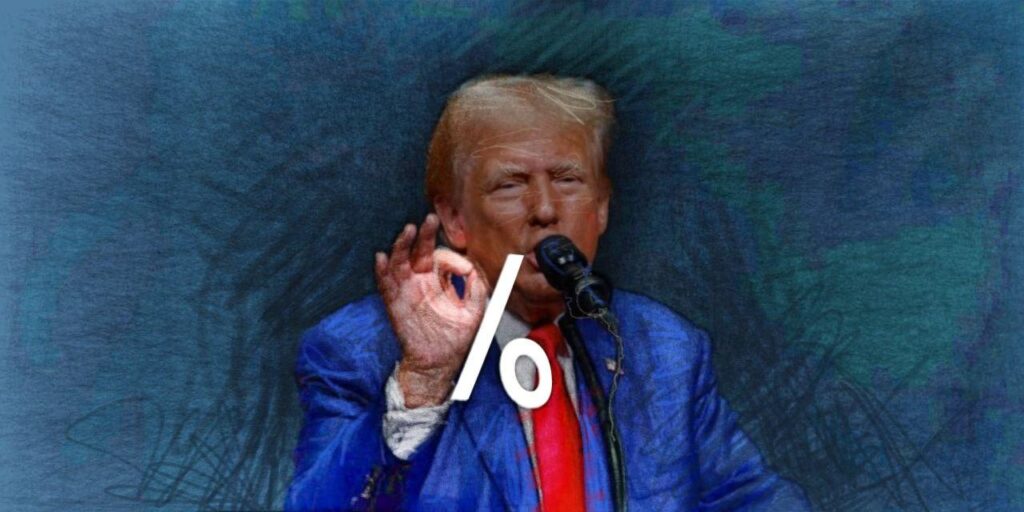
Kazakhstan will be hit with the largest U.S. tariffs among Central Asian states after President Donald Trump announced duties on goods from global trading partners, vowing to end what he calls unfair treatment of the United States even as concerns grow that a vast trade war carries grave risks for economies around the world.

According to a White House list released on Wednesday, Kazakhstan charges 54% tariffs on American goods and its own products will therefore be subject to duties of 27% when they arrive in the United States. A minimum baseline of 10% tariffs will also be applied to goods from Kyrgyzstan, Uzbekistan, Tajikistan, and Turkmenistan.

However, Kazakhstan has large reserves of minerals that could have applications in energy and other industries and might be exempted under terms of the Trump administration’s plan.

The measure against Kazakhstan reflects what the White House calls “an individualized reciprocal higher tariff” on countries with which the United States has its biggest trade deficits. The U.S. says its tariffs on nations around the world, which are to take effect in the coming days, can be increased if trading partners retaliate or can go down if those partners collaborate with Washington on economic and security matters.

The fallout from the Trump administration’s move remains to be seen, with many economists and other analysts warning that falling markets and the threat of higher prices, including in the United States, are a sign of the economic upheaval to come.

But a possible loophole for some Central Asian countries lies in the U.S. statement that some goods will not be subject to the tariffs. They include copper, pharmaceuticals, semiconductors, lumber, bullion, and “energy and other certain minerals that are not available in the United States.”

Kazakhstan said this week that it had discovered a huge rare earth metals deposit in the central region of Karaganda. By some estimates, the deposit could contain roughly 20 million tons of the coveted materials and is among the larger of more than a dozen similar deposits found in the country.

“The identified rare earth deposits and promising areas, if further confirmed, could position Kazakhstan as a global leader in rare earth element reserves and enable the rapid development of a high-tech rare earth metals industry,” the Ministry of Industry and Construction said, according to the Orda news organization.

Those natural resources are of interest to the United States. On March 12, U.S. Secretary of State Marco Rubio spoke with Kazakh Foreign Minister Murat Nurtleu and the U.S. “looks forward to working with Kazakhstan to deepen economic ties in the energy, telecommunications, and critical minerals sectors,” the U.S. State Department said.

U.S. tariffs and Central Asian resources are also likely to be discussed at a meeting of regional and European Union leaders in Samarkand, Uzbekistan, on Friday. The EU is seeking to expand trade ties with Central Asia as its longtime alliance with the United States unravels over trade and security matters.

More on this breaking story will follow.

A Historic Gathering: The First Central Asia-European Union Summit in Samarkand

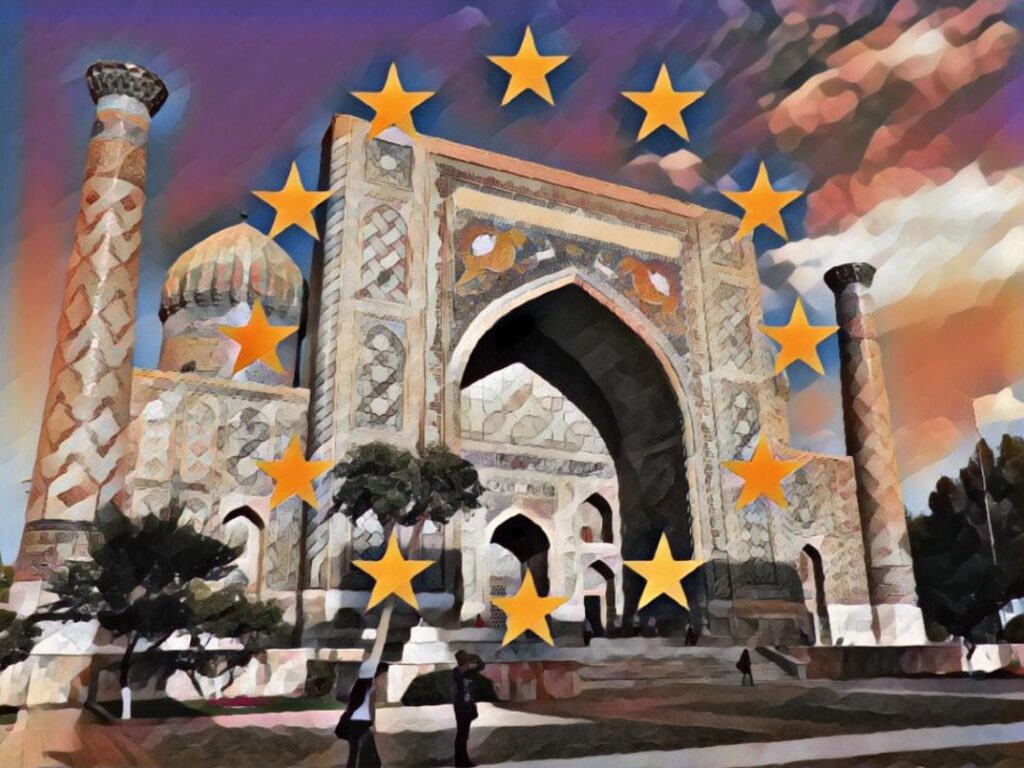
Excitement is building in Samarkand as it gears up to host the inaugural Central Asia-European Union Summit. This landmark event promises to pave the way for significant negotiations and collaboration, bringing together leaders and representatives from both regions. With a rich cultural backdrop and a vibrant atmosphere, Samarkand is poised to play a crucial role in shaping the future of partnerships and cooperation between Central Asia and the European Union. 

In recent weeks, Uzbekistan has experienced notable advancements in its foreign policy, signaling a proactive approach to international collaboration. A highlighted event was the fruitful engagement between Uzbekistan’s head of state and Kaja Kallas, the High-level Representative of the European Union for Foreign Affairs and Security Policy. Additionally, a delegation led by Josef Sikela, the European Union Commissioner for International Cooperation, participated in discussions to foster deeper ties. A significant milestone on the horizon is the inaugural Central Asia-European Union summit, set to unfold in the historic city of Samarkand on April 3-4.

During a pivotal meeting on March 27 with Kallas, President Shavkat Mirziyoyev meticulously explored the preparations for this groundbreaking summit, which has captured global attention due to its potential to reshape regional dynamics. The leaders engaged in a rich exchange of ideas focused on bolstering practical cooperation between their regions and planning future collaborative events that could further strengthen these ties.

The significance of fostering mutually beneficial cooperation between the two regions in trade and logistics was emphasized during the meeting. This includes harnessing the potential of the Trans-Caspian Transport Corridor, advancing digitalization, promoting green energy, addressing ecological concerns, modernizing infrastructure, and other priority areas. The introduction of effective mechanisms for implementing initiatives and projects in these fields was also highlighted. Participants exchanged views on enhancing Uzbekistan’s relations with European Union organizations, discussing adopting a new agreement for enhanced partnership and cooperation and Uzbekistan’s accession to the World Trade Organization. Current international and regional policy issues were also addressed.

Additionally, on March 18, President Shavkat Mirziyoyev met with a delegation led by Josef Sikela, the European Union Commissioner for International Cooperation. This meeting discussed critical matters regarding further developing multifaceted relations between Uzbekistan and the European Union. Moreover, plans for organizing the inaugural “Central Asia – EU” summit and the Climate Forum in Samarkand were considered. In recent years, bilateral cooperation with the European Union has accelerated across political, trade, economic, investment, and cultural-humanitarian spheres, presenting extensive opportunities for the continued expansion of these ties. A new Enhanced Partnership and Cooperation Agreement between Uzbekistan and the European Union is anticipated to be signed soon. Both parties have expressed a keen interest in promoting joint projects and programs across transport and logistics, energy, digitalization, agriculture, water management, and other key areas.

Kallas conveyed warm greetings and best wishes on behalf of key EU figures, including António Costa, the President of the European Council, and Ursula von der Leyen, the President of the European Commission. The discussions underscored the necessity of cultivating mutually beneficial cooperation across various sectors, including trade and logistics, and harnessing the untapped potential of the Trans-Caspian Transport Corridor. Other critical themes included digitalization efforts, green energy initiatives, environmental programs, infrastructure modernization, and the establishment of effective mechanisms for executing joint projects.

Furthermore, there was a focus on deepening Uzbekistan’s engagement with EU organizations, including adopting a new agreement to enhance partnership and cooperation. The talks also touched on Uzbekistan’s anticipated accession to the World Trade Organization, alongside key international and regional policy matters.

Earlier in the month, on March 18, Mirziyoyev held a significant meeting with Josef Sikela’s delegation. During this meeting, they addressed pressing issues related to advancing multifaceted relations between Uzbekistan and the European Union. The agenda revolved around organizing the forthcoming Central Asia-EU summit and the Climate Forum, which will take place in Samarkand.

The trajectory of bilateral cooperation with the European Union has accelerated remarkably in recent years, encompassing various dimensions such as politics, trade, economics, investment, and cultural-humanitarian exchanges. Both partners recognize the prosperous opportunities available for further growth and collaboration.

In March, a significant agreement was finalized in Tashkent concerning two strategic projects backed by the European Union. The delegation underscored that the “Connecting Central Asia” (C4CA) initiative focuses on enhancing digital infrastructure and fostering regional integration, which will, in turn, encourage cooperation and economic exchanges among Central Asian nations.

According to Sikela, the collaboration between the European Union and Uzbekistan seeks to improve internet connectivity across Central Asia, aspiring to provide fast and secure internet access. This initiative aims to empower businesses, generate new employment opportunities, and elevate living conditions for local communities by integrating advanced European technologies and Uzbekistan’s expertise. 

Overall, the partnership between Uzbekistan and the European Union is entering a transformative phase, offering substantial opportunities for growth and mutual benefit as both sides work together to create a more interconnected future.


What Does Turkey’s “Return” to Europe Mean for Central Asia?

Turkey’s ties with Europe are undergoing a reinvigoration. This phenomenon is foregrounded by recent high-level diplomatic engagements and burgeoning military and economic linkages, which may at first glance appear as a realignment within the Euro-Atlantic system. It holds deeper implications, however, and most consequentially for Central Asia.

Turkey is re-entering the European strategic imagination, this time not as a supplicant but as a self-assured middle power. Europe’s altered international environment, by changing its external posture, will provide the Central Asian states with additional geopolitical resources in a world marked by shifting alignments and competing centers of power.

To grasp the systems-level implications of this shift, one must first dispense with the linear narrative of bilateralism that has long framed Turkey-Europe or Turkey-Central Asia relations in isolation. Instead, Turkey’s position as a hub of multi-vectorial networks — anchored in NATO, increasingly interlocked with EU markets, yet culturally and politically entwined with Turkic Central Asia — makes it a proactive agent whose movement in one sphere triggers systemic perturbations across others. Thus, when Turkey edges closer to Europe, it also subtly reconfigures the vector of Central Asia’s international relations.

The second Trump administration is continuing the transition in Europe’s security architecture that was inaugurated during the first. With longstanding assumptions about American commitment to the Atlantic alliance shaken, Europe finds itself unmoored. In this new context, Turkey’s military interventions — its incursions in northern and now central Syria, its containment of Russian advances in Ukraine, and its supply of military drones to Azerbaijan — demonstrate a degree of strategic autonomy that is rare among NATO members.

Europe has noticed. The readjustment of its view of Turkey is evident through invitations to summits with key EU players, overtures from German and Polish leaders, and discussions around deepening the customs union. Turkey is no longer peripheral country knocking at the EU’s door; shifts in the international system have made it an increasingly indispensable node in the continent’s security and energy architectures. This European courtship of Turkey has ramifications well beyond Brussels or Berlin, or even Ankara.

For the Central Asian states, afflicted by asymmetric dependencies on Russia, Turkey’s geopolitical normalization with Europe presents a “demonstration effect”. That is, it puts the spotlight on a regional actor that is using soft power affinities and hard power capabilities to parlay its peripheral status into centrality. Turkey’s return to Europe showcases a successful strategy of multidirectional engagement. Such “strategic hedging” obviates obedience to any single bloc, instead leveraging the overall system’s recursive entanglements for national-interest advantage.

The Turkish-Azerbaijani partnership is illustrative. Turkey’s provision of military assistance used during the Second Karabakh War in 2020, notably the Bayraktar TB2 drones, enabled Azerbaijan to shift the regional balance. Russia is no longer the hegemonic power in the South Caucasus and must compete in a condition where it is diplomatically and militarily weakened by its war against Ukraine. Baku stands to benefit from its multisectoral economic cooperation with Ankara, which goes far beyond military assistance. Specifically, Azerbaijan’s partnership with Turkey enhances its autonomous access to European political and economic systems.

This logic extends beyond the South Caucasus. Central Asian republics like Kazakhstan and Uzbekistan have long sought to diversify their foreign relations beyond the Moscow–Beijing axis. Turkey’s growing influence in Europe offers Central Asia an opportunity to readjust its own alignments, and this process is already under way. Partnership with Turkey adds another vector on the strategic pathway to their cooperation with Western systems. In systems-theoretic terms, Turkey serves as a coupling interface between two loosely integrated subsystems — Europe and Central Asia — where previous linkages were weak and constrained by chokepoints on capital, knowledge, and influence.

None of this, of course, occurs in a vacuum. Russia’s declining leverage, compounded by Western sanctions and the vitiation of its own forces in Ukraine, creates space for new actors to assert influence. China’s rise provides Central Asia with infrastructure but not ideological or cultural affinity. Turkey’s renewed ties to Europe position it, by contrast, as a system-balancer: culturally proximate, economically credible, and strategically mobile. It is the hybrid quality of being Western-facing and Eastern-rooted that increases Turkey’s relevance for Central Asia.

Yet the durability of this influence remains contingent. Europe’s embrace of Turkey is pragmatic, not ideological. Should the EU fragment further, or should Ankara overplay its hand, the momentum could stall. Central Asia’s receptivity likewise depends on Ankara’s maintenance of its ability to remain an autonomous actor whose proximity to Europe amplifies, rather than constrains, its regional partnerships.

In the medium term, the challenge for Turkey will be to operationalize this systemic advantage without succumbing to overextension. For Central Asian states, the opportunity lies in strategically leveraging Turkish-European synergy to increase their own possibilities. The region’s long history of subordination to external powers has produced a diplomatic caution, but the spectacle of Turkey navigating from NATO to the Kremlin to Brussels — all while deepening ties with Baku, Tashkent, and Astana — offers a working model for a new kind of Eurasian agency.

Turkey’s “return” to Europe is, therefore, not a story of Atlantic integration, particularly as the United States is withdrawing its longstanding attention to Europe in the direction of Asia and the Indo-Pacific. This “return”, rather, represents a redefinition of how once-peripheral actors can, in the rapidly evolving international system, transform their situation and affirm their new position, afforded by the evolution in that system. For Central Asia, the lesson is clear: proximity to Turkey now means potential proximity to Europe. In a world of connectivity and relative rather than absolute autonomy, proximity is still an underestimated resource.

Uzbekistan Prepares to Host Historic Central Asia-EU Summit in Samarkand

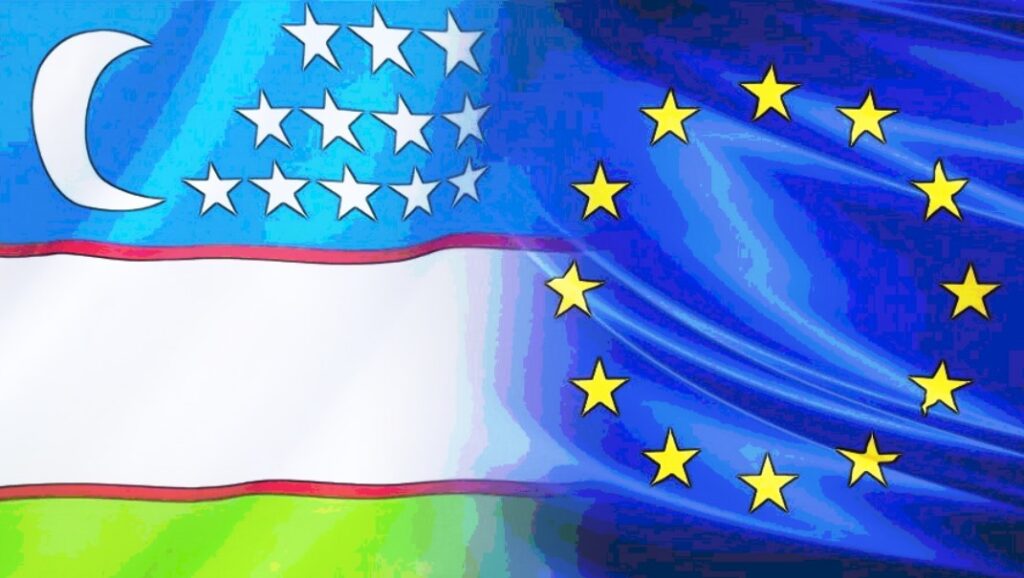
Samarkand is set to host the first-ever Central Asia-European Union (EU) summit on April 3-4, marking a pivotal moment in relations between the two regions. In the lead-up to the event, Uzbek President Shavkat Mirziyoyev spoke with Euronews about the growing cooperation between Central Asia and the EU.

Deepening Economic Ties

President Mirziyoyev emphasized the historical and strategic depth of Central Asia’s relationship with the EU.

“Over the past 30 years, our partnership has grown steadily in trade, investment, security, and digital transformation. Today, we are entering a new phase of cooperation that will benefit both regions,” he said.

In recent years, economic ties between the regions have strengthened significantly. Trade turnover has quadrupled over the past seven years, reaching €54 billion. European companies are increasingly investing in Uzbekistan and across Central Asia.

Mirziyoyev noted that Central Asia has become a model for constructive dialogue and cooperation.

“We have proven that through dialogue and mutual respect, we can resolve even the most complex issues. The recent agreement between Kyrgyzstan and Tajikistan on border demarcation is a testament to this approach.”

As chair of the Central Asian Five, Uzbekistan is prioritizing regional security, economic integration, and environmental sustainability. Key infrastructure projects, such as the Trans-Caspian and Trans-Afghan transport corridors, are central to improving connectivity with international markets.

To attract further European investment, Uzbekistan has introduced reforms to improve the business climate. In 2024, trade with EU member states reached $6.4 billion, and more than 1,000 European companies now operate in the country. The anticipated signing of the Enhanced Partnership and Cooperation Agreement (EPCA) is expected to deepen economic relations.

Mirziyoyev also proposed aligning the EU’s Global Gateway strategy with regional transport initiatives.

“We must work together to simplify trade procedures and ensure that Central Asian products gain greater access to European markets. Only through joint efforts can we build a strong and resilient economic partnership,” he stated.

He added that enhanced financial assistance from European institutions could further bolster the region’s economic resilience.

Energy and Security: Shared Priorities

Central Asia is emerging as an important player in global energy markets, particularly in renewable energy. Uzbekistan is implementing over 50 solar and wind projects, aiming to raise the share of renewables to 54% within five years.

“Green energy is the future, and Uzbekistan is ready to lead this transformation in our region. A Central Asia-EU Clean Energy Partnership will help us achieve this goal,” Mirziyoyev said.

On security, he emphasized the need for coordinated efforts to combat terrorism, extremism, and cyber threats.

“We must strengthen our cooperation in security matters, because stability in Central Asia means stability in Europe as well.”

Uzbekistan also continues its active engagement with Afghanistan, stressing the importance of inclusive dialogue and regional support.

“Afghanistan should not be left in isolation. We must continue dialogue and provide support to help the Afghan people rebuild their country,” the president concluded.