• KGS/USD = 0.01144 0%
  • KZT/USD = 0.00192 -0%
  • TJS/USD = 0.10849 0.37%
  • UZS/USD = 0.00008 0%
  • TMT/USD = 0.28490 0%
  • KGS/USD = 0.01144 0%
  • KZT/USD = 0.00192 -0%
  • TJS/USD = 0.10849 0.37%
  • UZS/USD = 0.00008 0%
  • TMT/USD = 0.28490 0%
  • KGS/USD = 0.01144 0%
  • KZT/USD = 0.00192 -0%
  • TJS/USD = 0.10849 0.37%
  • UZS/USD = 0.00008 0%
  • TMT/USD = 0.28490 0%
  • KGS/USD = 0.01144 0%
  • KZT/USD = 0.00192 -0%
  • TJS/USD = 0.10849 0.37%
  • UZS/USD = 0.00008 0%
  • TMT/USD = 0.28490 0%
  • KGS/USD = 0.01144 0%
  • KZT/USD = 0.00192 -0%
  • TJS/USD = 0.10849 0.37%
  • UZS/USD = 0.00008 0%
  • TMT/USD = 0.28490 0%
  • KGS/USD = 0.01144 0%
  • KZT/USD = 0.00192 -0%
  • TJS/USD = 0.10849 0.37%
  • UZS/USD = 0.00008 0%
  • TMT/USD = 0.28490 0%
  • KGS/USD = 0.01144 0%
  • KZT/USD = 0.00192 -0%
  • TJS/USD = 0.10849 0.37%
  • UZS/USD = 0.00008 0%
  • TMT/USD = 0.28490 0%
  • KGS/USD = 0.01144 0%
  • KZT/USD = 0.00192 -0%
  • TJS/USD = 0.10849 0.37%
  • UZS/USD = 0.00008 0%
  • TMT/USD = 0.28490 0%
11 December 2025

Kazakhstan Deepens Its Critical Minerals Push

Kazakhstan is pushing a new phase of geological exploration, and the early results suggest that the country’s critical minerals profile is deepening. The Ministry of Industry and Construction says the area of mapped and studied subsoil will rise from about 2.1 to 2.2 million square kilometers by 2026. Exploration work completed in 2024 across eleven sites has produced new resource forecasts in Abai, East Kazakhstan, Karaganda, and Kostanay.

The distribution matters as much as the tonnages: rare earths and other strategic metals appear across multiple regions, while gold prospects stand out in Kostanay. Five deposits have been added to the national register, alongside newly booked reserves of gold, copper, manganese, and phosphorites. Kazakhstan’s mineral importance was already widely recognized; this round of findings measurably strengthens that judgment.

Four Regions Drive a Wider Metal Mix

The most recent round of results from the national survey program is notable for the geographic spread and metals mix. The 2024 work across eleven sites also produced new forecasts of precious, rare, and strategic metals in Abai, East Kazakhstan, Karaganda, and Kostanay, according to the Ministry of Industry and Construction.

In the Abai Region, geologists have outlined forecast resources of about 3,200 tonnes of beryllium, 1,100 tonnes of yttrium, and 200 tonnes of niobium. The mix points to advanced-manufacturing relevance, not a single-commodity profile. East Kazakhstan adds a second, larger beryllium signal, with newly identified deposits estimated at roughly 20,600 tonnes of beryllium and 600 tonnes of tungsten. That pairing reinforces an emerging pattern in which the northeast and east of the country are presenting not just rare-earth potential but a broader suite of strategic inputs.

The largest rare-earth figures in this announcement sit in the Karaganda Region. Early estimates there indicate roughly 935,400 tonnes of lanthanoids, alongside prospective resources of copper, yttrium, gallium, and molybdenum. This is consistent with the earlier 2025 reporting that has repeatedly placed central Kazakhstan at the center of the country’s renewed rare-earth narrative.

Kostanay Region stands out on the precious metals side. Forecast gold resources there are reported at about 17,500 tonnes, with prospective copper resources also identified. The December update also marks formal follow-through: five new deposits have been added to the national register, with newly booked reserves that include 98 tonnes of gold, 36,000 tonnes of copper, 11 million tons of manganese, and more than 1.3 million tonnes of phosphorites.

Taken together, these regionally distributed findings give added empirical weight to a view already present in earlier coverage: Kazakhstan’s mineral importance was established; the survey now suggests a widening and deepening strategic profile rather than a single episodic discovery.

Kazakhstan Treats Geological Knowledge as Policy

The December 8 update also fits a pattern visible through 2025: the state is treating geological knowledge as a policy tool. Earlier this year, the Geology Committee described plans to expand subsurface study coverage by early 2026, while late-2025 government reporting reiterated the 2.2 million square kilometer objective as a presidential instruction tied to industrial priorities.

What separates the current cycle from older, more episodic exploration is the combination of broad mapping and targeted studies. The specialized initiative in eastern Kazakhstan that examined collision-zone granitoids is an example of this deeper push. It identifies three target zones with substantial potential for niobium, zirconium, rare earths, molybdenum, and tungsten, with very large preliminary figures attached to each category.

The pattern suggests a planned survey design rather than chance. They reflect an intensifying survey architecture that is designed to widen the national resource map and to identify multi-metal clusters that may later support higher-value processing inside the country.

Forecasts, Early Estimates, and New Reserves Clarify the Stakes

The figures in the ministry’s summary combine several categories that sit at different stages of development. Some numbers are described as forecast resources, others as preliminary estimates tied to specific target zones, and still others as newly booked reserves added to the national register.

This distinction matters for readers who track Kazakhstan’s strategic position. Forecasts and early estimates signal geological promise and help shape investor interest, but they are not yet the same as proven, commercially bankable reserves. By contrast, the registry additions reported for 2024 reflect a more formal step in resource confirmation, including newly booked figures for gold, copper, manganese, and phosphorites.

For Kazakhstan, the policy-strategic effect is not only about export volume. It is also about the ability to turn a wider resource base into a more diversified industry. The government has repeatedly linked the survey expansion to industrialization aims and to a shift toward higher value-added production.

Recent reporting by The Times of Central Asia has framed rare earths and associated strategic metals as a category where the country can move from promising geology to a more competitive midstream role, provided that investment conditions, regulatory clarity, and technical capacity keep improving. The multi-region mix outlined on December 8 reinforces that perspective. Abai and East Kazakhstan point to a broader strategic-metals bundle. Karaganda anchors the rare-earth story with large early estimates. Kostanay adds a strong gold signal.

Strategic Outlook

Internationally, the latest survey results add another layer to Kazakhstan’s positioning as a potential non-Chinese source of critical materials, at a time when the United States, the European Union, and key Asian economies are all pursuing diversified supply arrangements. The country already holds a recognized place in the global uranium supply, and broader external interest in mineral cooperation with Central Asia has been building since 2025.

The December 8 announcement strengthens the investment case because it suggests scale across multiple regions rather than dependence on a single site. It also aligns with the 2025 trend of increasing exploration funding and more formal reserve registration.

The constraints remain familiar. Large tonnages on paper still require long lead times, capital-intensive feasibility work, and confidence in permitting and infrastructure. A reasonable near-term watch list, therefore, includes new tender announcements, joint-venture frameworks, and any concrete steps toward domestic refining or separation capacity that would turn geological promise into supply-chain leverage.


Pannier and Hillard’s Spotlight on Central Asia: New Episode Available Sunday

As Managing Editor of The Times of Central Asia, I’m delighted that, in partnership with the Oxus Society for Central Asian Affairs, from October 19, we are the home of the Spotlight on Central Asia podcast. Chaired by seasoned broadcasters Bruce Pannier of RFE/RL’s long-running Majlis podcast and Michael Hillard of The Red Line, each fortnightly instalment will take you on a deep dive into the latest news, developments, security issues, and social trends across an increasingly pivotal region.

The new episode, available this Sunday, will be dedicated to 16 Days Against Gender-Based Violence, with guests Svetlana Dzardanova, a gender and human rights researcher for Freedom for Eurasia, based in Bishkek, and Janette Akhilgova, Equality Now’s Eurasia consultant.

Kyrgyzstan Adopts Online Tools to Combat Illegal Wildlife Trade

Customs and border officers in Kyrgyzstan haven’t traditionally focused on the smuggling of animals and plants, even though conservationists say the country is a transit point in Central Asia’s illegal wildlife trade. Backed by international expertise, Kyrgyzstan’s government is working to change that in a campaign that supporters hope will foster more regional collaboration.

“We recognize that this work must be done step by step; we cannot build everything at once,” said Bakytbek Tokubek uulu, Central Asia program manager of TRAFFIC, a Britain-based conservation group.

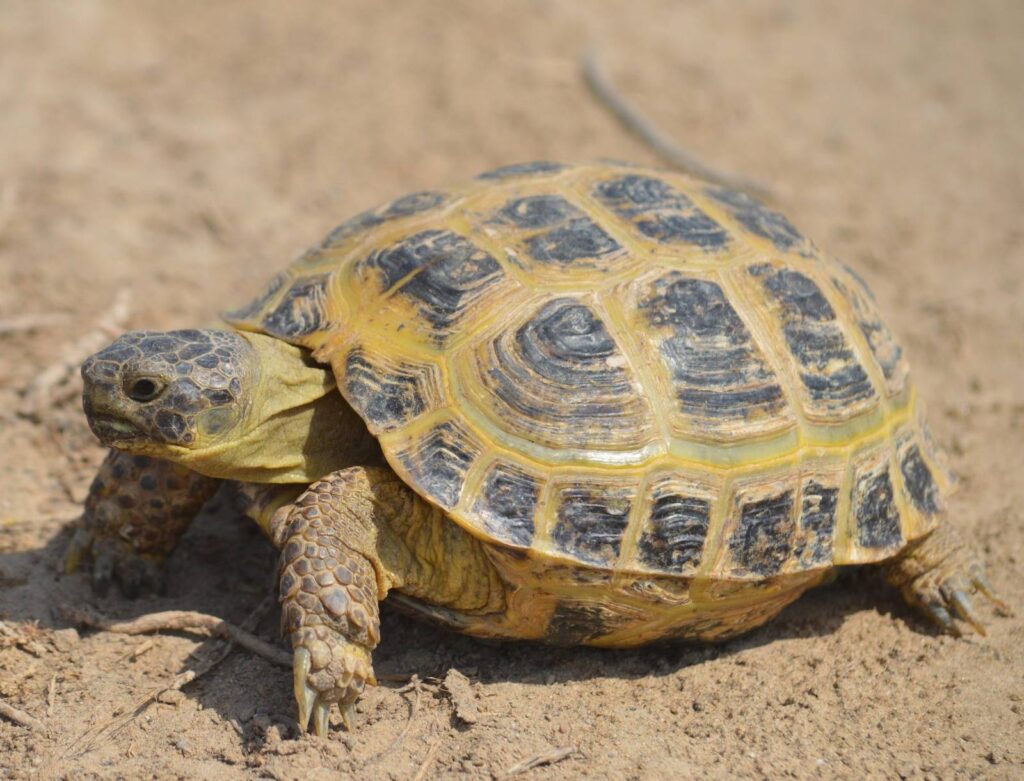
Some species considered to be vulnerable to illegal commerce in Central Asia include Saker falcons, coveted in the Middle East for falconry; Central Asian tortoises, which are smuggled as exotic pets; Saiga antelopes, whose horns are used in traditional medicine; and Argali sheep and Marco Polo sheep, which are hunted for trophies.

For the first time, Central Asia recently hosted the main meeting of the Convention on International Trade in Endangered Species of Wild Fauna and Flora, a United Nations entity also known as CITES. The conference in Uzbekistan, which ended on December 5, drew delegates from around the world and raised awareness in the region about the legal and illegal wildlife trade and protections for tens of thousands of species of animals and plants.

At a presentation during the meeting, the TRAFFIC conservation group described a new electronic database that Kyrgyzstan will use in an effort to detect and prevent wildlife smuggling. The database rollout, which followed training workshops in Bishkek over the summer, will help officials with wildlife checks, including verification of CITES permits, that were sometimes overlooked by officers more involved in searching for weapons and explosives.

Law enforcement officers in Kyrgyzstan during wildlife database training. Photo: Bakytbek Tokubek uulu/TRAFFIC.

The database will record wildlife smuggling cases, making it easier to spot suspicious conduct, and outline ways to identify animal parts and what documents are needed for import and export. Fauna & Flora, another Britain-based NGO, is also involved in the project overseen by Kyrgyzstan’s Ministry of Natural Resources, Ecology and Technical Supervision. It is funded by the U.S. State Department’s Bureau of International Narcotics and Law Enforcement Affairs.

“In the future, we envision all Central Asian governments having their own electronic CITES databases, enabling them to issue and track CITES permits online,” Tokubek uulu, the regional TRAFFIC manager, said in written responses to questions from The Times of Central Asia.

“Ultimately, our long-term goal is for all Central Asian countries to operate interconnected systems that share data in real time and enable coordinated, rapid responses like it is at TWIX,” he said.

TWIX, which stands for Trade in Wildlife Information eXchange, is an online platform, currently in operation in Europe and Africa, that allows law enforcement agencies to share information across borders as they track wildlife smuggling.

Some law enforcement officers at the summer training in Kyrgyzstan said they weren’t previously familiar with the CITES permit system, according to TRAFFIC.

“The shift in mindset takes time: officers need repeated exposure, practical examples from the region, and clear guidance on what to look for operationally. However, each session builds a bit more awareness, and you can see the change as participants start asking more concrete questions about detection, enforcement powers, and procedures,” Tokubek uulu said.

“So yes, progress is being made, but it will continue to require sustained reinforcement, practical case studies, and ongoing collaboration with law enforcement agencies to fully embed wildlife crime within their routine enforcement priorities.”


Hydropower, Social Media and Climate Change: Some News From Tajikistan That You May Have Missed

Drought Triggers Power Rationing at Nurek Hydro Station

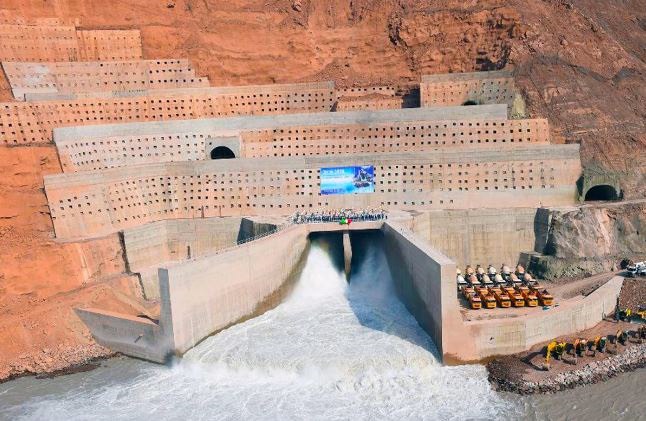
In early December, the Tajik government reintroduced electricity rationing after reservoir levels at the Nurek Hydroelectric Power Station fell sharply, due to an unusually dry autumn. The station normally supplies around 70% of the national grid, but current water levels are significantly below last year’s benchmark, affecting both domestic consumption and exports. According to Reuters, water levels have dropped more than three meters in the past month.

With shortages now affecting many regions, authorities have ordered public buildings to cut electricity outside of working hours and have switched off most street lighting. Tajikistan is seeking emergency imports from Uzbekistan, Turkmenistan and Kazakhstan to stabilize supply.

The crisis highlights vulnerabilities in a system dominated by hydropower. While Tajikistan has invested heavily in modernizing Nurek and other plants to improve winter reliability, lower precipitation remains a persistent threat. For regional energy markets, particularly those looking at cross-border electricity trade, the situation demonstrates how even large renewable systems are becoming more unpredictable under climate stress.

Rogun: Progress, Profits, and Persistent Disputes

Ambition continues to define the Rogun hydropower project, intended to make Tajikistan a top electricity exporter in the Eurasia region. With a projected capacity of 3,780 MW, Rogun is designed to host the world’s tallest dam. Financing momentum is building: the Asian Infrastructure Investment Bank has launched a $500 million multi-phase initiative, and Tajikistan has signed an energy-sale agreement with Uzbekistan at 3.4 US cents per kWh, paving the way for long-term regional integration.

But Rogun’s size continues to attract scrutiny, especially downstream. An investigation has been approved by the World Bank’s Inspection Panel into claims from Uzbekistan and Turkmenistan that altered flows on the Amu Darya river could damage farmland and ecosystems. The project’s social footprint is also expanding, with resettlement estimates reaching as high as 60,000 people.

Development banks have slowed some financing, pending stricter environmental and regional safeguards. Local environmental researchers and activists argue that international oversight is still insufficient, warning that the cumulative ecological impact of Central Asian dam-building could become irreversible if accountability is delayed.

Digital “Likes” Decriminalised, But Restrictions Remain

President Emomali Rahmon has signed amendments to remove criminal penalties for “liking” or otherwise reacting to online content labelled as “extremist”. Under previous legislation, social media users could face up to 15 years in prison for interacting with banned material. More than 1,500 people have been prosecuted under those rules, according to Reuters.

The government presented the reform as a correction of overly zealous enforcement, following Rahmon’s public criticism of harsh prosecutions. Yet rights monitors see only minimal change. The latest Human Rights Watch report on Tajikistan notes a continued clampdown on media, opposition figures and citizen journalists. The Committee to Protect Journalists ranks Tajikistan among the most restrictive media environments in Eurasia.

European officials have echoed these concerns. An OSCE-backed statement by European embassies denounced the opaque eight-year treason conviction of journalist Rukhshona Khakimova, reportedly linked to analysis of Chinese policy. For many observers, the relaxed online “like” regulations are an incremental change overshadowed by broader structural controls over speech.

Glacier Diplomacy and the Fight for Water Security

Tajikistan’s climate diplomacy is drawing global attention. The UN has designated 2025 as the International Year of Glaciers’ Preservation following a proposal from Dushanbe, with March 21 now marked as World Glacier Day. This year, Tajikistan hosted a High-Level International Conference on Glaciers’ Preservation co-organized with UNESCO and the World Meteorological Organization, producing the “Dushanbe Glacier Declaration” to expand global ice monitoring and climate finance for mountain regions.

Scientific collaboration is growing alongside diplomacy. Researchers working with the Ice Memory Foundation have completed deep drilling in the Pamirs, extracting two 100-meter frost cores that will be archived for long-term climate study. These samples are especially valuable because the Pamirs contain some of Central Asia’s last relatively stable ice formations, even as Tajikistan has already lost over 1,000 glaciers.

Given that the region’s water supply depends heavily on mountain ice, Tajikistan’s leadership in this area has global ripple effects. As a recent Glacier-loss study reported by The Guardian warns that nearly 40% of glaciers worldwide are already “doomed” to melt, Central Asian water security may increasingly influence geopolitics, agriculture and energy production across Eurasia.

Soyuz Crew Lands Safely in Kazakhstan After Space Mission

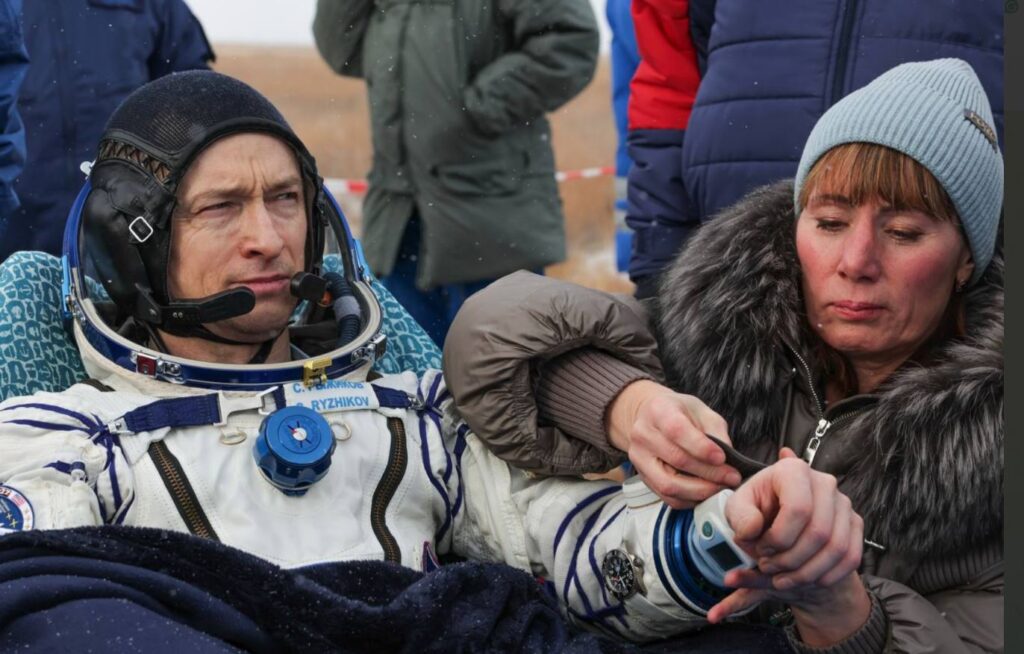
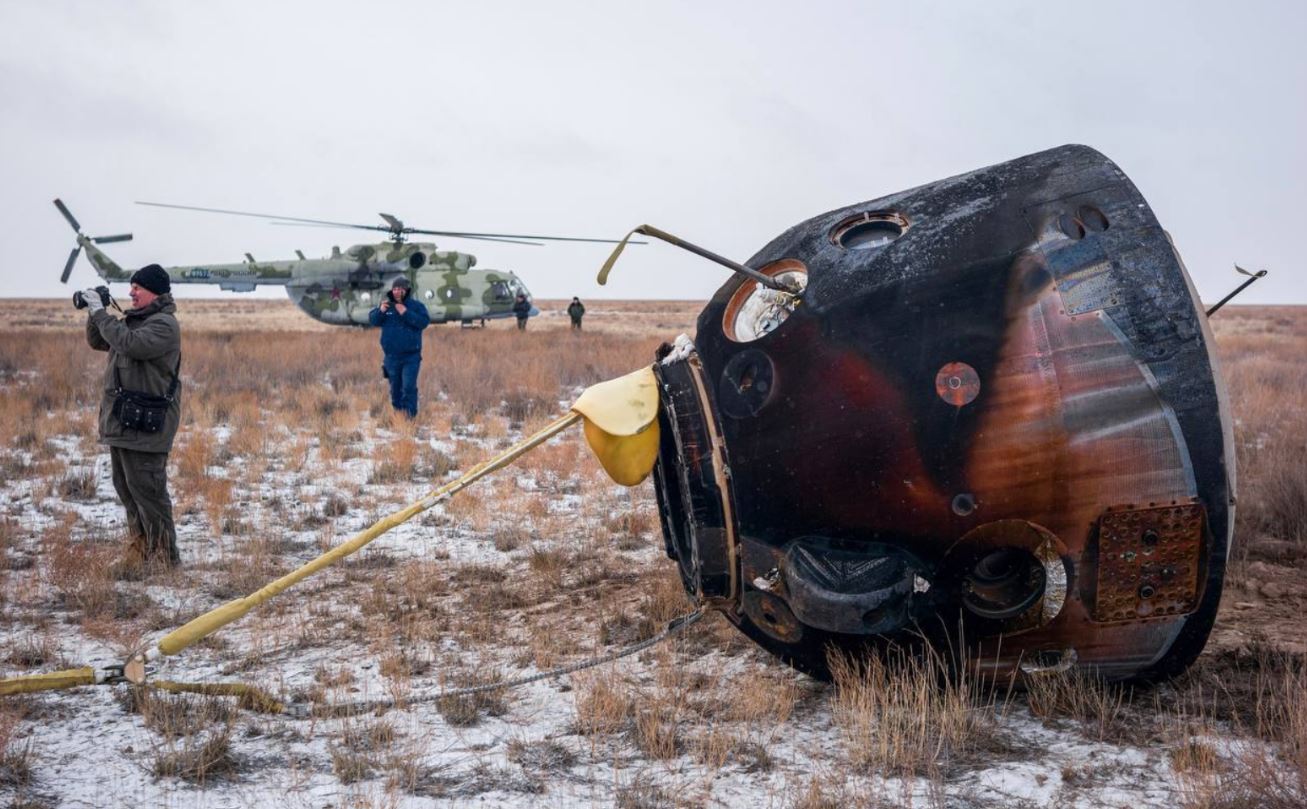
An American astronaut and two Russian cosmonauts landed in Kazakhstan on Tuesday after leaving the International Space Station, or ISS, in a Soyuz MS-27 spacecraft, ending an eight-month stay in space.

NASA´s Jonny Kim and Sergey Ryzhikov and Alexey Zubritsky of Roscosmos, the Russian space agency, made the parachute-assisted landing in the steppes southeast of Zhezkazgan, in the central part of the country.

“Early in the morning, they were on the ISS, and now they are on Earth,” Roscosmos said on Telegram.

“Over the course of 245 days in space, the crew orbited Earth 3,920 times, traveling nearly 104 million miles,” NASA said. “They launched to the space station on April 8. This mission marked the first spaceflight for both Kim and Zubritsky, while Ryzhikov completed his third journey to space, logging a total of 603 days in space.”

Image: Roscosmos

Kazakhstan’s Ministry of Foreign Affairs welcomed the safe landing and congratulated the three men on completing their mission aboard the International Space Station. The men conducted a number of scientific experiments on the station.

“Kazakhstan remains a trusted partner in international space cooperation, providing essential infrastructure and conditions that support safe and successful human spaceflight,” the ministry said.

The Baikonur Cosmodrome in Kazakhstan is a mainstay of the Russian space program.

Vatican, Uzbekistan United in Pursuit of Diplomacy and Peace

On 6 December 2025, Pope Leo XIV accepted the credentials of thirteen new ambassadors, among them Abat Fayzullaev of Uzbekistan, in Vatican City’s splendid, fresco-festooned Sala Clementia in the Apostolic Palace. The accreditation of Uzbekistan’s ambassador marks a further milestone in the development of Tashkent’s relations with the Holy See.

Addressing the new diplomats, Pope Leo XIV asserted the primacy the Holy See accords peace and diplomacy, and its conviction that peace can take root whenever the will to embrace it exists. “Peace is not merely the absence of conflict, but an active and demanding gift, one that is built in the heart and from the heart,” the Pope stated.

He called on the ambassadors and the governments they represent to renounce “pride and vindictiveness,” and to resist “the temptation to use words as weapons. This vision of peace has become all the more urgent as geopolitical tension and fragmentation continue to deepen in ways that burden nations and that strain the bonds of the human family.”

Pope Leo XIV said the Vatican would continue to publicly condemn grave inequalities, human rights abuses, and systemic injustice, while it defended the dignity of the poor and vulnerable.  This assertion is consistent with the Church’s age-old social teaching and constitutes a veiled jab at the global economic system and its evident defects from the Christian perspective.

In line with Central Asia’s broader interest in stability and common-good capitalism, Pope Leo told the ambassadors that “in times of global instability, the poorest and most marginalized often suffer most.” He encouraged the new ambassadors to help lay “the foundations for a more just, fraternal and peaceful world.”

Uzbekistan has struck a similar chord but from a different angle: “If the greatest gift given to man is life, then the greatest goal humanity has always strived for is, without a doubt, peace and harmony. That is why we always wish each other peace and tranquility, health, and well-being,” Kahramon Sariyev, Chairman of the Committee on Interethnic Relations and Compatriots Abroad of the Republic of Uzbekistan, stated.

Central Asians will surely welcome the Pope’s belief that “religions and interreligious dialogue can make a fundamental contribution to fostering a climate of peace and that truly peaceful relationships cannot be built apart from truth.”  Uzbekistan’s state media—along with those of other Central Asian countries—have pointed out repeatedly that genuine interfaith and interethnic dialogue is not only possible but essential for peace and stability—perhaps an indication of the impact Central Asia’s Congress of Leaders of World and Traditional Religions has had in calling for a diplomacy rooted in respect for diverse traditions and cultural mores.

Tashkent’s diplomatic engagement with the Vatican—embodied in the Uzbek ambassador’s accreditation to the Holy See last week—reflects a convergence of values. The Pope’s call for dialogue over discord sets the stage for deeper Vatican cooperation with Uzbekistan and the wider Central Asian region.