On December 19-20, Tokyo will host a landmark summit poised to reshape Eurasian cooperation. For the first time in the 20-year history of the “Central Asia + Japan” format, the dialogue is being elevated to the level of heads of state. For Japan, this represents more than a diplomatic gesture; it signals a shift from what analysts often describe as cautious “silk diplomacy” to a more substantive political and economic partnership with a region increasingly central to global competition over resources and trade routes.
The summit will be chaired by Japanese Prime Minister Sanae Takaichi. The leaders of all five Central Asian states, Kazakhstan, Kyrgyzstan, Tajikistan, Turkmenistan, and Uzbekistan, have confirmed their participation. Alongside the plenary session, bilateral meetings and a parallel business forum are scheduled to take place.
Why Now?
Established in 2004, the “Central Asia + Japan” format has largely functioned as a platform for foreign ministers and technical cooperation. According to Esbul Sartayev, assistant professor at the Center for Global Risks at Nagasaki University, raising the dialogue to the head-of-state level marks a deliberate step by Japan to abandon its traditionally “secondary” role in a region historically dominated by Russia and China.
This shift comes amid a changing geopolitical context: disrupted global supply chains, intensifying competition for critical and rare earth resources, and a growing U.S. and EU presence in Central Asia. In this environment, Tokyo is promoting a coordinated approach to global order “based on the rule of law”, a neutral-sounding phrase with clear geopolitical resonance.
Unlike other external actors in Central Asia, Japan has historically emphasized long-term development financing, technology transfer, and institutional capacity-building rather than security alliances or resource extraction. Japanese engagement has focused on infrastructure quality, human capital, and governance standards, allowing Tokyo to position itself as a complementary partner rather than a rival power in the region.
Economy, Logistics, and AI
The summit agenda encompasses a range of priorities: sustainable development, trade and investment expansion, infrastructure and logistics, and digital technology. Notably, the summit is expected to include a new framework for artificial intelligence cooperation aimed at strengthening economic security and supply chain development. It is also likely to reference expanded infrastructure cooperation, including transport routes linking Central Asia to Europe.
As a resource-dependent country, Japan sees Central Asia as part of its evolving “resource and technological realism” strategy. For the Central Asian states, this presents a chance to integrate into new global value chains without being relegated to the role of raw material suppliers.
Kazakhstan: Deals Worth Billions
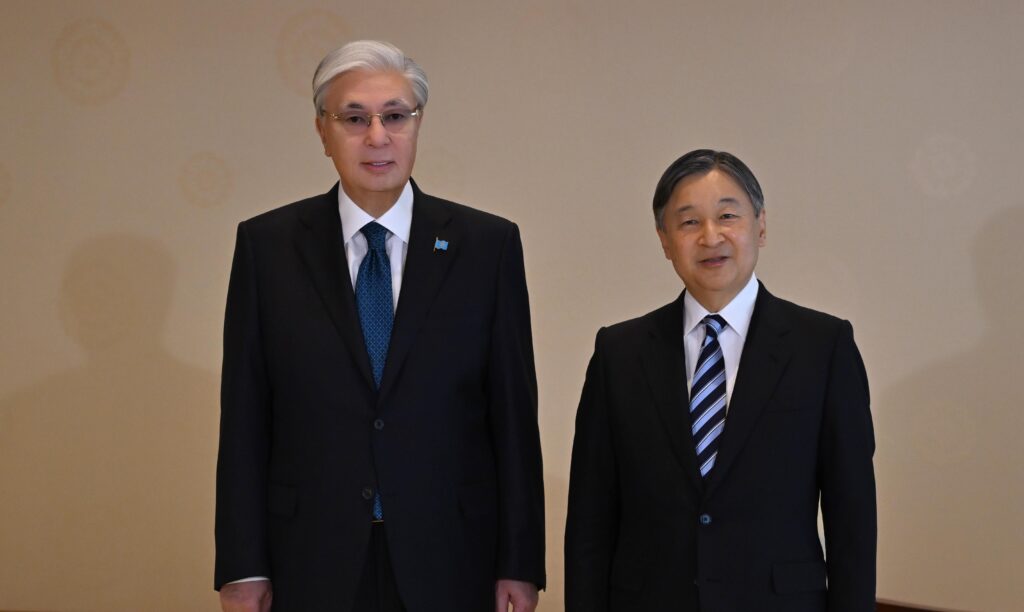
The summit coincides with Kazakh President Kassym-Jomart Tokayev’s official visit to Japan from December 18-20. During the visit, more than 40 agreements totaling over $3.7 billion are expected to be signed. These span energy, renewables, digitalization, mining, and transport. Participants include Samruk-Kazyna, KEGOC, Kazatomprom, KTZ, and major Japanese corporations such as Marubeni, Mitsubishi Heavy Industries, Toshiba, and JOGMEC.
Japan’s ambassador to Kazakhstan, Yasumasa Iijima, has referred to Kazakhstan as a future Eurasian transport and logistics hub, highlighting its strategic role in developing the Trans-Caspian route and the Middle Corridor.
Uzbekistan and the Wider Regional Stake
In the past decade, Uzbekistan has significantly deepened its economic ties with Japan. Between 2017 and 2024, bilateral trade increased 2.3 times to $388.6 million, with a 64% surge recorded in 2024 alone. There are now 121 Japanese capital companies operating in the country, with cumulative Japanese investment and loans over this period reaching $184 million. Key areas of future cooperation include green transformation, digitalization, and human capital development.
Kyrgyzstan views the C5+1 format as a tool to enhance its diplomatic leverage through regional solidarity. Its priorities include renewable energy, ecology, sustainable tourism, and educational exchanges. Tajikistan and Turkmenistan, meanwhile, are primarily interested in Japanese investment and technology in the energy sector.
Geoeconomics Without Confrontation
Although the summit is civilian in nature, its agenda also touches on security, ranging from stability in Afghanistan to climate and water-related risks. Analysts note that Japan is offering a model of engagement that avoids coercive political demands or military ambitions, instead emphasizing institutional partnerships, technological cooperation, and human resource development, an approach which has been described as “trust-building diplomacy.”
More broadly, the Central Asia + Japan format enhances Central Asia’s agency, allowing the region to present a unified voice and reduce dependency on asymmetric relationships with great powers. For Tokyo, it is an opportunity to carve out a stable, long-term role in a region where geoeconomics increasingly outweighs geopolitics. For Central Asian governments, the shift to a leaders-level summit strengthens their collective bargaining position by reinforcing the region’s ability to engage external partners as a bloc. Speaking jointly allows the five states to elevate shared priorities such as transport connectivity, energy transition, and technology access, while limiting the risks of being drawn into bilateral dependencies with larger powers.