• KGS/USD = 0.01144 0%
  • KZT/USD = 0.00212 0%
  • TJS/USD = 0.10456 0.19%
  • UZS/USD = 0.00008 0%
  • TMT/USD = 0.28490 0%
  • KGS/USD = 0.01144 0%
  • KZT/USD = 0.00212 0%
  • TJS/USD = 0.10456 0.19%
  • UZS/USD = 0.00008 0%
  • TMT/USD = 0.28490 0%
  • KGS/USD = 0.01144 0%
  • KZT/USD = 0.00212 0%
  • TJS/USD = 0.10456 0.19%
  • UZS/USD = 0.00008 0%
  • TMT/USD = 0.28490 0%
  • KGS/USD = 0.01144 0%
  • KZT/USD = 0.00212 0%
  • TJS/USD = 0.10456 0.19%
  • UZS/USD = 0.00008 0%
  • TMT/USD = 0.28490 0%
  • KGS/USD = 0.01144 0%
  • KZT/USD = 0.00212 0%
  • TJS/USD = 0.10456 0.19%
  • UZS/USD = 0.00008 0%
  • TMT/USD = 0.28490 0%
  • KGS/USD = 0.01144 0%
  • KZT/USD = 0.00212 0%
  • TJS/USD = 0.10456 0.19%
  • UZS/USD = 0.00008 0%
  • TMT/USD = 0.28490 0%
  • KGS/USD = 0.01144 0%
  • KZT/USD = 0.00212 0%
  • TJS/USD = 0.10456 0.19%
  • UZS/USD = 0.00008 0%
  • TMT/USD = 0.28490 0%
  • KGS/USD = 0.01144 0%
  • KZT/USD = 0.00212 0%
  • TJS/USD = 0.10456 0.19%
  • UZS/USD = 0.00008 0%
  • TMT/USD = 0.28490 0%

Central Asia Confronts Iran War Fallout as Trade Routes and Citizens Come Under Pressure

Central Asian governments are racing to protect citizens and keep trade moving as the U.S.–Israel war with Iran widens across the Middle East, disrupting airspace and driving up shipping and energy costs. The effects of the conflict are reaching a region that has spent the past four years trying to diversify trade routes and reduce dependence on maritime chokepoints, now disrupted by rising risk and transport volatility.

The threat to its citizens has become immediate for Central Asian governments. On March 1, Kazakhstan’s Foreign Ministry said that it was working on evacuation measures for its nationals in escalation zones and urged citizens to follow official updates from diplomatic missions. It also advised Kazakh citizens in Iran to explore overland exits, including via Azerbaijan, Armenia, Türkiye, and Turkmenistan, given airspace closures and flight suspensions. Uzbekistan’s Foreign Ministry issued safety guidance for citizens in the United Arab Emirates, urging them to avoid crowded areas and adhere to official security directives as tensions in the region escalated. Tajik nationals have already been among those leaving Iran through Azerbaijan’s Astara crossing, with The Times of Central Asia reporting yesterday that five civilians from Tajikistan are among foreigners from numerous countries who have crossed from Iran into Azerbaijan.

For Central Asia, the crisis is hitting both its people and its trade routes. The same border crossings used for evacuations sit on corridors that carry freight and connect the region to southern markets. Azerbaijan’s role as a transit hub has grown sharply over the past decade, but in this crisis, it is also a pressure valve for land exits from Iran. As of March 2, more than 300 people have been evacuated from Iran via Azerbaijan. Any tightening at borders or disruptions to rail and road links around the Caspian immediately affect how Central Asian states move both people and cargo.

Oil and shipping costs are rising sharply. On March 1, oil prices jumped by around 10%, with analysts warning prices could move toward $100 a barrel if disruption in the Strait of Hormuz worsens. The impact across Central Asia has been uneven. Kazakhstan may see stronger export revenues in the short term due to higher crude prices, but that gain comes with volatility and increased import costs across the region. ING stated that stronger commodity prices could improve the external balance of fuel exporters such as Kazakhstan, while increasing inflation risks for importers.

Shipping poses a deeper structural risk. Tanker owners and traders have slowed or suspended transits through the Strait of Hormuz because of security fears and insurance constraints, even without a formal blockade. Higher risk premiums feed directly into freight rates on the routes Central Asian exporters use to reach Europe, the Gulf, and South Asia. When insurers reprice war risk, smaller shippers and landlocked economies absorb the cost first.

Iran is central to Central Asia’s trade geography. It serves as a transit state for the southern corridor linking Central Asian rail and port networks to Türkiye, Europe, and the Gulf. Central Asian capitals see Iranian ports as a gateway to the Persian Gulf and Indian Ocean and a way to diversify export routes beyond northern corridors, even as they assess cost, risk, and political uncertainty in the region. Turkmenistan, which borders Iran and anchors much of this routing, has continued talks with Tehran on rail connectivity, including discussions in Sarakhs that Iranian media described as strategic for transit corridors.

The strain is also visible in aviation. Airspace closures and hub disruptions have forced airlines to reroute or cancel flights, cutting cargo capacity and raising costs for high-value goods that usually move by air. As shipments shift to land and sea, congestion has increased at rail terminals and ports used by Central Asian supply chains. Exporters of perishables, time-sensitive components, and precious metals are facing immediate exposure.

Central Asia has spent several years building alternative routes, including the Trans-Caspian corridor, also known as the Middle Corridor. An OECD report from November 2025 on Kazakhstan’s segment of the Corridor documented rising sea cargo volumes and the need to upgrade port infrastructure to sustain growth. Rising Gulf instability increases pressure on this route; greater freight diversion toward Eurasian land corridors would intensify congestion at Caspian ports, strain ferry capacity, and slow border processing.

Transport planning now intersects directly with geopolitics. On February 19, President Donald Trump convened the inaugural meeting of the Board of Peace in Washington, presented as a reconstruction and coordination mechanism for Gaza and backed by member states, including Kazakhstan and Uzbekistan. The expansion of the conflict with Iran has heightened security pressure across the Gulf and increased uncertainty for trade and finance. For Central Asian governments, the latest events underscore how quickly U.S. policy shifts can alter sanctions exposure, banking access, and the risk profile of routes that pass through Iran or Gulf markets.

Policymakers face a difficult choice. The southern corridor through Iran offers shorter access to warm-water ports and Türkiye’s logistics network. The war increases the risk of sudden border restrictions, rail disruption, or expanded sanctions that complicate financing and insurance. The Middle Corridor avoids Iran, but depends on Caspian maritime capacity and stable conditions in the South Caucasus. Both routes face heightened uncertainty as the conflict widens.

For ordinary Central Asians, the first concern is safety: embassy hotlines, cancelled flights, and overland exits from Iran and neighboring states. The second is cost. Sustained high oil prices and elevated freight premiums push up food and consumer prices. Countries reliant on imported fuel or staples are especially vulnerable. Major infrastructure projects across the region remain under construction and depend on predictable transit conditions to deliver returns.

Redundancy in trade and transport routes has become essential. Multiple corridors are no longer a future ambition but a requirement for economic stability and public safety.
Three Main Principles of Kazakhstan’s Afghan Policy

August 15, 2026 will mark five years since the Taliban came to power in Afghanistan. This substantial period can be assessed in different ways, particularly given the widespread skepticism at the outset regarding the Taliban’s ability to govern effectively and build relations with other countries.

The situation in Afghanistan remains complex and multifaceted, with diverging trends.

On the one hand, the current Afghan leadership faces a wide range of internal challenges, primarily socio-economic. After the Taliban’s return to power, humanitarian assistance declined sharply. For many years, two-thirds of Afghanistan’s budget had been financed through foreign aid, and its reduction has significantly affected the social conditions of ordinary Afghans. According to the United Nations, only one-third of the $2.4 billion humanitarian response plan required for 2025 has been funded. Over 21 million Afghans require humanitarian assistance.

The economic situation has been further complicated by the deteriorating humanitarian environment, largely due to the deportation of millions of Afghan refugees from Iran and Pakistan this year. In total, around 4.5 million Afghans have returned since 2023, primarily through deportations from Iran and Pakistan, resulting in a 10% population increase.

Other pressing social issues remain. Several countries continue to focus on security and terrorist threats, as well as government inclusiveness and the rights of women and girls, particularly their access to employment and education.

At the same time, nearly five years into Taliban rule, the anticipated “economic and political collapse” has not materialized. The national budget is gradually increasing, and small and medium-sized enterprises are emerging. Industrial parks aimed at developing domestic production have appeared in major cities such as Kabul, Mazar-i-Sharif, and Herat.

Since 2023, relative macroeconomic stabilization has been observed, although growth rates remain insufficient to offset demographic pressures and reduce poverty. The World Bank forecasts Afghanistan’s gross domestic product (GDP) growth at 4.3% in 2025, with inflation projected to remain low at approximately 2%.

According to the United Nations, the area under opium poppy cultivation has declined by 95% during the years of Taliban rule. At the same time, synthetic drug production has reportedly increased, reflecting trends observed in many other countries.

Politically, the Taliban maintains consolidated control over most of the country.

In other words, a more stable, albeit fragile, reality has emerged, one that Central Asian countries must engage with on a daily basis.

Kazakhstan has adopted a pragmatic approach. Its policy toward Afghanistan is based on a model of “pragmatic engagement without recognition,” while developing an independent system of transport, energy, and humanitarian ties with the country. Kazakhstan’s decision to remove the Taliban from its list of banned organizations does not signify a departure from international law nor does it constitute automatic recognition of the current Afghan authorities. On the issue of formal recognition, Kazakhstan relies on decisions of the UN Security Council.

From a foreign policy perspective, this step forms part of a broader strategy: Kazakhstan is adapting its instruments to a changed reality while remaining within international norms and avoiding symbolic gestures that could be interpreted as premature political endorsement.

Afghanistan should not be viewed solely as a source of regional security threats, but also in terms of opportunities for the region and for Kazakhstan. The country is no longer perceived merely as an object of foreign policy and geopolitics, but as a constant factor influencing security, trade, humanitarian conditions, and regional stability.

This approach is not limited to the countries of the region. As of February 2026, 18 foreign diplomatic missions are operating in Afghanistan, including embassies from all Central Asian states.

Kazakhstan’s policy is guided by long-term objectives and strategic vision. Quick results should not be expected, particularly in the implementation of projects or in assessing their risks and benefits.

Based on national interests, Kazakhstan has formulated three core principles of its Afghan policy.

First: Recognition of realities on the ground and the interdependence of regional and national security

An understanding of historical and political realities underpins Kazakhstan’s policy toward Afghanistan. Change must come through engagement rather than isolation.

Although Kazakhstan does not share a direct border with Afghanistan, it bears a degree of responsibility for developments in the country. This stems from the recognition that in Central and South Asia, and more broadly, including the Middle East, national security is inseparable from regional security.

In this context, Kazakhstan’s decision to join U.S. President Donald Trump’s “Peace Council” initiative and the Abraham Accords, aimed at reducing conflict and establishing new mechanisms for interaction in the Middle East, is noteworthy.

At first glance, such participation may appear beyond Central Asian priorities. However, when security is viewed as an interconnected space, where crises in one region generate risks far beyond its borders, the logic becomes clearer.

A priority for Afghanistan’s stable development lies in close cooperation with other Central Asian countries. There is a shared understanding that only through Afghanistan’s integration into regional cooperation frameworks can common threats, terrorism, illegal migration, and drug trafficking, be effectively addressed.

Particularly significant is the need to involve Afghanistan in legal frameworks governing cross-border cooperation on the Amu Darya, especially in light of the construction of the Qosh Tepa Canal. At the same time, the region does not require new institutional formats for engagement with Kabul. Since 1993, the International Fund for Saving the Aral Sea has operated as one of the few sustainable mechanisms of regional cooperation, demonstrating Central Asia’s capacity for collective action on the international stage.

Second: Priority of economic cooperation and development of transit potential

The development of trade and transit connectivity remains central to Kazakhstan’s Afghan policy.

Bilateral trade reached $545 million in 2024 and $541 million in 2025, with a target of $3 billion. Trade is primarily based on agricultural products, particularly Kazakh wheat and flour, which are well established in the Afghan market. In 2024, Kazakhstan’s exports totaled $523 million, of which $317 million consisted of flour.

This underscores Kazakhstan’s tangible presence in Afghanistan’s economy, contributing directly to the country’s food security.

Cooperation in the mining sector is also viewed as promising. Afghanistan remains one of the least explored yet potentially resource-rich countries in the region, with deposits of precious metals, rare earth elements, and other minerals. Major industrial enterprises in Kazakhstan have expressed interest in potential extraction and processing projects.

Opportunities are also being considered for establishing service centers and dealer networks for Kazakh vehicles and agricultural machinery.

Support for Afghanistan’s private sector, particularly women’s entrepreneurship, represents another important dimension. International organizations regard the private sector as a primary source of job creation, including for women, who are currently restricted from public-sector employment and higher education. Encouraging entrepreneurship could form a foundation for broader regional cooperation.

However, trade volumes are unlikely to expand significantly without improvements in transit infrastructure. Prolonged instability in Afghanistan has long impeded the movement of goods from Central Asia to South Asia, Pakistan, India, and beyond, representing a market of nearly 2 billion people. For Kazakhstan, as a landlocked country, route diversification and access to Indian Ocean ports are strategically important.

Discussion of corridor competition in Central Asia is often overstated. The region’s priority is not rivalry but harmonization of standards, procedures, and tariff policies to ensure that routes function predictably and complement the broader logistics architecture.

Kazakhstan’s transport priorities include developing multimodal routes, eliminating bottlenecks, digitalizing procedures, increasing terminal capacity, and creating transparent conditions for carriers and cargo owners. In this context, Kazakhstan supports cooperation with Pakistan, Iran, Central Asian states, and other interested partners.

Third: Assisting Afghanistan through the Sustainable Development Goals

One of the Taliban’s major challenges is a shortage of skilled professionals.

Upon coming to power, the authorities confronted urgent issues in education, healthcare, poverty reduction, and climate policy, all of which fall within the framework of the 17 UN Sustainable Development Goals (SDGs).

In 2025, the UN Regional Center for Sustainable Development Goals for Central Asia and Afghanistan was opened in Almaty. This institution may serve as a platform for coordinated work between Central Asian countries and Afghanistan, using UN resources.

Kazakhstan’s longstanding experience in training specialists across various sectors can help systematize SDG-related efforts concerning Afghanistan. As a leading educational hub in Eurasia, Kazakhstan continues to provide scholarships for Afghan students in priority fields such as medicine, agriculture, and engineering. Thousands of Afghan citizens have graduated from Kazakh universities.

Educational initiatives, both degree programs and short-term courses, could form the backbone of regional cooperation. Each Central Asian country offers specialized expertise. For example, Afghan water management specialists could receive training at Taraz University of Water Management and Irrigation, while agricultural training could be provided by universities in Uzbekistan or Turkmenistan.

Humanitarian support remains equally important. Kazakhstan is among Central Asia’s leading providers of humanitarian assistance. At least twice annually, and at the request of the Afghan side, the government allocates aid in the form of food, medicine, tents, and winter clothing. Kazakhstan also facilitates the delivery of assistance under various UN programs and through its national operator, KazAid.

Medical assistance has become an increasingly significant area of cooperation. In November 2025, following devastating earthquakes in eastern Afghanistan, Kazakhstan dispatched an interdisciplinary medical mission comprising specialists in traumatology, orthopedics, neurosurgery, and emergency medicine. Over ten days, Kazakh doctors treated more than 100 patients and performed 44 surgeries, including complex procedures for multiple traumas and traumatic brain injuries. In several cases, patients previously recommended for limb amputation received alternative treatment.

Beyond clinical care, the mission had a strong educational component. Joint consultations were conducted, complex cases reviewed, modern treatment methods demonstrated, and patient management strategies discussed with Afghan counterparts.

In conclusion, Kazakhstan’s policy toward Afghanistan is grounded in political realities. While it offers no quick solutions, it seeks to create conditions for long-term stability both for Afghanistan and for Central Asia as a whole. The core of the dialogue between Astana and Kabul lies in working with reality rather than with convenient interpretations of it.

EBRD Provides €20 Million Loan to Expand Uzbekistan’s Pharmaceutical Production

Uzbekistan is taking further steps to strengthen its pharmaceutical industry and healthcare system through new investment and sector reforms aimed at reducing reliance on imported medical products.

The European Bank for Reconstruction and Development (EBRD) has announced a loan of up to €20 million to its long-term client Samarkand England Eco-Medical (SEEM) and its sister company, Bayan Medical. Both companies produce intravenous solutions, including sodium chloride, glucose, and amino acid infusions, as well as generic and specialized medicines in tablet and capsule form.

The financing will support the installation of new production lines at SEEM, enabling the company to expand manufacturing of in-glass intravenous solutions, antibiotics, syrups and suspensions, medical-grade water, nasal sprays, suppositories, and ointments. Part of the funds will also be allocated to modernizing Bayan Medical’s facilities, including energy-efficiency upgrades and the installation of a blow-fill-seal ampoule production line and other specialized equipment. The companies are also expected to restructure their balance sheets as part of the project.

The investment comes at a time when approximately 75% of medical goods used in Uzbekistan are imported. Expanding domestic production capacity is intended to promote localization, strengthen supply security, and align manufacturing standards with international requirements.

The project also includes social and workforce components. Bayan Medical plans to introduce internship opportunities for university graduates, expand professional training programs for employees, and create new jobs, including positions accessible to people with disabilities.

To date, the EBRD has invested nearly $6.9 billion (€5.8 billion) in Uzbekistan across 205 projects, the majority of which have supported private sector development. Uzbekistan has been the largest recipient of EBRD funding in Central Asia for six consecutive years, reflecting sustained economic reforms and investor engagement.

Healthcare indicators point to broader structural progress. According to the 2024 Health Care Index published by CEOWORLD magazine, Uzbekistan ranks first in Central Asia and 64th globally, with a score of 36.26. Kazakhstan ranks 78th, and Turkmenistan 95th.

Data from the World Health Organization and the World Bank indicate that Uzbekistan’s Universal Health Coverage service index rose from the mid-50s in 2000 to the mid-70s by 2021, suggesting expanded access to essential medical services. Authorities aim to further increase coverage by 2027 while reducing out-of-pocket healthcare spending through strengthened primary care systems and clearer guarantees of publicly funded services.

Two Architectural Monuments from Kazakhstan Included in UNESCO’s Tentative World Heritage List

Two landmark architectural monuments in Kazakhstan, the Zharkent Mosque and the Ascension Cathedral, have been added to UNESCO’s Tentative List of World Heritage Sites. The announcement was made by State Counselor of Kazakhstan Erlan Karin.

Inclusion on the Tentative List is a mandatory preliminary step before a site can be formally nominated for inscription on the UNESCO World Heritage List. Only properties included in the Tentative List may proceed to the full nomination process.

The Zharkent Mosque is located in the city of Zharkent in the Zhetysu region. Built in 1895 to the designs of Chinese architect Hong Pique, the structure was constructed without the use of nails. It represents a distinctive synthesis of Islamic architectural principles and East Asian design traditions, including elements commonly associated with Buddhist temples.

This architectural fusion reflects the historical cultural exchanges among the peoples of the region and the cross-border influence of architectural schools. Since 1982, the mosque has been under state protection as a monument of architectural and historical significance at the national level.

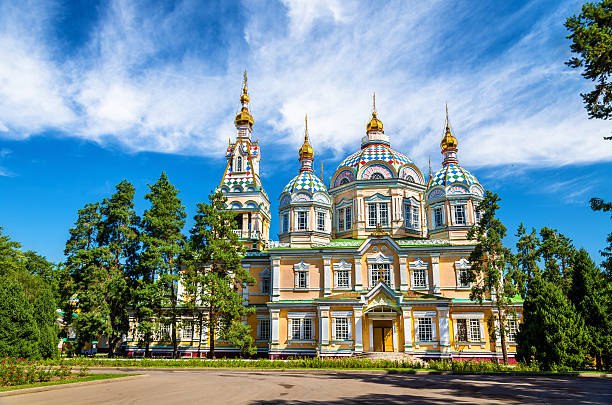
The Ascension Cathedral, situated in Almaty’s Park of the 28 Panfilov Guardsmen, was constructed between 1904 and 1907 as the cathedral of the Turkestan diocese of the Russian Orthodox Church.

Rising to a height of 54 meters, it is considered one of the tallest wooden Orthodox churches in the world. Built from Tien Shan spruce, the cathedral’s wooden framework, reinforced with metal fastenings, allowed it to withstand several major earthquakes. Today, it is listed as a historical and cultural monument of Kazakhstan.

According to Karin, the inclusion of both the mosque and the cathedral on the Tentative List marks an important step toward preserving and promoting the country’s cultural heritage. If the nomination process is successfully completed, the sites could obtain full World Heritage status, granting them enhanced international recognition and protection, as well as potentially increasing tourism.

The joint nomination of Islamic and Orthodox religious monuments also underscores Kazakhstan’s cultural and religious diversity and reflects the historical coexistence of different faith traditions in the region.

Previously, The Times of Central Asia reported that an updated UN Action Plan for the Protection of Religious Sites Worldwide was presented in Astana during the Congress of Leaders of World and Traditional Religions.

Escalation in the Middle East Threatens Kyrgyzstan’s Agricultural Export Potential

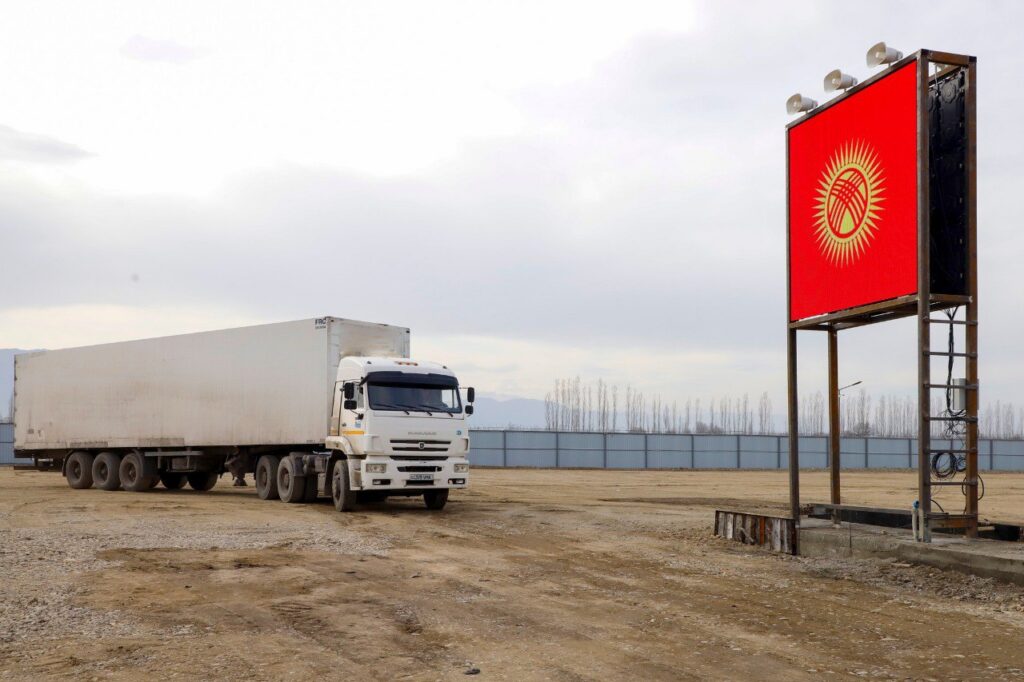
Escalating tensions in the Middle East are putting pressure on Kyrgyzstan’s export routes, a significant portion of which previously transited through Iranian territory. Iranian ports in the Persian Gulf and on the Caspian Sea have provided Kyrgyz producers with access to markets in the Middle East and Europe.

According to the National Statistical Committee of Kyrgyzstan, cattle exports from Kyrgyzstan declined fivefold in 2024.

In 2025, domestic meat prices rose sharply amid what authorities described as uncontrolled exports of cattle carcasses, primarily to Uzbekistan and Tajikistan. In response, the State Antimonopoly Service introduced maximum retail prices for lamb and beef in the domestic market and imposed a temporary ban on livestock exports to neighboring countries.

To stabilize supply, the government approved meat imports from India for processing plants, while domestic production was intended to meet internal demand.

Against this backdrop, many farmers shifted their focus to exporting chilled meat to Iran. In 2024, shipments resumed, beginning with an initial 10-ton consignment, after which volumes gradually increased. The Ministry of Agriculture announced plans to raise lamb exports to Iran to 1,000 tons.

In addition to meat, Kyrgyz companies exported legumes, grains, and dried vegetables to Middle Eastern markets via Iranian ports. Honey, beans, and nuts were also shipped to Europe using Iranian transit routes.

However, in the context of renewed military tensions, Kyrgyz exporters may now need to seek alternative logistics corridors or new destination markets. Any rerouting is likely to increase transportation costs and reduce the price competitiveness of Kyrgyz agricultural products.

In 2023, the Eurasian Economic Commission signed a free trade agreement with Iran, which entered into force on May 15, 2024. The agreement provides for the creation of “green customs corridors,” the digitalization of trade procedures, and the introduction of electronic transit mechanisms. According to EEC Minister for Trade Andrey Slepnev, the deal was intended to facilitate accelerated access to the Iranian market for companies from the Eurasian Economic Union.

Under the agreement, goods from EAEU member states benefit from tariff preferences, including zero or reduced import duties in Iran. Iranian products receive comparable preferences within the EAEU market.

Last year, Tehran also proposed that Bishkek consider establishing its own merchant fleet, using Iranian ports in the Persian Gulf and the Caspian Sea to export Kyrgyz agricultural products and expand transit opportunities.

S&P Global Ratings Expects Kazakhstan’s GDP Growth to Slow in 2026

The international rating agency S&P Global Ratings has affirmed Kazakhstan’s long-term sovereign credit rating at BBB- and its short-term rating at A-3, while maintaining a positive outlook on the long-term rating. At the same time, S&P analysts expect economic growth to decelerate in 2026 and warn of persistently high inflation.

According to commentary on S&P’s projections by analysts at the Halyk Finance research center, Kazakhstan’s GDP growth is forecast to slow to 4.1% in 2026. The projected slowdown is attributed to a 4% decline in oil production, weaker fiscal stimulus, and reduced consumer activity amid higher taxes and tighter credit conditions.

In the medium term, for 2028-2029, S&P expects GDP growth to remain at around 4% or slightly higher. However, risks persist, particularly those related to geopolitical tensions and the continued sensitivity of Kazakhstan’s budget revenues and exports to fluctuations in global oil prices.

For comparison, Kazakhstan’s GDP grew by 6.5% in 2025. In 2026, the government expects growth of 6.2%, a notably more optimistic projection than S&P’s estimate.

Other international institutions have offered varying forecasts. The European Bank for Reconstruction and Development (EBRD) recently upgraded its 2026 GDP growth forecast for Kazakhstan to 4.7%, up from 4.5%. In contrast, the International Monetary Fund (IMF) in January lowered its 2026 growth forecast by 0.4 percentage points to 4.4%.

Returning to S&P’s projections, the agency expects inflation to reach 11% by the end of 2026 and forecasts an exchange rate of 540 tenge per $1.

Halyk Finance analysts stated that they broadly agree with S&P’s GDP and inflation forecasts. However, they consider the risks of further weakening of the national currency to be greater than the agency anticipates. According to their estimates, the exchange rate in 2026 could depreciate to 580-590 tenge per $1.

S&P also expects the Kazakh government to continue fiscal consolidation in the medium term by expanding the tax base and tightening control over public spending, while preserving substantial liquid reserves.

Over the next three years, the government does not plan to withdraw additional funds from the National Fund through targeted transfers or bond placements. The guaranteed annual transfer from the National Fund is set at $5.5 billion, half the $11.1 billion withdrawn in 2025.

“We share S&P Global Ratings’ positive assessment, provided that the government strictly adheres to its fiscal consolidation commitments and reduces transfers from the National Fund,” Halyk Finance concluded.

The Times of Central Asia previously reported that the IMF believes Kazakhstan’s current GDP growth rate exceeds the country’s long-term economic potential, thereby increasing inflationary pressures and signaling potential overheating of the economy.