• KGS/USD = 0.01144 0%
  • KZT/USD = 0.00212 0%
  • TJS/USD = 0.10432 -0.29%
  • UZS/USD = 0.00008 0%
  • TMT/USD = 0.28490 0%
  • KGS/USD = 0.01144 0%
  • KZT/USD = 0.00212 0%
  • TJS/USD = 0.10432 -0.29%
  • UZS/USD = 0.00008 0%
  • TMT/USD = 0.28490 0%
  • KGS/USD = 0.01144 0%
  • KZT/USD = 0.00212 0%
  • TJS/USD = 0.10432 -0.29%
  • UZS/USD = 0.00008 0%
  • TMT/USD = 0.28490 0%
  • KGS/USD = 0.01144 0%
  • KZT/USD = 0.00212 0%
  • TJS/USD = 0.10432 -0.29%
  • UZS/USD = 0.00008 0%
  • TMT/USD = 0.28490 0%
  • KGS/USD = 0.01144 0%
  • KZT/USD = 0.00212 0%
  • TJS/USD = 0.10432 -0.29%
  • UZS/USD = 0.00008 0%
  • TMT/USD = 0.28490 0%
  • KGS/USD = 0.01144 0%
  • KZT/USD = 0.00212 0%
  • TJS/USD = 0.10432 -0.29%
  • UZS/USD = 0.00008 0%
  • TMT/USD = 0.28490 0%
  • KGS/USD = 0.01144 0%
  • KZT/USD = 0.00212 0%
  • TJS/USD = 0.10432 -0.29%
  • UZS/USD = 0.00008 0%
  • TMT/USD = 0.28490 0%
  • KGS/USD = 0.01144 0%
  • KZT/USD = 0.00212 0%
  • TJS/USD = 0.10432 -0.29%
  • UZS/USD = 0.00008 0%
  • TMT/USD = 0.28490 0%

PPP Development in Kyrgyzstan Gains Strong Momentum

A new FII Institute’s Public-Private Partnerships: Financing The Future Impact Report 2026 reveals that emerging markets are driving the next wave of PPP growth. PPP spending across low-and middle-income countries reached $100.7 billion in 2024, up 16% on-year, with emerging markets now representing around 61% of global PPP activity by GDP share.

A key finding is that Kyrgyzstan ranks third in the report’s emerging-market PPP project pipeline, with 80 published or announced projects, behind only the Philippines (230 projects) and Saudi Arabia (98), and ahead of Bangladesh (71) and Peru (54).

For Kyrgyzstan, being ranked among the top PPP pipelines signals strong momentum in PPP development.

To coordinate and promote PPP projects and attract private investment and private-sector management experience, the government has established the Public-Private Partnership Center of the Kyrgyz Republic.

According to the National Investment Agency under the President of the Kyrgyz Republic, the PPP Center’s project portfolio now includes over 90 projects with a total private investment volume of 434 billion soms (over $4.9 billion). Currently, 65 PPP projects are in the active implementation phase, and 14 new PPP agreements were signed in 2025 in sectors such as transport, logistics, agriculture, ecology and waste management, tourism, education, and communications, attracting over $3.9 billion in private investment to the Kyrgyz economy.

Key PPP agreements signed in 2025 include the construction and operation of the Kelechek alternative toll tunnel through the Too-Ashuu Pass on the Bishkek-Osh highway; the construction and operation of the eastern bypass road around Bishkek; the construction and management of a trade and logistics center in Kara-Suu; and projects to modernize regional healthcare infrastructure, including the Bulak sports and fitness complex in Osh, the U Nexus Hub innovation center at the International University of Kyrgyzstan, and a magnetic resonance imaging (MRI) center at the Osh Interregional Clinical Hospital.

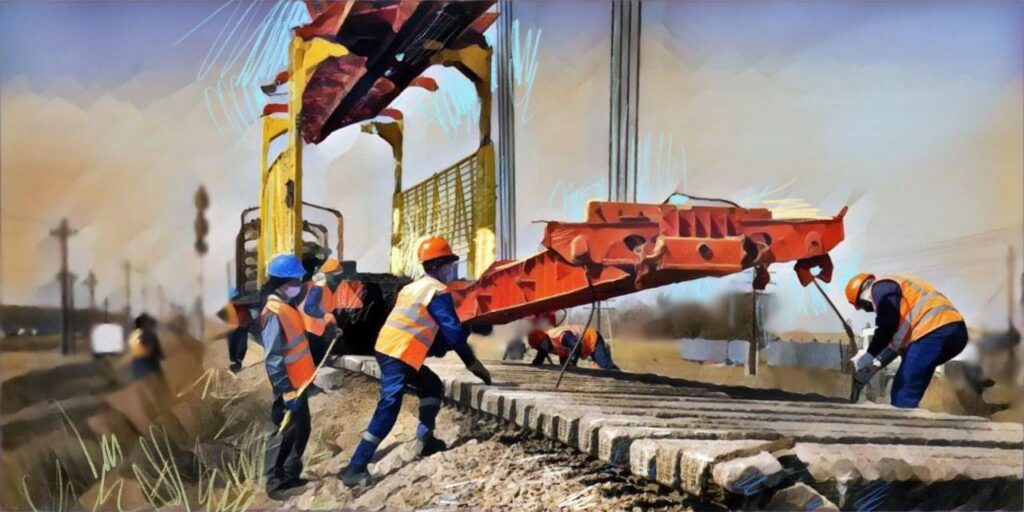
An important PPP initiative is the Trans-Eurasian Route railway project. A public-private partnership agreement for the project was signed in Bishkek in February 2025, marking Kyrgyzstan’s first PPP initiative in the railway sector. The agreement was concluded between the National Investment Agency, Kyrgyzstan’s national railway company Kyrgyz Temir Jolu, and the U.S.-based consortium All American Rail Group Global Infrastructure Partner LLC.

The project involves the construction of a railway across central Kyrgyzstan, traversing mountainous terrain from east to west and connecting Karakol in the northeastern Issyk-Kul region with Makmal in the southwestern Jalal-Abad region. The railway is expected to play a key role in modernizing the country’s transport infrastructure and enhancing regional connectivity and economic development.

The growth in the number of PPP projects was supported by legislative reforms in 2025. Amendments to the PPP Law significantly simplified procedures for investors: a simplified mechanism for launching small projects was introduced, along with provisions allowing the allocation of municipal land and property without a tender at a preferential rental rate.

A milestone of 2025 was the establishment of the PPP Academy, a joint initiative of the PPP Center and the Eurasian Development Bank, aimed at training professionals for Kyrgyzstan’s PPP sector.

In October 2025, Bishkek hosted the IV International PPP Conference under the motto “Government and Business: Synergy for a Strong Partnership.” The conference discussed strategic areas for PPP development in Kyrgyzstan, noting that PPP is an effective tool for infrastructure modernization, innovation, and improving the quality of public services.

Speaking at the conference, Ravshanbek Sabirov, Director of the National Investment Agency, said, “Today, PPP in Kyrgyzstan is a practical tool that is already delivering tangible results. It is a key instrument for attracting investment and innovation for the sustainable development of the country’s economy. PPP projects are being implemented across a wide range of sectors, from infrastructure and energy to healthcare, education, and tourism.”

Delhi Police Arrest Man After Large Theft Targeting Uzbek Visitor

Police in New Delhi have arrested a man accused of using his two minor children to carry out thefts near the busy Jama Masjid market, following an investigation into the theft of over $6,500 from a citizen of Uzbekistan visiting India for his daughter’s medical treatment, The Times of India reported.

According to police, the case began after the Uzbek national filed a complaint at the Jama Masjid police station on January 15. The victim told authorities he had traveled to India for his youngest daughter’s cancer surgery in Gurgaon and was carrying foreign currency in a sling bag while sightseeing and shopping with his family in the historic market area. He later discovered that the cash and his debit card had been stolen.

Deputy Commissioner of Police (Central) Anant Mittal said investigators relied on technical surveillance, CCTV footage from cameras installed around the market, and field intelligence to identify two siblings, aged 15 and 13, from the town of New Seelampur as suspects.

“Through sustained technical surveillance and analysis of CCTV footage, the movements of the juveniles were tracked and verified, revealing their involvement,” Mittal said.

Police conducted raids in New Seelampur and detained the children along with their father. During questioning, the man allegedly admitted that he had previously used his children to commit thefts in order to avoid direct suspicion, later keeping the stolen items himself.

Authorities said the suspect had previously been linked to a robbery case registered at the Pandav Nagar police station. The minors were also reportedly connected to earlier incidents, including motor vehicle theft cases investigated by Jama Masjid police.

During the operation, officers recovered $6,500 in cash, the victim’s debit card, 4,700 Indian rupees (about $57), and a mobile phone worth 48,000 rupees (approximately $580), which police believe was purchased with stolen funds. The investigation is ongoing.

Founder of inDrive Sees Kindred Spirit in Olympic Champion’s Father

Years ago, Stanislav Shaidorov, a former figure skating champion of Kazakhstan, sold his car to help pay for his son Mikhail’s training on the ice. After Mikhail won Olympic gold this month, the older Shaidorov was presented with an Audi Q8 by a businessman who had done the same thing for a different cause.

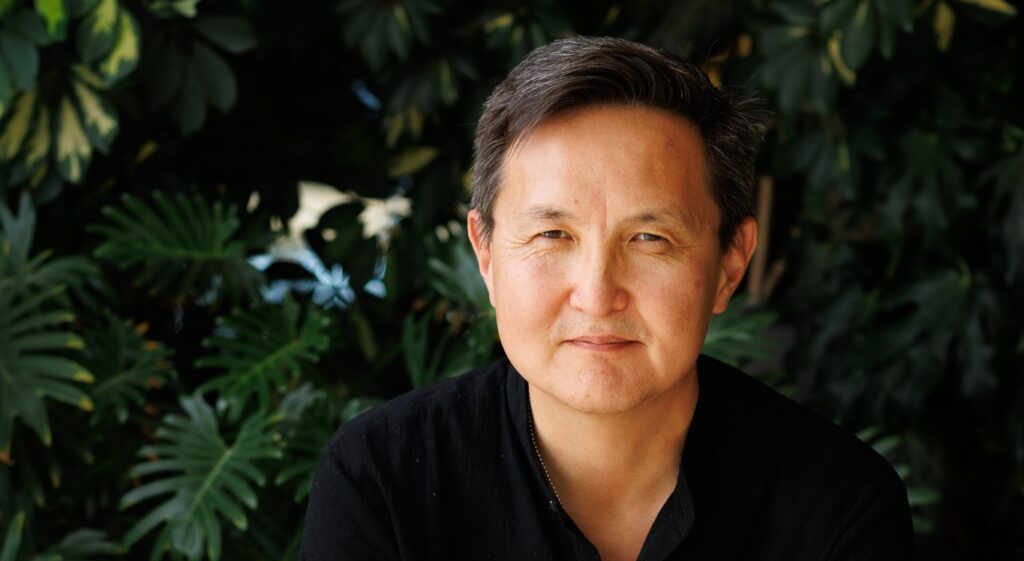
“This story is personal for me,” said Arsen Tomsky, founder and CEO of the ride-hailing app inDrive, which operates in dozens of countries.

“I did the same twice in my life — once to pay salaries when my first company had no money, and once to send the Yakutia esports team to a national championship when we couldn’t afford the tickets,” Tomsky said on Instagram.

Yakutia is in Russia. Tomsky was born in Russia, moved many employees to Kazakhstan after Russia’s full-scale invasion of Ukraine in 2022, and obtained Kazakhstani citizenship in 2023. Forbes Kazakhstan ranked Tomsky as the 11th richest business executive in the country in 2025.

Kazakhstan has been celebrating 21-year-old Mikhail Shaidorov’s achievement at the Winter Olympics in Milan – his country’s first gold medal in figure skating. His father is also getting recognition as a pillar of support earlier in his son’s career, when success was far from assured.

“As the father and first coach, he helped Mikhail take his first steps on the ice rink and was always by his son’s side during the most difficult moments of life,” President Kassym-Jomart Tokayev said at a ceremony in Astana for the gold medal winner and his key supporters.

“You went together through the winding path leading to the high peak,” Tokayev said to Stanislav Shaidorov on Wednesday. “Now you are seeing the fruits of your hard work and sweat, being honored and respected.”

Tomsky, the inDrive founder, said he could relate to Stanislav Shaidorov’s decision to give up his car for his son’s dream.

“In moments like that, you don’t think about the car,” the executive said. “You think about the future and the people you believe in.”

The World Bank Backs Kazakhstan’s Rail Shortcut

On February 19, 2026, the World Bank Board approved an $846 million IBRD guarantee to help the state-owned railway company Kazakhstan Temir Zholy (KTZ) mobilize $1.41 billion in long-term commercial financing. The financing is linked to a KTZ reform program under the umbrella “Transforming Rail Connectivity in Kazakhstan (Middle Corridor Development)” initiative. The purpose is to expand rail connectivity and upgrade logistics on Kazakhstan’s segment of the Trans-Caspian International Transport Route (TITR, Middle Corridor). The Asian Infrastructure Investment Bank (AIIB) will add a $564 million co-guarantee that shifts the financing away from a classic sovereign-loan model and toward private credit backed by multilateral risk coverage. The Multilateral Investment Guarantee Agency (MIGA) presents this operation as part of a wider World Bank Group approach that pairs corridor capital expenditure with steps to strengthen the operator’s financial sustainability and commercial viability.

The operation is structured as a two-part package. First, it finances a new 322.3-kilometer railway on a new segment between Mointy and Kyzylzhar in central Kazakhstan. This segment is meant to remove a major network detour, shorten the TITR route within Kazakhstan by 149 kilometers, ease congestion on heavily used sections, and support double-stack container operations. The line is planned with modern signaling and telecommunications, plus design provisions for later expansion and electrification. Second, it ties the construction to a reform program at KTZ, including tariff reform, exploration of alternative financing mechanisms, stronger financial and environmental management, and preparatory work for a potential initial public offering. The World Bank is structuring delivery through a Multi-Phase Programmatic Approach with the stated aim of tripling freight volumes and halving end-to-end transit times on Kazakhstan’s Middle Corridor segment by 2030.

Why This Segment Matters for the Middle Corridor

Inside Kazakhstan, the Mointy–Kyzylzhar line is a central connector in the Trans-Kazakhstan east–west trunk carrying traffic from the China-facing gateways at Dostyk and Khorgos toward the Caspian outlets at Aktau and Kuryk. Mointy itself is a pivotal junction where train paths, locomotives, and crews are redistributed across multiple directions; as a result, any congestion there propagates quickly into corridor-wide delays. In early 2025, President Kassym-Jomart Tokayev directed acceleration of the Trans-Kazakhstan corridor. KTZ says the expected benefits include decreased pressure on heavily used central segments, fewer locomotive changeovers at key junction points, and, on some routings, the potential to cut more than a day from transit time between the Chinese border and Aktau.

The World Bank’s 2023 Middle Corridor study stressed that the corridor’s most durable growth driver is regional trade among the core corridor economies: China–Europe movements remain important, but they compete with multiple alternatives, above all maritime shipping. An infrastructure upgrade adds economic value only if it reduces variability at the handoff points where delays accumulate, including rail-to-port interfaces, Caspian coordination, and national borders. Relieving the domestic bottleneck in Kazakhstan is economically meaningful only insofar as it stabilizes arrival times to Caspian terminals, creates more room for dispatching, and helps logistics providers offer shippers more predictable end-to-end service along the TITR. The emphasis is thus on schedule reliability, not just shorter mileage.

This guarantee-backed model finances specific corridor constraints rather than treating the rail system as a single sovereign program. In January 2026, the International Finance Corporation (IFC) announced a separate Swiss-franc-denominated non-sovereign package of up to $300 million equivalent for KTZ, alongside AIIB, supported by a proposed MIGA guarantee to Standard Chartered, a London-based multinational banking and financial services company. This package is tied to the planned railway bypass around Almaty, designed to divert long-haul freight around a node where it competes for capacity with urban passenger needs. It reflects an effort to package corridor links into financeable projects while holding the operator to the more exacting operational and financial due diligence that long-term private lenders require. The deal is explicitly framed as a model for “upcoming railway projects.”

World Bank project documentation for the Mointy–Kyzylzhar segment assigns a high environmental risk rating, implying a nontrivial implementation burden. KTZ has to procure and deliver civil works while meeting safeguards, occupational health and safety, and financial oversight requirements, including external auditing and results measurement, in a way that keeps lenders confident across the multi-phase structure. The disclosed Environmental Social Impact Assessment (ESIA) package includes an environmental and social management plan, a land acquisition and resettlement plan, biodiversity management, stakeholder engagement, labor management procedures, and ongoing monitoring. International lenders will watch whether Kazakhstan’s administrative and governance capacity keeps pace with construction. If it does, the project can build market trust for the next one. The significance here would be in the fact that Kazakhstan is the only Central Asian economy large enough to sustain multiple corridor upgrades in parallel.

How Scale Makes Kazakhstan’s Corridor Strategy Plausible

Kazakhstan’s corridor ambitions are economically plausible largely because of the size of its economy. World Bank data put Kazakhstan’s 2024 gross domestic product (GDP) at $291.5 billion, with GDP per capita at $14,154.60 and annual growth at 5%. That GDP figure exceeds the combined 2024 GDP of Uzbekistan ($115 billion), Turkmenistan ($51.4 billion), the Kyrgyz Republic ($17.5 billion), and Tajikistan ($14.2 billion). These figures show that Kazakhstan can sustain long-term investment programs as well as procurement and oversight burdens across multiple projects. Moreover, its large domestic freight base can reduce exposure to any single international traffic segment. This constellation of strengths supports a sequencing logic: if delivery discipline and operating reforms remain credible, then corridor upgrades can be planned and executed in stages and refinanced as a portfolio. Kazakhstan’s export profile reinforces the point. World Bank trade data list high-volume commodities like petroleum oils, uranium, and copper products among Kazakhstan’s leading export lines. These exports can anchor rail utilization beyond container-cycle volatility because they require continuous logistics throughput.

The World Bank’s 2023 Middle Corridor report identified the Caspian crossing as the place where delays are most likely to compound. That is because for the corridor to function as a service (rather than a set of segments), there must be reliable connections among rail schedules, port handling, and the sea leg. In the World Bank’s scenarios, traffic routed via the Caspian is projected to triple to about 11 million metric tons by 2030, including roughly 4 million metric tons of container demand; if the improvement program is not implemented, the resulting transportation demand would be 35% lower. For Kazakhstan, this means that domestic upgrades deliver their full value only when they match the report’s corridor-wide constraints across Kazakhstan, Azerbaijan, and Georgia, including logistics performance and the quality of intermodal handoffs. Projected growth thus depends on sustained, coordinated upgrades, not on a single investment standing alone.

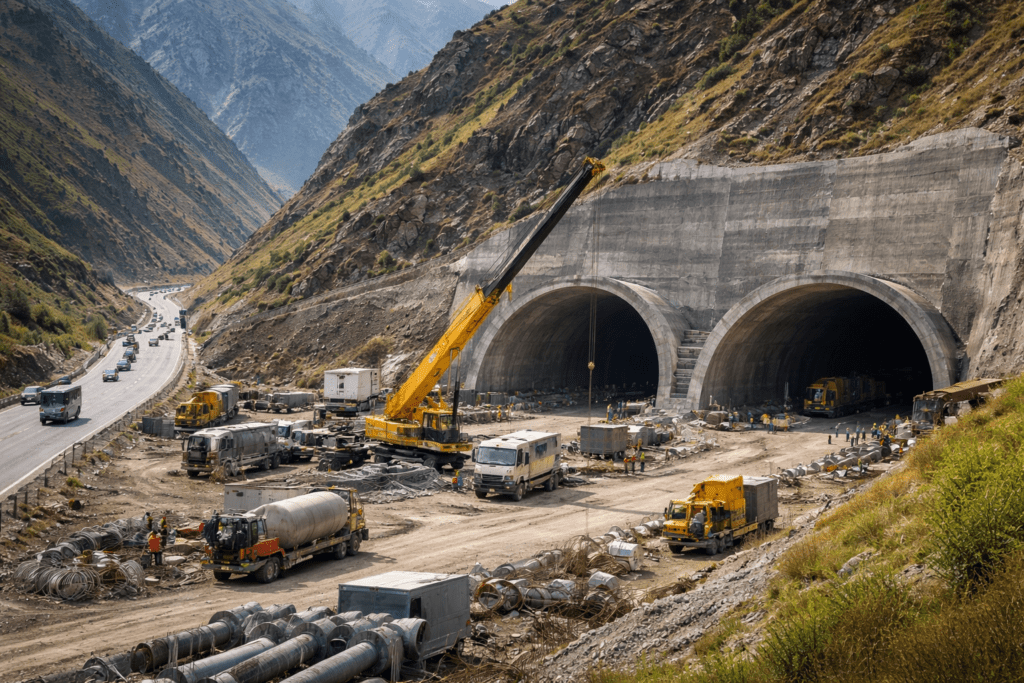
The most immediate competitive context for Kazakhstan’s Middle Corridor program is the China–Kyrgyzstan–Uzbekistan (CKU) railway. For Uzbekistan, CKU is meant to create a more direct rail link to western China and to strengthen westbound options for trade and logistics, including connections that can later be paired with routes toward the Caspian and onward markets. For Kyrgyzstan, it is also framed as a domestic development project; however, the line’s engineering is unusually difficult and therefore correspondingly expensive. The challenges include constructing 29 tunnels and 50 bridges, along with complex work in mountainous terrain that tends to amplify cost and increase schedule risk. Completion is often projected for the 2028–2030 window. Nevertheless, the regional scenario effects are straightforward. Because the project offers a credible southward alternative for some flows that today default to Kazakhstan’s east–west trunk, it can reshape expectations about future routing and pricing even before full completion. Such a prospect raises the premium on service quality for Kazakhstan’s existing route.

Kazakhstan does not have to race to replicate every alternative. Its best move is to focus on making its existing system the easier choice for high-volume traffic. The way to do this is to expand capacity, tighten schedules, and keep operating and financial practices predictable enough that logistics firms and banks can plan around them. This is exactly where Kazakhstan’s modernization plan for rolling stock complements its planned new infrastructure links. A useful marker here is the Wabtec–KTZ agreement for locomotives and services announced in September 2025, a multi-year package worth about $4.2 billion. This partnership between a private U.S.–based firm and a state company in Kazakhstan contrasts with the CKU, which is being advanced through a joint-company structure that gives China a majority stake.

Execution Will Decide the Corridor’s Future

The World Bank decision, alongside the AIIB co-guarantee, ties corridor capital spending to operating reforms at KTZ through a structure designed for staged delivery and repeatable financing. By removing a bottleneck that can trigger missed connections as traffic approaches the Caspian Sea crossing, it seeks to stabilize schedules and prevent multi-day disruption. The program, if it works as intended, will also push the operator toward tariff reform and balance sheet management that can support future private funding, including the preparatory pathway already built into the package.

In the near term, the test will be the quality of execution under demanding safeguards and monitoring requirements. The project will be judged not only on civil works delivery described in the ESIA, but also on procurement discipline, auditability, reporting quality, and consistent stakeholder processes. In the medium term, the test will be whether reforms translate into a service that shippers can plan around: fewer schedule shocks, tighter arrival times at ports, and clearer pricing signals. Routine indicators such as key-node dwell time, dispatch reliability, and intermodal handoff performance will show whether those reforms deliver the promised service discipline.

In such a competitive corridor environment, credibility becomes a strategic asset. The CKU railway can influence future routing and pricing well ahead of completion by giving shippers and forwarders a plausible southward option.  Kazakhstan’s advantage remains the scale of its economy and the depth of its rail network. Sustaining that advantage, however, depends on whether the corridor becomes a dependable service or is viewed as a chain of weak links. Kazakhstan has to show that project delivery, safeguards compliance, and operating reforms visibly reinforce one another. If it succeeds, then the World Bank–AIIB approach can become an established template for additional upgrades and financing rounds.

Gold Mining in Afghanistan Raises Security Concerns for Central Asia

Large-scale gold mining in northern Afghanistan is increasingly raising tensions and potential security risks for Central Asia, particularly along the Afghan-Tajik border, according to a report by ExpressAsia.

The outlet reports that intensive extraction activities are continuing in border areas adjacent to Tajikistan, where clashes and exchanges of fire have periodically occurred between Tajik border guards and individuals described as illegal miners or smugglers attempting to cross the frontier. Over the past two years, mining operations have expanded significantly, with thousands of units of heavy equipment, including excavators and trucks, reportedly transported to Afghanistan’s Takhar and Badakhshan provinces. Local residents have referred to the rapid industrial expansion as a “gold apocalypse.”

Mining is concentrated in the Chah Ab district, as well as the Shahri Buzurg and Raghistan areas, which border Tajikistan’s Khatlon region. The report states that around five Chinese companies and two Turkish firms are operating in the area, along with approximately 30 enterprises linked to Haji Bashir Noorzai, whom analysts widely describe as a major figure in Afghanistan’s narcotics trade, in addition to numerous smaller operators.

Badakhshan province is considered one of Afghanistan’s most resource-rich regions. In addition to gold, deposits of rubies, lapis lazuli, platinum, and other valuable minerals are being actively extracted. Official figures cited in the report indicate that gold mining generated approximately $900 million in government revenue in 2025. At the same time, experts estimate that gold worth roughly $60 million is extracted daily in border areas alone.

Despite the scale of the operations, analysts cited by ExpressAsia say regulatory oversight remains weak and revenue distribution lacks transparency. A significant share of profits is believed to flow to intermediaries and armed groups, while local communities reportedly receive limited economic benefit.

Environmental concerns are also mounting. Ecologists warn that intensive mining has already degraded agricultural land, with some fertile areas reportedly turning into sandy terrain, potentially creating long-term ecological challenges for the region.

Additional tensions stem from unresolved border management issues along the Panj River, which forms the natural boundary between Afghanistan and Tajikistan under agreements reached in the 1970s. As the river’s course gradually shifts, disputed islands have emerged, increasing the risk of unintentional crossings by miners and triggering repeated protests from the Tajik side.

According to ExpressAsia, Tajik authorities have begun reinforcing riverbanks, a move that could further alter water flow and complicate territorial arrangements as mining activity continues to expand.

Uzbekistan’s Ambassador to Kazakhstan on Regional Integration and a Shifting Global Order

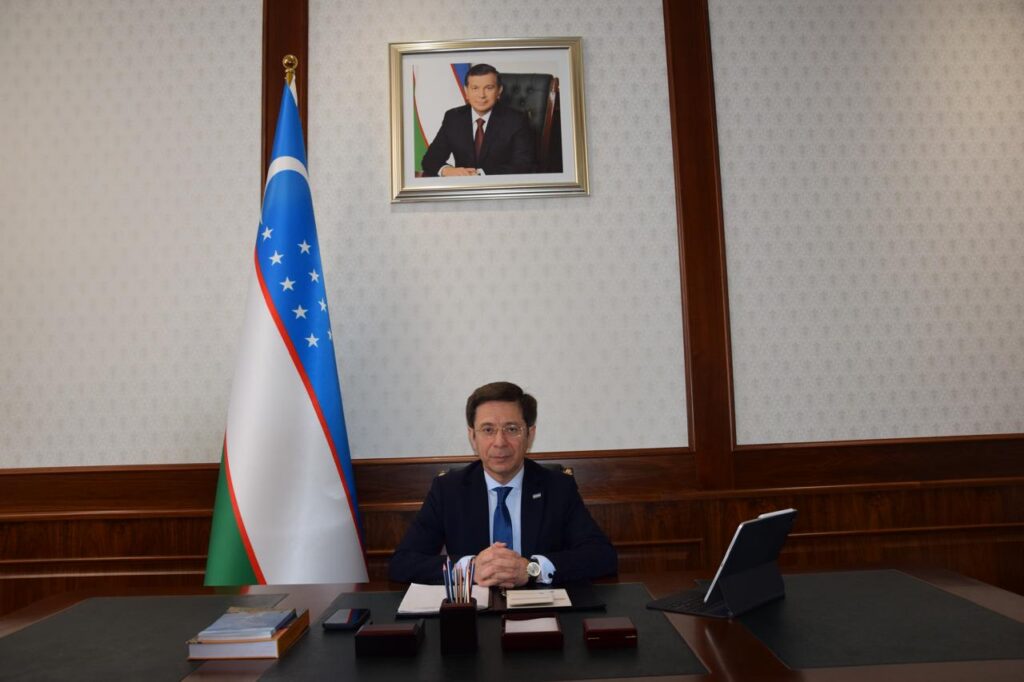
Amid shifting regional dynamics and an evolving global order, Uzbekistan has emerged as one of Central Asia’s most proactive diplomatic and economic actors. Since 2016, Tashkent has pursued an ambitious reform agenda at home while expanding cooperation with its neighbors and major global powers. In a wide-ranging interview with TCA, His Excellency Bakhtiyor Ibragimov, Ambassador Extraordinary and Plenipotentiary of the Republic of Uzbekistan to Kazakhstan, discusses regional integration, strategic partnerships, Afghanistan, China, and the future of economic diplomacy in Central Asia.

TCA: Mr. Ambassador, Uzbekistan has demonstrated significant economic progress in recent years. What do you see as the key drivers behind this success?

Ambassador Ibragimov: First of all, welcome to the Embassy of the Republic of Uzbekistan in Astana. We are familiar with your publication. We read it often, follow it, and analyze it.

I would start with President Shavkat Mirziyoyev taking office at the end of 2016. It is no secret that until 2016, the Republic of Uzbekistan, despite its potential, was a fairly closed country. Our president always asks us, his representatives abroad, to speak openly about this. You cannot rewrite history or hide it.

Relations with our neighbors were, frankly, at a very low level, and with some, there were no relations at all. The end of 2016 was a turning point, when reforms were not only declared but implemented and are now yielding results. One of President Mirziyoyev’s first foreign-policy priorities was normalization, and I want to emphasize this: normalization and then improving relations with neighbors.

There is a saying in Uzbekistan: “If your neighbor is doing well, then you will also do well.” Today, nearly a decade later, we can see that this policy is yielding results.

Please note: this is not my personal assessment, but the assessment of international experts who recognize that the President has managed to achieve what once seemed impossible. I am speaking about regional integration with our neighbors.

For example, a key issue for Central Asia is water. Many analysts warn that competition for water resources could, in the future, become a potential source of conflict. Two main rivers feed the region. Unfortunately, due to climate change, water volumes are not increasing year by year, while consumption is rising. We have managed to resolve almost all issues to date. In particular, based on the level of accumulation in the autumn-winter period in the upper reaches of the Amu Darya and Syr Darya rivers, and taking into account irrigation needs during the growing season, our water specialists jointly agree on and ensure the necessary water discharge within an agreed time frame.

Uzbekistan, as you know, is located in the very center of Central Asia, bordering all Central Asian states, as well as Afghanistan.

Today, border issues have largely been resolved. The final chord was struck on March 31, 2025, when the leaders of Uzbekistan, Tajikistan, and Kyrgyzstan signed an agreement on the border junction point, confirming the point of convergence of the three countries’ state borders.

It should also be noted that, on the initiative of our leader, a format was created: the Consultative Meeting of the Heads of State of Central Asia. This is a unique mechanism that allows our leaders to meet once a year to consider priorities, discuss regional and global geopolitical issues, and develop a common position. There is a saying that one person alone is not a warrior, but when there are several of you, in this case five states, then you are a force. Today, we see confirmation of this: the Central Asian platform is now recognized worldwide.

We also have Central Asia+ formats. Today, there is already a queue – requests to hold meetings – and we approach these thoughtfully based on our priorities. There is no point in meeting for the sake of meeting. This is the position of our leaders. We meet to discuss real, priority projects. All five leaders say their main priority is improving the well-being and standard of living of their people. Therefore, if we agree to certain formats and join them, we expect concrete results aimed at improving the quality of life in the region.

In November 2025, the seventh Consultative Meeting of the Heads of State of Central Asia was held in Tashkent. This became a landmark event because Azerbaijan joined this consultative format as a full participant. In this case, we went beyond strict geography, but we proceeded from the principle that together we are stronger. We have common goals, faith, culture, traditions, and history, and therefore a common view of the current situation in the world and in the region. We are ready to expand cooperation in formats that deliver practical results.

TCA: How do you assess current political and economic relations between Uzbekistan and Kazakhstan, and what priority areas of cooperation do you foresee in the coming years?

Ambassador Ibragimov: I would like to emphasize one important point: today, we understand that we are not competitors.

Kazakhstan and Uzbekistan are partners. This attitude comes from our leaders. It is time to leave old stereotypes in the past.

Today, Uzbekistan and Kazakhstan are the leading economic powers in the region. At the end of 2025, Kazakhstan’s GDP amounted to over $300 billion, while Uzbekistan’s GDP was $147 billion. Together, that is roughly $450 billion, almost half a trillion dollars. This is a significant figure.

Our partners and brothers in the region understand that the region’s economic stability will depend on the prosperity of its two leading economies. If you are economically weak, you will be treated accordingly on the international stage.

We can all see the geopolitical reality. The infrastructure of the global political system built after World War II is undergoing a major transformation. Frankly, the law of the strong is again coming to the fore.

I will not say that this is right; that is my personal view. There are international institutions; there are rules no one has rewritten. Nevertheless, today, despite appeals from the international community, the law of the strong, unfortunately, is again prevailing.

The political well-being of the region depends on economic conditions in Kazakhstan and Uzbekistan. We are aware of our responsibility and have therefore joined forces to ensure, first and foremost, the implementation of economic projects for the prosperity of Central Asia.

In 2012, trade turnover between Uzbekistan and Kazakhstan was about $2 billion. By the end of 2025, it had reached nearly $5 billion, a 2.5-fold increase over 10-12 years.

Our presidents have set a medium-term goal: to reach $10 billion by 2030. That would mean doubling trade turnover from current levels. It is ambitious, but we believe it is achievable because the prerequisites are already in place, and we have full political support.

If we speak about specific examples of industrial and investment cooperation, I would start with the Allur plant in the Kostanay region. Our Uzbek partner, UzAuto Motors JSC, supplies Chevrolet car kits from Uzbekistan, and we assemble the vehicles in Kostanay and sell them on the Kazakh market. In October 2025, Chevrolet was the best-selling brand in Kazakhstan.

This is gratifying and creates new incentives to deepen cooperation.

The second project is Silk Road Electronics in Karaganda, based on a similar concept. Components are supplied from Uzbekistan and assembled in Karaganda into vacuum cleaners, refrigerators, microwave ovens, and other home appliances.

Another project is the Central Asia International Center for Industrial Cooperation (CAIIC), located on the border between our two countries, in the Turkestan region on the Kazakh side and the Syr Darya region on the Uzbek side. Each country has allocated 50 hectares. There are no internal border controls within the center; the boundary is moved to the perimeter. At the initiative of our presidents, production facilities are being created there that are needed by the economies of Kazakhstan and Uzbekistan. First, we meet domestic needs, and only then do we export to regional and foreign markets.

This model creates a win-win situation because it reduces transportation costs, a very important issue for Uzbekistan. We have some commodity categories where transportation accounts for 70-80% of the cost structure, which is simply unreasonable.

This is a flagship project. We have nearly completed its initial implementation. A list of enterprises has been drawn up, auctions for land plots have been held, and construction is underway. The two presidents have tasked their governments with further expanding this project.

TCA: What role does China play in Uzbekistan’s economy? Some observers describe increasing competition among the United States, Europe, and China in Central Asia, particularly in areas such as trade, investment, and resources. There are also public concerns about growing economic dependence on China. How do you assess these perceptions?

Ambassador Ibragimov: I will express my personal opinion, but I think it aligns with our state policy. You’re right that China has been consistent in our region, unlike some Western countries. There is an explanation for this: in modern diplomacy, there is the concept of cross-cultural difference.

The East and the West can be very different in their approaches. Chinese and Eastern philosophy does not imply sudden movements; it implies gradual entry, the consistent establishment of partnerships, and, most importantly, respect for one’s partner. Dialogue should be on equal terms. In that sense, the Chinese model is closer to our spirit, because we are also an Eastern people. This is why the West may view it with some apprehension.

Unlike some Western countries, China does not only focus on the current economic situation. It enters economic relations designed for the long term. I am not saying the Chinese model is perfect, but in its basic principles, China respects its partners’ positions. This matters because Uzbekistan’s modern foreign policy and economic doctrine is based on the postulate that we advocate mutually respectful relations. If someone tries to force their position on us or lobby for their interests, it becomes difficult to negotiate.

China is more pragmatic in this regard. China is one of the world’s leading economies, yet it does business with us on equal terms. Today, China is Uzbekistan’s largest trading and investment partner, which is logical.

I have worked in the West and in the East and try to assess the situation in a balanced way. I am not saying one is good and the other is bad. The West has its approach, and the East has its own.

From a practical standpoint, it can take us a year, if not more, to consider an investment project or obtain a loan in the West. Sometimes there are requirements that are simply unrealistic. We are discussing an economic project, and we are asked, for example, when we will hold democratic elections, or why human rights were violated in a certain city, instead of discussing the financial model or economic indicators of the project.

With Chinese partners, within a year we can complete a feasibility study, sign agreements, and in some cases begin construction. In other words, it is no longer an amorphous idea: we understand that in two or three years, people living in the area will see real economic benefits.

China has a similar approach to our neighbors. China is also a major investment and trading partner for Kazakhstan, Tajikistan, Kyrgyzstan, and Turkmenistan.

I will give one example of Chinese pragmatism. Last summer, we held the second China–Central Asia summit in Astana. President Xi Jinping came, and all our presidents gathered to discuss pressing issues.

During the summit, the Chinese side raised a point: this is our second summit; we have met and agreed, but there is not enough movement. We asked what they proposed. They said: establish a permanent secretariat. Some may call this bureaucracy, but a secretariat has practical functions. They proposed taking on financing for the initial phase and locating the secretariat in Xi’an. What we agree would be monitored regularly, with periodic reports. The secretariat would include representatives from each country on a proportional basis, taking into account contributions.

Today, the secretariat is operational. Every three months, we receive information in Tashkent, and I’m sure it’s the same in other capitals, on the progress of approved projects. By the next summit, our leaders will have concrete information on what is working, what is not, and what requires attention.

I’ve discussed this with colleagues, ambassadors from a number of countries, and the China-Central Asia format is pragmatic.

We also have Central Asia-EU, Central Asia-Germany, Central Asia-Italy formats, and others. Some have existed for years. Summits are held, declarations are made, loud statements are issued, and then nothing happens.

Society has changed. People hear everything and track everything. After two or three months, they start asking questions.

For example, at the EU-Central Asia summit in Samarkand last year, it was announced that the EU would allocate €12 billion to Central Asia in four areas: green energy, critical minerals, transport, and digital infrastructure. But almost a year has passed, and the public is beginning to ask questions. We still cannot say much. My colleagues acknowledge this in private conversations.

TCA: What strategies do you consider most effective for strengthening Uzbekistan’s diplomatic and economic ties with Afghanistan, taking into account the interests of its neighbors in the region?

Ambassador Ibragimov: To understand Afghanistan and build the right relationship, you need to know its history.

Unfortunately, countries that are far away often do not learn from the past. I am not an expert on Afghanistan; I will express my personal view.

Over the past 200 years, no state or nation has been able to “break” these proud people, to put it simply. First, there were the British, then the Russian Empire, then the Soviet Union, and finally the United States. The whole world saw how the Americans left Afghanistan in 2021. From a power perspective, it is useless to talk to Afghanistan.

In 2021, as you know, there was a change of regime. Uzbekistan was among the first countries to establish a constructive, mutually beneficial dialogue with the new Afghan authorities on economic issues.

We also, and we say this openly, do not like, for example, their policy toward women and girls. What should we do? We do not live across the ocean. When all this is happening in your closest neighbor’s country, you must take that reality into account. Yes, we have not recognized them politically, but we are working closely with them on the economic agenda.

Uzbekistan has provided humanitarian aid 13-14 times since 2021. I will not talk about volumes now; the approach is what matters.

We have established a large cargo center in Termez through which international organizations, including the UN, the main donor, deliver humanitarian supplies.

At the beginning of last year, we launched the International Trade Center on the border between Uzbekistan and Afghanistan. Returning to Uzbek-Kazakh cooperation: the format was modeled on the Khorgos International Center for Boundary Cooperation, and we learned from the experience of our Kazakh brothers.

Today, the International Trade Center is operating profitably. The complex covers about 40 hectares. We created it as a humanitarian project, but it has become commercially successful. We did not expect this. We built a medical complex, and there is a queue; people sign up a week in advance. It is mainly used by Afghan citizens because they can stay there without a visa for 30 days. We were also surprised to see that women are coming; women make up 30-40% of those seeking medical services.

There is also a shopping complex where the Kazakh company KazTrade is represented. Food products, essential goods, household appliances, jewelry, and traditional Afghan carpets and stones are in demand.

Trade missions from Uzbekistan to Afghanistan are organized regularly, as are Afghan trade missions to Uzbekistan. At the end of last year, trade turnover amounted to $1.6 billion. These are significant figures.

On investment cooperation: Uzbekistan has traditionally supplied electricity to Afghanistan. A high-voltage line is being built between Surkhan and Pul-e Khumri, with a length of 250–300 kilometers. It is intended to cover 100% of the electricity needs of Kabul and the northern provinces.

Another project is the Tuti-Maidan gas field. It has been discussed for a long time and was known during the Soviet era. Today, its estimated reserves are more than one trillion cubic meters. If confirmed, and the chances are high, it would be among the largest fields in the region. Uzbek oil and gas companies have signed investment agreements with the Afghan authorities for joint exploration and development.

Of course, when we talk about Afghanistan, I must mention the mega-project: the Trans-Afghan Railway. This project is a priority for us. There are only two “double landlocked” countries in the world, meaning that to reach the sea, you must transit at least two countries, and Uzbekistan is one of them.

Uzbekistan is located in the center of Central Asia. The geographically closest port is Bandar Abbas in Iran, but Iran is under sanctions, and that region could become a hot spot at any moment. The Black Sea, as you can see, is in turmoil. The northern corridor toward Baltic and Russian ports is also under sanctions.

The only working corridor is through China’s ports, if but before these events average transit times for Uzbek cargo were 20-22 days, today, due to congestion, it is 50-60 days in the best-case scenario, and there are delays of up to 90 days. Therefore, the Trans-Afghan railway is of priority economic importance.

Preliminary estimates suggest that with this project, we could reach Pakistani ports such as Karachi and Gwadar in three to five days. Once the route reaches commercial capacity, 15-20 million tons of cargo could be transported annually. The project is ambitious because there is virtually no railway infrastructure in Afghanistan today.

The feasibility study is being prepared, and we expect it to be ready by summer. The study is being financed by the governments of Uzbekistan and Pakistan.

I repeat: the project is ambitious and costly, but we have no alternative. We will build this road no matter what. We are open about this with partners. Some acknowledge the project is interesting and would like to participate, but they raise political questions because the Taliban are not recognized. We believe that with political will, a practical solution can be found.

We are working actively with our Kazakh partners on this project. We share the understanding that a railway connecting Central Asia with the Arabian Sea via Afghanistan and Pakistan must be built, and we are moving confidently toward this goal.

I would reiterate that we call on the current Afghan authorities to ensure that basic human values are respected. While dialogue continues in the political arena, we are building cooperation on the economic track. Afghans are grateful for this constructive approach.

TCA: The President of Uzbekistan recently visited the United States, where major agreements were reached on cooperation in various sectors. Particular attention was paid to the joint development of rare earth elements. What prospects are opening up in this area for the countries of the region?

Ambassador Ibragimov: Again, I will express my point of view. The main focus today in relations with any country is the economic component. President Trump, as you know, has a policy of making deals. We also take a pragmatic approach: if we are interested, we sit down and talk.

We understand that the United States has strong technology, investment opportunities, and financial resources.

In any case, we are open to cooperation with everyone. If, at a later stage, a country or company wants to join a consortium, we are ready to discuss such proposals. Today, such models reduce economic risks. The more equal partners there are in terms of financial and technological capabilities, the more sustainable and economically promising a project is. That’s why we are ready for cooperation and dialogue.

We’re working actively with our Kazakh partners in this regard because we understand that the future is here and we must build strong, interconnected economies.

In Uzbekistan today, the largest enterprise in terms of critical minerals is Uzbek Technological Metals JSC (TMK), located in Chirchik. They work closely with Kazakhstan. I initiated the first contacts, and we traveled to the East Kazakhstan region, where three large enterprises have historically operated in this sector: Ulba Metallurgical Plant JSC, KazZinc LLP, and Ust-Kamenogorsk Titanium-Magnesium Plant JSC.

At the end of January, representatives of the Ulba plant were in Tashkent meeting with TMK and relevant ministries. Discussions continued on promising investment projects and mechanisms for implementation.

I want to emphasize once again: regional economic interests between our countries have been, are, and will remain a priority. At the same time, we are ready and willing to work in close cooperation with the world’s leading economic powers, including the United States, the European Union, and Japan.