• KGS/USD = 0.01144 0%
  • KZT/USD = 0.00211 0%
  • TJS/USD = 0.10460 0.19%
  • UZS/USD = 0.00008 0%
  • TMT/USD = 0.28490 0%
  • KGS/USD = 0.01144 0%
  • KZT/USD = 0.00211 0%
  • TJS/USD = 0.10460 0.19%
  • UZS/USD = 0.00008 0%
  • TMT/USD = 0.28490 0%
  • KGS/USD = 0.01144 0%
  • KZT/USD = 0.00211 0%
  • TJS/USD = 0.10460 0.19%
  • UZS/USD = 0.00008 0%
  • TMT/USD = 0.28490 0%
  • KGS/USD = 0.01144 0%
  • KZT/USD = 0.00211 0%
  • TJS/USD = 0.10460 0.19%
  • UZS/USD = 0.00008 0%
  • TMT/USD = 0.28490 0%
  • KGS/USD = 0.01144 0%
  • KZT/USD = 0.00211 0%
  • TJS/USD = 0.10460 0.19%
  • UZS/USD = 0.00008 0%
  • TMT/USD = 0.28490 0%
  • KGS/USD = 0.01144 0%
  • KZT/USD = 0.00211 0%
  • TJS/USD = 0.10460 0.19%
  • UZS/USD = 0.00008 0%
  • TMT/USD = 0.28490 0%
  • KGS/USD = 0.01144 0%
  • KZT/USD = 0.00211 0%
  • TJS/USD = 0.10460 0.19%
  • UZS/USD = 0.00008 0%
  • TMT/USD = 0.28490 0%
  • KGS/USD = 0.01144 0%
  • KZT/USD = 0.00211 0%
  • TJS/USD = 0.10460 0.19%
  • UZS/USD = 0.00008 0%
  • TMT/USD = 0.28490 0%

Opinion: What the Loss of RFE/RL Would Mean for Central Asia

The decision to terminate the federal grant agreement funding for Radio Free Europe/Radio Liberty (RFE/RL) is a crushing blow for hundreds of millions of people.

These people know their governments are not telling them the full truth about what is happening in their countries or in the world outside. The objective information provided by RFE/RL has been important to people such as these.

Perhaps as important, since the end of the Cold War, was the platform RFE/RL provides, whenever possible, for people in these countries to explain their views to the outside world.

I know, because I worked at RFE/RL for 25 years covering Central Asia.

RFE/RL was founded in 1950, and I didn’t show up there until 1997. I can only speak about what I saw and heard when I was an RFE/RL employee.

My understanding of my tasks as an RFE/RL employee was that we were supposed to keep close track of what was happening in Central Asia, cover as many of the important topics of the region as possible, and make objective and accurate information on these topics available to the people in Central Asia.

During Tajikistan’s 1992-1997 civil war, for example, RFE/RL’s Tajik service, Radio Ozodi, was the most trusted source of information for the people of Tajikistan.

During the Coronavirus pandemic, the Turkmen government would not even allow the word COVID to be spoken and denied there were any cases of the virus in the country, leaving RFE/RL’s Turkmen service, Azatlyk, as one of the only sources of information for Turkmenistan’s people about the illness.

I lived in Central Asia before joining RFE/RL, so I had some idea of what was important to people there.

Calling for respect for fundamental rights is a big part of RFE/RL’s work.

Read the constitutions of any Central Asian country and you will see enshrined there the right to freedom of speech, freedom of assembly, the right to freely receive or disseminate information, and much more.

In practice, these rights are not always observed in Central Asia.

In such a situations RFE/RL’s Central Asian services are a voice for those who, with good reason, are afraid to speak out publicly, or more importantly, for those who did speak out and are punished for that.

At RFE/RL we looked for “impact stories,” testimony from people of the region about unfulfilled government promises, abuses, or state mismanagement that were hurting communities and individuals.

Central Asian government officials are among the most faithful RFE/RL listeners, and often RFE/RL reports that raised social issues led officials to rectify the situation.

Ramshackle buildings or schools were suddenly repaired, electricity or running water became accessible to city districts and rural areas, sufficient food became available to communities.

The pleas of average citizens too often fell on deaf ears in government halls, but the criticism of an international organization such as RFE/RL, which was broadcasting to the entire country and Central Asian region, was too embarrassing for officials to ignore.

This made RFE/RL unpopular with Central Asian governments, but if it resulted in an improvement in the lives of the Central Asian people; that was really what was important.

In all those years I was working for RFE/RL and traveling in Central Asia, hundreds of people told me how much they appreciated RFE/RL for helping shed light on their problems. The people of Central Asia also told me, and tell RFE/RL’s Central Asian services every day, about how they see their countries and the world.

This is hugely important for the world’s understanding of Central Asia.

Too many reports from foreign media refer to “post-Soviet” Central Asia, or “the Stans,” but behind these terms are a variety of peoples and cultures that pre-date by millennia the Soviet Union or the use of the suffix “stan.”

Anyone accessing RFE/RL’s Central Asian services’ website can find out what people living in Central Asia are saying about Russia, China, the United States, Europe, the Middle East, or issues such as climate change, global trade, terrorism, and other topics.

Their views are often different from what their governments say publicly.

One last point is RFE/RL’s legacy.

When I started working there, it was less than a decade since the wall came down and countries in East and Central Europe were freed from being part of the Communist Bloc.

Czech President Vaclav Havel visited the RFE/RL building several times. So did top officials from the governments of former Communist countries. Like Havel, they were opposed to the Soviet-imposed governments in their countries.

I and other RFE/RL employees would gather to listen to them speak, and these officials told us how much RFE/RL meant to them when they were living under communism. RFE/RL was a source of information, in the local languages, about what was happening in their countries and in the wider world, and they were grateful for that information.

What I remember best was that some of these Central and Eastern European officials said RFE/RL’s broadcasts were a reminder that America had not forgotten them.

Those broadcasts brought hope, and when hope became reality and independence finally came, the leaders of these countries wanted to express their gratitude to RFE/RL, and more broadly to the United States, for never forgetting about them and their countries, and for supporting their nations’ aspirations to be free.

I am not looking to sugarcoat RFE/RL or America’s reputation in Central Asia. For every person there who expressed their gratitude to me for RFE/RL’s work, there were at least two others who criticized RFE/RL as American propaganda and an attempt to push Western values on Central Asia. But even this shows the huge difference between RFE/RL and media from countries such as China or Russia.

Central Asians felt comfortable enough to exercise their right to freedom of speech and tell me, an American, about what they believed were RFE/RL’s shortcomings. Would they feel sufficiently comfortable to criticize Russian or Chinese reporting on Central Asia to a Russian or Chinese journalist?

And here is where the real dilemma of abandoning RFE/RL’s media space in its target countries is clearly seen.

Recent incidents in Central Asia highlight the use of force by authorities to manage unrest, often leading to casualties. Examples include events in Andijan (2005), and Kazakhstan, Gorno-Badakhshan in Tajikistan, and Karakalpakstan in Uzbekistan (2022). Critics have suggested these responses involved excessive force. While outlets like RFE/RL raised concerns, Russian and Chinese media backed the government’s actions, reflecting their interest in supporting the stability of existing regimes and aligning their narratives with local authorities. The loss of RFE/RL is the loss of the other side of the story.


Czech Republic Seeks EU Lifeline for RFE/RL

Czech Foreign Minister Jan Lipavský has announced plans to urge EU foreign ministers in Brussels to consider supporting Radio Free Europe/Radio Liberty (RFE/RL) following the termination of its U.S. funding.

“We have to start with the political readiness to do something, so I will ask for that today,” Lipavsky said before a meeting of EU foreign ministers.

On Friday, U.S. President Donald Trump signed an executive order cutting funding for the U.S. Agency for Global Media, which oversees Voice of America and RFE/RL. The move ended federal grants to RFE/RL, originally established during the Cold War to broadcast to the Soviet bloc.

On Saturday, RFE/RL President and CEO Stephen Capus said that the cancellation of REF/RL’s grant agreement would be a “massive gift to America’s enemies.”

From Enemy Waves to Fading Signals: Radio Liberty’s Journey in Central Asia

I went to school in Almaty, Kazakhstan, in the 1970s. This period in the Soviet Union is now commonly referred to as the “Era of Stagnation.” We felt its effects firsthand. We did not know what freedom of speech was. All media belonged to the state, and all were “party-affiliated.” Since there was only one party in the USSR, the Communist Party, all information was exclusively communist. Naturally, the media spoke only of the incredible successes of the working class and the over-fulfillment of party and government plans. We found this completely uninteresting, so we searched for alternative sources of information.

Radio broadcasting helped. Almost every home had a radio receiver capable of picking up various wave frequencies. That was when I first heard Voice of America, Radio Liberty, and the BBC. My father listened to these stations. Around the age of 14–15, I also began to listen to these “enemy voices,” as they were called at the time. I was primarily interested in the news reports about events that the Soviet press did not cover. And, of course, music. Western radio stations were one of the few sources of information about Western music, which was largely ignored in the USSR. Yes, even music was under ideological pressure.

Today, not everyone remembers, but back then, popular bands released new albums almost annually. It was an incredible time for the invention of new sounds — Pink Floyd, Deep Purple, Rainbow, Led Zeppelin, The Rolling Stones, The Beatles, Manfred Mann’s Earth Band, 10cc, and many other artists who are now largely forgotten. But they were giants of their time. Thanks to musical radio programs, we were aware of what was happening.

The first broadcasts of the Russian Service of Radio Liberty, originally called “Radio Liberation,” went on air on March 1, 1953. On March 18 of the same year, the Turkestan editorial office was established, broadcasting in several languages, including Kazakh, Uzbek, Kyrgyz, Tajik, Turkmen, Karakalpak, and Uyghur. Initially, broadcasts in Kazakh, known as “Bostandyk Radiosy” (Radio Liberation), aired four times a week for five minutes each.

In the 1960s, the volume of Kazakh-language broadcasting increased to one hour per week, with a four-person team working on its production. By the late 1960s, the Turkestan editorial office was reorganized into “Northern” and “Southern” departments, with the Kazakh program included in the “Northern” department. Khasen Oraltai headed the Kazakh service.

In 1971, the Turkestan Editorial Office was further divided into three separate editorial teams: “Turkestan-1,” “Turkestan-2,” and “Turkestan-3,” with Kazakh-language broadcasts conducted through “Turkestan-3.” By 1975, broadcast time had increased to half an hour in the morning and evening.

Broadcasts were transmitted on shortwave from Munich. Radio Liberty had no correspondents within the Kazakh SSR. In the USSR, the station’s broadcasts were jammed until 1988. In the foothills of Almaty, towers that housed jamming equipment for these broadcasts still stand today.

In 1993, a Radio Liberty bureau was opened in Almaty, followed by a branch in Astana. However, after President Trump signed an executive order for the Reduction of the Federal Bureaucracy, the future of these radio stations has been cast into doubt. Nonetheless, Kazakh Service Director Torokul Doorov wrote on Facebook that despite all developments, the editorial office would continue its work. Similarly, Venera Dzhumataeva, a representative of the Kyrgyz service, stated that they were continuing their operations for now.

Assessing the effectiveness of these radio stations is difficult. It is clear that in dictatorships that still exist in Central Asia, and under covert censorship, such activities can be beneficial. However, an analysis of the audience for the popular YouTube channel Azattyq using the Empty Subscriber calculator service revealed that out of 1.88 million subscribers, only 2% were active users. The remaining 98% constitute a “dead” subscriber base.

In Kazakhstan, for example, despite the prevailing belief in implicit censorship, access to information is virtually unrestricted. There is a different problem here — the overabundance of state-owned media. These media outlets often, as Elon Musk put it, “talk to themselves.”

I remember well how my mother asked me to listen to these radio broadcasts at low volume so that no one outside could hear. She was afraid that listening to “enemy voices” could lead to persecution. She remembered the repressions of the 1930s when her father was declared an “enemy of the people” and their family was exiled to Uzbekistan. The reason? He was a private entrepreneur and a rather successful one. But when she voiced her concerns, my father confidently replied, “It’s a different time now. They wouldn’t dare.”

It seems that these “enemy voices”, Radio Liberty and VOA, may be coming to an end. However, it is entirely possible that the battle for people’s minds is moving to a new stage, and radio broadcasting is simply outdated, with more modern technologies replacing traditional formats.

EU Monitors Uzbekistan’s Compliance with Trade Preferences Scheme

A European Union (EU) Generalised Scheme of Preferences Plus (GSP+) monitoring mission has arrived in Uzbekistan to assess the country’s compliance with trade-related commitments. The delegation will hold discussions in Tashkent and Bukhara with the Uzbek government, social partners, civil society, and UN representatives on key issues such as human rights, labor rights, environmental protection, climate change, and good governance, the EU Delegation to Uzbekistan announced​.

Uzbekistan’s GSP+ Status and Trade Relations with the EU

The GSP+ is a special EU trade incentive program that supports countries with vulnerable economies due to limited export diversification and insufficient integration into the global trading system. To qualify, countries must ratify and effectively implement 27 international conventions covering areas such as human rights, labor rights, environmental protection, climate change, anti-corruption, and drug control.

Uzbekistan has been a GSP+ beneficiary since April 2021, joining a select group of just eight countries worldwide. As part of the program, the EU conducts regular dialogues and monitoring missions to ensure compliance with the required international UN and International Labour Organization (ILO) conventions. The current monitoring mission will remain in the country until March 20​.

Progress and Key Trade Figures

Since the last monitoring mission in 2022, Uzbekistan has made notable progress in its trade relations with the EU. Currently, approximately 60% of EU imports from Uzbekistan benefit from GSP+ preferential market access, with chemical products, fertilizers, cotton, and plastics being the main export beneficiaries.

Uzbekistan also ranks among the top GSP+ countries in terms of preference utilization, having used nearly 84% of all available trade preferences in 2023. For the 2024-2025 reporting period, the EU has identified nine priority areas for monitoring to ensure Uzbekistan continues to comply with GSP+ requirements​.


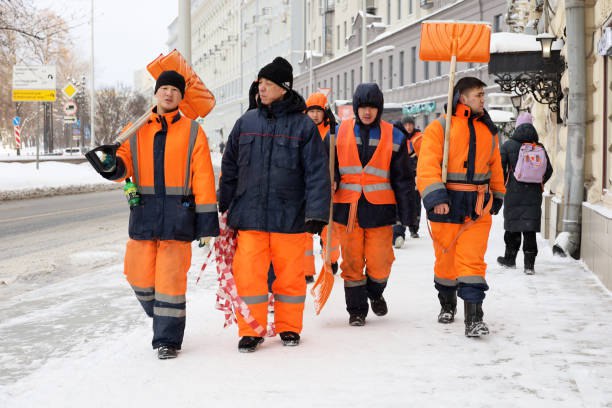
Russia Remains Top Destination for 600,000 Kyrgyz Migrant Workers

A total of 600,000 Kyrgyz citizens are currently living abroad, with Russia remaining the primary destination for Kyrgyz labor migrants, Kyrgyzstan’s Deputy Minister of Labor, Social Security, and Migration, Bakyt Darmankul uulu, said at a press conference last week, citing data from the Russian Ministry of Internal Affairs​.

As of the end of 2024, 379,949 Kyrgyz nationals were registered with Russian migration authorities.

According to the Kyrgyz Ministry of Labor, the distribution of Kyrgyz migrants in other countries is as follows:

  • Kazakhstan – approximately 70,000
  • Turkey – around 32,000
  • United States – about 40,000
  • South Korea – more than 17,000
  • Germany – about 15,000
  • United Arab Emirates (UAE) – more than 10,000​

The Role of Remittances in Kyrgyzstan’s Economy

Labor migration remains a vital source of income for many Kyrgyz households, with remittances playing a crucial role in the country’s economic development.

According to a recent World Bank report analyzing migration trends in Europe and Central Asia, remittances from labor migrants accounted for 24% of Kyrgyzstan’s GDP in 2024. The report also highlights that the poverty rate among Kyrgyz households with an international migrant is currently below 10% but would exceed 50% without remittances​.

Shifting Migration Trends

In recent years, many Kyrgyz and other Central Asian migrants have left Russia, due to the country’s economic downturn, stricter regulations, and rising anti-immigrant sentiment. As a result, an increasing number of migrants from Central Asia are opting for alternative destinations such as Turkey, South Korea, and various European countries​.

Tajikistan to Modernize Energy, Cotton, and Education Sectors with EU Grants

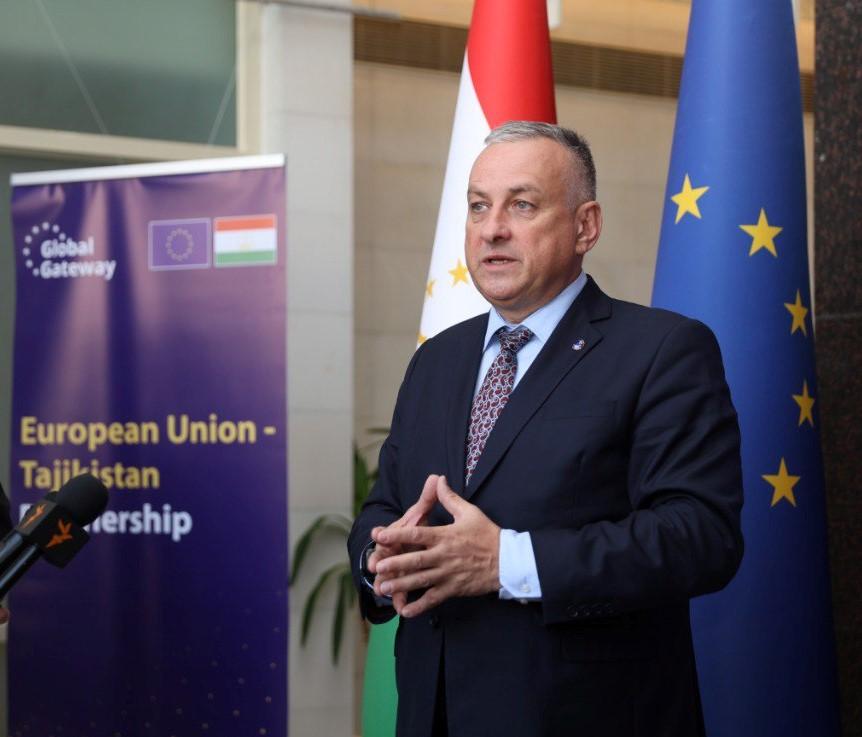
On March 14, European Commissioner for International Partnerships Jozef Síkela arrived in Tajikistan. He met with President Emomali Rahmon to reaffirm the European Union’s commitment to the country through the EU’s Global Gateway initiative​.

During their meeting, Síkela and Rahmon discussed the state and future of EU-Tajikistan relations, as well as pressing regional issues. Their talks focused on expanding economic and trade ties, attracting investments in industry and agriculture, and securing funding for hydropower projects. Rahmon emphasized Tajikistan’s commitment to green technologies and its goal of generating 100% of its electricity from renewable sources under the Strategy for the Development of the Green Economy until 2037​.

EU’s New Funding for Tajikistan

During his visit, Síkela announced several new EU funding initiatives aimed at strengthening Tajikistan’s sustainable development.

According to the EU Delegation to Tajikistan, two key agreements were signed with Team Europe partners to drive sustainability efforts in the country:

  • A €20 million investment grant with the European Bank for Reconstruction and Development (EBRD) to modernize Tajikistan’s electricity grid, reduce energy losses, and prepare for future renewable energy investments. This aligns with the EU’s broader goal of enhancing energy security and supporting the green transition in Central Asia.
  • A €20 million grant with Deutsche Gesellschaft für Internationale Zusammenarbeit (GIZ), the German Agency for International Cooperation, to promote sustainability in Tajikistan’s cotton sector. The initiative will support certified sustainable cotton production, improve processing for high-quality exports, and create new opportunities for the domestic private sector.

Additionally, the EU announced a €10 million disbursement as part of a larger €30 million budget support program. This funding will help implement the National Strategy for Education Development 2030 and the Programme for Professional Training of Citizens 2021-2025, improving the quality and relevance of both general secondary education and vocational training​.

As part of his visit, Síkela toured the Rogun Hydropower Plant, a crucial project for Tajikistan’s energy infrastructure.

“With its Global Gateway strategy, the EU is investing in Tajikistan’s future by supporting critical infrastructure upgrades, expanding renewable energy capacity, and modernizing key industries such as cotton production,” Síkela stated. “These investments will reduce energy losses, create jobs, and open new export markets”​.