• KGS/USD = 0.01144 0%
  • KZT/USD = 0.00193 -0%
  • TJS/USD = 0.10811 -0.28%
  • UZS/USD = 0.00008 0%
  • TMT/USD = 0.28490 0%
  • KGS/USD = 0.01144 0%
  • KZT/USD = 0.00193 -0%
  • TJS/USD = 0.10811 -0.28%
  • UZS/USD = 0.00008 0%
  • TMT/USD = 0.28490 0%
  • KGS/USD = 0.01144 0%
  • KZT/USD = 0.00193 -0%
  • TJS/USD = 0.10811 -0.28%
  • UZS/USD = 0.00008 0%
  • TMT/USD = 0.28490 0%
  • KGS/USD = 0.01144 0%
  • KZT/USD = 0.00193 -0%
  • TJS/USD = 0.10811 -0.28%
  • UZS/USD = 0.00008 0%
  • TMT/USD = 0.28490 0%
  • KGS/USD = 0.01144 0%
  • KZT/USD = 0.00193 -0%
  • TJS/USD = 0.10811 -0.28%
  • UZS/USD = 0.00008 0%
  • TMT/USD = 0.28490 0%
  • KGS/USD = 0.01144 0%
  • KZT/USD = 0.00193 -0%
  • TJS/USD = 0.10811 -0.28%
  • UZS/USD = 0.00008 0%
  • TMT/USD = 0.28490 0%
  • KGS/USD = 0.01144 0%
  • KZT/USD = 0.00193 -0%
  • TJS/USD = 0.10811 -0.28%
  • UZS/USD = 0.00008 0%
  • TMT/USD = 0.28490 0%
  • KGS/USD = 0.01144 0%
  • KZT/USD = 0.00193 -0%
  • TJS/USD = 0.10811 -0.28%
  • UZS/USD = 0.00008 0%
  • TMT/USD = 0.28490 0%
10 December 2025

Trump–Xi Meeting Reshapes Stakes Ahead of C5+1 Summit

The October 30, 2025, meeting between U.S. President Donald Trump and Chinese President Xi Jinping in Busan, South Korea, marked their first in-person contact since 2019. While framed as a limited reset or tactical pause, the talks carry deeper strategic implications. They occurred just days before the forthcoming C5+1 Leaders’ Summit in Washington on November 6, a gathering with direct consequences for Central Asia’s role in the future of critical mineral supply chains.

South Korea Talks: Reset or Recalibration?

At the meeting in Busan, Trump and Xi discussed supply chains, tariffs, rare earth trade, and broader trade issues. The U.S. announced that China had agreed to pause certain rare-earth export curbs for a year, with Trump describing the talks as “amazing.”

China currently processes roughly 90% of the world’s rare-earth elements and mines around 70%, which are indispensable in the production of electric vehicles, wind turbines, defense technologies, and high-tech manufacturing. Analysts characterized the Busan accord not as a strategic realignment but as a “tactical pause” or a “temporary lull to escalation” between the U.S. and China.

For emerging potential U.S. partners in Central Asia, however, the optics matter, as any perceived U.S.–China trade thaw could diminish the urgency behind diversifying rare earth supply chains.

Central Asia’s Rare Earth Opportunity

As previously reported by The Times of Central Asia, the upcoming C5+1 summit is likely to focus on critical minerals, energy logistics, and investment infrastructure as the U.S. seeks to reduce its reliance on China. Kazakhstan has emerged as a major player in rare earths, with geological surveys in 2024 and 2025 identifying 38 promising solid mineral deposits, including the Kuyrektykol site in the Karaganda region, which contains substantial reserves. Uzbekistan, meanwhile, signed a memorandum of understanding with the U.S. on critical minerals cooperation in September 2024, which represented a major step toward deepening bilateral cooperation on this front.

The U.S. International Development Finance Corporation (DFC) has signaled its interest in co-financing midstream mining and processing infrastructure in Central Asia, though projects remain at formative stages. Logistics routes such as the Middle Corridor via Central Asia and the Caspian remain strategically attractive to Western-aligned supply chains seeking to bypass Russia.

Trump–Xi Reset Could Blur U.S. Commitments, But the Case for Diversification Remains Strong

Should the Trump-Xi meeting diminish the immediate urgency of supply chain diversification, this will be of concern to countries looking to balance their economies with geopolitical neutrality. Kazakhstan has long positioned itself as a multi-vector neutral broker between major powers, meaning fluctuating U.S. policy signals could cause complications.

Despite the reset, however, most analysts contend that little has fundamentally changed, with the Busan meeting seen as a temporary rather than a genuine strategic pivot. While structural competition between Washington and Beijing endures, diversification of critical mineral supply chains remains as essential as ever. For Central Asia, this dynamic reinforces the need to continue developing regional value chains and its mid-stream processing capacity.

What to Expect in Washington

The November 6 C5+1 Leaders’ Summit in Washington will test whether the dialogue can yield tangible outcomes – clear schedules, designated project leads, and measurable progress on trade corridors, regulatory alignment, critical minerals, and energy logistics.

A crucial signal will be whether Washington commits to mid-stream infrastructure – refining and processing – rather than focusing on upstream mining, which for many Central Asian states is essential to avoid being mere raw-material exporters. Leaders will also monitor how the U.S. manages geopolitical risks. Deeper cooperation on rare earths paired with military or security components such as geospatial surveys or dual-use technologies could trigger pushback from Russia and China, potentially deterring some governments from closer alignment.

Observers will also watch how the U.S. manages geopolitical sensitivities. If critical mineral cooperation expands into areas such as geospatial surveys or dual-use technology partnerships, both Russia and China are likely to respond, potentially complicating regional governments’ balancing acts between major powers.

Window of Opportunity or Moment of Drift?

The Trump–Xi meeting in Busan has shifted the diplomatic atmosphere heading into the C5+1 summit, softening expectations of confrontation while raising just as many questions. Now entering its tenth year, the C5+1 platform is facing a turning point. The region’s governments are increasingly pragmatic, welcoming U.S. engagement and transactional diplomacy, but seeking predictable, long-term partnerships that deliver investment, technology transfer, and access to markets.

Whether the summit will produce genuine progress or another symbolic round of declarations will depend on Washington’s ability to translate strategy into capital and implementation. The coming summit could reaffirm Central Asia’s role in a diversified, resilient global supply chain, or reveal the limits of U.S. economic diplomacy in a multipolar world.


More Kazakhs Working in Their Chosen Fields as Job Satisfaction Varies

A growing number of Kazakhstan’s citizens are working in their chosen professions, yet satisfaction with their jobs remains uneven across demographics and regions, according to a recent study by Finprom.kz based on survey data from the National Statistics Bureau (NSB).

In a nationwide NSB survey conducted in March among nearly 12,000 respondents aged 15 and older, 50.7 percent reported being completely satisfied with their jobs, up slightly from 49.9 percent a year earlier. Another 29.9 percent said they were partially satisfied. The share of those dissatisfied with their jobs declined sharply from 3 percent to just 0.9 percent.

However, 18.5 percent of respondents either found the question difficult to answer or considered it inappropriate, a sharp increase from 1.6 percent the previous year.

Rural residents reported higher job satisfaction than their urban counterparts, with 53.9 percent compared to 49.4 percent. Dissatisfaction was also more common in cities (1.2 percent) than in rural areas (0.7 percent).

Gender differences also appeared. Men were more likely to report being satisfied with their work (55 percent) than women (48.1 percent). Women were slightly more likely to say they were only partially satisfied or entirely dissatisfied (1 percent versus 0.6 percent among men).

Satisfaction levels varied significantly by age. Among respondents under 17, only 30.2 percent were fully satisfied with their profession. Satisfaction peaked in the 29–38 age group at 62.5 percent but fell to 29.5 percent among those over 60.

As expected, financial status played a major role. Among high-income individuals, 82.6 percent were content with their professional choice, compared to just 14.8 percent among low-income respondents.

In the second quarter of 2025, Kazakhstan had 9.3 million employed people, an increase of 1.2 percent year over year. Of these, 7.1 million worked in their field of study, 1.7 million in unrelated professions, and 531,700 had not received formal professional training.

Urban residents were more likely to work in their trained field, with 4.9 million people, or 83.3 percent of the urban workforce, compared to 2.2 million rural workers (63.7 percent). In rural areas, 24.8 percent worked outside their area of study and 11.5 percent lacked professional training.

By gender, 3.6 million men and 3.5 million women reported working in their field. A higher percentage of women (77.6 percent) than men (74.8 percent) were employed in jobs matching their qualifications.

The leading employment sector remained trade and auto repair, employing 1.6 million people, a 3.3 percent increase over the past year. It was followed by education (1.2 million, +2.5 percent), agriculture (1 million, –5.2 percent), transport and warehousing (676,900, +1 percent), and construction (638,300, –1 percent).

The least represented sectors were water supply, real estate, and energy supply.

A Cascade of Opportunity: How Hydropower Is Driving Growth in Eastern Kazakhstan

Eastern Kazakhstan is harnessing its hydropower potential to transform water into economic strength. In a region that holds over 40% of the country’s water resources, local authorities are positioning hydropower as a cornerstone of sustainable development and energy independence.

At the recent Altai Invest-2025 international investment forum in Ust-Kamenogorsk, the regional capital of East Kazakhstan, officials signed memorandums for the construction of multiple hydroelectric power plants on the Ubi and Little Ulba rivers. The planned facilities are expected to deliver tens of megawatts of clean energy, generate hundreds of jobs, and reduce dependence on external electricity supplies. 

Regional Potential and Water Strategy

East Kazakhstan has long been regarded as the country’s renewable energy hub. The region already hosts seven operating hydroelectric power plants, including the Bukhtarma, Ust-Kamenogorsk, and Turgusun stations. With its climate less suited to solar and wind energy, hydropower remains the region’s most viable renewable resource.

Local authorities have identified 95 potential sites for small-scale hydropower projects, with a combined capacity of approximately 2 gigawatts. These facilities aim to supply rural areas with electricity, regulate water balances, and support irrigation and flood prevention efforts.

One of the largest agreements signed at the forum involves the construction of two hydropower plants on the Ubi River. According to a memorandum with Global Turbo Compressors, the projects will produce 150 MW and 50 MW, respectively.

Small Stations, Big Returns

CAPITAL DVP plans to construct two mini-hydropower plants with a combined capacity of 45 MW in the Altai region, near the village of Lesnaya Pristan. These projects will utilize modular technologies to accelerate construction timelines and reduce environmental impact. 

Another project, spearheaded by Kazakh firm Zhel Kuat, involves a 15 MW station on the Little Ulba River. Developed in partnership with the regional energy administration, the facility aims to enhance energy supply stability and create local employment.

@TCA

The project also includes provisions for environmental impact assessments, fish protection systems, and technical adaptations suited to local conditions.

For East Kazakhstan, hydropower serves not only as a renewable energy source but also as a catalyst for broader regional development. These facilities help regulate floodwaters, support agricultural irrigation, and sustain ecosystems.

The Ubi River, a major tributary of the Irtysh, runs through the Shemonaikha district and flows into the Shulbinskoye reservoir. Planned hydropower sites along its course will leverage natural elevation differences, avoiding the need to flood large areas.

The Turgusinskaya hydropower plant, launched in 2021, is frequently cited as a successful model. The 24.9 MW station has increased energy output, raised tax revenues, and created jobs, all while maintaining environmental standards.

A Broader Development Vision

At Altai Invest-2025, East Kazakhstan region head Nurymbet Saktaganov outlined a regional development strategy through 2030. Key goals include increasing the population to one million, revitalizing border areas, expanding gas infrastructure, and fostering job creation.

“These are ambitious but realistic goals that combine economic growth and social development in the region,” Saktaganov emphasized.

Kazakhstan to Use Innovative Drone Technology for Aral Seabed Reforestation

On October 29, a new initiative titled “Improving the Ecosystem of the Aral Seabed” was launched by Korkyt Ata Kyzylorda University, the University of California, Berkeley, the Kazakh Directorate of the International Fund for Saving the Aral Sea (IFAS), and the Bulat Utemuratov Foundation. 

The project seeks to rehabilitate the dried Aral Sea bed using innovative E-seed technology developed by scientists at UC Berkeley. The method involves aerial seeding with drones that distribute self-burying seeds encased in biodegradable material, an approach designed to accelerate greening, increase plant survival rates, and reduce labor costs.

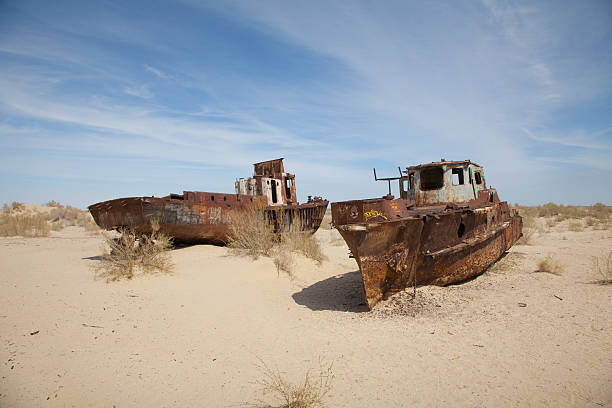
Once the world’s fourth-largest inland sea, the Aral Sea covered 68,000 square kilometers across Kazakhstan and Uzbekistan. Beginning in the 1960s, large-scale irrigation projects diverted water from the Amu Darya and Syr Darya rivers to support cotton farming. By 2007, the sea had shrunk to just 10% of its original size.

Today, the Aral Sea is a symbol of one of the world’s most severe environmental disasters. Salt-laden dust from the exposed seabed, estimated in the tens of billions of tons, is carried by wind as far as the Arctic and the Himalayas. This toxic dust, infused with pesticides and heavy metals, contaminates soil, water, and air, threatening regional public health and food security.

“The Aral Sea is a wound on the planet that cannot be ignored. We are launching a project that will create a barrier against salt and toxic dust, improve human health, and contribute to the future of the entire Earth,” said Ainur Karbozova, Director of the Bulat Utemuratov Foundation. “The uniqueness of this technology is that it can be applied worldwide from restoring burned-out forests to transforming deserts into green oases.”

A test planting on a one-hectare site is planned for March-April 2026. In 2027, the second phase will expand the pilot to 50 hectares.

“The use of the innovative E-seed technology will strengthen the soil structure, reduce dust and salt emissions, and ultimately increase the region’s biodiversity,” said Rakhat Kurmanbayev, Associate Professor at Korkyt Ata Kyzylorda University. “By 2040, we plan to stabilize the ecosystem over at least 50 square kilometers. The project will reduce air temperatures by 1-2°C and improve the microclimate.”

The initiative aligns with broader environmental goals outlined under Kazakhstan’s 2024-2026 chairmanship of IFAS, during which large-scale afforestation efforts aim to green more than 1 million hectares of the Aral seabed.

The Times of Central Asia previously reported the construction of a saxaul nursery in the Kyzylorda region. Located directly on the former seabed, the facility is expected to produce 1.5 million drought-resistant saxaul saplings per year.

According to the Ministry of Ecology and Natural Resources, Kazakhstan plans to afforest 1.1 million hectares of the dried seabed with saxaul. Between 2021 and 2024, 475,000 hectares were afforested, including 127,000 in 2024 alone. An additional 428,000 hectares are scheduled for planting in 2025.

By the end of 2025, Kazakhstan expects saxaul to cover approximately 40% of its portion of the dried Aral seabed. 

Glacier-Dependent Central Asian States to Benefit from ADB Climate Program

On October 29, the Green Climate Fund approved $250 million for Glaciers to Farms, a major adaptation initiative led by the Asian Development Bank (ADB) to build climate-resilient water and agricultural systems in glacier-dependent regions of Central Asia, the South Caucasus, and Pakistan.

The funding, provided mostly as grants, will complement a broader $3.25 billion investment by ADB over the next decade. The program spans nine countries: Armenia, Azerbaijan, Georgia, Kazakhstan, Kyrgyzstan, Pakistan, Tajikistan, Turkmenistan, and Uzbekistan. These states rely heavily on glacier- and snow-fed rivers for agriculture, drinking water, and electricity. Accelerated glacial melt poses a direct threat to ecosystems and rural livelihoods, particularly in areas where one in four jobs depends on agriculture.

By improving irrigation efficiency, expanding water storage, and investing in watershed management, the program seeks to reduce the growing frequency of droughts and floods linked to glacial melt.

Glaciers to Farms will focus on four major glacier-fed river basins: the Naryn and Pyanj in Central Asia, the Kura in the South Caucasus, and the Swat in Pakistan. These basins cover about 27 million hectares and are home to an estimated 13 million people.

The program will support glacier and climate assessments, upgrade monitoring networks, and introduce early warning systems to help communities prepare for glacial lake outburst floods and prolonged droughts.

Beyond infrastructure, Glaciers to Farms will strengthen the capacity of local banks to finance agricultural enterprises, particularly those led by women, as part of its inclusive development approach.

Climate-induced glacial retreat is a pressing concern for Central Asia, where glaciers supply up to 70 percent of river flows. The region contains more than 4,500 glacial lakes, many formed as a result of retreating ice. These lakes increase the risk of natural disasters such as lake outburst floods, avalanches, and landslides, threatening vulnerable mountain communities.

Recognizing the urgency, the United Nations General Assembly has declared 2025 the International Year of Glacier Preservation. Tajikistan hosted the International Conference on Glaciers’ Preservation in Dushanbe in May, highlighting the region’s central role in global climate adaptation efforts.

Uzbekistan Suspends New Gas Connections for Homes to Conserve Energy

Uzbekistan has halted the issuance of technical permits for new natural gas connections in residential and commercial buildings that use gas exclusively for heating or cooking. Minister of Energy Jurabek Mirzamahmudov announced the decision on October 28, according to Gazeta.uz.

The measure applies to newly built properties that consume gas purely for combustion rather than industrial production. “This does not concern only apartment buildings,” Mirzamahmudov said. “According to a Cabinet of Ministers resolution, starting this year, technical permits for gas connection are no longer issued to consumers who use gas solely for burning. However, if gas is used to create added value in industry, that is allowed, because resources are limited.”

Existing buildings already connected to the gas network will not be affected. In new developments, gas stoves will be replaced with electric ones, and heating will be provided through centralized or local boiler systems. The minister said that the rational use of resources has become a national priority, particularly given the country’s reliance on certain external energy supplies. “Since there are alternative sources, such as electric stoves for cooking and electricity for heating, they serve the same purpose,” he added.

Mirzamahmudov said that the country’s centralized heating network is being expanded during the current heating season, with several projects under development through public-private partnerships. “Urban networks are being modernized, and cogeneration facilities are under construction. For example, on November 18 in Samarkand, during an international forum, we plan to sign a heating supply agreement based on a public-private partnership with a Saudi company,” he noted, likely referring to a project in Nukus involving the Emirati firm Tadweer.

The policy shift comes amid a continued decline in domestic gas output. Uzbekistan’s natural gas production fell by 4.2% in the first two months of 2025 compared to the same period last year. Production has steadily dropped from 61.59 billion cubic meters in 2018 to 44.59 billion in 2024. The new restrictions reflect the government’s growing efforts to conserve resources and improve nationwide energy efficiency.