• KGS/USD = 0.01144 0%
  • KZT/USD = 0.00196 -0%
  • TJS/USD = 0.10899 -0%
  • UZS/USD = 0.00008 -0%
  • TMT/USD = 0.28490 0%
  • KGS/USD = 0.01144 0%
  • KZT/USD = 0.00196 -0%
  • TJS/USD = 0.10899 -0%
  • UZS/USD = 0.00008 -0%
  • TMT/USD = 0.28490 0%
  • KGS/USD = 0.01144 0%
  • KZT/USD = 0.00196 -0%
  • TJS/USD = 0.10899 -0%
  • UZS/USD = 0.00008 -0%
  • TMT/USD = 0.28490 0%
  • KGS/USD = 0.01144 0%
  • KZT/USD = 0.00196 -0%
  • TJS/USD = 0.10899 -0%
  • UZS/USD = 0.00008 -0%
  • TMT/USD = 0.28490 0%
  • KGS/USD = 0.01144 0%
  • KZT/USD = 0.00196 -0%
  • TJS/USD = 0.10899 -0%
  • UZS/USD = 0.00008 -0%
  • TMT/USD = 0.28490 0%
  • KGS/USD = 0.01144 0%
  • KZT/USD = 0.00196 -0%
  • TJS/USD = 0.10899 -0%
  • UZS/USD = 0.00008 -0%
  • TMT/USD = 0.28490 0%
  • KGS/USD = 0.01144 0%
  • KZT/USD = 0.00196 -0%
  • TJS/USD = 0.10899 -0%
  • UZS/USD = 0.00008 -0%
  • TMT/USD = 0.28490 0%
  • KGS/USD = 0.01144 0%
  • KZT/USD = 0.00196 -0%
  • TJS/USD = 0.10899 -0%
  • UZS/USD = 0.00008 -0%
  • TMT/USD = 0.28490 0%
08 December 2025

Uzbekistan and Afghanistan to Increase Trade Turnover to $3 Billion

The government portal of the Republic of Uzbekistan has reported that on August 17, a delegation led by the Prime Minister of the Republic of Uzbekistan, Abdulla Aripov, visited Afghanistan. President Mirziyoyev has previously stated that no positive result can be achieved without establishing an international dialogue with the current government in Afghanistan. In a special resolution of the United Nations General Assembly adopted in 2022 at Mirziyoyev’s initiative, it was recognized that Afghanistan has a special place in establishing relations between Central Asia and South Asia.

As the report states, Uzbekistan was one of the first to establish a constructive and mutually acceptable dialogue with the interim government of Afghanistan.

During the meetings, the development of trade relations with Afghanistan, the promotion of effective cooperation in the field of energy to a new level, the implementation of joint development projects in copper, iron, oil and gas fields, transport and logistics, agriculture and water management, education, and further development of inter-regional relations were discussed.

It was also noted that there are possibilities to increase mutual trade turnover to $1 billion this year, and to $3 billion shortly after. It was reported that agreements on the protection of bilateral investments and preferential trade would give great impetus to the further development of trade and economic cooperation.

Former Minister of Foreign Affairs and Director of the Central Asia International Institute, Vladimir Norov, wrote on LinkedIn that 35 contracts with a total value of $2.5 billion were signed between the government of Uzbekistan and the Taliban. “They were signed yesterday in the presence of Taliban Deputy Prime Minister for Economic Affairs, Abdul-Ghani Baradar and Uzbek Prime Minister, Abdulla Aripov. Of these, 12 documents are investment documents worth $1.4 billion, and 13 are trade documents worth $1.1 billion.
Uzbekistan will train 100 Afghan railway specialists and accept 500 Afghan students for a grant work that has begun to simplify the issuance of visas to Uzbekistan for Afghan students and businessmen,” Norov wrote.

One of the main announcements was the introduction of a Preferential Trade Agreement, which will come into effect on October 1, 2024. This agreement will eliminate import duties on 14 different products, simplify the process for exporters, and increase trade flow between the two countries. To further support cross-border trade, the Ayritom-Khayraton border post has switched to 24-hour working hours starting August 1, 2024.

Previously, The Times of Central Asia reported that the Uzbek side has finished repairing the Naibabad railway station in Afghanistan.

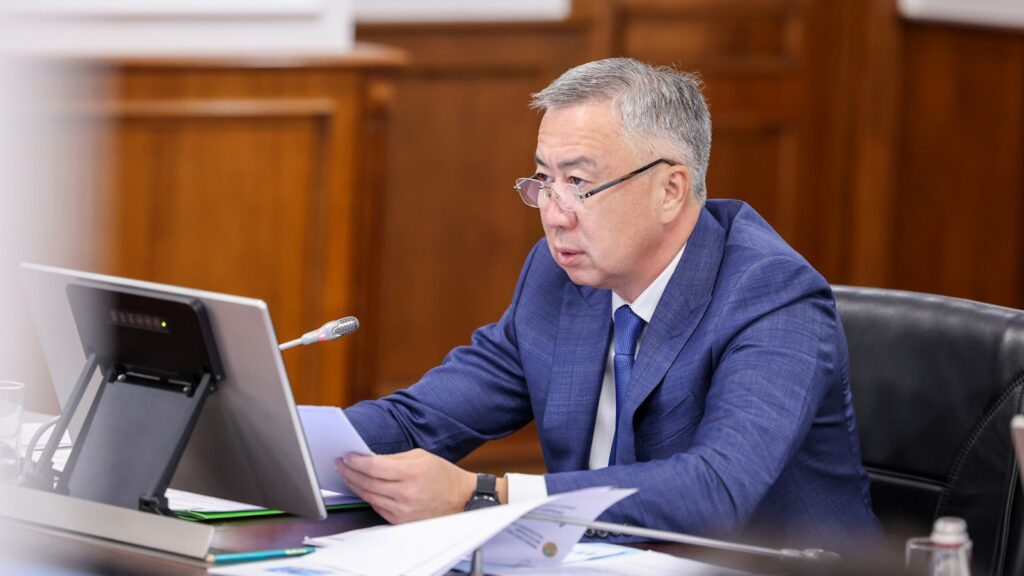
Kazakh Deputy Prime Minister Zhumangarin: Astana Will Not “Blindly Follow” Anti-Russian Sanctions

In an interview with Bloomberg, Kazakhstan’s Deputy Prime Minister and Minister of Trade and Integration, Serik Zhumangarin said the country does not intend to “blindly follow” Western sanctions against Russia if they harm Kazakhstan’s economy.

According to Zhumangarin, Kazakhstan will comply with the sanctions, but will also consider the impact on the domestic market and the country’s economic interests. The statement responded to the concerns of Kazakh entrepreneurs, who are already facing difficulties due to disruptions in trade chains and logistical problems caused by the sanctions.

The Deputy Prime Minister emphasized that Western sanctions against Russia have caused disproportionate damage to his country. According to the official, Kazakh producers are suffering huge losses, while their former Russian customers have reoriented themselves to suppliers inside Russia and “continue to prosper.” Without the restrictions, “profits would have stayed in Kazakhstan,” the Deputy Prime Minister said. Instead, he said, they are now “going to those against whom” the West has imposed sanctions.

The Kazakh Deputy Prime Minister noted that the sanctions imposed against Russia had already hurt Kazakhstan’s economy. In particular, in terms of the breakdown of logistics chains and decreased exports to Russia, one of Kazakhstan’s largest trading partners.

Zhumangarin stated that Astana will continue to adhere to Western restrictions, but stressed that in the context of global instability, Kazakhstan is seeking to pursue a balanced policy to minimize the impact of sanctions at home and maintain stability in the domestic market. Kazakhstan adheres to an independent policy and continues to develop trade relations with other countries, such as Iran and China, Zhumangarin noted. In particular, Kazakhstan is studying the possibility of using routes across the Caspian Sea to expand trade to the south. Kazakhstan is also negotiating with Western countries to allow the sale of Kazakhstani goods to Iran, or to use the country for transit.

Kazakhstan’s position reflects its desire to maintain economic independence and minimize the risks associated with external sanctions. At the same time, Kazakhstan is currently complying with international rules and is in dialog with Western countries to find compromise solutions that will avoid further pressure on the economy.

Thus, remaining faithful to its international obligations, Kazakhstan seeks to protect its national interests, maintain stability, and develop its economy in a difficult foreign policy environment.

Central Asians Beaten and Deported from Russia

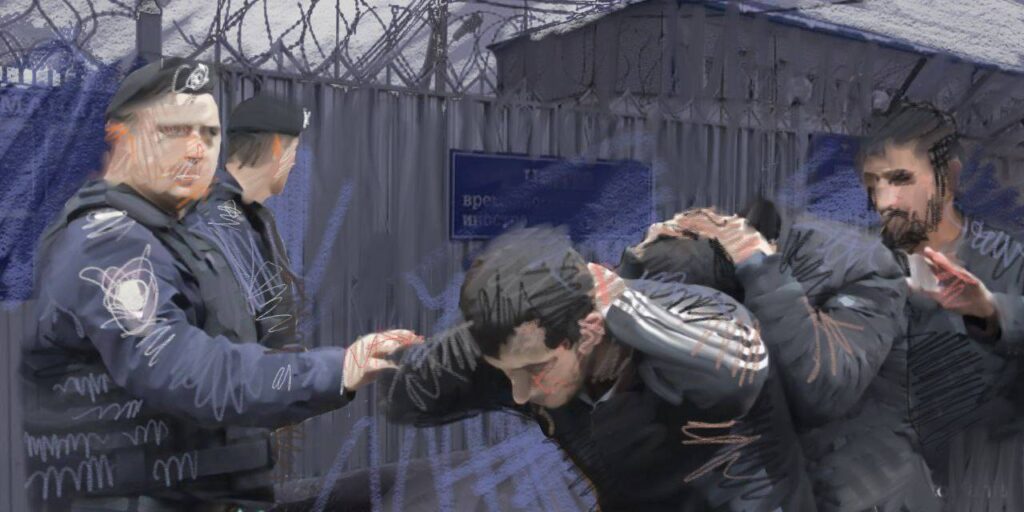
The punishment for many Central Asians in Russia whose work or residency documents are not in order is pain and humiliation, and then possibly deportation. Xenophobia targeting Central Asians in Russia has been on the rise since the March 22 terrorist attack on Moscow’s Crocus City Hall that left more than 140 people dead. Russian authorities apprehended a group of ethnic Tajiks who allegedly carried out the attack and after that the level of prejudice against Central Asians in Russia, which has always existed, dramatically worsened.

The treatment of Central Asians at the Sakharovo migration center on the outskirts of Moscow is an example. Moscow courts are likely to send Central Asians caught with document problems to the Sakharovo center.

Radio Free Europe’s Kyrgyz Service interviewed several people who passed through the Sakharovo center. Their descriptions shed light on the conditions inside.

One man who spent 18 days in the center said, “The day we entered there, they intimidated us, forced us to walk in single file, run fast… then they examined us and beat us with a stun gun.”

That jibes with another man’s description. “They call your last name, then you go out into the corridor and run. There they hit you on the back of the head and tell you to ‘run.’” Then, the man continued, “They made me face the wall, forced me to raise my arms up, spread my legs, and started hitting me with a stun gun.”

There is an anti-Islamic element to the treatment of detainees at Sakharovo.

A different person remembered this about his detention. “They fed us food with pork. Since we were hungry, we removed the meat and ate what was left.” He said there were some people who recited their daily prayers in their rooms. “When one guy was saying namaz, the guards entered. Then one of them (the guards) hit him in the face twice.” When the person continued saying his prayers, the guards said, “Let him go to Kyrgyzstan, Tajikistan, Uzbekistan, and read his prayer there.”

Some of the detainees with beards were forcibly shaved.

Batygul Moldobayeva is from Kyrgyzstan. She was detained in Moscow this summer with an expired work permit and sent to Sakharovo. Moldobayeva said the guards yelled at women detainees and were rude to them. She added that sometimes the guards “asked them to be their ‘temporary wives.’” Moldobayeva said there were pregnant women in the center, some as far along as six months, and the guards did not pay any attention to their condition. According to Moldobayeva, there were some Kyrgyz citizens at Sakharovo who had been there for three or four months.

Askar Uskenbayev is another Kyrgyz citizen who was detained in Moscow in mid-June and sent to Sakharovo. He said he met fellow Kyrgyz citizens who had been there six months.

After being deported back to Kyrgyzstan, Moldobayeva posted about her experience on social media and warned Kyrgyz citizens to be sure all their documents were in order if they planned on traveling to and staying in Russia. She also confirmed in her posts that guards at the center beat some of the male detainees.

Another common complaint from detainees was that the air-conditioners at the center made it uncomfortably cold. Those detained at Sakharovo were let out into a courtyard once a day and some recalled there were bars all around the yard and even overhead, the sort of cage one would expect in a prison.

A big problem was that all the detainees’ phones were confiscated when they entered Sakharovo. They were allowed to use the center’s push-button telephones once every four days, but this was problematic as many people did not know from memory the phone numbers of the people they wanted to call. Uskenbayev said it was possible “to buy” your mobile phone back from the guards for 15,000 rubles.

Center officials also try to recruit young men detained at Sakharovo to join the Russian army and fight in Ukraine.

Kyrgyzstan’s Labor Ministry says it regularly sends representatives to Sakharovo to check on Kyrgyz nationals held there. Some of the former Sakharovo detainees said they complained to the Kyrgyz Embassy about torture at the center. However, Russian authorities deny the allegations, so there is not much the Kyrgyz government can do to help citizens detained at the center.

Zhandarbek Aitnazaov of Kyrgyzstan’s Ministry of Labor, Social Security and Labor Migration said in an interview at the end of July that “in September a raid called ‘Illegal’ will be conducted in Russia against foreign citizens,” and warned Kyrgyz not to travel to Russia until the situation stabilizes.

As of mid- July, there were 136 Tajik citizens being held at Sakharovo, and 173 Kyrgyz citizens. None of the people at Sakharovo are dangerous criminals, yet some seem to be treated as if they had been sent to the gulag.

The accounts given here are from Kyrgyz citizens, and Kyrgyzstan is a member of the Russian-led Eurasian Economic Union (EEU).

Under EEU agreements, Kyrgyz citizens in Russia should enjoy greater labor rights than Tajiks or Uzbeks, whose countries are not in the EEU, which raises the question that if Kyrgyz are being treated this way at Sakharovo, how are Tajiks, Uzbeks, and others from non-EEU countries being treated?

Elderly Kyrgyz Woman, Who Told of Mass Burial Site From 1930s Purges, Is Mourned

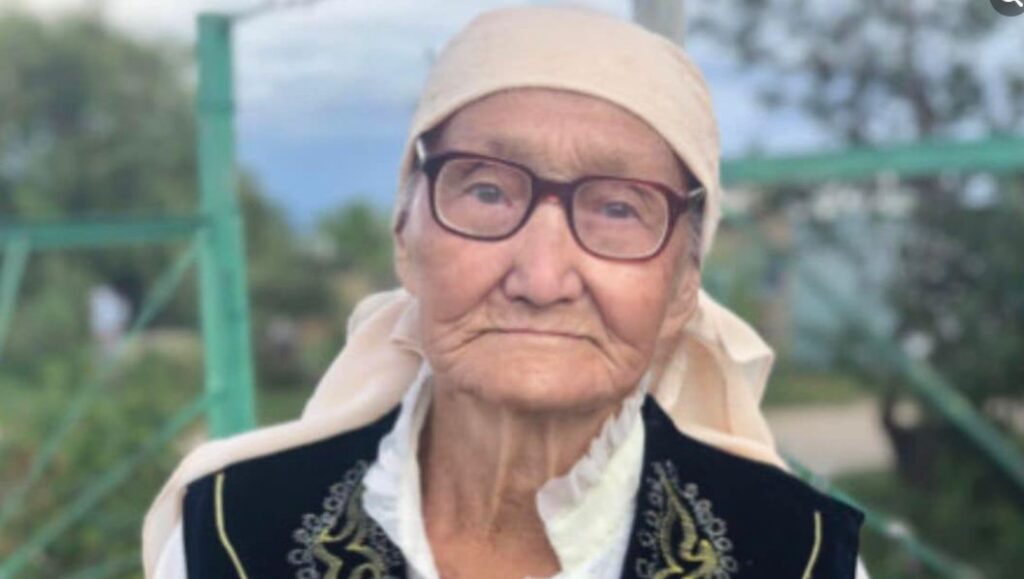
Bubuira Kydyralieva, a Kyrgyz woman who led authorities to a mass grave of victims of 1930s Stalinist purges that became a centerpiece of Kyrgyzstan’s national identity after Soviet rule, has died at the age of 96.

Kydyralieva, who died on Wednesday, had provided details about the burial site at Chon-Tash, a village south of the capital of Bishkek, around the time of Kyrgyzstan’s independence from the Soviet Union in 1991. The revelation led to the construction of the nearby Ata-Beyit Memorial Complex, a tribute to about 140 people who were shot and buried at an abandoned brick factory in the village as well as the several tens of thousands believed to have been killed in Kyrgyzstan during years of repression under Soviet leader Josef Stalin.

After her secret came to light, Kydyralieva was hailed by Kyrgyz officials as a patriotic citizen who helped to forge the character of the young nation by revealing the fate of a group of intellectuals and other prominent figures who were marked for death by Soviet enforcers. She had carried the burden of knowing for many years, learning about the burial site from her father, a local worker, during the Soviet era, but only finding a receptive audience for the information as Kyrgyzstan moved toward independence and a more open political climate.

“We would not know many of our country’s founding fathers” if Kydyralieva had not spoken up, said Kyrgyz President Sadyr Japarov, referring to her affectionately as “Mother Bubuira.”

She made “an immeasurable contribution to clarifying our history,” enabling Kyrgyzstan to learn about the ancestors who died while laying the groundwork for the eventual creation of a separate state, Japarov said on Facebook.

After Kydyralieva told a Kyrgyz national security official about the mass grave, exhumations at Chon-Tash began promptly in 1991. The bodies were found, and a reburial service with government honors was held. In 2000, Kydyralieva was awarded Kyrgyzstan’s medal of courage.

The Ata-Beyit site was later used to commemorate those who died during the ouster of an authoritarian government in 2010 as well as a 1916 uprising during Russian Tsarist rule. Foreign dignitaries visit the site. Some Kyrgyz politicians have said more funding is needed to prevent the complex falling into disrepair.

An Exploration of Identity by Kazakh Artist Gulnur Mukazhanova

There are some abstract works that can feel like a spiritual encounter.

We are all familiar with the work of Mark Rothko, a master in materializing emotions and bringing viewers to transcendence through simple hues, nuances, and color gradients.

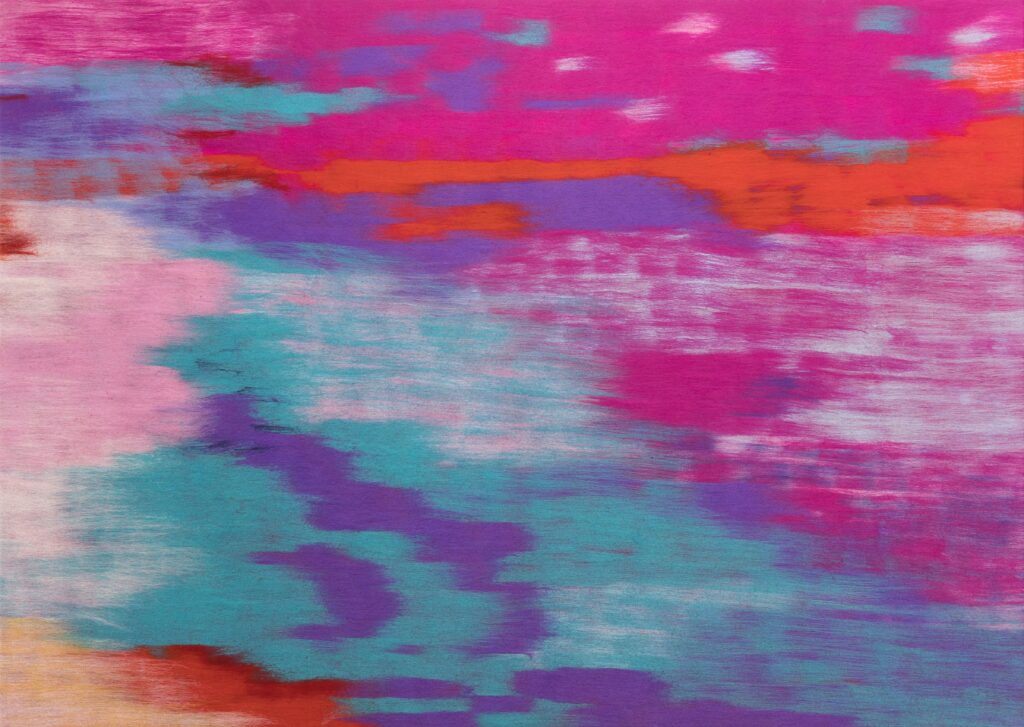
Far fewer people however, will be aware of Gulnur Mukazhanova, a Kazakh artist whose felt paintings are imbued with a tenderness that offers viewers solace and comfort, and grounded in hope, open new horizons.

When I first saw the artist’s work at the Parisian art fair ‘Asia Now’ two years ago, I was immediately struck by her unique use of wool and felt in the creation of abstract art. Delicate and evocative at once, her work successfully elevates craft to the status of fine art.

Photo: Estefania Landesmann: Gulnar at work

Born in Semipalatinsk, Kazakhstan, shortly before the end of the USSR, the artist has been working with textiles since beginning her practice, and influenced by Kazakh traditions, employs felt as a primary material.

Mukazhanova studied at the Art Academy in Almaty and later, at the Kunst Hochschule in Berlin Weißensee. She has now lived and worked in Berlin for many years and it was here, that she started to process her Kazakh origins, heritage, and the state of society, with an international audience in mind.

Spiritual and emotional, her abstractions are informed by issues concerning identity and the transformation of traditional values of her  native culture in the age of globalization.

TCA caught up with Gulnur to discuss her latest work, her creative process, and how her Kazakh origins continue to influence her art.

TCA: What initially drew you to art and how did your journey begin?

GM: My earliest memories involve drawing animals when I was around five years old. My cousin, also an artist, had a significant influence on me and was the first person to open my eyes to the world of art.

I studied art at the university in Kazakhstan and then moved to Berlin, initially to study textile design. However, I quickly realized that design wasn’t my path and so, shifted my focus to more experimental approaches with textiles. By the end of my studies in Berlin, I was fully immersed in working with felt and it has remained a central part of my practice ever since.
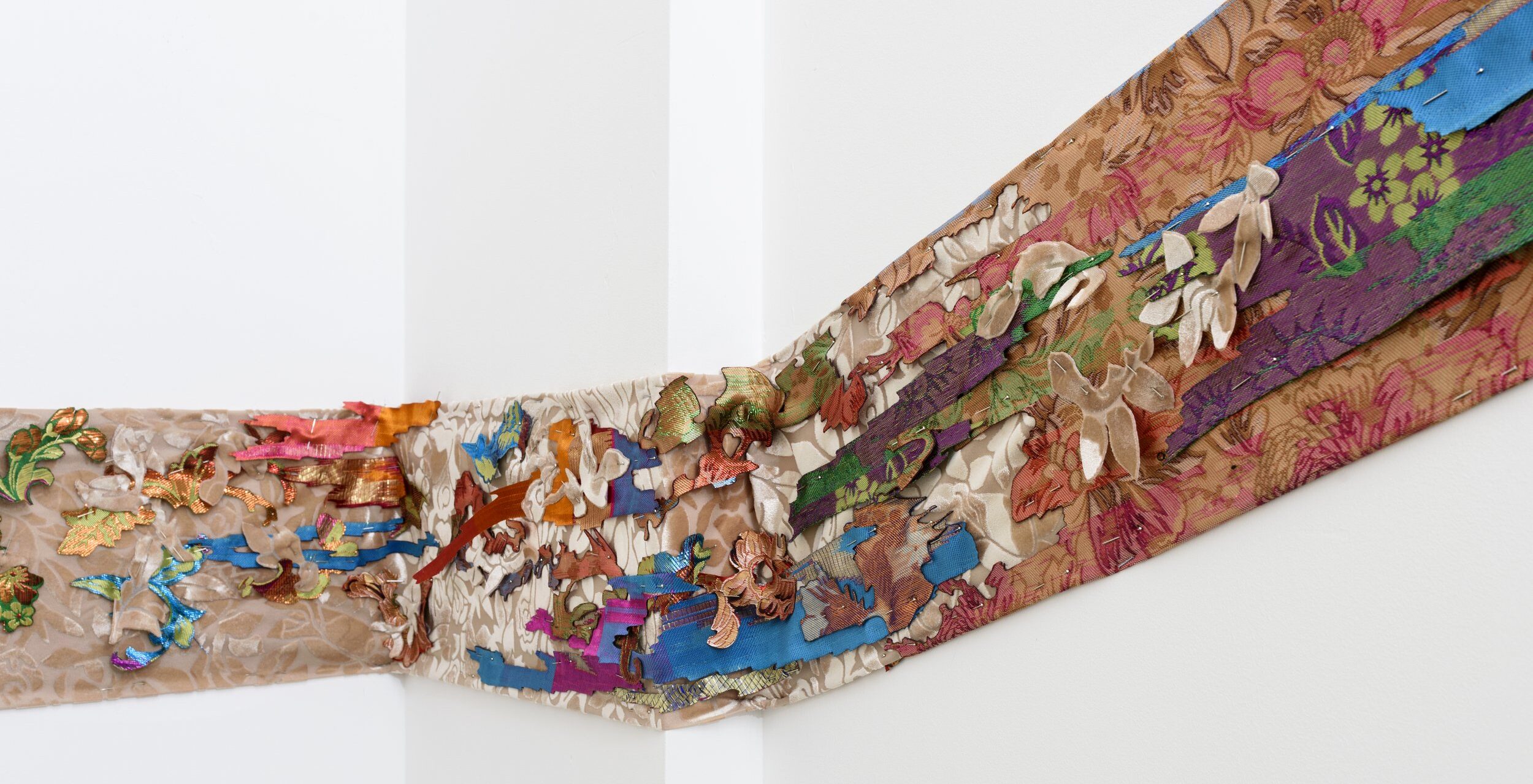
Photo: Thierry Bal : Öliara & the Dark Moon

TCA: Your work often carries deep emotional and historical weight, as illustrated by your series “Öliara: The Dark Moon” and your abstract self-portraits. How do you approach abstraction in these works?

GM: “Öliara: The Dark Moon” was a solo show in Mimosa House in London that dealt with dark periods in Kazakh history, particularly the tragic events of “Bloody January” 2022. The series reflects on life, death, and the fragile nature of existence; themes that are unfortunately all too relevant in our world today.

The felt pieces in this series are abstract allowing them a deep emotional resonance which would not be afforded by a literal depiction of the events that inspired them. My ongoing self-portraits series continue to explore these themes but in a more personal way.

Photo: Gulnur Mukazhanova: Self-portrait

TCA: How do you choose titles for your works? Do they guide your approach to abstraction?

GM: Titles often come from the emotional or conceptual space that I’m in during the creative process. For example, “Dark Moon” relates to a very specific period of darkness in Kazakhstan’s history, while my self-portraits are more about my internal world. The titles help to anchor the abstraction, giving the viewer a way to connect with the work even when it is not immediately recognizable as a portrait or a narrative.

TCA: Why did you choose felt as your primary medium?

GM: Amidst exploring other fabrics, I continue to work primarily with felt. To me, felt has a strong connection to my roots and carries a lot of emotional weight. It’s a material that feels both grounding and expressive, and has an organic energy which I think resonates deeply with people, especially in Kazakhstan.

TCA: How does the reception of you work abroad differ to that in Kazakhstan?

GM: The feedback is varied but generally positive. People respond strongly to the work, some find hope in it, while others connecting with it on a more personal level, see reflections of their own history and culture.

Exhibiting in Kazakhstan is particularly important to me because the work speaks directly to the Kazakh experience. However, when I show my work abroad, like in Europe, I aim to address global issues using Kazakhstan as an example. The themes I explore—political and social tensions—are universal despite being rooted in a specific context.
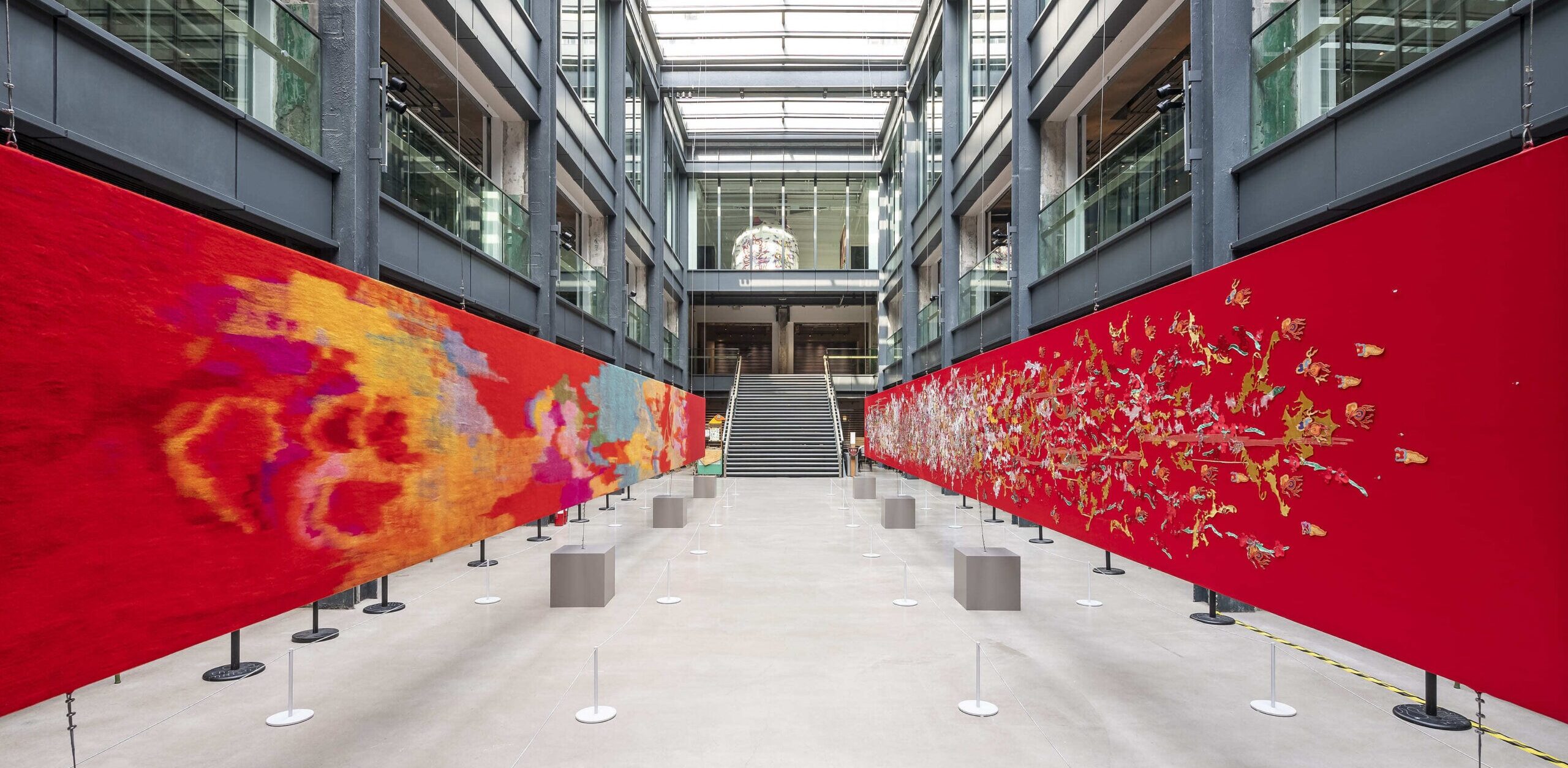
Photo: artist: Installation, Hong Kong

TCA: What can you tell us about “Shadows of Hope,” your current solo show at the Aspan Gallery?

GM: The show in Almaty is a continuation of an installation exhibited in Hong Kong in 2023 and created during my residency at the converted textile factory Mill6CHAT.

The original was a 16-meter-long felt artwork which I intentionally left unfinished at one end, and the new installation, spanning the perimeter of the gallery space, runs to over 41 meters.

Conceptually, it represents ongoing conflicts and societal issues in Kazakhstan. The broken, fragmented line reflects the emotional and psychological state of the country, especially after the traumatic events of the past two years, especially in January 2022.

For me, this work is also a metaphor for the Kazakh steppe, with its endless horizons symbolizing both its history and trauma, and hope for a better future. It’s a deeply personal piece, reflecting how I navigate these complex feelings through my art.

TCA: How did the centerpiece of the exhibition evolve?

GM: For me, the process is just as important as the finished piece. My artistic practice is akin to one continuous journey, where each work is part of a larger whole. The evolution of this installation is likely to continue since I approach my work with neither a fixed theme nor endpoint.

Each piece emerges intuitively, reflecting my emotional state during the creative process. Some days, the colours are vibrant and mixed, while on others, they might be starker and more contrasting. I let the materials guide me.
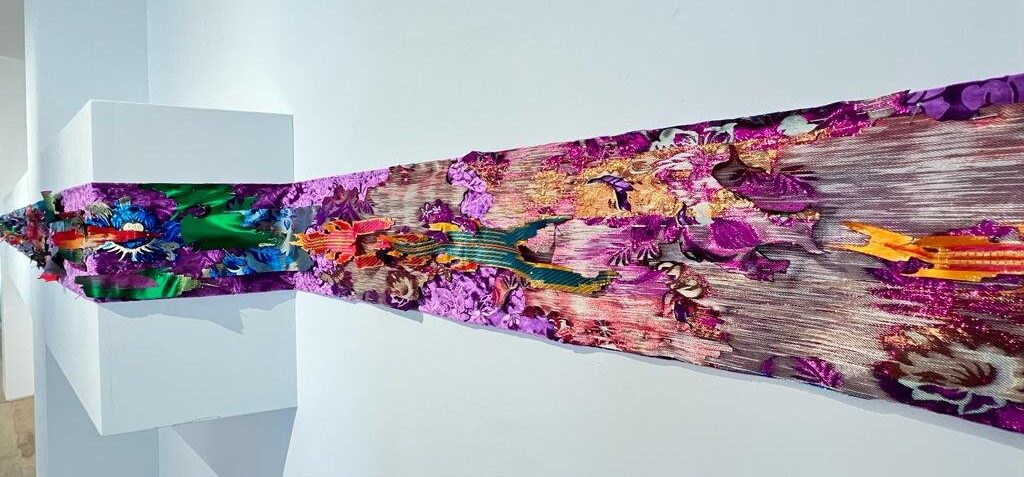
Photo: Aspan Gallery

TCA: What can we expect from your upcoming projects?

GM: I am currently working on several projects, including a group show in London this September and another in Milan in October, featuring Central Asian artists. It will be exciting to see how these works resonate with new audiences.

In terms of artistic research, I have been working with darker colors, especially black which I have always avoided in preference for brighter colors with a more positive energy. However, while preparing for the Aspan show, I found myself drawn to black. It felt like a natural evolution; a way of confronting my anxieties head-on. Using black allowed me to express a deeper, perhaps more sombre, emotional landscape. It’s a new direction for me, and a bit scary, but I am curious to see where it will lead.

“Shadows of Hope” will be exhibited at the Aspan Gallery, Almaty, until 22 September 2024.

The Yurt : More Than a Humble Abode

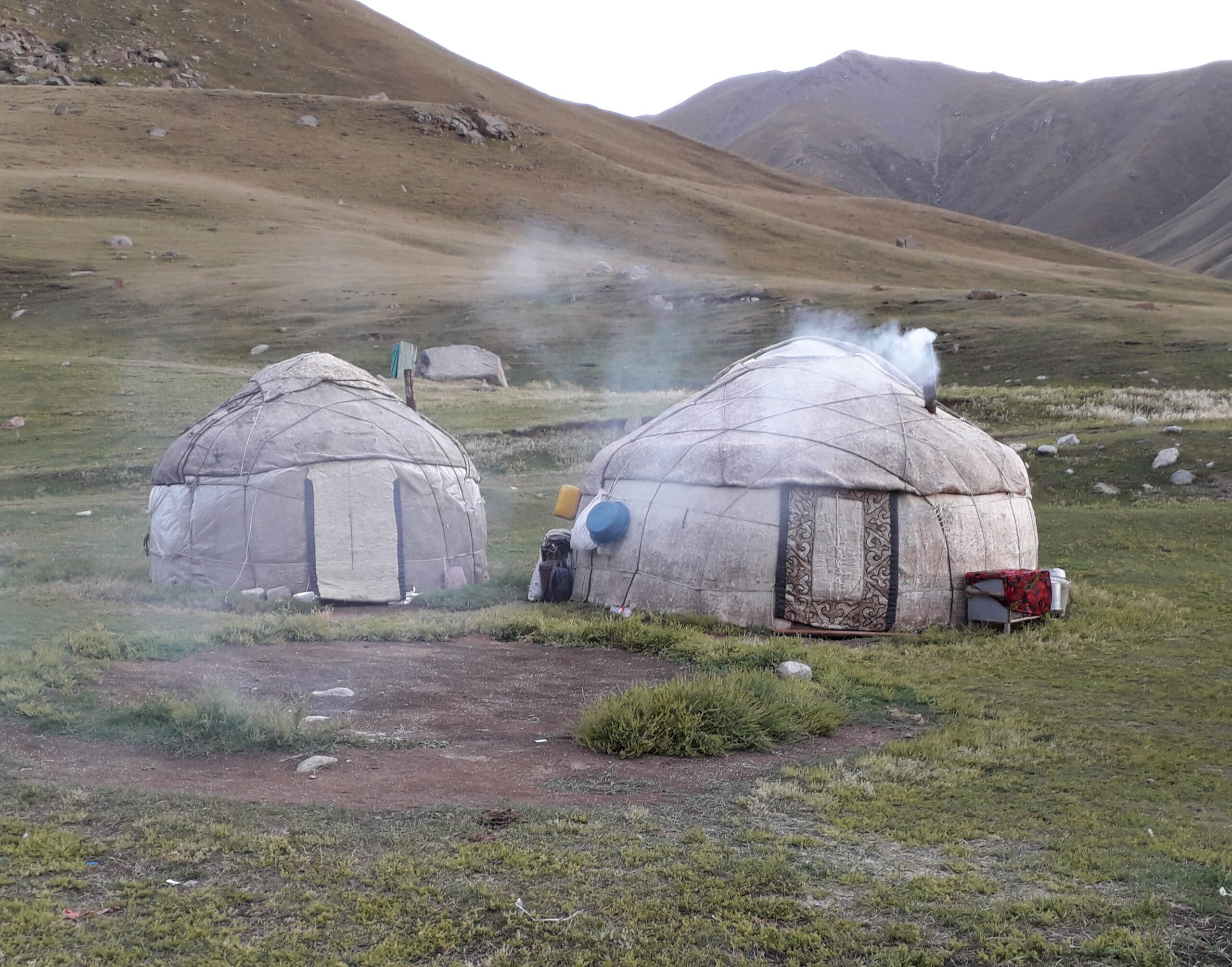
Attracted by the region’s spectacular, natural landscape, an ever-increasing number of tourists descends on Central Asia each year. For many, one of the highlights, is to experience a night or two in yurts, traditional, humble felt-clad tents which in use for over 2,500 years, were homes to most of Central Asia’s nomads until the 1930’s.

Photo LH: herders’ yurts

Today’s Kazakh, and Kyrgyz herders are semi-nomadic. Winters are spent in villages but during the warmer months, they migrate with their animals to summer pastures and like their ancestors before them,  live in yurts.

More than a humble abode, the yurt encapsulates the cultural, philosophical, and aesthetic values of both Kazakh and Kyrgyz people; a fact recognized by its inclusion in 2014, in the UNESCO Representative List of Intangible Cultural Heritage of Humanity.

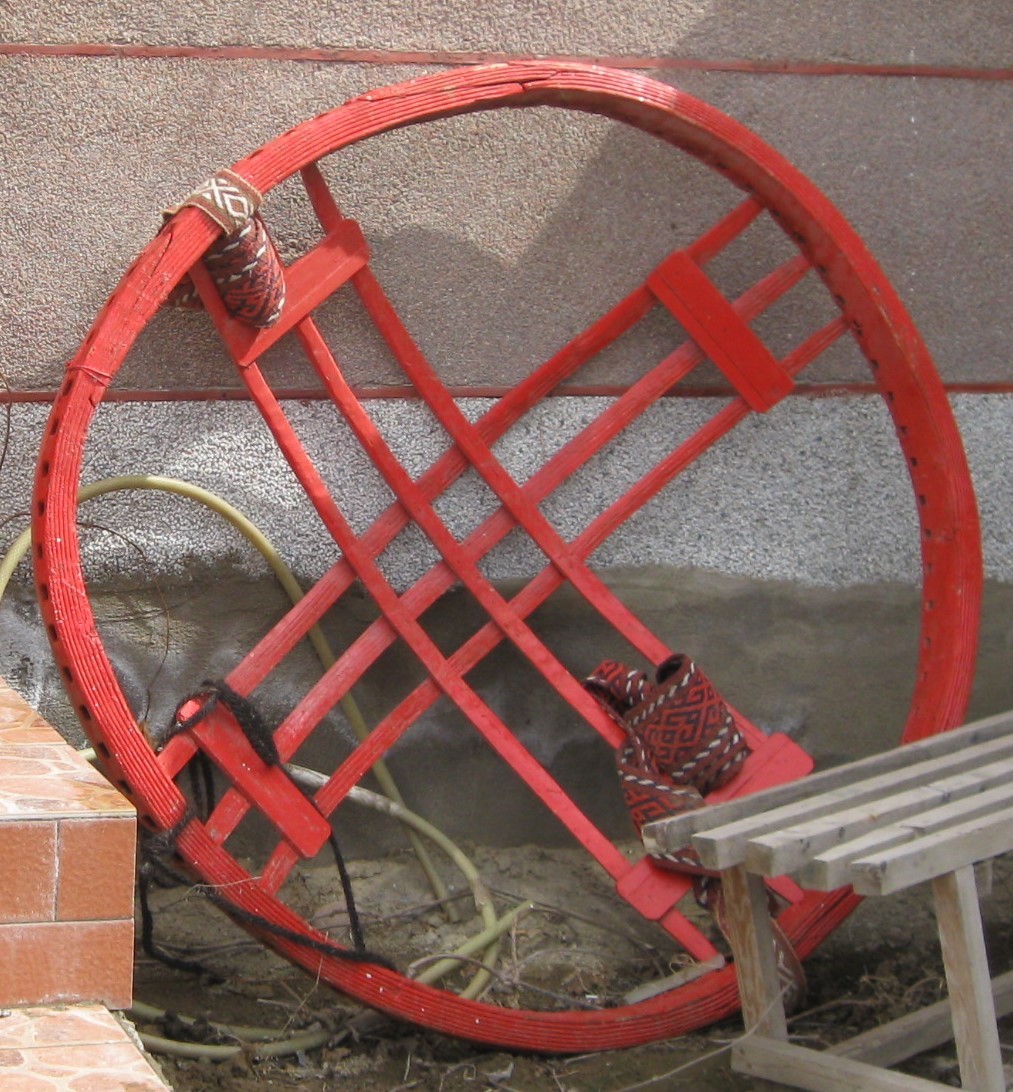
Photo LH: shanyrak

To gain a better understanding of the cultural significance of the Kazakh yurt in particular, TCA spoke to Art historian Raushan Yeschanova who explained:

“A yurt is not just a dwelling; it is a space that reflects the entire philosophy of Kazakh nomadic culture. It is a house that carries the idea of harmony, freedom and connection with nature. The yurt serves not only as a home, but also as a place for rituals, festivals, and gatherings, making it a central element of Kazakh society.”

A yurt consists of several key elements, each of which has a meaning beyond its mere function.

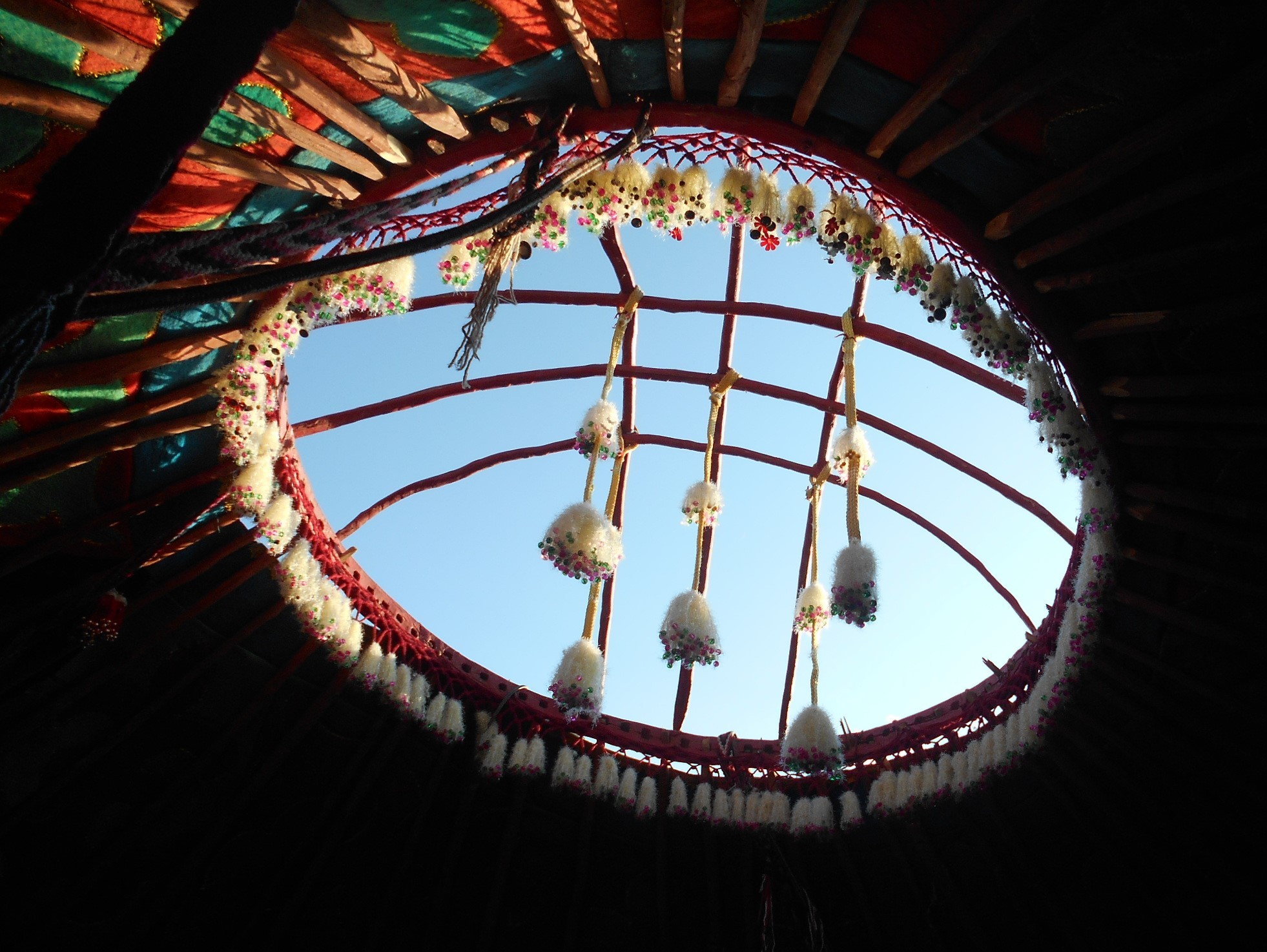
Photo LH: shanyrak in situ

The Shanyrak or Crown

The most cherished component of the yurt, carefully preserved and passed down generations from fathers to sons, the ‘crown’ is a circular structure of steam-bent wood located in the center of the roof to ventilate the interior and allow the escape of smoke from the stove. The cultural importance of the Kazakh shanyrak and Kyrgyz tunduk, is such that it features on the national flags of both Kazakhstan and Kyrgyzstan.

Regarding rules in erecting the yurt, Raushan states: “In spite of the fact that construction is, as they say, a ‘man’s business’, women are actively engaged in the construction of the yurt which takes up to three hours. Its assembly is a special ritual in which each element has its own sacral meaning. Only men are permitted to handle the shanyrak which is lifted to the upper part of the frame with a forked pole known as a bakan. Perceived as a symbol of masculinity, women are forbidden to touch the bakan except during childbirth when it is retained in place for them to lean on to ease their labour.”

Kerege

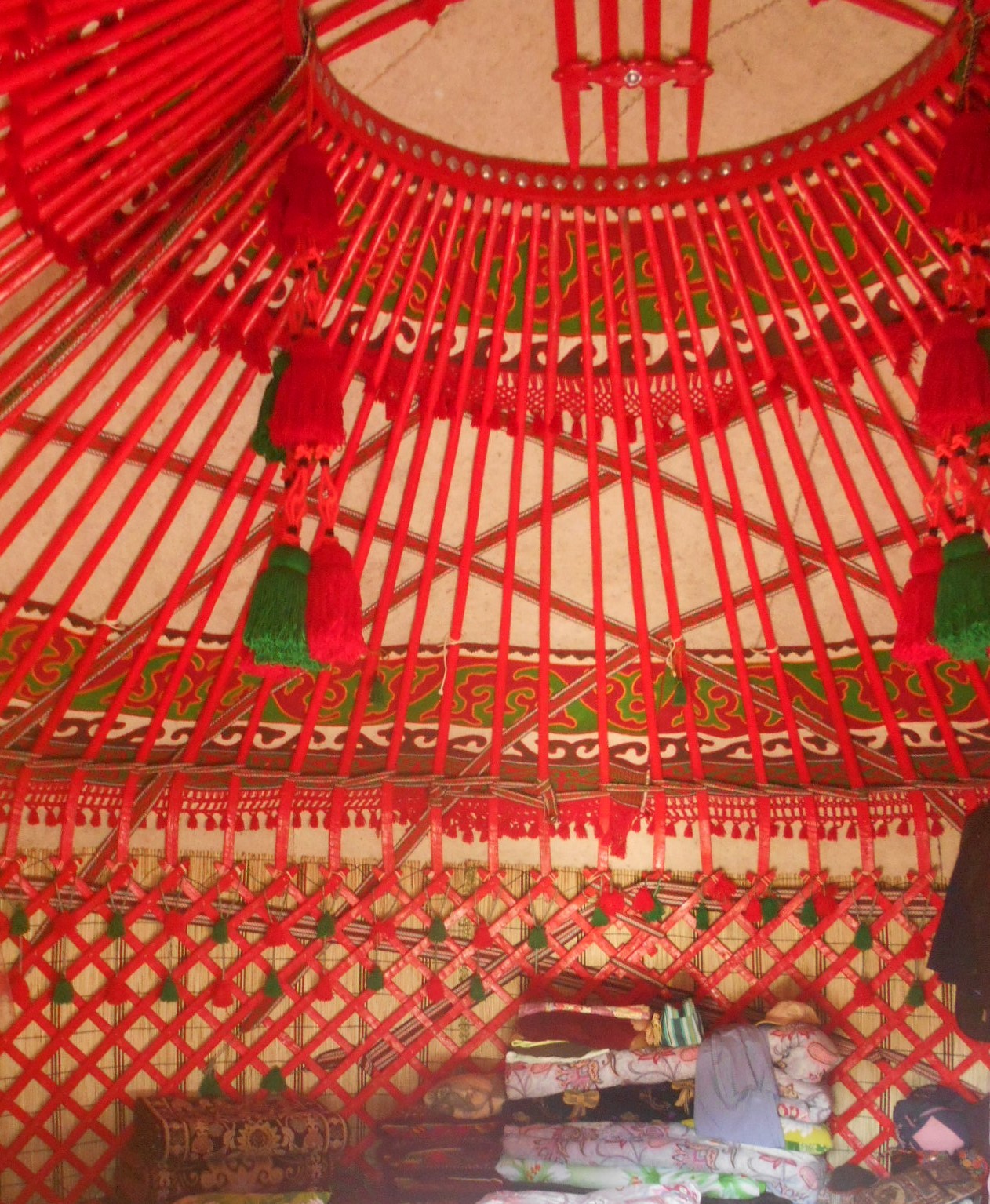
The circular foundation of the yurt comprises four or more sections of folding wooden lattice linked together on diagonal axes and to the doorframe with braided rope known as saganak.

Uyk

Traditionally fashioned from wild willow, these long, steam-bent, or straight wooden poles, extend from the kerege and slot into the crown, to form the roof of the yurt.

photo LH: yurt interior

Yerenek

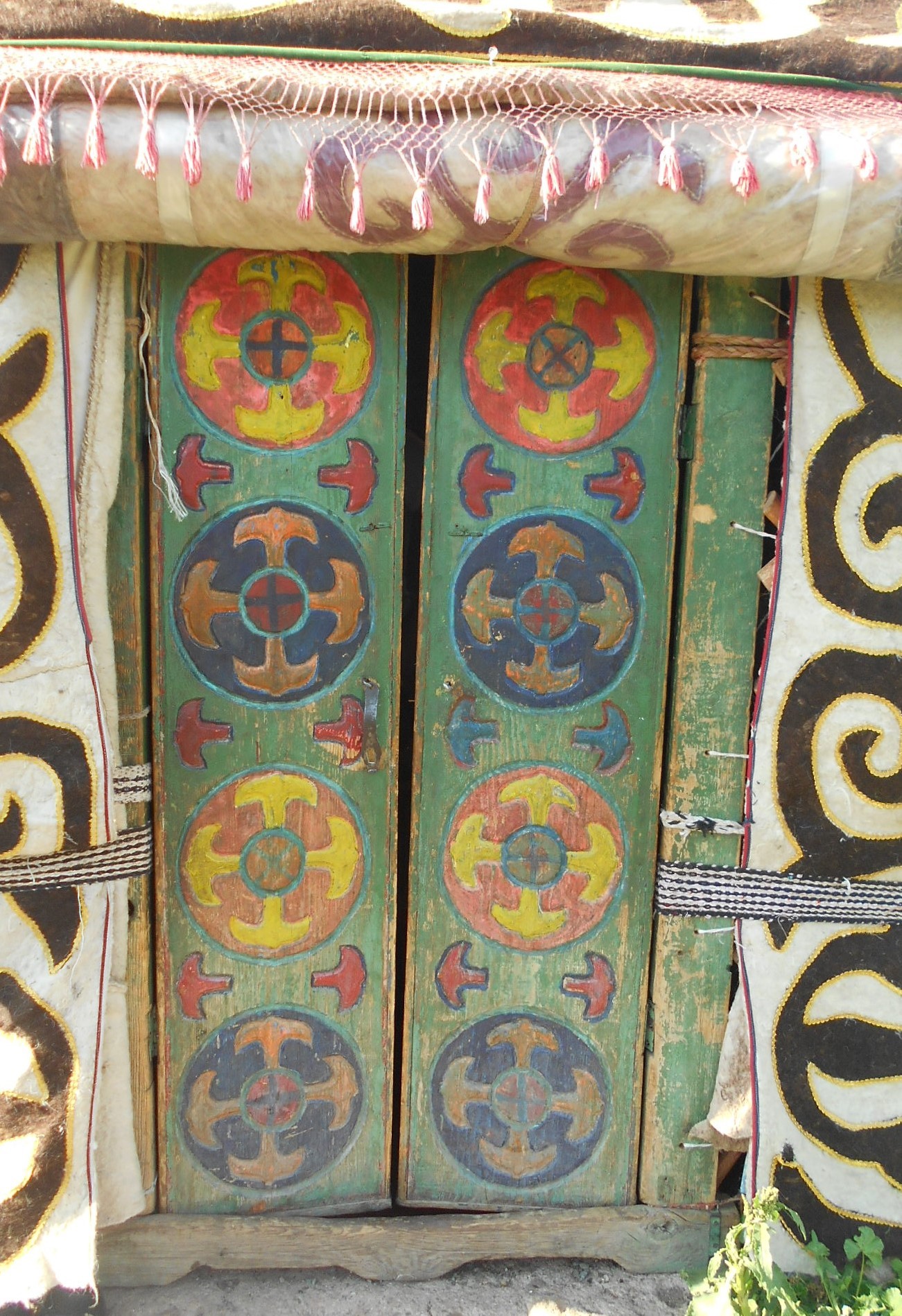
The yurt entrance consists of three parts: a wooden jamb, often embellished with carved designs, a colourful, painted wooden door, and an embroidered felt cape.

Photo LH: traditional doorway

The frame of the yurt is clad with felt, providing warmth and protection from the elements and Raushan notes: “Three types of felt are used to clad the frame, differing in size and shape according to function: turyrlyk for the base; uzyuk for the dome, and tundik covering the shanyrak. The creamy-white felt of pure wool, was traditionally made during the summer following specific, ancient rituals. The edges of the cloths are laced with hand-braided cord and each section, decorated with appliqued patterns of traditional geometric and zoomorphic motifs to denote the owners’ status.

“I personally believe,” said Raushan, “ that a yurt has a feminine soul, and like a woman, her body is adorned with robes and jewelry. Traditional measurements for different elements relate to parts of the human body and when we talk about the different sections, we can imagine talking about a living being. For example, each notch into which the dome’s poles are inserted is known as a kez meaning ‘eye’; the frame resembles the joints in the human hand, shoulder and forearm, reaching up to the palm-like shanyrak. The walls of the kerege are curved, echoing the shape of the human spine. The name for the dome’s felt cladding translates as ‘cape’ and the lower covering is called the hem. All the decorations of the yurt are vibrantly colourful, and what girl finds it impossible to love beautiful clothes and jewellery?!”

On a final note, Raushan stressed that in contrast to those of other Turkic peoples, Kazakh yurts are defined by their purpose, with guest yurts known as konak uy, those for newly-weds, as otau, and those erected to store and prepare food for special celebrations, as uy.

 In recent years, comparatively luxurious  yurts have become the go-to choice in glamping throughout Europe, but for Kazakhs and indeed, many Central Asian peoples, the traditional yurt is not just a dwelling, but a highly important symbol of their culture, traditions, and family values.