• KGS/USD = 0.01144 0%
  • KZT/USD = 0.00215 0%
  • TJS/USD = 0.10599 -0.28%
  • UZS/USD = 0.00008 0%
  • TMT/USD = 0.28571 0%
  • KGS/USD = 0.01144 0%
  • KZT/USD = 0.00215 0%
  • TJS/USD = 0.10599 -0.28%
  • UZS/USD = 0.00008 0%
  • TMT/USD = 0.28571 0%
  • KGS/USD = 0.01144 0%
  • KZT/USD = 0.00215 0%
  • TJS/USD = 0.10599 -0.28%
  • UZS/USD = 0.00008 0%
  • TMT/USD = 0.28571 0%
  • KGS/USD = 0.01144 0%
  • KZT/USD = 0.00215 0%
  • TJS/USD = 0.10599 -0.28%
  • UZS/USD = 0.00008 0%
  • TMT/USD = 0.28571 0%
  • KGS/USD = 0.01144 0%
  • KZT/USD = 0.00215 0%
  • TJS/USD = 0.10599 -0.28%
  • UZS/USD = 0.00008 0%
  • TMT/USD = 0.28571 0%
  • KGS/USD = 0.01144 0%
  • KZT/USD = 0.00215 0%
  • TJS/USD = 0.10599 -0.28%
  • UZS/USD = 0.00008 0%
  • TMT/USD = 0.28571 0%
  • KGS/USD = 0.01144 0%
  • KZT/USD = 0.00215 0%
  • TJS/USD = 0.10599 -0.28%
  • UZS/USD = 0.00008 0%
  • TMT/USD = 0.28571 0%
  • KGS/USD = 0.01144 0%
  • KZT/USD = 0.00215 0%
  • TJS/USD = 0.10599 -0.28%
  • UZS/USD = 0.00008 0%
  • TMT/USD = 0.28571 0%

Uzbekistan to Restrict Foreign Access to Farmland as Land Reforms Advance

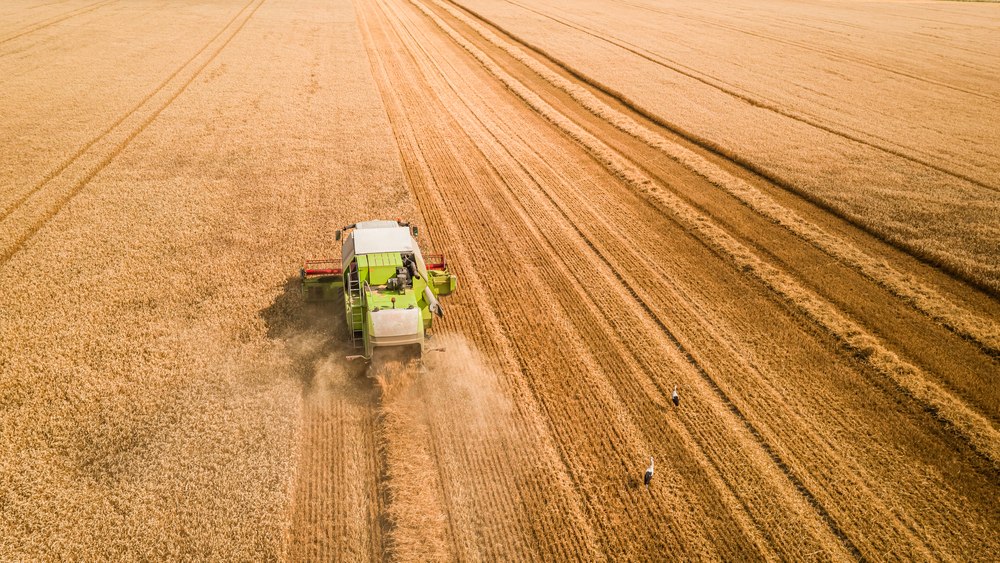
Uzbekistan plans to stop offering agricultural land lease rights to foreign investors through auctions as part of a broader effort to improve land use efficiency, according to the presidential press service.

The measures were presented during a government briefing on land reform, where officials outlined changes to the current system. Over the past five years, Uzbekistan has shifted to an auction-based model for land allocation, removing the authority of local governors to distribute plots directly. During this period, more than 616,000 hectares of land were allocated through auctions, generating 1.4 trillion UZS ($115,940) in state revenue.

Officials said the reforms have led to the emergence of private land users and increased productivity. Income per hectare has tripled to around 50-60 million UZS ($4,140-$4,970), while land allocated through auctions now produces goods worth an estimated 539 trillion UZS ($44,635,398,500) annually and generates $2.1 billion in exports.

Despite these gains, authorities acknowledged ongoing challenges. Around 117,600 hectares of land remain unallocated, partly due to limited autonomy for tenants in how they use the land. To address this, the government plans to introduce a revised leasing system and auction an additional 100,000 hectares under new conditions this year, with stronger economic incentives for efficient use.

A key change will affect foreign investors. Under the proposed rules, they will no longer be able to acquire land through auctions. Instead, access to agricultural land will be limited to secondary lease agreements arranged through regional authorities, and only for projects with a minimum investment of $10 million. These projects must also focus on developing underused land, including pasture and rain-fed areas.

At the same time, participation in agricultural land auctions will be restricted to domestic farmers and entrepreneurs. Land designated for defense, border zones, forests, and cultural heritage sites will be allocated exclusively to Uzbek citizens. A unified lease term of up to 49 years is also proposed for all land categories.

The presentation highlighted successful pilot projects in the Fergana Valley, as well as in Jizzakh and Tashkent regions, and Karakalpakstan, where entrepreneurs were allowed to independently choose crops. On 16,000 hectares, farmers planted high-yield and export-oriented crops, contributing to an estimated $150 million in exports in 2025.

To support new projects, the government plans to offer financial incentives, including preferential loans of up to seven years with grace periods, subsidies for infrastructure costs, and compensation of up to 50% of packaging expenses. Authorities also intend to expand the use of modern agricultural technologies to increase land productivity.

Officials also stressed the need to accelerate digitalization in the sector, noting that many processes, such as land reclassification and compensation calculations, are still handled on paper, causing delays and investor dissatisfaction. Plans include integrating cadastral, agricultural, and legal databases, as well as introducing transparent procedures for extending lease agreements.

Video: Leaders, Delegates and International Representatives Arrive for the Regional Ecological Summit

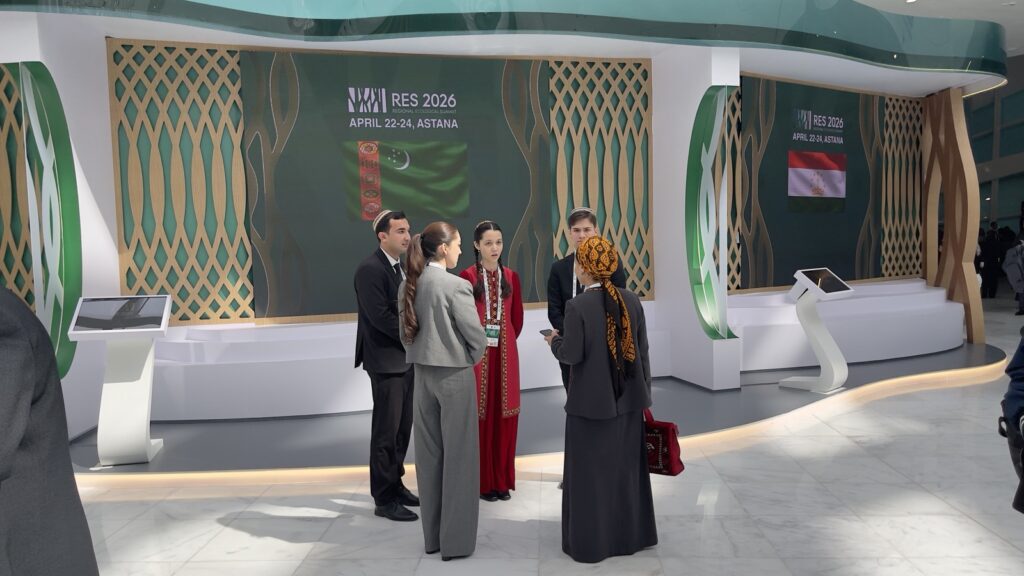
Astana opened the Regional Ecological Summit on April 22 with the declared aim of turning regional environmental pressure into coordinated policy, investment, and cross-border action. Hosted by Kazakhstan with UN backing, the three-day gathering brings Central Asian governments and international partners together around climate adaptation, water management, biodiversity, and the financing needed to make regional plans work.

Researchers in Kazakhstan Develop Central Asia’s First Digital Food Atlas

Researchers at Nazarbayev University in Astana have unveiled Central Asia’s first digital food atlas, a tool designed to improve how diets in the region are measured and studied. The development is expected to strengthen research in public health and nutrition.

Developed by the Central Asia Food Innovation Lab (CAFI Lab), the atlas addresses a long-standing gap in public health research: the lack of accurate, region-specific data on dietary habits. As the researchers note, even minor errors in estimating portion sizes can lead to significant distortions in calculating calorie and nutrient intake.

Until now, specialists in Central Asia have largely relied on Western or East Asian dietary databases. However, the structure of the regional diet, characterized by high consumption of red meat, flour-based foods, and dairy products, limits the accuracy of such tools.

@NU

The atlas introduces a standardized approach based on two previously developed regional datasets: the Central Asian Food Dataset (CAFD) and the Central Asian Food Scenes Dataset (CAFSD). It includes 115 items, ranging from traditional dishes such as beshbarmak, plov, and manty to commonly consumed foods such as pizza, cereals, and ice cream. Each item has been digitized under laboratory conditions with precisely measured portions, an essential factor for accurate dietary assessment.

“This is not just a visual guide,” said Dr. Mei Yen Chan, assistant professor at the university’s school of medicine. “It aligns with international standards and allows researchers in Central Asia to generate data that are globally comparable.”

At the same time, the atlas represents only a first step. It does not directly calculate calorie content and requires an additional analytical layer. As the authors note, regional dishes vary widely in composition and preparation methods, while “hidden” components, such as fats, broths, and density, make precise assessment difficult. In theory, caloric value is calculated as the sum of the energy provided by all ingredients (e.g., 4 kcal per gram of protein and carbohydrates, and 9 kcal per gram of fat).

In practice, however, accurate calculation would require weighing every ingredient, an approach rarely feasible in real-life settings. Visual atlases therefore serve as a practical compromise, helping estimate portion size and approximate calorie intake, albeit with some margin of error. Even AI-based systems still struggle to accurately analyze complex, multi-ingredient dishes.

@NU

In this context, the project’s significance extends beyond calorie counting. By standardizing portion sizes, the atlas addresses a fundamental prerequisite for reliable dietary assessment and the advancement of digital nutrition technologies.

Beyond research, the atlas supports the development of AI-driven health applications. The datasets are already being used to train machine learning models, including multi-task deep learning systems capable of recognizing dishes, estimating nutritional value, and supporting digital health tools from mobile applications to telemedicine platforms.

The findings have been published in the international peer-reviewed journals Nutrients, IEEE Access, and Scientific Reports, and are available in open access. The research team is currently working to expand the project by incorporating detailed nutritional data and is seeking additional funding to translate these findings into practical solutions for the Kazakhstani population.

Kazakhstan and EBRD Strengthen Cooperation on Climate Agenda

Kazakhstan intends to expand cooperation with the European Bank for Reconstruction and Development (EBRD) in the field of climate policy and the transition to a low-carbon economy.

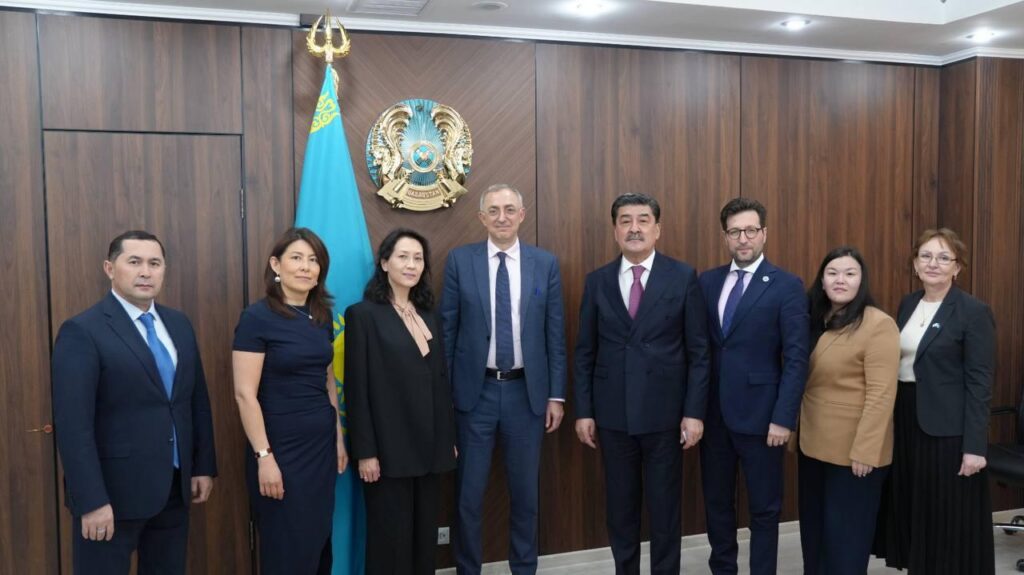
Minister of Ecology and Natural Resources Yerlan Nyssanbayev held talks with EBRD Managing Director for Climate Strategy and Delivery Gianpiero Nacci. Following the meeting, the parties confirmed their intention to strengthen their partnership in advancing the climate agenda and achieving carbon neutrality.

Kazakhstan has set a target of reaching carbon neutrality by 2060 and has adopted an updated Nationally Determined Contribution (NDC 3.0), which requires a 17% reduction in greenhouse gas emissions by 2035 compared to 1990 levels.

With EBRD support, several projects are already underway in the country, including efforts to reduce methane emissions in the wastewater treatment sector and to improve the emissions trading system. These measures are aimed at developing the carbon market and enhancing its efficiency.

Kazakhstan is also developing “Qajet,” a country platform for energy transition, to help coordinate climate financing and identify priority projects. The energy sector, the largest source of emissions, is expected to be its main focus.

Kazakhstan and the EBRD plan to continue expanding their cooperation, focusing on the implementation of practical projects aimed at sustainable, low-carbon development.

Insider’s View: Tashkent’s Water Diplomacy – From National Reforms to Regional Synergy in Central Asia

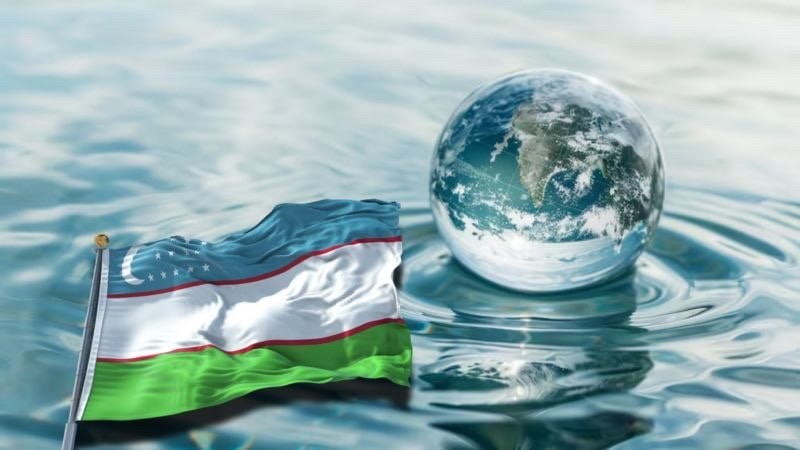
On April 22, a summit of the International Fund for Saving the Aral Sea (IFAS), one of the region’s prominent organizations, takes place in Astana.

The meeting of the Heads of the Founding States is especially significant because it marks the transition of the Fund’s chairmanship to Uzbekistan for the 2027-2029 period.

This will be our country’s third mandate, following leadership terms in 1997-1999 and 2013-2016. Tashkent was at the forefront of the creation of IFAS. Yet returning to this leadership role after a decade comes in a fundamentally transformed regional landscape. Today, Uzbekistan brings not only substantial experience but also a broad portfolio of initiatives that have received international recognition.

The Transformation of Uzbekistan’s Water Sector for Sustainable Development

Facing intensifying climate pressures alongside strong economic and demographic growth, Uzbekistan has made the restructuring of water resource management a core priority of state policy.

The scale of the challenge is clear in the data. Over the last 15 years, per capita water availability in the republic has fallen by more than half, from 3,000 to 1,400 cubic meters per year. According to the Ministry of Water Resources, the annual volume of water resources has dropped to 51-53 billion cubic meters, a 21% decline from 1991 levels of 64 billion cubic meters.

A major challenge remains the country’s high dependence on external sources, as approximately 80% of surface water, or 41 billion cubic meters, originates outside the country. While the water shortage did not exceed 3 billion cubic meters prior to 2015, expert forecasts indicate that the deficit could reach 7 billion cubic meters by 2030 and 15 billion cubic meters by 2050.

Recognizing the scale of these risks, Uzbekistan, under the leadership of Shavkat Mirziyoyev, is pursuing broad technological modernization of the water sector. In less than a decade, the area using water-saving technologies has grown from 28,000 hectares to more than 2.6 million hectares, now covering more than 60% of all irrigated land. At the same time, large-scale work continues across the country on canal concreting and the reconstruction of flume networks. By 2030, these systemic measures are projected to yield annual savings of up to 15 billion cubic meters of water.

At the same time, the sector is undergoing digitalization. Currently, 11 information platforms are being deployed to manage the water cadastre, monitor pumping stations, and track land reclamation status. Over the past four years, the management of 100 major water facilities has been fully automated, the Smart Water system has been introduced at 13,000 water intake points, and more than 1,700 pumping stations have been equipped with real-time online monitoring devices.

At the same time, the national economic model is also adapting. According to the Center for Economic Research and Reforms, the share of agriculture in GDP has declined from 32% in 2017 to 19% by 2024. Notably, against this backdrop, total agricultural production has increased by 17%. This divergence points to a transition toward more efficient resource use and higher productivity.

Regional Synergy and Water Diplomacy

At the same time, Uzbekistan is also advancing on the international water cooperation track. Most of the initiatives proposed by Tashkent within the framework of IFAS have been implemented through consolidated regional efforts and the active support of international partners.

The main focus of this work has been the ecological rehabilitation of the Aral Sea region. A network of local water bodies has been created on the dried bottom of the sea and in the Amu Darya delta, including the Sudochye, Khojakul-Karajar, and Maipost-Domalak lake systems, the Mezhdurechenskoe reservoir, as well as the Muynak, Rybachy, and Zhyltyrbas bays.

In addition, major forest reclamation projects are underway. To date, green plantations have been established across approximately 2 million hectares. In the next two years, protective belts are planned on another 400,000 hectares. The expansion of the protected natural area network, which has now reached 4.6 million hectares in the Aral Sea region, has not only reduced the emission of toxic dust but also created conditions for the revival of local flora and fauna.

International recognition of these efforts took shape in 2019 at a high-level conference in Nukus, where the designation of the Aral Sea region as a ‘Zone of Ecological Innovations and Technologies’ was advanced. The initiative, first proposed by President Shavkat Mirziyoyev at the 72nd session of the UN General Assembly and the IFAS Summit in 2018, received broad support in 2021 when the UN General Assembly unanimously adopted the corresponding resolution.

An important addition to these political initiatives was the launch in 2018 of the UN Multi-Partner Trust Fund for Human Security for the Aral Sea Region. Established at the proposal of Uzbekistan, the fund serves as a mechanism for mobilizing donor resources and coordinating international efforts to address the region’s most pressing socioeconomic and environmental challenges.

Alongside the development of these financial and humanitarian mechanisms, Uzbekistan consistently views IFAS as the preeminent platform for regional interaction in the water and environmental sphere, playing a unique role in ensuring stability in Central Asia. Through the qualitative strengthening of this organization, Tashkent intends to further promote the consolidated interests of the region on the global stage.

Furthermore, Uzbekistan is promoting multilateral cooperation formats. A steadfast commitment to the principles of good-neighborliness and proactivity has paved the way for a constructive dialogue on the joint management of the Amu Darya and Syr Darya water resources.

Concrete examples of this synergy include the agreements between Uzbekistan, Kazakhstan, and Tajikistan on the operation of the ‘Bahri Tojik’ reservoir, as well as the landmark decisions by Uzbekistan, Kazakhstan, and Kyrgyzstan regarding the Toktogul reservoir and the ‘Kambarata-1’ HPP construction project.

In light of the growing water shortage, a logical continuation of these efforts is a shift toward long-term strategic planning. To this end, during the Seventh Consultative Meeting of the Heads of State, the President of Uzbekistan proposed declaring 2026-2036 the Decade of Practical Actions for the Rational Use of Water in Central Asia. Recognizing that effective management is unattainable without a highly skilled workforce, Tashkent also plans to establish a Regional Center of Competence in Water Management at the TIIAME National Research University.

A critical vector of regional water cooperation remains the establishment of a dialogue with Afghanistan. Uzbekistan advocates the gradual involvement of Kabul in regional partnerships on the basis of a balance of interests. As practical steps, Tashkent proposes joint monitoring of transboundary rivers, the real-time exchange of hydrometeorological data, and the creation of permanent expert platforms. These measures are intended to lay the foundation for fair and rational water use throughout the region.

In summary, large-scale internal reforms combined with a proactive foreign policy have created a solid foundation for Uzbekistan’s upcoming chairmanship of IFAS. During its 2027-2029 mandate, the state intends to prioritize the renewal of the Fund’s regulatory and institutional framework. At the same time, efforts will remain focused on improving socioeconomic conditions, strengthening ecological safeguards, and identifying sustainable ways to increase the region’s water supply. Ultimately, Tashkent aims to raise the international standing of IFAS, making water and environmental cooperation a cornerstone of sustainable development and long-term stability in Central Asia.

Astana Is Turning Ecology into Regional Statecraft

On April 22–24, Astana will host the Regional Ecological Summit with the participation of numerous United Nations agencies and international partners. It is expected to produce a joint declaration and a Regional Program of Action for 2026–2030, giving it a formal ambition beyond that of a standard diplomatic conference. Kazakhstan is presenting the event as a region-wide platform through which shared ecological pressures may become a more regular channel for Central Asian coordination.

Officially, the summit is framed as a platform for regional solutions to climate and environmental challenges. It is also a more ambitious test of whether Kazakhstan can use ecology to sustain a more regular pattern of regional cooperation under multilateral auspices. Here, Astana is using ecology to include water, health, food systems, natural-resource management, pollution, resilience, and financing. The broader the issue area becomes, the more usable it is as a basis for cooperation among states whose interests diverge elsewhere.

The summit grew out of the Regional Climate Summit that President Kassym-Jomart Tokayev proposed at the Astana International Forum in June 2023. Since then, the agenda has widened from climate policy in the narrow sense to ecology more generally. This broadening fits the constraints the five Central Asian states share, which extend beyond emissions or adaptation metrics. They include water stress, land degradation, cross-border environmental risks, public-health effects, and the need for outside financing and technical coordination. A climate-only frame would have been too narrow for those overlapping pressures. The broader ecological frame is therefore more politically useful.

The meeting also has a prehistory in earlier regional backing and multilateral development. A key point came on July 21, 2022, at the Fourth Consultative Meeting of Central Asian heads of state in Cholpon Ata, where the Green Agenda Regional Program for Central Asia was adopted. At the same meeting, a joint statement, a roadmap for regional cooperation for 2022–2024, and a concept for Central Asian interaction in multilateral formats were also adopted. The Green Agenda itself was linked to decarbonization, alternative energy, mutual electricity supply, water-saving and environmentally friendly technologies, and the rational use of water resources. Later UNDP material tied that program more explicitly to regional cooperation on climate action, water and energy management, and the use of United Nations platforms for advancing shared initiatives. The Astana summit builds on that earlier momentum.

The scale of the UN presence indicates that the summit is meant as more than a ceremonial gathering. UN Kazakhstan says that 18 UN agencies are co-organizing 27 sessions and five workshops. For a regional meeting of this kind, that is a dense working structure. The same UN summary says that one expected outcome is a Joint Declaration by the Heads of State of Central Asia on regional environmental cooperation, followed by a Program of Action for 2026–2030 developed in partnership with the United Nations. Kazakhstan’s own framing presents the summit as a permanent platform for dialogue among governments, international organizations, scientific institutions, business, and civil society. The event is thus situated at the intersection where regional diplomacy meets multilateral policy design.

The agenda shows why ecology is being used in this way. It brings together climate transition, adaptation, food security, ecosystems, resource use, pollution, finance, and technology under a single policy frame. The operative goals are concrete: reduce emissions, improve energy efficiency, expand renewable energy, protect communities and ecosystems from climate and natural risks, support sustainable agriculture, and safeguard water resources such as the Aral and Caspian Seas. This is a policy bundle rather than a loose thematic list. It connects environmental constraints to economic management, state capacity, and social effects.

The summit’s health-and-environment component shows this broadening especially clearly. It connects ecological deterioration to direct consequences for populations and to problems of governance that no single state can manage effectively on its own. The World Health Organization is hosting a ministerial session focused on the health consequences of environmental degradation in the Aral Sea region. It is expected to bring together government representatives from Central Asia and the Caspian region, along with international organizations and experts. The discussion will focus on coordinated, evidence-based responses and on ways to strengthen cross-border and intersectoral cooperation.

Attention to implementation questions distinguishes the summit from a purely declaratory meeting. Alongside its large UN presence, the preparatory process has produced named initiatives and concrete mechanisms. UNDP Kazakhstan says that the Green Shield initiative and the Harmony with Nature for Sustainable Development of the Region initiative are being prepared for presentation and endorsement at the summit, followed by the adoption of a declaration and a resolution. The same preparatory meeting in Almaty focused on cross-border biodiversity protection, forest restoration, action against land degradation and desertification, and a coordinated system for mobilizing financial resources.

The immediate question, and the practical test, is whether the summit can secure endorsement of the joint declaration and the Regional Program of Action it has been designed to produce. Preparations have been wide-ranging: regional and international consultations, discussions at UN platforms, an updated summit concept, a draft joint declaration, and the launch of more than 20 regional initiatives. However, final bargaining over scope, wording, and priorities often occurs at the meeting itself, and one cannot assume that the political outcome is settled before official action makes that clear.

That outcome will indicate whether shared ecological constraints can be turned into a more routine form of regional cooperation. Through its extensive multilateral preparation, Kazakhstan is trying to make that happen. Success would not mean deep ecological integration across Central Asia. It would mean, however, that ecology had become a standing channel through which the region’s governments could coordinate on problems that already bind them together in practice. Astana is using this summit to see whether that channel can be widened and made sustainable.