• KGS/USD = 0.01144 0%
  • KZT/USD = 0.00213 0%
  • TJS/USD = 0.10456 0.19%
  • UZS/USD = 0.00008 0%
  • TMT/USD = 0.28490 0%
  • KGS/USD = 0.01144 0%
  • KZT/USD = 0.00213 0%
  • TJS/USD = 0.10456 0.19%
  • UZS/USD = 0.00008 0%
  • TMT/USD = 0.28490 0%
  • KGS/USD = 0.01144 0%
  • KZT/USD = 0.00213 0%
  • TJS/USD = 0.10456 0.19%
  • UZS/USD = 0.00008 0%
  • TMT/USD = 0.28490 0%
  • KGS/USD = 0.01144 0%
  • KZT/USD = 0.00213 0%
  • TJS/USD = 0.10456 0.19%
  • UZS/USD = 0.00008 0%
  • TMT/USD = 0.28490 0%
  • KGS/USD = 0.01144 0%
  • KZT/USD = 0.00213 0%
  • TJS/USD = 0.10456 0.19%
  • UZS/USD = 0.00008 0%
  • TMT/USD = 0.28490 0%
  • KGS/USD = 0.01144 0%
  • KZT/USD = 0.00213 0%
  • TJS/USD = 0.10456 0.19%
  • UZS/USD = 0.00008 0%
  • TMT/USD = 0.28490 0%
  • KGS/USD = 0.01144 0%
  • KZT/USD = 0.00213 0%
  • TJS/USD = 0.10456 0.19%
  • UZS/USD = 0.00008 0%
  • TMT/USD = 0.28490 0%
  • KGS/USD = 0.01144 0%
  • KZT/USD = 0.00213 0%
  • TJS/USD = 0.10456 0.19%
  • UZS/USD = 0.00008 0%
  • TMT/USD = 0.28490 0%

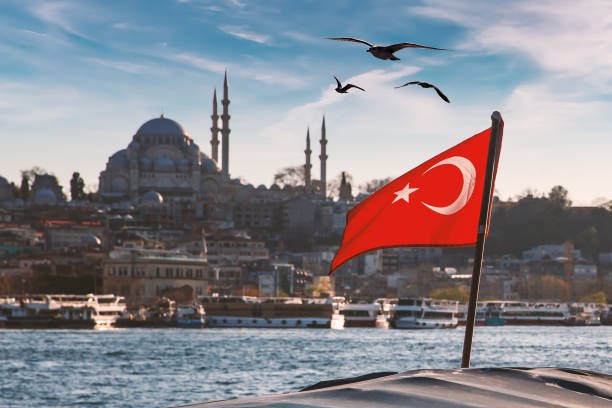
Turkey Replaces “Central Asia” with “Turkestan” in New History Curriculum

Turkey’s Ministry of National Education has unveiled significant changes to its history curriculum, replacing the phrase “Central Asia” with “Turkestan.” Experts say this shift reinforces national identity and instills stronger patriotism in future generations.

President Recep Tayyip Erdogan stressed the importance of the unity of the Turkic world: “We will work shoulder to shoulder to make the coming period the era of the Turks by extending our vision of the ‘Turkish Century’ to the Organization of Turkic States.”

Professor Ahmet Taşagıl explained the historical meaning of the term Turkestan to TRT Haber. “The word Turkestan, meaning ‘homeland of the Turks’, has been used since the earliest periods of history. In the second half of the 19th century, due to the Russian invasion, the concept of Central Asia was introduced and spread instead of the name Turkestan,” he mentions.

Associate Professor Ramin Sadık commented on the decision of the Ministry of Education for TRT Haber. “Our appeal to the concept of Turkestan and its inclusion in textbooks by the Ministry of National Education is a very correct decision. Both Turkey and Turkestan mean a region where the Turks predominantly live,” Sadık said.

The expert notes that during efforts to create a shared history, geography, literature, maps, and alphabet for the Turkic world, the Ministry of National Education’s decision to use “Turkestan” in textbooks, even for children, is a significant step. He believes this change is a crucial start and a valuable contribution to Turkey, the entire Turkic world, and its partner countries.

Experts say the change is part of a broader strategy to strengthen ties in the Turkic world, including creating a shared history, literature, maps, and alphabet.

Water Supply Plan to the Aral Sea is Almost 100% Complete

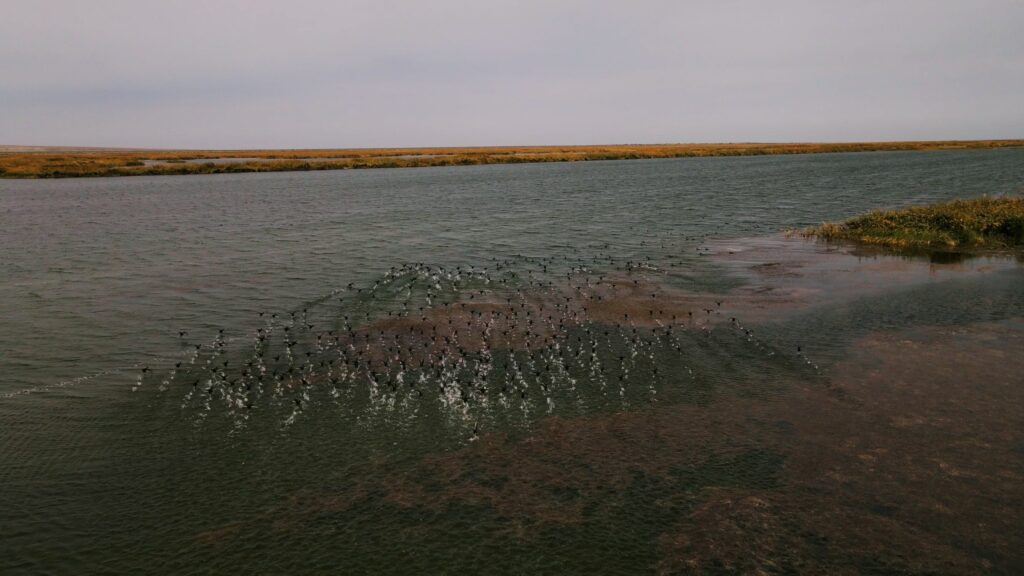
This year, the Aral Sea received 977 million cubic meters of water, which allowed it to fulfill the water supply plan by almost 100% during the irrigation period. This is the first time in the last five years it has got close to 100%.

Deputy Head of Aral-Syrdarya Basin Inspection Zeinollah Kaztoganov noted that this year, the volume of water flowing into the Northern Aral increased to 60-70 cubic meters per second, ten times more than in previous years when the figure was 7-10 cubic meters per second. Now, the total volume of water in the Northern Aral is about 22 billion cubic meters.

Additionally, more than 45 million cubic meters of water were directed to Akshatau, Sorgak, and Kamystybas lakes, which positively impacted fishing and tourism: water salinity decreased, and fish populations increased. If the catches of local fishermen earlier were only 400 tons a year, this year they reached over 7,500 tons.

Kuntugan Turganbayev, a 76-year-old fisherman from the village of Karateren who has been fishing all his life, said that with the inflow of water into the Aral Sea, there is a prospect for the development of fisheries. He noted that this year, there are more fish than last year, and if the current water level in the Aral Sea is maintained, the fishery will continue to grow.

Meanwhile, Uzbekistan’s Ministry of Water Resources and Irrigation and the World Bank are developing the second phase of a program to conserve the Northern Aral Sea. This program is aimed at improving water supply, construction, and modernization of water infrastructure. The main objective is to support sustainable water use, which includes the development of agriculture, tourism, and fisheries in the region. The project also provides for the establishment of an automated water management system, which will help control water flows effectively and ensure stable water levels in the Northern Aral Sea.

Kazakhstan Prepares to Introduce Digital Currency

At this week’s Central Asia Fintech Summit in Almaty, the Digital National Bank of Kazakhstan presented its vision for a digital version of the country’s currency, the tenge.

The digital tenge is an electronic version of Kazakhstan’s national currency issued by the National Bank. It is designed to complement cash and non-cash forms of money by making financial services available in digital format. Digital tenge can be used for instant payments and transfers, settlements between individuals and businesses, and payment for goods and services through mobile banking applications.

This currency is particularly useful in e-commerce, government services, financial technologies, and cashless settlements. It also supports the development of smart contracts, allowing for the automation of financial transactions. The introduction of the digital tenge promotes transparency in financial transactions and improves access to financial services in remote and rural areas.

Advisor to the Chairman of the National Bank, Binur Zhalenov, said that the project is planned to be completed within five years. Some components, such as the digital tenge and a single QR in pilot mode, are already being implemented.

Full implementation of the digital tenge, including the connection of all second-tier banks, is expected by 2025. Zhalenov noted that the platform is ready and operates based on the National Payment Corporation. In the coming years, it is planned to actively connect financial organizations and expand the digital tenge’s capabilities.

Last year, Zhalenov explained that using the digital tenge will require an existing banking app for one of the project participants. Thus, users will be able to link a digital tenge account to their current payment card without the need to install additional programs.

Kumtor: Drop In Gold Production No Cause For Concern

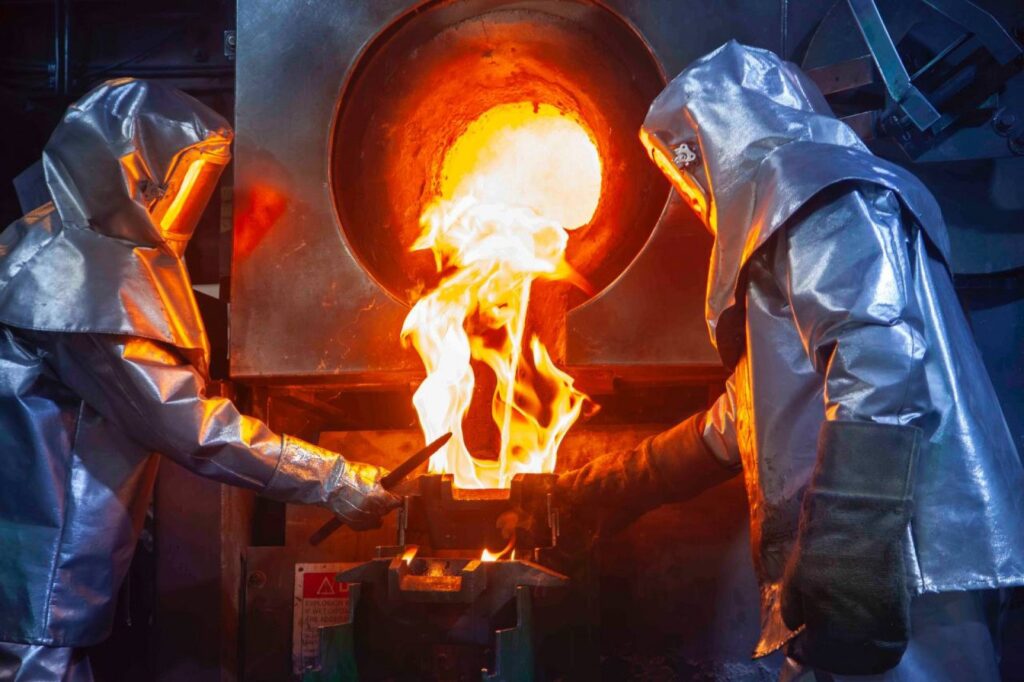
Kyrgyzstan’s largest gold mining company, Kumtor, has announced a decrease in gold production. However, authorities assure that this is temporary.

In 2023, Kumtor Gold Company produced 13.5 tons of gold, less than planned; the professional community even began to talk about the mine’s imminent depletion. However, the company itself hastened to reassure citizens.

The company’s representatives commented: “Reduced gold production targets are common due to the low grade of gold in commercial ore mined at Kumtor. The mining of low-grade ore will continue for some time. In the future, gold production is expected to increase to 17-18 tons gradually. This takes into account the implementation of projects for underground mining of gold-containing ore and processing waste ore from the tailings pond.”

It is worth noting that all of Kyrgyzstan is watching the volume of gold production, as Kumtor’s share of the country’s GDP is almost 10%. In 2023, the company paid more than $200 million to the country’s budget. After nationalization in 2021, foreign experts predicted a rapid closure of production. Allegedly, the gold extracted by open-pit mining at the mine is running out.

“Right now, the ore is poor,” responded Cabinet Chief Akylbek Japarov to the criticism. “We plan to mine 14 tons each. Previously, we were getting 17 tons. This happens in geology.”

However, the low figures have forced the country’s authorities to reconsider their approach to mining. Gold will now be mined underground. In addition, it was announced that the processing of gold in Kumtor’s tailings pond will begin soon.

Specialists of the Institute of Geology at the National Academy of Sciences confirmed to The Times of Central Asia information about the reduction of precious metals in the area of the open pit at Kumtor. Earlier, there were 7 grams of gold per ton of ore; today, it is 5 grams.

“But the gold is not running out. There is still quite a lot of gold at Kumtor – over a thousand tons. But everything depends on the areas that are going to be developed. Part of the gold-bearing strip is under glaciers,” said geologist Rozalia Jenchuraeva.

The Institute of Geology recommends that the government quietly conduct exploration and not rush to mine gold hidden under glaciers, as this could damage the ecology.

“There is still enough gold at Kumtor, and you don’t have to worry about it. Although gold mined underground will be more expensive, this method will have less impact on the melting of glaciers. The depth of gold content will probably change, but we will have enough for a hundred years; we need to be rational in our approach to mining,” Jenchuraeva emphasized.

Previously, the Kumtor mine produced 20-22 tons of gold annually.

Anniversary of the Ashgabat Earthquake Tragedy

In every city’s history, there are events that forever change its image and the fate of its inhabitants. The night of October 5-6, 1948, marked a turning point for Ashgabat, with a tragic event which still resonates in the hearts of those who lived through it.

On that warm October evening, no one in Ashgabat could ever have predicted that the next few hours would forever change the fates of tens of thousands of people. Life in the city continued as usual, music played in the parks, lovers strolled along the streets, and students prepared for classes. The starry sky promised a peaceful night…

Founded in 1881, when seismology was still young, Ashgabat grew and developed, oblivious to any impending danger. Traditional adobe construction —a mixture of clay and straw—seemed ideal for the dry climate. Year on year, residents renewed their clay roofs, adding new layers without considering that the increasing weight could be a death trap.

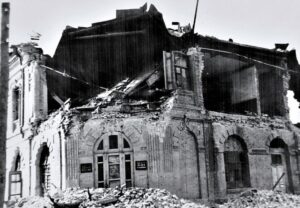
“Only the stone building of the Central Committee of the Communist Party of Turkmenistan and a few other important buildings were made of quality bricks,” recalled one eyewitness. “It was these buildings, though damaged, that survived, while virtually the rest of the city was reduced to rubble.”
@mchs.gov.ru

“In the middle of the night – we heard- a menacing rumble, then rumbling and cracking as the ground shook and shimmered…” said one of the survivors, recalling the beginning of the tragedy.

At 1.14 am on October 6, 1948, something happened that many Ashgabat residents believed was the start of a new war.

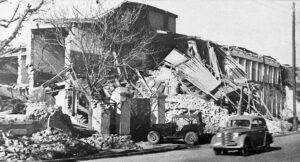
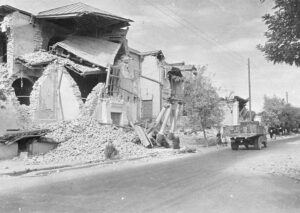
Within but a few seconds, the city was a ruin. Academician Dmitry Nalivkin, who was at the epicenter of events, describes the harrowing event: “There was something incredible, impossible outside the window. Instead of a dark transparent starry night, there was an impenetrable milky-white wall in front of me, and behind it – horrible moans, screams, cries for help.”
@mchs.gov.ru

According to Nalivakin, the city was completely paralyzed. Telephone communications were interrupted, the train station turned into a pile of rubble, and the airfield was destroyed. Overnight, the capital of the republic was cut off from the outside world. In a matter of seconds, 98% of the city was rubble.
Lieutenant Colonel of Medical Service Tikhon Boldyrev describes the first minutes after the catastrophe: “A deafening noise like a deep sigh swept through the city, and immediately there was dead silence. The air was filled with thick, suffocating dust. There was no sound, no cries for help, no animal sounds; it was as if every living thing had perished beneath the ruins.”

In the darkness, in a dense veil of dust, survivors raked through the rubble with their bare hands, trying to save their loved ones. Alevtina Dubrovskaya, a resident of Ashgabat, recalls, “I found myself covered from head to toe with a mat hanging over my bed, but there was some space with air under it, which saved me from suffocation…”
@mchs.gov.ru

The city medics deserve special commendation. An improvised hospital was set up on Karl Marx Square where Professors of the Medical Institute Smirnov, Beburishvili, and others, performed operations on clerical tables. One doctor reported that the victims included “hundreds of crushed, torn people with terrible wounds, who were not even at the epicenter.” When the anaesthesia wore off,  students held patients’ hands.

The Ashgabat earthquake was not only a colossal tragedy but also a lesson in humanity, mutual aid, and resilience. Viktorina Chervinskaya, an earthquake survivor, says: “Not everyone could bear the tragedy of losing relatives. And that is understandable. But it was thanks to those who were able to overcome their grief and continue to fight that the city was able to revive.

Information on the number of victims of the Ashgabat earthquake remains confidential. For a long time, the official figure for the death toll was about 40,000 but researchers now claim that up to 110 thousand people could have died that night.

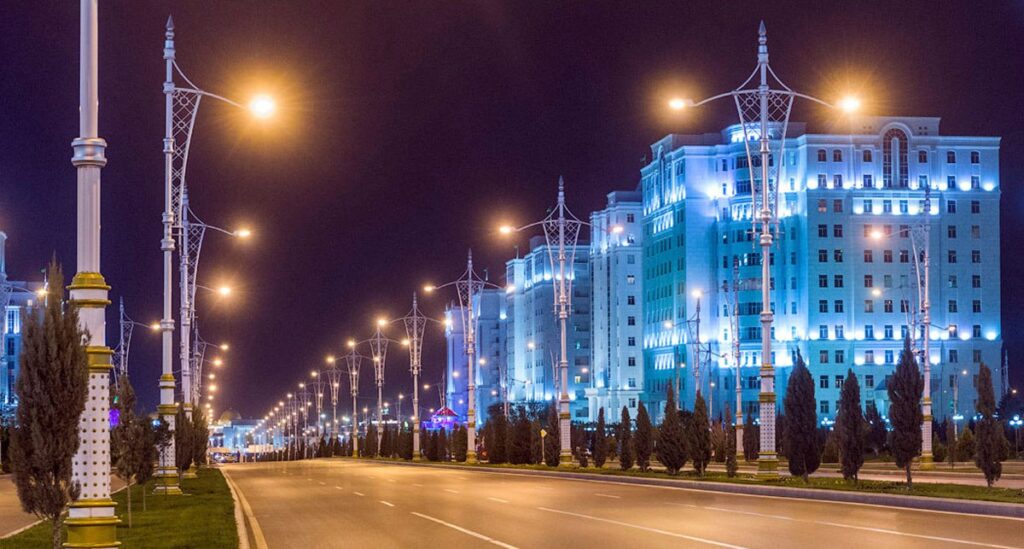
Today, Ashgabat is one of the most earthquake-resistant cities in the world and walking through its streets, it is hard to imagine the horror that reigned here 76 years ago.

Every year, on October 6, city residents gather at the memorial for the earthquake victims. They bring flowers and pray and at this moment, the city seems to freeze, in remembrance of that terrible night and those left under the ruins of old Ashgabat.

The tragedy changed not only the appearance of the city but also her people’s consciousness. Although the pain of loss has not subsided, the city lives, grows, and develops, keeping the memory of the past and looking to the future with hope.

Tajik Company Restores “Tatra Around the World” Expedition Bus

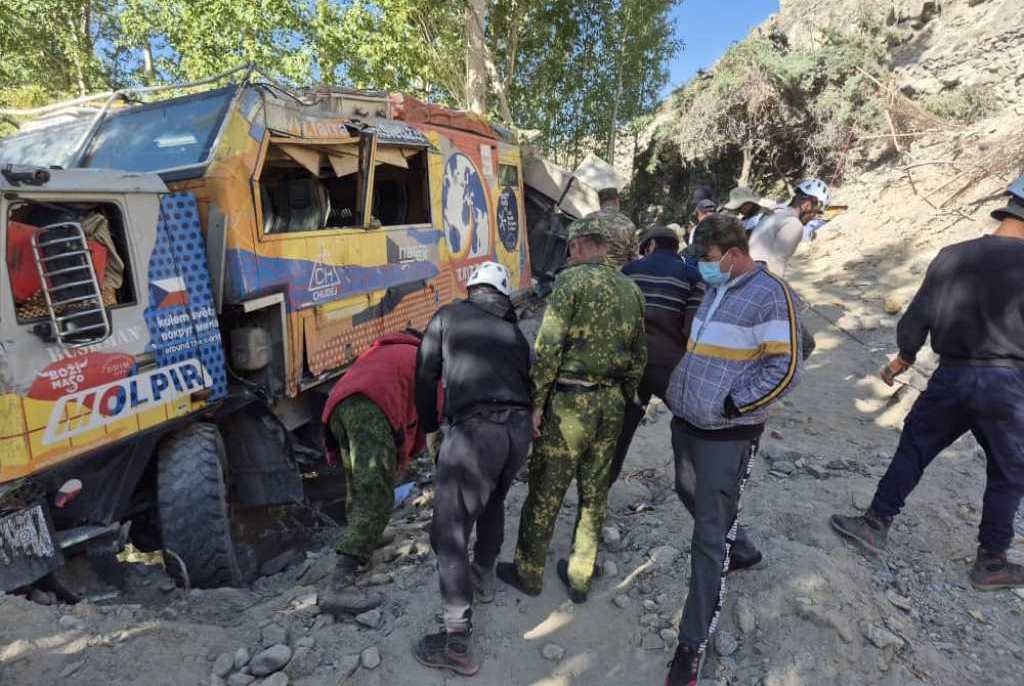
A minibus, involved in an accident in the Pamir Mountains during the “Tatra Around the World-2” expedition, is currently being repaired by a Tajik company.

The accident occurred on August 5 , at 3,000 meters near the village of Tukhgoz in the Ishkashim district, Gorno-Badakhshan Autonomous Region, when the minibus veered down a slope and got caught in  trees. Fortunately, none of the nine tourists, rescued by residents and the Committee for Emergency Situations, were seriously injured.

Eight members of the expedition returned home, whilst Marek Havricek remained with the vehicle  in Tajikistan. The minibus is now at the Obi Zulol factory, which has pledged to undertake and finance its repair.

As soon as the vehicle is roadworthy, Havricek plans to travel through Tajikistan’s neighboring countries and return to Europe. Once home, he is considering displaying the restored vehicle in a museum.

The “Tatra Around the World” project, founded in 1987-1990, aimed to show people the real world, as opposed to that promoted through the prism of media and propaganda, and over the past five years has comprised expeditions to the Czech Republic, Iran, North Africa, South and North America, Turkey, Azerbaijan, Georgia, Turkmenistan, Russia, Uzbekistan and Kazakhstan.

The last expedition started in February 2020 and prior to the accident, the minibus, designed to accommodate 15 passengers, had covered over 175,000 kilometers through Europe, Africa, America, and Central Asia.