• KGS/USD = 0.01144 0%
  • KZT/USD = 0.00196 -0%
  • TJS/USD = 0.10899 -0%
  • UZS/USD = 0.00008 -0%
  • TMT/USD = 0.28490 0%
  • KGS/USD = 0.01144 0%
  • KZT/USD = 0.00196 -0%
  • TJS/USD = 0.10899 -0%
  • UZS/USD = 0.00008 -0%
  • TMT/USD = 0.28490 0%
  • KGS/USD = 0.01144 0%
  • KZT/USD = 0.00196 -0%
  • TJS/USD = 0.10899 -0%
  • UZS/USD = 0.00008 -0%
  • TMT/USD = 0.28490 0%
  • KGS/USD = 0.01144 0%
  • KZT/USD = 0.00196 -0%
  • TJS/USD = 0.10899 -0%
  • UZS/USD = 0.00008 -0%
  • TMT/USD = 0.28490 0%
  • KGS/USD = 0.01144 0%
  • KZT/USD = 0.00196 -0%
  • TJS/USD = 0.10899 -0%
  • UZS/USD = 0.00008 -0%
  • TMT/USD = 0.28490 0%
  • KGS/USD = 0.01144 0%
  • KZT/USD = 0.00196 -0%
  • TJS/USD = 0.10899 -0%
  • UZS/USD = 0.00008 -0%
  • TMT/USD = 0.28490 0%
  • KGS/USD = 0.01144 0%
  • KZT/USD = 0.00196 -0%
  • TJS/USD = 0.10899 -0%
  • UZS/USD = 0.00008 -0%
  • TMT/USD = 0.28490 0%
  • KGS/USD = 0.01144 0%
  • KZT/USD = 0.00196 -0%
  • TJS/USD = 0.10899 -0%
  • UZS/USD = 0.00008 -0%
  • TMT/USD = 0.28490 0%
08 December 2025

Russia Overtakes Central Asian Suppliers in China’s Gas Market

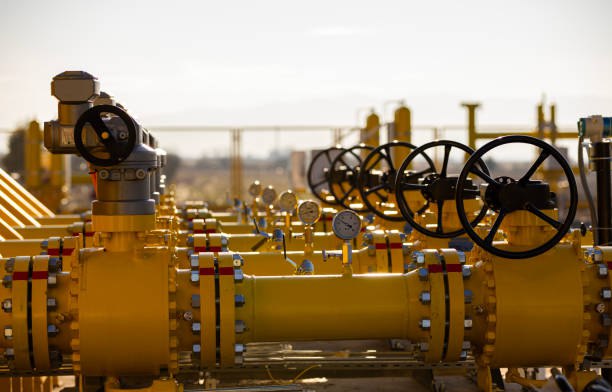
While Central Asian nations remain major suppliers of natural gas to China, newly released data indicates that Russia is rapidly expanding its market share and has now overtaken traditional exporters from the region.

According to figures from China’s General Administration of Customs, as reported by Russian state media TASS, Turkmenistan, Kazakhstan, and Uzbekistan together supplied more than $7.9 billion worth of pipeline gas to China between January and September 2025.

Turkmenistan, historically China’s leading gas supplier, exported $6.46 billion worth of pipeline gas during the nine-month period, representing a 12.7% decline year-on-year. Kazakhstan followed with gas exports totaling $854.7 million, while Uzbekistan supplied approximately $629.8 million.

Russia, however, has emerged as the largest single supplier, exporting $7.29 billion worth of pipeline gas to China in the same period, an 18.9% increase compared to the previous year. In September alone, Russian gas exports reached $802.2 million, slightly exceeding August’s figures. The surge follows an agreement signed during President Vladimir Putin’s visit to Beijing in late August and early September, under which Russia committed to supplying 106 billion cubic meters of gas annually to China.

In 2024, China’s total pipeline gas imports rose by 8.6% to $21.1 billion, with Russian imports growing by 25% to $8.03 billion.

Russia’s growing footprint in the Chinese gas market aligns with its broader strategy to deepen energy cooperation across Eurasia.

In February, Moscow announced plans to construct a new trunk pipeline to supply gas to northern and northeastern Kazakhstan. The pipeline, which will pass through Russia’s Tyumen region, is designed to transport 10 billion cubic meters of gas per year and will be supported by compressor stations generating 50 megawatts.

Kazakhstan Forecasts Twofold Increase in Internet Traffic Consumption

Kazakhstan is set to double its internet traffic consumption by the end of 2025 compared to the previous year, Minister of Artificial Intelligence and Digital Development Zhaslan Madiyev announced during a government meeting. The minister also noted that full population coverage with internet services is not expected until 2027, meaning continued growth in demand is likely.

“It is important to note the significant growth in internet traffic consumption this year: we expect it to be twice as high as last year,” Madiyev said.

In 2024, total internet traffic in Kazakhstan reached 2.14 million terabytes, with the average subscriber using approximately 22.4 GB per month, 40% above the global average of 16 GB.

Madiyev attributed this growth to substantial investment in digital infrastructure. Over the past three years, more than $1.8 billion has been invested in the development of internet and mobile communication services. Kazakhstan now boasts an average internet speed of 94 Mbps, with 20 million mobile internet users and 3.7 million fixed-line subscribers.

“By the end of 2027, we plan to provide 100% internet coverage for the population, and internet speeds will exceed 100 megabits per second,” the minister stated.

He added that 90% of rural settlements will be connected to fiber-optic communication lines by that time, significantly improving regional connectivity.

According to the Kazakh government, of the country’s 6,179 settlements, 119 cities and 4,906 villages currently have access to communications infrastructure. Of these, 2,724 are connected via 3G and 2,182 via 4G. Fixed internet access is available in 1,902 villages through ADSL and in 2,654 villages via fiber-optic networks.

Plans are in place to connect an additional 3,000 villages to high-speed internet by 2027. In parallel, 504 remote settlements will receive satellite internet access. Of these, 176 are already connected via KazSat, and a further 328 are expected to be connected through OneWeb by the end of 2025.

In June 2025, Kazakhstan signed an agreement with Starlink, which officially began operating in the country on August 13. Starlink’s satellite internet is now used in more than 1,700 rural schools. Overall, 84% of the country’s villages are covered by mobile networks, according to ministry data.

Alexander Babichev, Chairman of the Board at Mobile Telecom Service LLP (MTS), stated that 3G technology will be fully phased out in all major cities by the end of 2025, replaced by 4G. In 2026, Kazakhstan is expected to introduce VoWiFi technology nationwide, allowing voice calls over any available Wi-Fi network.

“We have successfully conducted a pilot within the company, and next year the technology will become widely available,” said Evgeny Nastradin, Executive Director of Kar-Tel.

In parallel, Kazakhstan is developing a national Wi-Fi operator to provide secure internet access across social and transport infrastructure. In the first phase, 400 locations in 10 cities will be covered. By 2027, that figure is expected to grow to 20,000. This infrastructure will support the rollout of digital services and AI-based solutions.

As previously reported by The Times of Central Asia, the European Union has launched a major initiative aimed at boosting digital connectivity in Central Asia, with the goal of addressing the region’s digital divide.

The Industrial Map of Central Asia: Projects That Could Reshape the Region’s Economy

Over the next decade, the countries of Central Asia are preparing to launch a wave of industrial projects: copper mines, gas-chemical complexes, hydropower and nuclear plants, fertilizer factories, and others. The largest initiatives, valued at tens of billions of dollars, could significantly alter the balance of global markets.

Uzbekistan: Betting on Metallurgy and Gas Chemistry

Uzbekistan has been particularly active in launching new industrial projects. The largest initiative is the $15 billion expansion of the Almalyk Mining and Metallurgical Combine (AMMC), designed to increase copper cathode production from 148,000 to 400,000 tons annually by 2030.

This more than two-fold increase is driven by strong global demand for copper. In May 2024, prices exceeded $11,000 per ton due to anticipated shortages linked to the energy transition and rising consumption in green technologies. Copper has become a key metal for electrification, and Uzbekistan’s copper megaproject fits squarely into this global trend, positioning the country as an emerging player in the market.

Another strategic direction is the deep processing of natural gas into chemical products. In spring 2024, construction began on a $5 billion methanol-to-olefins gas-chemical complex in Bukhara.

The plant, located in the Karakul Free Economic Zone, will process 1.3 billion m³ of gas and 430,000 tons of naphtha per year, producing up to 1.1 million tons of polymers. Completion is expected in 2027. The facility will create 2,000 direct jobs, and about 4,000 more in related industries such as construction materials, textiles, automotive, and electronics.

Equipment suppliers include companies from the United States, Germany, and China, and the project is led by Uzbekistan’s largest oil and gas company, Sanoat Energetika Guruhi (Saneg).

An even larger $10 billion MTO project is planned for completion by 2028, creating about 3,000 jobs and further expanding polymer production based on methanol.

Uzbekistan is also investing in modernizing existing facilities. The $1.8 billion expansion of the Shurtan Gas Chemical Complex is under way, and preparations are being made for the privatization of the $3.4 billion Uzbekistan GTL plant launched in 2021.

In renewables, a 250 MW solar power plant with Masdar is being built in Bukhara region with UAE partner Masdar, scheduled to come online by late 2025.

Turkmenistan: Fuel, Energy, and the Chemical Industry

Turkmenistan, which holds the world’s fourth-largest natural gas reserves, is focusing on export-oriented energy projects and the development of gas-chemical production. A key regional initiative is the TAPI pipeline (Turkmenistan–Afghanistan–Pakistan–India), valued at more than $7 billion.

In 2024, work began on the Turkmen segment from Serhetabat on the Afghan border to Herat, forming the central section of the route. TAPI aims to deliver Turkmen gas to South Asian markets and enhance regional energy security. Despite geopolitical challenges, construction continues under the government’s “Arkadag Bright Path” energy development strategy.

The country is also expanding its domestic processing capacity. In 2019, Turkmenistan launched the world’s first industrial gas-to-gasoline (GTG) plant in Ovadan Depe, a $1.7 billion facility that converts 1.8 billion m³ of gas into 600,000 tons of A-92 gasoline annually. The fuel is already being exported to Afghanistan. Authorities are now considering a second GTG plant with foreign partners to increase liquid fuel production.

In addition, Turkmenistan is boosting its chemical industry. In 2018, the country commissioned a $3.4 billion gas-chemical complex in Kiyanly, which processes 5 billion m³ of gas into 380,000 tons of polyethylene and 80,000 tons of polypropylene annually.

By 2024, cement plants in Bakharden and Lebap were being expanded, and a new high-voltage power line (Balkan–Dashoguz) was under construction along with new power stations. According to official data, 86 industrial and social facilities were commissioned in 2024, and GDP grew by 6.3 percent.

Kazakhstan Enters the Potash Market and Develops Nuclear Energy

Kazakhstan, the most diversified economy in Central Asia, is strengthening its industrial base across several key sectors. One of the most ambitious initiatives is the country’s first potash mining and processing complex. Qazaq Kalium is developing the Satimola deposit of potash and boron salts in the West Kazakhstan region, with plans to process 25 million tons of potash ore and 1 million tons of boron-bearing ore annually by 2035.

The $2.4 billion project will produce potash fertilizers such as potassium chloride and boric acid, reaching a capacity of 6 million tons per year. This figure is comparable to China’s 6.3 million tons in 2024 and Germany’s 3 million.

The project would make Kazakhstan one of the world’s top five potash producers, with an estimated global market share of around 14 percent. The complex is expected to create 4,000 jobs and fully meet domestic demand while expanding exports. Officials view the project as a boost to food security and economic stability, given persistently high global fertilizer prices in recent years.

Kazakhstan has also become the first country in Central Asia to begin building a nuclear power plant near Ulken, in partnership with Russia’s Rosatom, in the village of Ulken in the Almaty region. The $15 billion project was approved by a national referendum in October 2024, with 71 percent of citizens voting in favor. It is expected to create 10,000 jobs during construction and more than 2,000 permanent positions once operational.

In his September 8 address to the nation, President Kassym-Jomart Tokayev emphasized that this first plant marks only the beginning of Kazakhstan’s long-term energy strategy. Plans for a second and third nuclear power plant are already under consideration. He highlighted Kazakhstan’s strategic partnership with China in the nuclear sector and stressed that the country remains open to cooperation with global partners on a mutually beneficial basis to ensure long-term energy sovereignty. Recent updates include Rosatom’s selection as the first-plant contractor and the IAEA’s site approval.

Tajikistan: A Hydropower Giant and Industrial Revival

Tajikistan’s key project is the Rogun Hydropower Plant on the Vakhsh River, which should resolve chronic electricity shortages and turn the country into an energy exporter. With a planned capacity of 3,780 MW and six turbine units of 630 MW each, Rogun will be the largest hydropower facility in Central Asia. The first units are already operational, and full completion is expected by 2030.

Valued at over $6 billion, the project is co-financed by the Asian Development Bank, the EBRD, and the Islamic Development Bank. Analysts say it could supply electricity to 10 million people, end winter blackouts, and help decarbonize regional energy systems through green exports. The dam reservoir will also help manage floods and stabilize water supplies. New measures under a no-net-loss reforestation plan have also been announced, and Tajikistan has discussed supplying Rogun power to Uzbekistan at 3.4 cents/kWh.

Tajikistan is also modernizing its industrial base. The Tajik Aluminum Company (TALCO), the region’s largest industrial plant, is being upgraded with Chinese assistance. In 2024, the government signed a deal with China Machinery Engineering Corp (CMEC) to modernize smelting capacity, increasing output by 20 to 25 percent.

Plans for a new $1.6 billion aluminum plant with Yunnan Company have been delayed, but production still rose by 22.5 percent in 2024 to about 19,000 tons of rolled aluminum.

In the mining sector, Tajikistan is developing its reserves of precious and rare metals. More than 75 percent of gold output is controlled by Chinese investors, and the giant Koni Mansur silver deposit, requiring about $4 billion in investment, is being developed by a Chinese company. The deposit holds an estimated 70,000 tons of silver.

The government is also promoting public-private partnerships for rare metal projects such as Yakjilva in the Gorno-Badakhshan (GBAO) region, though these plans have sparked debates about resource sovereignty and national interests.

Kyrgyzstan: An Industrial Leap and Cross-Border Cooperation

Kyrgyzstan’s economy has traditionally relied on gold mining and hydropower, but in recent years the government has pushed for industrial revival and diversification. In 2024, the prime minister announced the launch of 100 new production facilities supported by tax incentives and state aid for strategic projects. By year-end, the goal was surpassed, with 102 plants worth a total of $800 million opened.

Among them are the $160 million Terek-Tash cement plant in Chuy region, a ceramic tile factory, a porcelain stoneware plant, a tobacco factory, and a $50 million machine-building facility developed jointly with Uzbekistan.

A 700-hectare logistics hub near Bishkek is also under construction, and the government has revived the Soviet-era Mailuu-Suu electric lamp plant to produce modern lighting equipment. New factories for trucks, LED lamps, paper, and agricultural drones have been opened with Chinese investment.

The Kambarata-1 Hydropower Plant (HPP-1) is another megaproject that could transform the region’s energy balance. Planned since Soviet times, this 1,860 MW plant on the Naryn River is moving forward after a 2023 agreement between Kyrgyzstan, Uzbekistan, and Kazakhstan; experts recently emphasized seismic due-diligence as financing advances.

Kyrgyzstan is also exploring its mineral resources. The prime minister announced that one deposit contains confirmed reserves of 20 million tons of titanomagnetite ore, while the Kutessay II site holds up to 60,000 tons of rare earth metals. These projects remain in early stages, with technoparks and geological surveys under way.

A Region Entering a New Industrial Era

Central Asia is undergoing an industrial upswing driven by globally demanded sectors. Regional leaders are drawing lessons from global trends while leveraging local advantages. The region is entering a new phase of industrialization, with announced projects totaling tens of billions of dollars, and their implementation could significantly boost Central Asia’s combined GDP over the next five to ten years.

However, success will depend on several factors: securing financing, improving the investment climate, developing a skilled workforce, and maintaining regional stability. Each of the five Central Asian countries is claiming its own industrial niche while complementing the others. This model not only creates domestic benefits but also integrates the region more deeply into the global economy than ever before.

Q-Pop Is Back. Is Kazakhstan Ready This Time?

Around 2015, Kazakhstan saw the rise of Q-pop, led by the boy band Ninety One. A decade on, the cultural tension remains: while youth artists enjoy greater visibility, many observers argue that freedom of expression is still shaped by a silent boundary — ‘you can make music, but not stir too much controversy.

A little over a decade ago, five young men in earrings and pastel clothes released “Aıyptama!” (“Don’t blame me”) – a slick, catchy track in Kazakh, with a video that looked like it came straight out of Seoul. The group, Ninety One, was born out of a reality TV show modeled on the K-pop system.

At the time, Kazakh-language pop had little presence on mainstream radio or TV, where Russian-language and Western hits dominated. Much of the Kazakh-language music most people heard came from weddings and folk performances rather than commercial pop charts. Occidental pop, rock and Russian-language hip hop ruled the charts. So, when Azamat Zenkaev (AZ), Dulat Mukhamedkaliev (Zaq), Daniyar Kulumshin (Bala), Batyrkhan Malikov (Alem), and Azamat Ashmakyn (Ace) debuted as a group, they looked and sounded like nothing the local music scene had ever seen.

Their appearance sparked outrage. In Karaganda, a 2016 concert was canceled after protests. “We are against them because they dye their hair and wear earrings!” a demonstrator shouted, captured in the 2021 documentary Men Sen Emes (Sing Your Own Songs) by Katerina Suvorova. “No parent would want their son to look like a woman,” a conservative activist added. Even their producer, Yerbolat Bedelkhan, noted, “They shook up Kazakh show business with their unusual looks.”

And yet, their rise was unstoppable. Despite boycotts and online abuse, Ninety One topped national charts. Each video release became an event. Over time, their success helped make gender-fluid aesthetics more visible in Kazakhstan’s pop scene — and made singing in Kazakh fashionable again among young audiences.

But their aesthetics stood in sharp contrast to the state-promoted model of Kazakh masculinity.

Ninety One; image: JUZ Entertainment

Revival and Restriction: The State’s Masculine Ideal

In 2017, then-President Nursultan Nazarbayev launched Rukhani Zhangyru – a sweeping state program for “spiritual renewal.” Its goal was to forge a unified Kazakh national identity after decades of Soviet domination, largely by reigniting traditional values. Streets were renamed after historical khans, a National Dombra Day was established, and the country began shifting from Cyrillic to the Latin alphabet.

But the cultural revival came with a gender script. School textbooks were rewritten, according to a 2021 Rutgers University study, to cast masculinity as a blend of strength, rationality, and emotional restraint. The ideal Kazakh man – the Batyr – was reimagined as a stoic warrior of the steppes.

In this context, Ninety One’s aesthetics didn’t fit in. “Many thought Q-pop artists didn’t act like ‘real Kazakhs’,” Merey Otan, a musician and PhD candidate at Nazarbayev University told The Times of Central Asia. “Wearing makeup, earrings, or bright clothes, expressing emotions or sexuality – these all clashed with a rigid model of masculinity.”

Some other pop groups, however, had already challenged this model.

According to Nargiz Shukenova, director of the Batyrkhan Shukenov Foundation and producer of the encyclopedic, 91–23: The popular music of independent Kazakhstan, the Kazakh pop scene had been experimenting for decades. “To say pop started with Ninety One is inaccurate. Even during the Soviet era, it drew inspiration from Western bands such as The Beatles, Depeche Mode, and Earth, Wind & Fire.”

Orda, the pop group led by the producer Bedelkhan, was an early pioneer. “Because they wore earrings and had a style deemed too feminine, they were called ‘freaks’,” Shukenova recalls.

What changed with Ninety One was timing and resonance.

A Generation Looking for Air

“The youth wanted something that connected their roots to the modern world they live in,” Shukenova told TCA, and Ninety One struck that nerve. Urban, digital-native fans wanted to reclaim the Kazakh language and rediscover local folklore – without denying the parts of their identity shaped by the internet and globalization.

The band gave them all that. Fans named themselves “Eaglez”, after the Kazakh national emblem. They even coined the term “Q-pop” (short for Qazaqstan pop) in the Latin alphabet. Rapidly, each one of their clips went viral.

Their popularity grew so strong that even former haters came around. “Ex-anti-fans started listening,” notes Otan. “The fact that they sang almost exclusively in Kazakh helped promote the language and tied music to the national identity.”

For N.B., a member of Q-pop group ALPHA formed in 2019, Ninety One was a revelation. “My first impression was freedom,” he told TCA. “Q-pop isn’t traditional and that’s what I liked. In 2015, teens needed air. Q-pop gave us that.”

ALPHA; image: recentmusic.com

From Love Songs to Protest Anthems

At first, Ninety One mostly sang about love, self-confidence, and resilience. But in 2019, their tone shifted. The single, “Bari Biled,” tackled corruption, environmental degradation, and social injustice, striking a chord with young listeners disillusioned by broken systems. A year later came “Taboo,” a collaboration with rap collective Irina Kairatovna, whose sharp social commentary and gritty blend of Russian and Kazakh pushed underground energy into the mainstream.

“Young people love songs that address real issues,” observes Otan. And it’s not just in pop or rap. After the COVID-19 pandemic, new scenes flourished online.

“For artists, it used to be either patriotic or commercial music,” says Shukenova. “Social media created a third way.”

One example is Qazaq Indie, a label born on the platform VK in 2017. Its first breakout star was Samrattama, a long-haired singer-poet embodying the identity struggle shaping Kazakhstan’s music scene. His latest project, Barsakelmes – a collective hybrid performance mixing traditional and electronic music with the group Steppe Sons – quietly ventures into delicate territory. By exploring decolonization through Kazakh legends and the Aral Sea tragedy, he touches on a subject few artists have dared to explore. “I’m ‘decolonial’ in the sense that I’m changing my own paradigms, my ways of seeing,” he says.

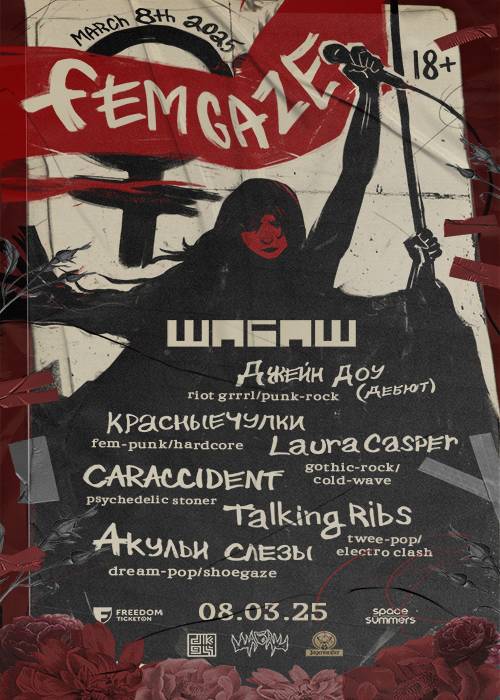
Social criticism has become even more direct in tracks like “Obal oilar-ai” (“These Guilty Thoughts”), a collaboration among indie musicians such as Dudeontheguitar and Jeltoksan, addressing poverty, corruption, and everyday despair. Even punk has joined the wave. “We’re seeing all-female fem-punk bands like Krasniye Chulki (Red Stockings),” notes Otan. “Their raw energy challenges gender norms in a rock scene long dominated by men.”

FEMGAZE 2025 featuring Krasniye Chulki; image: @kair_fltt

Free to Sing, but Not Everything

But artistic freedom remains limited; criticism may be less virulent than in 2015, but it persists. “It’s less violent now, yet mindsets don’t change overnight,” say A.Boo, I and N.B. from ALPHA. Otan agrees: “If someone like Samrattama reached Ninety One’s level of fame, there would still be resistance, though weaker than ten years ago.”

As for freedom of expression, censorship is often indirect. “There’s no official censorship, but a lot of self-censorship,” Otan notes. She recalls seeing a band at the OYU Festival – an annual celebration of Kazakh art held since 2022 – perform a political song without lyrics, only as an instrumental. “It says a lot about the fear of speaking out,” she adds.

ALPHA deliberately stays away from politics. “It’s not our role,” they say.

The subject remains fraught. In December 2024, rapper Karim Asylbekov was charged with “hooliganism” after performing a song about social injustice. That same year, a comedian was briefly detained for “obscenity” after joking about President Tokayev’s “Zhana Kazakhstan” slogan.

Kazakhstan may have moved past the open outrage of 2015, but a quiet message still lingers in the cultural airwaves: Kazakhstani artists can make music – as long as they don’t make too much noise.

Aliyev–Tokayev Talks Rekindle Momentum for Trump’s Peace Corridor

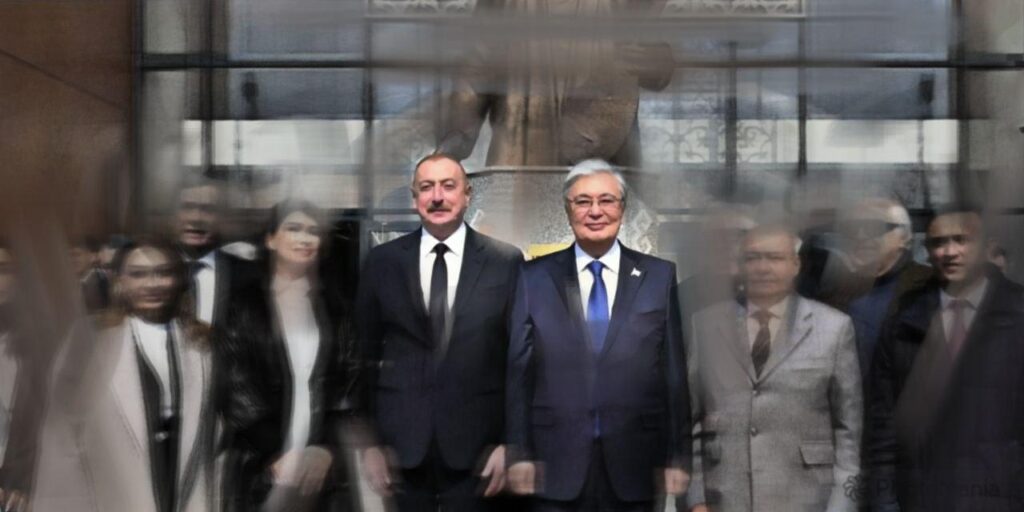
Azerbaijani President Ilham Aliyev’s state visit to Kazakhstan this week highlights the deepening strategic alignment between the two Caspian neighbors. Both are united by a drive to reshape Eurasia’s transport map through the Middle Corridor — a trans-Caspian route linking Central Asia to Europe — and its politically sensitive South Caucasus extension, the Zangezur Corridor.

The meeting comes amid renewed optimism following the August 2025 U.S.-brokered declaration between Armenia and Azerbaijan. The accord envisions a transit route linking mainland Azerbaijan with its Nakhchivan exclave via a roughly 20-32 km stretch of Armenia’s Syunik region. Under the framework, the United States would receive exclusive long-term development rights for infrastructure (railways, pipelines, fibre-optic cables) on that corridor — while Armenia retains full territorial sovereignty and the route operates under Armenian law.

U.S. President Donald Trump, who hosted the White House summit that produced the deal, said: “Thirty-five years they fought, and now they’re friends and they’re going to be friends for a long time.” The project is also known as the “Trump Route for International Peace and Prosperity” (TRIPP),

From Framework to Reality

TRIPP remains far from implementation: Armenia and Azerbaijan still must ratify the agreement as a binding treaty, finalize the terms of U.S. development rights, and attract major investment for rail, energy and digital networks. Meanwhile, peace between the two remains fragile.

Resistance from Iran, wary of being bypassed, and Russia, whose influence has waned since the war in Ukraine, complicates progress. Turkey’s backing, as a champion of trans-Turkic connectivity, will be crucial. Whether the “peace route” becomes operational or stalls as another geopolitical mirage depends on political consensus and sustained stability.

A Trans-Caspian Lifeline

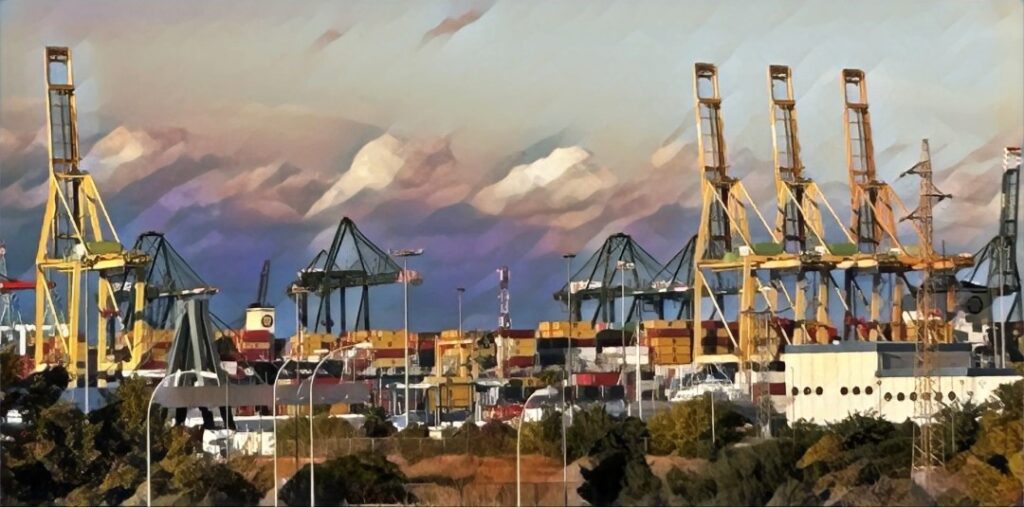
For Aliyev and President Kassym-Jomart Tokayev, these uncertainties strengthen the case for deeper transport cooperation. During the visit, the two leaders will focus on transport integration, energy transit, and digital infrastructure, with attention to coordination among the Aktau, Kuryk, and Baku ports, building on existing MoUs and ongoing Middle Corridor initiatives.  Discussions will also cover customs digitization and rail interoperability along the Trans-Caspian International Transport Route (TITR).

Although the Zangezur Corridor is not formally on the agenda, diplomats in both capitals suggest it looms large behind the logistics talks. For Kazakhstan, a functioning Zangezur link would tighten its connection to Turkish and European markets, reducing dependence on routes that traverse Russian or Iranian territory. For Azerbaijan, it would complete the east–west chain that underpins Baku’s Middle Corridor strategy — linking the Caspian directly to the Mediterranean through a unified Turkic transport system.

For Kazakhstan, the Middle Corridor represents a strategic alternative to disrupted Russian transport routes, preserving the continuity of its westward trade and reinforcing its role as a key Eurasian transit state. The route—linking Kazakhstan across the Caspian Sea to Azerbaijan, and continuing through Georgia and Turkey—provides access to European markets while reducing dependence on northern pathways. For Azerbaijan, it consolidates its position as a central hub connecting the Turkic world to global trade networks.

Presidents Kassym-Jomart Tokayev and Ilham Aliyev have both framed the Middle Corridor as a cornerstone of regional connectivity and stability. Tokayev emphasized Kazakhstan’s commitment to expand the route’s capacity, noting that “4.5 million tons of cargo were transported along this route last year … we aim to reach 10 million tons in the near future” (AzerNews). Aliyev described the corridor as playing a “key role in ensuring stable and efficient connectivity between Azerbaijan and Kazakhstan,” underlining Baku’s ambition to serve as a central hub connecting the Turkic world to global markets.

The Zangezur Link

Though absent from the official program, the Zangezur Corridor — the planned route through southern Armenia — remains the missing link in the east–west transport chain from Ankara to Almaty. For Kazakhstan, the project would shorten supply lines and enhance predictability across politically sensitive regions. As Farid Shafiyev, Chairman of the Baku-based Center of Analysis of International Relations (AIR Center), writes in the Times of Central Asia, Central Asian states “have long sought secure, diversified links to Europe,” especially as “Russia’s war has made northern routes through its territory unreliable.” By connecting to the Caucasus network through Azerbaijan, Kazakhstan and its neighbors would gain a more stable and direct path to European markets.

The project remains delicate, with Armenian Prime Minister Nikol Pashinyan calling the agreement “a significant milestone in Armenia–Azerbaijan relations,” and affirming that new transport links will function “based on the principles of sovereignty, territorial integrity, and jurisdiction.” Azerbaijan, meanwhile, continues to push for unimpeded passage linking its mainland with Nakhchivan. The U.S. role as developer and facilitator under the TRIPP framework adds a new geopolitical layer, expanding Washington’s influence in a region watched closely by Moscow and Tehran.

Strategic Calculus and the Turkic Energy Nexus

The Aliyev–Tokayev partnership is driven by expanding energy ties and shared Turkic integration goals. Kazakhstan is routing more oil through Azerbaijani pipelines and ports, diversifying beyond its northern links. Baku solidifies its role as a Caspian–Black Sea hub, with both states advancing cooperation in a region where Moscow remains an influential actor.

Both leaders coordinate through the Organization of Turkic States (OTS) to harmonize customs, tariffs, and multimodal logistics — turning corridor development into a vehicle for collective economic resilience.

For Azerbaijan, cooperation with Kazakhstan solidifies its role as the South Caucasus’s connectivity leader and bridge between Asia and Europe. For Kazakhstan, it adds redundancy to trade routes and reduces dependence on Russian infrastructure constrained by sanctions.

Yet corridor diplomacy remains sensitive. Iran fears exclusion, Russia resists diminished influence, and Western powers see an opportunity to anchor the South Caucasus in a rules-based framework. The interplay of these interests will shape Eurasia’s emerging trade map.

Looking Ahead

As Aliyev and Tokayev meet, the convergence of energy, transport, and diplomacy signals a wider realignment across the Caspian basin. The Middle Corridor — and its southern extension through Armenia — is more than a logistics project: it is a test of whether regional actors, backed by global powers, can transcend old conflicts to build a new architecture of cooperation.

If successful, the Aliyev–Tokayev partnership could position the Caspian as a bridge rather than a boundary — a step toward a more connected Eurasia. If legal ambiguities or geopolitical rivalries persist, corridor diplomacy may remain a vision deferred — another missed opportunity at the crossroads of continents.

Bottlenecked: Eurasia’s Freight Lifelines Falter

Amid heightened geopolitical tensions and stricter border regulations, key transit routes linking China and Europe via Kazakhstan and Belarus have experienced severe disruptions. The resulting bottlenecks have exposed the fragility of Eurasian logistics and cast doubt on the reliability of the overland corridors central to China’s Belt and Road Initiative.

From Military Maneuvers to Transport Gridlock

For over two decades, Kazakhstan has invested heavily in developing its transit potential, aiming to become the main bridge between China and Europe. But in September and October this year, logistical bottlenecks began to appear, chiefly at border crossings.

The disruptions were triggered by the closure of Belarusian‑Polish checkpoints following the launch of the Zapad 2025 military exercises (12‑16 September 2025) conducted by Russia and Belarus. On September 12, the day the exercises began, Poland suspended road and rail traffic after drones reportedly entered its airspace.

Belarus claimed the drones had veered off course due to electronic warfare measures involving Russia and Ukraine. Despite this explanation, Poland invoked Article 4 of the NATO charter, prompting the alliance to launch Operation Eastern Sentry to bolster its eastern flank.

The closure lasted nearly two weeks, during which more than 130 freight trains from China, carrying cargo worth billions of euros, were stranded.

The China Factor and Limited Alternatives

China responded diplomatically: on 15 September, Foreign Minister Wang Yi held talks in Warsaw; on 22 September, Politburo member Li Xi visited Minsk. Despite these efforts, border reopening was not immediately expedited.

Alternative routes proved inadequate. The Trans‑Caspian International Transport Route (Middle Corridor) — through Kazakhstan and the Caspian Sea — is growing but still modest in capacity. In 2022 its potential was assessed at around 80,000 TEU annually. Some forecasts estimate it may rise to 10 million tons per year by 2027, but it remains well short of the volumes handled by the northern rail corridor.

According to Logistan, the route currently has a monthly capacity of under 10,000 TEU, far short of the 40,000 TEU demand. The World Bank estimates that upgrading Middle Corridor infrastructure will require $27-$29 billion over 15 years, primarily for rail and port development.

Amid these limitations, China tested a new maritime option: in September, an ice-class container vessel departed Ningbo-Zhoushan for the UK via the Northern Sea Route. The move indicates Beijing’s growing interest in Arctic alternatives to land corridors.

Kazakhstan-Russia Hubs and “Gray” Transit

As disruptions continued on the western flank, issues emerged in the south. Since mid-June, Russian logistics companies have reported delays at Kazakhstan’s border crossings. Kazakhstan’s Ministry of Finance attributed the slowdowns to increased inspections aimed at intercepting counterfeit goods. Forbes reported that roughly 7,000 trucks, carrying Chinese cargo worth hundreds of millions of dollars, were stranded. Many shipments used simplified declarations, often disguised as textiles or raw materials, and sometimes included dual-use items.

Despite denials from both Kazakh and Russian authorities, freight companies cited congestion stretching for kilometers. The situation worsened after Russia imposed new migration rules restricting Kazakh drivers to 90 days of stay per year. The Kazakh government appealed to the Eurasian Economic Commission, and an exemption was agreed earlier this month.

China-Kazakhstan Border: A New Wave of Delays

In early October, further delays hit the China-Kazakhstan border. Kazakhstan’s Ministry of Finance reported that domestic carriers had exhausted their quota of border crossing permits. The Ministry of Transport later announced an agreement with Beijing to exchange 6,000 permits weekly.

Meanwhile, Kazakhstan Railways temporarily halted shipments of grain and ore through the Dostyk-Alashankou checkpoint, citing congestion caused by the buildup of hundeds of trains.

China also imposed new tax regulations, requiring export agents to provide full documentation, including manufacturer details and formal invoices (fapiao). In the absence of this information, taxes are levied on the total value of the cargo as if it were the agent’s income.

Stress Test for Stability

These widespread disruptions across Eurasia highlight the extreme interdependence of nations involved in transit. Any political or regulatory misalignment can quickly trigger a domino effect from Minsk to Dostyk.

An analyst from Logistan described the situation as “a media-driven issue,” suggesting that such border congestion is cyclical and indicative of administrative hurdles rather than diplomatic fallout.

Nonetheless, the events of recent months underscore the vulnerability of Eurasia’s overland transit routes. Despite substantial investment, the Belt and Road Initiative could devolve into a patchwork of logistical bottlenecks unless participating countries achieve greater political coordination and regulatory transparency.