• KGS/USD = 0.01144 0%
  • KZT/USD = 0.00211 0%
  • TJS/USD = 0.10460 0.19%
  • UZS/USD = 0.00008 0%
  • TMT/USD = 0.28490 0%
  • KGS/USD = 0.01144 0%
  • KZT/USD = 0.00211 0%
  • TJS/USD = 0.10460 0.19%
  • UZS/USD = 0.00008 0%
  • TMT/USD = 0.28490 0%
  • KGS/USD = 0.01144 0%
  • KZT/USD = 0.00211 0%
  • TJS/USD = 0.10460 0.19%
  • UZS/USD = 0.00008 0%
  • TMT/USD = 0.28490 0%
  • KGS/USD = 0.01144 0%
  • KZT/USD = 0.00211 0%
  • TJS/USD = 0.10460 0.19%
  • UZS/USD = 0.00008 0%
  • TMT/USD = 0.28490 0%
  • KGS/USD = 0.01144 0%
  • KZT/USD = 0.00211 0%
  • TJS/USD = 0.10460 0.19%
  • UZS/USD = 0.00008 0%
  • TMT/USD = 0.28490 0%
  • KGS/USD = 0.01144 0%
  • KZT/USD = 0.00211 0%
  • TJS/USD = 0.10460 0.19%
  • UZS/USD = 0.00008 0%
  • TMT/USD = 0.28490 0%
  • KGS/USD = 0.01144 0%
  • KZT/USD = 0.00211 0%
  • TJS/USD = 0.10460 0.19%
  • UZS/USD = 0.00008 0%
  • TMT/USD = 0.28490 0%
  • KGS/USD = 0.01144 0%
  • KZT/USD = 0.00211 0%
  • TJS/USD = 0.10460 0.19%
  • UZS/USD = 0.00008 0%
  • TMT/USD = 0.28490 0%

Kazakh Civil Servants Fined Nearly $100,000 for Poor Public Services

In 2025, Kazakh civil servants were fined a total of $99,300 for violations related to the provision of public services, according to the Agency for Civil Service Affairs (ACSA).

The agency reported that 917 administrative reports were filed against 442 officials for infractions such as missed deadlines, improper procedures for issuing permits, and unjustified refusals of service. Of those held accountable, 375 were local government employees and 67 represented central government agencies.

In addition to financial penalties, 1,636 public employees faced disciplinary measures, 1,331 from local administrations and 305 from ministries and central agencies. Among them, 27.3% were in managerial positions.

Over the course of the year, more than 478,000 violations in the provision of public services were identified: 130,751 in central government bodies and 347,692 at the local level. These included 147,105 instances of missed deadlines. The rights of 12,340 service recipients were restored as a result of investigations.

The ACSA also received 2,737 complaints related to public service quality. Most grievances concerned local government officials, state-owned enterprises, and agencies involved in land administration. Following these complaints, 481 unscheduled inspections were conducted, leading to the restoration of the rights of 233 citizens.

In total, the agency carried out 4,316 control measures in 2025. These resulted in 720 formal submissions and 2,164 orders to rectify violations, 2,026 of which were executed.

As previously reported by The Times of Central Asia, Kazakhstan is prioritizing digital transformation to enhance public service delivery. A unified electronic platform for the construction industry is scheduled for launch in 2026, aiming to streamline bureaucratic processes and increase transparency.

Kazakhstan Bets on Pakistan for Central Asian Connectivity

In early February, Kazakh President Kassym-Jomart Tokayev made a historic visit to Pakistan. The last such visit was a two-day trip in 2003 by then-President Nursultan Nazarbayev, during which he met with the Pakistani president at the time, General Pervez Musharraf.

Kazakhstan’s outreach to Pakistan reflects a broader recalibration of its connectivity strategy, as Astana looks to secure more reliable southbound trade routes amid shifting geopolitical and logistical constraints across Eurasia.

The topic of connectivity was already on the table in 2003, and it was also one of the most important issues during the latest visit, with Tokayev discussing the issue with Pakistani Prime Minister Shehbaz Sharif.

The trip culminated in the signing of 37 agreements in various fields, including strategic sectors such as mining and, more generally, trade, with the aim of increasing trade from the current $250 million to $1 billion. Official statements indicate that both sides are aiming to reach that target within approximately the next two years. From a political point of view, the bilateral relationship has been elevated to the rank of Strategic Partnership.

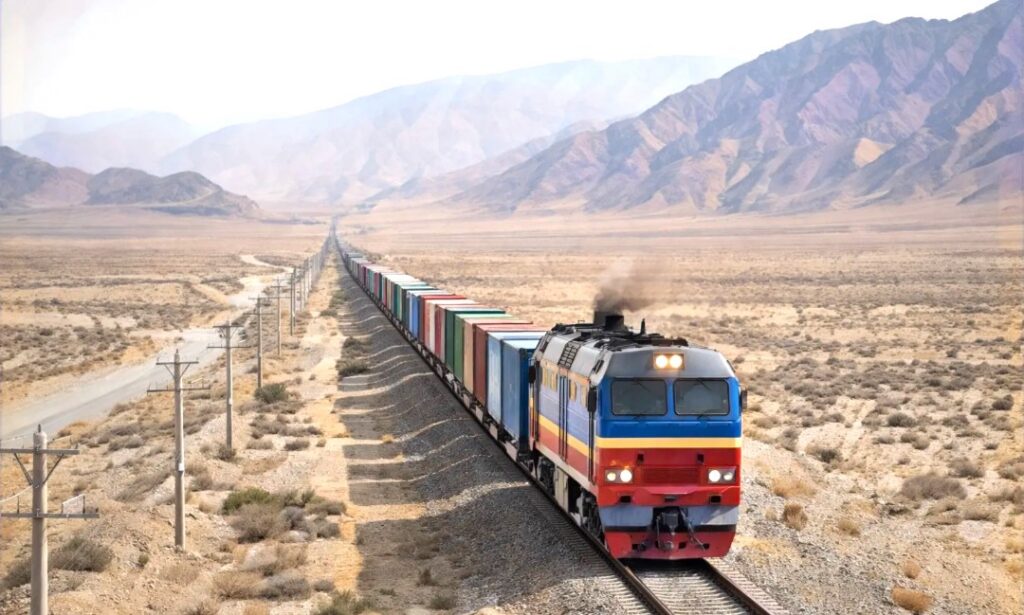
In an official statement released following the visit, great importance was placed upon the issue of connectivity and logistics between South and Central Asia. From this point of view, the Kazakhstan-Turkmenistan-Afghanistan-Pakistan railway took center stage. If completed, the project would connect Kazakhstan to the ports of Karachi and Gwadar and allow Pakistan to be included in the North–South International Transport Corridor and Trans-Caspian Middle Corridor logistics routes. Speaking to the Pakistani media in the days leading up to Tokayev’s trip, the Kazakh ambassador to Pakistan, Yerzhan Kistafin, stated Astana’s willingness to fully finance the construction of the infrastructure, at a total cost of around $7 billion. Kazakhstan’s move represents an acceleration of a logistical competition in this arena involving various players, with some at the forefront, such as Pakistan and Iran, and others further behind, such as China and India.

It has been talked about for some time, but the backbone of the Kazakhstan-Turkmenistan-Afghanistan-Pakistan railway has only recently begun to take shape, as confirmed to The Times of Central Asia by Dr. Nargiza Umarova, Head of the Center for Strategic Connectivity at the Institute for Advanced International Studies (IAIS), Uzbekistan: “In 2024, Kazakhstan joined the project to construct a railway through Afghanistan, also known as the western trans-Afghan route. The Turkmenistan-Afghanistan-Pakistan (TAP) railway corridor is designed to integrate the transport systems of Central and South Asia, which will stimulate trade and economic ties between the two regions. The TAP railway, which runs through western Afghanistan to the border with Pakistan, could be extended to Pakistani ports on the Indian Ocean. This would provide Central Asian countries with an alternative route to the open seas in addition to the southern ports of Iran.”

Pakistan’s importance as the destination for Kazakhstan’s logistics ambitions was confirmed by Dr. Marriyam Siddique, Assistant Professor at the Pakistan Navy War College in Lahore: “Pakistan serves as the primary maritime gateway for Kazakhstan’s ‘land-linked’ strategy, offering the shortest geographical access to the Arabian Sea,” she told TCA. “By providing deep-sea port facilities at Karachi and Gwadar, Pakistan enables Kazakhstan to diversify its trade routes away from traditional reliance on Russia and China.”

A possible rail link along the north-south axis is also highly regarded by Islamabad, as emphasized by Dr. Adilbek Yermekbayev, Associate Professor at the Center for Regional Affairs of the Al-Farabi Kazakh National University in Almaty: “For Pakistan, the development of transit links with Kazakhstan is economically and strategically attractive, as it provides access to Central Asian markets and, in the longer term, potentially to the markets of Russia and Belarus,” he told TCA. “From Islamabad’s perspective, such connectivity would strengthen Pakistan’s position as a regional transit hub linking South Asia, Central Asia, and parts of the post-Soviet space.”

The potential is clear, as is the main risk associated with the railway. “Afghanistan is geographically indispensable but politically and institutionally fragile as a transit link between Pakistan and Kazakhstan,” stated Yermekbayev. “From Kazakhstan’s perspective, however, it is the current Afghan authorities that may be able to provide a minimum level of security along key transport routes.”

This is a vision echoed by Dr. Siddique, who told TCA that, “The project’s viability depends entirely on Afghan stability.”

Pakistan’s growing role could ultimately undermine Iran’s position. In recent years, Iran had emerged as one of the most promising countries in terms of Central Asian connectivity, but now the situation could be set to change.

“Iran’s port infrastructure competes with Pakistan’s maritime transport capabilities,” Umarova said in assessing the current situation. “There are two strategic ports in southern Iran: Bandar Abbas and Chabahar. Both are used by Central Asian countries to access global trade markets.”

The fact that Tehran is ahead of Islamabad in this regard was also highlighted by Yermekbayev: “Iran plays a more practical and institutionally established role in providing southern transit options for Kazakhstan. Through existing railway and multimodal corridors, Iran already offers Kazakhstan access to ports on the Persian Gulf, making this route significantly more operational than the still largely prospective Pakistan–Afghanistan corridor. At the same time, this role is constrained by both external and internal risks. Consequently, Astana treats the Iranian route as one element within a broader diversification strategy rather than as a single dominant solution.”

According to Siddique, Astana’s recent moves could suggest that this process of “replacement” is already well advanced: “While Iran’s International North-South Transport Corridor is currently more established, Kazakhstan’s offer to fully finance the rail link to Pakistan could shift the competitive balance by removing Islamabad’s capital constraints. If Kazakhstan successfully secures the Afghan segment, the Pakistani route may emerge as a faster, more cost-effective alternative to the Iranian ports.”

As Russia becomes a less predictable partner, including in logistics, and Iran faces renewed internal and external pressures, Kazakhstan’s engagement with Pakistan marks a notable acceleration in a connectivity agenda that has long produced more plans than completed projects.

Behind Turkmenistan’s Neutrality, Quiet U.S. Military Ties Endure

In late January, U.S. Special Envoy for South and Central Asia, Sergio Gor visited Turkmenistan. Accompanying Gor was U.S. Secretary of the Army Daniel Driscoll.

Driscoll’s presence in Turkmenistan, a country with a roughly 1,150-kilometer border with Iran, sparked some speculation that his visit was related to escalating tensions between Washington and Tehran. But while it is unusual for any top foreign military officials to visit Turkmenistan, U.S. military officials have stopped by Turkmenistan relatively often over the course of the last 30 years.

Neutral Turkmenistan

A good trivia question about Central Asia is, which country was the first to join NATO’s Partnership for Peace (PfP) program?

The answer is Turkmenistan, in May 1994, and NATO had just created the PfP program in January of that year.

However, in December 1995, the UN approved giving Turkmenistan official status as a neutral country. Turkmenistan’s president at the time, Saparmurat Niyazov, said as part of that neutral status, Turkmenistan would not join any military blocs or join in aggression against another country.

Then came the September 11, 2001, terrorist attacks on the United States and U.S. President George Bush Jr’s remark that “you’re either with us or against us.”

Central Asia, with its nearly 2,400-kilometer border with Afghanistan, suddenly became a frontline in Washington’s campaign against terrorist groups inside Afghanistan.

The other Central Asian countries, which had watched with dread as the Taliban advanced toward Central Asian borders, quickly expressed their support. Kyrgyzstan, Tajikistan, and Uzbekistan offered the use of military bases to the U.S. and NATO forces that were rapidly being assembled.

Turkmenistan took a different position on events in Afghanistan.

Remaining true to its UN-recognized neutrality status, Turkmenistan engaged with the Taliban and with the government of Burhanuddin Rabbani, whom the Taliban had ousted from power. A round of peace talks between the two Afghan parties was held in the Turkmen capital, Ashgabat, in March 1999.

After 9/11, Turkmenistan agreed to allow U.S. planes carrying non-lethal cargo to transit through Turkmen airspace and to refuel at Ashgabat airport. But officially, that was as far as the Turkmen government was willing to become involved.

The U.S. had already established a military connection with Turkmenistan.

The head of the U.S. Central Command, General Tommy Franks, visited Turkmenistan in September 2000 and again in May 2001. U.S. Secretary of State Donald Rumsfeld visited Turkmenistan in April 2002. General Franks followed in August that year, promising to help Turkmenistan fight the illegal narcotics trade.

The United States gave Turkmenistan two small naval patrol boats for use in the Caspian Sea in 2002, and in 2003, gave 40 Russian-made off-road vehicles to Turkmenistan’s border guards.

Reports started to appear stating that Turkmenistan’s military cooperation with the United States was quietly deepening. The Turkmen government had said when agreeing to allow overflights and refueling that no foreign troops would be stationed in Turkmenistan. But it turned out that a small U.S. Air Force team, only about seven servicemen, was stationed in Ashgabat to help refuel U.S. aircraft at the Ashgabat airport.

In 2004, Russia protested alleged U.S. and Arab construction work at an airfield in Mary, in western Turkmenistan. One report said the U.S. had “gained access to use almost all the military airfields of Turkmenistan, including the airport in Nebit-Dag near the Iranian border.”

Rumors of small, American-built or American-repaired airfields in the empty Turkmen desert continue to this day. Whenever it is discovered by foreign media that members of royal families from Arab countries have come to hunt in Turkmenistan, they are almost invariably said to be landing at remote desert airstrips built by Americans during the 20-year campaign in Afghanistan.

It is not possible to independently verify this information.

Certainly, the Turkmen government never mentioned U.S. servicemen at the Ashgabat airport or airfields being built or repaired by Americans.

It is not in the habit of the Turkmen authorities to admit to ties like these.

For example, in March 2015, U.S. Central Command chief Lloyd Austin mentioned Turkmenistan in testimony before the Senate Armed Services Committee. Austin said, “The Turkmens recently expressed a desire to acquire U.S. military equipment and technology to address threats to their security along their southern border with Afghanistan.”

The Turkmen authorities later rejected Austin’s claim, saying Turkmenistan was capable of securing its own borders.

However, prior to Austin’s comments, fighting in northern Afghanistan just across the Turkmen border was intensifying. There were clashes between Afghan government forces and the Taliban, with both sides also fighting militants from the Islamic State.

There were also two incidents in 2014, when groups from Afghanistan attacked Turkmen forces along the border, resulting in casualties among Turkmen troops, though the Turkmen government never confirmed this.

The same month the U.S. Central Command chief made his comments about Turkmenistan to the Senate committee, Turkmenistan called up its reservists, and in August 2015, it conducted a large-scale military exercise along the Afghan border.

Still a Warm Reception Waiting

U.S. Central Command chiefs continued to visit Turkmenistan after General Franks stepped down; John Abizaid, William Fallon, David Petraeus, James Mattis, and Michael Kurilla all made official trips.

By way of comparison, visits by top Russian military officials are less frequent.

In 2015, as the situation in northern Afghanistan deteriorated, the Turkmen authorities continually denied any problems along their border. Reports from Afghanistan, including video and photos of fighting right along the border, told a different story.

The Kremlin finally forced the Turkmen government to accept a visit from Russian Defense Minister Sergei Shoigu in June 2016 to discuss “CIS” border security. Shoigu’s visit was the first by a Russian defense minister since Turkmenistan became independent in late 1991.

Curiously, the brief statement released by the U.S. State Department ahead of Gor’s arrival in Turkmenistan only mentioned Gor and did not say Driscoll was also in the U.S. delegation.

Turkmen state media, which is tightly controlled by the government, seemed anxious to note Driscoll’s presence, however, reporting President Serdar Berdimuhamedov met with the “U.S. Secretary of the Army Daniel Driscoll and also with …. Gor.” A separate report noted that “Driscoll held substantive meetings with the leadership of the Ministry of Defense of Turkmenistan, with the participation of… Gor.”

Much about the U.S.-Turkmen military relationship remains unknown, save to a select few in those two countries, but it is clear these ties are enduring and important for Turkmenistan.

Breaking into Project Vault: A U.S. Role for Central Asia’s Strategic Minerals

The Trump Administration has decided to go head-to-head with Beijing to secure an independent supply chain for critical minerals and insulate U.S. industries from supply shocks. Among many initiatives, the United States launched Project Vault on February 2 to establish a U.S. Strategic Critical Minerals Reserve. The public-private stockpile is expected to secure essential minerals and metals for U.S. national security purposes and high-technology industries.

The effort formalizes the U.S. strategy to diversify critical mineral supply chains away from rival China and, in the process, harness broader global capacity. As part of this effort, mineral-rich Central Asia is already factoring heavily in U.S. foreign and economic policy thinking. Participating in the front row of the 2026 Critical Minerals Summit, Kazakhstan and Uzbekistan were invited to engage in Washington’s global effort to build resilient global supply chains. But Project Vault is a critical and separate component of the administration’s focus.

Formally approved by the Export-Import Bank of the United States (EXIM) on February 2, Project Vault will be backed with up to $10 billion in long-term financing and an additional $2 billion in private sector participation. In sites across the country, the initiative will establish stores of critical minerals and rare earth elements essential for aerospace, defense, semiconductors, advanced manufacturing, renewables, and electric vehicles.

The stockpile’s structure will be operated as a public-private partnership that enables manufacturers, trading firms, and private capital providers to jointly participate. Rare earths, copper, lithium, titanium, scandium, gallium, and germanium are all key minerals highlighted by the U.S. Department of the Interior that underpin modern technologies and demonstrate U.S. vulnerability to supply chain disruptions.

Why a Strategic Mineral Reserve?

The initiative is a direct response to perceived risks posed by China’s relative control of global critical mineral supply chains and markets, as well as Beijing’s use of trade restrictions, protectionism, and the weaponization of access to certain critical minerals. China controls a commanding share of the mining, refining, and processing of rare earths and related materials. Due to years of strategic planning and investment, Beijing has leveraged state subsidies and pricing controls to develop and secure between 80%-100% of rare earth processing capacities that have dominated international markets and disincentivized competitors for decades.

Past export controls and export-license restrictions imposed by Beijing have underscored how critical mineral supply can become a tool of geopolitical leverage. China has at times restricted rare earth exports to Japan, Sweden and the United States in what is defined by many as supply-chain protectionism. Such actions can disrupt U.S. production for industries that rely on stable supplies to manufacture semiconductors, defense systems, and clean energy technologies.

Project Vault is, therefore, conceived not merely as a reserve but as a mechanism to stabilize U.S. markets, to reduce reliance on China, and to signal a long-term commitment to diversified supply chains. Much like the U.S. Strategic Petroleum Reserve acts to cushion energy price shocks, the mineral reserve is expected to serve as a similar buffer.

Operational and Financial Dimensions

Project Vault’s financing model expects a return on investment, as private firms will be paying for access and storage, with mining partners benefiting from stable demand. EXIM’s role and risk will come from using government financing to stopgap and underwrite long-term mineral extraction and processing ventures that private capital was unwilling or under-resourced to develop.

However, stockpiling raw materials is not a panacea. Project Vault cannot substitute for the lack of downstream processing and refining, which are still largely concentrated in China. Any true U.S. reorientation will require not just investments in mining, but also in value-additive refining and processing capacities, which are not part of the stockpile initiative.

Central Asia’s Strategic Mineral Potential

While Project Vault focuses first on securing strategic mineral flow and shielding domestic access from global shocks, its ultimate success will depend on a significant diversification of upstream supply. This is where Central Asia can play a key role. Kazakhstan, the Kyrgyz Republic, Tajikistan, Turkmenistan, and Uzbekistan sit atop significant deposits of a wide range of strategic minerals identified as critical by the U.S. Geological Survey (USGS). While the United States began surveying and inventorying the region’s rare earth deposits in 2012, Central Asia didn’t draw significant attention until recently.

Despite Kazakhstan being the world’s largest supplier of uranium since 2009, holding up to half of the world’s supply of tungsten, and Tajikistan producing approximately a quarter of global antimony supply, U.S. supply chains have found the region too remote. However, as Washington has sought greater independence from sole-sourced materials from China, the rare earth and strategic metal deposits found across the region are now seen to represent a significant alternative for U.S. policymakers.

Collectively, Central Asia has deposits of over 25 different minerals that the United States designated as critical. The region is also rich in manganese, chromium, lead, zinc, and titanium reserves that further underscore the region’s strategic value to U.S. industrial and manufacturing interests. Though much of Central Asia’s mineral wealth remains underdeveloped or primarily exported as raw materials to China and Russia, change has appeared on the horizon. Washington’s recent cascade of high-level engagements that involve Central Asia at multiple levels, including an invitation for Kazakhstan and Uzbekistan to attend the 2026 G20 summit, indicates a broader commitment and continued interest in developing strong, long-term partnerships with the region that include but are not limited to extractive mineral development.

From C5+1 to B5+1

Over the past year, the Trump administration has signaled a clear evolution in how it sees Central Asia. Moving deliberately from high-level diplomatic engagement toward more commercially anchored strategies, Washington is working to translate political interest into economic results. This shift is evident in the augmentation of the long-standing C5+1 diplomatic framework to include a series of visits of Presidential envoys focusing on economic engagement and the continued commitment to the B5+1 business platform. The transition reflects a White House belief that Central Asia’s strategic potential cannot be realized through diplomacy alone.

The C5+1, launched in 2015, has served as a principal vehicle for U.S. engagement with the five Central Asian countries. Initially conceived as a consultative forum, it expanded over time as a State Department-led effort to encompass regional security, economic development and reform, energy cooperation, and connectivity. In November 2025, the framework reached a new level of political significance with the first-ever White House summit for C5 leaders. That meeting underscored a continuing and deepening U.S. commitment to the region, with senior leadership engaging bilaterally and regionally on a wide range of issues and shared strategic concerns.

Critical minerals featured prominently in those discussions, as U.S. officials emphasized their own need to diversify global mineral supply chains and reduce dependence on China. Central Asian leaders highlighted the substantial potential of their mining sectors and a corresponding desire to expand economic partnerships beyond traditional ties to China and Russia. The 2024 C5+1 Critical Minerals Dialogue, while once a relevant channel to highlight greater cooperation in the mining sector, has since been significantly supplemented.

Breaking with Diplomatic Tradition

In its desire to speedily ramp up critical mineral procurements, the Trump White House saw too many limits in traditional diplomacy for working with Central Asia. That perspective has driven greater emphasis in the use of Presidential envoys, high-level deal-making events, and the B5+1 mechanism to foster business-focused initiatives designed to create greater ties between U.S. private capital and commercial actors in the region. Organized with support from the Center for International Private Enterprise, the B5+1 is an example of the broader U.S. strategy to mobilize the private sector as a primary engine of economic engagement.

The 2026 B5+1 Forum in Bishkek builds on the inaugural 2024 Almaty meeting and illustrates the thinking behind the Trump administration’s shift. The forum agenda focuses on sectors where strategic interests and commercial opportunities overlap, such as critical minerals, transport and logistics, finance, and technology. By convening U.S. firms, Central Asian companies, and government officials in a single forum, the B5+1 aims to move beyond policy statements toward concrete investment pathways, addressing barriers such as financing gaps, regulatory uncertainty, and infrastructure constraints.

As part of this massive effort, the White House is also catalyzing the Development Finance Corporation (DFC), the United States Trade and Development Agency, and EXIM Bank to promote U.S. critical mineral supply chain security through development and finance efforts aimed at reducing China’s stranglehold on critical minerals. Each agency is expanding its work in Central Asia, bringing financial and technical resources to projects that speed up cooperation in this key terrestrial sector.

Taken together, the transition from a standalone C5+1 to include a broader platform of concentrated business investment and engagement reflects an administration increasingly focused on operationalizing an implicitly proactive Central Asia strategy. While diplomatic lifting has created a solid foundation to signal political commitment and strategic intent, business-driven cooperation is now Washington’s focus and metric for delivering results. In the context of initiatives like Project Vault, this evolution suggests that Washington now sees Central Asia not just as a geopolitical partner, but as a potential long-term contributor to diversified, market-based supply chains capable of supporting U.S. economic and national security objectives.

From Strategy to Structure

Beyond the Critical Minerals Summit, the launch of Project Vault in 2026 represents a decisive policy shift toward treating U.S. critical mineral supply as an imperative of economic and national security. In doing so, the United States is opening a new chapter in supply-chain diplomacy that recognizes geopolitical risk, technological competition, and the strategic value of diversified resources.

Central Asia’s expansive and underdeveloped mineral wealth positions the region well to become a key partner in this endeavor. Through a panoply of engagement mechanisms, the United States is seeking not only to counterbalance China’s strategic mineral processing and export monopolies but to build resilient collaborations with Central Asia that create interconnected and interdependent, multinational supply chains.

This emerging partnership carries promise for powering future economies, but requires sustained investments, mutually beneficial agreements, and long-term commitments to counter the inevitable shifts in geopolitical currents. If successful, U.S.-Central Asian partnerships could significantly alter the composition of global critical mineral markets by contributing to a more diversified and resilient supply system. Nevertheless, the seeds of cooperation and inter-reliance between the United States and the Central Asian region augur a significantly higher level of trust, partnership, and shared strategic interests.

Kazakhstan Proposes Restrictions on Social Media Access for Minors

An active and ongoing debate is taking place in Kazakhstan over proposed amendments to legislation that would ban children under the age of 16 from using social media. The initiative has been raised repeatedly by lawmakers, although many experts believe teenagers would still find ways to circumvent such restrictions.

The primary objective cited by lawmakers is to protect children from harmful content, including violence and pornography, and to reduce cyberbullying. The Ministry of Culture and Information has already prepared draft amendments that would affect the regulation of social media. Mechanisms for verifying users’ ages will be developed jointly with the Ministries of Education and Digital Development.

Specifically, the proposals under discussion would introduce a ban on registering users under the age of 16 on social media platforms, with an exception for instant messaging services. Education Minister Zhuldyz Suleimenova said the working group is considering measures, including SIM card registration for children under 14 as an initial step toward access control, monitoring the content minors consume, and stronger digital and media literacy education in schools.

Lawmakers argue that the issue is becoming increasingly urgent. In February, officials reported that around 200 registered cases of bullying and cyberbullying involving children were recorded in 2025. The figures were cited by Yulia Ovechkina, deputy chair of the Committee for the Protection of Children’s Rights.

According to Ovechkina, these statistics primarily reflect improved detection and reporting rather than the full scale of the problem. She also noted that administrative liability for bullying was expanded in 2024. Officials say the number of teenagers experiencing harassment on social media continues to rise.

In November 2025, police in Astana reported a sharp increase in cyberbullying complaints nationwide, particularly among female students and individuals active in public life.

Law enforcement agencies note that forms of digital violence are evolving rapidly and becoming less visible. The most common manifestations include cyberbullying, stalking, the publication of personal data, extortion involving intimate materials, and the growing use of deepfake technologies. Increased online activity among teenagers heightens their vulnerability to such threats, police say.

At the same time, experts question whether a blanket ban would be effective or meaningfully improve child safety.

According to educational psychologist and Gestalt consultant Olga Tretyakova, building trusting relationships with children, openly discussing the dangers of harmful content, and conducting sustained preventive and educational work are far more effective than simply passing restrictive legislation. While such efforts require significantly more resources, she argues they are the only measures likely to produce lasting results.

Skepticism also stems from the deep integration of social media into everyday communication, education, and adolescent development. Attempts to isolate minors from these platforms through legal measures risk cutting them off from a social environment they perceive as normal. Children are likely to register using other people’s phones, false names, or fake dates of birth, said Gabit Umirbekov, deputy chairman of the Chamber of Legal Advisors of the Republic of Kazakhstan.

For many minors, especially those who are socially isolated or vulnerable, social networks serve as an important channel for communication, learning, and self-expression. Restrictions could push children toward VPNs or less regulated platforms, experts warn.

Despite these concerns, a number of countries have already moved to restrict minors’ access to social media. In Australia, new rules took effect in December 2025 requiring platforms to take reasonable steps to prevent under-16s from holding social media accounts. Media reports say the restrictions apply to around ten platforms, including Facebook, Instagram, Snapchat, Threads, TikTok, X, YouTube, Reddit, Kick, and Twitch.

In Spain, the government has also moved toward tighter controls on minors’ online activity, with lawmakers advancing proposals to raise the minimum age for social media use to 16 and to strengthen age-verification and parental-consent requirements, though no nationwide ban has yet entered into force.

Similar initiatives, ranging from parental-consent rules to age-verification requirements, are under discussion in France, Denmark, and parts of the United States. In January 2026, the authorities in Azerbaijan also raised the possibility of restricting children’s use of social media.

Kyrgyzstan Expands Security Cooperation with the U.S.

Alongside U.S. business leaders and government officials who arrived in Bishkek for the B5+1 business forum, security representatives from U.S. Central Command, the U.S. Air Force, and the Montana National Guard also visited the Kyrgyz capital, according to the U.S. Embassy in Bishkek.

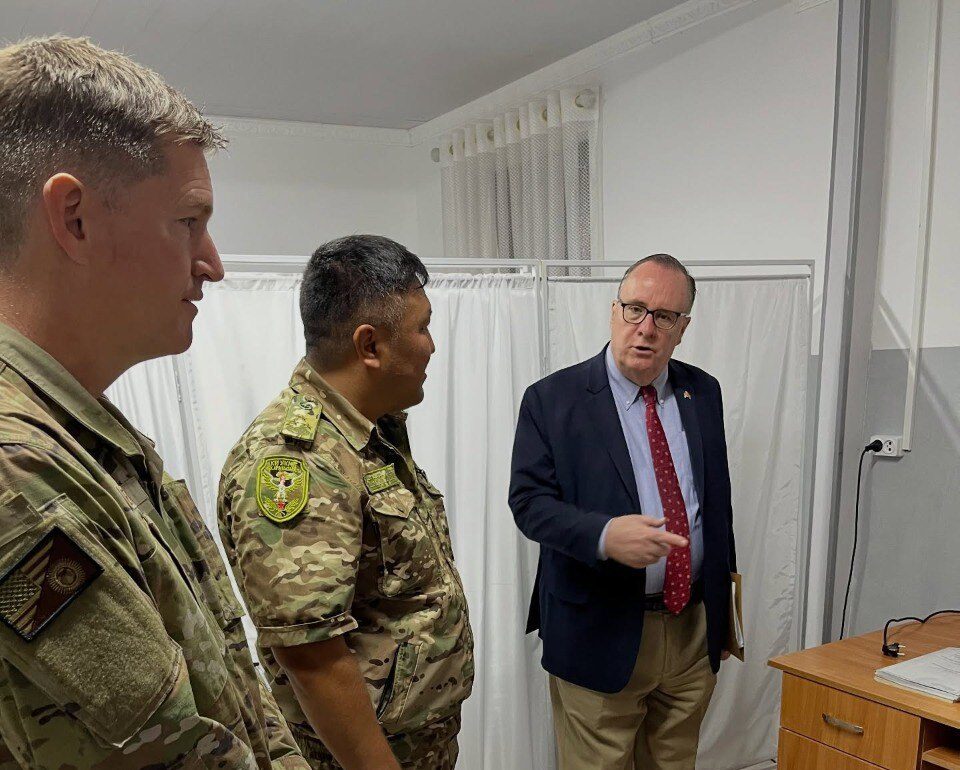
At a meeting held at the Kyrgyz Ministry of Defense in the village of Koy-Tash, both sides discussed military cooperation plans for the 2027 fiscal year. Participants carried out detailed planning of joint activities, focusing on experience-sharing and establishing common objectives for the near future.

“We thank the Ministry of Defense of the Kyrgyz Republic for organizing this event. The participants joined forces to promote our regional goals aimed at enhancing security and stability,” the U.S. Embassy stated.

U.S. Chargé d’Affaires Les Zentos emphasized that over the past 30 years of Kyrgyzstan’s independence, a strong partnership has developed between the Montana National Guard and the Kyrgyz Ministry of Defense, as well as with the Ministry of Emergency Situations and the Border Service. This relationship, he noted, is based on trust and a commitment to shared goals.

Image: kg.usembassy.gov

“We hope to improve and optimize plans for military contacts in 2026 and 2027. Today’s meeting is important for strengthening mutual understanding and finding common ground,” Zentos said.

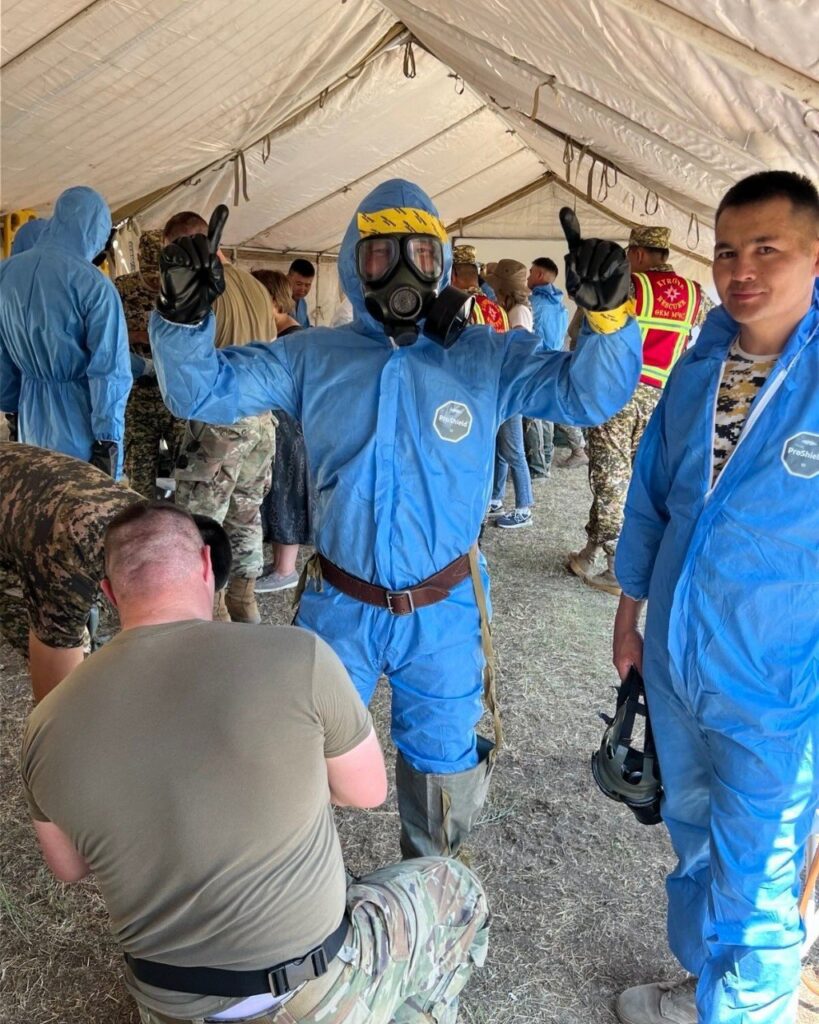
This is not the first visit by representatives of the Montana National Guard and the U.S. Air Force to Kyrgyzstan. Approximately six months ago, the two sides held joint military exercises under the name “Ak-Shumkar-2025.” According to U.S. officials, the drills facilitated exchanges of expertise in humanitarian operations, disaster relief, air medical evacuation, search and rescue, and border security.

The Montana National Guard has maintained a long-standing relationship with Kyrgyzstan since 1996, under the U.S. National Guard Bureau’s State Partnership Program.

The U.S. Embassy also noted that bilateral military cooperation extends beyond this program. It includes participation in regional exercises organized by U.S. Central Command, which bring together countries from Central and South Asia to pursue shared security objectives.