• KGS/USD = 0.01143 0%
  • KZT/USD = 0.00213 0%
  • TJS/USD = 0.10593 0.47%
  • UZS/USD = 0.00008 0%
  • TMT/USD = 0.28571 0%
  • KGS/USD = 0.01143 0%
  • KZT/USD = 0.00213 0%
  • TJS/USD = 0.10593 0.47%
  • UZS/USD = 0.00008 0%
  • TMT/USD = 0.28571 0%
  • KGS/USD = 0.01143 0%
  • KZT/USD = 0.00213 0%
  • TJS/USD = 0.10593 0.47%
  • UZS/USD = 0.00008 0%
  • TMT/USD = 0.28571 0%
  • KGS/USD = 0.01143 0%
  • KZT/USD = 0.00213 0%
  • TJS/USD = 0.10593 0.47%
  • UZS/USD = 0.00008 0%
  • TMT/USD = 0.28571 0%
  • KGS/USD = 0.01143 0%
  • KZT/USD = 0.00213 0%
  • TJS/USD = 0.10593 0.47%
  • UZS/USD = 0.00008 0%
  • TMT/USD = 0.28571 0%
  • KGS/USD = 0.01143 0%
  • KZT/USD = 0.00213 0%
  • TJS/USD = 0.10593 0.47%
  • UZS/USD = 0.00008 0%
  • TMT/USD = 0.28571 0%
  • KGS/USD = 0.01143 0%
  • KZT/USD = 0.00213 0%
  • TJS/USD = 0.10593 0.47%
  • UZS/USD = 0.00008 0%
  • TMT/USD = 0.28571 0%
  • KGS/USD = 0.01143 0%
  • KZT/USD = 0.00213 0%
  • TJS/USD = 0.10593 0.47%
  • UZS/USD = 0.00008 0%
  • TMT/USD = 0.28571 0%

Kazakhstan Officially Backs Nuclear Power Referendum

The government of Kazakhstan has approved a draft resolution to hold a national referendum on constructing a nuclear power plant (NPP). The meeting, chaired by Prime Minister Olzhas Bektenov, discussed the prospects for developing nuclear energy in the country.

Energy Minister. Almasadam Satkaliyev noted that the referendum will allow Kazakhstanis to make an important decision about the future of the country’s energy security.

Bektenov emphasized that Kazakhstan has mastered almost the entire cycle of nuclear fuel production and has experience with small reactors. However, the current shortage of energy capacity requires new solutions to avoid purchasing electricity from abroad. With the global abandonment of coal-fired power plants and the limited potential of renewable energy sources, the development of nuclear power is the most promising direction.

According to the International Atomic Energy Agency, 415 nuclear power units operate worldwide, and 61 new units are under construction in 15 countries, including China and the UK. With its significant uranium resource base, Kazakhstan can ensure stable electricity tariffs and independence from raw material price fluctuations.

Modern NPPs have a multi-level safety system that meets IAEA international standards. According to Bektenov, nuclear power should become the basis for Kazakhstan’s energy-intensive economy, stimulating innovation and industry development.

The draft resolution was supported unanimously. The Ministry of Energy and the Government Office were instructed to submit a draft decree to the Presidential Administration.
Talks on constructing a nuclear power plant in Kazakhstan have been ongoing for many years; the idea of the need for a nuclear power plant first appeared after the closure of the Soviet reactor in Aktau in 1999. Since then, the country has repeatedly raised questions about the development of nuclear power, especially in the context of improving energy security and climate change resilience. However, public opinion remains divided; many people in the country remember the consequences of nuclear tests at the Semipalatinsk test site and fear environmental risks.

In 2021, discussions about constructing a nuclear power plant intensified when a possible site for Kazakhstan’s first atomic power plant began to be considered in Almaty Oblast, near the village of Ulken. These plans sparked lively public debate and protests among residents and environmentalists. President Kassandra-Jomart Tokayev proposed a national referendum to give citizens a say on this critical issue.

Ashgabat Exhibition to Mark Ukraine’s Independence Day

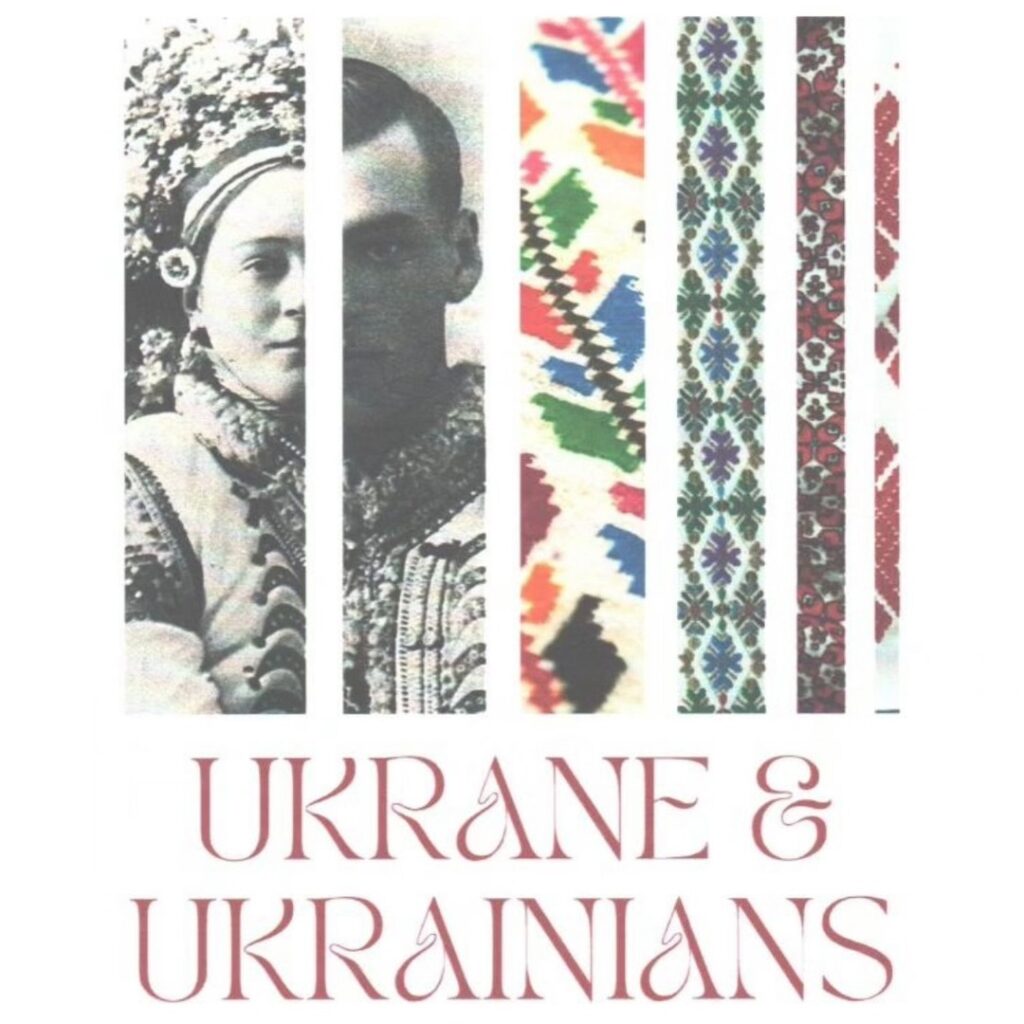
The Embassy of Ukraine in Turkmenistan is poised to display an exhibition of archival photographs in Ashgabat, dedicated to Ukraine’s Independence Day.

Titled “Ukraine and Ukrainians,” the exhibition will run from August 30 – September 6 2024, and comprise a selection of rare images from the Ivan Honchar Museum.

Funded by the National Center of Folk Culture, an organization actively engaged in preserving and disseminating folk cultural traditions, the museum’s vast collections of historical photographs provide the younger generation with a deeper understanding of their cultural roots and heritage.

The forthcoming exhibition follows “Cultural Values of the Turkmen People”; an exhibition of  photographs, books, and national dress previously mounted in Kyiv to celebrate the 300th anniversary of the birth of Turkmen poet and philosopher Makhtumkuli Fraghi.

Aimed to attract young audiences, the exhibition was complemented by excursions for pupils of eight of Kyiv’s  schools and lyceums, as well as students studying journalism, with talks presented on Turkmenistan’s archaeological monuments located in the ancient cities of  Merv, Kunyaurgench, and Nisa fortresses, and included in the UNESCO World Heritage List.


Kazakhstan’s Kapchagay Reservoir Fills Up For First Time In A Decade

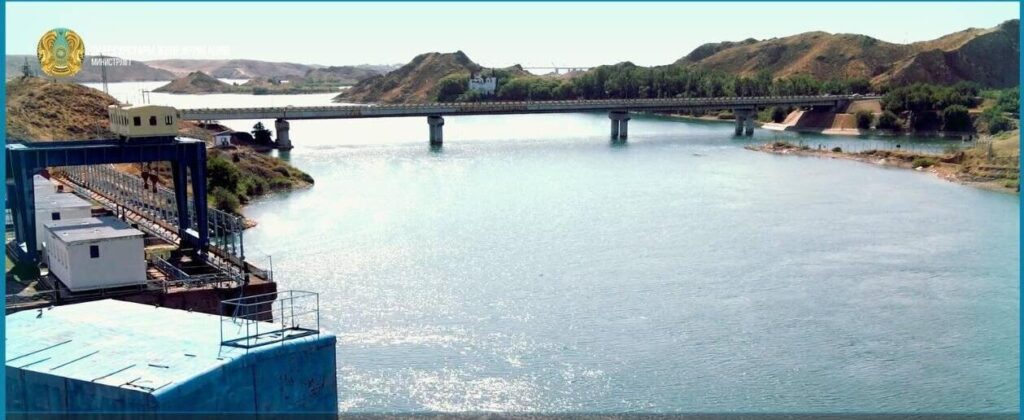
Kazakhstan’s Ministry of Water Resources and Irrigation announced on August 26 that the Kapchagay reservoir outside Almaty was completely full for the first time in ten years.

Created in 1970 as an artificial lake, 100km long and up to 25km wide in places, the reservoir can hold more than 18 billion cubic meters of water.

The reservoir collects water from the Ili River, which originates in China. This spring, the ministry said up to 900 cubic meters of water per second flowed into the reservoir, attributing the increased inflow to the melting of the Tien Shan mountain glaciers and higher than usual rainfall.

The reservoir was initially meant to regulate the flow of the Ili River on its way to Kazakhstan’s largest lake, Balkhash. Today, it is used for irrigation, fish farming, and recreation. Located a one-hour drive from Almaty, its beaches are popular with holidaymakers.

According to Medet Kerimzhanov, deputy head of the Balkhash-Alakol basin inspectorate, the last time the Kapchagay reservoir was 100% full was in 2014. Today, 750 cubic meters of water per second are released from the reservoir to irrigate fields. Kerimzhanov added that the irrigation season in the region will continue until the end of September.

Earlier this month, the Ministry of Water Resources said it was drafting an intergovernmental agreement between Kazakhstan and China on distributing water from transboundary rivers — the Ertis, the Ili, and the Emel. To date, the parties have reached a consensus on several provisions of the future agreement, the ministry said.

China to Build a Trade and Industrial Park in Astana

Last week, Xinjiang Hengyuan Investment Management Co., Ltd., based in the Chinese city of Baiyang, and Kazakh Invest signed a memorandum to implement the construction of a trade and industrial park, spanning 50 hectares, in Astana.

As reported by Kazakh Invest, the project is expected to positively impact the development of critical sectors of Kazakhstan’s economy, including logistics, warehousing, processing, trade, and real estate management. The project will also attract Chinese trade and manufacturing companies to operate in Kazakhstan.

Yan Wang, Deputy Mayor of Baiyang, commented: “We are entering this project with great enthusiasm, seeing the enormous potential of Kazakhstan as a key logistics hub in the region. Creating the Kazakhstan-China Trade and Industrial Park in Astana will significantly expand the country’s logistics capabilities and strengthen its role as an important transit corridor between East and West. We believe this project will catalyze attracting new trade flows and manufacturing.”

Yerzhan Yelekeyev, Chairman of the Board of Kazakh Invest, added: “This project opens up new horizons for cooperation between Kazakhstan and China. The creation of the Kazakhstan-China Trade and Industrial Park in Astana will not only accelerate the development of key sectors of our economy -but-also create numerous new jobs.”

Uzbekistan and Afghanistan To Work Together on Mining Projects

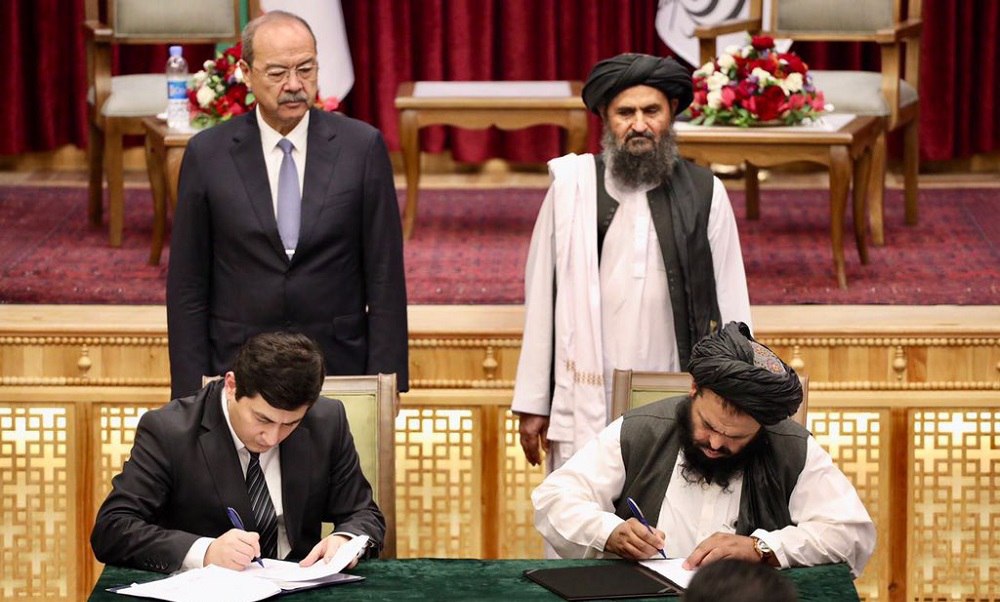
Afghanistan and Uzbekistan have signed five agreements related to mining projects in Afghanistan.

The agreements are for the exploration of hydrocarbon fields in the Afghan-Tajik oil and gas basin, the development of copper and gold deposits in the Qandaran district of Zabul province, iron extraction in the Hesh district of Bamyan province, and hydrocarbon resources in the Tuti-Maidan district of Faryab province. There are also plans to build a 120-megawatt gas-fired power plant in Faryab province.

These agreements, totaling $1.15 billion, were part of a more comprehensive package of 35 agreements and memorandums of understanding signed between the two countries. These agreements amount to an Uzbek investment in Afghanistan of over $2.5 billion.

The latest round of cooperation points to the strengthening of economic ties between Tashkent and Kabul, which is especially important given the region’s current geopolitical challenges and financial instability. These agreements can also significantly impact Afghanistan’s economic development by providing needed resources and creating jobs in crucial regions of the country.

With the Russian Language Waning in Central Asia, Will Other Languages Replace It?

Russian is still the most widespread foreign language in Kazakhstan, though its role is declining there, and across Central Asia in general. At the same time, the people of the region have been slow to learn other languages, in part due to economic factors such as slowing globalization, according to the Kazakhstani political analyst Zamir Karazhanov, who is head of the Kemel Arna Public Foundation.


The language of cities

Since declaring independence in 1991, all the counties of Central Asia have made promoting their national languages a priority. But foreign languages, which link the region with the rest of the world, have also historically been seen as critical. In practice, however, the study and use of foreign languages other than Russian is not widespread.

The Russian language is losing its prominence in Kazakhstan as the number of ethnic Russians declines. According to official statistics, as of January 1, 2024, Russians made up 14.89% of the country’s population, down from close to 40% in 1989. Nevertheless, thanks to the education system and Kazakhstan’s proximity to Russia, the level of proficiency in Russian remains high.

In Kazakhstan and Kyrgyzstan, Russian is a second official language. In Tajikistan, it is called the “language of interethnic communication”. In Uzbekistan and Turkmenistan, however, it does not have an official status.

More than 90% of Kazakhstanis know Russian to some degree, while 20% of the population considers it their native language. Meanwhile, those figures for Turkmenistan are 40% and 12% respectively. In Kyrgyzstan, about 44% know Russian and 5% consider it their native language; in Uzbekistan, it is about 50% and 2.7%; and in Tajikistan, 55% and 0.3%.

Kazakhstan’s President Kassym-Jomart Tokayev has repeatedly spoken about the need to preserve the Russian language in Kazakhstan, and the unacceptability of language-based discrimination. Last year, he unveiled the International Russian Language Organization, established by the CIS Heads of State Council. “The new organization is open to all countries and, of course, very relevant from the point of view of global humanitarian cooperation,” explained Tokayev, while underlining that measures to promote the Russian language in the Eurasia region and elsewhere are congruous with the trend of strengthening national identities. “Kazakhstan will continue the policy of bolstering the status of the state language of Kazakh,” Tokayev said at the time.

Today, Kazakhstan has many Russian-language media, while Russian remains the lingua franca at meetings among post-Soviet countries. Even though Russian is concentrated in big cities, all Kazakhstanis receive a significant amount of western and other foreign news from Russian sources.

“Russian is spoken in most of Kazakhstan. In the biggest city, Almaty, communicating in Russian is not a problem. But, if you move 30-50 km outside the city, it gets harder to speak it. Russian is the language of cities and the language of interethnic interaction,” the political analyst Karazhanov told The Times of Central Asia.

“Of course, the number of native speakers of the Kazakh language is growing, and the number of Russian speakers is declining, but Kazakh cannot yet be the language of interethnic communication. To raise its status, large investments are still needed, including accessible, preferably free, linguistic courses so people of other nationalities can learn Kazakh. This is a long process. Historically, the Russian-speaking population did not come into contact with Kazakh, except in the provinces where mainly Kazakhs lived. Overall, across the country, the opposite process [compared to now] was taking place. Currently, geopolitical events are a factor. After the announcement of mobilization in 2022 [for Russia’s war in Ukraine], migrants poured into Kazakhstan from Russia, which increased the need for Russian,” Karazhanov added.


The role of slowing global growth

Central Asia has slowly adopted the English language. In a global ranking of English proficiency by the language education company Education First last year, Kazakhstan ranked 104th out of 113 countries surveyed, and 22nd out of 23 in Asia, behind Uzbekistan, Kyrgyzstan, and Azerbaijan.

In 2022, Uzbekistan overtook its Central Asian neighbors in terms of English proficiency, though that meant just 89th place overall – its score was still considered “very low”. Meanwhile, Kyrgyzstan was ranked 91st, Kazakhstan 99th, and Tajikistan 106th.

In the breakdown by city, Tashkent trailed Astana and Bishkek, which nevertheless had a low score.

“The prevalence of foreign languages, including English and Chinese, which are in great demand abroad, is linked to the population’s need for them. People need these languages mainly for work, and/or to leave [Kazakhstan] to live permanently in another country. Even if the study of foreign languages goes up, this will not lead to an increase in the level of proficiency in them inside Kazakhstan, since it is linked to intentions to leave the country. For someone who [fluently] speaks a foreign language to stay in Kazakhstan, he needs a job where that language is required. In turn, the availability of such jobs mainly depends on investors who are native speakers of a foreign language, and there are not so many of them right now. Investment is rising, but we are not seeing an influx of foreign companies in which big capital would flow not to one group of industries (in particular, extractive industries), but to many groups or entire sectors of the economy at once. Chinese and English are needed in mining and the oil sector; in other areas, foreign businesses find translators, meaning this is not a mass process; the population [at large] is not included in it. In other words, a foreign language is needed either to travel abroad or to work for a foreign company, which is not very common. Therefore, the percentage of people who speak foreign languages remains low, since the population does not particularly need them for ordinary life,” says Karazhanov.

Karazhanov also attributes the slow adoption of the English language in Central Asia to the lack of colonial influence in the region, meaning the language was not studied for generations.

Today, he believes, the study of foreign languages is slowing, as the pace of globalization and economic growth weakens broadly, together with “people shooting all around.” In the near future, Karazhanov argues that no foreign language in Kazakhstan and in the region as a whole will be spoken proficiently by 20-30% of the population. On the contrary, if the geopolitical tensions fail to abate, the role of regional languages, including Russian, will only rise.


Back to the roots

Over the years, proposals have been made to add Chinese and Arabic to the compulsory study of Kazakh, Russian, and English in Kazakhstani schools, though they were never considered at the government level. Experts say interest among Kazakhstanis in learning Chinese, Turkish, Arabic, Korean, and even Uzbek (in areas along the two countries’ border) is growing steadily but very slowly. The situation in Kazakhstan, Karazhanov thinks, can be extrapolated to the whole of Central Asia, though not without some reservations.

“A person begins to learn a foreign language only when he faces a problem. He wants to get something, but first, he needs to learn another language. There is no such acute problem in the countries of Central Asia at this point. It is not that investors are coming, paying extra money to study [a language] and hiring huge staffs who speak Chinese or English. In terms of investment, Kazakhstan ranks first in Central Asia, so if there is no such need here, then there is definitely none in Kyrgyzstan or Uzbekistan,” the analyst noted.

The situation with the Russian language varies across the region. Kazakhstan’s neighbors have always had a lower share of Russian speakers, so it is no surprise that Uzbek and Tajik are gradually becoming the lingua franca in Uzbekistan and Tajikistan. In Kazakhstan, the transition to Kazakh is also proceeding relatively painlessly, without the bumps in the road that one might expect amid such a major shift in the national makeup of the population.

As for other foreign languages, Arabic is of interest as the language of the sacred texts of Islam, while Turkish has an appeal given the Turkic roots of the Kazakh language. Demand for learning them is growing steadily, explained Karazhanov, and depends less on economic and demographic factors.

“I cannot say that the number of Muslims in Kazakhstan is increasing since it surged back in the 1990s, but some religious people are really trying to learn Arabic. Others are starting to learn Korean so that they can go to South Korea to work. There is a Korean diaspora in Kazakhstan, which has its own language schools, and it is not only Korean Kazakhstanis who study there. Many Kazakhstanis travel to Turkey to buy real estate. But, as I said, people must need to learn languages; if there is none, then the percentage of those who speak them will grow to some small figure and plateau there,” Karazhanov concluded.