• KGS/USD = 0.01144 0%
  • KZT/USD = 0.00193 -0%
  • TJS/USD = 0.10811 -0.28%
  • UZS/USD = 0.00008 0%
  • TMT/USD = 0.28490 0%
  • KGS/USD = 0.01144 0%
  • KZT/USD = 0.00193 -0%
  • TJS/USD = 0.10811 -0.28%
  • UZS/USD = 0.00008 0%
  • TMT/USD = 0.28490 0%
  • KGS/USD = 0.01144 0%
  • KZT/USD = 0.00193 -0%
  • TJS/USD = 0.10811 -0.28%
  • UZS/USD = 0.00008 0%
  • TMT/USD = 0.28490 0%
  • KGS/USD = 0.01144 0%
  • KZT/USD = 0.00193 -0%
  • TJS/USD = 0.10811 -0.28%
  • UZS/USD = 0.00008 0%
  • TMT/USD = 0.28490 0%
  • KGS/USD = 0.01144 0%
  • KZT/USD = 0.00193 -0%
  • TJS/USD = 0.10811 -0.28%
  • UZS/USD = 0.00008 0%
  • TMT/USD = 0.28490 0%
  • KGS/USD = 0.01144 0%
  • KZT/USD = 0.00193 -0%
  • TJS/USD = 0.10811 -0.28%
  • UZS/USD = 0.00008 0%
  • TMT/USD = 0.28490 0%
  • KGS/USD = 0.01144 0%
  • KZT/USD = 0.00193 -0%
  • TJS/USD = 0.10811 -0.28%
  • UZS/USD = 0.00008 0%
  • TMT/USD = 0.28490 0%
  • KGS/USD = 0.01144 0%
  • KZT/USD = 0.00193 -0%
  • TJS/USD = 0.10811 -0.28%
  • UZS/USD = 0.00008 0%
  • TMT/USD = 0.28490 0%
10 December 2025

Climate Change Threatens Kyrgyzstan With Potential Energy Crisis

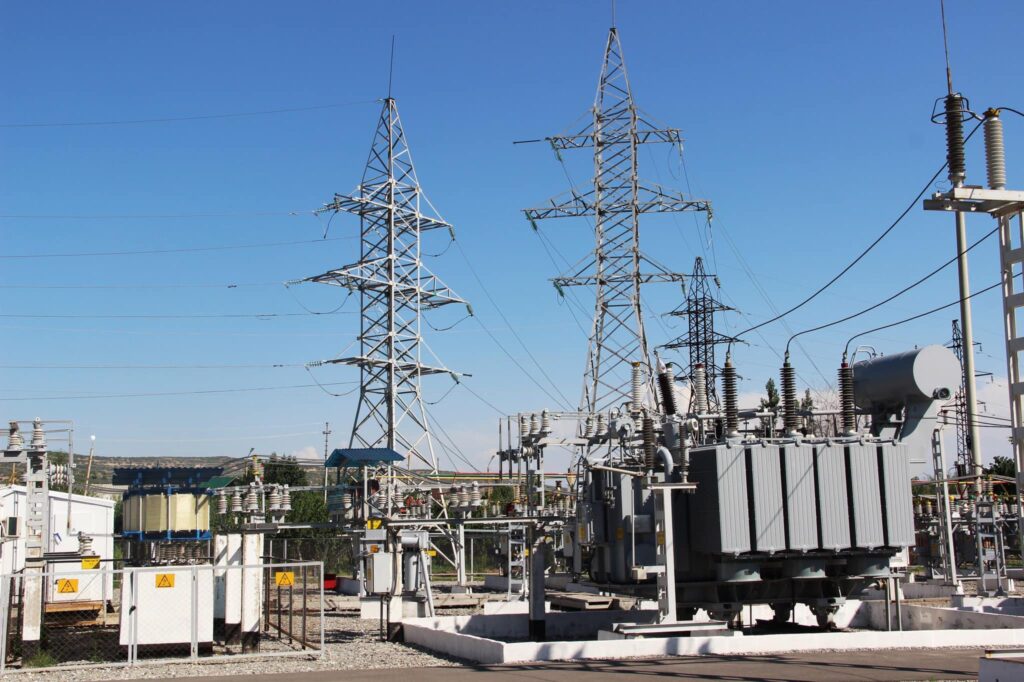
With electricity serving as Kyrgyzstan’s main source of heating for a third of the country’s population, national power consumption is tripling during the winter months, according to the Kyrgyz Energy Ministry. The ministry has drafted a law requiring “efficient and rational” use of electricity. Also, according to the draft law, authorities should develop efficient ways to generate electricity that take into account global climate change.

“At present, the shortage of domestic energy resources and constantly rising prices for imported hydrocarbons are constraining factors in increasing production and fully meeting the needs of the population and the real sector of the republic’s economy in the power grid,” reads the background to the draft law.

According to the ministry, the country’s leadership has laid out the task of creating conditions for introducing progressive technologies, equipment and materials into Kyrgyzstan’s energy sector that can ensure a qualitative improvement in the efficiency of domestic energy consumption. The background to the draft law states that in order to achieve this, the first priority is a system of strict record-keeping of electricity consumption by private companies and the population. The Ministry of Energy investigated and found that 35% of Kyrgyz people use electricity for space heating in winter. That’s because electricity is cheaper than traditional energy resources such as gas and coal. Officials argue that the low level of electricity tariffs for the population does not incentivize energy conservation. International observers have repeatedly said that increasing the price of electricity is a necessity, but the country’s authorities don’t want to take unpopular measures.

The Ministry of Energy believes that if every citizen is concerned about saving electricity and using it rationally, the country’s dependence on power imports will be reduced. As the Times of Central Asia has previously reported, Kyrgyzstan has a serious imbalance in its energy system, despite the country’s large water reserves. Electricity consumption grows by six% every year, forcing the authorities to import electricity from neighboring countries during the winter. But by the 2030s, the situation could seriously deteriorate. That’s because most of the country’s hydroelectric power plants, which generate 78% of Kyrgyzstan’s electricity, are located on the Naryn River. Climate scientists predict that the flow of Kyrgyzstan’s main river will decrease by 15-50% after 2030. That means the already low water levels in Kyrgyzstan’s largest reservoirs could become even lower.

This year, Kyrgyz authorities seriously intend to begin construction of a new large power plant, Kambarata-1, which will also be located on the Naryn River. The cost of the project is more than $3 billion. The new draft law from the Ministry of Energy notes that the Kyrgyz energy sector is highly vulnerable because the main power facilities depend on the flows of only one river. And the persistently warmer temperatures brought by climate change could worsen the industry’s already considerable problems. That’s why more small hydropower plants (HPPs) need to be built in Kyrgyzstan.

Kyrgyz President Sadyr Japarov has repeatedly said that for energy security, more small HPPs need to be built throughout the country. “To support business, we have abolished VAT on the import of necessary equipment, and simplified the procedure for granting land plots for the construction of energy facilities. Businesses based on renewable energy sources can be exempted from licensing for up to 15 years,” Japarov said earlier.
Turkmenistan Border Seeing Illegal Economic Activities Committed From Afghanistan’s Side

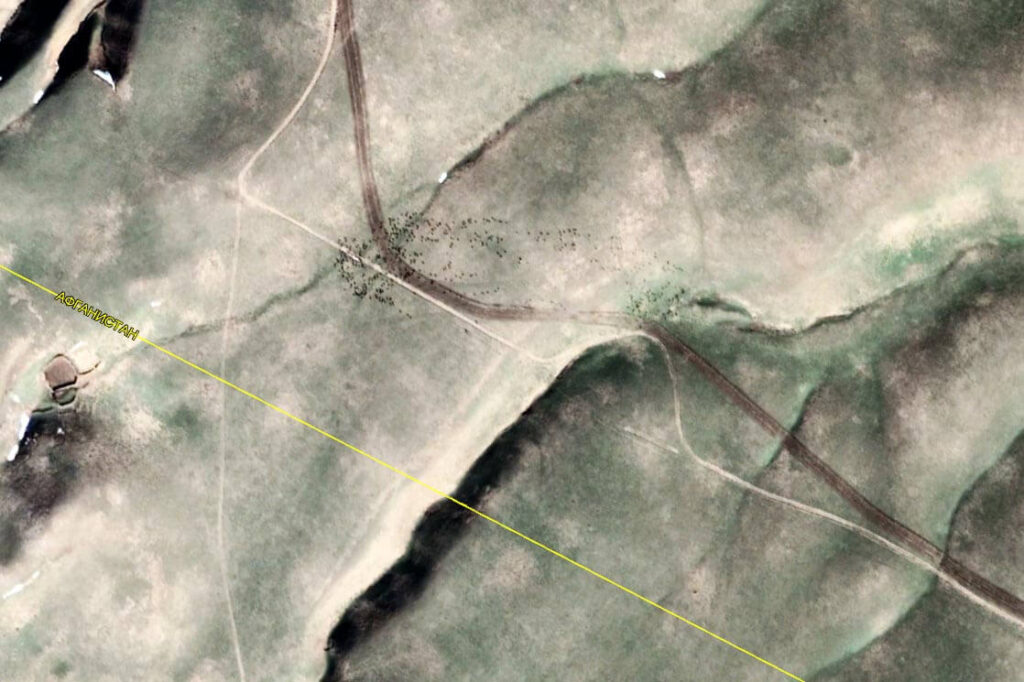
Citizens of Afghanistan are using thousands of square kilometers of territory that border Turkmenistan for illicit economic purposes. Specifically, Afghans graze on the land illegally, engage in unrestrained hunting, and gather fruits from wild trees, according to a report by the Chronicles of Turkmenistan, which cited a MeteoJournal.ru story that analyzed satellite photos of the region.

The Turkmenistan-Afghanistan border region is a control zone, which is a section of any border with restricted access that is between a few meters and several kilometers deep. It’s also commonly referred to as a “neutral” zone.

According to MeteoJournal, satellite images show that Afghans are freely entering this area of Turkmenistan, mostly for the purpose of raising livestock. One photo depicts a herd of sheep, as well as a sudden change in the density of vegetation along the line of engineering structures that delimit the border zone within the territory of Turkmenistan. Where the herds graze in front of the engineering structures, there is hardly any vegetation.

Additionally, Turkmenistan’s border zone experiences regular fires, according to MeteoJournal. Environmentalist Andrey Zatoka speculated that intentional grass burning may have caused the fires. Intentional burning of lands used for grazing by livestock is a common tool used by farmers around the world to cultivate vegetation for their animals.

According to the publication’s Telegram channel, a powerful DDoS (distributed denial-of-service) attack started after this content was posted on the MeteoJournal website –and has been ongoing for the past few days.

Land Cleared for Tourism next to Old Bukhara; UNESCO Urges Pause

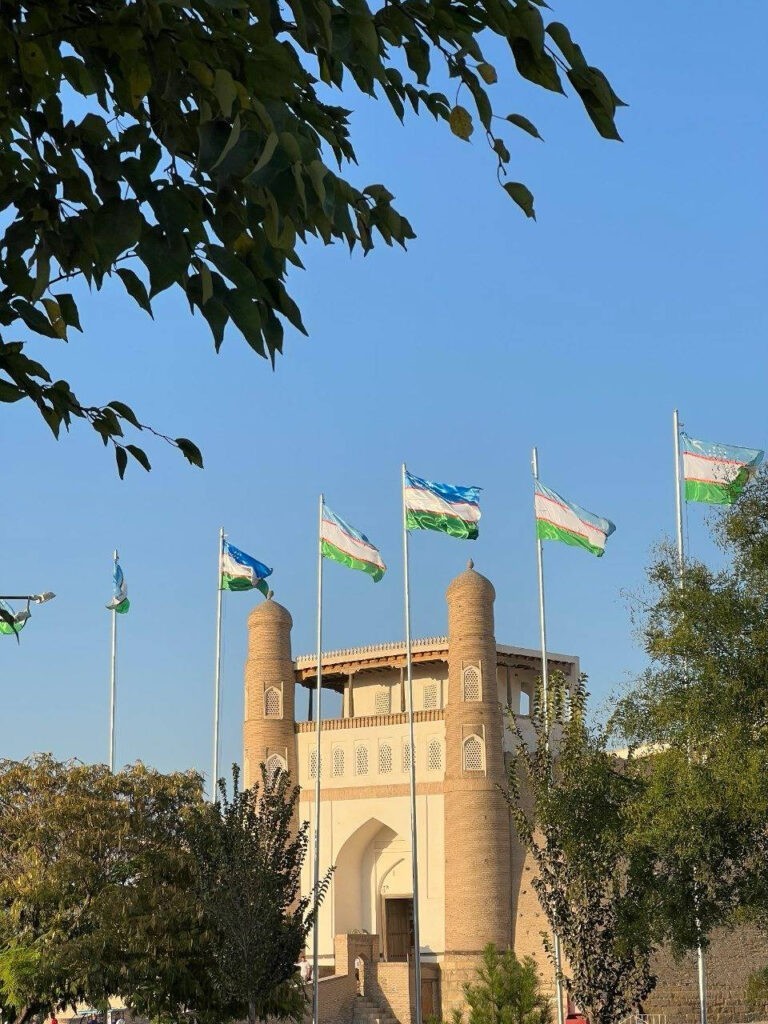
Despite UNESCO’s concerns, Uzbekistan is pushing ahead with plans for a big tourist complex next to the historical center of Bukhara, a jewel of medieval architecture in Central Asia.

Workers are already clearing areas for “Eternal Bukhara,” a tourist facility that will boast a museum, teahouses and restaurants offering national cuisine, craft stalls and workshops for gold and blacksmithing, embroidery, wood carving, pottery, and painting. The design intends to evoke the urban layout of past centuries, with traditional drainage systems and ponds.

All this construction would happen in part of the buffer zone surrounding the old city, potentially increasing the flow of tourists, but also putting more pressure on the integrity of the ancient site. Bukhara, a destination on the Silk Route that is more than 2,000 years old, contains the tomb of the ruler Ismail Samani, an emblem of 10th century Muslim architecture, as well as many ancient madrasas, or Islamic schools, according to UNESCO.

Traveler Veronika Karobitskaya looks toward the Kalyan Mosque in the ancient city of Bukhara, Uzbekistan. Karobitskaya, a Russian citizen, visited Bukhara in September 2022 and said she was “completely fascinated” by the city’s heritage. Photograph: Veronika Karobitskaya

A view of the Kalon Minaret, a major landmark in Bukhara. Photograph: Veronika Karobitskaya

The historical center of Bukhara, registered on the world heritage list of the U.N. cultural agency in 1993, comprises 216 hectares and its buffer zone comprises 339 hectares.

Some demolition has begun on the 32.6 hectares earmarked for the tourist complex, including at a sports stadium. Last year, some Bukharan residents appealed to the government not to dismantle the stadium, saying 1,200 children and 50 coaches use the stadium every day.

A total of 29 buildings and facilities are slated for demolition. They include the Bukhara government building, designed by Uzbek architect Richard Blaise and built in 1980, as well as secondary and music schools, and social centers. Local authorities have tried to reassure residents who say they wish the tourist complex could be built further from the historical center.

“It should be noted that on the basis of this project, it is planned to create a green park for residents and guests of Bukhara to walk in two-thirds of the area planned. In this regard, the trees in the area established earlier in accordance with the ´Green Bukhara´ program in the project area will be fully preserved and will be enriched as a new garden landscape,” the regional administration said in a report.

According to UNESCO, however, there are laws and urban planning codes that “provide protection of monuments of cultural heritage and their buffer zones.”

Sara Noshadi, director of UNESCO’s office in Uzbekistan, said on X, formerly Twitter, on March 2 that the U.N. agency is closely monitoring the Bukhara’s ancient site and was aware of local concerns about “potential construction plans” in the buffer zone.

Russian tourist Veronika Karobitskaya, who visited Bukhara in 2022, stands next to the carved wooden columns of the Bolo Haouz Mosque in the old city. Photograph: Veronika Karobitskaya

“The World Heritage Centre hopes that the authorities will comply with their commitments to the World Heritage Convention, and that they will not carry out any demolition/construction project without the prior notification and assessment of the World Heritage Committee, whose next session will be held in July 2024,” Noshadi said.

She added that UNESCO is ready to provide expertise and assistance to preserve the site.

“Why are construction works being carried out in the UNESCO buffer zone without UNESCO’s permission?” Nikita Makarenko, an Uzbek journalist and commentator, wrote on X.

Enter Engineering, a major construction company operating in Uzbekistan, is one of the main investors in the Eternal Bukhara complex, the Kun.uz media outlet reported citing Zuhridin Muhiddinov, the chief architect of Bukhara region. Enter Engineering also built a tourist center that opened in the ancient city of Samarkand in 2022.

Bukhara’s historical area, which includes wooden and earthen structures, mostly retains its character despite new construction in the 20th century, earthquake damage, and threats such as termites and underground water. Bolshevik forces bombed the city in 1920, eventually ousting the Bukhara Emirate.

Foreign tourists who have visited Bukhara hope others can experience the marvels that they did.

“I like the old world charm of the city, as I stayed in the old city itself. The locals were very friendly and sincere, and are willing to assist despite the language barrier,” said Lukman Hakim, a tourist from Singapore who visited Bukhara in December.

“I hope Bukhara can retain its charm and not build more buildings,” Hakim said on Instagram after being contacted by The Times of Central Asia. “I like that the old buildings are being repurposed for hotels, inns, restaurants and souvenir shops, but I hope these wouldn’t come at an expense for travelers.”

US Policymakers and Central Asian Business Leaders Gather in Almaty for the CIPE B5+1 Forum

Cooperation and trade with Central Asia still holds much unrealized potential. The region is developing fast and offers opportunities for companies and agencies, both international and local. As the global geopolitical landscape changes and supply chains are disrupted, the importance of Central Asia as a business and transit hub, through initiatives such as the Trans-Caspian Corridor, is growing. 

There are therefore great incentives for the five countries of the region – Kazakhstan, Uzbekistan, Kyrgyzstan, Tajikistan and Turkmenistan – to find ways to function as a single integrated market, in order to capitalize on opportunities for foreign and local companies, and attract more international investment and business. 

For this reason the Center for International Private Enterprise (CIPE) is inviting policymakers from Central Asia, the United States and other countries to its B5+1 Forum this week. On 14 and 15 March in Kazakhstan’s business capital of Almaty, leading minds from the public sector will discuss Central Asia’s economic integration, international trade and investment, alongside dozens of high-profile private companies. 

An event on 14 March entitled “Looking within Central Asia” will introduce the objectives and expected outcomes of the B5+1 format. Presentations by representatives of Kazakhstan’s Ministry of National Economy, the Caspian Policy Center, the US Department of State and Kyrgyzstan’s Ministry of Economy and Commerce will give business-focused perspectives on improving economic integration and the investment climate. 

The discussion on 15 March will center on the theme of “Central Asia’s place in the world economy”. Talks from representatives of the US-Kazakhstan Business Council, the American-Uzbekistan Chamber of Commerce and the European Bank for Reconstruction and Development (EBRD) will give an international perspective on promoting trade and investment flows in Central Asia.

The B5+1 Forum forms part of CIPE’s program “Improving the Business Environment in Central Asia” (IBECA). CIPE themselves are affiliated to the US Chamber of Commerce – the catalyst behind the B7 and B20 platforms – and receive funding from the US Department of State. 

The establishment of B5+1 is closely aligned with commitments outlined in a document called the New York Declaration to strengthen the republics’ economic relations, and improve the business environment for regional economic integration and investments. The upcoming Forum aims to deliver on two key commitments in the declaration.


The Times of Central Asia will be in attendance at the B5+1 Forum on 14-15 March, and will be publishing insight and analysis from the event.

Expansion of Transport Connections between Kazakhstan and Uzbekistan

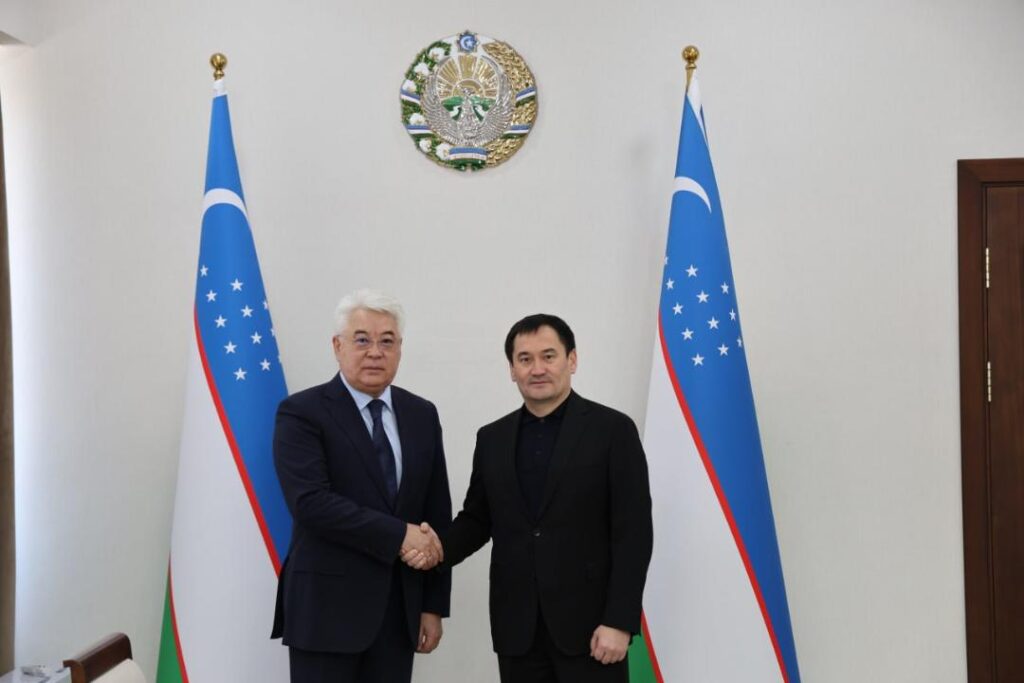
On March 8th, the Ambassador of Kazakhstan to Uzbekistan Beibut Atamkulov and the Minister of Transport of Uzbekistan Ilhom Makhkamov met in Tashkent to discuss the expansion of transit, transport and logistics links between Kazakhstan and Uzbekistan.

The implementation of a collaborative project to improve the road and rail infrastructure between the two countries is essential for the realization of a plan to increase bilateral trade to $10 billion per annum.

Kazakh-Uzbek rail and road freight is growing. In 2023, the volume of rail freight alone, between Kazakhstan and Uzbekistan, increased by 17.2% to 31.4 million tons, compared to 26.8 million tons in 2022.

The resumption of air services between the Kazakh cities of Almaty and Aktobe and Uzbekistan’s Nukus, as well as new connections between the countries’ tourist centres including Turkestan-Samarkand, Turkestan-Bukhara, and Turkestan-Urgench, was also discussed.

The current number of weekly flights between cities in Kazakhstan and Uzbekistan is 25; between Astana and Tashkent, 8, and between Almaty and Tashkent, 17.

New Bonded Zone to Boost Kyrgyz Exports to China

The Ministry of Digital Development of the Kyrgyz Republic has announced the opening of a new bonded zone to boost the development of e-commerce and exportation of Kyrgyz goods to the Chinese market.

The zone covers an area of 7,500 square meters on the Kyrgyzstan border between Kyrgyz Pochtasy (Kyrgyz Post) OJSC, Naryn’s free economic zone (FEZ), and Kashgar FEZ in China’s western Xinjiang Uygur Autonomous Region.

The opening of the new national pavilion ‘Made in Kyrgyzstan,’ a facility where Kyrgyz products are exhibited, stored, sold, and shipped both in e-commerce and offline modes, was attended by Akylbek Japarov, Chairman of the Cabinet of Ministers of Kyrgyzstan, on a visit to the zone early in March.

The project provides 48 and 72-hour direct warehouse-to-warehouse services for cross-border trading logistics between China and Kyrgyzstan.