• KGS/USD = 0.01144 0%
  • KZT/USD = 0.00215 0%
  • TJS/USD = 0.10637 0.19%
  • UZS/USD = 0.00008 0%
  • TMT/USD = 0.28530 0%
  • KGS/USD = 0.01144 0%
  • KZT/USD = 0.00215 0%
  • TJS/USD = 0.10637 0.19%
  • UZS/USD = 0.00008 0%
  • TMT/USD = 0.28530 0%
  • KGS/USD = 0.01144 0%
  • KZT/USD = 0.00215 0%
  • TJS/USD = 0.10637 0.19%
  • UZS/USD = 0.00008 0%
  • TMT/USD = 0.28530 0%
  • KGS/USD = 0.01144 0%
  • KZT/USD = 0.00215 0%
  • TJS/USD = 0.10637 0.19%
  • UZS/USD = 0.00008 0%
  • TMT/USD = 0.28530 0%
  • KGS/USD = 0.01144 0%
  • KZT/USD = 0.00215 0%
  • TJS/USD = 0.10637 0.19%
  • UZS/USD = 0.00008 0%
  • TMT/USD = 0.28530 0%
  • KGS/USD = 0.01144 0%
  • KZT/USD = 0.00215 0%
  • TJS/USD = 0.10637 0.19%
  • UZS/USD = 0.00008 0%
  • TMT/USD = 0.28530 0%
  • KGS/USD = 0.01144 0%
  • KZT/USD = 0.00215 0%
  • TJS/USD = 0.10637 0.19%
  • UZS/USD = 0.00008 0%
  • TMT/USD = 0.28530 0%
  • KGS/USD = 0.01144 0%
  • KZT/USD = 0.00215 0%
  • TJS/USD = 0.10637 0.19%
  • UZS/USD = 0.00008 0%
  • TMT/USD = 0.28530 0%

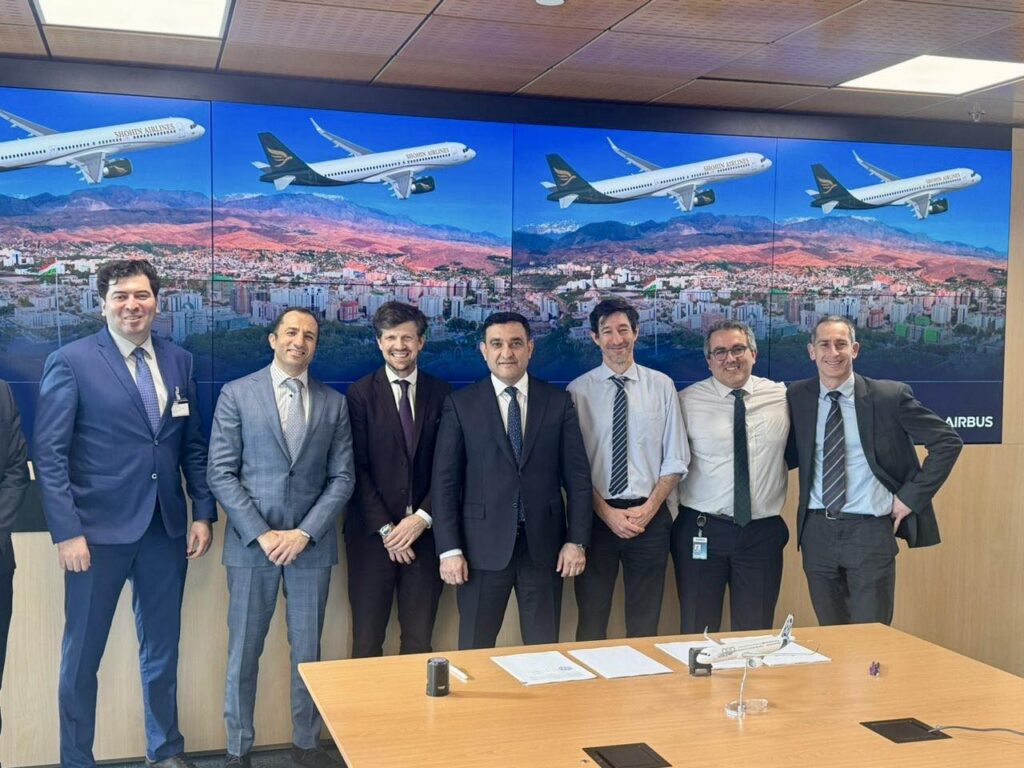
Tajikistan-Based Shohin Airlines Aims to Acquire Four Airbus Aircraft

Shohin Airlines, a new private airline registered in Tajikistan, says it is in the final stage of acquiring four planes from the Airbus A320neo line of aircraft.

The airline and the European aerospace company met on April 10 to discuss the acquisition of two A320neo and two A321neo aircraft, building on a dialogue that began earlier this year at the Airbus headquarters in Toulouse, France, according to Shohin Airlines.

The discussions with Airbus are showing “steady positive momentum,” and implementation of agreements “will be an important step in developing the airline’s fleet and strengthening its position in the air transport market,” the airline said in a statement on Friday.

Currently, Shohin Airlines operates helicopters for specialized flights. The negotiations with Airbus reflect its plans for significant expansion into commercial passenger traffic.

Last month, the airline announced a $200 million investment from a European investment fund.

Tajikistan Says Two Afghan Smugglers Killed After Crossing Border

Security forces in Tajikistan killed two alleged drug smugglers from Afghanistan who crossed the border overnight, the Tajik government said on Friday.

The incursion happened around 1 a.m. in the Farkhor district of the Khatlon region, and border guards and other national security troops disrupted the attempt to smuggle 25 kilograms of hashish, Tajikistan’s State Committee for National Security said.

“The smugglers disobeyed the border patrol’s lawful demands to surrender and offered armed resistance,” the committee said, according to state news agency Khovar. It said two of the smugglers were killed during “the combat operation” and that a third suspect escaped in the darkness.

The committee described the situation at the border with Afghanistan as “under control.”

On April 8, delegates from border agencies of some countries belonging to the Commonwealth of Independent States, a regional group linked by past Soviet ties, assessed the Afghanistan situation during a meeting in Tajikistan.

“There is general agreement that the unstable military-political and economic situation in Afghanistan will have a destructive impact on border security in the Central Asian region in the medium term,” the agencies said.

Last year, a number of Chinese workers in Tajikistan were killed in cross-border attacks from Afghanistan, prompting the Chinese government to urge the Tajik government to take more robust steps to protect Chinese citizens and businesses.

At the time, Tajik President Emomali Rahmon and senior security officials discussed ways to strengthen the southern border with Afghanistan, whose ruling Taliban movement promised to help find the attackers. The border between the two countries is rugged and mountainous in many places and is about 1,370 kilometers long, making it difficult to monitor.

From From Global Streaming to International Productions: Kazakhstan Filmmakers Go International

Makpal Kursabayeva is a sound engineer whose work has increasingly extended beyond Kazakhstan’s local film industry. Over the years, she has contributed to projects with international teams, from working alongside The Matrix cinematographer Bill Pope to taking part in series produced for global streaming platforms. Her career highlights the expanding role of Kazakhstani professionals in international production and shows that local crews can compete with their Western counterparts. Her work includes on-set recording, post-production, and sound capture in environments ranging from military airbases and nighttime steppes to urban locations.

In an interview with The Times of Central Asia, she discusses how the industry works and why crews from Kazakhstan are competitive in international productions.

TCA: You are a highly experienced sound engineer, but most of your work has been on local projects. Do you think Kazakhstani specialists are competitive in the global market?

Makpal: I have no doubt about it, however confident that may sound. Recently, we worked on an international series filmed in Kazakhstan by Turkish filmmakers. Many department heads were Turkish, but I led the sound department. We worked and communicated seamlessly; there were no barriers at all. And that’s always the case.

I also worked on a commercial project for Chevron, where the cinematographer was Bill Pope, who shot the legendary film The Matrix, the Ant-Man films, Shang-Chi, and more.

TCA: Was the entire crew international as well?

Makpal: The second director was American. Playback equipment was brought from Moscow. It was a mix, bringing together the best. The Russian team even said that such sound equipment isn’t available in Moscow. Technically, we are not lagging behind at all. We also have plenty of talented and highly skilled professionals.

TCA: Were they at all arrogant?

Makpal: Not at all. Bill Pope was great to work with. He’s like a rock star, very open, loves music. We talked about ethnic music; I let him listen to the band Turan. He even asked me to play the dombra. I was a bit nervous because the executive producer was very strict, and I thought she might say I was disrupting the workflow. But he went to her himself and asked, and then she was the one chasing me to make it happen, so the question isn’t whether we can work at a Western level; we already do.

TCA: You’ve also worked with German teams on Emir Baigazin’s films, and with French teams on projects by Yermek Shinarbayev and Akan Satayev’s epic Myn Bala: Warriors of the Steppe?

Makpal: Yes. There was an interesting experience with one Western specialist, I won’t say from which country. I thought they had a different school and that I could learn from him. But while he was good on set, he wasn’t very strong in post-production. It even got to the point where I was teaching him, explaining how to properly edit sound and the technology behind it. Sometimes I would suggest something, and the next day those ideas would be presented as his own. But that didn’t matter much to me, the important thing was that the work was done correctly. I think it’s because we are more versatile specialists, we can work on set and actively participate in post-production. It seems they don’t always have that breadth.

TCA: What is most important to you in working with sound, and which part of the process do you enjoy most?

Makpal: I love the entire process: recording clean sound on set, capturing atmospheres and sync sounds, editing, and sitting in on the final mix. I adore dubbing, it’s about interacting with actors, finding the right intonation, when an actor delivers a line exactly as you imagined it, or even better. That’s pure joy.

TCA: Your projects range from dramas to blockbusters. Which one stands out the most?

Makpal: Every shoot is special, something interesting always happens. For example, on Time of Patriots, we recorded real fighter jets. We were on an airbase, setting up multiple microphones in the field and recording flyovers. It’s an incredibly powerful sound; you have to capture it perfectly.

On another commercial project involving cars, we had to record a vehicle driving at high speed. We placed microphones all over the track, and I got into the car with the driver, directing how to drive to get the right sound. It was quite extreme but very exciting.

TCA: In Yermek Tursunov’s Shal, you even worked with wolves?

Makpal: They were actually wolf-dog hybrids. They were brought from Russia and were very friendly, even wagging their tails, which annoyed the director because it didn’t look wolf-like. Sometimes I even walked three wolves on leashes.

It was a very unusual process. We were in a canyon, without the film crew. My colleague and I set up microphones, and I started howling, and the wolves responded. That’s how you capture the sound. We were on the same wavelength. I remember that shoot very fondly. I also had to record the sound of a snowmobile, and they gave me rides on it, one of those rare moments where work and enjoyment align perfectly.

TCA: Have you experienced extreme conditions on set?

Makpal: Every time, especially due to the weather. Once, during a shoot, a young cameraman asked me to film a message for his mother, saying, “Mom, everything is fine, I’m warm.” Then we had a 20-hour shoot in freezing conditions. Emergency services announced school closures due to a snowstorm, we were still filming. At least we could occasionally warm up at a checkpoint. But that cameraman didn’t step inside once in 20 hours. I think he was traumatized after that.

TCA: You must be constantly freezing, most filming is outdoors, right?

Makpal: We do freeze, even with the warmest gear, special boots, heated insoles powered by power banks. Once I got so cold I thought, “Can I please never work in winter again?” Somehow, that wish came true, I didn’t work winters for a while. Of course, if I’m called, I’ll go but I’d rather avoid the discomfort.

TCA: Your whole life seems to take place on set. Do you ever feel like life is passing you by?

Makpal: Yes. As long as I can remember, I’ve been on set. I feel like I’ve missed important moments in my life. When Seven Days of May premiered, I came home and discovered my 75-year-old father was seriously ill. Two weeks later, he passed away, I learned about it on set, at the end of the workday. It was painful, but I didn’t allow myself to grieve and returned to work on the third day.

When my grandmother passed away, I was in the middle of a 30-hour editing session on a critical project. The entire studio was working. I didn’t even attend the funeral, and I regret that.

TCA: Was that a kind of defense mechanism?

Makpal: Probably. It was hard to process. But I wasn’t only on set during difficult moments, I missed celebrations too. For example, I didn’t celebrate my graduation.

I graduated with honors. My thesis project was Prokofiev’s cantata Alexander Nevsky, a large-scale work with a symphony orchestra and double choir. We recorded and mixed it, and I used it as the basis of my thesis, adding a theoretical part which I actually wrote on set during The Sky of My Childhood.

I came in for one day to defend it. My supervisor, Sergey Lobanov, was on the committee, and right after that he asked me to work on post-production materials with Gérard Depardieu. Everyone was celebrating, and I was editing until late at night.

I always felt everything depended on me, that I had to do it perfectly, that no one else could do it.

TCA: What has changed in the industry over the years?

Makpal: Everything. The biggest change is that we now achieve 100% clean sound. The first time I managed that was on Kempir by Yermek Tursunov. The cast was exceptional: Gaziza Abdinabieva, Kadyrbek Demessinov, Isbek Abilmazhinov, Murat Nurasylov, and legends like Asanali Ashimov and Meruert Utekesheva. It would have been a shame to dub them.

At the time, the producer kept asking me what percentage of clean sound we would get. I said, “I don’t know, I’m not Nostradamus.” In the end, we didn’t dub anything, the entire film used original sound. That was a shock, because it had rarely been done before.

TCA: Has the industry become more technological?

Makpal: Yes, but there are still many nuances that technology can’t replace. For example, it’s now very hard to find quiet locations. We sometimes worked from 2 a.m. to 5 a.m. just to capture silence. Once, we had only one night to record all background sounds before a lockdown began. If we hadn’t made it in time, it wouldn’t have been possible at all.

TCA: How sensitive are directors to sound?

Makpal: It varies. Some are very sensitive, others less so. Some like to sit through dubbing and relive everything, the shoot, the edit. Others get tired of their own material and don’t attend at all.

TCA: But you ensure everything sounds right?

Makpal: It depends. The director is responsible for acting if a line is delivered insincerely or incorrectly. Editors and script supervisors handle dialogue continuity. My role is to ensure the technical quality and clarity of sound, it has to be clean, rich, and expressive. If a plane flies overhead or a phone rings, I ask for another take. Sometimes we decide to fix it in post-production. I always explain what can be cleaned later and what cannot, then the team decides how much they are willing to adjust for sound quality.

TCA: What most often interferes with good sound on set?

Makpal: Location is key. The main issue isn’t phones — they’re usually switched off — but the environment itself: city noise, machinery, random sounds. Technology has advanced a lot, and we can clean many things in post-production but not everything. That’s why the main task is to capture sound correctly from the start.

TCA: Do you have a dream project or director you’d like to work with?

Makpal: Recently, I realized that all my professional dreams are already coming true. I’m working with the people I always wanted to work with.

Kazakhstan Freezes Projects with Iran Amid Military Conflict

Kazakhstan has suspended several joint projects with Iran amid ongoing military hostilities in the country, Deputy Foreign Minister Arman Issetov has announced.

The decision effectively puts on hold plans to expand trade and economic cooperation between Astana and Tehran, despite previously stated ambitions to significantly increase bilateral trade.

On December 11, 2025, during the Kazakhstan-Iran business forum in Astana, Tokayev said bilateral trade had exceeded $340 million the previous year. The two sides set an initial goal of raising trade to $1 billion, with a longer-term aim of doubling that figure. However, the escalation of military activity in Iran has forced both sides to reconsider these plans.

“The situation is currently very complicated. At this point, many of our projects with Iran have been frozen due to the country being in a state of war. As a result, our businesses and entrepreneurs are now in a wait-and-see position,” Issetov said.

“Kazakhstan is not suffering major losses, as the volumes were relatively small and did not significantly impact the national economy. Nevertheless, given our strong partnership with Iran, there is an effect, though not a substantial one,” he added.

Despite the growth in trade, Iran’s share in Kazakhstan’s foreign economic relations remains limited. According to the Ministry of National Economy, exports to Iran in 2025 amounted to $239.3 million, while imports totaled $191 million, equivalent to roughly 0.3% of the country’s total foreign trade turnover.

The agricultural sector accounted for the bulk of trade: approximately 90% of Kazakhstan’s exports to Iran consisted of wheat and barley. In the first ten months of last year alone, grain shipments reached $280 million, exceeding the total agricultural trade volume for 2024 ($220 million).

Government officials believe these volumes can be redirected to alternative markets if necessary.

From a logistics perspective, Iran is not considered a critical transit route for Kazakhstan. This was previously confirmed by Deputy Prime Minister and Minister of National Economy Serik Zhumangarin.

“I don’t think the conflict will have any impact on our logistics. Shipments through the Persian Gulf were never dominant for us,” he said.

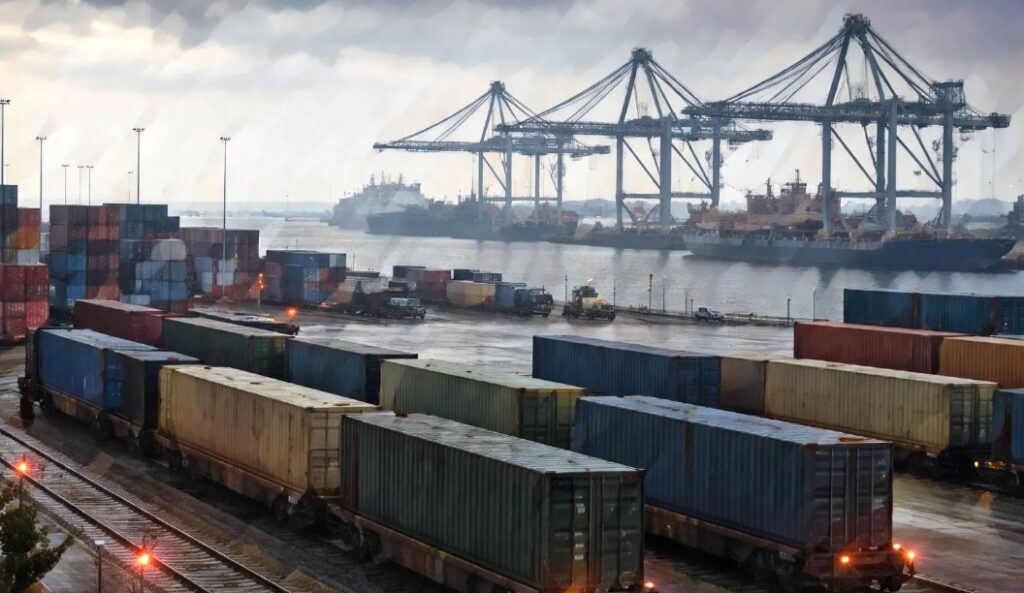
Despite its currently limited role, Iran had been viewed as a promising direction for the development of transport corridors. In December 2025, Tokayev announced plans to build a transport and logistics terminal at Shahid Rajaee Port, which was intended to provide direct access for Kazakh exports to global markets.

Plans also included strengthening links between Kazakhstan’s ports of Aktau and Kuryk and Iran’s ports of Amirabad and Anzali, as well as integrating Bandar Abbas and Chabahar into regional logistics chains.

“It is important for us to develop multimodal corridors connecting Central Asia with the Persian Gulf, and the Kazakhstan-Turkmenistan-Iran railway plays a key role in this,” Tokayev previously stated.

According to his estimates, cargo traffic along this route could have doubled by 2030. For now, those plans are effectively on hold.

Water Stress: Will the Summer of 2026 Become a Turning Point for Central Asia?

The summer of 2026 is projected to be a critical and potentially decisive period for Central Asia in the context of water stress. The region is entering the growing season with significantly lower water reserves in its main river basins, the Amu Darya and Syr Darya, compared to previous years. The combined impact of climate change and rising consumption is expected to exacerbate irrigation shortages, threatening crop yields and food security.

A Region Under Pressure: Water as a Strategic Factor

For Kazakhstan, water is taking on an increasing strategic importance in 2026. The southern regions, Kyzylorda, Turkestan, and Zhambyl, have already entered a phase of persistent low water availability. Estimates suggest that the irrigation deficit could reach up to 1 billion cubic meters.

The situation in the Syr Darya basin remains critical. Inflows are expected to fall 3.2 billion cubic meters below normal, and by the start of the growing season, total water volume may reach only 1-2 billion cubic meters, far below demand. The Shardara Reservoir, a key regional storage facility, is currently at roughly half of its design capacity.

Uzbekistan faces an even more vulnerable position due to its high population density and large agricultural sector. The flow of the Amu Darya is projected to fall to 65% of its historical norm, putting food stability at risk. Tashkent is accelerating investments in canal reconstruction, as water losses during transport reach up to 40%.

Against this backdrop, tensions between upstream and downstream countries could become more pronounced. Kyrgyzstan, acting as the region’s “water tower,” faces a difficult trade-off between energy security and its obligations to downstream neighbors. Low accumulation levels in the Toktogul Reservoir have constrained hydropower generation, leading to winter energy shortages and reduced summer water releases, precisely when Kazakhstan and Uzbekistan require them for irrigation. This cyclical dependency turns each growing season into a complex round of “water-for-electricity” negotiations, with diminishing room for maneuver.

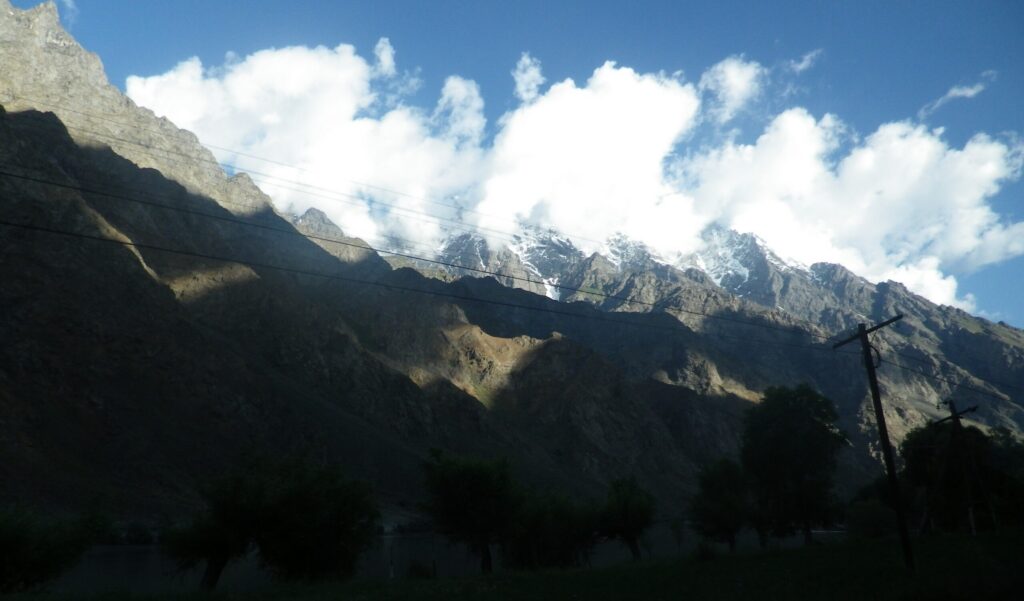
Tajikistan faces a similar situation in the Amu Darya basin. The Nurek Hydropower Plant is operating under strict conservation principles as reservoir levels remain several meters below previous norms. For Dushanbe, the priority remains fulfilling the Rogun project, which, under low-water conditions, raises justified concerns among downstream states. These tensions are compounded by the accelerated melting of Pamir glaciers, which currently increases water flows but poses a long-term risk of severe depletion.

Turkmenistan is also expected to experience acute water stress in 2026. In the Ahal and Mary regions, pasture degradation and limited irrigation are reducing livestock numbers and grain yields. The government is investing in dredging the Karakum Canal and constructing small desalination plants, but these measures only partially offset declining Amu Darya flows.

An additional destabilizing factor is Afghanistan’s Qosh-Tepa Canal project. By summer 2026, its impact on the Amu Darya basin is expected to become physically noticeable. Estimates state that unregulated water withdrawals could reduce downstream flows by 15-25%. Afghanistan’s absence from regional water-sharing agreements creates a legal vacuum that existing mechanisms cannot address.

As a result, Central Asia is approaching a threshold where traditional water management systems, largely reactive and based on Soviet-era quotas, are no longer effective. The creation of a unified water-energy strategy is therefore shifting from an option to a necessity. Without transparent digital monitoring at hydrological stations and the coordinated management of glaciers and reservoirs, the risk of localized water disputes in 2026 could reach its highest level in decades.

The Aral Sea: An Indicator of Crisis

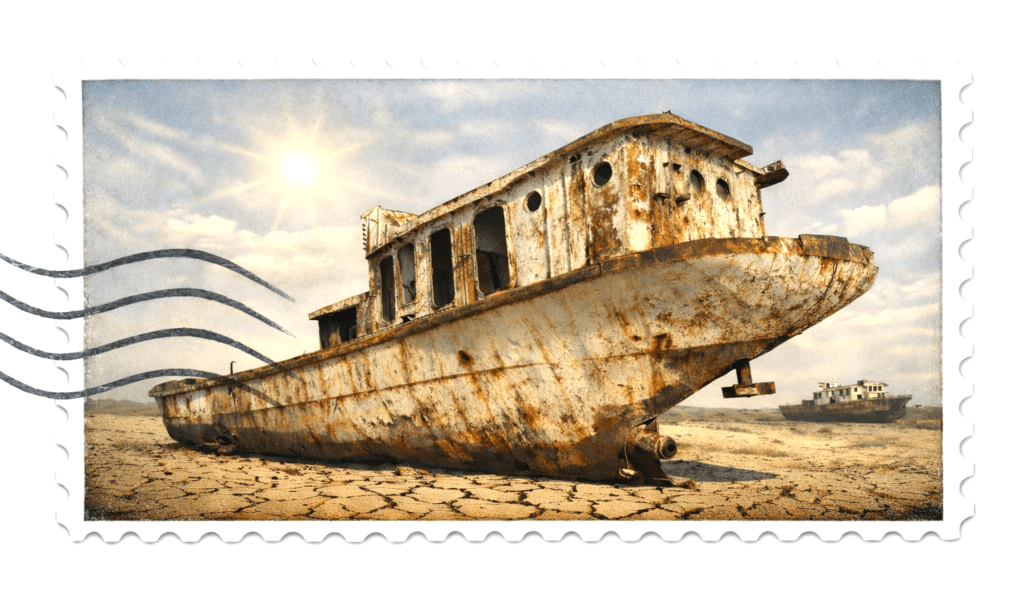
The condition of the Aral Sea remains the clearest indicator of regional water stress. In 2025, the projected inflow to the Aral Sea region was 975 million cubic meters, while actual inflow measured at the Karateren hydropost was only 589 million cubic meters, 386 million cubic meters below projections.

The Northern (Small) Aral Sea, often cited as a partial recovery success, faces a serious test. Despite the Kokaral Dam, critically low Syr Darya inflows, less than 50 m³/s at the peak of the summer, cannot compensate for intense evaporation. By August, some experts expect water levels to fall by 50-70 cm, leading to shoreline retreat and increased salinity, threatening fisheries in Saryshyganak Bay.

The Southern (Large) Aral Sea in Uzbekistan continues its seemingly irreversible decline, fragmenting into hypersaline water bodies. The summer of 2026 is expected to be unusually hot, increasing the likelihood of severe salt storms from the dried seabed, now known as the Aralkum Desert. High-end projections suggest the possibility of 10-12 major dust events capable of transporting toxic salts and pesticide residues hundreds of kilometers, affecting not only Karakalpakstan but also Khorezm and even the foothills of the Tien Shan.

Public health impacts are already severe. The Aral region is experiencing rising rates of eye and respiratory diseases, as well as anemia and cancer. Since the 1960s, coronary heart disease has increased 18-fold, pneumonia 19-fold, and chronic bronchitis 30-fold. Poor drinking water quality has contributed to a 4.2-fold rise in kidney stone disease in rural Karakalpakstan. According to researchers, up to 46.4% of respiratory diseases in children and 38.9% in adults are linked to sulfate air pollution from dust storms.

The main large-scale mitigation measure remains afforestation of the dried seabed. By mid-2026, saxaul and other halophyte plantings in Kazakhstan and Uzbekistan are expected to cover 1.7-2 million hectares. Kazakhstan’s Ministry of Ecology and Natural Resources is also developing a forest nursery on the seabed with an annual capacity of 1.5 million seedlings.

These “green shields” help stabilize sand and salt, but their survival depends on groundwater levels, which are also declining.

Water Diplomacy and “Digital Trust”

At the same time, 2025-2026 has marked a shift toward more pragmatic regional cooperation. Kazakhstan, Kyrgyzstan, and Uzbekistan have signed agreements on water-energy exchange, whereby electricity is supplied in return for increased water releases during the growing season.

Parallel efforts are underway to introduce automated monitoring systems. Kazakhstan and Uzbekistan have begun installing digital measurement points along the Syr Darya to improve transparency and reduce disputes over water allocation.

A key upcoming event is the Regional Ecological Summit (RES), which will take place in Astana from April 22–24. The agenda includes joint programs for the Aral Sea basin, reforms to the International Fund for Saving the Aral Sea (IFAS), sustainable management of transboundary water resources, and the introduction of digital water accounting systems.

Further progress is also expected on President Kassym-Jomart Tokayev’s proposal to establish an International Water Organization within the UN, reflecting the growing importance of water governance amid global warming.

From Crisis to Management

The summer of 2026 may prove to be a turning point for Central Asia. The convergence of drought cycles with infrastructural and institutional weaknesses is making water the region’s primary risk factor.

Addressing this challenge will require a shift from reactive responses to systemic management. Key priorities include transparent allocation mechanisms, digital monitoring, infrastructure modernization, and alignment of long-term environmental and water-energy strategies. Without such measures, water could become not only scarce but a source of broader regional instability.

Kazakhstan to Train “White Hat” Hackers and AI Engineers for the Energy Sector

Kazakhstan plans to train cybersecurity and AI specialists for the energy sector as part of its broader effort to digitally transform the industry, the country’s Ministry of Energy said.

In 2026, declared the Year of Digitalization and Artificial Intelligence in the electricity and heat power sector, the ministry plans to develop a professional standard titled Digitalization and the Application of Artificial Intelligence in Energy. The document envisages the creation of new professions, including “white hat” hackers and AI engineers.

A “white hat” hacker is a cybersecurity specialist who legally tests IT systems for vulnerabilities with the owners’ permission. Unlike malicious hackers, such experts identify weaknesses so they can be fixed before potential attacks, thereby protecting data and infrastructure.

Following a meeting of the Sectoral Council for Electricity and Heat Power Engineering under the ministry, the new standard was expanded to include the following specialties: smart grid designer, engineer for the development and implementation of AI in power systems (Smart Grid), and energy grid cybersecurity specialist (“white hat” hacker).

The ministry said these professions were formulated on the basis of Kazakhstan’s Atlas of New Professions and Competencies and are intended to adapt the education system to the demands of the digital economy.

The development of Smart Grid systems is seen as one of the key tasks for the next five to ten years. In the future, some energy system management functions, including dispatch control, are expected to be handed over to intelligent algorithms, requiring new competencies at the intersection of energy and IT.

As part of the digitalization of the fuel and energy complex, Kazakhstan also plans to create a system of digital models and “digital twins” for facilities within the Unified Energy System as early as 2026.

“Our goal is not simply to digitize processes, but to create an intelligent model of the energy system. This will improve the quality of operational management and make it possible to take strategic decisions based on precise data rather than forecasts,” Vice Minister of Energy Bakytzhan Ilyas said.

According to him, the introduction of vertical online monitoring using digital twins will make it possible to track key parameters in real time from generation volumes to energy production costs. This will form the basis for tariff-setting policy and investment attraction.

Kazakhstan’s energy sector is already implementing a number of projects using artificial intelligence technologies. Among them is AI-based defect detection on power transmission lines using drones, computer vision, and machine learning. The technology can identify support structure defects, overheating, and deformations using data from 4K cameras, thermal imagers, and LiDAR. Another example is robotic diagnostics of heating networks using acoustic resonance, allowing the condition of pipelines to be assessed without excavation or shutting down the system.

The ministry emphasizes that the digitalization of the energy sector requires not only technological solutions, but also systematic workforce training.

As previously reported by The Times of Central Asia, Kazakhstan plans to expand the use of AI across various sectors from healthcare to the fiscal sphere, including early disease detection and efforts to combat the shadow economy.