Uzbekistan and Georgia have signed a declaration establishing strategic partnership relations, adding a new dimension to a relationship led by trade and Eurasian transit routes.
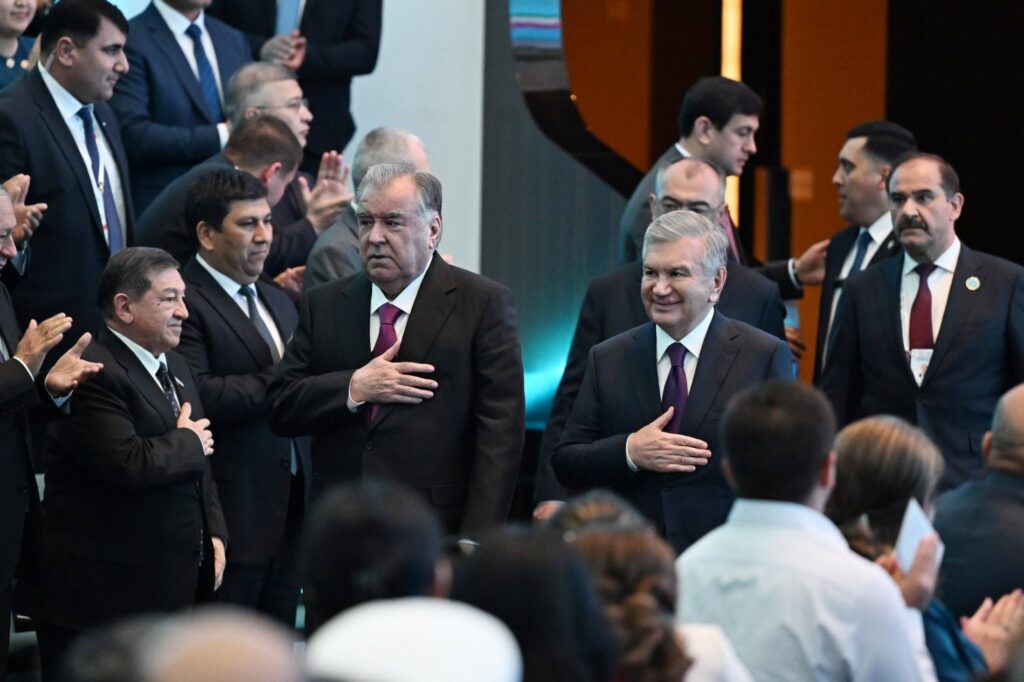
President Shavkat Mirziyoyev and Georgian Prime Minister Irakli Kobakhidze held talks on July 3 in Tbilisi during Mirziyoyev’s state visit. The sides also exchanged agreements and memorandums on customs, digitalization, education, agriculture, tourism, environmental protection, labor migration, healthcare, and nuclear and radiation safety.
The visit was the first by an Uzbek president to Georgia in 23 years. Mirziyoyev held talks with Georgian President Mikheil Kavelashvili on July 2 and with Kobakhidze the following day. Before the signing, Georgian Foreign Minister Maka Botchorishvili told 1TV that the visit was a “historic opportunity to elevate relations” and tied the agenda to the Middle Corridor.
One concrete diplomatic step is Tashkent’s decision to open an embassy in Georgia. Uzbekistan currently has no embassy in Georgia and covers the country through its diplomatic mission in Baku, despite diplomatic relations having been established in August 1994.
The Uzbek president’s office said bilateral trade reached $270 million in 2025 and has passed $100 million since the start of 2026. The governments plan a dedicated roadmap to raise trade to $1 billion in the coming years and reduce the trade imbalance. Following the talks, the Uzbek side said both governments had agreed on “concrete steps to significantly increase trade and deepen industrial cooperation in key sectors.”
The focus on Georgian ports gives the deal a clear regional dimension. Mirziyoyev and Kobakhidze discussed wider use of Poti and Batumi for Uzbek cargo and backed a logistics hub in Georgia, with an industrial zone and a showroom for Uzbek products. A business forum held before the signing drew about 300 participants, including Georgian businesses from logistics, pharmaceuticals, finance, IT, tourism, and agribusiness.
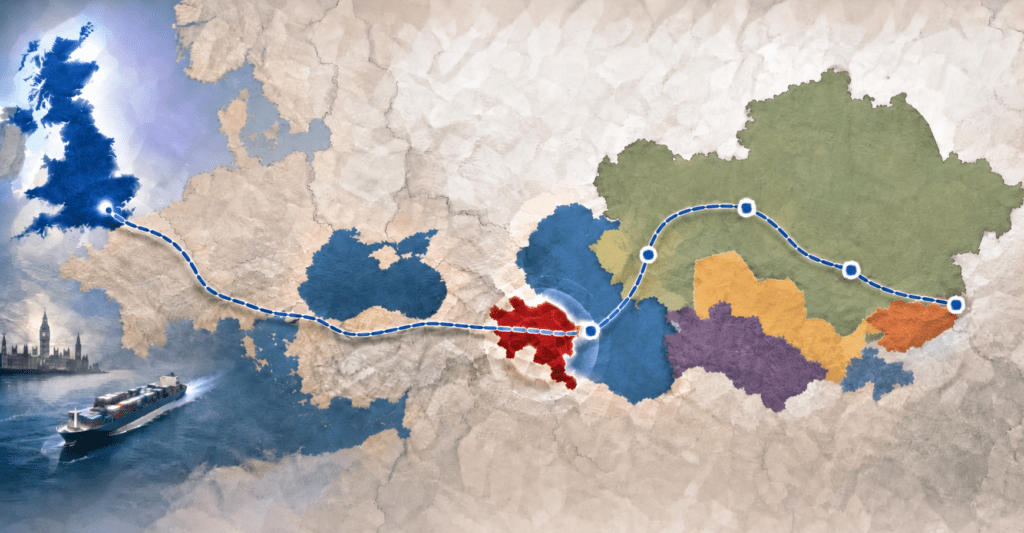
Georgia already serves as a South Caucasus outlet for Central Asian freight moving toward the Black Sea and Turkey. Uzbekistan is seeking more western routes as it develops rail links toward China, Afghanistan, and the Caspian Sea. The Times of Central Asia recently reported that Kyrgyzstan and Georgia discussed linking the China-Kyrgyzstan-Uzbekistan railway to Georgian port infrastructure. Mirziyoyev made the same connection in Tbilisi, proposing that the Baku-Tbilisi-Kars railway corridor be integrated with the China-Kyrgyzstan-Uzbekistan railway now under development.
That proposal would put Georgia firmly inside Uzbekistan’s export planning. Uzbek foreign trade cargo moving along the Middle Corridor has doubled over the past five years to reach 1.2 million tons by the end of 2025.
Industrial cooperation is also moving beyond general pledges. The sides signed a cooperation program through 2027 and discussed projects in agriculture, electrical engineering, energy, pharmaceuticals, food processing, construction materials, digital services, and tourism. The leaders also proposed a joint investment fund to support new projects.
People-to-people links have grown with direct flights. Tashkent now has air links with both Tbilisi and Batumi, with direct flights operating 13 times per week. More than 21,500 Uzbek tourists visited Georgia in 2025, while Georgian tourist arrivals in Uzbekistan reached 6,800 in 2025, compared with 3,000 in 2019.
Culture also formed part of the visit. Georgia held the Days of Georgian Culture event in Tashkent in March, and Tbilisi has decided to name a park after the Uzbek poet Alisher Navoi. Mirziyoyev also received Georgia’s Order of the Golden Fleece, the country’s highest state honor, during the visit.
The declaration gives both governments a formal framework for these projects. For Uzbekistan, Georgia offers a route toward Europe. For Georgia, Uzbekistan brings cargo, investment prospects, and another Central Asian partnership as Tbilisi tries to turn its geography into trade.