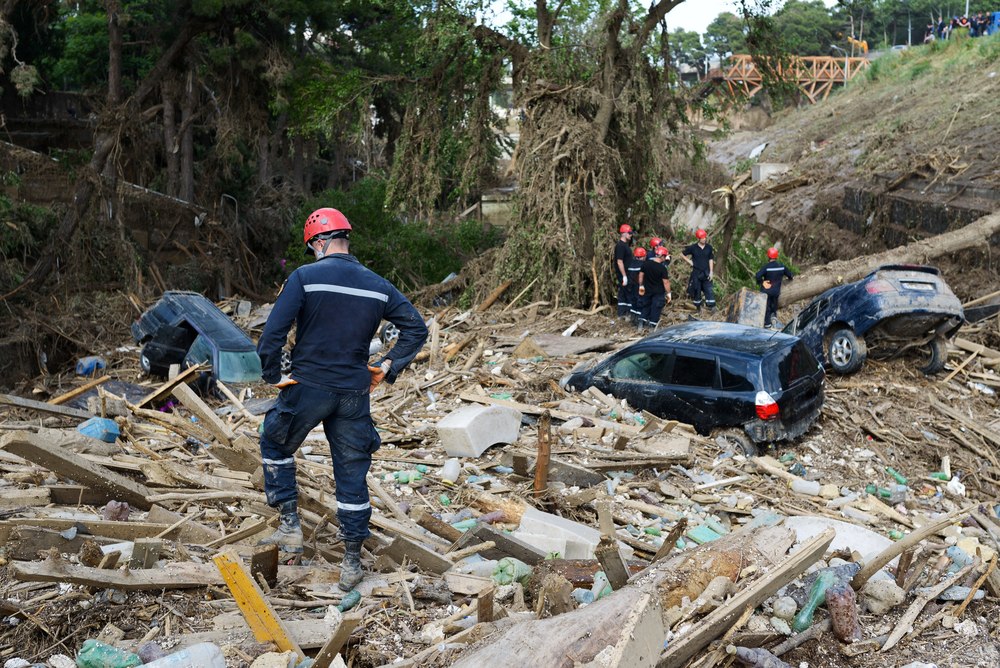
Kyrgyzstan recorded 348 mudflows during the first half of 2026, the highest number in 30 to 40 years, according to the Ministry of Emergency Situations and Kyrgyzhydromet. These violent torrents of water, mud, and boulders killed eight people and injured three.
Roads, villages, and critical infrastructure are concentrated in narrow mountain valleys. Each new debris flow can therefore threaten lives and isolate entire communities.
A Rapidly Escalating Season
The damage extends beyond the human toll. Authorities evacuated 236 people from hazardous areas, while mudflows damaged 668 hectares of farmland. Preliminary estimates place economic losses at 399 million soms (approximately $4,560,000).
The scale of the crisis became apparent well before mid-summer. By late June, Kyrgyzstan had already recorded more than 240 mudflows. The first-half total of 348 was almost five times the roughly 70 recorded during the same period of 2025.
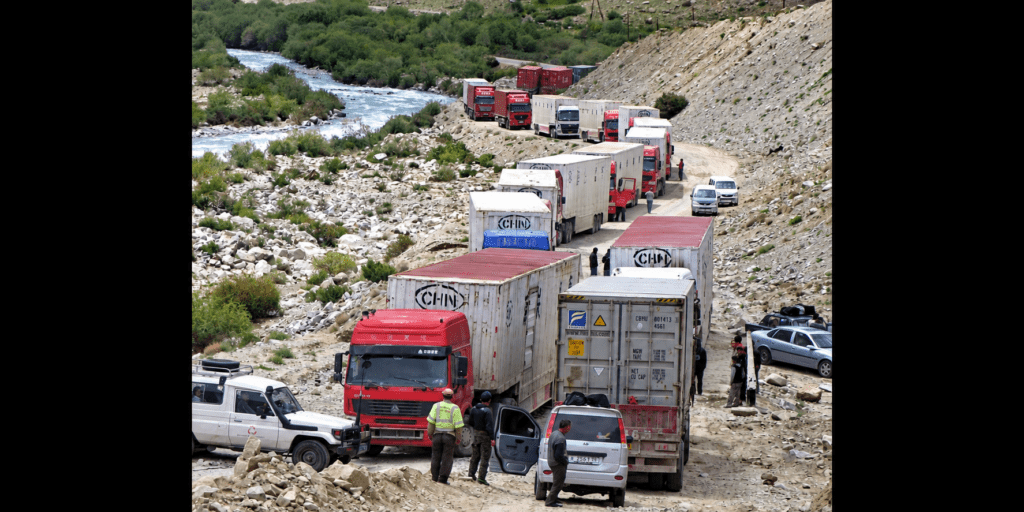
The deadliest incident occurred on the Osh-Alay highway, where a powerful mudflow swept a vehicle from the road, killing six people.
The Ministry of Emergency Situations identifies Batken, Jalal-Abad, Osh, and Talas regions as the country’s most vulnerable areas, where mudflows repeatedly destroy roads, bridges, and residential buildings.
Why the Risk Is Increasing
Officials link the surge to several overlapping factors, including intense local downpours and earlier snow and glacier melt. Settlement expansion into hazardous valleys and a shortage of protective structures have increased exposure. Pasture degradation and forest loss add to the danger. Rising temperatures are also transforming the Tian Shan as glaciers retreat and new high-altitude lakes emerge.
Kyrgyzhydromet estimates that the area of Kyrgyzstan’s glaciers has declined by about 16% in recent decades. As glaciers shrink, newly formed alpine lakes become more vulnerable to overflowing or bursting during intense rainfall or rapid snow and ice melt. Such outbursts can generate destructive debris flows.
The threat extends beyond mudflows. Officials warn that warming will also increase the risks posed by glacial-lake outbursts, landslides, and rockfalls.
Strengthening Defenses
Despite the record number of mudflows, the death toll remains significantly lower than in 2024, when such disasters claimed 25 lives. The Ministry of Emergency Situations attributes the improvement to earlier warnings, more effective evacuations, and expanded preventive measures in high-risk areas.
Kyrgyzstan is also expanding its use of forecasting technologies. KG Labs, working with international partners, is developing an AI model to forecast glacial lake outburst floods in the Tian Shan. The work draws on a digital catalogue of Kyrgyzstan’s glaciers and is exploring affordable sensors for remote mountain areas with intermittent internet access. The Ministry of Emergency Situations already uses a separate AI-powered system to monitor high-altitude lakes and issue warnings.
The Season Is Far From Over
The figure of 348 covers only the first six months. In Kyrgyzstan, the period of highest risk typically lasts until autumn, meaning that mountain communities and transport corridors remain vulnerable for several more months.
The events of 2026 illustrate how rapidly natural hazards are evolving. Retreating glaciers, the formation of new alpine lakes, and increasingly intense rainfall are changing the country’s risk profile. These trends require more than emergency response. They call for sustained investment in hazard mapping, resilient infrastructure, early-warning systems, and long-term adaptation.
The lower death toll compared with 2024 demonstrates that preparedness can save lives. Yet the record first-half total shows that climate-related disasters are becoming a structural challenge rather than an exceptional event.