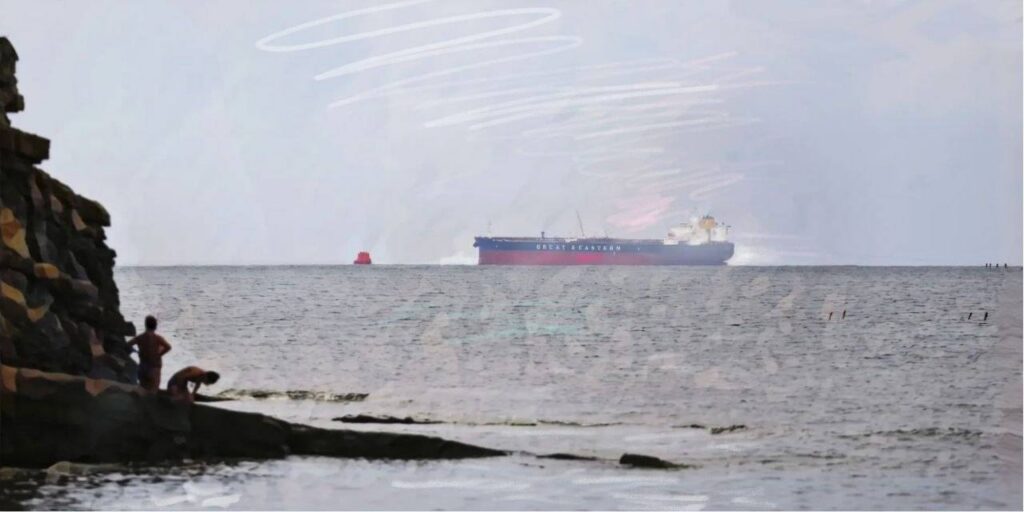
Bloomberg reported on August 8 that the Turkish authorities were withholding or delaying transit permission for some vessels bound through the Dardanelles for Novorossiysk. Some applicants were reportedly told that permits were not being issued, while others faced additional review. The practice appeared selective: vessels bound for some other Black Sea destinations continued to transit, while some Ukraine-bound vessels were also reportedly affected.
On August 9, however, Turkish officials told Reuters that shipping through the Turkish Straits was proceeding smoothly and described the actions as temporary security measures rather than an ongoing restriction.
The reported restrictions followed a sharp increase in attacks on commercial shipping around the Black Sea, including Turkish-linked vessels near Novorossiysk. Turkey’s Foreign Ministry expressed concern after attacks on the Turkish-owned Yaşar and Nadezhda and called on Russia and Ukraine to ensure navigational safety. Novorossiysk is especially important for Kazakhstan, because the Caspian Pipeline Consortium (CPC) terminal there handles the overwhelming majority of its oil exports. Although the CPC pipeline itself remains operational, the episode showed how quickly traffic serving Kazakhstan’s principal oil-export outlet could face an additional constraint.
The events shed light on an export strategy Kazakhstan began developing several years before the current problems. Tokayev’s July 2022 instructions addressed both oil-export diversification through the Trans-Caspian route and alternative transport chains for other cargo. In particular, he called for greater use of Kazakhstan’s Caspian ports and the development of alternative railway routes. Later that year, KazMunayGas (KMG) and SOCAR established a framework for moving Kazakhstani oil from Aktau across the Caspian Sea and onward through the Baku–Tbilisi–Ceyhan pipeline, initially for up to 1.5 million tons annually. Kazakhstan, Azerbaijan, Georgia, and Turkey also adopted a 2022–2027 roadmap to remove bottlenecks along the Middle Corridor.
Kazakhstan continued to develop transport links with Russia and China as it expanded Trans-Caspian routes through Azerbaijan, Georgia, and Turkey. The strategy extended Kazakhstan’s longstanding geopolitical multi-vector policy, which balances relations with partners in multiple directions, into the geoeconomic sphere. Tokayev made the combination explicit in his 2023 State of the Nation address. Relations with Turkey had meanwhile been elevated to an enhanced strategic partnership in May 2022, including transport cooperation and the Baku–Tbilisi–Kars railway.
Kazakhstan and Azerbaijan deepened their strategic and allied cooperation later that year, likewise emphasizing transport and logistics. Closer ties with Azerbaijan and Turkey widened Kazakhstan’s options without displacing established routes through Russia.
The CPC pipeline remains so dominant in Kazakhstan’s oil exports that no other existing route approaches its present scale. Of the 78.7 million tons of oil that Kazakhstan exported in 2025, the Energy Ministry reported the volume moving through the CPC pipeline at 64.8 million tons (the CPC itself reported about 63 million tons), meaning that more than four-fifths of Kazakhstan’s exported oil depended on the CPC system. Kazakhstan moved only about 1.4 million tons through the Aktau–Baku–Ceyhan (ABC) route in 2024, and about 1.3 million tons in 2025. Diversification cannot at present mean replacing CPC.
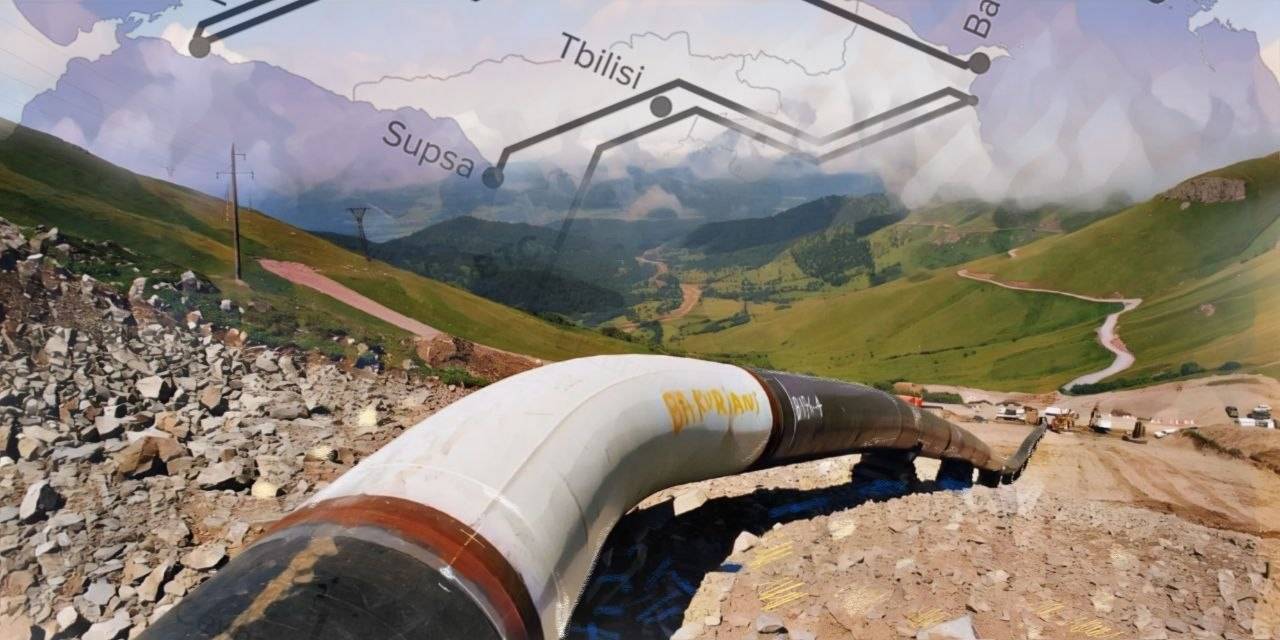
The Baku–Tbilisi–Ceyhan (BTC) pipeline gives Kazakhstani oil a westbound egress with materially different exposure from the CPC route because it reaches the Mediterranean Sea at Ceyhan without traversing the Black Sea. Before entering the BTC pipeline, Kazakhstani crude crosses the Caspian Sea from Aktau to Baku. The roughly 1,768-kilometer pipeline then runs through Azerbaijan and Georgia and across Turkey to Ceyhan. Oil loaded there does not pass through the Turkish Straits; disruption around Novorossiysk does not affect the route in the same way.
Kazakhstan does not need the BTC pipeline to carry CPC-scale volumes for it to have strategic value. Its significance derives less from the volume carried than from the additional export flexibility created by its different geography, although it remains subject to such operational constraints as cross-Caspian shipping requirements and crude-quality limitations.
The KMG–SOCAR arrangements provide for a phased increase to 2.2 million tons annually, but the 2025 interruption showed the current limits of the strategy. KMG attributed the lower volume partly to technological restrictions associated with contamination in the BTC system. The Aktau–Baku route was temporarily suspended from August to October, coinciding with scheduled upgrades to the Taraz and Liwa tankers. Aktau’s stated oil-loading capacity is 5.2 million tons annually, but tanker availability, blending requirements, and commercial arrangements constrain the route as a whole.
Kazakhstan’s freight strategy has developed analogously through the Trans-Caspian International Transport Route (TITR), commonly known as the Middle Corridor, which provides several westward continuations after cargo crosses the Caspian Sea. The country, rather than relying on a single overarching infrastructure project, has supported the Trans-Caspian route through investment in ports, shipping, rail capacity, and operating coordination. The TITR carried about 4.5 million tons in 2024 and about 4.1 million tons in 2025; container traffic reached roughly 77,000 twenty-foot equivalent units in 2025. Kazakhstan has completed a container hub at Aktau and expanded capacity at Kuryk while adding vessels, including ferries, and improving customs and digital coordination. Aggregate traffic figures, however, do not show which western continuation the cargo ultimately used.
Within that system, the overland route through Azerbaijan, Georgia, and Turkey has become a more capacious option for westbound freight. Kazakhstan and Turkey strengthened rail-freight cooperation in July 2025 through an agreement covering transportation via the Middle Corridor railway route. The Baku–Tbilisi–Kars (BTK) railway’s stated freight capacity rose from about 1 million to 5 million tons annually after upgrading works completed in June 2026. Georgian officials also reported that container traffic on the BTK line increased nearly sixfold in 2025, although they did not publish an absolute volume. Published figures also do not separate Kazakhstan-origin cargo that continues overland through the BTK route from cargo using Georgian Black Sea ports.
Azerbaijan and Turkey now occupy an important place in Kazakhstan’s export strategy because they provide westbound channels for two different classes of exports. The BTC pipeline gives oil a Mediterranean Sea outlet beyond the Black Sea; the Middle Corridor gives general freight an overland continuation through the South Caucasus and Turkey. Neither removes Kazakhstan’s dependence on larger established routes, and neither is free of constraints. Together, however, they reduce Kazakhstan’s exposure to disruptions affecting any single westbound route. The recent Black Sea disruptions thus illustrate how the maintenance of several usable channels, particularly when their vulnerabilities do not coincide, enhances the resilience of Kazakhstan’s multi-vector export strategy.