Kyrgyzstan and China have agreed to begin work on mutual recognition of organic certification systems, in a move that Bishkek hopes will simplify exports of organic agricultural products to China.
At present, obtaining an organic certificate in Kyrgyzstan is not enough for a producer to sell a product as organic in China.
The agreement was reached on September 17 during talks in Bishkek with a delegation from China’s State Administration for Market Regulation, or SAMR. The two sides agreed to establish a joint working group to harmonize their organic standards and technical requirements. Training and internships for Kyrgyz specialists were also discussed.
The September 17 announcement described a “principled agreement” rather than a signed mutual-recognition arrangement, so it is too early to speak of the Chinese market being opened to Kyrgyz organic products.
An organic certificate is only one part of the requirements for exporting food to China. Depending on the product, exporters must comply with separate sanitary requirements covering everything from pests and diseases to processing, packaging, and storage. Overseas food producers and processors may also need to register with Chinese customs through the China Import Food Enterprises Registration system, known as CIFER.
In practical terms, mutual recognition could remove one layer of certification, but it would not eliminate other import requirements. Different products are subject to different rules. Approval for Kyrgyz raspberries, for example, does not automatically provide access for beans, honey, or meat.
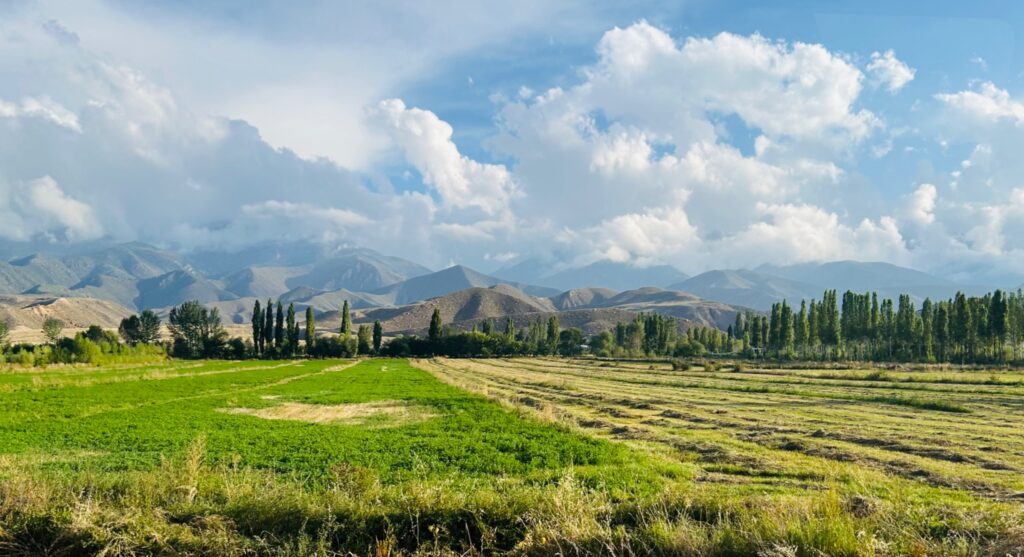
Kyrgyzstan already produces organic goods including beans, apricots, and nuts. Certification could increase their value, but exporters would still need consistent supplies, cold storage where required, and reliable transport across the border.
By the end of June 2026, more than 101,000 hectares in Kyrgyzstan were covered by organic production systems. Around 11,400 hectares are cultivated by 11 cooperatives working to international standards, producing goods ranging from cotton and beans to fruit and nuts.
Most of the remainder, about 85,300 hectares, falls under a Participatory Guarantee System, or PGS. These lower-cost systems are mainly aimed at local markets and are not automatically recognized abroad.
The total area under organic production therefore does not show how much Kyrgyz produce could already be sold in China as organic. A key issue in the negotiations will be which parts of Kyrgyzstan’s certification system China agrees to recognize.
By 2029, Kyrgyzstan wants to expand certified organic farmland to about 200,000 hectares and run pilot programs in Issyk-Kul and Naryn to shift more farming toward organic production. The national program also aims for organic products to account for 25% of agricultural production and exports.
China has been gradually opening its market to individual categories of Kyrgyz agricultural products. The countries have already signed eight protocols covering products including beans, poultry, wool, and cashmere. Dried fruit exports have begun, while access for several other agricultural products remains under discussion.
China has also simplified access for frozen fruit. It removed quarantine-access requirements for imported frozen fruit in August 2024, allowing such products to enter from any country provided other import requirements are met. In March 2026, Chinese customs confirmed that Kyrgyz enterprises could export frozen fruit after registration through CIFER, without obtaining the separate quarantine permit required for fresh fruit.
In 2025, Kyrgyzstan exported agricultural, food, and processed products worth about $378 million. Crop products accounted for about $80.7 million. Agricultural and processed products represented 13.3% of the country’s total exports.
For Kyrgyz producers, China offers a market far larger than the domestic one. How much difference the new initiative makes will depend largely on what parts of Kyrgyzstan’s organic certification system China ultimately agrees to recognize.