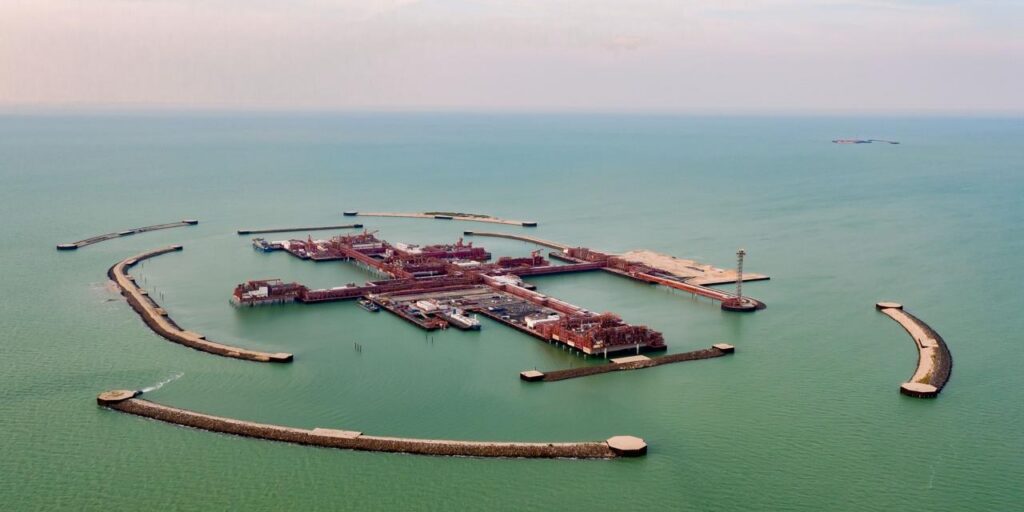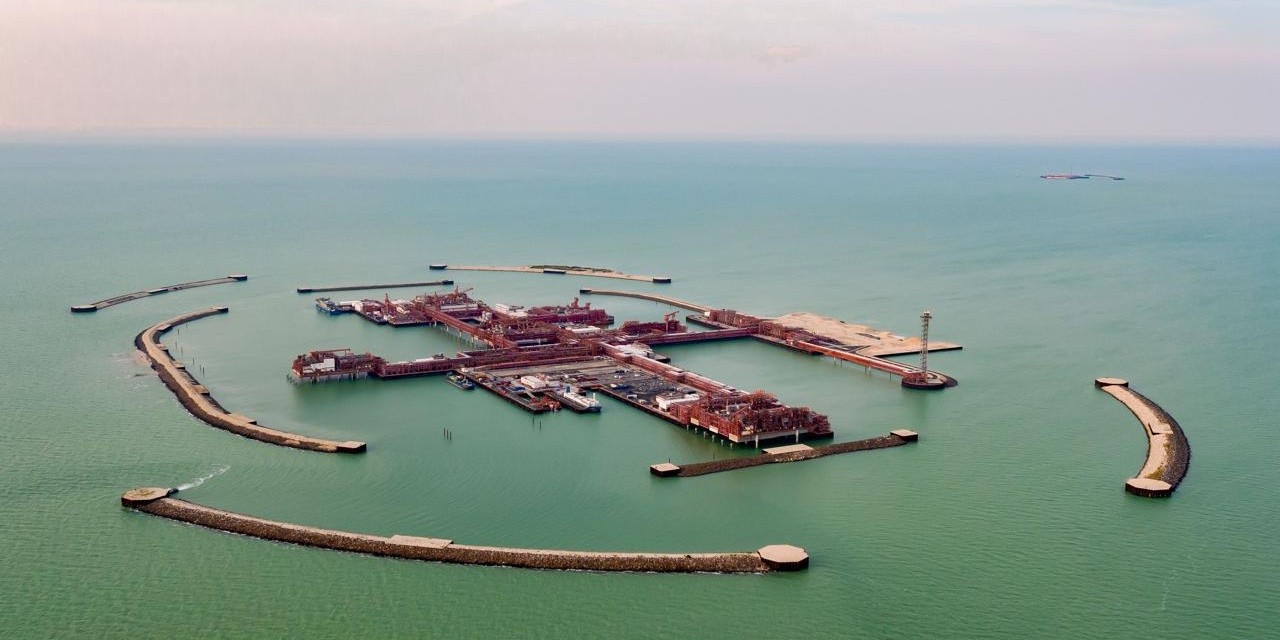
Kazakhstan has restarted enforcement proceedings to collect a 2.3 trillion tenge ($5.22 billion) environmental fine from North Caspian Operating Company (NCOC), operator of the Kashagan oil field, ending a three-week procedural pause.
The proceedings resumed on September 29, according to the Justice Ministry’s online enforcement database. NCOC continues to reject both the allegations behind the fine and the penalty itself, and says it is challenging them through available legal channels.
Collection had been suspended on September 7 after NCOC challenged the actions of a state enforcement officer. The Specialized Interdistrict Administrative Court of Atyrau Region requested the enforcement case materials, which required the collection process to stop while the documents were before the court. The Justice Ministry said at the time that the pause was procedural and that collection would resume.
The court later rejected NCOC’s claim seeking to overturn the enforcement proceedings. The ruling was reported on September 28, and the enforcement status changed to active on the following day.
The fine stems from a 2022 environmental inspection at Kashagan’s onshore facilities in the Atyrau Region that identified about ten alleged violations. Inspectors said more than 1.7 million metric tons of sulfur had accumulated at the Bolashak processing complex, while the operator’s permit allowed storage of no more than 730,000 tons. NCOC has maintained that its sulfur handling complied with Kazakh law and the permits issued for the project. Internal documents reported earlier by The Times of Central Asia showed that Eni had warned as early as 2017 that the project risked exceeding its permitted sulfur-storage capacity.
The dispute has moved through several rounds of domestic litigation. The original penalty order was overturned in 2025 because of procedural defects, without dismissing the underlying environmental allegations. Regulators then reissued the penalty. The Atyrau Regional Court upheld the fine on June 19, clearing the way for compulsory enforcement after NCOC did not pay by the July deadline.
Kazakhstan then stepped up pressure on the consortium. Enforcement proceedings began in July, and authorities froze NCOC property and vehicles. The company’s managing director was also warned of possible administrative and criminal liability for failure to comply with the court ruling.
The domestic enforcement process is running alongside international arbitration. NCOC’s six foreign shareholders have challenged the penalty through treaty arbitration. Separately, NCOC said in July that a tribunal operating under the rules of the United Nations Commission on International Trade Law had issued interim measures barring enforcement while that arbitration remained pending.
Kazakhstan’s Justice Ministry rejected NCOC’s interpretation of the interim order. It argued that the commercial arbitration tribunal could not prevent the state from enforcing environmental law and a final domestic court judgment. NCOC has continued to maintain that enforcement should not proceed while the arbitration is unresolved.
Kashagan is one of Kazakhstan’s largest oil fields and one of the biggest oil discoveries of recent decades. Recoverable reserves are estimated at between 9 billion and 13 billion barrels. The field produced 18.2 million tons of oil in 2025.
The consortium brings together Kazakhstan’s state-owned KazMunayGas with Eni, ExxonMobil, Shell, TotalEnergies, CNPC, and Japan’s Inpex. The fine is one of several multibillion-dollar disputes involving Kazakhstan and foreign investors in its oil sector.
The September pause did not remove the fine or settle the underlying case. With enforcement now active again, NCOC faces renewed collection measures while the international arbitration proceedings continue.