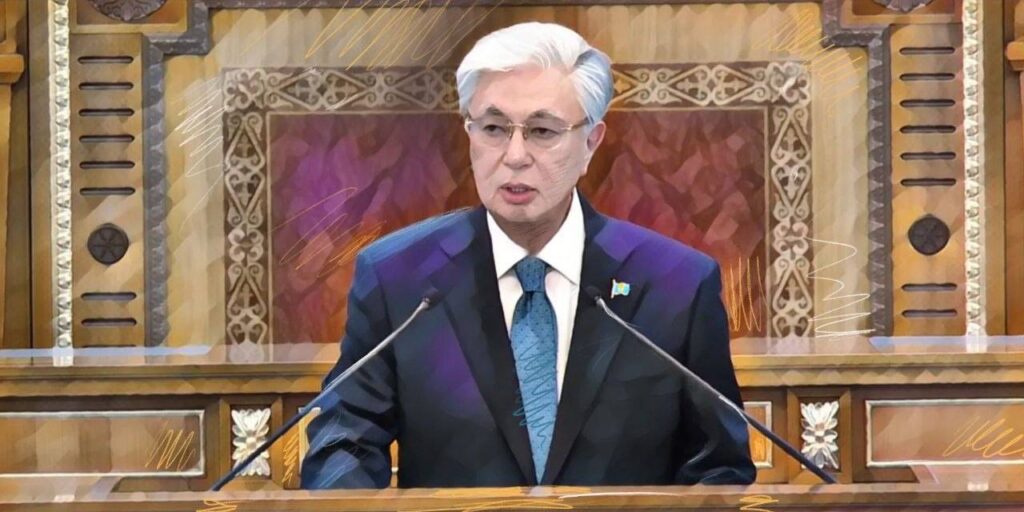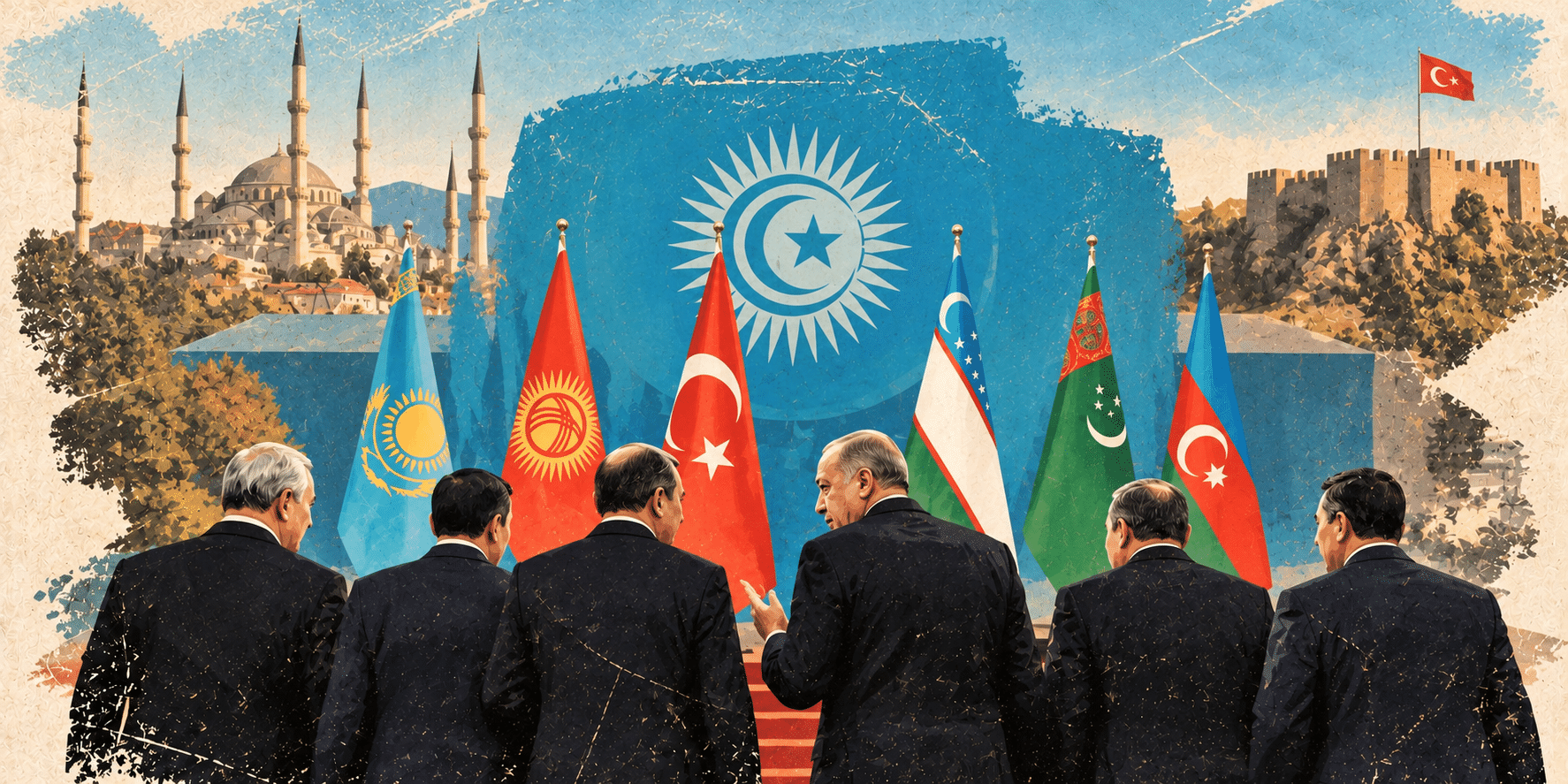
Kazakh President Kassym-Jomart Tokayev arrived in Ankara on October 28, the day he delivered his annual State of the Nation Address, in which he announced plans to expand transport routes between China and Europe. On October 30, he will attend the 13th summit of the Organization of Turkic States (OTS). Turkey is preparing to take over the organization’s chairmanship from Azerbaijan, and Central Asian countries are seeking to accelerate freight transportation across the Caspian Sea.
Behind the shared rhetoric of Turkic unity lie specific economic interests. Kazakhstan is building railways and expanding its capacity to handle transit cargo from China. Azerbaijan is developing Caspian ports and transport infrastructure in the South Caucasus. Turkey wants to attract more freight moving between China and Europe through Central Asia, increasing its role as a transit hub.
A unified route looks much simpler on a political map than it does in the daily operations of transport companies. Between China and Europe, cargo crosses several borders, is transferred from trains to ships and back, undergoes customs clearance, and is subject to tariffs set by different operators.
Interest in alternative Eurasian transport routes has grown since Russia launched its full-scale invasion of Ukraine, but the competition extends beyond freight. Ankara is looking to strengthen its political presence in Central Asia, where Russia and China retain considerable influence.
Summit events begin on October 29 with a meeting of the Council of Foreign Ministers, chaired by Turkish Foreign Minister Hakan Fidan. The nation’s presidents will meet on the following day. Participants are expected to adopt the Ankara Declaration, discuss investment, energy, digitalization, security, and appoint a new OTS secretary-general.
Tokayev and Kazakhstan’s Route to Europe
Tokayev’s visit to Turkey follows directly after his State of the Nation Address, much of which focused on infrastructure, including plans to open the 272-kilometer Bakhty–Ayagoz railway in 2027. The line is expected to add 20 million metric tons of annual freight capacity between Kazakhstan and China.
Tokayev also discussed construction of the Aral–Caspian highway. The project would establish a new transport connection between western and central Kazakhstan. According to government estimates, it could shorten certain freight routes between China and Europe by approximately 1,000 kilometers and reduce delivery times by up to three days.
Both projects are part of a broader effort to increase Kazakhstan’s revenue from international logistics. The country currently earns a substantial share of its transit revenue directly from freight transportation. Developing warehouses, terminals, processing facilities, and distribution centers could generate additional income.
Turkey occupies an important position in this network. An overland branch of the Middle Corridor passes through its territory en route to European markets; the Baku–Tbilisi–Kars railway connects Azerbaijan to Turkey’s rail network through Georgia.
On the sidelines of the Ankara summit, Turkish business associations plan to discuss border crossing operations, transportation costs, and the development of the Middle Corridor.
Transport geography, however, does not fit neatly within the OTS’s political boundaries. Georgia, through which the railway connecting Azerbaijan and Turkey passes, is not a member of the organization. China, which generates a substantial share of potential freight traffic, also remains outside it.
The Caspian section presents additional challenges. The capacity of the ports of Aktau, Kuryk, and Baku depends on the availability of vessels, weather conditions, and coordination of railway schedules. A delay along one section can eliminate the advantage of a shorter overland route.
Ankara Expands Its Influence, Astana Draws Boundaries
Turkey has steadily strengthened its ties with Central Asia through trade, education, defense cooperation, and infrastructure projects. The OTS brings these areas together within a permanent framework for high-level negotiations.
But the five member states do not share a unified foreign policy.
Kazakhstan and Kyrgyzstan belong to the Eurasian Economic Union alongside Russia, Belarus, and Armenia. Both countries are also members of the Collective Security Treaty Organization, while Turkey is a NATO member, and Uzbekistan maintains a policy of nonparticipation in military blocs.
Central Asian members also balance their ties with Turkey against relationships with China, Russia, and the European Union. Those outside partnerships complicate efforts to forge a common OTS foreign policy.
At the May summit in Turkestan, Tokayev rejected portraying the organization as a military or geopolitical alliance, emphasizing practical cooperation, a position analysts interpreted as evidence of differing visions within the OTS.
Turkey’s upcoming chairmanship brings these differences back into focus. President Recep Tayyip Erdogan wants to increase the OTS’s international standing, while its Central Asian members are pursuing closer cooperation without limiting their wider diplomatic and economic partnerships.
Uzbekistan Seeks Leadership of the Secretariat
Uzbek President Shavkat Mirziyoyev is set to visit Turkey on October 29–30, with Tashkent announcing plans for discussions covering trade, investment, transport logistics, tourism, environmental issues, and education.
Uzbekistan joined the OTS in 2019, after the organization’s other current members. According to Uzbekistan’s government, it has since proposed more than 85 initiatives across various areas.
The summit is expected to appoint a new secretary-general. Mehmet Seyfettin Erol, president of the Ankara Center for Crisis and Policy Studies (ANKASAM), anticipates an Uzbek representative taking the role for the first time. Such an appointment would strengthen Tashkent’s presence within the organization’s permanent institutions.
In his assessment, cooperation between Turkey and Uzbekistan could accelerate the organization’s work in trade, investment, energy, digitalization, and transportation.
Uzbekistan is seeking new transport links to international markets. As a landlocked country, it relies on neighboring states and transit partners to move goods westward.
However, Tashkent and Astana have competing transit interests. The China–Kyrgyzstan–Uzbekistan railway, now under construction, could divert some freight from routes through Kazakhstan. Uzbekistan proposes linking the railway to the Middle Corridor, but the routes would still compete for cargo.
The OTS can help coordinate these projects, but its secretary-general cannot settle competing national priorities. Decisions on infrastructure financing and transport policy remain with national governments.
A Shared History Has Not Created a Common Market
The Organization of Turkic States was established in 2009 as the Cooperation Council of Turkic Speaking States and adopted its current name in 2021.
Its full members are Azerbaijan, Kazakhstan, Kyrgyzstan, Turkey, and Uzbekistan. Hungary, Turkmenistan, the Turkish Republic of Northern Cyprus, and the Economic Cooperation Organization have observer status. Northern Cyprus is recognized as an independent state only by Turkey, and its participation in the OTS has been a source of friction, according to analysts.
In recent years, the OTS has established several economic mechanisms, including the Turkic Investment Fund. Members are also expanding cooperation among customs authorities, transport operators, and business associations. But there is no common market within the organization. Kazakhstan and Kyrgyzstan follow the customs rules of the Eurasian Economic Union, while the other members operate under their own trade regimes and international agreements.
Yaşar Sarı, a professor at Istanbul’s Ibn Haldun University and director of the Heydar Aliyev Center for Eurasian Studies, considers strengthening existing institutions more important than expanding the OTS or attempting to form a new geopolitical bloc. In an interview with CASPIA Lab, he advocated developing economic integration, transport cooperation, and regional coordination.
The OTS can help finance projects and coordinate negotiations, but national governments retain control over transport policy. Its members also have commitments to partners outside the organization, limiting how far they can act together. Agreeing on a joint statement is easier than negotiating lower freight charges or shorter border delays across several countries.