Kazakhstan’s outgoing parliament spent one of its final sessions debating the government’s management of the 2025 budget, in what often resembled a dress rehearsal for the country’s first Kurultai election campaign.
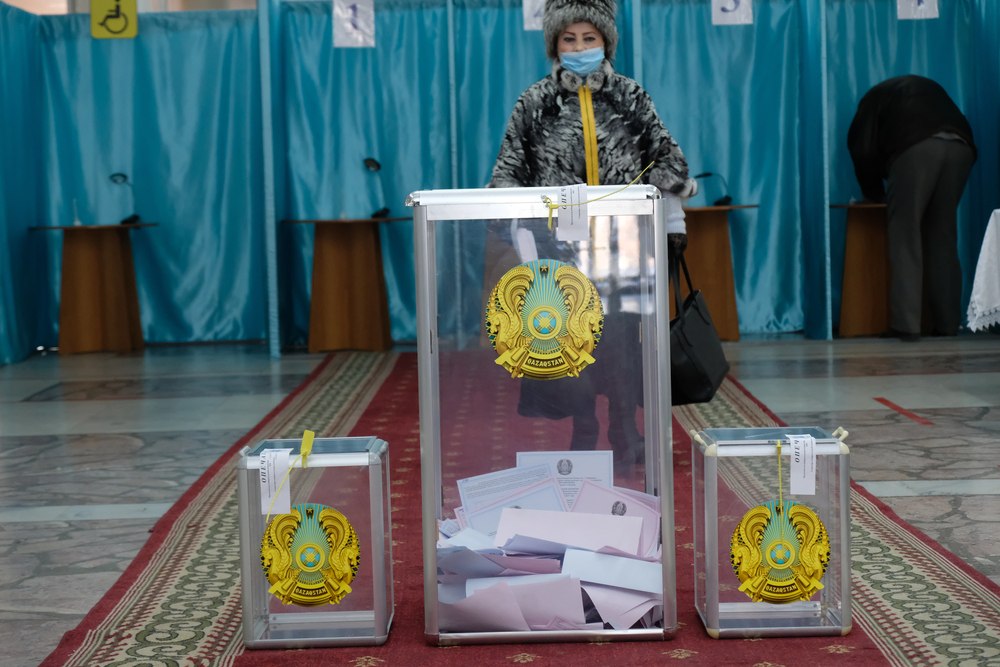
On July 1, Kazakhstan’s new constitution will enter into force, replacing the current Senate and Mazhilis with a single-chamber Kurultai. The new legislature will have 145 deputies elected through party lists, and elections are expected in August.
No current deputy will transfer automatically into the new chamber. Those who want to remain in national politics will need a place on a party list and a fresh mandate. That gave the June 26 session an unusual political significance: would any outgoing deputies use the budget debate to make a final public break with the government?
Some did put pointed questions to Prime Minister Olzhas Bektenov and Finance Minister Madi Takiyev as parliament reviewed and approved the reports of the government and the Supreme Audit Chamber on the execution of the republican budget for 2025.
Finance Minister Madi Takiyev presented the figures in optimistic terms. According to him, Kazakhstan’s economy grew by 6.5% in 2025, while GDP increased by $14.7 billion in dollar terms. Meanwhile, public debt remains low at around 22.8% of GDP, or approximately $74.5 billion.
Deputies asked Prime Minister Olzhas Bektenov why, despite GDP growth of 6.5%, Kazakh citizens’ incomes had declined.
Bektenov referred to high inflation, which has been eating into household incomes.
“Last year, inflation peaked in September at 12.9%. Now, as a result of measures taken by the government, the National Bank and other interested agencies, inflation over the first five months of this year has declined to 10.4%,” the prime minister said.
He recalled that the government had adopted a separate plan to raise household incomes. According to the government, the average monthly wage reached 442,000 tenge, about $910.
He said there were already sectors, such as agriculture and transport, where real incomes had increased.
Mazhilis deputy Azat Peruashev, who recently stepped down after 15 years as chairman of the Ak Zhol party but still heads its parliamentary faction, focused on the National Fund. He said the government had failed to keep an earlier promise to reduce withdrawals.
“When approving the draft budget for 2024-2026, the government announced a plan to reduce withdrawals from the National Fund starting in 2025. In fact, the volume of funds received from the National Fund in 2025 remained high, at approximately $10.8 billion,” he said.
The National Fund is one of the most politically sensitive parts of Kazakhstan’s public finances. Built largely from oil and gas revenue and managed through the National Bank, it is meant to serve two functions: to help stabilize the budget when commodity revenue falls, and to preserve part of the country’s resource wealth for future generations. Heavy withdrawals therefore carry a political cost. They can help cover current spending, but they also reduce the savings Kazakhstan has accumulated from its oil wealth, making the size of annual transfers a perennial political argument.
Peruashev also criticized what he described as the existing imbalance in budget policy. According to him, social spending in 2025 increased to approximately $20.6 billion, while spending on the real sector of the economy amounted to only about $4.5 billion.
“The government spends five times more on non-recoverable needs than on creating future sources of income. In our view, the ratio should be the opposite,” the deputy said.
He also noted that the government does not reflect all areas of its activity in the national budget.
“New major investment projects based on higher value-added processing are being implemented in the regions and are capable of changing the structure and technological level of the national economy. However, these billions in public funds are directed outside the budget and parliament, through the Samruk-Kazyna fund, on the basis of independent government decisions. Thus, parallel economies have effectively emerged: one is the economy that passes through the budget, and the other is the economy that the government forms without discussion in parliament,” Peruashev said, while nevertheless calling on deputies to support the reports of the government and the Supreme Audit Chamber.
Other deputies used the session less to challenge the 2025 accounts than to set out themes for the coming campaign.
Serik Yegizbayev, a Mazhilis deputy from the Auyl party who recently stepped down as its chairman, said the current system of state support for farmers is too complex and should be reformed. He also called for a specialized agricultural bank to provide direct financing to producers.
Askhat Rakhimzhanov, a representative of the National Social Democratic Party faction, said his party’s deputies did not support the government’s report and called for an increase in the minimum wage.
Both the government, which will resign its powers before the newly elected Kurultai convenes, and the deputies themselves are already operating as temporary officeholders, aware that existing problems will be dealt with by entirely different people – or by the same people in new roles.
For that reason, the exchanges never became a full confrontation. Deputies criticized inflation, real incomes, National Fund withdrawals and off-budget spending, but most stopped short of rejecting the report. Instead, the joint parliamentary session often resembled an early campaign platform for Kazakhstan’s next political era.