Central Asia is increasingly visible on the contemporary art map, and few events carry more symbolic weight than the Venice Biennale, often described as the Olympics of the art world.
In recent years, Kazakhstan’s privately funded art scene and Uzbekistan’s state-backed art scene have often led the region’s international push. This year, Kyrgyzstan is is determined not to lag behind.
The country’s pavilion at the 61st Venice Biennale marks its second dedicated national participation. Kyrgyzstan first appeared in this format in 2022 with Gates of Turan, a state-commissioned installation by Firouz FarmanFarmaian on the Venetian island of Giudecca that drew on nomadic heritage and local craft traditions.
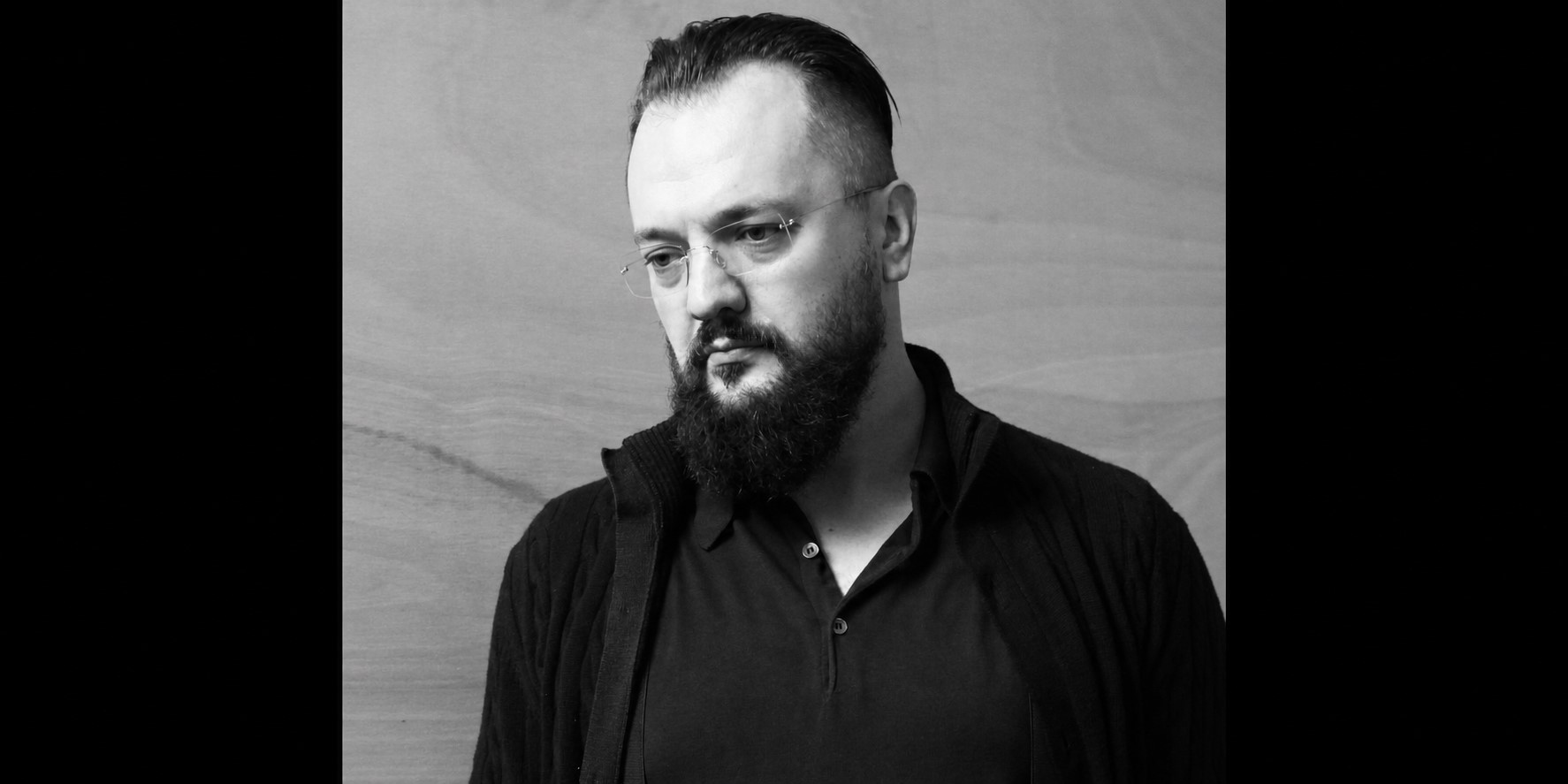
At the center of the 2026 pavilion is Alexey Morosov, a Bishkek-born artist who has lived and worked in Italy for years. He chose the former church of Santa Caterina at Convitto Foscarini, in Venice’s Cannaregio district, as the setting for BELEK, the Kyrgyz word for “gift.”
Curated by art historian Geraldine Leardi, the exhibition reflects on water and Kyrgyzstan’s tradition of generosity. The works are in close dialogue with the space that hosts them.
The former church, founded in the 14th century, still carries traces of a fire during restoration work in the 1970s. “You can almost smell the burn,” Morosov said at the opening, standing in the presbytery.
“For me, it’s very important to pay attention to the genius loci, the spirit of the place,” the artist added. “In a place like this, you have to understand precisely how to use space as a tool, while also respecting it.”
Artistic Nomadism
Born in Bishkek in 1974, Morosov was trained in the traditions of classical Western art and developed a deep interest in Greek and Roman archaeology, Renaissance painting, and medieval architecture. At 17, he began traveling. He has lived and worked in Lucca, Tuscany, since 2015.
“In his practice, the artist naturally bridges Eastern and Western cultures,” Leardi said. “By birth, the original content of his art is Central Asian. His training and artistic education, however, developed in a Western direction.” BELEK, she said, represents a synthesis of those backgrounds.
Morosov himself frames it in terms of nomadism. ” It’s my land, my blood, because my family is originally from Kyrgyzstan, from the middle of the 18th century. I’d describe my mode as meta-nomadismo,” he said. “And in my mind, Kyrgyz tradition, Kyrgyz soul, are absolutely in harmony with the Italian conception of art and style of life.”
Leardi came to the project as a Byzantinist with no previous deep engagement with Central Asian art. She describes her research for the pavilion as its own kind of journey, traveling to Kyrgyzstan via Mongolia and Korea, “like Marco Polo,” she said, laughing.
What she found was a country of extreme contrasts. “It’s not a quiet land. You feel a lot when you’re there. It’s very challenging,” she said. Her task was to “find the channels, find the paths to communicate in the right way between the country and Venice, because there are major cultural differences and hurdles. But we did our best and we were successful.”
Three Themes, One Church
The exhibition unfolds across three interconnected themes. The first is water, which makes sense for a mountainous country that is one of Central Asia’s main sources of freshwater.
“They don’t keep the water for themselves,” Leardi said. “They donate, they give the water to all the countries all around.” Morosov was blunter, describing Kyrgyzstan as a source of water for Central Asia and China. “In the present days, I have to say, it’s not a gift, it’s a sacrifice.”
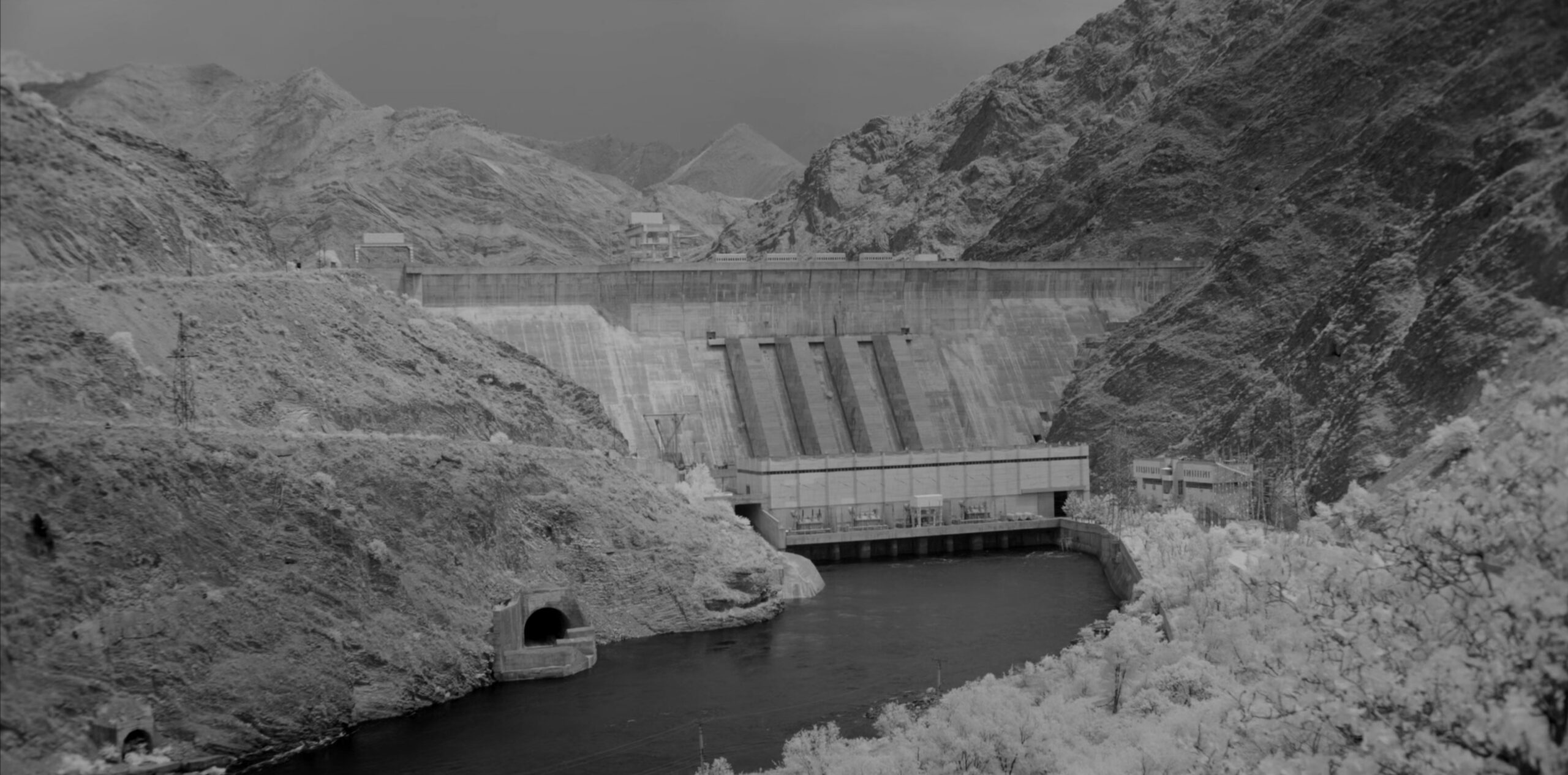
That distinction between gift and sacrifice lies at the heart of the exhibition’s title. In BELEK, glaciers and rivers appear in a video work alongside the remains of Soviet-era hydraulic infrastructure, including dams and canals that altered the country’s terrain in the second half of the 20th century.
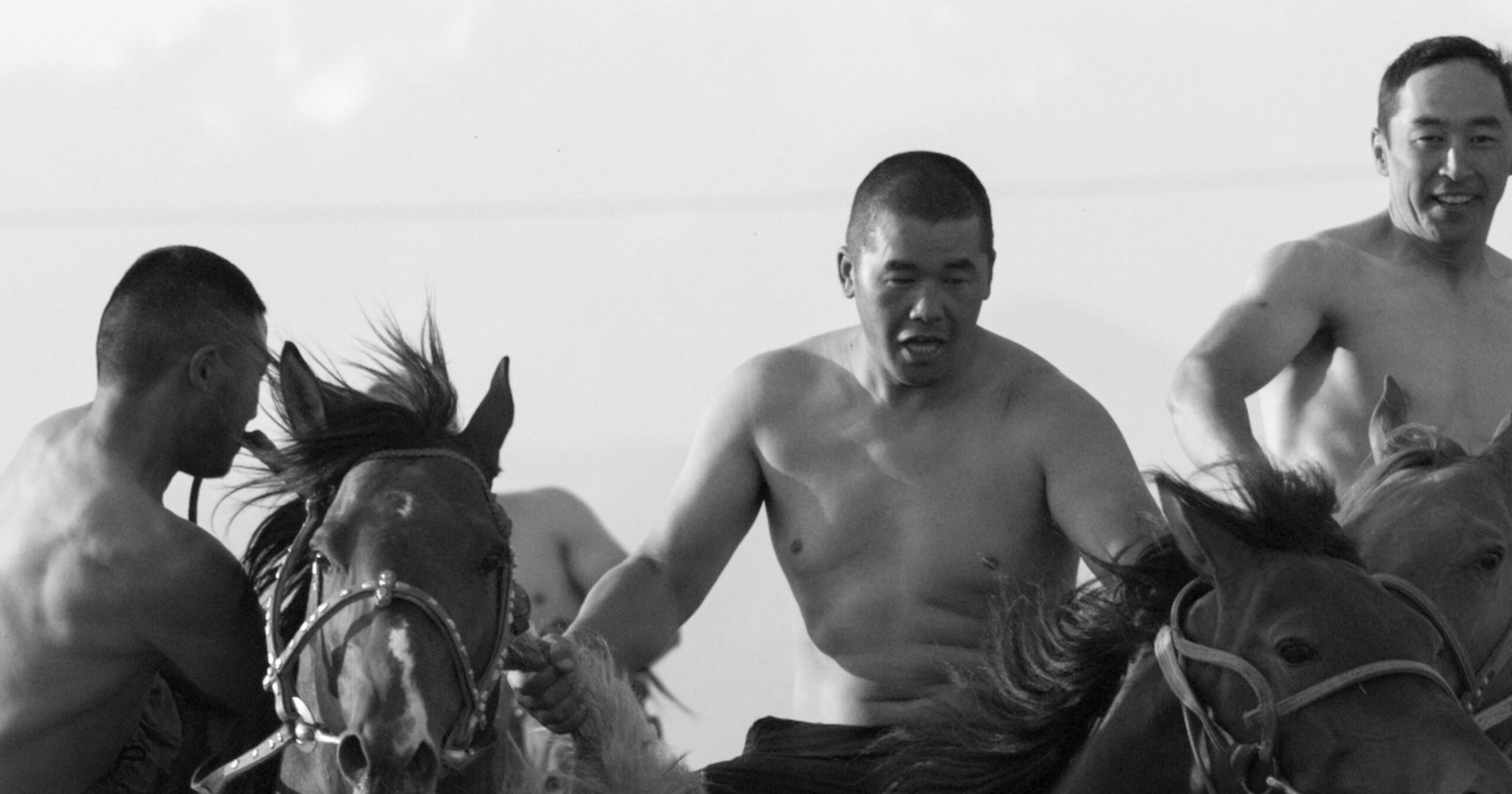
The second theme in the show is the relationship between human beings and horses, a central element in the region. The exhibition centres in part on Kok-Börü, an ancient equestrian game, in which teams on horseback compete to maneuver a goat carcass into the opponent’s goal. In the video piece, this sport becomes an emblem of collective spirit and symbiotic living.
“These players are on the horses and move almost like centaurs, these mixed creatures made by the man and the horse,” Morosov said. The centaur also appears as the exhibition’s sculptural centerpiece.
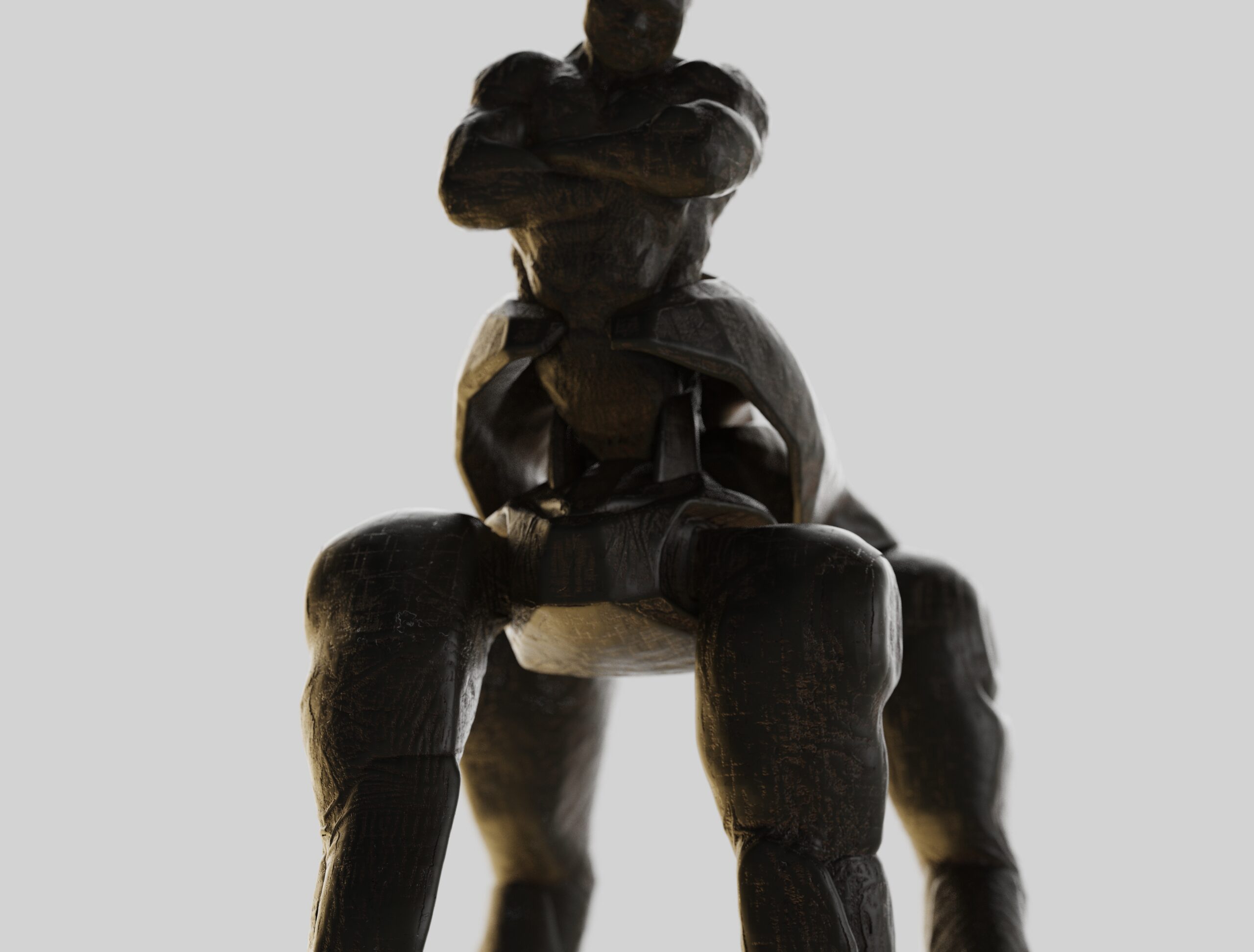
The third theme is the epic Manas, the ancient Kyrgyz poem composed of more than half a million verses. “It’s longer than the Iliad or the Odyssey,” Leardi said. “It has been transmitted for centuries by oral storytellers known as manaschi. Manas has survived invasion, Soviet suppression, and the disruptions of modernity.”
Its presence in the church is concentrated in Temirkesik, a towering vertical sculpture in the presbytery. “The sculpture represents a connection between the earth and the sky, and it’s not by chance that it is placed in the most holy part of the church,” Leardi said. The placement creates an unexpected conversation between Central Asian traditions and the Gothic vault of medieval Venice.
Materials as Memory
The versatility of Morosov’s practice is evident in BELEK, which presents sculptures, video, and paintings. For the artist, the conception of the pavilion began with a sketch and soon moved into the selection of materials. For his sculptures, he uses two primary materials.
“The first one in Italy is called terra cruda,” he explains. “It’s a type of dry clay which we use in Central Asia to construct buildings.”
“The second is poplar wood, the sacred tree of my homeland. It looks like the cheapest trees, but they are huge, really, sometimes a pyramidal shape.”
The use of poplar wood, including its distinctive shapes, suggested a design context. “It’s a true dialogue between industrial design voice and the really old Neolithic material, because the raw clay has been used since Mesopotamian times, from the epoch of the Neolithic revolution,” Morosov said.
In the apse, where Veronese’s Mystic Marriage of Saint Catherine once hung before being moved to the Gallerie dell’Accademia, Morosov’s paintings enter into direct dialogue with the painter. “To create a dialogue with Veronese, I decided to use the pigment which is called Venezian Green, or Paul Veronese, I use it, and the carbon,” he said.
Art Scene and Future Prospects
At a moment of regional awakening, Kyrgyzstan, smaller and less wealthy than some of its neighbors, is showing that it also has genuine energy. Leardi, who explored the art scene while preparing the pavilion, confirmed this impression.
“There is a very vital art scene in Bishkek,” she said. “There is a creative hub called Ololo, and generally a great fervor; other Kyrgyz artists are emerging. Kyrgyzstan wants to come out with its true identity; with an ancient identity that is being re-updated.”
Morosov, she suggested, belongs to a different formation from these emerging voices, one shaped as much by Bologna and Lucca as by Bishkek. For Morosov, the occasion carries genuine weight.
“Almost for every artist, being at the Biennale in Venice is a huge milestone,” he said. “But it’s also a big duty and responsibility. The production was a collective feat, and I couldn’t have made it without my collaborators.”
When asked whether he had approached this work differently, knowing he was representing his country, Morosov paused. “It’s a bit complicated,” he said. “As a person who was born in Kyrgyzstan, I’m a real nomad.”
His deepest aim, he said, was simple. “My idea was to open the soul of Kyrgyzstan, of Kyrgyz people to our world, and to explain who we are.”
BELEK runs through November 22, 2026.